
Month: October 2025
Blog

Atlanta Dedicated Servers: Bandwidth-First, Budget-Friendly
Atlanta is a case study in how infrastructure economics and competition can tighten hosting costs without compromising quality. With over 130 data centers in the metro, providers sharpen rates and add value to win deals. Add in Georgia’s ~$0.10/kWh commercial power rates and state tax incentives for data center investments, and you get a market where dedicated servers with high‑bandwidth allocations are available at double‑digit monthly prices, often with tens of terabytes of data transfer included. Such a combination—budget‑sensitive economics, competitive bandwidth, and a network crossroads hosted in Tier III+ facilities—is rare in the southeastern United States.
Choose Melbicom— 28 ready-to-go servers in Atlanta — Tier III-certified ATL data center — 40 PoP CDN across 6 continents |
 |
Why Is Atlanta’s Hosting Market So Competitively Priced?
Density drives competition: Atlanta’s large data‑center footprint—over 130 facilities—keeps prices under sustained pressure. The area continues to see new construction—for example, a $1.3B QTS campus, a 36‑MW Flexential expansion, and a 40‑MW DataBank build—which adds capacity and moderates pricing even as demand grows. Meanwhile, robust carrier coverage, peering, and fiber routes support high throughput at favorable rates.
How do Georgia’s power rates and incentives reduce monthly bills?
Georgia’s average commercial rate of ~$0.10/kWh gives Atlanta providers structural savings on compute and cooling, which they can pass through in server pricing. On top of that, Georgia’s 2018 sales‑and‑use tax exemption (HB 696) cut capital and equipment costs for qualifying data centers. One policy analysis, citing the state’s evaluation, attributes roughly 90% of Georgia’s data center activity to these incentives—evidence that public policy materially expanded local capacity and competition. Together, inexpensive power plus tax relief help explain why “affordable” in Atlanta does not mean “compromised.”
What Should a Cheap Dedicated Server in Atlanta Plan Include Today?
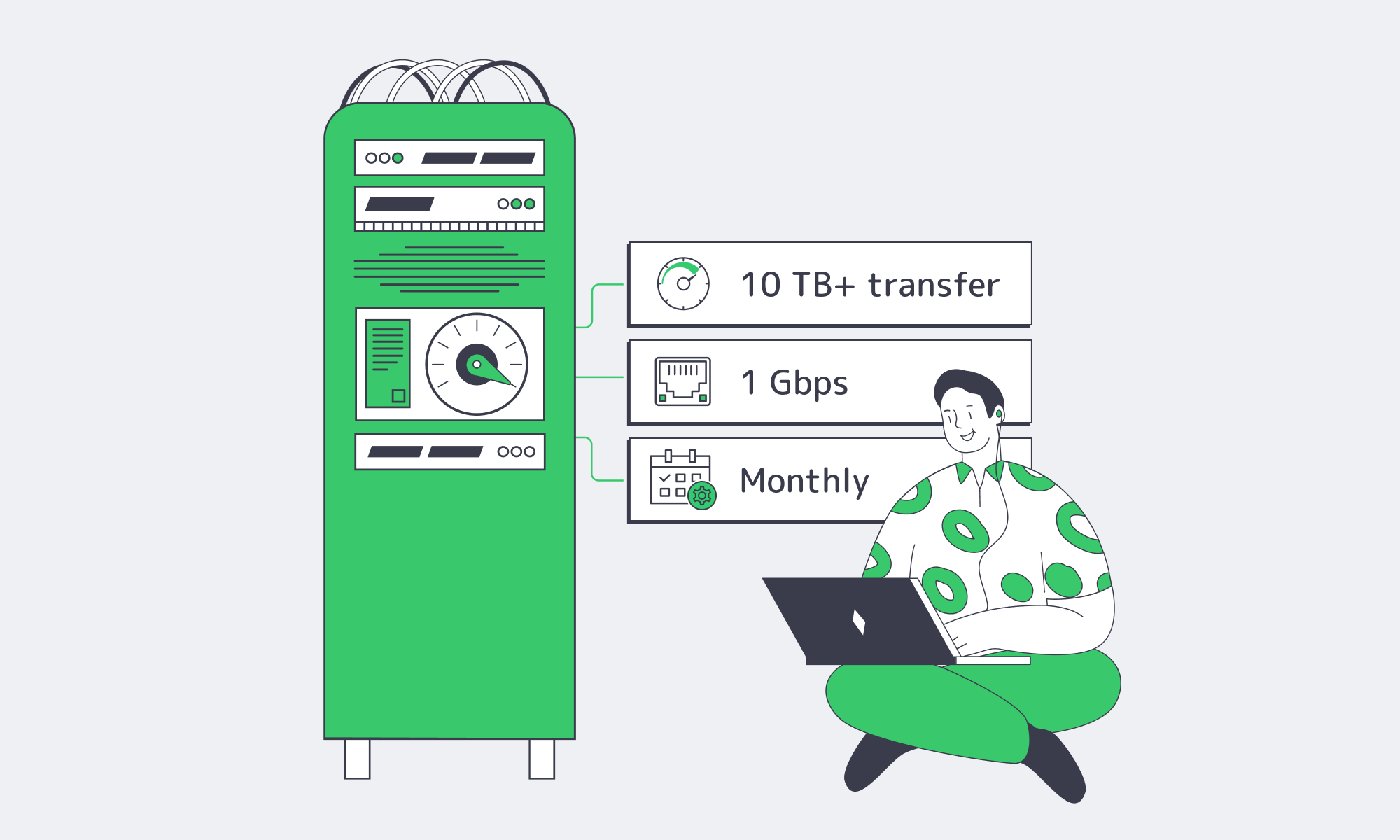
In Atlanta, “cheap” refers to value, not corner‑cutting. Entry‑level packages commonly include generous bandwidth—10 TB or even unmetered—in the base price. The providers achieve this with the help of the Peering and providers operating at the metro level with fiber available due to the fact that the cost per gigabit delivered decreases with the bandwidth added. Legacy plans that billed per GB of data have largely given way to bandwidth‑first packages. At entry level, the total cost of a dedicated server in Atlanta often beats an equivalently provisioned VPS once realistic bandwidth needs are factored in.
Dedicated server hosting in Atlanta: bandwidth‑first economics
Expect practical configurations such as 1–10 Gbps ports paired with terabytes per month of transfer and rapid turn‑up. The market has since lost the majority of the archaic types of pricing (huge initial minimums, significantly small pieces of data, very long lock-ins), to embrace foreseeable monthly arrangements in line with the existing shape of traffic.
Which Modern Cost‑Saving Technologies Are Doing the Heavy Lifting?
Hardware efficiency. Successive generations of x86 processors deliver more compute per watt, enabling more‑spec boxes in the same rack footprint and power envelope.
Automated and fast provisioning. Standardized ready‑to‑go configurations image quickly and consistently, reducing labor and time‑to‑value for customers. For example, we can activate standard Atlanta servers within 2 hours from a bench of 28 on‑hand servers.
Transit and peering of high capacity. Suppliers are able to give the big transfer quotas, even unmetered on 1Gbps, at sustainable price with multi-Tbps backbones and wide choice of carriers. Melbicom’s network supports 14+ Tbps aggregate capacity, with per‑server ports up to 200 Gbps as required.
Facility engineering. Modern Tier III+ data centers standardize redundancy and efficiency practices (hot/cold aisle containment, high‑efficiency UPS, intelligent cooling). That reduces PUE and levels the costs despite the variability in the power markets -advantages that translate into consistency in performance where prices are affordable.
Atlanta’s Cost Levers for Affordable Dedicated Servers
| Cost Lever | What it means for you |
|---|---|
| Power economics | ≈$0.10/kWh commercial power reduces OPEX for compute and cooling, enabling lower monthly server pricing. |
| Market competition | Over 130 Atlanta data centers drive competitive pricing; new supply and expansions (QTS, Flexential, DataBank) strengthen buyer leverage. |
| Tax incentives | HB 696 (2018) exempts sales/use tax on qualifying data‑center equipment; an analysis ties ~90% of Georgia’s data‑center activity to these incentives, expanding capacity and choice. |
| Network abundance | Network abundance provides tens-of-TB or unmetered plan support at favorable rates and with good throughput. |
| Facility maturity | Tier III+ Atlanta facilities emphasize efficiency and reliability; many providers maintain ready‑built configurations for rapid, low‑touch delivery. |
How Should Buyers in Atlanta Control Total Cost without Losing Performance?
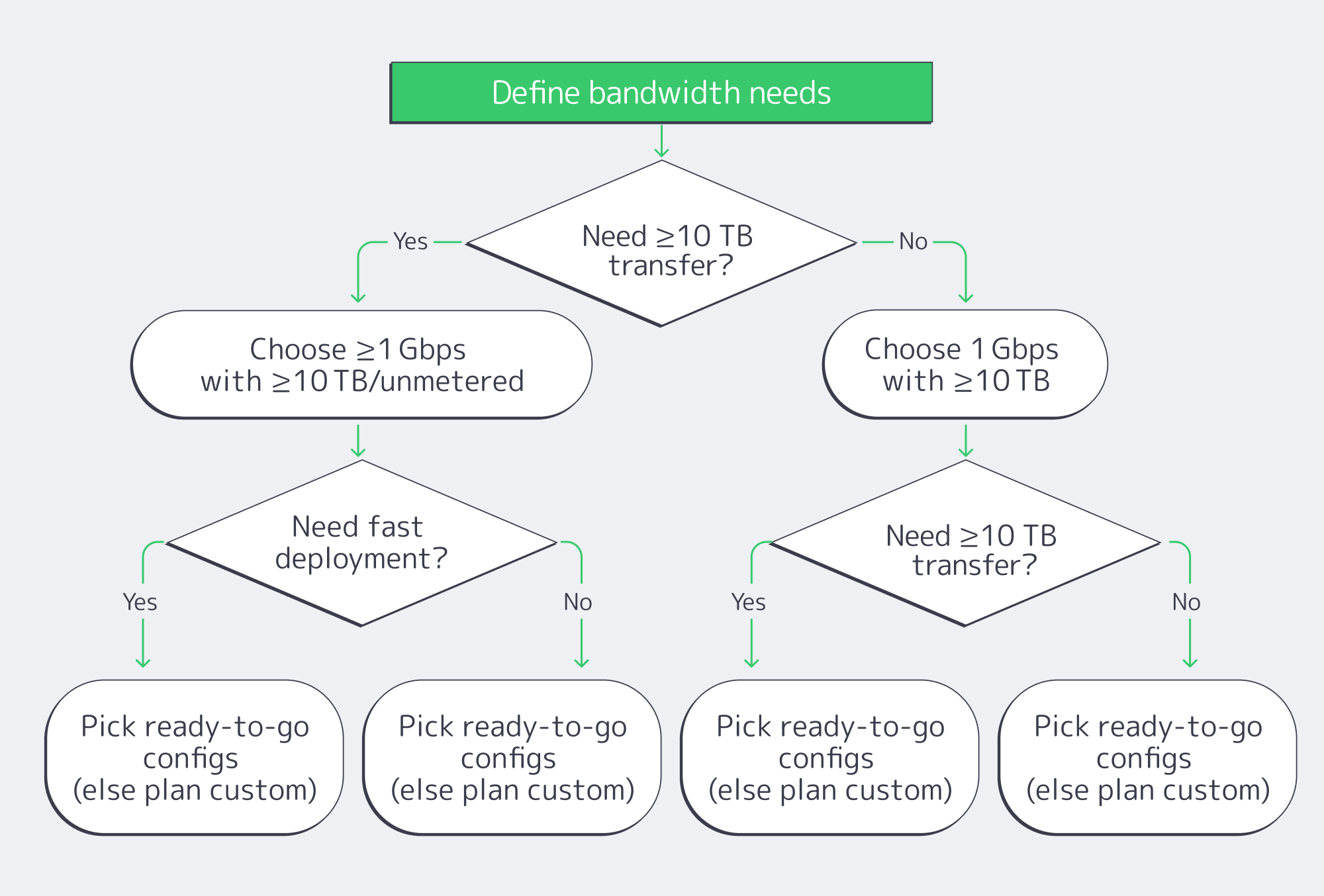
- Bandwidth is more important than raw CPU counts. The users of Atlanta dedicated server hosting normally choke the egress and not the cores. Target plans with 10+ TB of monthly transfer and at least a 1 Gbps port.
- Choose the suppliers whose delivery will take the shortest possible time. Atlanta ready designs not only save time-to-launch, but the total cost of ownership as well. Choose providers that offer rapid delivery; we can provision 28 Atlanta servers within 2 hours.
- Determine the level of redundancy and facility. A Tier III+ Atlanta data center helps protect uptime and power/cooling efficiency, supporting predictable OPEX.
- Utilize network architecture. Pair your dedicated server in Atlanta with a CDN to offload global traffic bursts and reduce last‑mile latency.
- Re-platform, step-up are not to occur. Favor vendors that enable clean upgrades—1→10→40 Gbps ports and higher transfer quotas—without migrations; Melbicom offers per‑server ports up to 200 Gbps in Atlanta.
- Maintain low management overheads. Automated OOB provisioning and remote tools save time on the common operations. Evaluate whether the provider includes 24/7 support—a safety net that matters when you run a lean team.
Is Atlanta the Right Choice for Your Workload?

In the case of teams that consider value per dollar, Atlanta can fit oddly well: there is a deep provider base, power that is cheap(er), and capacity expansion through policy that ensures that offerings remain competitive. The fiber and peering ecosystem enables providers to include generous transfer (10 TB or unmetered) at prices that are difficult to match in more expensive metros along the coastlines—which is ideal when bandwidth is your primary cost driver. In case your users are located in the U.S. East Coast (or you share transatlantic flows), the trade-off on latency against costs in Atlanta is difficult to overcome.
Launch Atlanta dedicated servers in hours
Provision ports up to 200 Gbps on 28 pre‑configured servers over our 14+ Tbps network with free 24/7 support. Deploy in a Tier III Atlanta facility and scale bandwidth as you grow.
Get expert support with your services
Blog

Ensuring Low Latency with LA‐Based Dedicated Servers
Live experiences rely on more than bandwidth, and real‑time experiences rely on low latency. A couple of milliseconds can determine the difference between a smooth user session and an irritating one in competitive iGaming, live streaming, and time‑sensitive analytics. This article traces the network strategies that deliver ultra‑low latency with Los Angeles dedicated servers, explains why Los Angeles’s transpacific position matters, and shows how to evaluate providers that can turn geography into quantifiable performance for West Coast and Asia‑Pacific users.
Choose Melbicom— 28 ready-to-go servers — Tier III-certified LA facility — 40 PoP CDN across 6 continents |
 |
What Can Latency (Not Bandwidth) Tell Us About User Experience?
Latency is the round‑trip time between user and server. In real‑time applications, greater delay worsens interactivity and performance (e.g., gameplay responsiveness, live video quality, voice clarity, and trade execution). Reduced latency enhances interaction; organizations that optimized routing policies recorded clear response‑time improvements. The implication for infrastructure leaders is that, to compete on experience, you must design for the fewest, fastest network paths.
What Makes Los Angeles a Prime Low‑Latency Hub?
Geography and build‑out converge in LA
Roughly one‑third of Internet traffic between the U.S. and Asia passes through Los Angeles, with One Wilshire as the hub. It is one of the most interconnected buildings on the West Coast, supporting 300+ networks and tens of thousands of cross‑connects, including nearly every major Asian carrier. Such a density condenses hop count and makes traffic local.
Distance still matters: adding 1,000 km of fiber distance increases round‑trip delay by roughly 5 ms. Shorter great‑circle routes from LA to APAC, enabled by direct subsea landings, visibly reduce ping. Benchmark Examples:
| City (Destination) | Latency from LA (ms)Approx. | Latency from NYC (ms)Approx. |
|---|---|---|
| Tokyo, Japan | 80 | 165 |
| Singapore | 132 | 238 |
| Hong Kong, China | 117 | 217 |
The chart below shows how consistently LA outperforms New York on APAC round trips.
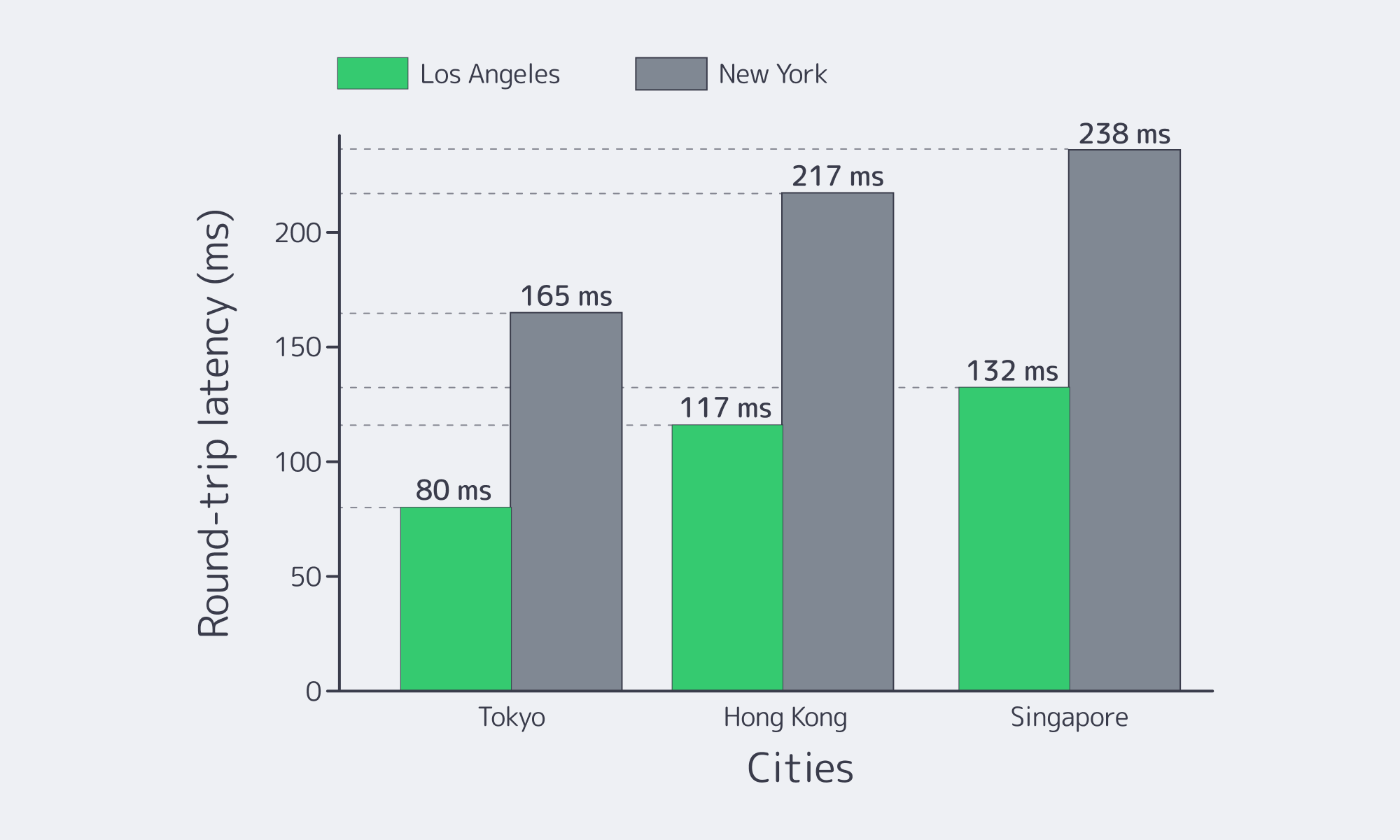
Latency from Los Angeles versus New York to APAC hubs (smaller is better). The west coast position of LA provides significantly shorter transpacific routes.
The infrastructure story is also conclusive
Legacy and next‑gen cables land in or backhaul to LA—for example, the Unity Japan–LA 8‑fiber‑pair system terminates at One Wilshire. More modern constructions increase capacity and operation strength: JUNO connects Japan and California with up to 350 Tbps and latency‑minded engineering, and Asia Connect Cable‑1 will offer 256 Tbps over 16 pairs on a Singapore–LA route. Carrier hotels continue to upgrade (e.g., power to ~20 MVA and cooling enhancements) to maintain high‑density interconnection.
Melbicom’s presence in Los Angeles is in a Tier III‑certified site with substantial power and space, ideal for terminating high‑capacity links and hosting core routers. Practically, this means fast, direct handoffs to last‑mile ISPs and international carriers, reducing detours that introduce jitter.
Why Are LA Dedicated Servers Ideal for Achieving the Lowest Latency?
Direct peering and local interconnectivity
Each additional network jump is time consuming. Direct peering shortens the path by interconnecting with target ISPs/content networks within LA’s exchanges, which can enable one‑hop delivery to end users. This prevents long‑haul detours, congestion, and points of failure. Melbicom is a member of 29 Internet exchanges worldwide and peers with access and content networks in Los Angeles. In the case of a Los Angeles dedicated server serving a cable‑broadband user, packets leave our edge and hand off to the user’s ISP within the metro.
Public IX peering is augmented by private interconnects (direct cross‑connects), providing deterministic microsecond‑level handoff on high‑volume routes. This approach is especially effective for dedicated servers in Los Angeles serving streaming applications and multiplayer lobbies, where the first hop sets the tone for the entire session.
Optimized BGP routing (intelligent path selection)
Default BGP prefers the fewest AS hops, not the lowest latency. To ensure that the BGP routing tables are optimized, the BGP route optimization platforms constantly probe multiple upstreams and direct the traffic to the minimal-delay and minimal-loss path. Traffic is redirected when a better path becomes available (or an old path fails). The network shifts to the new path within seconds. Tuning BGP policies has reduced latency for 65% of organizations.
Melbicom maintains multi‑homed BGP with numerous Tier‑1/Tier‑2 carriers and can announce customer prefixes and use communities to control traffic flow. In practice, when a Los Angeles dedicated server can egress via a San Jose route or a Seattle route to reach Tokyo, we at Melbicom prefer the better‑measured route—particularly during peak times—so players or viewers see steady pings rather than oscillations.
Low-contention high bandwidth connectivity
Bandwidth headroom prevents queues; bandwidth is not the same as latency. Link saturation creates queues and increases latency. The fix is large, dedicated ports that have a significant backbone capacity. Melbicom also provides ports up to 200 Gbps per server in Los Angeles and supports a 14+ Tbps global network. Guaranteed bandwidth (no ratios) reduces contention as traffic rises. To the group that needs a 10G dedicated server in Los Angeles, the advantage of this in practice is that bursts do not cause bufferbloat; the 99th-percentile latency remains nearly the same as when they are not busy.
Modern data‑center fabrics (including cut‑through switching) and tuned TCP stacks further reduce per‑hop and per‑flow delay. And that is it; broad pipes and forceful discipline over the overuse of the broadband result in the steady small latency.
Edge caching as latency complement and CDN
A CDN will not replace your origin, but it shortens the distance to users for cacheable content. With 40 locations through our CDN, Melbicom has deployed the assets to the users leaving the bulk of the work to the dynamic call on your LA origin on a quick local path. In Los Angeles deployments of dedicated servers, such as video streaming platforms or iGaming apps with frequent patch downloads, caching heavy objects at the edge while keeping stateful gameplay or session control in Los Angeles is the best of both worlds.
How to Choose a Low Latency Dedicated Server LA Provider
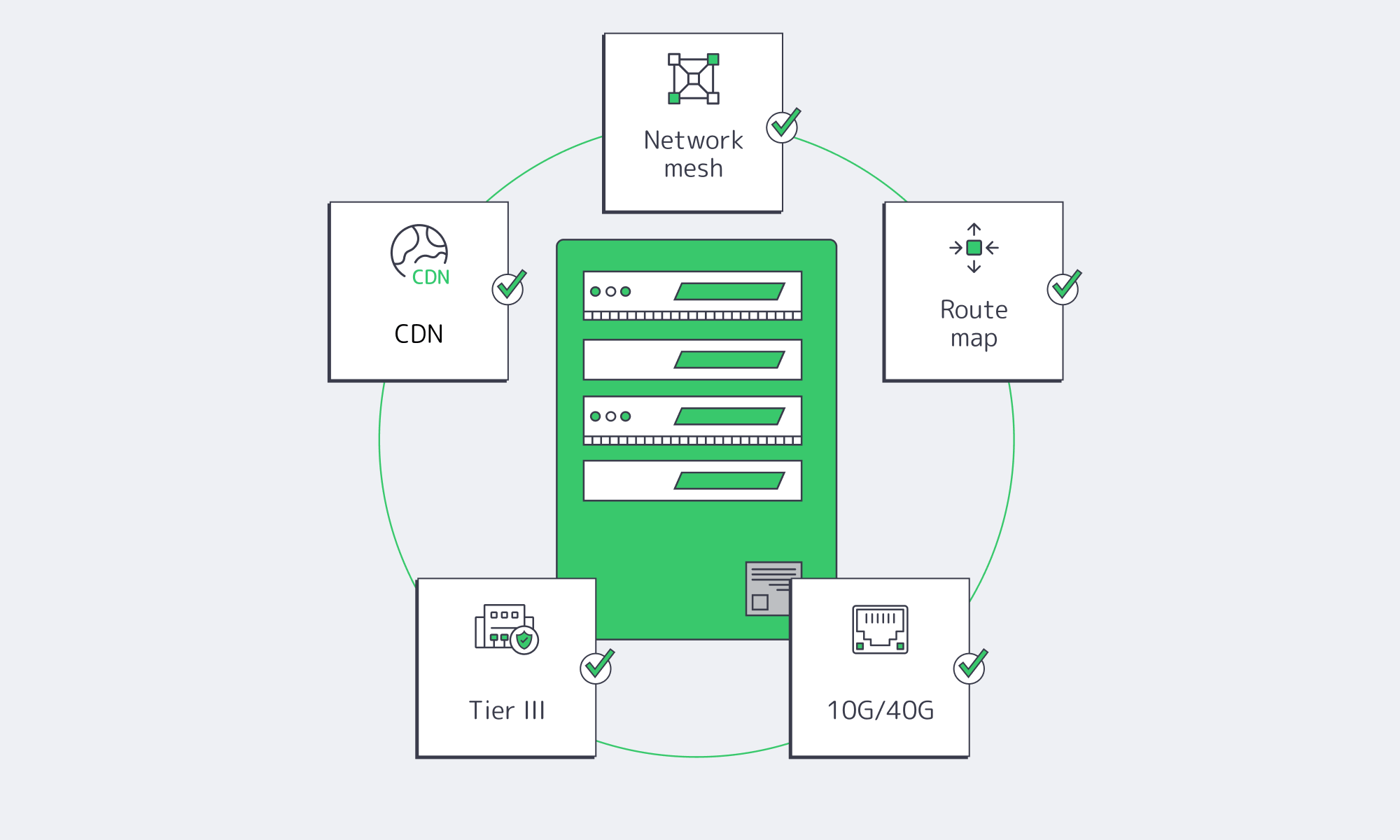
Reduce checklist to that which makes the latency needle move:
- Leverage LA’s peering ecosystem. Prefer providers with carrier‑dense coverage (One Wilshire adjacency, strong presence at Any2/Equinix IX). Melbicom peers extensively in Los Angeles to keep routes short.
- Demand route intelligence. Enquire about multi‑homed BGP and on‑net performance routing; route control is associated with reduced real‑world pings. Melbicom provides communities/BYOIP with the ability to tune flows.
- Purchase bandwidth in the form of latency insurance. Even better, use 10G+ ports even when you are unsure; the capacity margin prevents queues. With Melbicom, this sits on a guaranteed‑throughput network engineered for up to 200 Gbps per‑server bandwidth in Los Angeles.
- Confirm facility caliber. Power/cooling capacity and Tier III design minimize risk. The LA facility at Melbicom qualifies that bar and is in favor of high density interconnects.
- Localize heavy objects with the help of CDN. Offload content to 40 PoPs, leaving stateful traffic at your LA origin.
LA Low-Latency Networking, What Next?
Transpacific fabrics are becoming thinner and quicker. JUNO launches 350 Tbps Japan-California capacity w/ latency-sharing architecture; Asia Connect Cable‑1 launches 256 Tbps on a Singapore–LA arc. Investment in subsea systems is also rapid across the industry, $13billion in 2025-2027, and the global bandwidth has tripled since 2020, due to cloud and AI. At the routing layer, SDN and segment‑routing technologies are coming of age, enabling latency‑aware path control at large scale. Within the data center, quicker NICs and kernel‑bypass stacks shave microseconds that add up across millions of packets within the networking stack.
The practical note: the solution to APAC -facing workloads and West Coast user bases will continue to be a first-choice hub in LA, with increased direct routes, improved failover, and reduced jitter, each year.
Where LA Servers Make Latency a Competitive Advantage
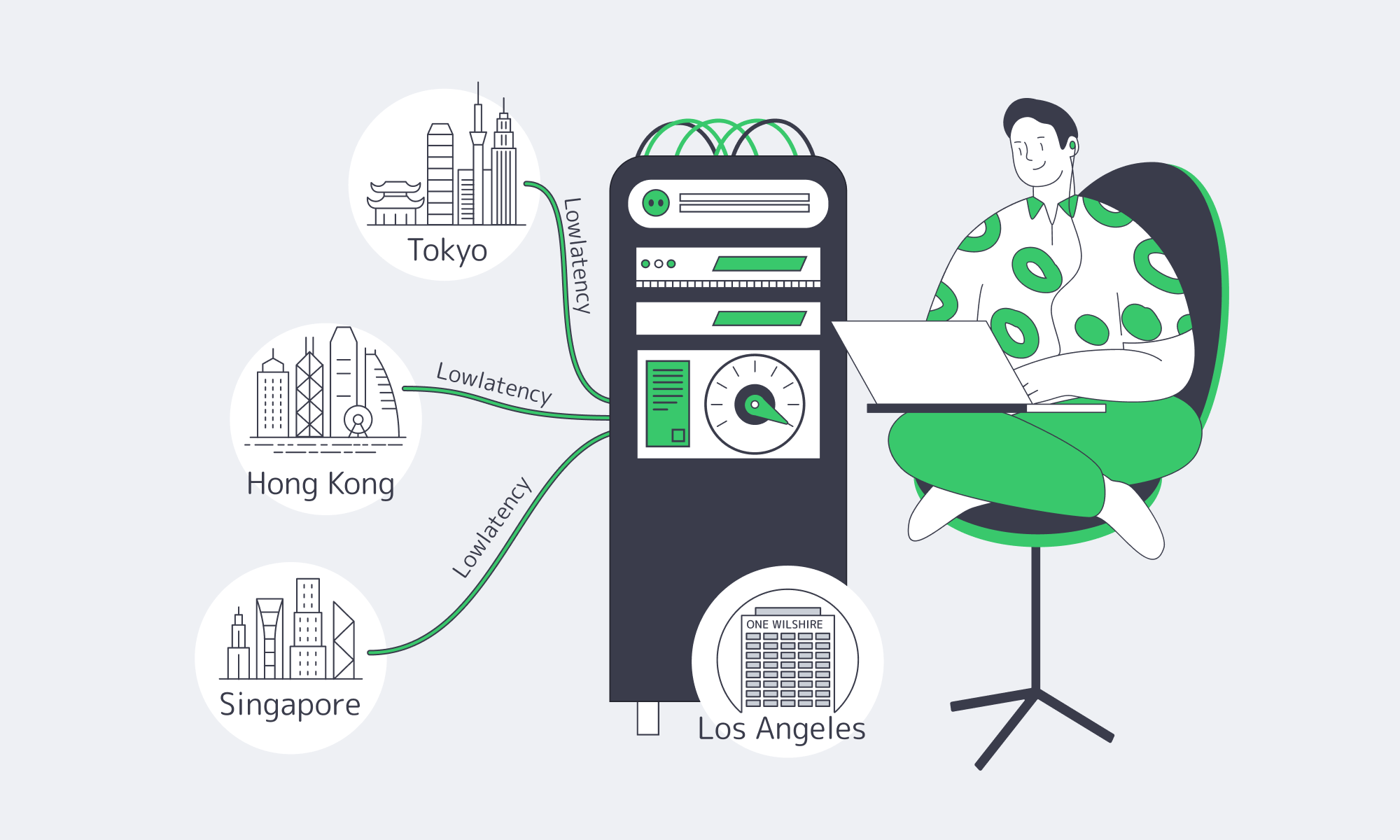
Assuming that milliseconds determine your success, Los Angeles makes geography an SLA-quality asset – without route deviations. The playbook is settled: co‑locate near Pacific cables, peer aggressively within the metro, deploy smart BGP to keep paths optimal, and provision ports and backbone capacity to avoid queues. Add CDN to localize heavy objects, and you can provide real-time experience that is localized to the West Coast and acceptable to East Asia. In the case of teams intending to acquire a dedicated server in Los Angeles (or increase an existing West Coast presence), the low-latency benefit is calculable in terms of engagement, retention, and revenue.
That is the result we at Melbicom are designing for: the physical benefits of LA plus network engineering that squeeze out wasted milliseconds. Hosting a dedicated server in Los Angeles—well‑peered and high‑bandwidth—remains among the most defensible infrastructure moves you can make.
Deploy in Los Angeles today
Launch low‑latency dedicated servers in our LA facility with multi‑homed BGP, rich peering, 40 CDN PoPs, and up to 200 Gbps per server.
Get expert support with your services
Blog
Why Dedicated Servers Elevate ERP Performance And Compliance
Long gone are the days when resource planning was destined for a back-office ledger. These days, the ledger is a real‑time operating system bursting with data, wrapped in AI, and bound by strict regulatory rules that demand predictable performance, isolation, and verification. Given those requirements, it is unsurprising that many are returning to ERP hosting on dedicated servers once again to keep compliance black and white and have hands-on control. Modern multi‑tenant clouds often struggle to satisfy these demands, and the pivot is underscored by industry surveys that show 42% of IT pros migrated workloads from public clouds back to dedicated servers in the last year for more predictable costs, stable performance, and governance needs.
Choose Melbicom— 1000+ ready-to-go servers — 21 global Tier IV & III data centers — 40 PoP CDN across 6 continents |
|
Why Is ERP Getting Harder to Host?
Current ERP stacks are defined by the following three major factors:
- Heavier data: The datasphere for ERP has far broader telemetry, assets, and transactions that come from omnichannel commerce and third‑party datasets. Yet the demand for low‑latency I/O and high‑throughput networks remains continuous, and that datasphere will only continue to expand, as IDC predicts explosive growth.
- Stricter regulations: Auditability and the ever‑evolving rules in finance, healthcare, and public sectors are driving the need for single‑tenancy isolation. Proving geography is also required as data‑residency rules become stricter, which dedicated infrastructure can facilitate.
- AI: ERP models are increasingly employing AI-driven features for forecasting, scheduling, and anomaly detection. These copilots are compute‑intensive and bursty, leading many to encounter unexpected cloud bills in the $5,000–$25,000 range.
These pressures stress the importance of fast, private infrastructure that you can orchestrate, which dedicated servers deliver.
Why Are Teams Moving Workloads Back from Cloud to Dedicated?
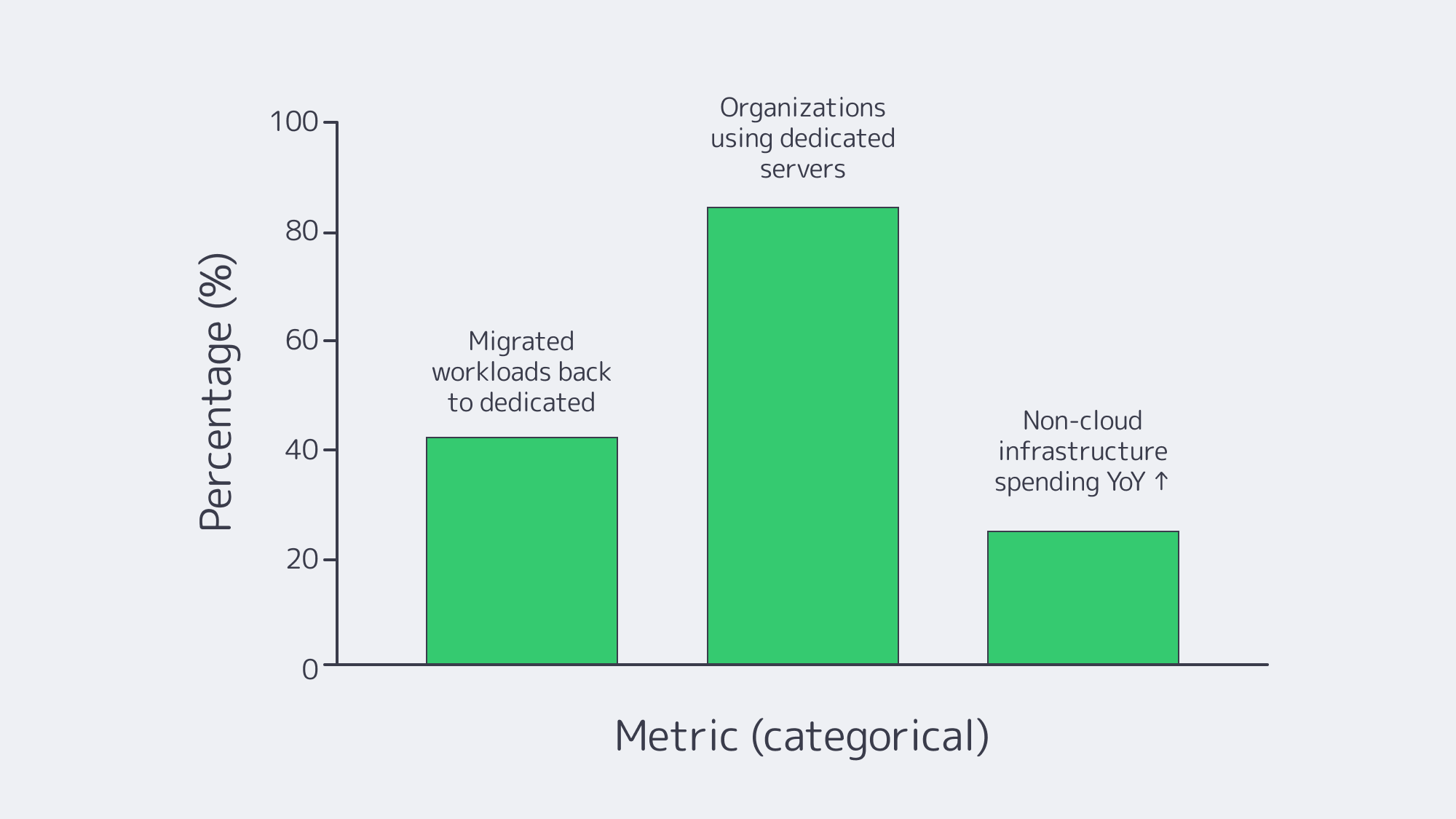
One thing is for sure: repatriation is happening at scale. Recent research reports that 42% of organizations moved workloads from public cloud to dedicated servers in the previous 12 months. The driving factors behind this decision were, firstly, full control and customization, followed by performance, compliance, and predictable pricing, with 86% stating they already run dedicated servers in their mix.
Quite often, budget dynamics are at the heart of most business decisions. As ERP stacks are always‑on and transaction‑heavy, metered pricing plans often mean unexpected costs soaring. With dedicated capacity, you can simplify forecasting; a successful month doesn’t come with the caveat of added costs or anxiety.
When you examine spending patterns, the trend in return to dedicated infrastructure also tracks. The IDC identified a 25.8% year‑over‑year jump in non‑cloud infrastructure spending in a recent quarter. So, organizations are clearly re‑investing in single‑tenant capacity.
How Performance Improves with ERP Hosting on Dedicated Servers
While many think of performance in terms of speed, in reality it is more about consistency under load. By having your ERP hosted on dedicated infrastructure, you have no noisy neighbors or a hypervisor taxing your database, and your app servers own 100% of the cores, RAM, and I/O. This brings the following benefits:
- Deterministic latency. With a dedicated ERP host, you have full control throughout the pipeline, allowing you to orchestrate CPU scheduling, NUMA policy, NVMe layouts, and network paths. This means you can run complex MRP, end‑of‑period closes, and large exports at line rate.
- Right‑sized bandwidth. Sustained throughput is needed for ERP that is integrated with e‑commerce, partner EDI, or BI platforms with decisive east‑west bandwidth. Melbicom can provide per‑server ports up to 200 Gbps to ensure database replication and object storage sync concurrency.
- Locality benefits. Round-trip times are significantly reduced with dedicated hosting because you can keep ERP placed close to users and data sources by choosing exact facilities and interconnects.
You are also ready to scale with ease on platforms with well‑known scale‑up behaviors, such as Odoo server deployments or Epicor servers tuned for heavy financials. A dedicated server ensures cores, memory, and NVMe can be packed to yield measurable improvements. This is also true in the case of Infor server reporting or keeping a Sage X3 print server isolated to prevent batch document generation from throttling OLTP.
Control and Customization Payoffs
With a dedicated server, you get much more control than cloud providers typically allow. Although their instance menus are broad, freedom is limited. The dedicated hosting route allows you to:
- Run OS and database versions certified by your ERP, even if modules demand specific kernels or drivers.
- Shape topology: You can separate apps, DB, and integration nodes across servers, pin cores for JVMs or .NET runtimes, and choose RAID levels to complement traffic.
- Install numerous deep integrations, such as factory OPC-UA gateways, Epicor Spreadsheet Server, without any restrictions.
Control and customization rank highly as driving factors behind dedicated server choice in surveys, with 55% of organizations giving it as their primary reason. ERP roadmaps buried under hyperscalers’ abstraction layers make compliance much trickier.
ERP Nuances & Requirements: Odoo, Workday, etc.
- Odoo requirements: With a dedicated server, you can scale Odoo cleanly. Postgres, workers, and caches can be separated, CPU affinity can be tuned for long‑running jobs, and write-intensive modules can be facilitated by using NVMe.
- Workday server integrations & locations: When integrating with Workday’s SaaS endpoints, place your dedicated ERP or data hub close to the workday server locations your tenant uses to minimize egress and meet residency requirements.
- IFS server / Infor server: Single-tenancy provides better performance for latency‑sensitive shop‑floor connectors and on‑prem MES links.
- Epicor server & Epicor Spreadsheet Server: Reporting and Excel‑access paths can be kept on the same low‑latency network paths as the ERP database, preventing throttling.
- Sage X3 print server: You can prevent your transactional cores from being affected by document bursts by decoupling print/report generation.
Simplifying Compliance Audits Through ERP Platform Isolation
Dedicated ERP hosting is single‑tenant by design, reducing the risks associated with multitenancy and making compliance far simpler by default. The isolation clarifies and satisfies audit boundaries:
- Demonstrable data residency: Instead of auditors having to infer geography from cloud “regions,” you can prove the location because you can choose it. Melbicom has Tier III/IV facilities sited across multiple continents, which enables you to deploy and match jurisdictional policy.
- Verifiable access control: You have sole ownership, so all admin accounts, logging, network ACLs, and change windows align with your ERP release cadence.
- Auditability: You can easily test and present asset tags, topology diagrams, and jump‑host policies.
Dedicated environments meet privacy and oversight demands, and the preference is also prevalent in survey responses, where organizations shared that they avoid putting their most regulated data in public clouds.
The Practical Differences Between Cloud and Dedicated for ERP?
| Aspect | ERP on Dedicated Server | ERP on Public Cloud |
|---|---|---|
| Performance | Exclusive cores, RAM, and NVMe; no “noisy neighbors.” Deterministic latency for OLTP and batch. | Shared, virtualized resources; performance can fluctuate with contention and throttling. |
| Customization | Full control over OS/DB versions, middleware, and topology (e.g., separate Odoo server DB/app tiers). | Constrained to provider‑approved images, services, and shapes; limited kernel/driver control. |
| Compliance & Data Location | Single‑tenant isolation; choose exact jurisdiction; easier audit trails. | Multi‑tenant by default; residency and isolation depend on provider controls and shared‑responsibility models. |
| Cost Predictability | Fixed monthly/annual pricing; high utilization doesn’t spike the cost. | Metered charges for compute/storage/egress; surges and analytics/AI runs can trigger bill shocks. |
The above table highlights differences for ERP hosting that make an impact.
Decision‑Making Takeaways for ERP
- Performance prioritized: Consistent throughput and low latency are provided with a dedicated server hosting, which is important for mixed OLTP + analytics/integrations.
- Compliance is built in: Single tenancy means isolation from the get-go, and explicit geography helps simplify audits while satisfying data‑sovereignty obligations.
- Strategic control: Dedicated setups have structures that align well with ERP roadmaps, such as custom kernels, database versions, and topology choices.
- Predictable costs: There are no nasty surprises for always‑on ERP with fixed pricing that trumps metered options with AI features at scale.
- Trends speak volumes: Surveys show many teams have moved or are moving workloads back to dedicated servers. There is also a spike in re‑investment in non‑cloud hosting infrastructure.
Operational Moves

With data residency rules overhead, if you are looking to modernize your ERP and leverage the latest AI, you need a safe infrastructure. The verifiable isolation, full control, and transparent reporting of dedicated servers provide the safest option and satisfy auditors. The performance they offer also brings operational advantages, ensuring smooth core transactions and a large tuning surface for laying down AI pipelines without the costs spiralling. With the security offered, we are seeing many organizations reverse the shifts they once made over to the cloud after losing control.
Melbicom’s globally distributed, certified facilities have a design that is ideal for high‑throughput ERP for those bound by strict compliance, with workloads that incorporate the latest AI assistance. We can rapidly provision and have a network built for sustained loads, with hybrid footprint setups available. We can keep ERP isolated at the origin while our CDN layer (in 40 locations) pushes static assets to the edge.
Deploy ERP on Dedicated Servers
Provision dedicated, compliant infrastructure for ERP with predictable performance and costs. Choose global data centers and high‑bandwidth ports, backed by 24/7 support.
Get expert support with your services
Blog
Choosing ERP Servers for Performance, Uptime, and Scale
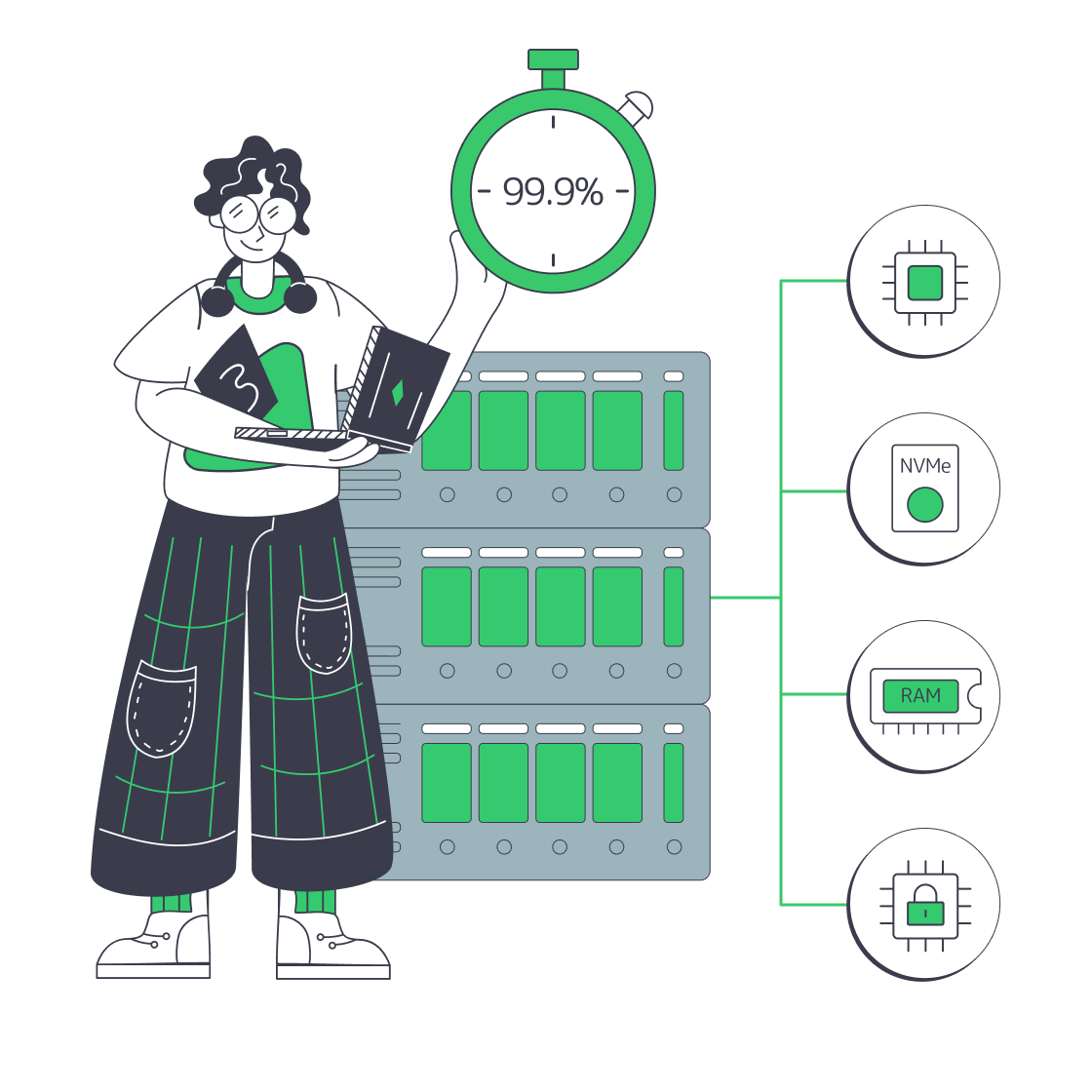
Enterprise resource planning (ERP) systems coordinate orders, inventory, finance, HR, analytics, and audits, making them always on. These workflows need consistent performance, resilient architecture, and strong security because ERP platforms hold sensitive, business-critical data. IBM’s 2026 breach report puts the global average breach cost at $4.99 million, showing why resilient ERP infrastructure matters.
Use this framework to evaluate ERP server hosting for performance headroom, high availability, predictable costs, scalable design, and compliance.
Choose Melbicom— 1000+ ready-to-go servers — 21 global Tier IV & III data centers — 40 CDN PoPs across 35 countries |
|
What Hardware Profile Runs ERP Efficiently?
Prioritize CPU and RAM: ERP stacks concentrate OLTP traffic, reporting, background jobs, and integrations, so size both core count and clock speed from measured concurrency and query behavior. Provide enough RAM for database and application caches so application servers do not swap under normal peaks. Odoo uses Python and PostgreSQL, and its worker model makes concurrency a key sizing input.
Balance storage latency and capacity: For active ERP data, latency and IOPS often matter more than raw capacity alone. NVMe SSDs can reduce batch and query runtimes, while write-heavy ledgers and MRP benefit from sustained IOPS. Size databases, logs, snapshots, and backups separately.
Size network throughput from real flows: ERP environments move EDI files, BI extracts, backups, and API payloads, so measure peak traffic, ensure high bandwidth where the workload requires it, and avoid oversubscribed ports. Melbicom offers up to 200 Gbps per server, depending on location, for integration and backup spikes.
Think headroom by design: Size your server so typical peaks do not exhaust CPU or RAM, then validate the margin with month-end, seasonal, and failover load tests.
How Close to “Always On” Should ERP Be?
For business-critical ERP, a 99.99% service-availability objective allows about 53 minutes of annual downtime. Whether that target is appropriate depends on business impact, recovery objectives, maintenance windows, and budget. Treat it as an end-to-end application objective, not a guarantee created by one server or facility tier.
Tier III/IV DCs can reduce facility risk, but tier is one design layer. The Uptime Institute defines Tier III as concurrently maintainable and Tier IV as fault tolerant; these classifications describe site topology, not guaranteed application availability.
The network architecture must also match. Melbicom connects each top-of-rack switch to two aggregation switches and uses vPC and 802.3ad for link redundancy. Dual core routers and VRRP protect Layer 3 connectivity, reducing single-device failure exposure.

Best ERP Server Hosting: Plan for Scale
Vertical scaling adds CPU, RAM, storage, or NIC capacity to the existing node and can postpone architectural complexity. Horizontal scaling separates database, application, print/reporting, and integration roles so contention in one service does not consume the entire ERP stack. Choose a dedicated server with free memory slots and storage bays for scale-up, and a provider that can add nodes quickly as demand changes.
Melbicom has 1000+ ready-to-go servers across 21 Tier III/IV data centers, so capacity can be added closer to users and data.
Price Clarity: Predictable ERP Economics
Unexpected ERP hosting costs often come from outbound data transfer, support tiers, and migration work. The UK CMA’s 2025 final decision summary identifies egress fees as a key commercial barrier to switching or multi-cloud use. In the EU, the Data Act has applied since September 12, 2025; switching charges, including egress charges tied to switching, must be removed from January 12, 2027. Model normal traffic and migration traffic separately, and verify exactly what the provider meters.
Choose a dedicated server provider with clear bandwidth limits and broad CDN access for cacheable content and eligible API responses.
Melbicom’s CDN spans 40 CDN PoPs across 35 countries.
Integration and Compatibility
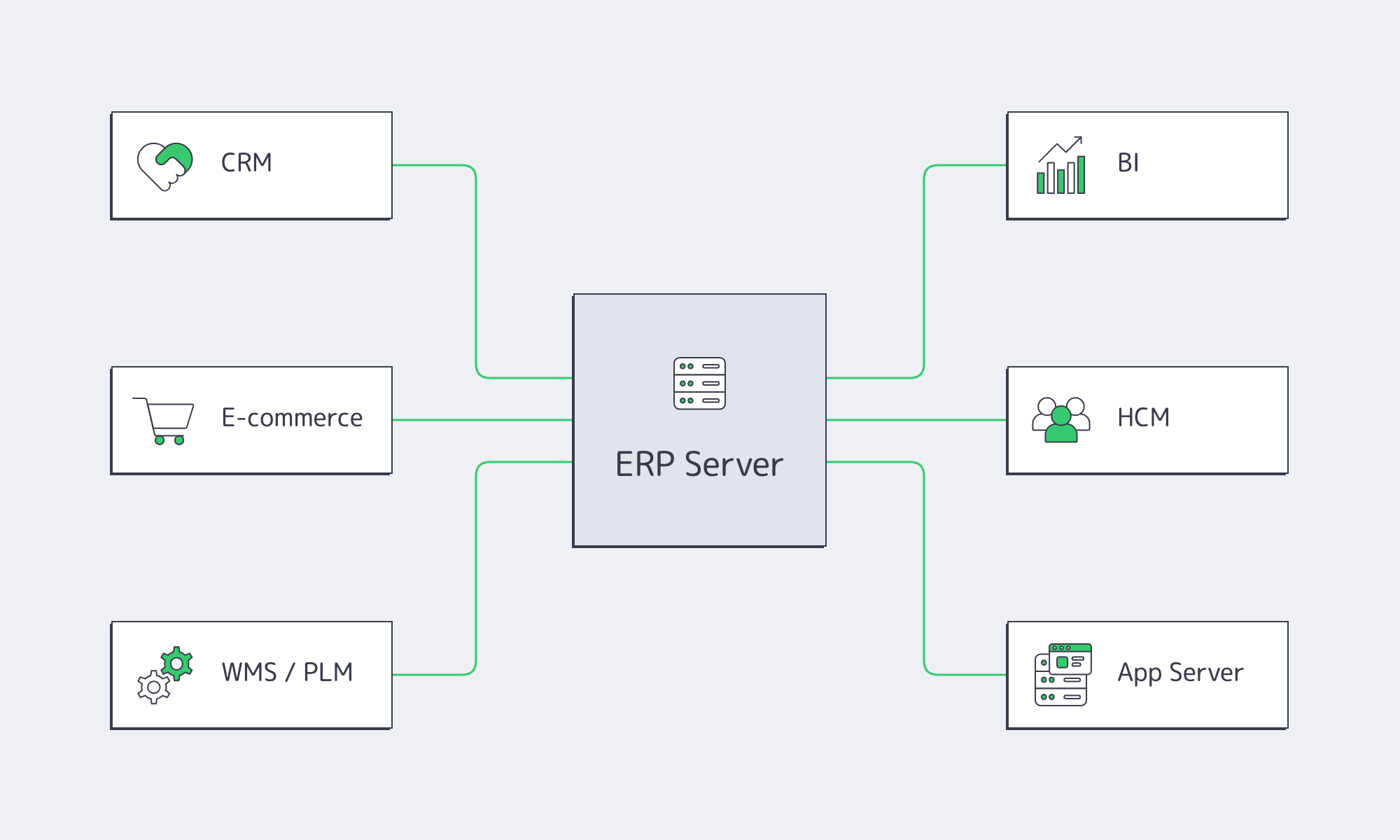
An ERP server must support payroll, PLM, WMS, e-commerce, BI, identity, and other simultaneous workflows without letting one integration overwhelm core transactions. Choose the operating system, database, drivers, and connectors from the exact ERP version and deployment model.
- Odoo stack alignment. For self-hosted Odoo, full server access simplifies dependency, module, and database administration. Odoo uses Python and PostgreSQL, and production sizing should account for worker processes, scheduled jobs, and peak concurrent use rather than user count alone.
- Windows stack alignment. For Epicor, Infor, or IFS deployments, validate the exact product, version, and deployment model before choosing Windows or Linux, SQL Server or another database, ODBC, and reporting components. Cloud and on-premises options vary by product and lifecycle, so do not infer infrastructure requirements from the vendor name alone.
- Print/report offload. If Sage X3 printing or reporting is deployed as a separate service, isolate its capacity so document jobs do not consume OLTP resources.
- SaaS peers. Workday is delivered as SaaS rather than a self-hosted ERP server, so the infrastructure decision applies to integration middleware, data pipelines, and network paths to Workday—not to hosting Workday itself.
Platforms at a glance
| ERP/system | Typical hosting | Hosting notes |
|---|---|---|
| Odoo | Self-hosted Linux or vendor cloud | Python + PostgreSQL; size workers, scheduled jobs, and concurrency. |
| Epicor / Infor / IFS | Cloud or supported on-premises deployment, depending on product and version | Validate the OS, database, ODBC, reporting, and lifecycle requirements for the exact release. |
| Sage X3 | Self-managed or provider-hosted, depending on deployment | Validate application, database, print, and Windows service roles for the exact architecture. |
| Workday | SaaS (multi-tenant) | No self-hosted Workday application tier; size integration middleware and network paths. |
A Support Model to Reduce Risk
ERP incidents often occur outside business hours, so 24/7 technical support should be a priority. Engineers who can help diagnose database stalls, NIC saturation, or filesystem errors can make a material difference when minutes matter. Melbicom provides around-the-clock technical support.
Beyond response coverage, ask which disks, DIMMs, and NICs are kept onsite, how hardware replacement and escalation work, and whether architectural guidance is available for database replicas or application-server splits.
AI, Real‑Time Data, and Regulation
ERP platforms increasingly use AI for forecasting, recommendations, and anomaly detection, but these workloads can raise compute and memory demand. Isolate models and vector indexes on adjacent nodes when they would contend with OLTP, use high-throughput networking where measurements justify it, and consider GPU‑capable servers. Melbicom offers per-server bandwidth up to 200 Gbps, depending on location.
Real-time IoT feeds and event streams need backpressure control and predictable ingestion capacity. Isolating message brokers such as Kafka or MQTT on separate cores or nodes prevents them from starving OLTP workloads.
Because the EU Data Act now applies, ERP teams using in-scope data processing services should document export formats, dependencies, migration procedures, and residency requirements before deployment. Regional hosting matters, but base portability plans on architecture and contracts—not geography.
Best ERP Server Hosting Checklist
- Size CPU, RAM, and NVMe for OLTP peaks and batch windows.
- Set an availability objective from business impact, then combine Tier III/IV facilities with end-to-end application, data, and network redundancy.
- Engineer for compliance with encryption, segmentation, auditable access, and tested recovery controls.
- Separate database, application, reporting, printing, and integration roles as needed; reserve hardware capacity for scale-up.
- Don’t underestimate support: verify 24/7 response coverage, hardware replacement procedures, escalation paths, and architecture assistance.
- Model egress and switching costs: favor clear bandwidth terms and broad CDNs, and check how the Data Act’s switching rules apply to the service.
- Use GPU capacity, high-throughput NICs, and regional nodes only where measured workloads and latency requirements justify them.
Make Your ERP Server a Strength

ERP needs consistent performance, so provision enough CPU, RAM, and NVMe for measured peaks and let databases operate without memory or storage contention. Choose a suitable facility, but use redundant application, data, and network layers to meet the availability objective. Add auditable security controls, clear scale-up and scale-out paths, and transparent bandwidth and support terms. Confirm the environment fits each integration, from Odoo modules and Epicor add-ins to SaaS platforms such as Workday.
Melbicom provides ERP server options across 21 Tier III/IV data centers, with per-server bandwidth up to 200 Gbps, 40 locations across 35 countries, and 24/7 support. That footprint gives ERP teams options for integration traffic, backup windows, regional capacity, and predictable bandwidth planning.
Provision ERP on dedicated servers
Get reliable performance, up to 200 Gbps of per-server bandwidth, and 24/7 support for ERP workloads across Tier III/IV sites. Choose from 1000+ ready-to-go servers close to users and data.
Get expert support with your services
Blog

LA Dedicated Servers: Low Latency and Tier III Resilience
Los Angeles (LA) remains a global media capital and serves as one of the internet’s major transpacific gateways. When you need dedicated infrastructure that serves both Asia-Pacific and North America with consistently low latency—and you want it in an advanced, carrier-neutral Tier III-certified data center—Los Angeles should be on your shortlist. The three benefits we discuss below are strategic geography for global reach, a resilient data center fabric, and a next-generation, workload-driven ecosystem. Where appropriate, the discussion uses verifiable latency figures and local facility characteristics.
Choose Melbicom— 28 ready-to-go servers — Tier III-certified LA facility — 40 CDN PoPs across 35 countries |
|
How Do Los Angeles Dedicated Servers Reduce Latency to APAC?
Los Angeles dedicated servers reduce APAC latency by placing the origin near West Coast backbone routes, dense carrier interconnects, and Southern California transpacific cable paths. This shortens the network path between North American applications and users in Japan, Australia, and Southeast Asia, often saving tens of milliseconds versus inland or East Coast hosting.
Downtown’s One Wilshire carrier hotel is a useful example of the local fabric: it is carrier-neutral, offers access to 200+ carriers, and is described by CoreSite as hosting more than 300 networks. That density helps teams route traffic across varied paths instead of depending on a single upstream path.
TeleGeography’s Submarine Cable Map continues to show Southern California as an important U.S. landing and aggregation area for Pacific cable systems, reinforcing Los Angeles’s role as an on-ramp to Japan, Southeast Asia, and Oceania. In short, packets that originate in LA have a geographic head start toward APAC.
How many milliseconds does that translate into? On an optimized transpacific path (Unity), Los Angeles–Tokyo measures ~97 ms RTT router-to-router, while city-to-city measurements typically show ~160 ms to Sydney and ~170 ms to Singapore. Those are the latency budgets to design around when you host in LA.
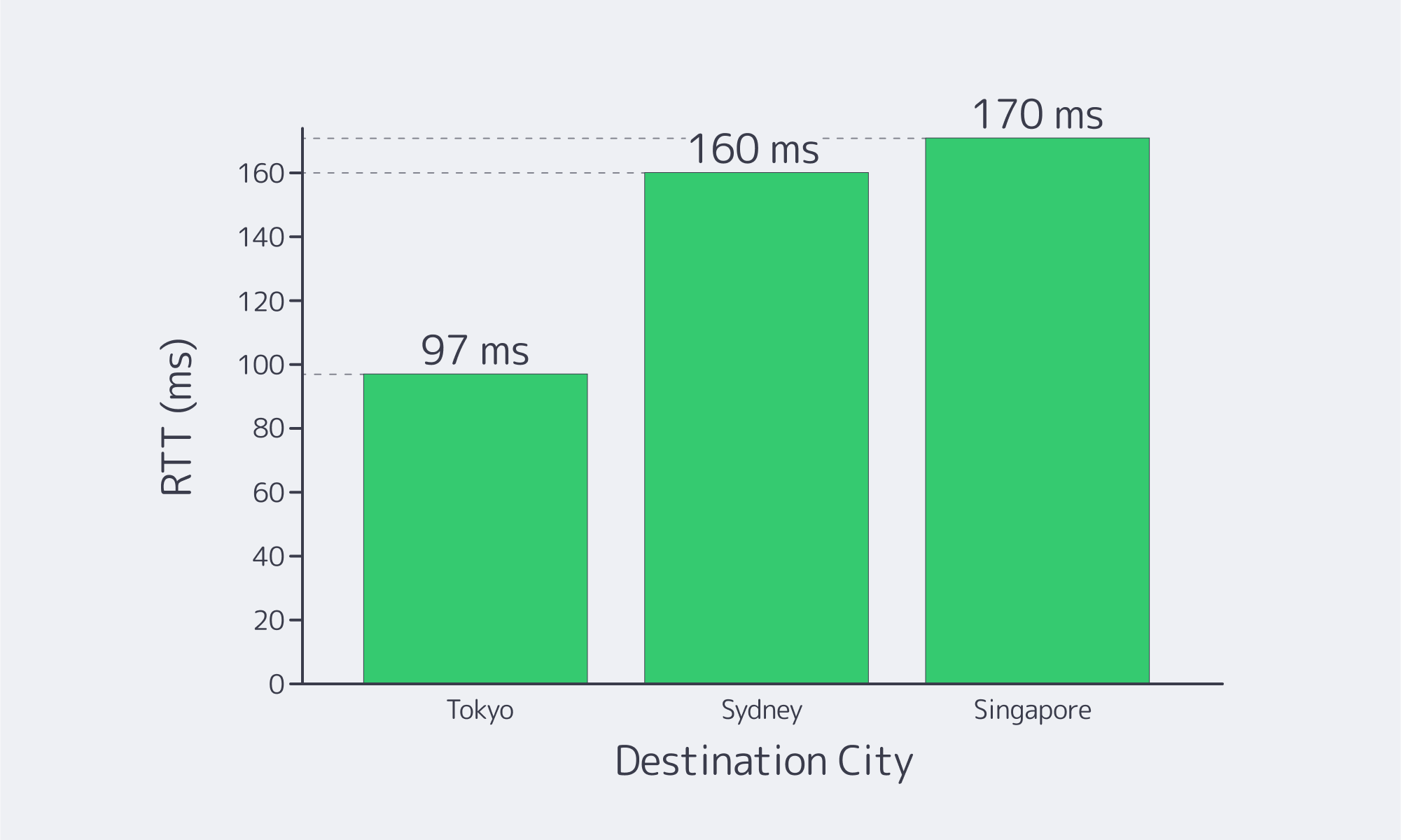
Sources: Global Secure Layer (Unity cable latency matrix) and WonderNetwork Global Ping Statistics. (globalsecurelayer.com; wondernetwork.com)
The architectural bottom line is that placing an LA origin server or stateful application layer in Los Angeles can save tens of milliseconds for APAC users versus an inland or East Coast deployment. Those milliseconds matter for real-time APIs, streaming, multiplayer gaming, and trading workloads.
When Should You Use a Dedicated Server in Los Angeles for Global Reach?
Use a LA dedicated server when one footprint needs to serve both the U.S. West Coast and East Asia without the operational complexity of active multi-region deployment. Dense interconnects and proximity to transpacific cable paths help reduce tail latency while keeping architecture simple.
What Does LA’s Data-Center Fabric Look Like Under the Hood?
Carrier-neutral mega-hubs enable cross-connects and multi-carrier routing, while Tier III data centers support planned-maintenance resilience. A Tier III design target is commonly associated with 99.982% availability, or about 1.6 hours of annual downtime, and allows maintenance without taking IT load offline when redundant systems are used.
Melbicom’s Los Angeles facility is Tier III-certified, offers 28 ready-to-go servers deployable in under two hours, and supports ports up to 200 Gbps per server.
Which Workloads Benefit Most from Los Angeles Dedicated Servers?
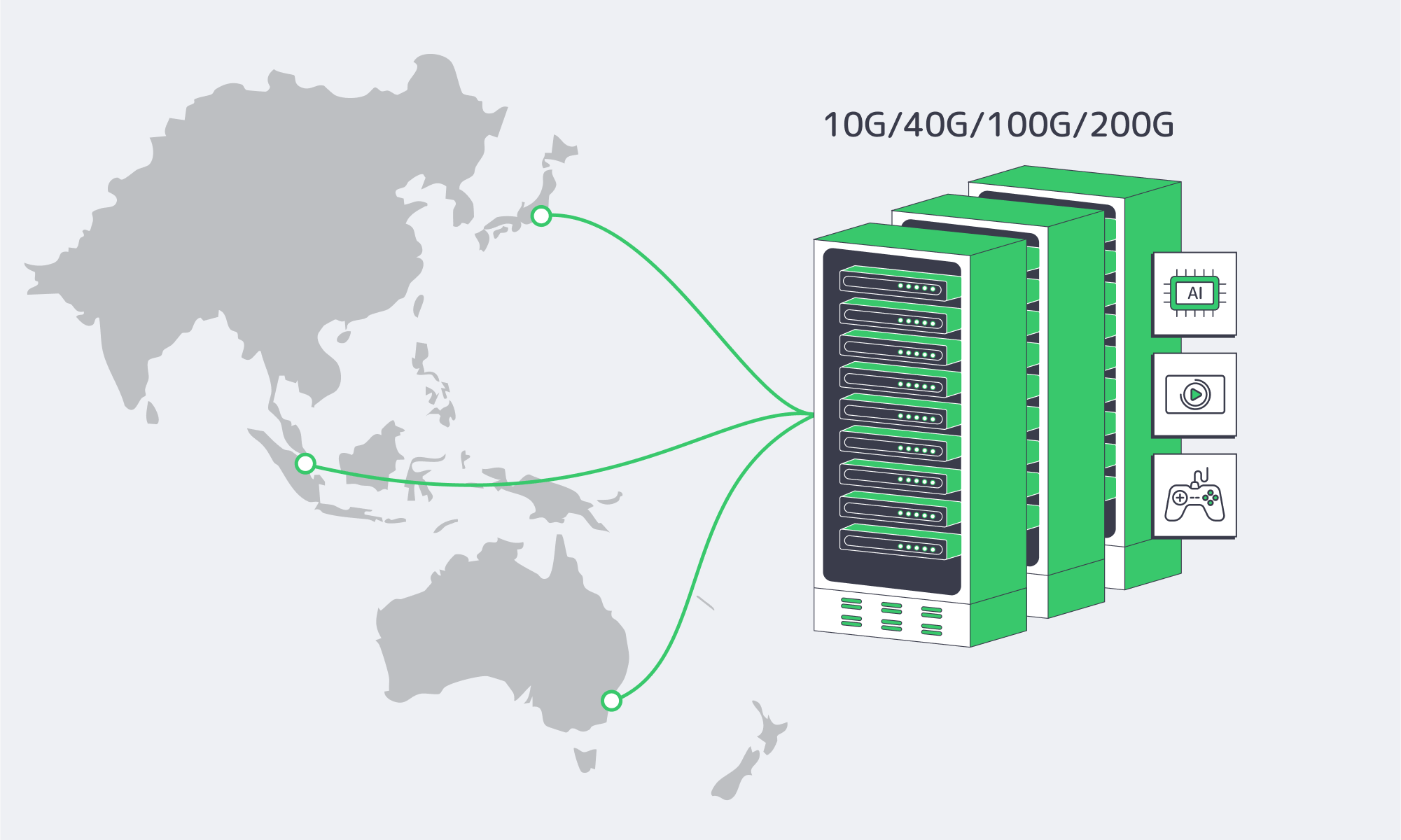
Broadcasting and interactive media. Video remains one of the heaviest internet traffic categories. AppLogic report states that video remains the largest application category by volume, while live digital events and streaming platforms continue to shape traffic peaks. A cluster in LA can feed both West Coast audiences and transpacific edges while keeping origin fetches short.
Gaming, real-time collaboration, and low-jitter messaging. The RTTs above support the rationale for LA PoPs in multiplayer titles and RTC systems. You can shave dozens of milliseconds compared with inland footprints and reduce congestion risk by staying on-net through well-peered West Coast routes.
CDN-assisted architectures. Los Angeles is an excellent origin hub for global delivery, especially when it feeds edges along the Pacific. For teams that prefer a single-vendor path, Melbicom’s global CDN spans 40 locations across 35 countries and integrates cleanly with LA-hosted origins to reduce cache-fill time and keep delivery costs predictable.
How Does LA Help West Coast Scaling?
Latency budgets. For interactive applications or long-tail VOD, each 10–30 ms saved to APAC markets can matter. Hosting in LA places your origin close to transpacific cable landings and dense meet-me rooms, decreasing RTT and path variance.
Data gravity and egress economics. Keeping origin stores or hot caches in Los Angeles reduces cross-region round-trips for West Coast users and fetches to Asia, and with the right interconnect mix you can balance cloud egress via private paths and IX peering.
Operational resilience. Tier III redundancy provides N+1 power and cooling, enables maintenance without downtime, and reduces the blast radius of routine changes. Combine that with multiple upstreams and IX peers to avoid last-mile incidents.
Key Lessons for Your LA Deployment
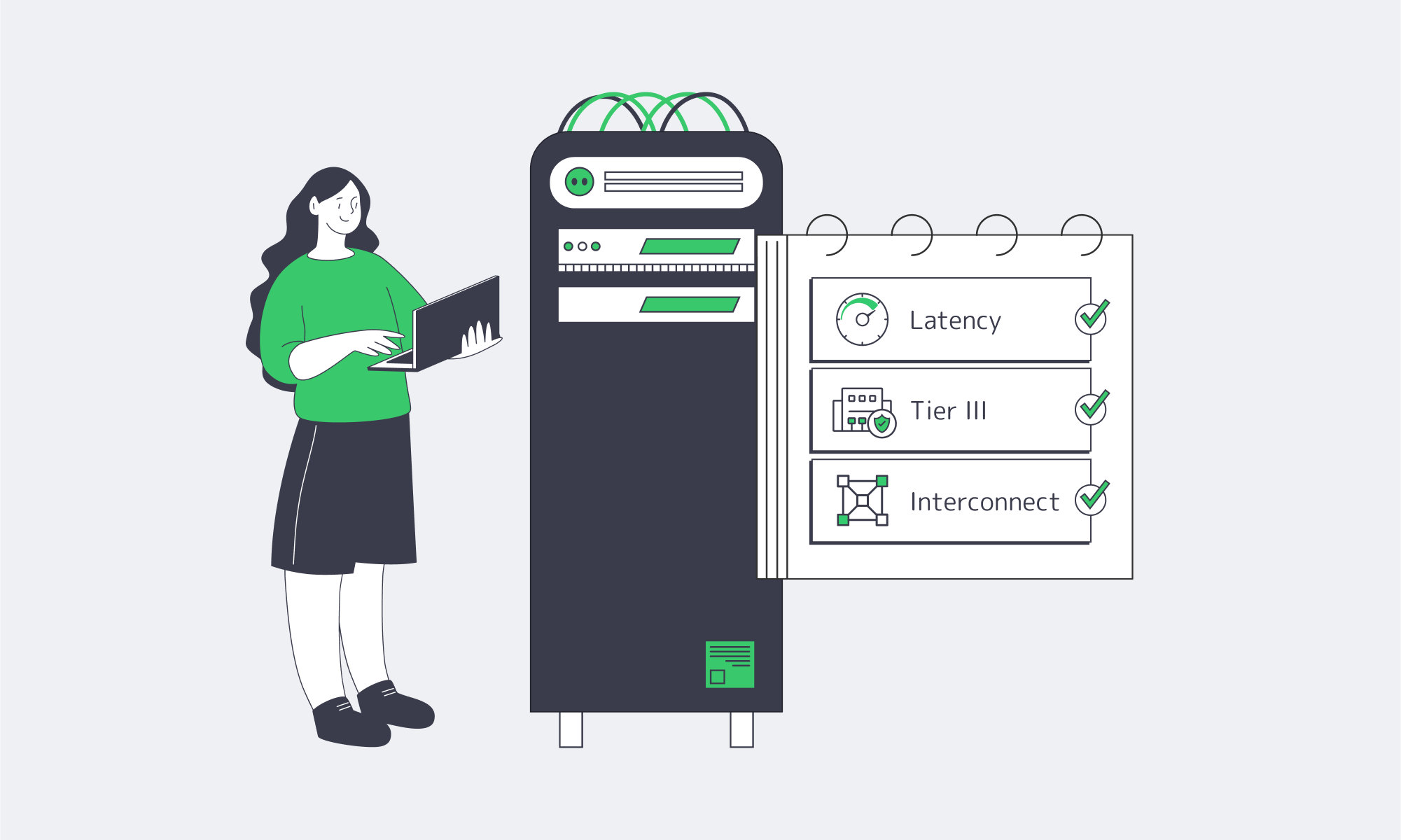
- Begin where your packets need to start. Los Angeles combines transpacific routes and dense carrier hotels, giving you roughly 100–170 ms RTT design targets to key APAC centers and strong U.S. West Coast performance.
- Choose Tier III data centers. Use this design class when you need maintenance-without-downtime patterns and the 99.982% Tier III availability target.
- Use LA as an interconnection hub. Use a CDN footprint with LA origins to speed cache fills and reduce last-mile variation.
- Tune bandwidth to the workload. For media, gaming, and inference, prioritize providers that offer per-server bandwidth in the hundreds of Gbps and multi-carrier routes. Melbicom’s Los Angeles location supports ports up to 200 Gbps per server.
- Think ahead to hybrid. Carrier-neutral facilities in LA make it easier to interconnect with major clouds when you need burst capacity or tier splitting.
Where Should You Build Next?

If APAC expansion or tighter West Coast performance is part of your roadmap, a Los Angeles dedicated server footprint is a practical next step. You get measurable latency targets in Tier III facilities with deep carrier selection and access to transpacific cable paths. LA gives origins and APIs an advantage for streaming and interactive workloads, where video and live digital events remain major capacity drivers.
For teams planning multi-node systems, LA also adds operational leverage: cross-connects are straightforward, redundancy patterns are familiar, and there is ample capacity to scale bandwidth off the shelf without re-architecting the stack. Adding edges or secondary regions becomes a linear expansion rather than a full redesign.
Deploy in Los Angeles today
Launch high‑performance dedicated servers in LA with Tier III reliability, bandwidth up to 200 Gbps, and rapid provisioning in under 2 hours.
Get expert support with your services
Blog

Navigating Budget‐Friendly Dedicated Servers in Los Angeles
If you want a dedicated server in LA that balances reliability with a low budget, focus on maximizing value rather than simply chasing low sticker prices. Los Angeles is a well-connected hub that handles as much as one-third of trans‑Pacific internet traffic through the One Wilshire carrier hotel. That interconnection creates broad route choice, but buyers still need to compare facility, power, bandwidth, and support costs rather than assume every Los Angeles offer is competitively priced.
However, it also means that competition among providers is fierce, leading to aggressive pricing tactics and the need for strong features. The market is also subject to false economies. For buyers, evaluating attractive offers and understanding the workload well enough to right-size the configuration are vital.
Choose Melbicom— Dozens of ready-to-go options — Tier III-certified LA facility — 40 CDN PoPs across 35 countries |
|
Why Dedicated Server Hosting in LA?
Firstly, Los Angeles Metro offers global reach through its mature data‑center ecosystem with a capacity that sits in the high hundreds of megawatts. Secondly, despite persistent demand in the area, growth is modest, highlighting the value of existing footprints and network density for latency‑sensitive workloads. Tier III infrastructure represented the majority of Los Angeles capacity in the cited 2025 market data, but buyers should still verify the certification and redundancy of the specific facility rather than assume every low-cost offer inherits the same standard.
How to Get a Cheap Dedicated Server in LA Without False Savings
Overall value should trump the monthly price.
The key to a good deal on a low budget is to look beyond the monthly fee. While the price tag might meet your budget, a dedicated plan that seems “too cheap” can shift costs elsewhere. Budget plans may include low default bandwidth with steep overages, underpowered CPUs, or paid-only support tiers. These hidden costs from subpar performance and avoidable outages can erase the savings from a cheap deployment. In ITIC’s 2024 survey of more than 1,000 firms, hourly downtime costs exceeded $300,000 for over 90% of mid-size and large enterprises surveyed. The figure is not a universal rate for every business, but it reinforces the need to price incident exposure and confirm that 24/7 support covers network and hardware issues.
Right‑sizing to prevent overprovisioning: The CPU, RAM, and storage you need
Overprovisioning often starts when teams buy for an assumed peak before measuring real demand. That can leave paid CPU, memory, and storage idle for much of the billing cycle, which is far from ‘budget-friendly.’ By right-sizing with a profiling pass that identifies true CPU concurrency, RAM working set, and I/O profile, you can reduce waste. Higher‑clocked CPUs for lightly threaded apps and NVMe for hot datasets and logs, paired with HDD for bulk storage, can help keep the cost per TB low. Start with measured demand and add nodes when utilization or latency justifies it; Los Angeles has enough network and data-center choice to support that scale-out approach.
Timing purchases and negotiating discounts
The competitive nature of the LA market can work to your advantage if you keep an eye out for seasonal or launch promotions. Many providers offer first‑term discounts or price breaks on longer billing cycles. If you are buying multiple servers or considering a longer term in Los Angeles, ask sales for a customized quote and confirm whether bandwidth upgrades, RAM increases, or setup-fee waivers are available. Promotions and inventory can change, so compare the full first-term and renewal cost instead of assuming the lowest advertised monthly price will remain available. Use review sites as one signal, then verify the quoted configuration, traffic allowance, setup fees, and renewal terms directly with the provider.
Avoid overbuying with a scale‑out design
With a Los Angeles deployment, working incrementally is practical. At Melbicom, LA dedicated servers from a catalog of dozens of ready-to-go configurations can be activated within two hours. That makes it practical to add nodes as sustained demand appears instead of paying for unused capacity from day one.
Verify the facility and network, not just the node
Tier III and Tier IV facilities are available across Los Angeles at a range of price points, but the facility tier still needs to be paired with strong upstreams and adequate port speed. Melbicom’s Los Angeles location supports per-server ports up to 200 Gbps for streaming, multiplayer game backends, frequent large-object replication, and other high-traffic uses. For global audiences, our CDN can offload static and video delivery through 40 CDN PoPs across 35 countries, reducing origin load and traffic swings.
Benchmarks & Third‑Party Signals to Check
To help keep your evaluation grounded in realistic outcomes, use this checklist:
- Economic predictability: Find a fixed monthly price that includes sufficient outbound traffic and an appropriate port speed. For SMBs, 1 Gbps might be enough, but if you push concurrency or lots of media, then look for 10 Gbps+.
- Provisioning targets: How quickly can you add nodes when demand and revenue justify it? Melbicom activates ready-to-go servers within two hours and offers 1000+ ready-to-go servers globally.
- Support for incidents: Technical support should never be overlooked; network and hardware incidents should be included. You may find that paid add‑ons for full management are required.
- Cloud cost control: Flexera’s 2026 State of the Cloud Report found that 85% of respondents viewed managing cloud spend as a top challenge, while estimated wasted IaaS and PaaS cloud spend reached 29%. Treat these figures as a reason to compare steady-state utilization and total operating cost across dedicated servers, cloud services, and hybrid designs, not as proof that one infrastructure model is always cheaper.
Cloud Cost Challenges in Flexera’s 2026 Survey
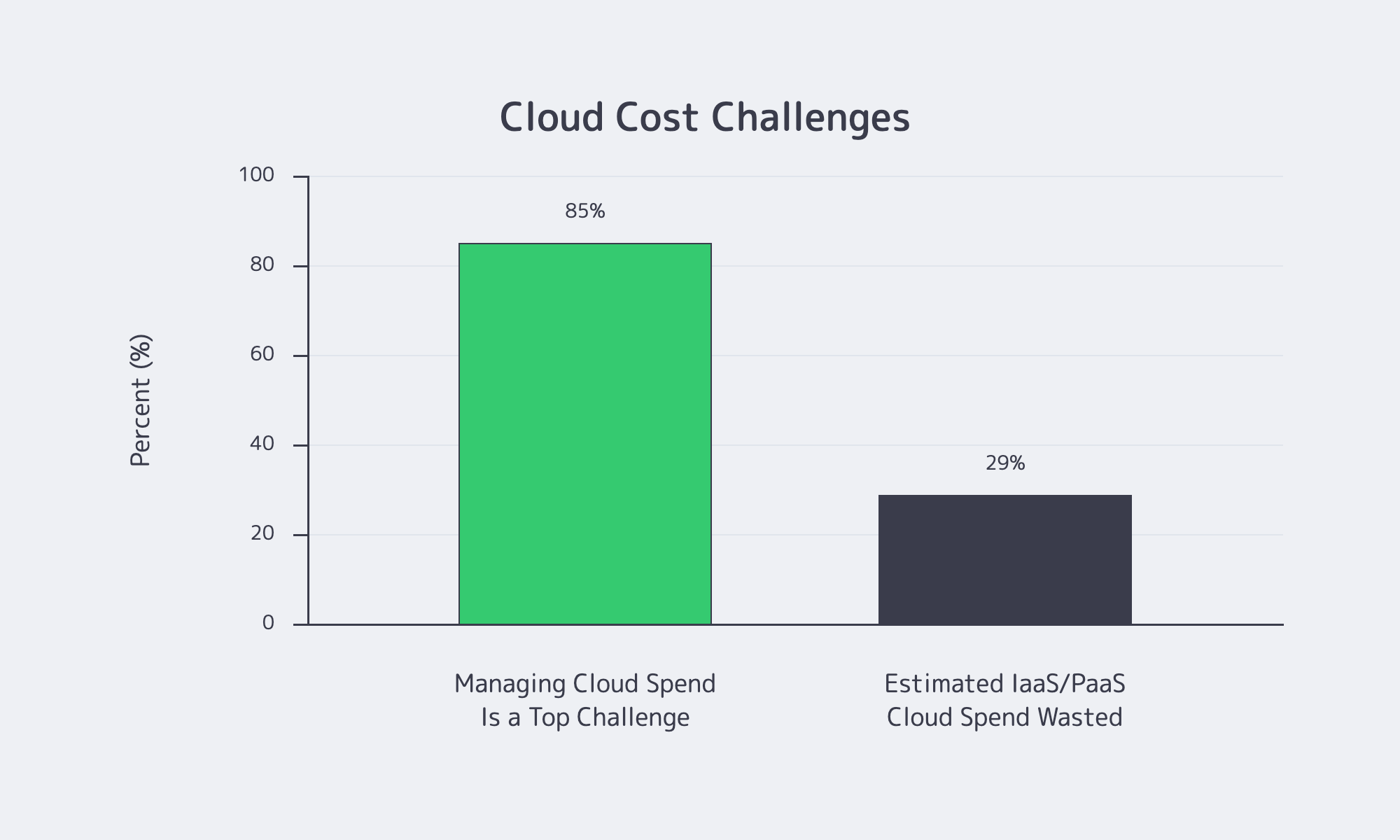
Comparing Cost Drivers and Savings Levers To Find Where Value Truly Lies
Compare the factors that raise monthly cost with the levers that reduce waste so you can balance performance and price in dedicated server hosting in Los Angeles without cutting the capacity or support the workload actually needs.
| Feature | Impact on Cost | Budget‑Friendly Tip |
|---|---|---|
| CPU (Processor) | Newest/high‑core CPUs are pricier. | Match threads to the workload; older-generation or mid-tier CPUs can offer better price/performance when workload-specific benchmarks confirm that their core count and clock speed are sufficient. |
| Memory (RAM) | Large RAM configs also raise the price. | Size for your requirements + 20–30% headroom; you can upgrade later. |
| Storage (SSD vs. HDD) | NVMe/SSD is more expensive per GB. | Lower your price per TB by putting hot data/DB on NVMe and using HDD for bulk. |
| Bandwidth & Port | Higher port speeds and unmetered traffic usually increase monthly cost. | Pick the lowest port speed and transfer tier that covers peak + growth; don’t pay for redundant headroom. |
| Support & Management | Fully managed plans add recurring cost. | Go unmanaged if you can; insist on 24×7 infra support included. |
How LA Competition Benefits Buyers
The following three characteristics can improve value in Los Angeles when the provider’s actual offer supports them:
- Interconnection gravity: The One Wilshire ecosystem concentrates carriers and connects to trans-Pacific cable routes, creating route choice and low-latency options. Buyers should still compare the upstream mix and traffic terms of each plan.
- Facility standards at scale: Tier III+ accounts for the majority share of LA capacity, but facility tier does not guarantee application availability. Verify the specific site, power design, network path, and support coverage behind a budget offer.
- Flexible, high‑bandwidth offerings: Los Angeles providers offer a range of traffic allotments and port options. Melbicom’s LA location supports up to 200 Gbps per server, giving high-traffic workloads room to scale without changing locations solely because of port capacity.
Choosing a Cheap Dedicated Server in Los Angeles That Won’t Backfire

Before wrapping up, use this checklist to help avoid “false savings”:
- Scope workloads precisely: Profile CPU threads, RAM working set, and I/O (random vs. sequential). Right‑size for your current needs; plan future upgrade paths for growth instead of paying in advance for waste.
- Scrutinize bandwidth: Check included traffic, overage rates, and default port speed.
- Verify the facility and network quality. Confirm the selected facility’s tier, upstream mix, and redundancy; do not infer them from the city or price tier.
- Test provisioning and support. Confirm provisioning targets, 24×7 coverage, and incident response expectations.
- Time your purchases to promotions: Compare first-term discounts and seasonal offers, and request a volume quote when ordering multiple nodes.
- Prioritize providers with scale options: Providers with multiple ready-to-go configurations and optional CDN integration can simplify growth without forcing an immediate platform move.
Budget-Friendly Provisioning Takeaways

When trying to minimize your spending on a dedicated server in Los Angeles, look beyond headline prices and optimize for outcome‑per‑dollar. Dense interconnection and the availability of Tier III and Tier IV facilities make it possible to compare affordable options without treating low price as proof of weak infrastructure. The specific facility, upstreams, traffic terms, and support coverage still need verification.
Ultimately, right-sizing is the crux: cut idle cores and unnecessary RAM, verify transparent network terms, and add capacity when measured demand justifies it. Promotions can reduce first-term cost, but they should not replace a full comparison of renewal pricing, bandwidth, support, and operational overhead. The same cost discipline applies across cloud, dedicated, and hybrid designs; no model is always cheaper.
Given the range of Los Angeles offers, these principles can be translated into specific builds. A Tier III facility with scalable bandwidth options lets you add capacity as traffic grows without paying for large amounts of unused headroom from day one. If high-quality performance is non-negotiable, then “budget‑friendly” looks a little different.
Budget-Friendly LA Dedicated Servers
Scale on Tier III infrastructure with two-hour provisioning, up to 200 Gbps per server, and 24×7 support. Right-size CPU, RAM, and bandwidth as you grow.
Get expert support with your services
Blog

Managing Traffic Spikes on Adult Sites with Dedicated Servers
A newly trending performer, a live cam marathon, or an outage on a major platform can drive a sudden traffic spike that floods your origin without warning. During the COVID-19 lockdowns, for example, Pornhub made premium access free, and global traffic rose 18.5% in a single day. Although that kind of demand can be a “good problem,” an under-provisioned stack can fail quickly. This matters at the category’s scale: Pornhub claims more than 100 million daily visits. Downtime is also expensive: ITIC’s 2024 survey found that hourly downtime costs exceeded $300,000 for 90% of mid-size and large enterprises.
Choose Melbicom— 1000+ ready-to-go servers — 21 Tier III/IV data centers — 40 CDN PoPs, 35 countries |
|
How to Prevent Downtime During Surges
Prevent downtime during traffic surges by distributing requests across multiple dedicated servers, caching reusable content through CDN edge caching, keeping warm capacity available, and scaling application replicas automatically. Geographic distribution, health checks, load shedding, and capacity alerts help keep a flash crowd from exhausting one server, region, or network path.
Building Scalable Adult Hosting Infrastructure That Copes With Spikes
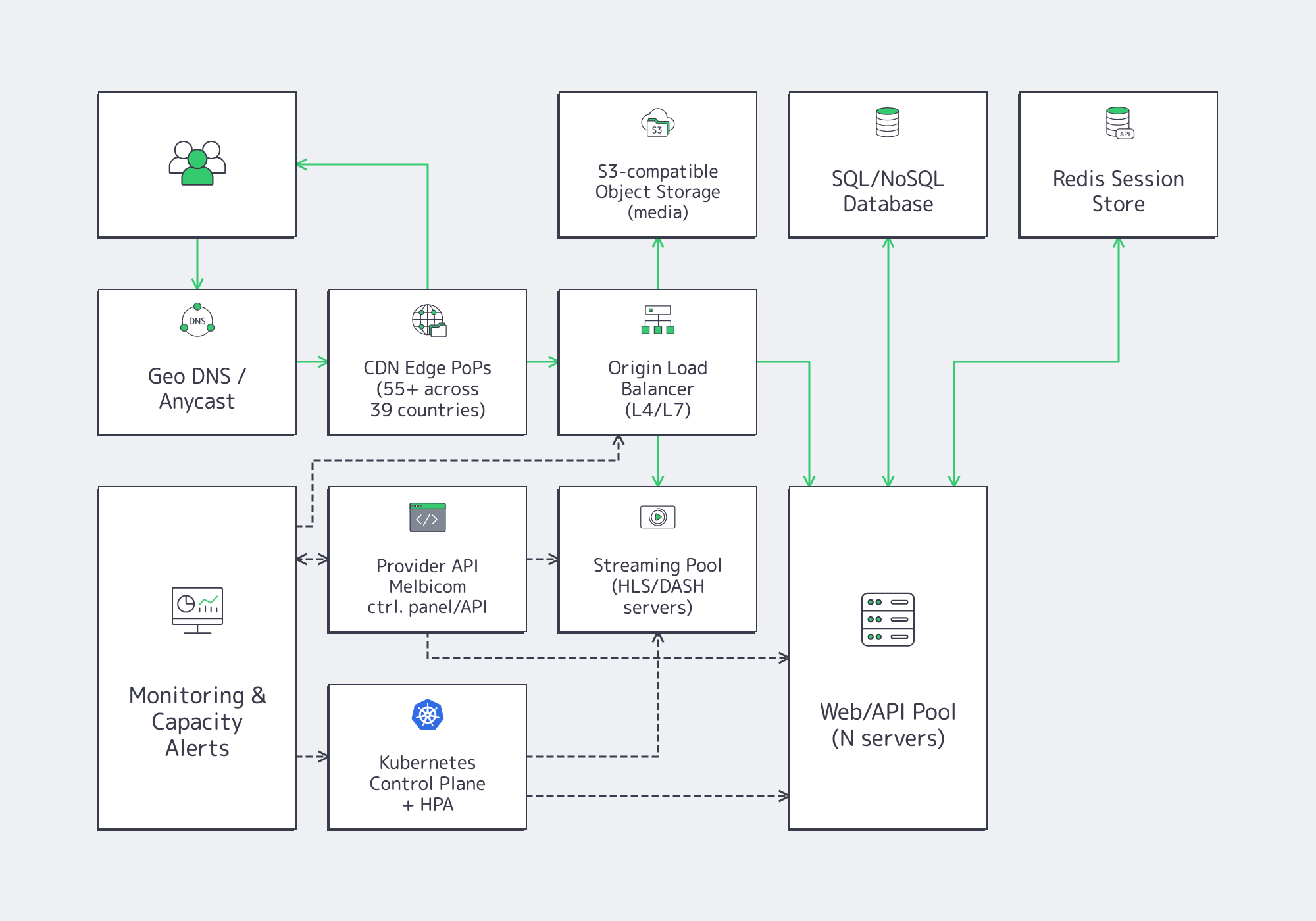
Load balancing and web tiers
One origin creates a single point of failure. Place an L4/L7 load balancer in front of multiple dedicated web, API, and streaming nodes, use least-connections or EWMA routing, and run continuous health checks. Use active-active clusters only where the application and data layer support them. Separate frontend HTML/API pools from HLS/DASH segment servers so video surges do not starve logins, searches, or payments. For global delivery, combine regional load balancers with geo-DNS or Anycast so users reach the nearest healthy path.
Bandwidth also needs explicit headroom because streaming spikes are egress-heavy and an undersized network can become the bottleneck. Use high-capacity per-server NICs and a multi-terabit backbone. Melbicom can provision a dedicated server with up to 200 Gbps per server, while the 14+ Tbps backbone gives multi-origin clusters room to absorb sustained traffic growth.
Provisioning on‑demand to handle climbing traffic
Demand can change by the minute. A physical server cannot scale at pod speed, so use two different tactics: warm capacity for immediate response and API-driven provisioning for anticipated or sustained demand:
- Maintaining warm standby nodes: Provision several nodes in advance and keep them idle or running preemptible batch or auxiliary workloads. They can be drained and added to the production pool quickly during a surge.
- Rapid hardware turn-ups: Connect provider APIs to capacity alerts so an operator or automation can request additional dedicated servers after a threshold is crossed. Melbicom offers 1000+ ready-to-go servers that can be activated in 2 hours, plus 24/7 support, a control panel, and an API.
Pair new nodes with a stateless application design: externalize session state in Redis, centralize authentication tokens, and use immutable images or Ansible so nodes join consistently. Move cold objects to S3-compatible storage while hot subsets remain on local cache nodes. Melbicom’s S3 Cloud Storage helps decouple media libraries from origin compute, with NVMe-accelerated storage and EU-based data residency.
CDN caching for adult traffic spikes
CDN cache management reduces the number of repeat requests that reach the origin. Adult platforms commonly see demand concentrate on thumbnails, JavaScript/CSS, and especially HLS/DASH segment files. Focus the cache strategy on those reusable objects and account for two operational realities:
- Small cache-hit gains make a significant difference: At the same request volume, raising the cache-hit ratio from 90% to 95% halves cacheable origin requests because misses fall from 10% to 5%.
- Keep delivery close to viewers: Users should fetch segments from nearby edges in locations such as Paris, Dallas, and Tokyo. Melbicom’s CDN provides 40 CDN PoPs across 35 countries and supports adaptive video delivery, reducing repeat traffic to origin infrastructure.
Additional notes for implementation:
Use segment-aware cache keys, normalize query strings, tune TTLs, and avoid per-user cache fragmentation.
Micro-cache anonymous HTML responses for 30–120 s to flatten short-lived demand on front pages and searches.
Use tiered caching (edge → regional → origin) to shorten fetch paths when an object is cold in one region but hot in another.
Container orchestration: Rapid horizontal scaling for high‑traffic adult sites
Managing containerized services on dedicated servers with Kubernetes (or Nomad) provides three scaling advantages:
- Horizontal Pod Autoscaling can add replicas in response to CPU, QPS, queue depth, or custom metrics when spare cluster capacity exists.
- Rolling updates can limit deployment risk, while pod disruption budgets constrain voluntary evictions; they do not protect against every outage.
- If a node fails, a workload controller can replace affected pods on healthy nodes after the failure is detected and capacity is available.
Map node groups to dedicated clusters by region or data center, and use capacity thresholds to trigger provider API requests for additional physical nodes. Melbicom’s global Tier III/IV data centers let teams place clusters closer to users and shift traffic between regions as demand changes.
Core components and surge risk mitigation
| Component | What it mitigates | Actionable configuration |
|---|---|---|
| Multi‑origin + L4/L7 LB | Single-origin overload; node failure | Least‑connections/EWMA, health checks, per-role pools, geo‑DNS/Anycast |
| CDN + origin shields | Origin saturation; long-haul latency | Normalize cache keys, set segment TTLs, micro‑cache HTML, tiered caches |
| Orchestrated containers | Slow/manual application scaling; fragile deployments | HPA on CPU/QPS/custom metrics, PDBs for voluntary disruptions, API-provisioned nodes |
Effort to Impact: A 30‑day hardening checklist
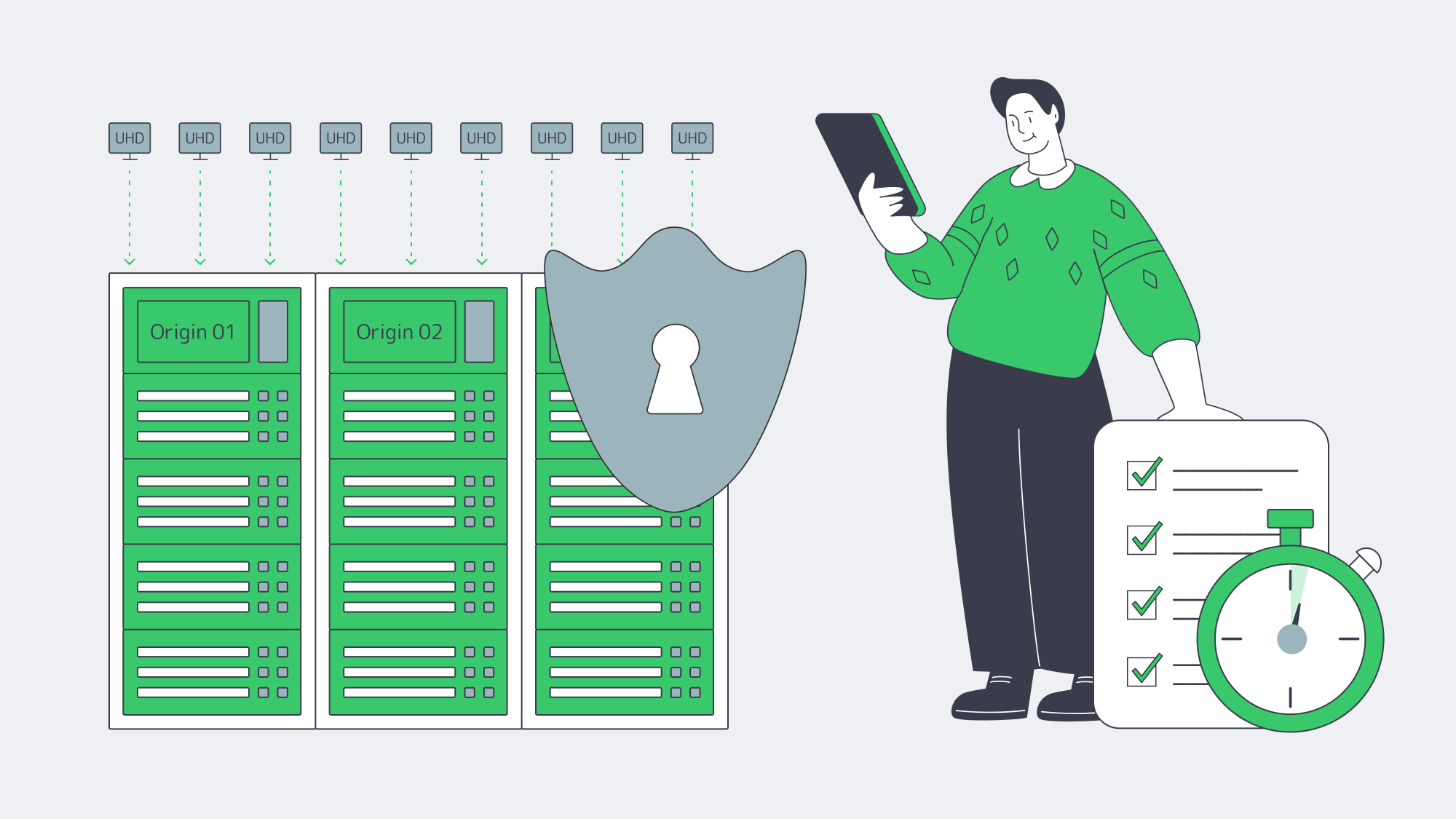
- Start with CDN fronting: Cache eligible HLS/DASH segments and thumbnails, and add an origin shield tier.
- Organize different roles into isolated pools: Keep web/API and streaming on separate load-balanced backends to prevent cross-starvation.
- Micro-cache anonymous hot HTML endpoints with a 30–120 s TTL.
- Identify and contain the busiest microservices: Define HPA policies and test surges from 1× to 3×.
- Set up capacity alerts: Maintain warm standby nodes for immediate response and use provider API requests for sustained demand.
- Migrate asset libraries to object storage and pre-warm regional caches.
Why these four pillars work
Together, the four pillars mitigate a surge at every layer of the request path:
- Concurrent distribution: Load balancers distribute requests and isolate node failures, reducing single-origin choke points.
- Flexible capacity: Warm dedicated servers provide immediate headroom. API-driven provisioning adds sustained capacity without keeping every node online.
- Offloading to the edge: Cached content no longer sends every repeat request to origin. At the same request volume, a cache-hit increase from 90% to 95% halves cacheable origin requests.
- Safe rapid redeployment: Container orchestration can add replicas when spare node capacity exists and roll out changes without replacing the full fleet.
Combined, these measures form layered guardrails during third-party outages and demand spikes, reducing the chance that one overloaded component forces emergency recovery.
Planning Your Team’s Next Moves

Scaling vertically and hoping for spare headroom is not a reliable virality plan. Traffic surges often arrive during external outages or cultural moments. During the 2019 Facebook and Instagram outage, for example, Pornhub traffic reached as much as 19% above average. Distribute traffic across multiple dedicated origins, cache reusable content near users, scale application replicas while cluster capacity remains available, and request physical nodes before sustained demand pushes p95 latency beyond its budget. The investment can be lower than the cost of an outage: ITIC’s 2024 survey found that hourly downtime costs exceeded $300,000 for 90% of mid-size and large enterprises.
Melbicom supports that blueprint with dedicated infrastructure in 21 Tier III/IV data centers, 40 CDN PoPs across 35 countries, and 1000+ ready-to-go servers that can be activated in 2 hours. Teams can combine 24/7 support, a control panel and API, and object storage for media catalogs to build a platform that is more resilient to traffic surges.
Scale dedicated capacity fast
Activate ready-to-go high-bandwidth dedicated servers in 2 hours. Use 24/7 support and flexible configurations to add capacity early.
Get expert support with your services
Blog
Atlanta’s Edge: Connectivity, Power, and Policy
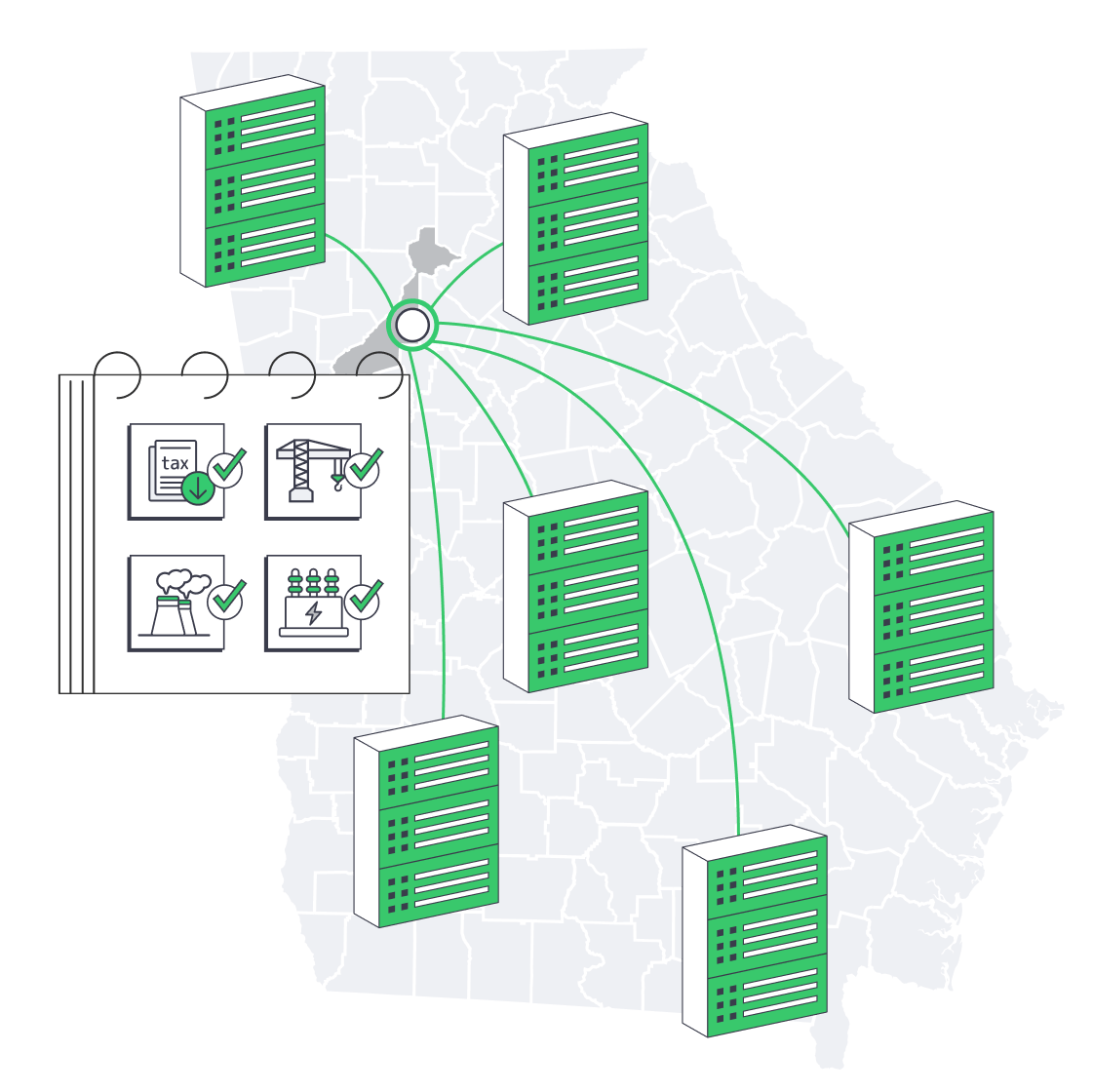
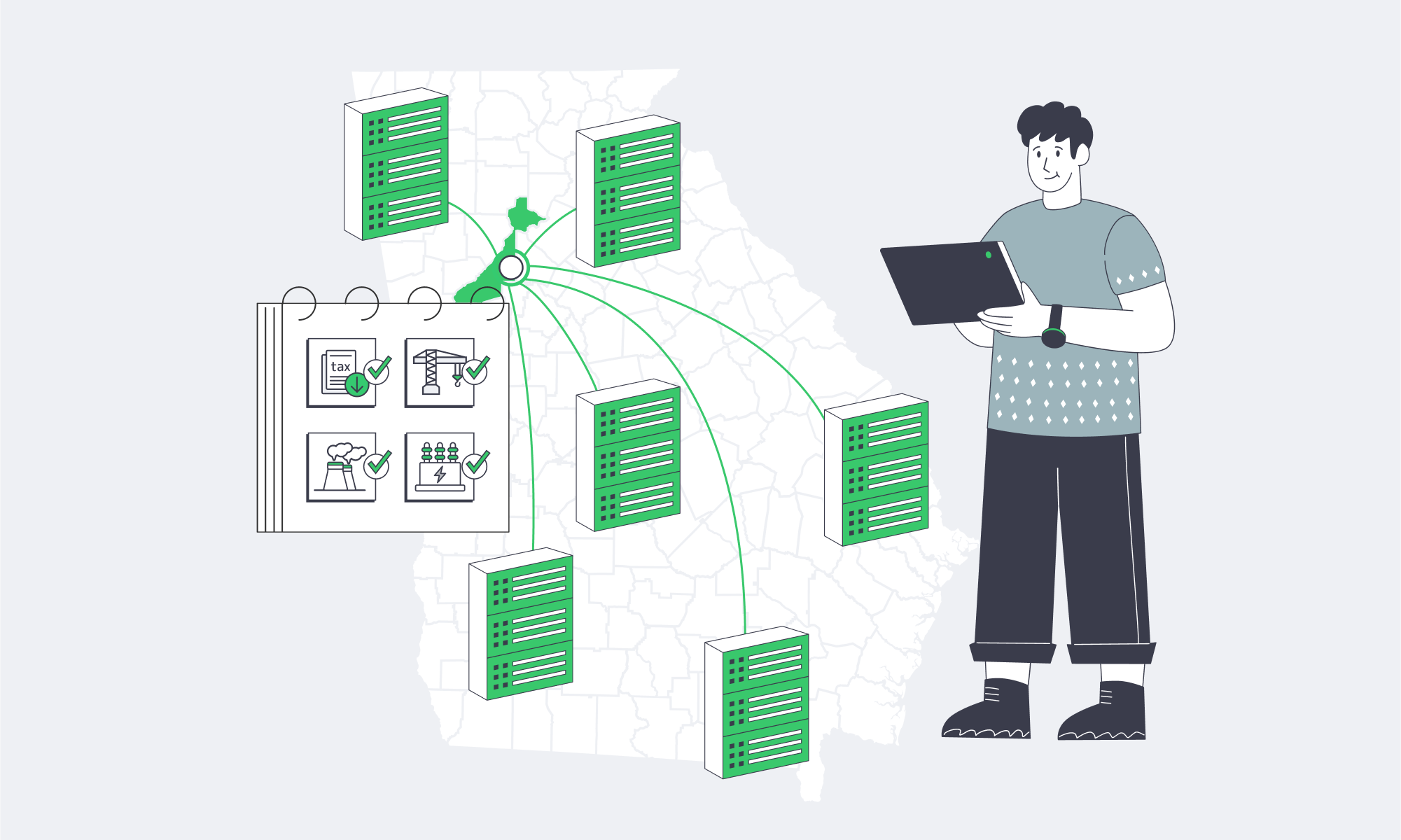
Atlanta has turned out to be a U.S. metro that fulfills all the criteria of constructing and successfully running modern infrastructure on a large scale. Metro Atlanta is now the second-largest data center hub in the country (only Northern Virginia bests it), and it achieved this thanks to rapid construction, reliable power, and dense connectivity. According to market studies, the amount of data center capacity under construction in the region has doubled every six months since mid‑2023, far outpacing the rest of the country.
The rise of Atlanta is not a coincidence. The region offers vast acreage, dense fiber‑optic interconnection, affordable electricity, abundant water, and significant tax incentives that substantially reduce total cost of ownership. Together, they have drawn multi‑year commitments from leading technology companies and a wave of AI‑focused projects.
Choose Melbicom— 28 ready-to-go servers in Atlanta — Tier III-certified ATL data center — 40 PoP CDN across 6 continents |
|
How Did Atlanta Catch Up So Quickly?
The inflection is characterized by two data points: among major U.S. data-center markets, Atlanta recently rose to the top for net absorption; and the metro now has more than 2 GW under construction in the development pipeline. Taken together, these signals are evidence of near-term demand and long-term readiness in power, space, and connectivity.
A brief look at what changed:
Leasing velocity and construction velocity. Net absorption moved into a national lead, and developers announced multi‑campus projects across the metro, including outlying counties that have capacity for very large footprints and on‑site substations.
Policy alignment. Georgia retained and broadened a full sales‑and‑use tax exemption on qualified high‑technology data‑center equipment; state revenue estimates indicate the incentive waives hundreds of millions of dollars annually at current build rates.
Grid pragmatism.Regulators approved a special tariff framework for ≥100 MW data‑center customers to fund upstream generation and transmission upgrades without shifting costs onto smaller customers—an essential enabler for AI‑era facilities.
What Makes Atlanta so Well Connected?

Network gravity in Atlanta centers on 56 Marietta Street—the Southeast’s signature carrier hotel—where hundreds of networks interconnect in a 10‑story facility that serves as the region’s primary meet‑me point. According to industry counts, the ecosystem contains well over 165 networks, therefore, it serves to be one of the most active sites of interconnection between the Mid-Atlantic and South Florida.
The metro amplifies this core with long‑haul routes radiating north–south and east–west and, most importantly, a direct inland fiber route to the East Coast’s newest submarine‑cable landing cluster. This direct inland route complements Atlanta’s extensive terrestrial fiber and enhances international reach. A 450‑mile terrestrial route connects the Carolina coast to downtown Atlanta’s interconnection hubs (including 56 Marietta). This linkage gives inland workloads a fast, resilient path to transatlantic systems and Latin America‑bound cables.
For operators, this means low, predictable latency across the Eastern U.S. and efficient routes to Europe and the Caribbean without hosting on the coast.
Policy and Community Guardrails
The City of Atlanta has restricted new data centers in much of the urban core, channeling projects toward industrial districts and exurban sites while the statewide equipment tax exemption remains in force after high‑profile debates. Such measures have pragmatically directed growth in areas where there exist land and power with conservation of urban redevelopment objectives.
Dedicated Server in Atlanta: What Performance & Resiliency Can You Achieve?

If you are placing latency-sensitive applications, analytics stacks, or high-throughput services in the Southeast, a dedicated server in Atlanta reduces distance to major population centers and anchors your deployment to a scalable grid and fiber backbone. The inland fiber connection to new coastal cable landings shortens transatlantic paths. The state’s pro-infrastructure posture reduces the risk of power constraints. Taken together, these factors reduce the risk of power unavailability for your equipment.
A structured concise summary of the structural advantages is provided below:
Benefits of Atlanta-Based Data Centers
| Driver | What it is meant in Atlanta |
|---|---|
| Market scale | Second- largest hub in the United States; national net absorption leader in recent times |
| Accelerate momentum | Builds on the flanks Since mid 2023, Under Megafinal capacity, which was two-folds every 6 months |
| Interconnection | 56 Marietta concentrates 165+ networks; primary point for the Southeast |
| Global reach | Direct inland fiber at landing of new coastal cables to downtown hubs |
| Cost advantages | Exempt of sales/use tax of 100% on qualified equipment; high annual saving |
| Grid policy | PSC authorized tariff scheme to support upstream upgrading in 100 MW + users |
How Does Atlanta Handle AI‑Era Density and Thermal Loads?
New facilities across the metro are pre‑engineered for high‑density racks with liquid cooling, taller plenum spaces, and substation capacity added in timed tranches. Together with the rich pool of water in the region and low-cost energy, supported by a wide new generation, operators can roll out large masses of GPU clusters with reduced tradeoffs. The immense amount of current AI-driven expansions is an indication of how ready it is.
What Does Atlanta Dedicated Server Hosting Look Like?
At the work load tier, Atlanta dedicated server hosting typically focuses on:
- Latency‑sensitive east‑of‑the‑Mississippi traffic benefits from short East‑Coast hops and easy reach to Florida and Texas.
- Egress/ingress bandwidth is high. Multi‑homed paths from the carrier hotel core reduce jitter and support sustained high‑throughput applications.
- Hybrid and multi‑cloud adjacency. Dense on‑ramps and exchange fabrics enable private interconnects to public cloud services without leaving the metro.
In the case of teams willing to rent dedicated servers in Atlanta, operational advantage would be to allow the lateral scale, namely, to add neighboring servers in the same campus to maintain the latency and east-coast performance consistent with the rise in demand.
Atlanta Dedicated Server Hosting Lessons
- Capacity and momentum: Atlanta is the only market in the U.S. that has recently surpassed the national leader in terms of absorption coupled with twice the construction pipeline after every couple of quarters.
- Connectivity density: The connectivity density of the anchor carrier of hundreds of networks, the 56 Marietta carrier hotel links directly to the new submarine-cable landings on dedicated inland route.
- Cost structure: 100% sales/use tax exemption on qualified equipment, plus local abatements, reduces TCO significantly.
- Grid readiness: An approved grid‑rate scheme, together with active generation planning, reduces power‑availability risk for high‑density deployments.
What’s the Bottom Line for a Dedicated Server in Atlanta?
The fact that Atlanta is number two in market size, and that it has a carrier hotel core and direct routes to new undersea cables makes it a hosting point that is speedy, scalable and supported by policies. The tax law also gives preference to long term investments. Infrastructure teams seeking a cost‑effective East‑Coast anchor rarely find a stronger combination of performance headroom and long‑term resilience.
Deploy in Atlanta today
Launch dedicated servers in a Tier III Atlanta facility for low latency across the Eastern U.S., high bandwidth, and 24/7 support. Scale GPU and general workloads with reliable power and dense connectivity.
Get expert support with your services
Blog

Why Singapore Powers Low-Latency FinTech Infrastructure
If modern finance runs on speed, trust, and uptime, infrastructure is its engine room. FinTech teams expanding across Asia need to measure network latency, define security controls, and document regulatory responsibilities before choosing a hosting location. A focused strategy built around hosting in Singapore can support that work through regional proximity, dense connectivity, and clear governance reference points.
Choose Melbicom— 90+ ready-to-go servers in SG — Tier III-certified SG data center — 40 CDN PoPs across 35 countries |
|
Why Singapore Fits FinTech Infrastructure
Singapore is a major financial and connectivity hub. In 2023, it hosted 26 subsea cable landings across three landing sites and was expected to connect to more than 40 subsea cables by 2028 according to the Carnegie Endowment for International Peace. That concentration can shorten network paths to Asian markets, although actual latency still depends on routing, peering, and the destination.
Singapore’s FinTech sector attracted close to US$1.04 billion across 90 deals in H1 2025, up about 87% year over year. The figure shows continued investment activity, but infrastructure decisions should still rest on workload, route, control, and cost requirements.
Policy adds clearer reference points rather than automatic compliance. The Monetary Authority of Singapore’s Technology Risk Management Guidelines set out technology risk management principles and best practices for financial institutions, while the Personal Data Protection Act obligations govern the handling of personal data. Hosting location and single-tenant hardware can support a control design, but they do not by themselves make a workload compliant.
How Singapore Hosting Changes Latency
For workloads such as market-data ingestion, order routing, AML screening, and instant payments, network distance matters. Singapore places compute closer to many Asian endpoints, but the result must be verified against each counterparty and route. Current city-to-city measurements illustrate the geographic effect:
| Destination | RTT from Singapore | RTT from New York |
|---|---|---|
| Hong Kong | ~30 ms | ~203 ms |
Indicative RTTs checked on August 4, 2026 from independent, continuously measured Singapore–Hong Kong and New York–Hong Kong pings; values vary with routing and time.
Two Takeaways
First, regional adjacency: on August 4, 2026, Singapore-to-Hong Kong measured about 30 ms, while New York-to-Hong Kong measured about 203 ms—a gap of roughly 173 ms. That gap can matter for latency-sensitive systems, but teams should test the actual exchange, payment network, cloud on-ramp, or customer endpoint instead of relying on city averages.
Second, private routes can differ sharply from public internet paths. In September 2025, McKay Brothers announced a private London–Singapore service below 137 ms RTT, while WonderNetwork city-to-city measurements checked on August 4, 2026 were about 168 ms on the public path. London–New York is roughly 70 ms in measurements checked on August 4, 2026, while EXA advertises an under-60-ms specialized route.
Dedicated servers can remove provider-side noisy-neighbor contention; when used as bare metal, they also avoid provider-imposed hypervisor scheduling overhead. They do not eliminate all jitter. Application design, kernel and NIC tuning, storage, congestion, route changes, and counterparty systems still determine end-to-end latency and tail behavior.
Where Melbicom fits: Melbicom’s Singapore location is Tier III and offers network capacity up to 200 Gbps per server, with 90+ ready-to-go servers. The suitable configuration depends on measured CPU, memory, storage, and network demand.
How Can Singapore Hosting Support Security and Compliance Work?

Financial-services infrastructure must be secure by design and operated with documented controls. Under the Uptime Institute Tier framework, Tier III data centers are concurrently maintainable: components can be maintained or replaced without shutting down IT operations. The Tier label describes facility topology; it is not a substitute for application resilience, a service commitment, or tested recovery procedures.
The PDPA’s accountability obligation requires organizations to manage and protect personal data through appropriate policies and practices. MAS TRM provides technology risk management principles and best practices for regulated financial institutions. Dedicated hardware can clarify asset ownership, access boundaries, and evidence collection, but customers still own the controls, configuration, tests, and evidence.
Locating a workload in Singapore can simplify a chosen data-location strategy, but the PDPA does not turn local hosting into automatic compliance. Its Transfer Limitation Obligation also governs overseas transfers by requiring comparable protection. Business continuity and disaster recovery still require tested architectures, backups, dependencies, and operating procedures.
For systems that communicate with counterparties located in Singapore, placing compute in the city-state can reduce physical path length. The benefit must be verified with endpoint-specific RTT and route testing because venue, carrier, peering, and failover paths can change the result.
Where we help: Melbicom’s Singapore location combines Tier III facility infrastructure, network capacity up to 200 Gbps per server, 90+ ready-to-go servers, and 24/7 support. These features can support a documented data-location and recovery design, but compliance and recoverability depend on the customer’s architecture and controls.
Which FinTech Use Cases Gain the Most from Singapore Dedicated Servers?
- Market infrastructure (e-FX, equities, crypto matching): Matching and market-data services benefit when the selected Singapore route is closer to the relevant Asian venues. The private sub-137-ms London–Singapore route announced in 2025 shows that specialized long-haul transport can also reduce interregional delay, but it is a private service rather than a public-internet baseline.
- Payments and digital banking: Authorization, 3-D Secure, AML/KYC, and ledger writes require stable capacity and measured latency. Single-tenant hardware removes cross-tenant host contention, but application queues, databases, and external payment dependencies still require load and failover testing.
- Fraud, risk, and AI inference: Feature stores, graph workloads, behavioral models, and real-time inference benefit from predictable resource allocation. Size CPU, memory, storage, and network capacity from profiling data, then test p95 and p99 latency under representative peaks.
- Data-location-sensitive services: A Singapore dedicated server deployment can support an organization’s chosen data-location controls and evidence collection. PDPA obligations, including overseas-transfer protection, still depend on policy, contracts, configuration, and operations rather than the server’s country alone.
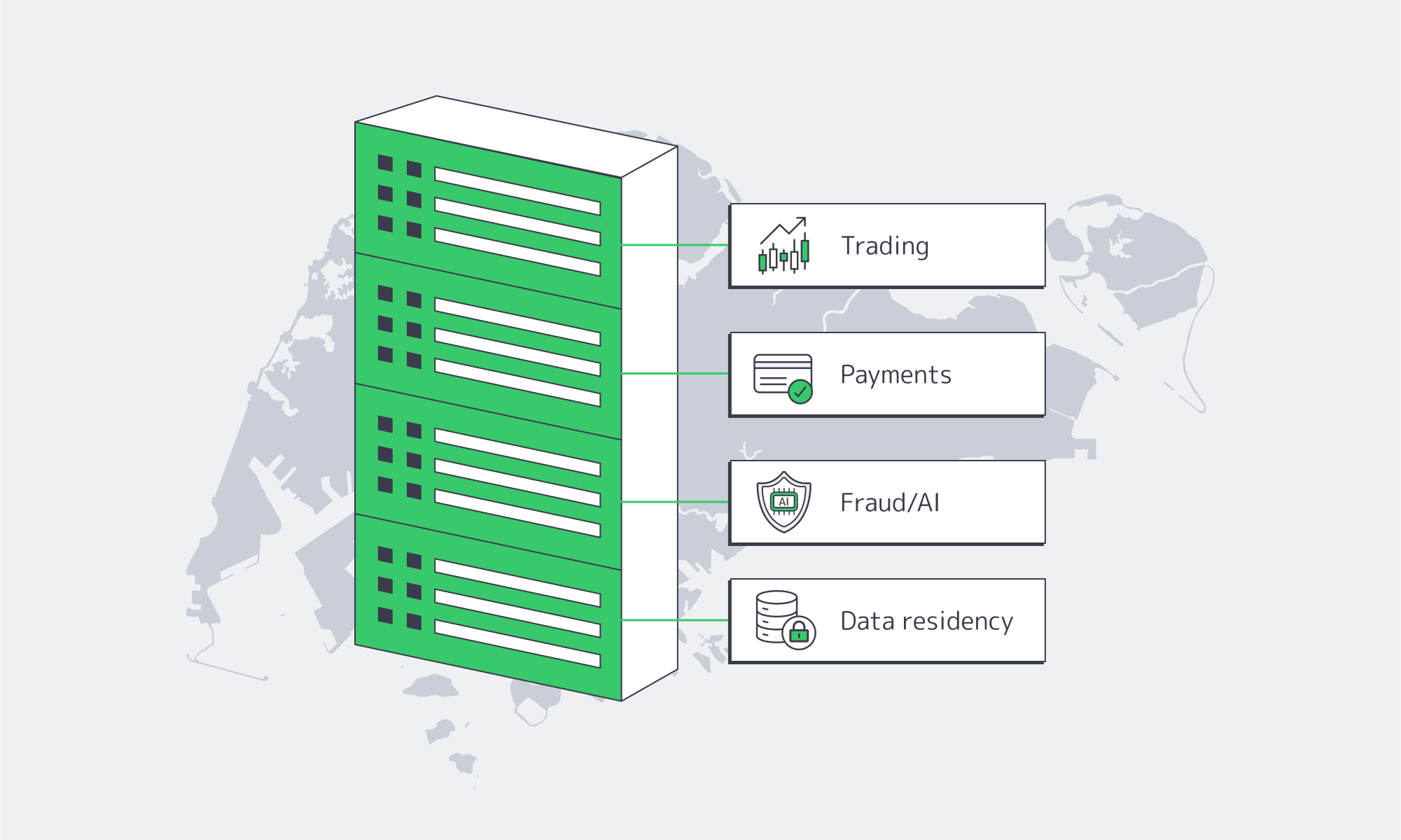
How Should CTOs Choose the Best Dedicated Server Hosting in Singapore?
1) Proven network performance. Request RTT, packet-loss, route, and peering data to the actual exchanges, payment networks, cloud on-ramps, and recovery sites you use. WonderNetwork measurements checked on August 4, 2026 were about 30 ms between Singapore and Hong Kong, while McKay Brothers announced a private London–Singapore service below 137 ms in September 2025. Test both normal and failover paths.
2) Facility and resilience credentials. Verify the Tier III facility scope, maintenance procedures, power and cooling topology, incident history, and service terms. Use application-specific RTO and RPO targets, then test whether redundancy, backups, and failover design meet them; a Tier label alone does not set your workload’s availability.
3) Compliance posture. Map applicable MAS TRM and PDPA obligations to concrete controls such as access logging, key management, change approval, incident response, vendor oversight, and evidence retention. Confirm which obligations apply to your entity and workload instead of treating provider location or hardware tenancy as certification.
4) Scalability options. Compare ready-to-go and custom configurations, provisioning lead times, CPU and memory ranges, storage options, and port capacity. Melbicom has 90+ ready-to-go SG servers; verify the exact inventory and delivery timing for the required build before committing.
5) Edge acceleration. For public endpoints, a CDN can shorten delivery distance for cacheable content and absorb regional traffic variation. Validate cache hit ratio, origin latency, dynamic-content behavior, purge controls, TLS handling, and cost; a larger PoP footprint does not guarantee a faster result for every request.
How Does Singapore Stack Up on Long-Haul Payment & Trading Routes?
| Route | Representative RTT Insight |
|---|---|
| London ↔ Singapore | <137 ms on a specialized private route announced by McKay Brothers in September 2025; about 168 ms in public city-to-city measurements checked on August 4, 2026. |
| London ↔ New York | About 70 ms in public city-to-city measurements checked on August 4, 2026; under 60 ms on EXA’s specialized route. |
These measurements, together with the roughly 30 ms Singapore-to-Hong Kong RTT measured on August 4, 2026, show why Singapore can reduce regional path length without eliminating long-haul delay. Use them as directional examples only; production decisions need endpoint-specific tests, packet-loss data, failover paths, and repeated measurements.
Singapore Dedicated Servers: Important Insights
- Latency is geography plus engineering. Singapore’s cable density and peering can reduce RTT to selected Asian endpoints, while specialized transport can shorten some long-haul routes. Actual performance depends on the destination and path.
- Compliance requires more than location. Singapore provides clear regulatory reference points, but neither PDPA nor MAS TRM is satisfied by server location alone. Dedicated hardware can clarify boundaries and evidence, while governance and operations remain essential.
- Determinism has limits. Dedicated bare metal removes cross-tenant host contention and provider-imposed virtualization overhead, but end-to-end jitter still depends on the application and network path.
- Resilience must be designed. Tier III describes concurrently maintainable facility infrastructure. Workload resilience still depends on architecture, failover, backups, testing, and service terms.
- Distribution should be measured. Pair Singapore compute with a CDN only where workload behavior and measurements show a benefit.
What Do You Gain by Switching to Dedicated Hosting in Singapore?

Performance and evidence are closely related in finance. Singapore can provide short regional paths to selected Asian endpoints and a governance environment familiar to many regulated firms. The benefit is workload-specific: measure actual counterparties, document controls, and test recovery rather than treating geography as a guarantee of latency, compliance, or business outcomes.
Public London–Singapore measurements checked on August 4, 2026 were about 168 ms RTT, while a specialized private route announced in 2025 was below 137 ms. That difference shows why route choice matters as much as server location. For teams that need Singapore dedicated server capacity, the practical decision is whether the available hardware, network, support, control evidence, and total cost meet the workload’s measured requirements.
Deploy low-latency servers in Singapore
Provision Tier III Singapore dedicated servers with network capacity up to 200 Gbps per server and 90+ ready-to-go servers. Map routes and controls to the MAS TRM and PDPA duties that apply to the workload.
Get expert support with your services
Blog

Fortifying Compliance with Singapore Dedicated Servers
As regulated enterprises move core systems outside their home markets, two questions matter most: will sensitive data remain secure, and can the organization prove its controls to regulators? Singapore’s combination of stable rule of law, strict data protection and cybersecurity oversight, and dense regional connectivity has made it a practical hub for dedicated server hosting in Asia. This article focuses on what IT managers in finance, healthcare, and other regulated industries need to know about security controls, compliance procedures when deploying dedicated servers in Singapore, and how Melbicom can support those requirements.
Choose Melbicom— 90+ ready-to-go servers in SG — Tier III-certified Singapore DC — 40 CDN locations, 35 countries |
|
Why Is Singapore Positioning Itself as a Safe Haven for Sensitive Workloads?
Singapore combines stable governance, stringent regulatory supervision, and strong regional connectivity. It is also one of APAC’s tightest data center markets: CBRE reported that Singapore had the region’s lowest vacancy rate at 2% in Q1 2025, driven by strong demand and government controls on new greenfield development. Singapore server hosting leverages subsea connectivity and major exchange points to provide a low-latency jump into Southeast Asia and the wider world, supported by facilities designed for concurrently maintainable power, cooling, and network operations.
Melbicom’s presence in Singapore matches that profile: a Tier III-certified data center, network capacity up to 200 Gbps per server, 90+ ready-to-go servers, unmetered plan options, and 24/7 support. The result is a platform where enterprises can run sensitive systems with the performance headroom to grow.
How Do Singapore Dedicated Servers Extend Reach Across the Region?
An application located in Singapore can sit within dozens of milliseconds of key ASEAN metros, often improving reliability compared with more distant multi-region deployments. For organizations that need a single hardened site in Asia, servers in Singapore can support multiple regional markets without forcing teams to refactor every security and compliance control in each market.
What Threats Require a Fortress Posture?

The business risk model is no longer defined by isolated incidents. Regulated teams must plan for compound, fast-moving attacks:
- Singapore Police Force statistics showed S$456.4 million in reported scam losses in the first half of 2025, a reminder that industrialized fraud pipelines and persuasive social engineering remain material business risks.
- The 2025 IBM report put the global average breach cost at USD 4.44 million, including investigation, response, downtime, and follow-on business impact across operations.
- Supply-chain compromise, including firmware, libraries, managed services, and remote-management tooling, has pushed regulators to look beyond application controls and into underlay infrastructure and suppliers.
- OT/IoT expansion, AI-assisted phishing, and the future transition to post-quantum cryptography all increase the need for long-lived key management, asset visibility, and tested incident response.
One strategic response has been renewed interest in single-tenant dedicated infrastructure for crown-jewel data and latency-sensitive applications. In a 2025 survey, 42% of IT professionals said they had migrated workloads from public cloud back to dedicated servers in the previous 12 months, citing control, performance, compliance, and cost predictability. This is not a cloud-exit pattern; it is a hybrid security posture in which public cloud remains useful for elastic workloads while a Singapore dedicated server can provide stronger isolation, auditability, and deterministic control for regulated systems.
What Compliance Obligations Must Singapore Dedicated Server Hosting Meet?
Security and compliance are closely intertwined in Singapore. Regulated workloads should usually be mapped to the following frameworks through policies, contracts, technical controls, and audit evidence:
| Regulation / Standard | Key Focus & Requirements | Who Must Comply / Scope |
|---|---|---|
| Cybersecurity Act (amended provisions being phased in) | Protects Critical Information Infrastructure (CII) and expands oversight as technology operating models change. Provisions that commenced on 31 October 2025 expanded incident reporting for CII owners, including certain advanced persistent threat and non-interconnected-system incidents, with two-hour reporting to CSA after awareness of relevant incidents. | CII owners in sectors such as finance, healthcare, energy, transport, infocomm, and government; designated systems of temporary cybersecurity concern; and other regulated classes when designated or commenced. |
| Personal Data Protection Act (PDPA) | Requires reasonable security arrangements, retention and transfer controls, accountability, and breach notification. A notifiable breach must be reported to the PDPC within three calendar days after assessment, including breaches of significant scale affecting 500 or more individuals. | Organizations that collect, use, disclose, or store personal data in Singapore, including overseas organizations handling personal data connected to Singapore operations. |
| MAS TRM Guidelines | For financial institutions: define critical systems, availability and recovery objectives, technology risk governance, multi-factor authentication, security monitoring, cyber hygiene, network defense, incident response, and root-cause analysis. | Banks, insurers, payment institutions, capital markets firms, and outsourced service arrangements that support regulated financial operations. |
| ISO/IEC 27001:2022 | Information security management system standard based on risk assessment, control selection, continual improvement, supplier security, cryptography, access control, physical safeguards, and evidence of governance. | Service providers, data centers, and enterprise customers that need an internationally recognized security-management baseline for procurement and audits. |
| Health Information Act / healthcare security requirements (transition) | The Health Information Bill was passed in January 2026. MOH states that healthcare providers contributing to or accessing NEHR, and entities sharing non-NEHR health information, will need cybersecurity and data security safeguards for proper storage, access, use, and sharing of health information, with timely notice to MOH of confirmed incidents and breaches. MOH intends these requirements to take effect from early 2027. | Licensed healthcare providers and relevant health-information ecosystem participants, including IT vendors and hosted technology suppliers that support healthcare workflows. |
What this means in practice: Hosting in Singapore will not make your stack automatically compliant, but it can shorten the compliance distance. The laws and guidelines focus on outcomes such as resilience, confidentiality, traceability, breach notice readiness, and board-level accountability. Choose an auditable facility and provider, integrate your identity and monitoring stack, document log retention and response cooperation, and maintain the evidence your auditors are likely to request.
How Do Singapore Dedicated Servers Improve Security for Regulated Workloads?

Dedicated servers are single-tenant physical machines. That physical isolation, in a Tier III-certified Singapore infrastructure, forms the basis of a layered defense:
Guaranteed isolation, physical/environmental controls
Tier III means concurrently maintainable power, cooling, and network systems; for regulated workloads, pair that facility baseline with documented physical access controls and chain-of-custody procedures. Your compute, storage, and NICs are not shared, removing classes of multi-tenant risk and “noisy neighbor” performance volatility. Melbicom’s Singapore facility is Tier III‑certified, and we have 90+ ready-to-go servers so teams can standardize on hardened builds quickly.
Network architecture built for performance and control
Predictable workloads need predictable throughput and clean inspection paths. Melbicom’s Singapore data center supports per-server network capacity up to 200 Gbps, giving transaction systems, medical imaging pipelines, and replication jobs room to scale. You define routing, segmentation, and egress policy; Melbicom provides stable capacity and routing. Coupled with our CDN with 40 locations across 35 countries, sensitive core systems can remain in Singapore while public content is distributed closer to users at the edge.
Cryptography where it matters
On dedicated servers, you manage disk and database encryption and key lifecycles without relying on a shared compute control plane. Encrypt data at rest, enforce TLS for client-server and inter-tier traffic, and plan post-quantum-safe options for long-term records. PDPA, MAS, and healthcare security requirements all expect documented encryption and key management; auditors will ask for evidence.
Identity, access, and zero-trust by default.
Require MFA for administrative access, restrict management interfaces to a corporate VPN or bastion, apply least-privilege roles, rotate keys, and log all administrative activity. MAS TRM treats weak access controls as a material risk. On dedicated servers, there is no shared hypervisor policy to work around; you own the policy surface.
Monitoring, logging, and response muscle
Compliance regimes are direct: detect quickly, contain quickly, and prove what happened. Centralize system, application, and security logs in a hardened store; baseline normal activity; alert on anomalies; and back each step with documentation. Melbicom’s 24/7 support aligns with the operating cadence regulators expect during off-hours incidents and infrastructure coordination.
Auditability and control hand-off.
From procurement through decommissioning, maintain an inventory of assets, data types, owners, and mapped controls. Dedicated servers make that mapping simpler: one tenant, one control owner, and a clear operational demarcation. Your compliance team will benefit from the cleaner evidence trail.
Where Does Dedicated Server Hosting in Asia from Singapore Fit Best?
- Systems where data locality, audit trails, and deterministic performance matter more than elastic scaling, such as systems of record for core banking, EHRs, and regulated transaction ledgers.
- Latency-sensitive decisioning, such as risk scoring and payments, served from a Singapore footprint to reduce regional round-trip latency and jitter.
- Sensitive analytics and AI on governed datasets where lineage, encryption, and isolation are already core requirements.
How Should IT Leaders Maintain Security and Compliance on Singapore Dedicated Servers?

Take Singapore’s strengths and operationalize them. The checklist below covers common areas that auditors and security teams review:
Choose the right provider and facility. Prefer a Tier III location, clear documentation, and responsive 24/7 support. Confirm that operational controls can support PDPA, MAS TRM, ISO/IEC 27001:2022, and sector-specific requirements. At Melbicom, teams can standardize on 90+ ready-to-go Singapore servers and provision network headroom up to 200 Gbps per server when scale demands it.
- Harden and encrypt on day one. Change defaults, patch OS and firmware, close exposed ports, deploy file-integrity and configuration monitoring, and enable encryption at rest and in transit.
- Enforce strong identity and network policy. Require MFA for administrative access, isolate management interfaces, adopt least-privilege roles, and review keys and accounts routinely on a recurring schedule.
- Monitor continuously; test often. Centralize logs, inspect network traffic, run vulnerability scans and penetration tests, rehearse incident response, and align playbooks to statutory notice windows such as two-hour CII reporting and PDPA’s three-calendar-day PDPC notification timeline after assessment.
- Demonstrate evidence of compliance. Map controls to PDPA, MAS TRM, healthcare requirements, and internal standards; maintain retention schedules; document breach-notification triggers, including the 500-person PDPA significant-scale threshold; and assign a Data Protection Officer where required.
- Design for resilience. Define RTO/RPO by system, back up routinely, keep offsite copies, test restores, and architect HA/DR patterns that match the workload’s regulatory criticality.
- Stay current on threats and regulations. Track regulatory circulars and industry guidance, assess post-quantum migration paths, and update policies as AI-enabled attacks evolve over time.
What’s the Bottom Line on Security-First Dedicated Hosting Options in SG?

If your mandate is to host sensitive systems with traceable controls, fast detection, and reliable recovery, Singapore remains a strong regional foundation. Its laws and guidelines define clear expectations for data protection, cybersecurity reporting, and operational resilience; its infrastructure market is built around high-density connectivity; and its role as an ASEAN network hub supports deterministic regional latency. Dedicated servers anchor that posture by adding physical isolation, policy control, and auditable boundaries that can be mapped to PDPA, MAS TRM, healthcare requirements, and ISO/IEC 27001. The right foundation is strong encryption today, with post-quantum planning for tomorrow.
Deploy Singapore Dedicated Servers
Launch security-focused, high-performance infrastructure in Singapore with a Tier III facility, up to 200 Gbps per server, and 24/7 support. Get started with configurations tailored for regulated workloads.