
Month: April 2026
Blog

Choosing Country, Network, and Compliance in Europe
Choosing a dedicated server in Europe is no longer a “pick the closest metro” decision. Data residency, RTT budgets, transfer pricing, and grid-linked capacity now shape the result more than raw server specs. Europe’s core exchanges move traffic at planetary scale—DE-CIX reported 79 exabytes globally and 48 exabytes in Frankfurt, while AMS-IX reported 35.66 exabytes and a 14.2 Tb/s peak. That changes how placement/bandwidth should be bought.
Choose Melbicom— Tier III & IV DCs in Amsterdam — Tier III & IV DCs in Frankfurt — 24/7 infrastructure support |
 |
Dedicated Server Europe: The Decision Constraints That Matter Now
Europe is not one infrastructure zone. It is a mix of jurisdictions, peering ecosystems, and power conditions, so country choice, network design, and compliance now behave like one architecture problem. Get one dimension wrong, and the cost shows up somewhere else: latency, transfer spend, or operational risk.
Bandwidth economics feel different in Europe because the interconnection fabric is different. Dense peering and market maturity pull costs down in major hubs, while Euro-IX’s reporting shows operational IXPs in Europe grew 89%, from 144 to 273, over a decade. But the physical layer still matters. REN21 estimates data centers consumed about 460 TWh globally, around 2% of electricity demand, and the OECD has warned that grid bottlenecks can constrain large new loads. The result: the best metro on a map is not always the best metro to scale.
How to Choose the Right Country for a Dedicated Server in Europe
Choose a country the way you choose a platform dependency: by matching legal boundaries, network reach, and latency budgets to the workload. The right answer is often one primary site plus a deliberate secondary or edge strategy, not a single “Europe” location expected to do everything.
Data residency basics: map data, not servers
“EU residency” usually breaks in telemetry, backups, and admin paths, not in the production database. Under the GDPR’s transfer rules and the EDPB’s guidance on supplementary measures, the important question is where personal data goes and who can reach it. For dedicated servers, residency mapping should include databases, object storage, snapshots, logs, monitoring, and the human access layer.
Latency as a placement budget: physics first, routing second
Location still sets the lower bound. A standard engineering rule of thumb is that light in fiber moves at roughly 200,000 km/s, so every 1,000 km adds about 5 ms one-way, or roughly 10 ms RTT before routing overhead. A RIPE Atlas-based longitudinal study found delay fell for 80% of European city pairs, but that does not erase geography. It makes smart geo more valuable. Buy for your real user metros, not for a central Europe abstraction.
Network density and power availability: pick your trade-off deliberately
Dense hubs can beat physically closer sites because they offer better peering and fewer ugly routes, but they can also face sharper capacity pressure. Country selection is a trade-off between legal fit, practical RTT, and infrastructure headroom.
A Practical Country-and-Metro Selection Table
| Country / metro archetype | Why teams pick it | What to model as the trade-off |
|---|---|---|
| Netherlands / Amsterdam | Dense connectivity and strong Western European reach. | Core hubs can face intense demand; add a second site if one-metro failure is unacceptable. |
| Germany / Frankfurt | Central geography plus heavyweight interconnection. | Centrality is still a compromise; proximity beats “middle of the map” for strict low-latency targets. |
| France / Paris | Good reach into Western and Southern Europe. | Residency leaks often happen through observability or support tooling, not the core database. |
| Spain / Madrid | Useful for Iberia and some transatlantic path variants. | Southern placement can stretch RTT north and east, so a central secondary site may be worth it. |
| Sweden / Stockholm | Strong northern reach and good separation from southern hubs. | Cross-continent consistency often needs a second site or CDN layer. |
| Poland / Warsaw | Helpful for eastern reach and for spreading failure domains. | East-west replication and failover design matter more than buyers expect. |
Dedicated Server Europe Placement: Low-Latency Single-Site vs. Multi-Site

Single-site is right when state is centralized, the user base is concentrated, and cross-site coordination would cost more than it saves. Multi-site becomes the better product decision when latency variance, jurisdictional boundaries, or resilience requirements are now part of the application itself.
The key distinction is state. Put authoritative writes where they are easiest to keep correct; then move stateless layers closer to users. Uptime Institute has described the broader shift from single-site hardening toward distributed, replicated resilience, and its survey work shows more than half of workloads are off-premises in some capacity. In practice, that often means one primary EU site, one secondary site for failover or lower-latency reads, and an edge layer for cacheable traffic.
A common rollout is simple: start with one central site, add a second EU site when latency or resilience justifies it, then move static and bursty delivery outward. On the infrastructure side, Melbicom supports private networking between different data centers. If routing control matters, Melbicom’s BGP Sessions gives teams a path to customer-managed prefix announcements and traffic steering. That is more useful when the network underneath it is deep enough to matter; Melbicom’s current commercial materials describe 23 transit providers and 29 IXPs across the broader platform.
Europe Dedicated Server Cost Comparison: Metered vs. Unmetered Bandwidth

Metered bandwidth works when traffic is uncertain or still small. Unmetered bandwidth works when steady egress, high cache-miss rates, or traffic spikes make predictability more valuable than pure utilization. The decision is who carries the tail risk: you, or the contract.
The market backdrop favors larger committed capacity. TeleGeography found weighted median 100 GigE IP transit port prices in major cities falling at roughly 12% annually over a recent three-year window. That helps explain why unmetered offers are increasingly common in Europe. But port speed is not the bill. A 10 Gbps or 40 Gbps port is capacity; billed transfer is a separate question.
The cheapest bandwidth decision is often architectural. Keep dynamic requests on the dedicated server. Push bulk objects into S3-compatible storage. Put cacheable traffic behind a CDN. That reduces repeated origin egress and improves user experience at the same time.
EU Dedicated Server Due Diligence Before Signing: Residency, Security, & Migration Fit

Due diligence is where theory meets invoices and incident response. Before signing, verify that data stays inside the intended boundary, security baselines are enforceable, DDoS and segmentation assumptions are real, and migration economics still work after transfer, replication, and operational overhead are counted.
Residency due diligence should prove control, not intent: map every transfer and every access path. Security should start with CIS Benchmarks for configuration and the SANS Linux hardening checklist for patching, services, and permissions. Segmentation should be default: production, admin, replication, and monitoring should not share one trust zone. Migration fit should be judged workload by workload. Uptime’s survey data shows hybrid delivery is normal, not transitional. The best candidates for repatriation are usually steady-state databases, predictable background processing, and egress-heavy services where public-cloud transfer pricing overwhelms flexibility.
Vendor-neutral checklist before you sign
- Map databases, backups, logs, traces, monitoring, and admin access before you talk about “residency.”
- Build a latency budget using user geography, distance, and routing variance.
- Decide single vs. multi-site based on where state lives and what failure you can tolerate.
- Separate port speed from billed transfer when comparing metered vs. unmetered offers.
- Apply CIS-aligned baselines, SANS-style hardening, and segmentation from day one.
- Ask how abuse response, filtering, and routing controls are governed.
- Start migration with one workload that can prove cost, latency, and compliance fit.
Configure Now: A Clear Path From Requirements to a Melbicom Order

The fastest path is to turn architecture into filters: country boundary, target RTT, transfer model, and security posture. Shortlist one core metro and one secondary or edge candidate, test real paths, then lock hardware and network. That sequence keeps procurement from getting ahead of design.
Start with Melbicom’s Europe dedicated server catalog: Amsterdam, Frankfurt, Madrid, Palermo, Paris, Riga, Sofia, Stockholm, Vilnius, and Warsaw. Then check the live location inventory instead of assuming every metro has the same depth. If the design is multi-site, validate private interconnect needs on Melbicom’s network page and decide whether BGP sessions belong in the ingress strategy. Keep bulk objects and cacheable traffic off the origin where it makes economic sense by pairing the server with S3 storage and CDN.
Explore Europe Dedicated Server Options
Compare European server locations, network options, and bandwidth models to match your latency, residency, and compliance requirements.
Get expert support with your services
Blog
Buy Amsterdam for Bandwidth and Control
Amsterdam is no longer a “pick a central city and you’re done” decision. The modern trap is subtler: you can buy a strong dedicated server and still ship a slow product because the network path is wrong, the port is “unmetered” only on paper, the abuse workflow is a surprise, or the remote console is available but unsafe to rely on when an incident lands.
This guide is built around a simpler reality: for latency-sensitive platforms, bandwidth is now a product feature because it is tied to peering, backhaul capacity, route control, and how fast your team can regain control when something breaks. The goal is to make Amsterdam measurable before you migrate, not merely attractive on a spec sheet.
Choose Melbicom— 300+ ready-to-go server configs — Tier III & IV DCs in Amsterdam — 40 PoP CDN across 6 continents |
|
Dedicated Server Amsterdam: Why the Network Has Become the Product
Amsterdam’s edge is network gravity, not central geography. AMS-IX says its Amsterdam platform handled 35.66 exabytes of traffic in the most recent full year, reached 69.57 Tb/s of active port capacity, and logged a 65% annual increase in 400G ports. EXA Infrastructure also launched a 1,200 km route and the first new North Sea subsea cable in 25 years. Those are not vanity metrics; they show why exchange density and path diversity now matter as much as rack space.
Capacity pressure is the other half of the story. CBRE expects Europe’s vacancy rate to close at 9% amid strong demand and a “lack of available power,” which is exactly why fast provisioning matters. In Amsterdam, Melbicom’s dedicated server footprint spans Tier III & IV DCs in Amsterdam, and both facilities enable up to 200 Gbps per server. This is not a chassis decision first; it is a network-position decision.
How to Choose a Dedicated Server in Amsterdam for EU Low-Latency Traffic
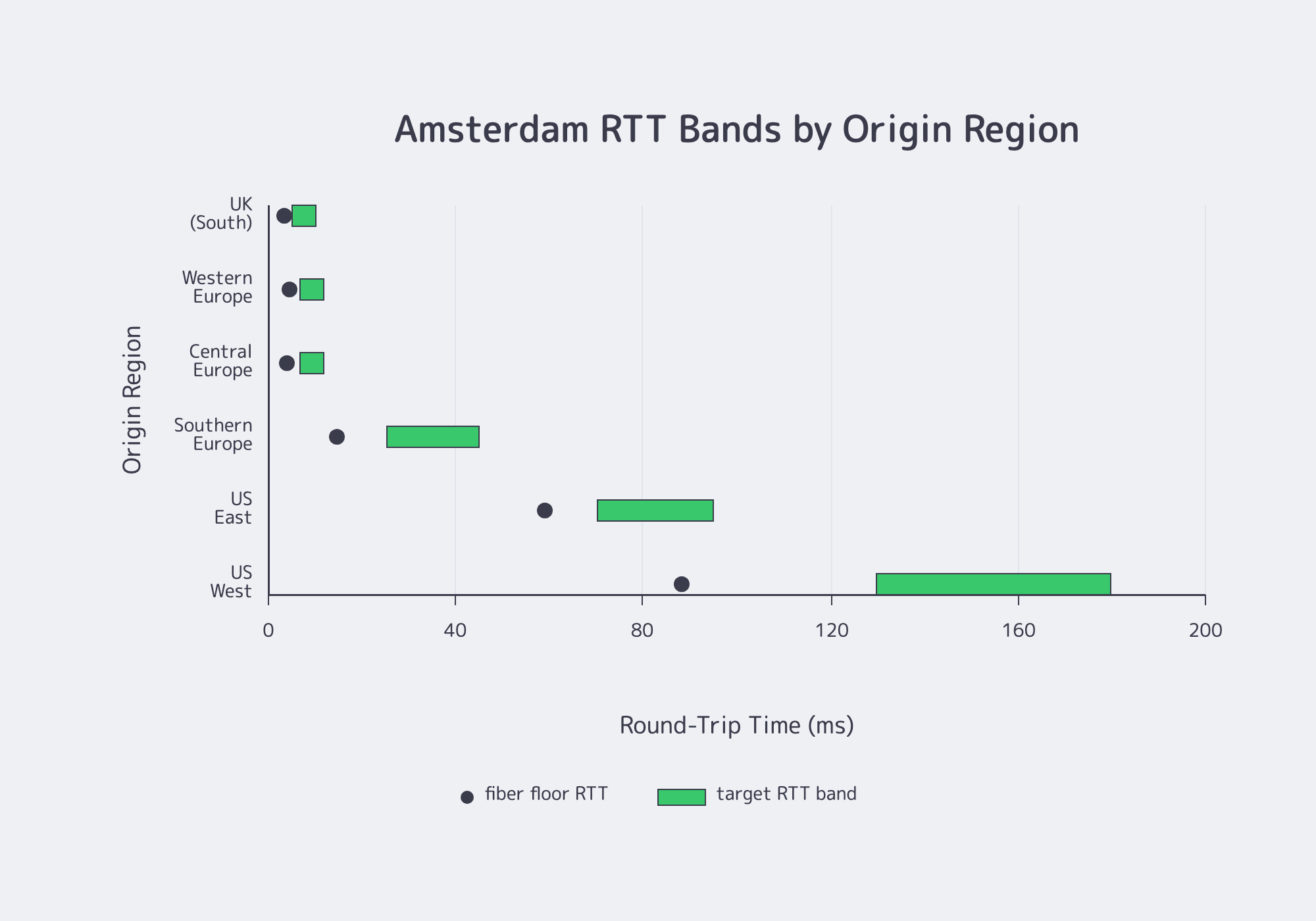
Start with latency mapping, not hardware browsing. For a dedicated server in Amsterdam, the first pass is whether EU, UK, and transatlantic routes stay inside your target RTT bands under real ISP conditions. If paths miss the band, extra cache or compute rarely fixes the user experience.
A useful model separates physics from routing. Physics gives you the floor: a quick rule of thumb for single-mode fiber is roughly 4.9 microseconds per kilometer. Routing determines the lived experience: RIPE Labs notes that “close” according to BGP and geographically close are not always the same thing.
Use the table below as a planning model. The floor RTT uses the fiber rule of thumb; the goal band adds routing overhead, peering variation, and congestion margin. Melbicom publishes an Amsterdam test endpoint and download payload so you can validate the model before migration.
Latency Mapping for a Dedicated Server in Amsterdam
| Origin Region | Distance / Floor RTT | Goal RTT Band | If You’re Above the Band |
|---|---|---|---|
| Western Europe | 450 km / 4.4 ms | 7–12 ms | Test multiple ISPs and avoidable hops |
| Central Europe | 400 km / 3.9 ms | 7–12 ms | Verify reverse-path consistency |
| Southern Europe | 1,500 km / 14.7 ms | 25–45 ms | Watch congested interconnects |
| US East | 6,000 km / 58.8 ms | 70–95 ms | Validate transatlantic diversity |
| US West | 9,000 km / 88.2 ms | 130–180 ms | Prioritize route stability |
The point is simple: Amsterdam is an excellent EU hub, but US performance still depends on path quality, not map distance alone.
A practical decision playbook:
- Define at least two acceptance bands: EU core and transatlantic.
- Test from multiple networks inside each band, not just one office ISP.
- Treat traceroute as diagnostic, not truth; RIPE Labs notes that traceroute shows the forward path while RTT reflects both forward and reverse paths, which can differ.
- If results drift, ask for levers you can actually control, such as BGP policy or a different transit mix.
True Unmetered vs. Capped Ports in Amsterdam Dedicated Server Offers
“Unmetered” matters only if the port stays clean under sustained, parallel load. Ignore headline burst numbers and verify multi-stream throughput, loss, retransmits, and any time-based shaping during real traffic windows. An Amsterdam dedicated server should clear those checks before you move a production origin or API tier.
What matters in practice is port speed, sustained throughput, and policy reality. That matters more now because AMS-IX traffic keeps rising and 400G ports are scaling fast, while Melbicom’s Amsterdam PoP offers high-bandwidth server options with guaranteed bandwidth, without ratios. For a buyer, this matters more than a burst number on a banner.
How to Validate “True Unmetered” on an Amsterdam Dedicated Server
Treat unmetered as a claim to verify. The three failure modes worth catching early are a single-flow ceiling, multi-flow collapse, and time-based shaping after several mins of load.
A pragmatic acceptance test:
- Run ping and MTR baselines for at least 30 minutes.
- Use 8–32 parallel streams, not one optimistic transfer.
- Repeat during local peak windows.
- Hold throughput long enough to reveal shaping, usually 10–20 minutes.
- Track retransmits and packet loss, not just headline Mbps.
- Save the result as your known-good baseline.
A streaming-origin relocation works best when bandwidth verification is treated like release engineering: run the bake, verify that sustained multi-stream load stays flat, then roll traffic in stages. That is how “unmetered” stops being marketing language and becomes operationally believable.
Which Amsterdam Dedicated Server Checks Matter before Migration & Incident Response
Before migration, focus on the checks that still matter at 2 a.m.: remote console recovery, DDoS and abuse workflow, IPv4/IPv6 readiness, and route control. Those are the controls that turn fast provisioning into a safe server deployment instead of a risky cutover.
Remote Management on a Dedicated Server
Remote management is the difference between fixing a bootloader issue in minutes, recovering from a firewall mistake without losing the host, and diagnosing a kernel panic from a real console instead of partial telemetry.
Melbicom’s servers have a dedicated IP-KVM port connected to an isolated management network, with customer access via VPN. That matches NSA guidance that management interfaces should never be directly exposed to the Internet and helps explain why exposed BMC/IPMI surfaces remain a bad idea: NIST still documents high-impact cases such as “cipher zero” authentication bypasses. Looking forward, Redfish-style REST-based out-of-band automation is increasingly the cleaner control plane, even when classic IPMI/KVM remains the break-glass tool.
DDoS and Abuse-Policy Fit Is an Ops Requirement
This is not about selling DDoS features. It is about workflow: what happens to your traffic, your ports, and your support path when pressure starts.
The Netherlands is still a strong jurisdiction for internet operations: Freedom House describes internet freedom there as robust, while the OECD’s Netherlands notice-and-take-down document outlines a structured, intermediary-oriented process for handling alleged unlawful content, with compliance framed as voluntary but procedural. On the DDoS side, NBIP’s NaWas has operated since 2014 and says it provides automatic 24/7 mitigation for connected participants. The takeaway is not “buy a badge”; it is “choose an operating model you can execute quickly.”
What to check before you migrate:
- What triggers suspension versus a remediation request?
- Who can answer an abuse or attack escalation around the clock?
- Are logs, timestamps, and ownership already wired into your playbook?
IPv4/IPv6 Strategy and BGP Control
Addressing is now part of the bandwidth decision. RIPE NCC says its remaining IPv4 pool was exhausted in 2019, while APNIC reports the global average IPv6 capability at around 40%, with adoption still uneven by region. The practical answer is straightforward: treat dual-stack as default, preserve IPv4 where compatibility still matters, and make sure observability and security tooling are IPv6-aware.
Routing control is the next lever. Melbicom’s BGP session service lists BYOIP, IPv4 and IPv6 support, BGP communities, and full, default, or partial routing, and it states that BGP sessions are free on dedicated servers. For a latency-sensitive SaaS cutover, the clean pattern is provision Amsterdam, baseline latency and throughput, then shift traffic in stages while keeping rollback ability. Teams that can announce or re-announce prefixes avoid brittle DNS-only moves and keep endpoint control during change windows.
Fast Deployment Checklist and Acceptance Test Plan

Amsterdam is a location with abundant inventory. Melbicom’s Amsterdam facility provides 300+ ready-to-go server configurations, offering up to 200 Gbps per server. Available stock is prompted for 2-hour activation, and custom configs are deployed in 3–5 business days.
A fast deployment is only “fast” if it includes verification.
Deployment checklist:
- Confirm facility, port size, and redundancy plan.
- Pre-map latency from EU, UK, and US vantage points.
- Decide your minimum IPv4 need and enable IPv6 from day one.
- Define unmetered proof: parallel streams, sustained duration, peak-hour reruns.
- Lock remote-console access behind VPN and document break-glass use.
- Pre-wire abuse handling, ownership, and logging.
- Plan BGP before migration day if route control matters.
Acceptance test plan:
- Validate remote console access while everything is healthy.
- Run 30-minute latency baselines and capture jitter.
- Test single-stream and multi-stream throughput.
- Repeat throughput tests at peak hours.
- Use the Amsterdam test payload as a sanity check.
- Verify IPv6 end to end.
- If using BGP, test propagation and rollback.
Key Takeaways for a Bandwidth-First Amsterdam Buy
- Approve Amsterdam only after three RTT bands are baselined: EU core, UK, and transatlantic.
- Treat unmetered as unproven until sustained multi-stream testing says otherwise.
- Keep remote console on an isolated management path with VPN-only access, and rehearse it before change windows.
- Plan dual-stack early; IPv4 scarcity is structural, not temporary.
- Predefine DDoS and abuse workflow before launch, because policy surprises cost more than latency misses.
- Buy Amsterdam for controllability: path quality, port integrity, and fast recovery must clear the bar together.
Buy the Network Position, Not Just the Dedicated Server

The Amsterdam decision is no longer a hardware beauty contest. It is a routing and ops decision: can the network hold your RTT budget, does the port behave honestly under sustained load, and can you regain console access the moment a change goes wrong?
That is why the best Amsterdam deployments look boring on launch day. Paths were mapped, unmetered was tested, dual-stack was planned, DDoS and abuse workflow was documented, and rollback access was already rehearsed. Do that work up front, and Amsterdam becomes a controllable hub instead of a latency gamble.
Deploy in Amsterdam
Explore Amsterdam dedicated servers with high-bandwidth options, fast activation, and network controls designed for low-latency deployments.
Get expert support with your services
Blog
Designing High-Availability Clusters That Fail Safely
High availability becomes concrete once downtime gets priced. An ITIC survey found that more than 90% of mid-size and large organizations now lose over $300,000 per hour of downtime, while 41% put the hit at $1 million to more than $5 million. Uptime Institute data reinforces the point: more than half of respondents said their most recent serious outage cost over $100,000, and one in five said it exceeded $1 million.
That is why availability targets are architecture constraints, not branding. Google’s SRE availability table turns the choice into a hard downtime budget, and each extra 9 narrows the room for slow failovers, sloppy maintenance, or optimistic recovery assumptions.
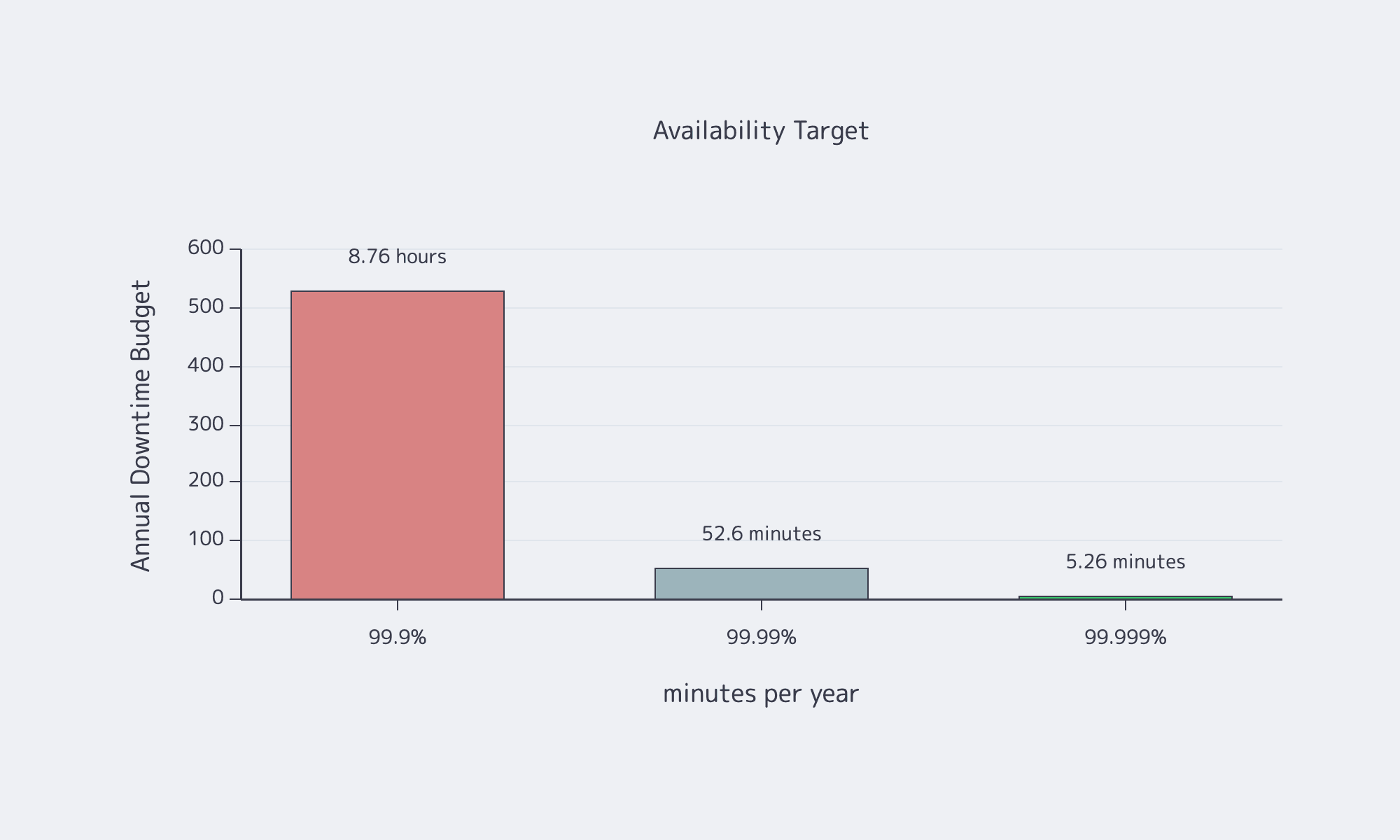
Source: Google SRE availability table.
How Server Clustering Works on Dedicated Hardware for High Availability
Server clustering on dedicated hardware means multiple servers behave like one service, with explicit rules for failover, traffic flow, and data ownership. The aim is predictable behavior when a node, switch, rack, or site fails—without turning every fault into a manual rescue or a risky improvisation.
On dedicated hardware, you choose the failure domains and define how the application, data, and network layers react. The application layer decides whether work is stateless or stateful, the data layer decides whether failover is fast or safe or a trade between the two, and the network layer decides whether users can actually reach the healthy side. N+1 headroom, patching, and hardware rotation belong in the design.
The Web Almanac reports that 97.3% of mobile homepages are served over HTTPS, and more than 98.8% of mobile requests already use HTTPS. That pushes more HA responsibility into the load-balancing tier: TLS termination, certificate rotation, session handling, and app-aware health checks are now part of the failure path, not edge details.
How to Design Active-Active and Active-Passive Clusters Without Split-Brain Risk

Active-passive and active-active answer the same question in different ways: who may serve traffic and write state when the system is stressed? The safe pattern is the same in both: quorum grants authority, fencing removes ambiguity, and any node that cannot prove ownership must stop taking writes.
Active-passive is simpler, but only if false failover is prevented. A split-brain event happens when a standby promotes itself during a partition while the original primary is still alive. Active-active uses capacity better, but it also raises the cost of bad coordination. The practical rule is simple: never allow writes on a node that cannot prove it still has quorum. Raft formalizes majority-based progress, MongoDB operationalizes that with majority write concern and warnings around weak arbiter layouts, and Red Hat’s guidance is blunt that any node that might still touch shared data must be fenced first.
Load Balancing and Failover Patterns for Server Clusters
Load balancing is where users feel the cluster. It decides whether healthy capacity is reachable, not just whether it exists.
L4 balancing fits services where any healthy node can answer any request. L7 matters when correctness depends on cookies, headers, affinity, canaries, or TLS-aware routing. The bigger mistake is shallow health checking. A socket that accepts connections is not the same thing as a node that can safely serve traffic, which is why modern HA designs need shallow process checks, deep dependency checks, and role-aware checks that confirm whether a node may accept reads or writes in its current state.
For active-passive services, a virtual IP via VRRP is still a clean pattern because clients keep one address while leadership moves underneath. For larger failover, DNS can steer broadly, edge layers can select the best entry point, and BGP can move reachability itself. That is why the network matters as much as the nodes: Melbicom’s network enables redundant switching with VRRP-protected L3 connectivity, Melbicom’s CDN supports geographic request routing and origin pooling, and our BGP Sessions support BYOIP plus full, default, or partial routes across all locations—useful building blocks when failover has to survive both server faults and path changes.
Replicated Storage and State Consistency in Server Clusters

Compute is easy to duplicate. State is where HA becomes discipline.
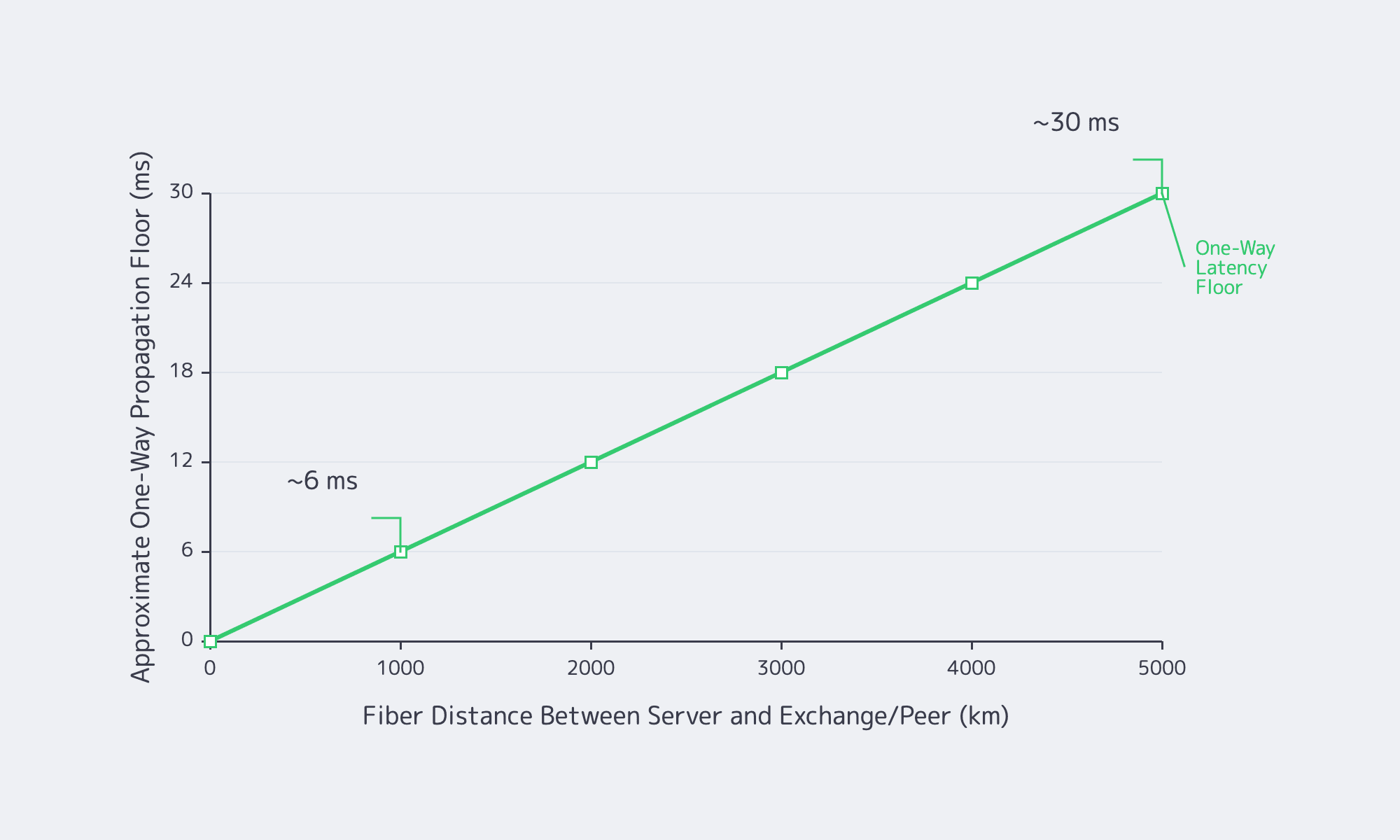
The core trade-off is still RTO versus RPO. The MySQL Reference Architectures for High Availability frame HA and DR as service-level design choices, not as a single “best” topology. Distance adds physics to the argument. As an ITU reference notes, signals in optical fiber move at roughly 200,000 km per second, or about 5 milliseconds per 1,000 kilometers; a 6,000-kilometer path costs roughly 30 milliseconds one way. Synchronous cross-site replication can protect data, but latency still sends the invoice.
Keep voting members odd in number, keep replicas provisioned consistently, and do not hide all copies behind the same dependency. A SAN, storage shelf, or network choke point can quietly turn “replication” back into a single point of failure. If the design includes shared-write storage, split brain is existential, not cosmetic.
Operating Server Clusters: Health Checks, Maintenance, and Incident Workflows
Most HA failures are not dramatic hardware crashes. They are lagging replicas, certificate expiry, partial dependency failure, mis-sequenced maintenance, and configuration drift.
The healthier operating pattern is drain, replace, verify, rejoin. Observability also has to catch brownouts, not just outages, which is why Google’s SRE guidance and MongoDB’s production guidance both push teams toward indicators such as replication lag, stale reads, queue growth, and capacity pressure instead of relying on binary “up/down” checks.
The useful chaos-engineering questions are still the obvious ones:
- Will health checks detect the right failure fast enough?
- Will failover pick the right winner based on quorum, fencing, and data freshness?
- Can the system return to a stable state without a split-brain hangover?
Choose Melbicom— 1000+ ready-to-go servers — Custom builds in 3–5 business days — 21 Tier III/IV data centers |
|
When Server Clustering Is the Right Answer Instead of Kubernetes or Vertical Scaling
Server clustering is the right answer when a small number of critical services need explicit failover, bounded blast radius, and clear leadership rules. Kubernetes fits broader platform standardization across many services. Vertical scaling fits workloads that mostly need more headroom on one box, not more distributed machinery.
Kubernetes is mainstream; the CNCF reports that 82% of container users now run it in production. But popularity is not a design argument. Stateful reliability still depends on quorum, storage, routing, and failure handling whether the workload runs inside a cluster manager or not.
| Decision Trigger | Prefer This Approach | Why It Fits |
|---|---|---|
| Predictable failover for a small number of critical services | Server clusters | You can define leadership, quorum, storage behavior, and routing rules explicitly, with a smaller operational surface area. |
| Many services, frequent deploys, standardized scheduling | Kubernetes | A common control plane improves fleet operations, but stateful availability still depends on the same storage and quorum fundamentals. |
| CPU or RAM limits on one system, with restart tolerance | Vertical scaling | It is the simplest model, but it keeps single-node failure in play, so some failover plan is still required. |
Design Checklist for Server Clusters
- Design for the failure domains you can actually isolate: node, rack, path, storage tier, or full site.
- Elect leadership with quorum or a witness; heartbeat loss alone is not enough to justify promotion.
- Fence before you fail over any service that can still touch shared-write state.
- Size active-active for degraded mode, not for sunny-day utilization.
- Make health checks role-aware and dependency-aware, especially for write paths.
- Prefer maintenance playbooks that drain, verify, and rejoin instead of “patch in place and hope.”
- Track replication lag, queue depth, route convergence, and recovery time as first-class reliability signals.
- Rehearse partitions and operator mistakes before production rehearses them for you.
Conclusion: Design for Failure You Can Name
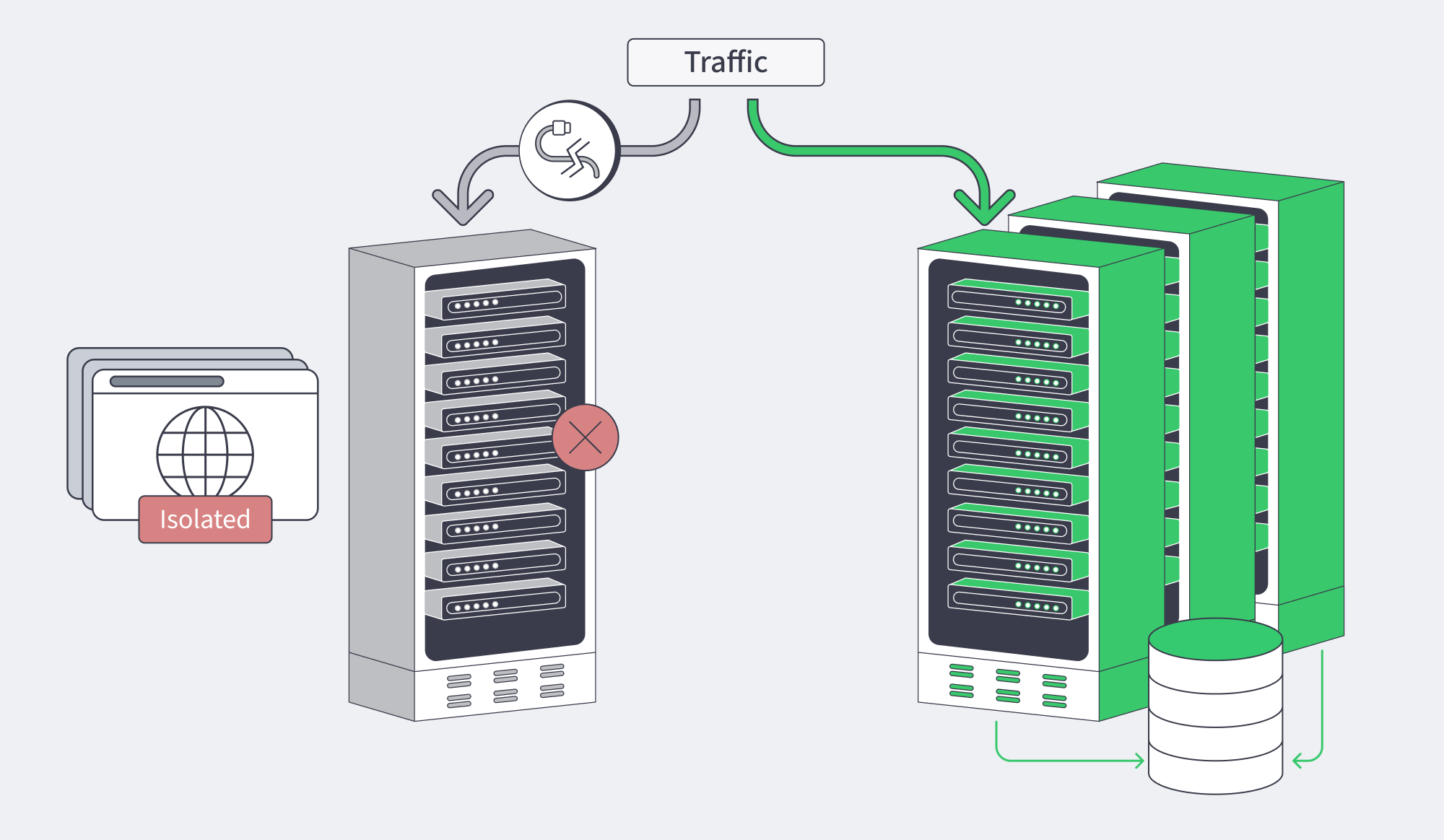
The strongest HA clusters are not the ones with the most layers. They are the ones that make failure behavior obvious. If leadership is explicit, writes are gated by quorum, fencing removes doubt, and health checks understand role as well as liveness, failover becomes a property of the design instead of a hopeful script.
That is why the clusters-versus-Kubernetes-versus-vertical-scaling decision matters. Pick the model that matches the workload, then design the failure path with as much care as the happy path.
Dedicated Servers for HA Clusters
Explore dedicated servers in 21 Tier III and IV data centers with high-capacity ports, BGP sessions with route control, CDN support, and fast deployment for high-availability clusters.
Get expert support with your services
Blog
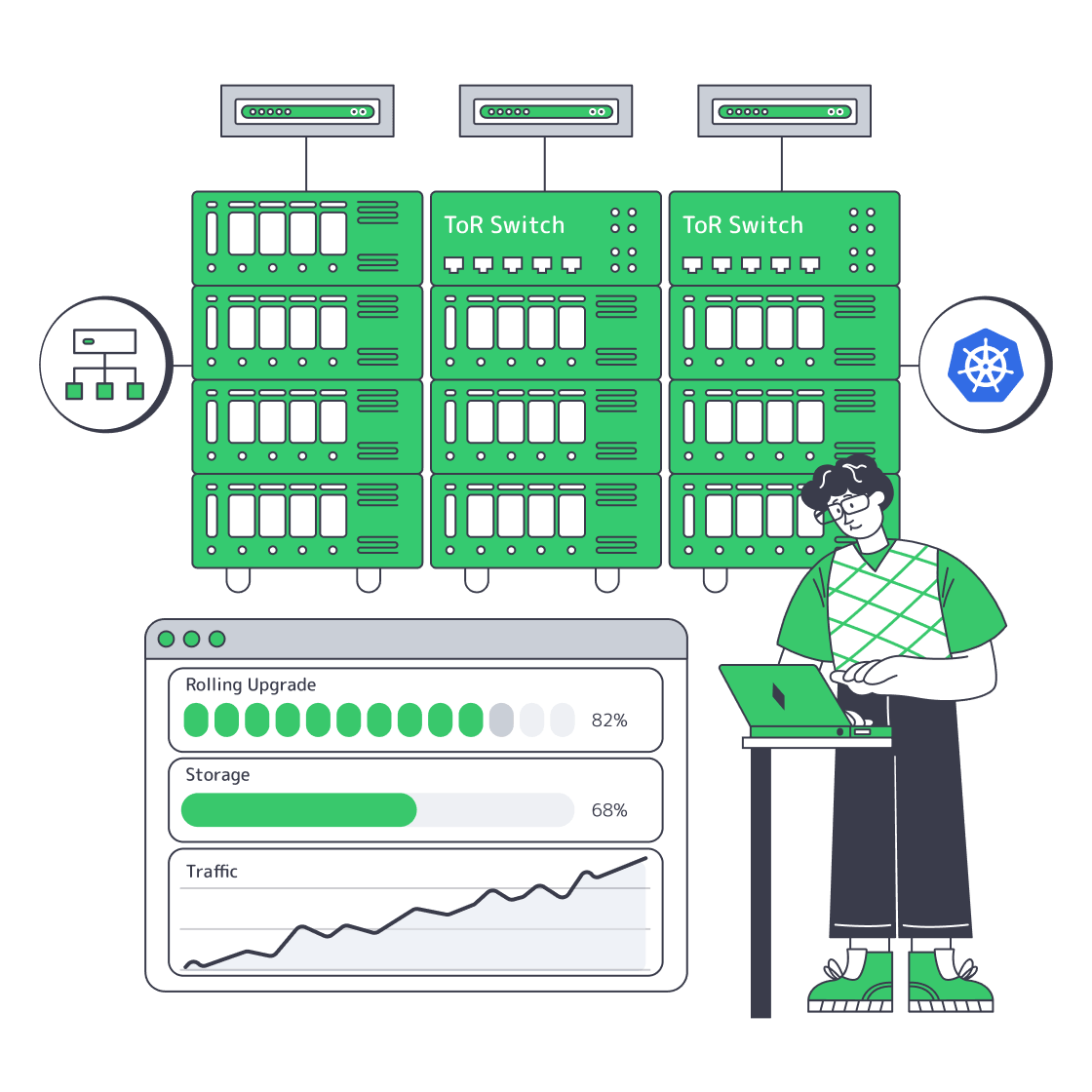
Operating Big Bare Metal Kubernetes Clusters
Running Kubernetes on physical servers stops being routine once the cluster has to survive racks, top-of-rack switches, power feeds, and upgrade waves that touch thousands of workloads. That is where managed abstractions can start working against you.
CNCF reports that 82% of container users run Kubernetes in production, and Flexera says 76% of large enterprises spend more than $5 million per month on public cloud. For bandwidth-heavy platforms, the question becomes predictability.
Choose Melbicom— 1000+ ready-to-go servers — Custom builds in 3–5 business days — 21 Tier III/IV data centers |
|
What Is a Big Bare-Metal Kubernetes Cluster?
A big bare-metal Kubernetes cluster is not defined by node count alone. It becomes “big” when topology, automation, and change management become the main reliability controls, because racks, switches, control-plane pressure, and upgrade sequencing matter more than simply adding workers.
Kubernetes can scale to 5,000 nodes, 110 pods per node, 150,000 pods, and 300,000 containers. Useful envelope, wrong operating definition. In practice, a cluster feels big earlier, when the dominant problems change:
- Failure domains must become scheduling inputs.
- API bursts and watch fan-out must not swamp etcd.
- Version skew and API removals become SLO risks.
- Fleet boundaries matter as much as cluster size.
That is where dedicated servers start to make sense: not because they simplify K8s, but because they let you make topology, networking, and lifecycle management intentional.
What Makes a Bare-Metal Kubernetes Cluster “Big” from an Operations and Failure-Domain Perspective?
A bare-metal Kubernetes cluster becomes operationally “big” when failures are correlated rather than isolated. The platform has to survive rack loss, control-plane locality shifts, and rolling maintenance without manual rescue, because the real risk is shared fate across infrastructure, networking, and the systems meant to heal both.
Failure domains become schedulable topology
On physical infrastructure, the blast-radius stack is concrete:
- a single server
- a rack
- an aggregation domain
- a data-center domain
That is why topology stops being optional. Pod Topology Spread Constraints exist so replicas can be distributed across real boundaries instead of pretending every node is interchangeable. Melbicom’s network design is exactly the kind of physical layout Kubernetes should understand.
Control-plane traffic locality matters
Nodes do not automatically steer API traffic to a same-zone endpoint. In a large multi-rack cluster, locality therefore belongs in the load-balancing design, not in hopeful assumptions about the scheduler.
Upgrade blast radius is a first-order SLO risk
Big clusters are dominated by change: kernels, runtimes, CNI, CSI, Gateway implementations, policy engines, and Kubernetes itself. Two upstream rules shape every serious upgrade plan:
- version skew limits how far components can drift
- API deprecation explains why minor upgrades can still break workloads
On dedicated servers, staged upgrades are possible only if you have spare capacity, rollback room, and placement discipline.
Correlated failures: the “shared fate” problem
Large clusters fail in waves. A ToR pair flaps, a storage path saturates, or routing shifts just enough to turn healthy control-plane traffic into a storm. That is why API Priority and Fairness matters: protecting the API is part of self-healing.
How to Design Networking, Storage, and Control-Plane HA for Bare-Metal K8s Clusters
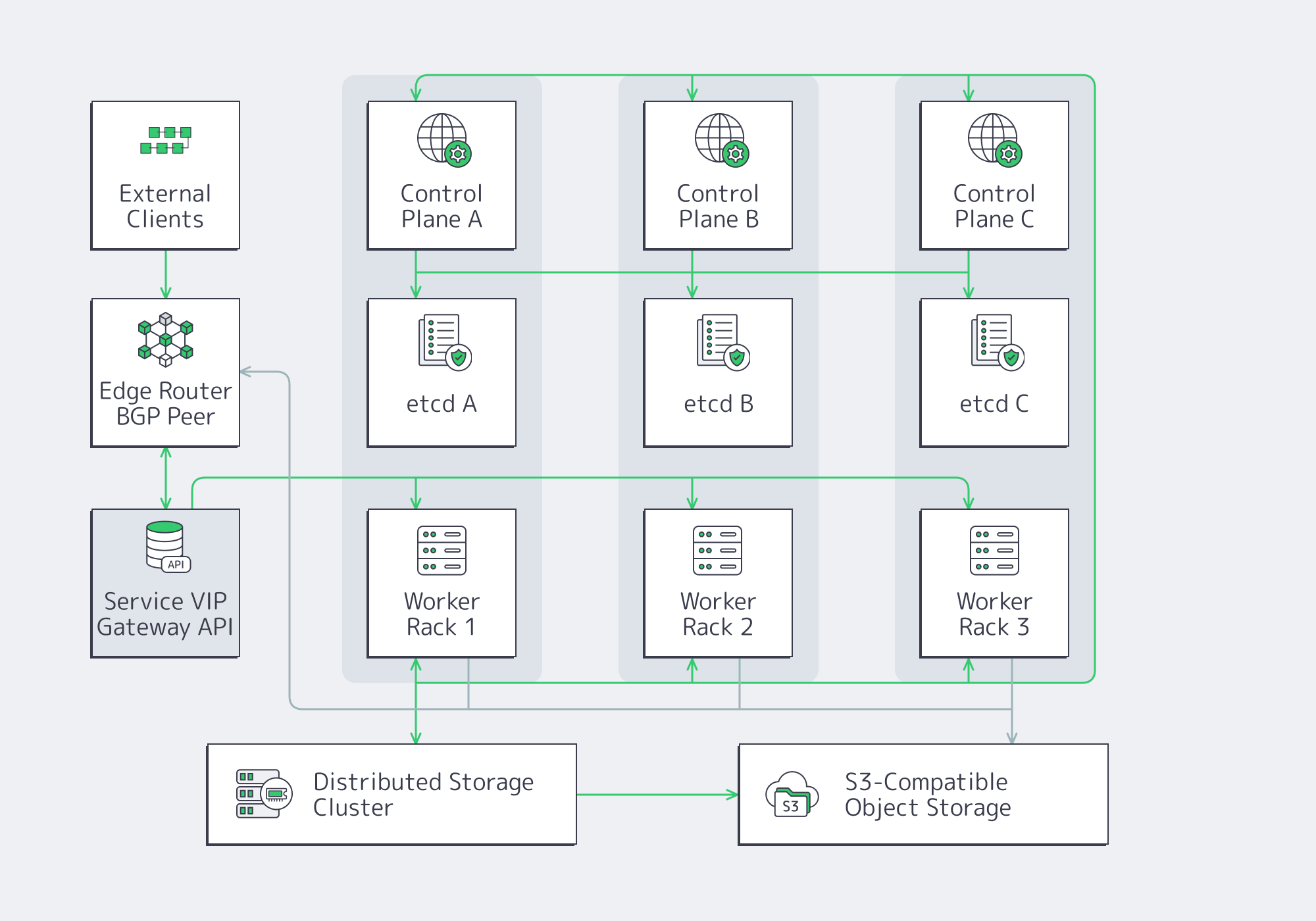
The right reference architecture optimizes for predictable behavior under failure and change. Large bare-metal clusters need an HA control plane placed across real failure boundaries, a data plane built for L3 multi-rack networking, a load-balancing strategy based on VIPs or BGP, and storage tiers aligned to recovery goals rather than convenience.
Control plane and etcd: HA that is actually operable
Place at least one control-plane instance per failure zone, then protect etcd like the latency-sensitive system it is. etcd hardware guidance calls for roughly 500 sequential IOPS for heavily loaded deployments versus about 50 for minimal viability, and its tuning docs warn that long fsync latency can trigger missed heartbeats and leader elections.
Kubernetes also recommends a separate etcd for Event objects in large environments, so high-churn data does not compete with the objects that keep the platform alive.
Networking baseline: assume L3, assume multi-rack, assume failure
At this size, Kubernetes networking is data-center engineering expressed through a CNI. Start from L3, assume east-west traffic will cross racks, and design for the path that fails first under load.
Kubernetes on bare metal: modern CNI and service routing choices
CNI choice at scale is really three decisions:
- how service load balancing works
- how network policy is enforced and debugged
- how observable the datapath is under real traffic
That is why modern designs gravitate toward eBPF data paths. Cilium’s kube-proxy replacement pushes service routing into the kernel, supports consistent hashing, and reduces iptables churn.
Load balancing: treat BGP as an infrastructure primitive, not a workaround
Bare metal Kubernetes has to create its own LoadBalancer semantics. In practice, that usually means:
- MetalLB advertising service VIPs over BGP
- kube-vip managing virtual IPs for the control plane and, where needed, services
At large scale, BGP is not a cloud substitute. It is the cleanest way to make Kubernetes endpoints participate in the wider network, which is why Melbicom’s BGP session service matters in this architecture.
North-south traffic: Gateway API is the “big cluster” control surface
Gateway API is the better north-south contract for large clusters because it separates infra ownership from route ownership and reduces cluster-wide ingress contention.
Storage strategy: performance tiers + failure domains + operable recovery
State punishes wishful thinking, so large clusters usually settle on three tiers:
- Local high-performance storage for low-latency workloads that can replicate at the application layer.
- Distributed block or file storage where transparent failover matters more than peak performance.
- Object storage for snapshots, backups, artifacts, and long-term telemetry.
VolumeSnapshots turn recovery into an API operation. Rook gives distributed storage a Kubernetes-native control loop. Thanos assumes object storage as the long-term metrics layer. Melbicom’s S3-compatible storage fits that third tier cleanly for backups, retention, and artifact pipelines.
How Day-2 Ops on Bare Metal Kubernetes Compare with Managed Kubernetes
Day-2 is the real trade. Managed Kubernetes removes part of the control-plane burden, but large bare-metal clusters give you more control over cost shape, routing, storage behavior, and lifecycle timing. The catch is simple: every convenience the cloud hides has to be replaced with automation that is reliable enough to become boring.
Patching and upgrades: make change boring or the cluster won’t survive
The core loop is straightforward: drain safely, reboot deliberately, validate aggressively. kubectl drain respects PodDisruptionBudgets, and Kured turns required reboots into a controlled DaemonSet workflow.
Node replacement automation: treat servers as replaceable, not precious
The sustainable posture is declarative lifecycle management for physical nodes:
- Tinkerbell for provisioning workflows
- Cluster API for cluster lifecycle
- Metal3 for bare-metal-oriented cluster management
Replacements have to preserve identity, labels, certificates, provider IDs, and topology membership. Melbicom’s dedicated-server platform matters here because hardware turnover is part of the design, not the exception path.
Observability at scale: the data plane is easy; the telemetry plane hurts
Prometheus is explicit that local storage is single-node in scope, which is why large clusters converge on remote or object-storage-backed metrics. In community discussion, users report query pain around roughly 10 million series, and the default --query.max-samples guardrail is 50 million. The durable pattern is short-term local TSDB plus long-term object storage, with a normalized pipeline such as the OpenTelemetry Collector.
Security: enforce intent at the platform layer
Large clusters need portable defaults and cluster-wide guardrails. Pod Security Standards and Pod Security Admission set the namespace baseline. NetworkPolicy remains the portable segmentation API. Audit logging turns cluster actions into evidence.
Cost and complexity: the honest comparison
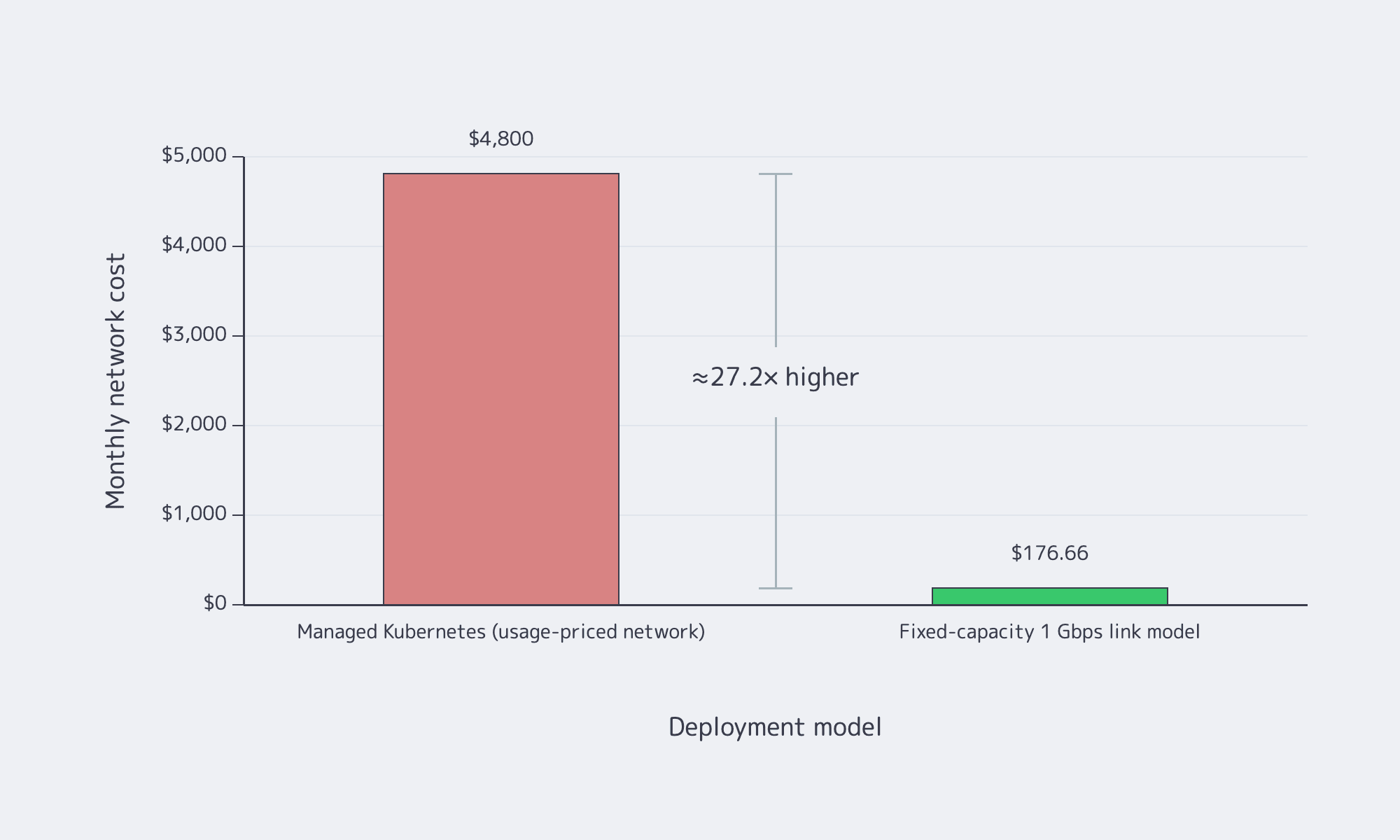
Managed Kubernetes shrinks the platform surface area you own, but it does not remove responsibility for workload design, policy, observability, or most storage decisions. The economic case for dedicated infra is strongest when network-heavy workloads punish usage-based pricing. One arXiv cost study modeled a monthly example at about $4,800 for a managed, usage-priced network path versus $176.66 for a fixed-capacity 1 Gbps link.
The trade is honest: dedicated infrastructure can change the cost shape, but only if provisioning, reboots, placement, and recovery are automated.
| Area | Large bare-metal Kubernetes (self-managed) | Managed Kubernetes |
|---|---|---|
| Control plane | You design HA, etcd hygiene, and API protection. | The provider runs more of the control plane, but clients and workloads can still overload it. |
| Networking | You supply load balancing, routing integration, and CNI policy behavior. | More primitives are prebuilt, but low-level control is narrower. |
| Node and storage lifecycle | You own patching, replacements, backup design, and performance isolation. | More integration is available, but application resilience and data design are still yours. |
Key Takeaways and Melbicom Fit
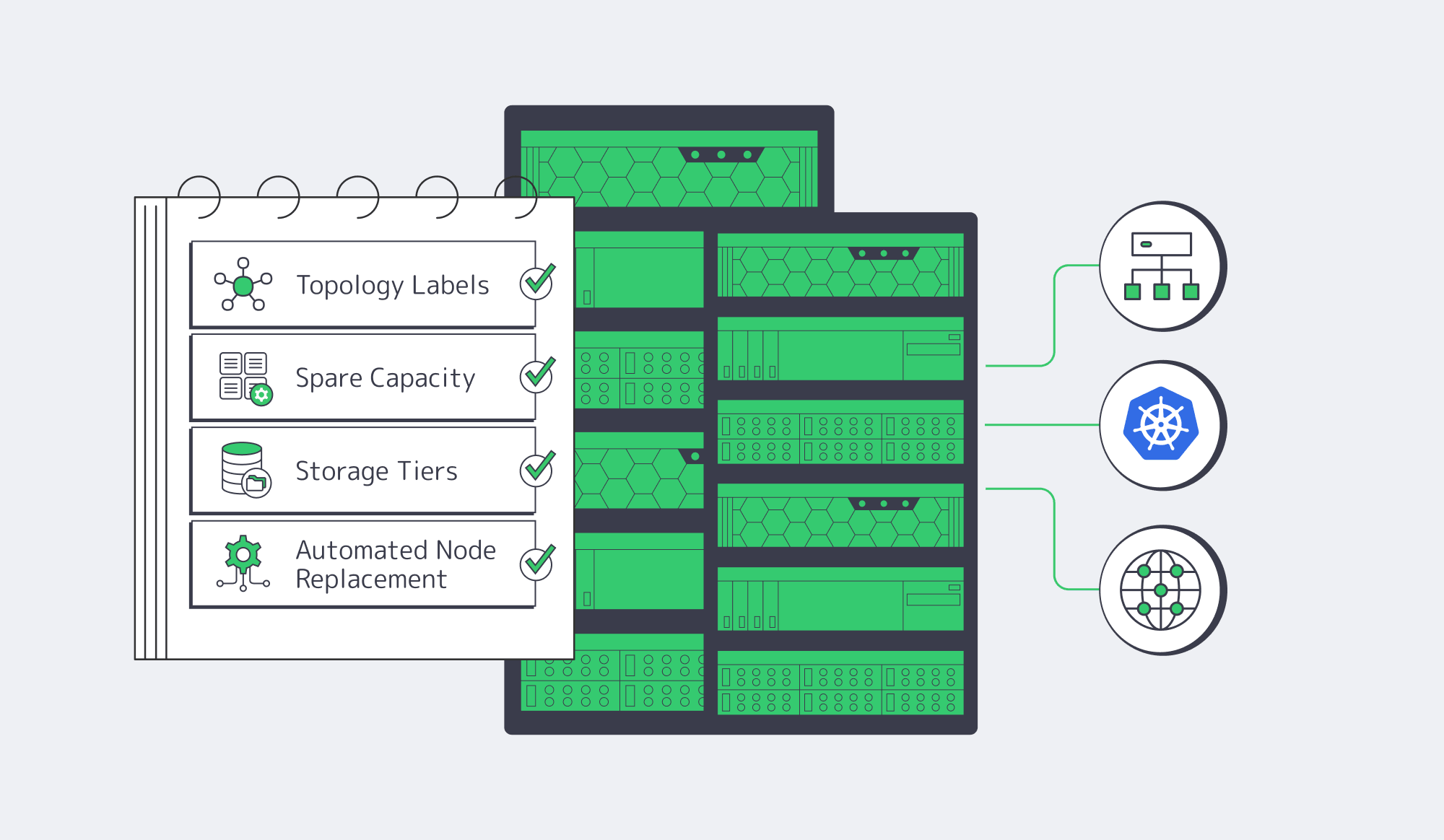
A big cluster is an operations boundary. Once racks, storage paths, and upgrade waves matter more than node count, the architecture has to privilege topology, routing, and automation over convenience. The best designs isolate failure domains, keep etcd fast, move traffic intentionally, tier storage, and treat hardware turnover as normal, because routing control, storage, and replacement cadence become part of the operating model.
- Model rack, power, and aggregation boundaries as first-class topology labels before maintenance turns into a shared-fate event.
- Reserve spare capacity and rollback room for every kernel, CNI, storage, and Kubernetes upgrade; blast radius should define rollout order.
- Standardize on L3 multi-rack networking and explicit service exposure so failures show up as routable problems instead of opaque “cluster weirdness.”
- Separate hot-path, failover, and retention storage into distinct tiers; one plane rarely satisfies latency, recovery, and telemetry economics at once.
Build on Bare Metal
Explore dedicated servers, BGP sessions, and S3-compatible storage for large Kubernetes clusters that need predictable networking, recovery, and upgrade headroom.
Get expert support with your services
Blog
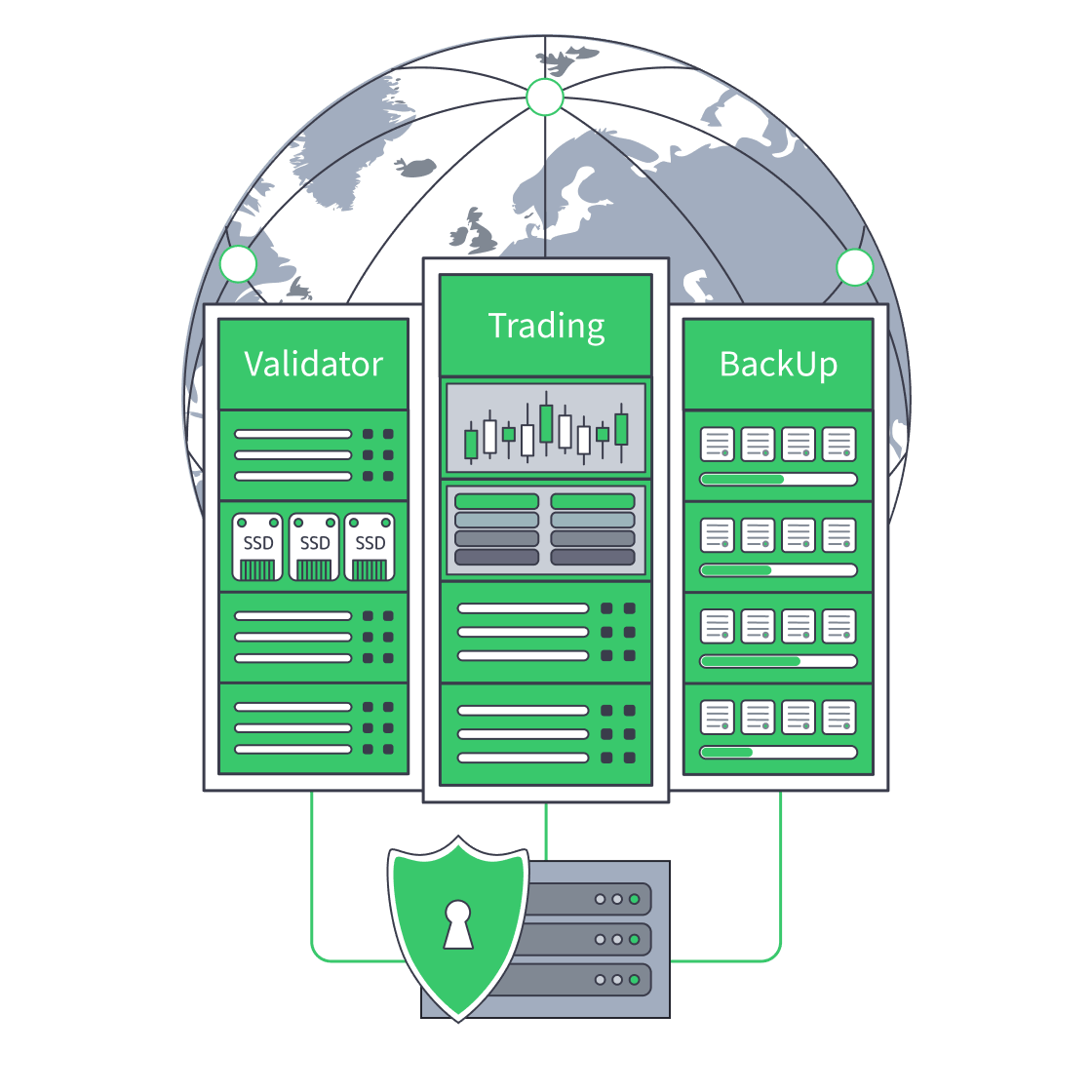
Crypto Hosting Buyer’s Guide: Dedicated Servers for Nodes & Trading
Crypto hosting is no longer shorthand for “rent a box and keep it online.” Modern crypto workloads concentrate risk in three places: private keys, network reachability, and stateful data that is slow to rebuild. The latest NETSCOUT DDoS report says global attack counts topped 8 million and peak demonstrations reached 30 Tbps, which is why resilience has to start upstream rather than at the server edge alone.
The dependency story changed, too. Stripe cites research showing that 35.5% of global security breaches were linked to third parties. In crypto, that matters because externally managed nodes, shared infrastructure, and opaque platform layers expand the trust boundary. In proof-of-stake Ethereum, validators must stake 32 ETH—roughly $68,000 at recent ETH/USD prices—and operate on a fixed 12-second slot and 32-slot epoch cadence, so uptime is directly tied to economic outcomes.
Best Crypto Hosting— 1000+ ready-to-go servers — Custom configs in 3–5 business days — 21 global Tier IV & III data centers |
 |
What Crypto Hosting Means for Node Ops, Trading Workloads, and Secure Infra
Crypto hosting usually means one of three things: running nodes and validators, placing trading systems close to market data and liquidity, or hosting ASIC mining hardware. The first two are secure compute-and-network problems with very different failure modes. The third is mostly a power-and-cooling business, so this guide only mentions it in passing.
For node operations, crypto server hosting means validators, full nodes, RPC endpoints, indexers, and archival systems. Those are stateful workloads. On Ethereum, a production validator means an execution client, a consensus client, and a validator client. On Solana, the infrastructure profile is more explicit: Agave calls for high-clock CPUs, 12 cores / 24 threads or more for validators, 16 cores / 32 threads or more for additional RPC capacity, 256 GB or more of RAM, 512 GB for full account indexes, multiple NVMe devices, and at least 1 Gbit/s symmetric Internet, with 10 Gbit/s preferred.
For trading, crypto server hosting is less about chain state and more about deterministic networks. Trading systems fail when paths lengthen, packets queue, clocks drift, or endpoints move. That is a different problem from “keep the node in sync.” The buying process gets cleaner once those workloads are separated. ASIC mining hosting sits in the same search bucket, but it is fundamentally about facility power, thermals, and rack operations, not the secure infrastructure decisions covered here.
How to Evaluate Crypto Hosting for Security, Compliance, and Uptime
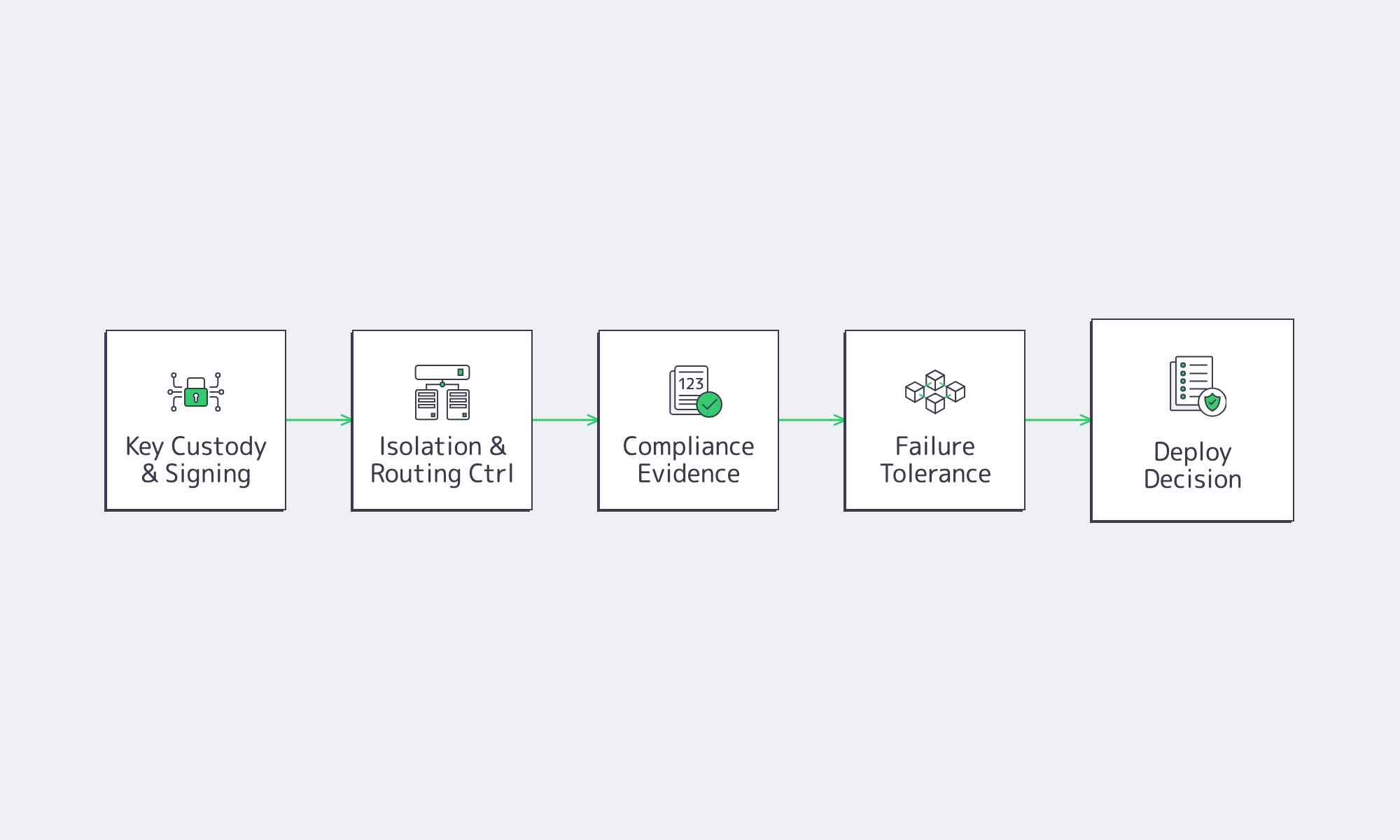
Evaluate crypto hosting in this order: key custody and signing, isolation and routing control, compliance evidence, and failure tolerance. CPU and RAM still matter, but they rarely decide outcomes alone. In production, the real question is whether the environment lets you sign safely, contain blast radius, and stay correct when components fail or networks get noisy.
Start with key management. If the workload can sign anything of value—validator duties, treasury actions, withdrawals, or custody operations—its risk profile starts there. Where the compliance footprint is higher, buyers should map HSM and KMS choices against FIPS 140-3 and NIST SP 800-57, not as future enhancements but as day-one design constraints.
Then look at isolation. Single-tenant infrastructure narrows the blast radius and reduces noisy-neighbor risk. Network isolation matters just as much: the management plane should be separate from production traffic, and private links should be available where state replication or multi-site failover matters. Melbicom enables private networking between data centers and an isolated management network reached through VPN. On the routing side, Melbicom offers BGP at every data center, enforces RPKI validation, and accepts only prefixes with valid IRR entries. In a world where DDoS demonstrations now reach 30 Tbps, those upstream controls matter more than checkbox language.
Compliance should be evidence-led, not promise-led. Ask for audit artifacts such as PCI DSS, ISO 27001, or SOC 2 Type II reports, plus incident-response and disaster-recovery procedures. Crypto-specific rules push that further: FATF’s virtual-asset guidance applies Recommendation 16—the travel rule—to VASP transfers and requires originator and beneficiary data handling. Uptime works the same way. Tier III means concurrently maintainable; Tier IV means fault tolerant. For validators and critical RPC, that distinction is operational, not cosmetic.
When Dedicated Servers Make More Sense Than Generic Hosting for Crypto Workloads
Dedicated servers make more sense when the bottleneck is predictability rather than burst capacity: fast local storage for sync-heavy nodes, stable routing for public endpoints, known tenant boundaries for sensitive operations, and deterministic paths for trading. When failure cost is measured in missed duties, stale data, or unstable ingress, generic hosting stops being cheap.
That is especially obvious in node operations. Ethereum’s node guidance centers storage and bandwidth: recommended specs are a fast CPU with 4+ cores, 16 GB or more of RAM, fast SSD storage with 2+ TB, and 25+ MBit/s bandwidth, while full-history footprints can climb from roughly 2.2 TB to 12 TB or more depending on client. Solana’s Agave guidance is blunter still: cloud deployment requires materially more operational expertise to achieve comparable stability and performance. Dedicated infrastructure wins when you need known disk behavior, cleaner tenant boundaries, and better control over public exposure.
Crypto Server Hosting for Validators and RPC
The table below condenses the latest published hardware guidance from Ethereum and Agave into a buying view.
| Workload | Baseline Hardware Profile | Storage / Network Posture |
|---|---|---|
| Ethereum node | Fast CPU, 4+ cores; 16 GB+ RAM | Fast SSD with 2+ TB; 25+ MBit/s bandwidth |
| Ethereum full-history / archive node | Client-dependent CPU and memory footprint | Roughly 2.2–12 TB+ depending on client, plus ~200 GB for beacon data; bandwidth caps still matter during sync |
| Solana Agave validator | 12 cores / 24 threads+; 256 GB+ RAM; ECC suggested | NVMe for accounts, ledger, and snapshots; at least 1 Gbit/s symmetric, 10 Gbit/s preferred |
| Solana Agave RPC | 16 cores / 32 threads+; 512 GB for full account indexes | Separate high-IOPS NVMe layout; dedicated public IP preferred |
The next design question is how the system fails. Signing should be isolated where possible, and distributed-validator patterns are worth evaluating because they reduce single points of failure. SSV argues that splitting validator operations across multiple independent nodes improves resilience and supports active-active redundancy. Recovery matters, too. Fast local storage should be paired with object storage for snapshots, rollback bundles, and long-retention logs; Melbicom’s S3-compatible storage is relevant here because it is designed as a drop-in S3 service that scales from 1 TB to 500 TB.
Crypto Server Hosting for Low-Latency Trading
Trading infrastructure is a network-placement problem first. Physics sets the floor, then routing and congestion determine how close you stay to it. In optical fiber, a useful planning model is roughly 6 microseconds per kilometer one way. That is why routing control, path quality, and endpoint stability often matter more than another benchmark win on CPU.
This is where Melbicom’s footprint becomes practical rather than decorative. Melbicom offers single-tenant servers across 21 global data centers, a 14+ Tbps backbone, 23 transit providers, 29 IXPs, and per-server bandwidth tiers up to 200 Gbps depending on location. BGP is available in every data center.
Key Takeaways
- Classify the workload before pricing servers. A validator, an RPC estate, and a latency-sensitive trading stack should not be bought against the same checklist.
- Put signing architecture ahead of server architecture. If key handling is weak, better CPUs and faster ports do not reduce the real risk.
- Buy bandwidth against failure budgets, not average throughput. Sync bursts, market volatility, and public-endpoint abuse all show up at the worst possible moment.
- Design the recovery path before production cutover. Snapshots, rollback artifacts, and retained logs are part of the platform, not afterthoughts.
- Use real location and routing data when evaluating providers. Ask for concrete stock examples, actual port tiers by site, and the timeline for custom builds.
Buy for Failure, Not Just for Throughput
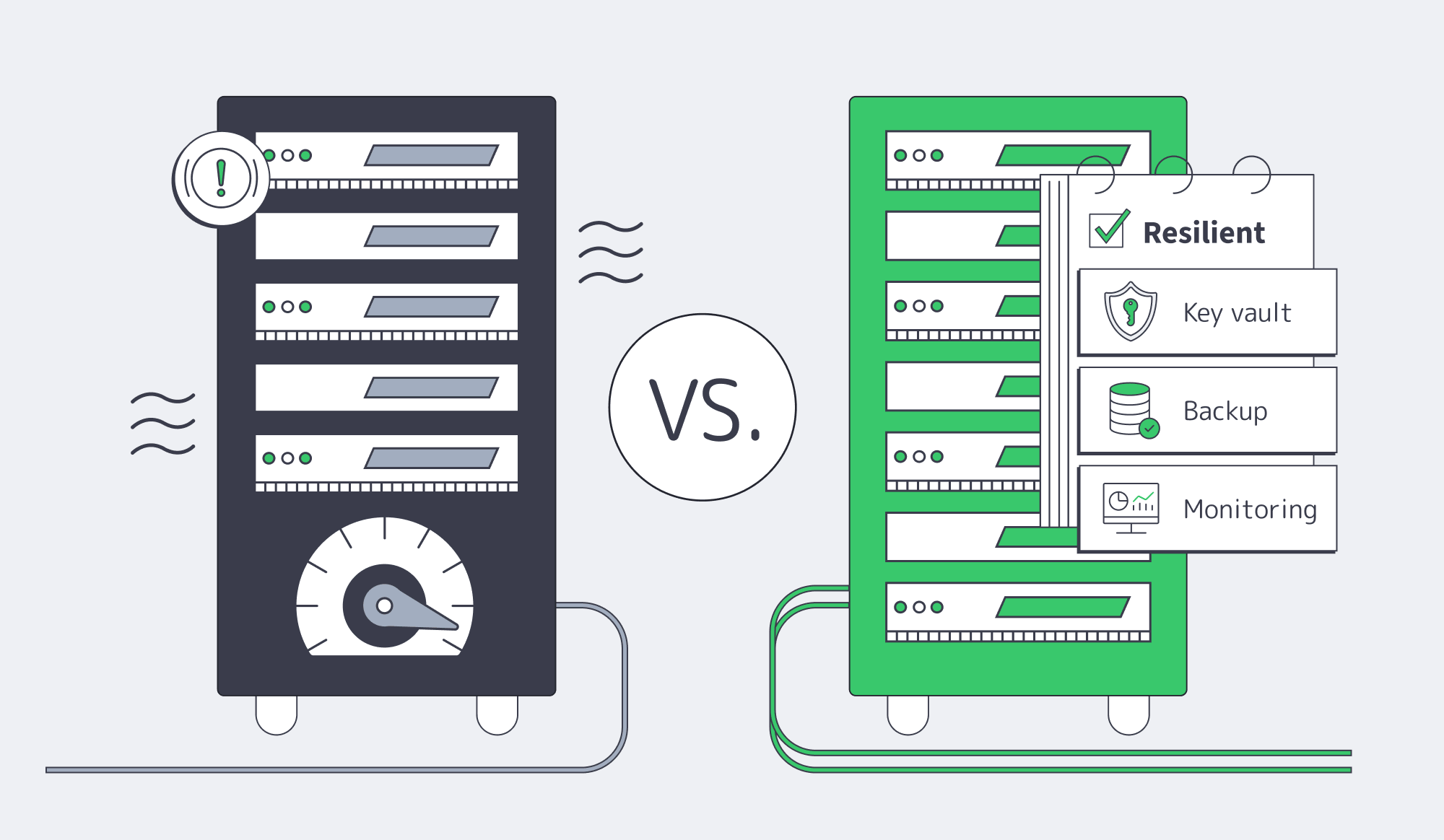
The best crypto hosting decision is rarely the one with the lowest monthly line item or the highest advertised core count. It is the one that matches the workload’s actual failure modes. For nodes and validators, that usually means safe signing, storage behavior, sync and recovery paths, and bandwidth headroom. For trading, it means distance, routing control, endpoint stability, and the ability to keep latency variance under control.
That is why “crypto hosting” should never be treated as one category. A validator cluster, an RPC layer, and a latency-sensitive trading stack may all run on servers, but they do not fail the same way. Buy around that reality, and the infra conversation gets more honest.
Dedicated servers for crypto workloads
Browse ready-to-order and custom dedicated servers for validators, RPC workloads, and low-latency trading across Melbicom’s global data centers.
Get expert support with your services
Blog
Bare Metal Server vs Cloud: Checklist for Performance, Compliance, and Cost
The old “bare metal vs cloud” argument was mostly about raw speed. That frame no longer holds. Published MLPerf Inference submissions on the same Dell PowerEdge XE9680 / 8x H200 platform show only low-single-digit differences between bare-metal and virtualized results on several throughput figures. The bigger differences now show up in tail latency, noisy-neighbor risk, auditability, and cost predictability.
That change tracks the market. Gartner forecast public cloud end-user spending at about $723.4 billion, Synergy Research Group estimated cloud infrastructure services revenue at $419 billion, and Flexera reported 29% wasted cloud spend alongside 58% usage of generative AI as a public cloud service. At this scale, picking the wrong substrate becomes an operating-model problem, not just a hosting preference.
Choose Melbicom— 1000+ ready-to-go servers — Custom builds in 3–5 business days — 21 Tier III/IV data centers |
|
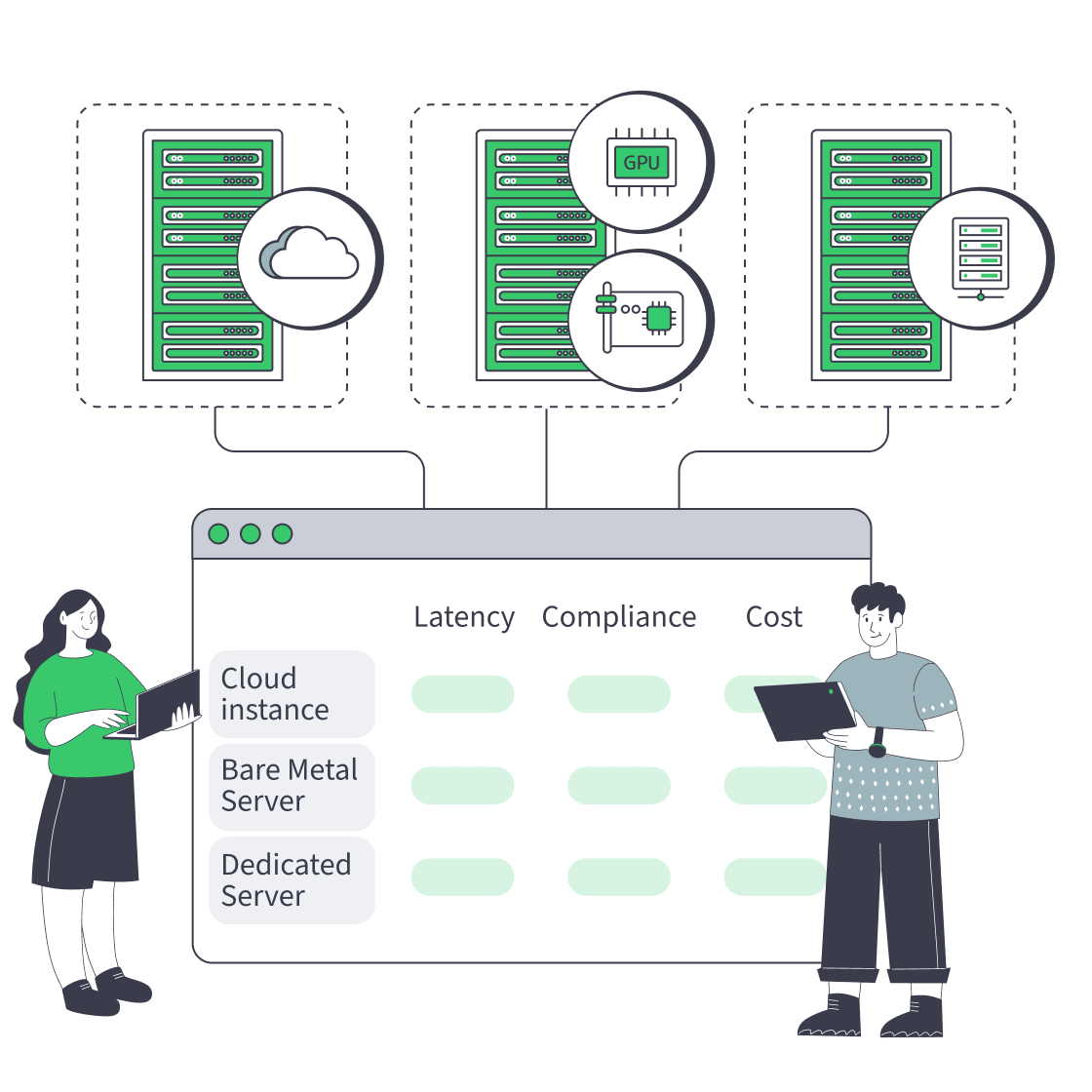
How Bare Metal, Dedicated Servers, and Cloud Instances Differ in Practice
Use cloud instances when elasticity and managed-service adjacency matter most. Use a bare metal server when you need physical determinism plus automation. Use dedicated server abstraction when you want single-tenant hardware as a stable, long-lived substrate with predictable cost and provider support. The choice is less about “fast versus slow” than about variance, control, and operational ownership.
Definitions that survive contact with production
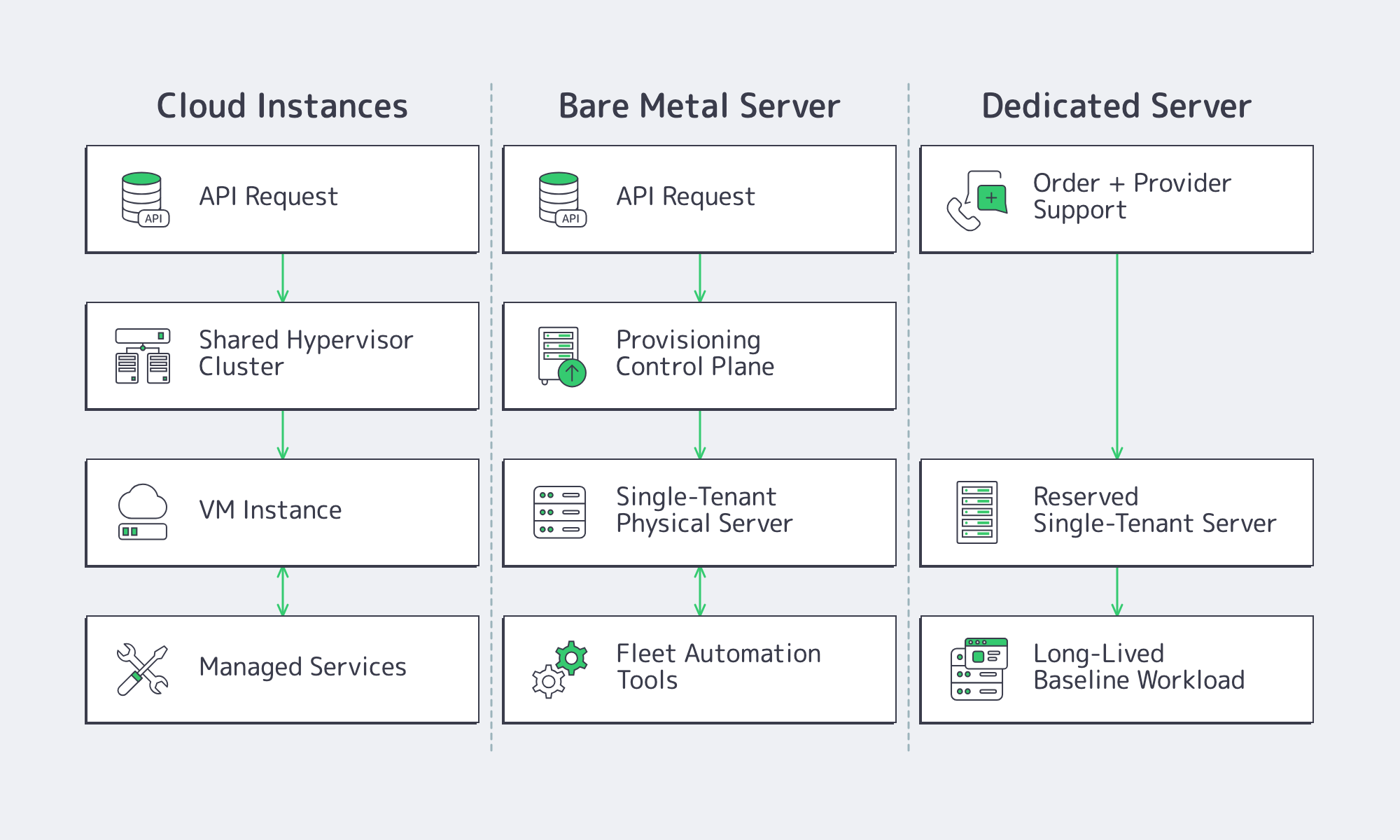
A cloud instance is compute behind an API. You choose a shape, launch quickly, and pair it with managed services, but usually with less visibility into placement and contention.
A modern bare metal server is single-tenant hardware delivered with cloud-like expectations: API-driven lifecycle, fast rebuilds, and fleet-style management. Tools such as OpenStack Ironic + Metal3 exist to make physical hosts behave more like declarative infra.
A dedicated server is also single-tenant hardware, but the operational intent is different. It is a durable node in a known location, rented for stability, support, predictable economics.
Bare metal server vs dedicated server: where the line actually is
The overlap is tenancy; the split is lifecycle. Bare metal is usually treated like part of a rebuildable fleet. Dedicated is usually treated like a stable substrate that you tune, keep, and plan around. “Cloud-like provisioning” on bare metal also does not mean instant by magic. It means automating the boot path and accepting more lifecycle responsibility.
When Bare Metal Is the Better Choice for Performance, Compliance, or Control
Bare metal is the better choice when performance debugging keeps pointing to placement, jitter, I/O contention, or specialized hardware paths. It can also simplify audit and residency conversations because tenancy boundaries are explicit. The value is not automatically higher average throughput; it is fewer hidden neighbors, fewer hidden schedulers, and clearer control over the machine itself.
Deterministic performance is about tail behavior
Performance-sensitive systems fail at P99, not at the median. Distance through fiber adds unavoidable delay before routing inefficiencies and queueing even enter the picture. Shared infrastructure adds another layer of uncertainty. That is why the strongest case for bare metal is often not headline throughput, but fewer surprises in the tail.
Noisy neighbors and hardware paths are the real differentiators
In a recent Kubernetes multi-tenant testbed study, researchers reported I/O-bound degradations of up to about 67% under combined noisy-neighbor stress. Even if your own environment never gets that bad, the structural risk is obvious. If your stack depends on stable cache behavior, known topology, predictable storage latency, or specialized NIC and accelerator paths, single-tenant hardware is easier to reason about. (arXiv)
Compliance and control often get simpler
Single-tenancy does not create compliance by itself, but it can make controls easier to explain. Gartner projected about $80 billion in sovereign cloud IaaS spending and described a shift of 20% of current workloads from global to local providers. That is a sign that locality, change control, and clearer boundaries are becoming design requirements.
What Automation + Operational Trade-Offs Come With Moving From VMs to Bare Metal
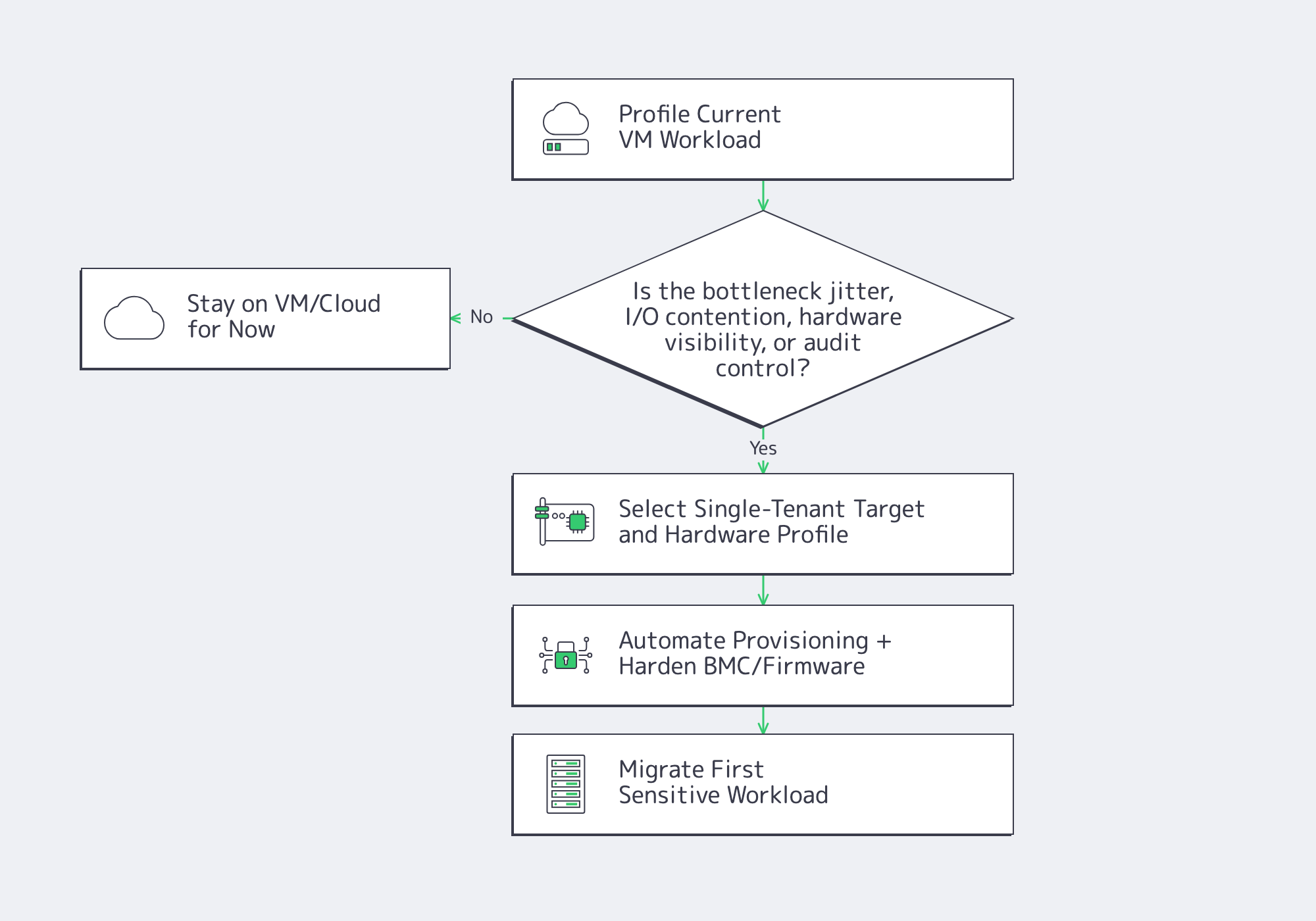
Moving from VMs to bare metal replaces clone-based convenience with hardware-aware operations. You gain determinism, but you also inherit the boot path, firmware lifecycle, BMC hardening, and spare-capacity planning. Teams that do this well automate provisioning early, treat host loss as normal, and move the noisiest or most control-sensitive services first.
Provisioning changes from “clone a VM” to “own the boot path”
On bare metal, provisioning becomes control plane to BMC to network boot or virtual media to OS image to configuration management. Ironic and Metal3 matter because they turn that sequence into an API-backed workflow instead of a rack-by-rack ritual.
Lifecycle, lead time, and BMC security become architecture concerns
Hardware is visible again: capacity planning, host replacement, firmware updates, and failure domains stop being somebody else’s abstraction. So does out-of-band management. NIST SP 800-193 and joint NSA/CISA guidance are clear that BMCs are highly privileged control planes and need separate hardening, segmentation, and patch discipline.
Migration friction is sometimes more expensive than compute
Leaving cloud is often less about CPU and more about data gravity, identity wiring, and the loss of VM-native conveniences. The UK Competition and Markets Authority has explicitly treated egress fees and related switching barriers as a competition problem. That makes data movement a first-class architecture cost.
Bare Metal Server Decision Checklist for Performance, Compliance, and Cost
Use the matrix below as a biasing tool, not a rigid rule. It is most useful when the real constraint is easy to name: variance, governance, hardware specificity, or cost shape.
| Decision Signal | Bias Toward | Why It Matters |
|---|---|---|
| Tail latency or jitter drives the SLO | Bare metal server or dedicated server | Physical isolation makes P99 tuning more predictable. |
| Shared I/O contention is the pain point | Bare metal server or dedicated server | Noisy neighbors can collapse disk or network behavior long before average CPU looks busy. |
| Audit, residency, or hardware-control requirements dominate | Bare metal server or dedicated server | Explicit single-tenancy and known hardware boundaries simplify evidence collection and change control. |
| You need known topology or specialized NIC/GPU behavior | Bare metal server or dedicated server | Repeatable hardware paths matter more than generic flexibility. |
| You want fleet-style hardware automation | Bare metal server | Ironic- and Metal3-style workflows fit rebuildable physical fleets. |
| You need fast burst capacity or managed-service adjacency | Cloud instances | Elasticity remains cloud’s clearest strength. |
| Your stack still depends on snapshots, quick clones, or live migration | Cloud instances, unless replaced at the app layer | VM-native workflows need redesign before metal feels natural. |
| Steady demand and volatile egress bills dominate the economics | Dedicated server | Flat monthly pricing and reserved port capacity make baseline cost easier to plan. |
A quick reality check on performance
The common myth is that bare metal wins mainly by avoiding the hypervisor. The more useful lesson from MLPerf Inference is narrower: average compute overhead can be modest, while placement and contention still dominate the user-visible outcome. On the same Dell PowerEdge XE9680 / 8x H200 platform, several published virtualized results sit within a few percentage points of the bare-metal submissions.
Migration Notes from VM-First Environments
- Identify the actual bottleneck. Move the workload constrained by jitter, storage latency, hardware visibility, or compliance pressure, not the one that is easiest politically.
- Start where single-tenancy buys down variance. Datastores, gateways, schedulers, and ingestion layers are common first moves.
- Keep adjacent interfaces stable. Melbicom’s S3 storage and CDN can let teams move sensitive compute first without rebuilding every data and delivery pattern at once.
- Treat network control as part of the design. Melbicom’s dedicated servers pair single-tenant hardware with API and KVM access, and Melbicom’s BGP sessions — including BYOIP — are available from all locations and free on dedicated servers when routing behavior is part of the product.
Key Takeaways for the Next Architecture Review
- Measure P95/P99, jitter, and storage variance before changing platforms. Median throughput alone is not a decision framework.
- Move the workloads that suffer from hidden contention, hardware opacity, or audit friction first; leave bursty, disposable, or service-adjacent pieces in cloud until the application layer is ready.
- Price migration as a systems change, not a server swap. Data movement, identity rewiring, and the loss of snapshot-heavy workflows can outweigh any compute savings.
- Do not scale bare metal operationally until provisioning, firmware policy, and BMC isolation are standardized. Otherwise every performance gain turns into day-two debt.
Conclusion: Choose for Variance, Control, and Operating Model
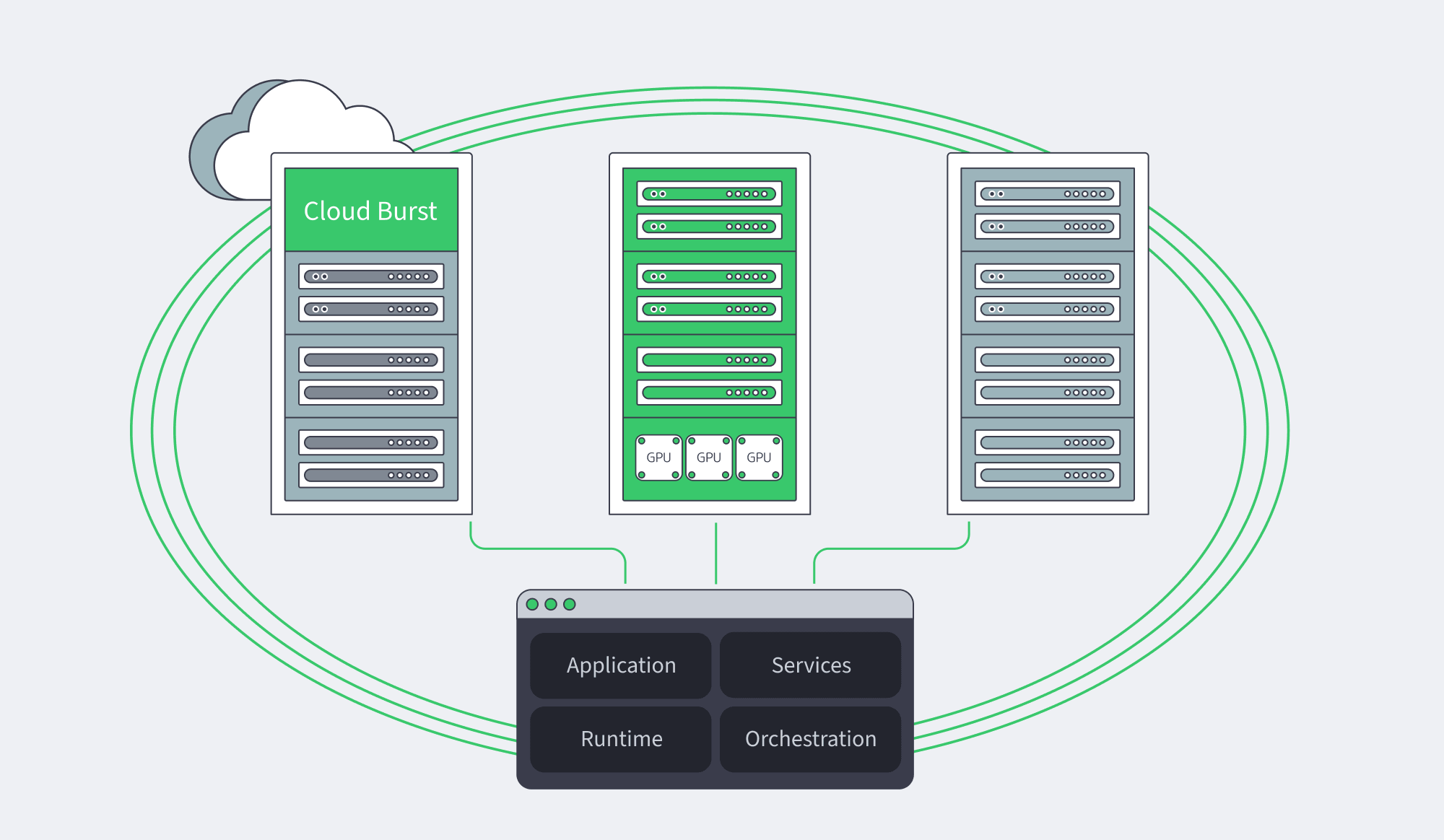
The best answer is rarely “cloud everywhere” or “metal everywhere.” It is usually a split: cloud where elasticity and managed services create real leverage, dedicated servers where single-tenant stability and predictable monthly cost matter most, and bare metal where hardware-level determinism and automation justify the extra operational ownership.
That is also why this comparison keeps returning. Performance-sensitive platforms do not need a slogan about bare metal being universally faster. They need a practical way to decide when variance, compliance, hardware control, and migration economics are important enough to justify moving down the abstraction ladder.
Explore dedicated servers
Compare single-tenant server options for performance-sensitive workloads that need predictable monthly cost, hardware control, and global deployment.
Get expert support with your services
Blog

Why Production dApps Fail in the RPC Layer, Not the Chain
Consensus rarely fails first. A chain can keep producing blocks while an app appears down because its RPC tier is overloaded, rate-limited, privacy-leaky, or inconsistent. Users hit the endpoint, queue, and indexer before consensus failure, which makes RPC design and observability the real uptime story.
An NDSS study showed the RPC layer is materially less decentralized than the peer-to-peer network and that abusing read-only simulation can raise latency by 2.1x to roughly 50x; at a few hundred requests per second, the same pattern slowed block sync by 91%. Separate work reported more than 95% deanonymization success against normal RPC users, and newer research found previously unknown context-dependent RPC bugs across major clients. Add API attack volumes that reached 258 per day, and the lesson is simple: production dApps fail in the data plane first.
Best Servers for Web3— 1000+ ready-to-go servers — Custom configs in 3–5 business days — 21 global Tier IV & III data centers |
|
What Production Blockchain Infrastructure Includes beyond RPC Endpoints
Production blockchain infrastructure is not a node plus an endpoint. It is a stack: dedicated RPC capacity, method-aware admission control, an indexing tier for historical reads, caches for safe read traffic and artifact delivery, telemetry for tail latency, and key handling that does not depend on a public endpoint staying healthy.
Crypto infrastructure layer for RPC reliability
Reliable RPC starts with deliberate redundancy: multiple nodes, ideally multiple client implementations, and separate pools for reads, writes, and expensive methods. N-version research shows client failures are often asymmetric. The practical rule is to budget the dangerous methods. eth_call, tracing, and wide log scans need gas caps, range limits, and hard timeouts so one pathological request cannot poison the queue.
Dedicated endpoints and stable routing
Public endpoints are fine for development. They are poor production infrastructure because you do not control noisy neighbors, burst admission, or method restrictions. Dedicated endpoints put the bottleneck back into your own capacity plan. Stable endpoint identity matters once partners or internal systems whitelist your RPC. Melbicom’s Web3 hosting is built around single-tenant servers for RPC nodes, indexers, and backends, while Melbicom’s BGP sessions add BYOIP and route control.
Indexing strategy instead of abusing eth_getLogs
A production node is not an analytics database. The web3.py docs note that eth_getLogs paginates blocks, not events, and clients often end up shrinking windows and retrying. Geth issue reports show the same timeout pattern on self-run nodes. If the product depends on search, history, or entity discovery, build an indexer.
- Canonical ingestion should pull only the data you need: blocks, receipts, traces, logs.
- Materialization should be reorg-aware, commit derived records after an explicit horizon.
- Query stores should match the product: address-centric, contract-centric, time-series, or graph-like.
Storage: archive data is a design constraint
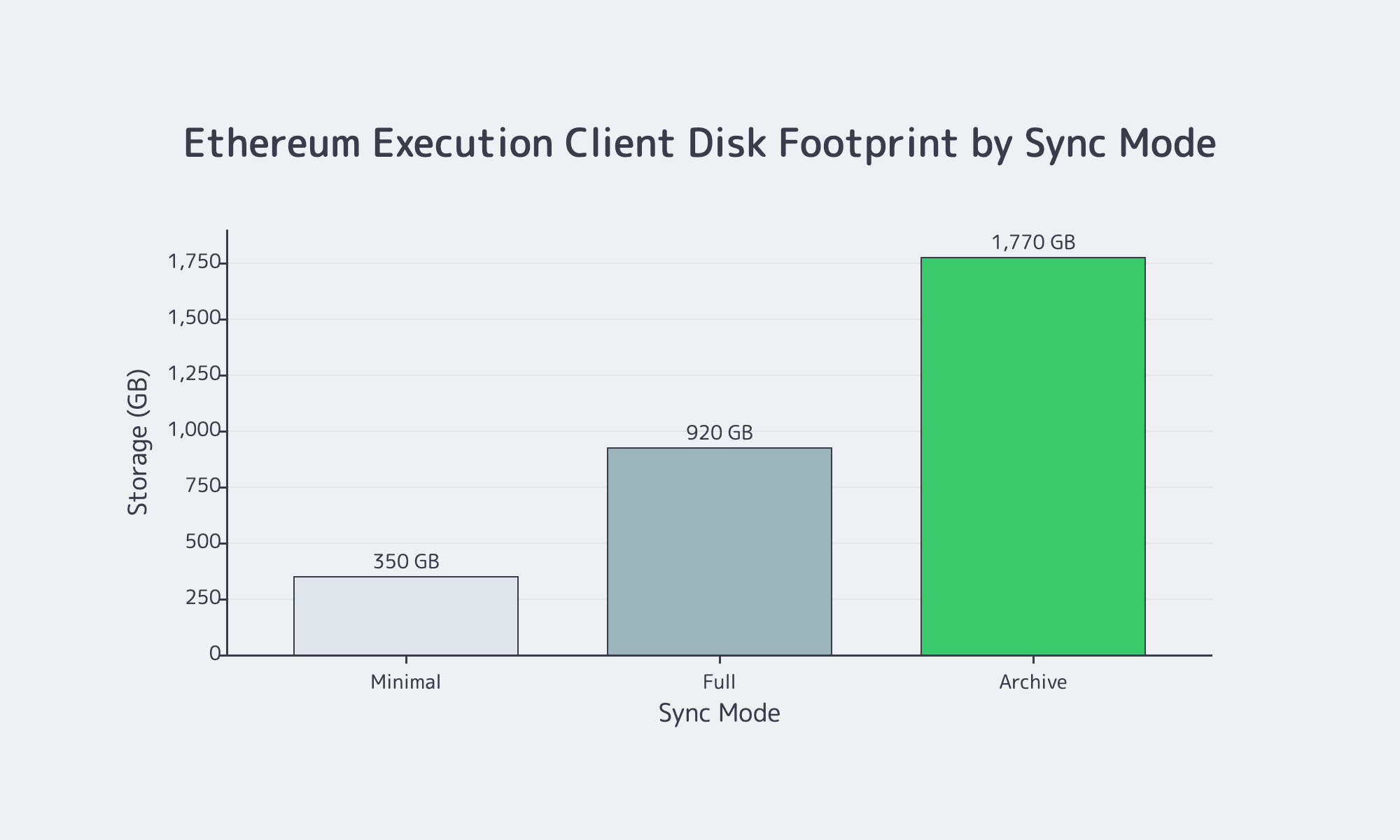
Self-hosting is “operate a database that only gets larger.” Current Ethereum mainnet storage is roughly 350 GB for minimal, 920 GB for full, and 1.77 TB for archive—before adding a consensus client, index database, metrics retention, or snapshots. That is why indexing is architecture, not optimization.
Observability, key management, and rate limiting
If RPC is a product surface, it needs product-grade telemetry. OpenTelemetry provides the right model: metrics, traces, and logs tied to the same request path. For blockchain operations, that means method-level latency, sync lag, queue depth, and submission success. NIST guidance remains the baseline for key isolation and rotation. OWASP now treats unrestricted resource consumption as a top API risk, and DDoS attacks have already reached 31.4 Tbps.
What to Choose: Public RPC, Managed RPC, Dedicated Nodes, and Self-Hosting
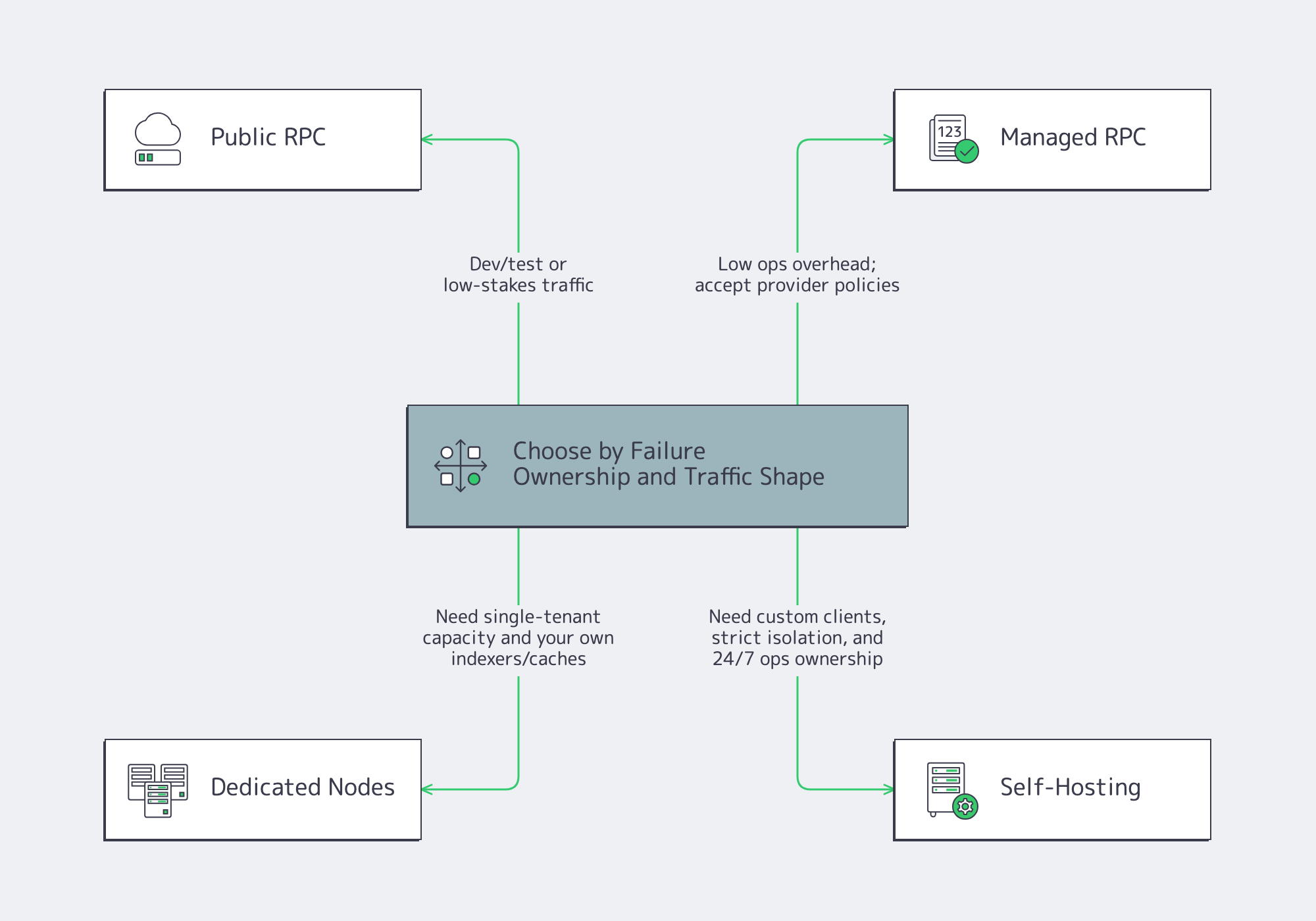
Choose by failure ownership, not by per-request price. The important variables are burst tolerance, method coverage, historical depth, operational control, and who gets paged when p99 latency spikes. Public endpoints minimize setup; self-hosting maximizes control; dedicated nodes are the middle ground where capacity planning becomes predictable.
Public endpoints
Use public endpoints for development, testing, and low-stakes traffic. They are easy to adopt, but they usually come with opaque rate limits, uneven method coverage, and little control over overload behavior.
Managed RPC
Managed RPC removes the work of running nodes. The tradeoff is policy inheritance: timeout budgets, archival depth, burst caps, and method restrictions are the provider’s call. On fast chains, that matters. One Solana infrastructure checklist notes that stake-weighted QoS can reserve 80% of leader connections for staked nodes, so network position can matter more than simply buying a higher plan.
Dedicated nodes
Dedicated nodes are where blockchain infrastructure starts behaving like infrastructure. Single-tenant capacity removes the worst noisy-neighbor effects, makes performance budgets easier to reason about, and lets teams run their own indexers and caches against predictable compute. Melbicom fits this model well, with a ready-to-go catalog that spans 1000+ location-specific server configurations and custom builds in 3–5 business days.
Self-hosting
Self-hosting makes sense when you need control that cannot be rented away.
- Strict data isolation requirements.
- Non-standard client or tracing configurations.
- Custom admission control and abuse defenses.
- A real 24/7 incident response model.
It is a poor choice when the plan is basically, “We can probably maintain it.”
Indexing Strategy for Blockchain Infrastructure w/o Overloading Endpoints
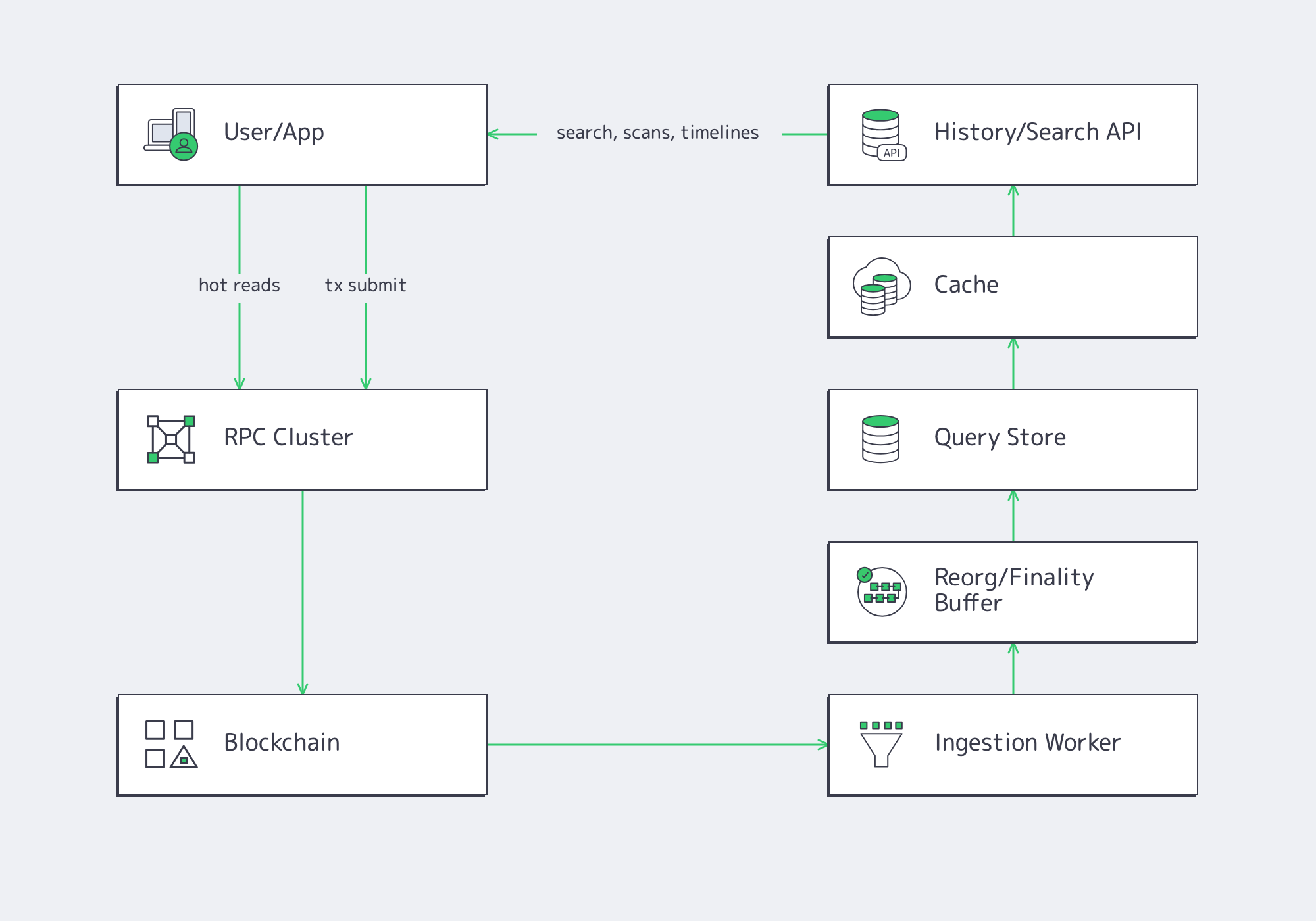
Use RPC for current state and transaction submission; use an indexer for history, discovery, portfolio views, and replayable analytics. Once a product depends on long-range log queries or search-style reads, the node should feed a pipeline—not answer every historical question directly.
Designing the data plane
A clean production split separates reads into three classes:
- Hot-path reads for balances, quotes, and user actions.
- Integrity-critical reads for simulation and preflight.
- History and discovery reads for scans, search, and long timelines.
The third class is where JSON-RPC becomes fragile and expensive. Design the data plane around that fact instead of learning it at peak traffic.
Reorgs, finality horizons, and “when is data real?”
Indexers that ignore reorgs will eventually publish the wrong answer. Near the chain tip, “confirmed” is not the same as “safe enough to materialize forever.” Production pipelines usually need two horizons:
- A fast-but-revisable horizon for immediate UX.
- A safer horizon for accounting, reconciliation, and exports.
The exact block count varies by chain/workload. What matters is making the policy explicit.
Snapshots and artifact pipelines
Fast recovery depends on artifacts, not optimism.
- Periodic snapshots of the index store.
- Client-compatible execution and consensus snapshots.
- Rollback artifacts and replay logs for incident recovery.
This is why S3 compatibility keeps showing up in modern crypto infrastructure. Snapshot tooling and restore jobs already assume that API.
Which MSA, Latency, and Data-Retention Questions Matter When Evaluating Blockchain Infrastructure Providers
Do not evaluate a provider by uptime language alone. The questions that matter in production map directly to real failure modes: overload, tail latency, method restrictions, historical depth, and what evidence you will get when something breaks. If the answers are vague, the risk has simply moved off the invoice and into your pager rotation.
| Evaluation question | What to look for | Why it matters |
|---|---|---|
| What does the MSA actually cover? | Scope by region or service, exclusions, measurement method, and incident communication. | “Uptime” claims often miss partial degradation, timeouts, and method-level failures. |
| Where are the lowest-latency regions? | Region list, routing model, peering posture, and jitter under load. | Geography helps, but routing and congestion usually decide p95 and p99. |
| What are burst limits and overload behaviors? | Explicit per-key or per-IP limits, backpressure rules, and whether overload fails with clear errors or silent timeouts. | Graceful degradation is engineered; meltdowns happen by default. |
| What is the data-retention model? | Pruned vs. full vs. archive support, historical depth, and request-log retention. | History-dependent features fail quietly when retention assumptions are wrong. |
| How do observability and debugging work? | Request logs, metrics, trace correlation, and access to incident evidence. | Without telemetry, outages turn into guesswork. |
A Minimal Production Stack, Wired for Dedicated Servers

A minimal production stack has three planes. The control plane owns endpoint identity, routing, admission control, and configuration. The execution plane owns RPC nodes and transaction submission paths. The data plane owns indexing, query stores, snapshots, and cache distribution. That architecture turns a fragile endpoint into an operable system.
Operational recommendations:
- Keep the hot path small: use RPC for current state and submission, and move search, scans, and long timelines into an indexer before JSON-RPC becomes your query engine.
- Budget pathological methods separately from average traffic: cap
eth_call, tracing, and wide log windows with explicit timeouts, payload limits, and range guards. - Plan storage together with recovery: archive footprint, index growth, snapshot cadence, and restore time should be sized as one system, not four separate problems.
- Choose the deployment model by pager ownership: if your team cannot absorb 24/7 node, indexer, and networking incidents, the cheapest option is usually the most expensive one in production.
When the node, the indexer, and the artifact pipeline all matter, single-tenant capacity and stable routing stop being luxuries and start being the difference between a tolerable incident and a customer-visible outage.
Dedicated servers for blockchain infra
Single-tenant capacity, stable routing, and global deployment options give RPC nodes, indexers, and snapshot pipelines a practical production base.
Get expert support with your services
Blog
Metal Blockchain Node Setup on Bare Metal: Validator Specs, Subnets, & Ops
Metal Blockchain validators are not “set it and forget it” infrastructure. They are always-on systems where a bad port rule, weak key workflow, or poor location choice can mean missed rewards, degraded uptime, or a subnet that fails its own governance rules. On Metal, the operational model is explicit enough that infrastructure design and protocol design are tightly coupled.
This article focuses on the part that matters in production: what Metal Blockchain is for, the published minimums for validator and subnet nodes, the ports that must be reachable, and the way subnet compliance rules shape hosting, access control, and auditability.
Best Servers for Web3— 1000+ ready-to-go servers — Custom configs in 3–5 business days — 21 global Tier IV & III data centers |
|
Metal Blockchain: Layer‑0 Design, Primary Network, and Subnets
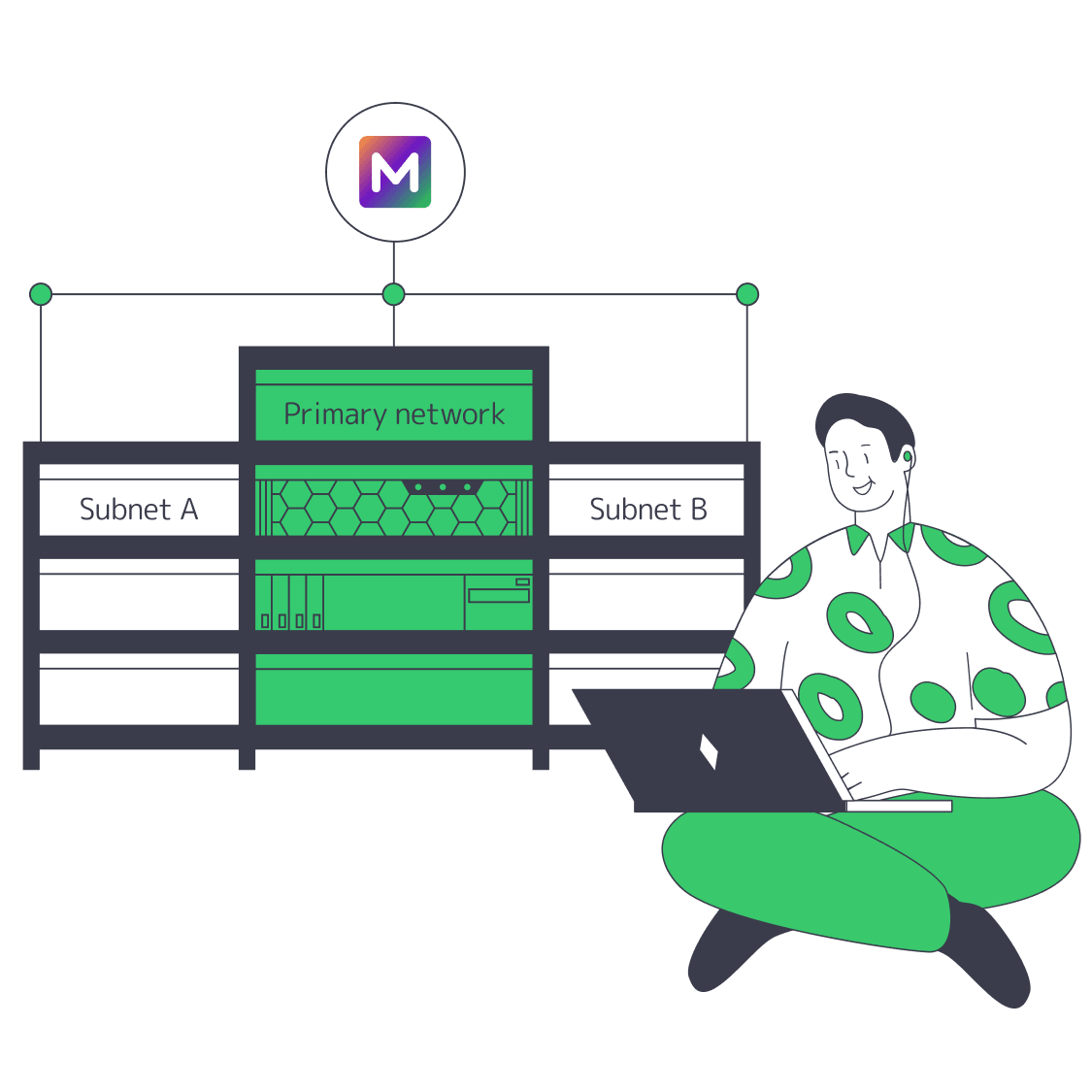
Metal presents itself as a Layer‑0 blockchain with a primary network and custom subnets. The design lets operators run separate validator sets and workloads while scaling horizontally; Metal says a subnet can process 4,500 TPS, with aggregate throughput growing as more subnets are added.
The catch for operators is structural. Metal calls the primary network “a special subnet”, and validators on custom subnets must also validate the primary network by staking at least 2,000 METAL. So a subnet validator inherits both base-network reliability requirements and subnet-specific policy requirements.
Those policies can be strict. Metal’s subnet framework allows validators to be limited by country, KYC/AML status, or licensing. Once those rules exist, physical location, privileged-access paths, and evidence-quality logs stop being “ops nice-to-haves” and become part of subnet compliance.
Metal Blockchain Node Requirements: Compute, Storage, and Networking Ports
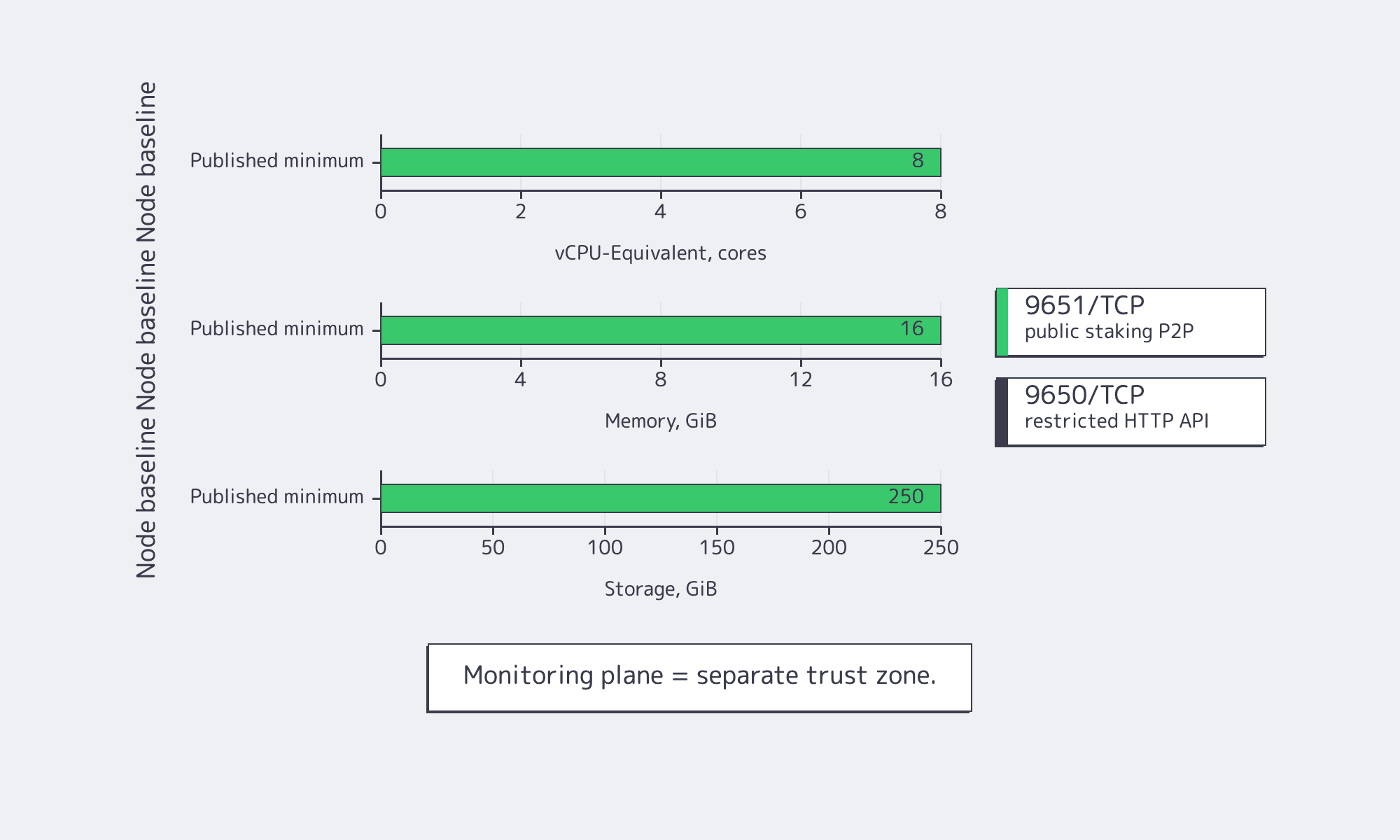
Metal’s manual deployment guide sets the baseline at 8 vCPU-equivalent, 16 GiB RAM, and 250 GiB of storage. That is enough to start; it is not always enough to stay healthy under long-lived connection growth, pruning, restores, or aggressive monitoring.
Metal Validator Node Minimum Specs vs. Production Sizing
| Node Role | Published Baseline | Ports and Exposure |
|---|---|---|
| Primary-network validator | 8 vCPU-equivalent, 16 GiB RAM, 250 GiB storage | 9651/TCP for staking P2P; 9650/TCP for HTTP API, usually restricted |
| Subnet validator | Production subnets should plan for at least five validators | Same node ports, plus any intentionally published subnet RPC paths |
| Monitoring plane | Treat as a separate trust zone | Metal warns common monitoring stacks are not hardened for public exposure |
Production sizing usually exceeds the baseline for two reasons. First, Metal’s offline pruning flow can temporarily increase disk pressure during maintenance. Second, MetalGo exposes --fd-limit because a busy node can accumulate enough peers and TCP sessions to make connection scale, not CPU, the first real failure point.
Metal Validator Node Ports and API Exposure Strategy
- 9651/TCP is the public staking port. Metal says inbound reachability is required for correct validator operation.
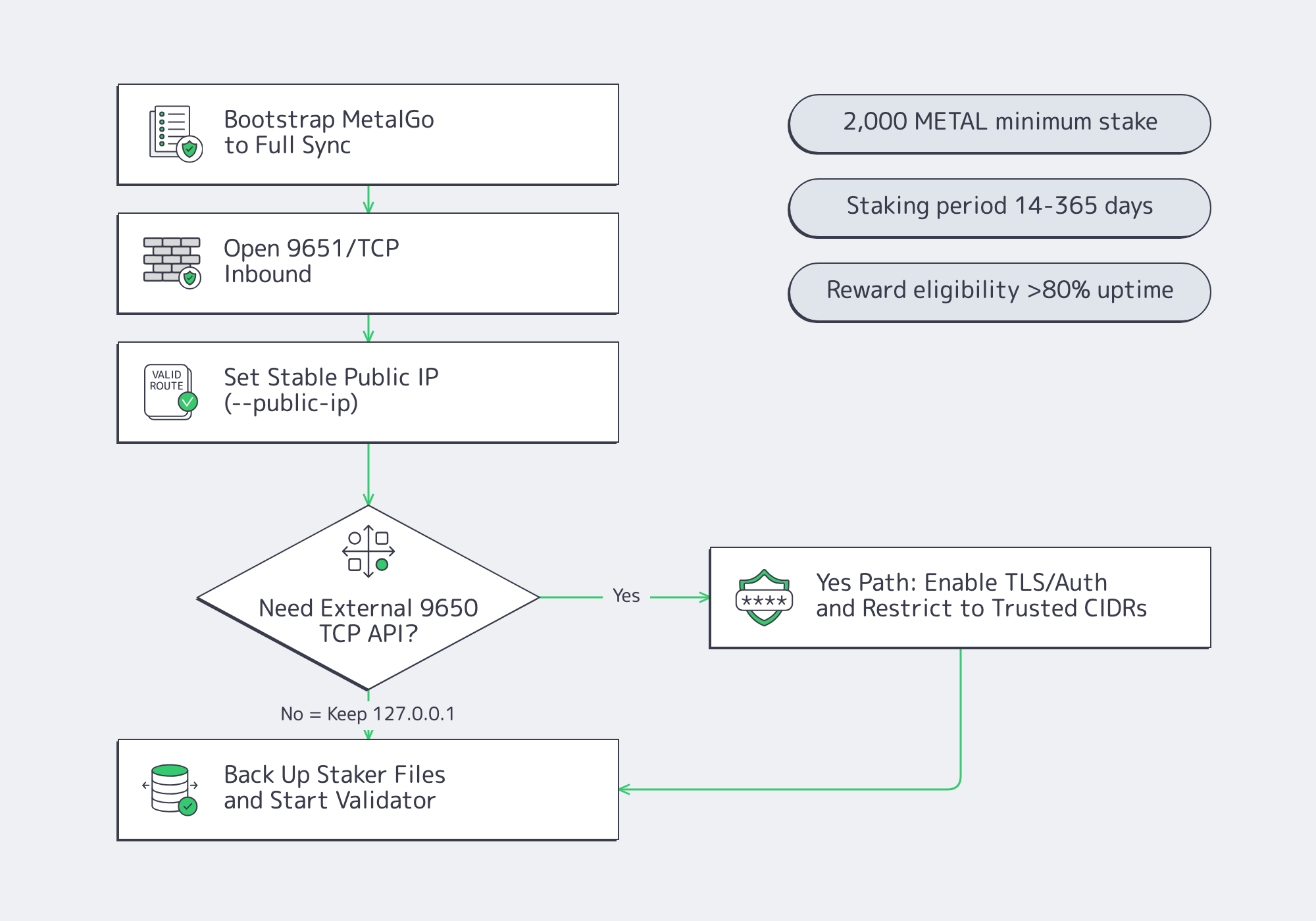
- 9650/TCP is the privileged HTTP API. It binds to 0.0.1 by default, which is exactly how most production teams should want it.
Metal also supports the controls that separate a working node from a defensible one: disable unused APIs, require authentication, and enable TLS. Geography matters too. An IEEE networking paper places propagation delay at roughly 5 μs/km in conventional fiber and 3.33 μs/km in near-air propagation. A subnet rule that pins validators to one jurisdiction also constrains your latency floor.
How to Run a Metal Blockchain Validator or Subnet Node on Bare Metal
A production Metal deployment starts with a fully synced node, exposes the staking path and little else, keeps the HTTP API private by default, and treats node identity, upgrades, and recovery as controlled workflows. The design goal is to separate consensus traffic, application traffic, and operator access before a failure forces that separation.
The working pattern is straightforward: bootstrap MetalGo to full sync, open inbound access for staking, set a stable public IP with --public-ip, and keep the HTTP plane limited to trusted sources if it must be reachable at all. Metal’s staking rules also make the business case for disciplined ops: validators need 2,000 METAL, a staking period of 2 weeks to 1 year, and more than 80% uptime to earn rewards. The validating host should keep only staking identity material; upgrades should always begin with staker-file backups.
What Infrastructure and Security Controls Metal Subnet Deployments Require
Metal subnet deployments need more than healthy hosts. They need launch-time governance controls, infrastructure that can satisfy location and access rules, and logs strong enough to stand up in review. In practice, keys, routing stability, privileged access, and evidence retention become part of subnet architecture, not background operations.
Governance Controls: Keys, Multisig, and “You Can’t Change It Later”
Metal’s mainnet subnet workflow requires a hardware wallet for signing, and Metal’s multisig deployment guide says multisig must be configured at deployment time and cannot be edited later. That is a blunt but useful constraint: keyholders, thresholds, and emergency procedures have to be correct before launch.
Compliance Rules: Location, Access Controls, and Evidentiary Logging
- Location and residency: a subnet can require validators in a specific country.
- Access control: privileged paths should be constrained and monitored, not exposed.
- Auditability: governance actions and infrastructure changes need evidence, not just good intentions.
Routing policy matters here too. Route leaks or hijacks can create soft outages that look like validator failure. Melbicom’s BGP Sessions support BYOIP, IPv4/IPv6, invalid-ROA rejection via RPKI, and IRR validation, which matters when endpoint stability and route auditability are part of the operating model.
Reliability Controls: Why “Five Validators” Is Only the Beginning
Metal says running a production subnet with fewer than five validators is “extremely dangerous” and “guarantees network downtime.” That is the minimum survivability number, not the resilience design.
- geographic separation, where subnet rules allow
- independent maintenance windows
- controlled upgrades
- avoidance of correlated misconfiguration
The reason to care is straightforward. In the Uptime Institute resiliency survey, more than half of respondents said their latest major outage cost > $100K, and network-related issues were the largest single cause. For validators, network architecture is a financial control.
Modern Secure Ops Pressure: Software Supply-Chain Integrity Is Now an Ops Concern
- A Federal Register notice on SBOM guidance points to more mature, machine-readable software inventory and risk workflows.
- SLSA treats provenance and build integrity as core supply-chain controls.
That lines up with NIST’s software supply-chain guidance: production node ops increasingly require proof of what binary is running, where it came from, and how it was delivered.
What a Production Deployment Checklist for Metal Blockchain Nodes Should Cover
A production checklist for Metal should protect the things that fail most often in the field: node identity, exposed control planes, recovery paths, upgrade discipline, and subnet governance. In practice, that means backing up staking material, keeping APIs private by default, preserving monitoring without widening exposure, and building redundancy around validator-set failure domains, not a single host.
Metal’s own docs call out the pressure points directly:
- the staker key and certificate are the node’s identity
- duplicate NodeIDs can damage uptime calculations
- monitoring stacks are not hardened for public exposure
- staker files should be backed up before upgrades
Use this cut-down deployment checklist:
- Identity and keys: back up crt, staker.key, and signer.key to 2+ secure locations.
- No duplicate identities: never run two live nodes with the same NodeID.
- Port discipline: keep exposure centered on 9651/TCP; restrict 9650/TCP to trusted sources if you open it at all.
- Public IP correctness: set
--public-ip“ - Connection and disk headroom: validate FD limits and leave spare storage for pruning and restore events.
- Monitoring and logging: keep dashboards off the public Internet and retain off-host logs for incident review.
- Patching and rollback: back up staker files before upgrades and make every version change reversible.
- Redundancy: diversify geography, routing, and maintenance windows where subnet rules allow.
- Governance security: use hardware-wallet signing and deployment-time multisig for mainnet subnets.
- Supply-chain verification: track the exact binary and provenance you are running.
Conclusion: Reliable Metal Blockchain Operations Are Designed, Not Improvised
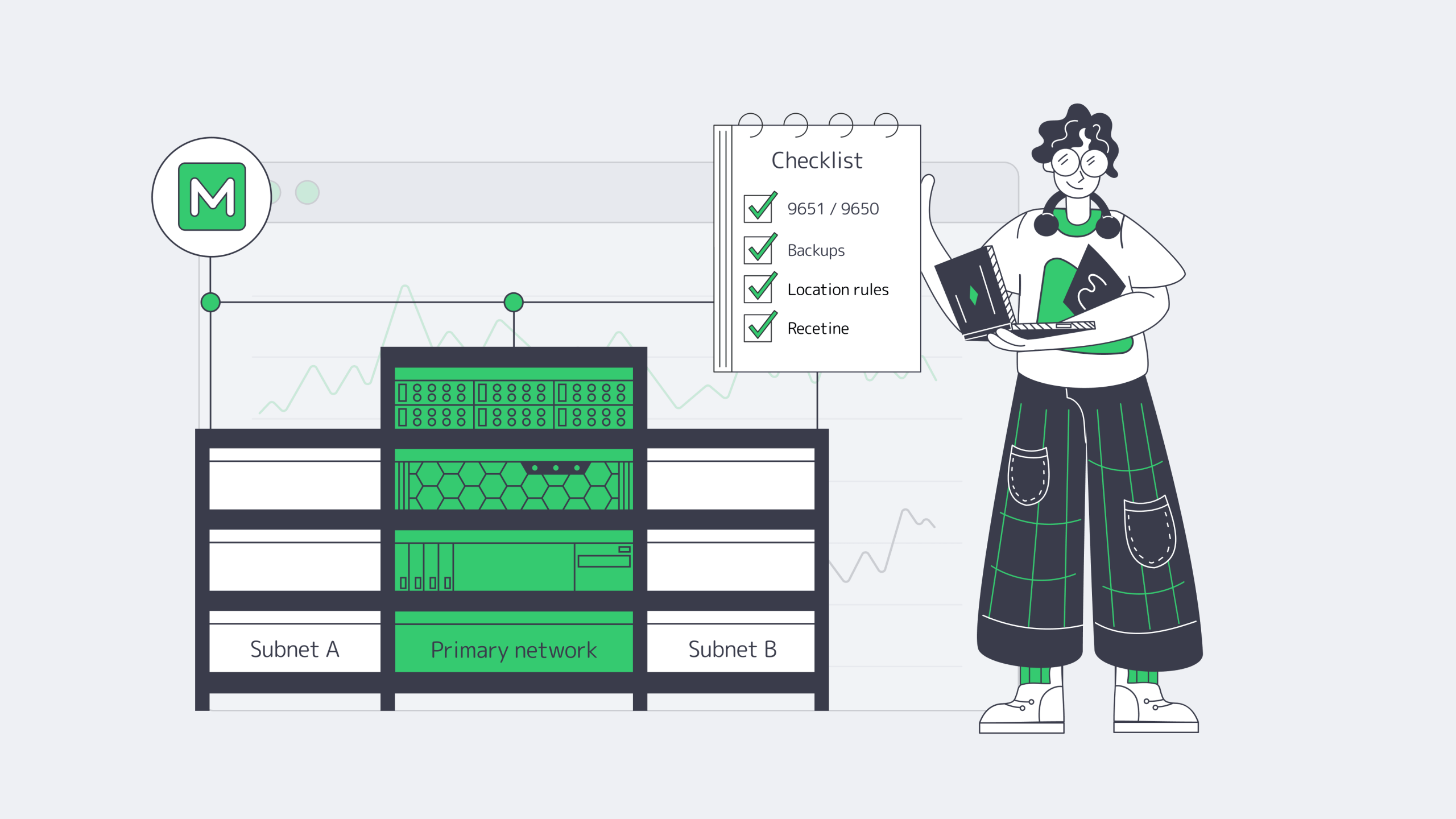
Metal’s Layer‑0-plus-subnets model gives teams flexibility, but it also turns infrastructure into part of the control plane. Validator uptime, subnet compliance, routing policy, access design, and recovery strategy all influence whether a deployment is merely online or actually production-ready.
That is why strong Metal operations start with deliberate hosting choices: correct geography, limited control-plane exposure, auditable admin paths, off-host backups, and enough headroom to survive pruning, restores, and upgrade mistakes. The best validator environment is not the cheapest one that boots; it is the one that keeps working when the easy assumptions break.
- Treat 9650/TCP as a control plane, not a public service.
- Choose validator locations that satisfy subnet rules before optimizing for convenience.
- Size for peer churn, pruning, and restores, not only steady-state averages.
- Keep staker identity, rollback artifacts, and monitoring data recoverable off-host.
- Build redundancy across failure domains that can be explained and audited.
Dedicated Servers for Metal Validators
Deploy Metal validator and subnet nodes on bare metal with stable routing, private API exposure, and enough headroom for pruning, restores, and uptime-sensitive operations.