
Month: December 2025
Blog
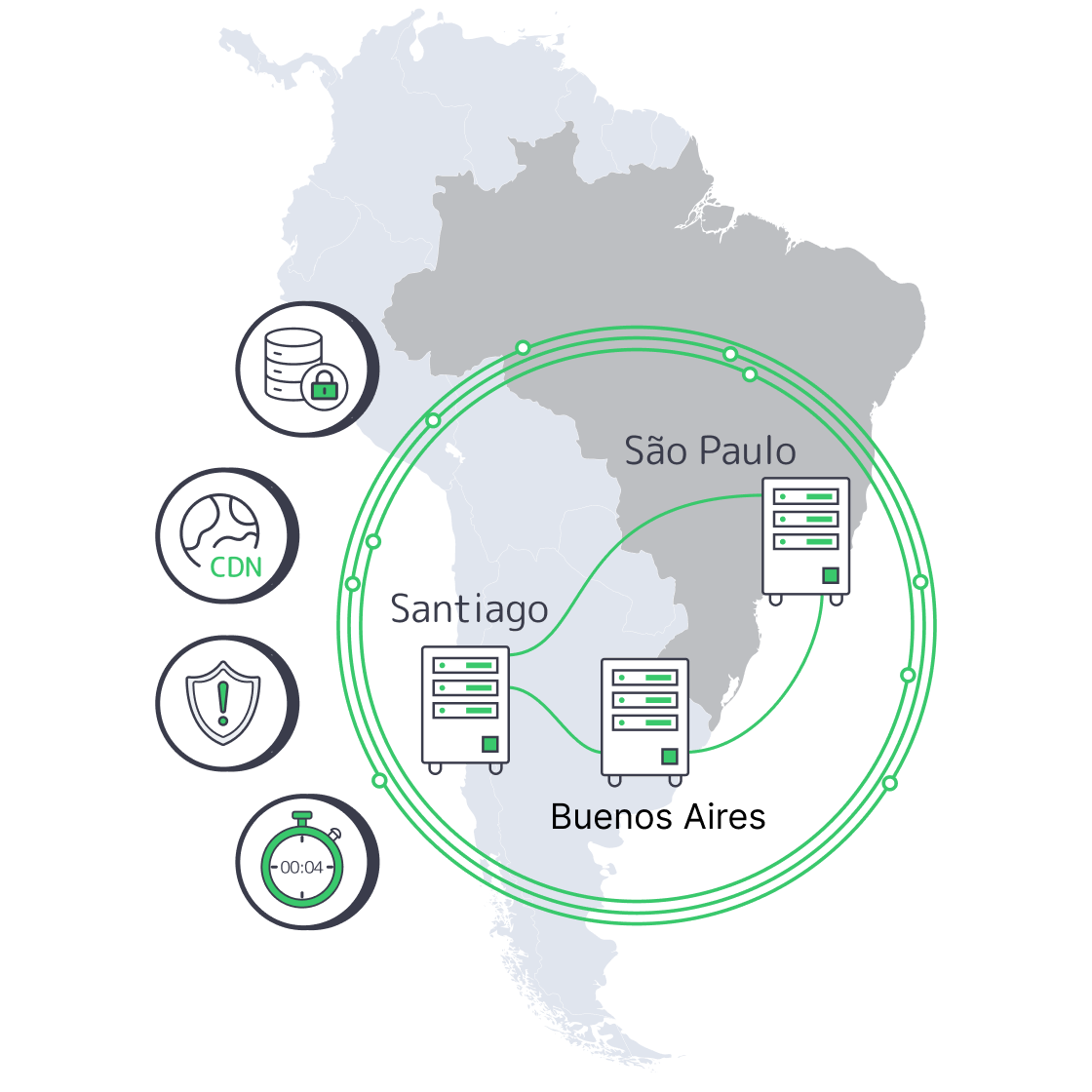
Active/Active Across São Paulo, Santiago, Buenos Aires
South America forces availability engineering to get honest—fast. When your workload is regulated (payments), adversarial (crypto), or real-time (iGaming cores), you don’t get to treat a region as “just another edge.” You have to prove uptime under partial failure: broken fiber segments, bad upstream routes, and the kind of cascading latency spikes that turn “highly available” into “highly unpredictable.”
This playbook shows how to run active/active clusters across São Paulo, Santiago, and Buenos Aires using dedicated hosting patterns that survive real incidents: transaction-safe replication, health-based traffic steering, and a CDN that can absorb volatility without masking it.
Choose Melbicom— Reserve dedicated servers in Brazil — CDN PoPs across 6 LATAM countries — 20 DCs beyond South America |
 |
South America Dedicated Server Requirements for “No-Excuses” Uptime
If you’re shopping for a South America dedicated server setup for 24/7 apps, don’t start with hardware checklists. Start with failure math:
- Every region is a set of metro failure domains. São Paulo, Santiago, and Buenos Aires are not just points on a map; they’re independent blast radii.
- Your data layer decides your uptime story. If the ledger can’t fail over safely, your active/active front end is theater.
- Routing must be health-based and reversible. Steer based on measured health (app + data), not on geography.
Diagram. The Three-Site Active/Active Shape
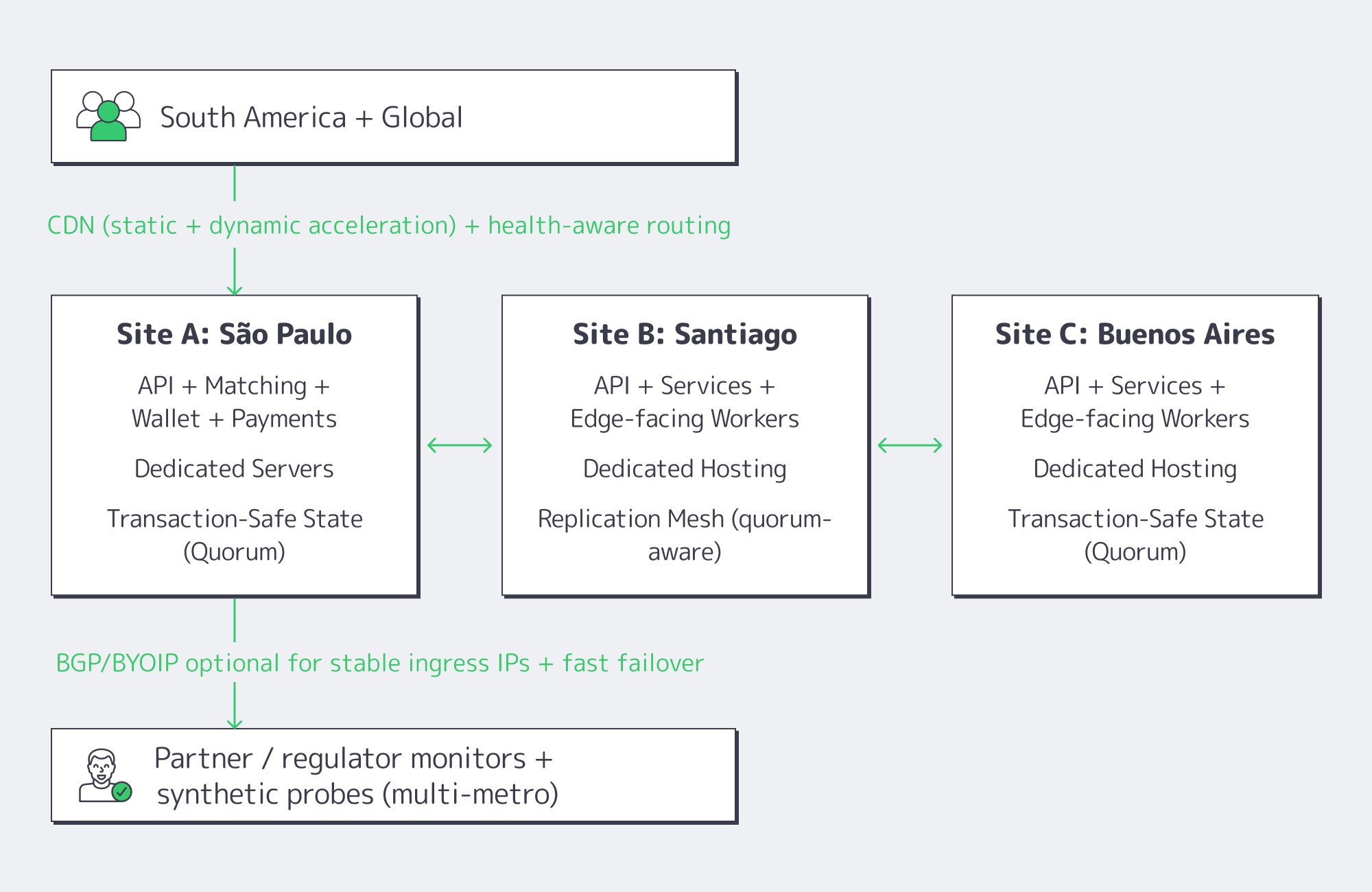
Melbicom supports the primitives you need for this design—BGP sessions (including BYOIP), private networking/inter-DC links, and S3-compatible object storage for snapshots/rollback artifacts—so your HA plan isn’t glued together from one-off scripts.
What Active/Active Dedicated Hosting Architecture Keeps 24/7 Apps Online Across South America?
Active/active that actually works in South America is a three-site design: each metro runs full production services, while a transaction-safe data core enforces correctness across sites. Put São Paulo on dedicated servers as the throughput anchor, use Santiago and Buenos Aires as equal peers, and front everything with health-based routing plus CDN shielding so failures degrade locally—not region-wide.
Dedicated Hosting in South America: The Stack That Holds Under Stress
For crypto exchanges, Web3 wallets, payment gateways, and iGaming cores, break the platform into three layers:
- Edge layer (CDN): static assets, API caching where safe, WAF rules if you use them, and the ability to steer around failures quickly.
- Stateless service layer: auth, pricing, game logic, matchmaking, session services—everything horizontally scalable.
- State layer: balances, orders, settlements, wallet state, player economy—anything that can’t be “eventually fixed” after an incident.
Melbicom’s CDN is explicitly built for multi-origin routing and automatic failover, delivered through 55+ PoPs in 36 countries (including Brazil, Argentina, Chile, Peru, and Columbia), which matters because the edge is where you buy time during a regional brownout (latency spikes, packet loss, upstream route churn).
São Paulo as the Regional Anchor (And Why It’s Not Optional)
São Paulo is where South America’s “always-on” backends usually converge because it’s the region’s interconnection gravity well: from there, you can reach IX.br’s 2,400+ networks, and latency can drop dramatically once you stop tromboning traffic via other continents.
Which Replication Strategy Between São Paulo, Santiago, and Buenos Aires Can Meet Strict RPO/RTO Targets?
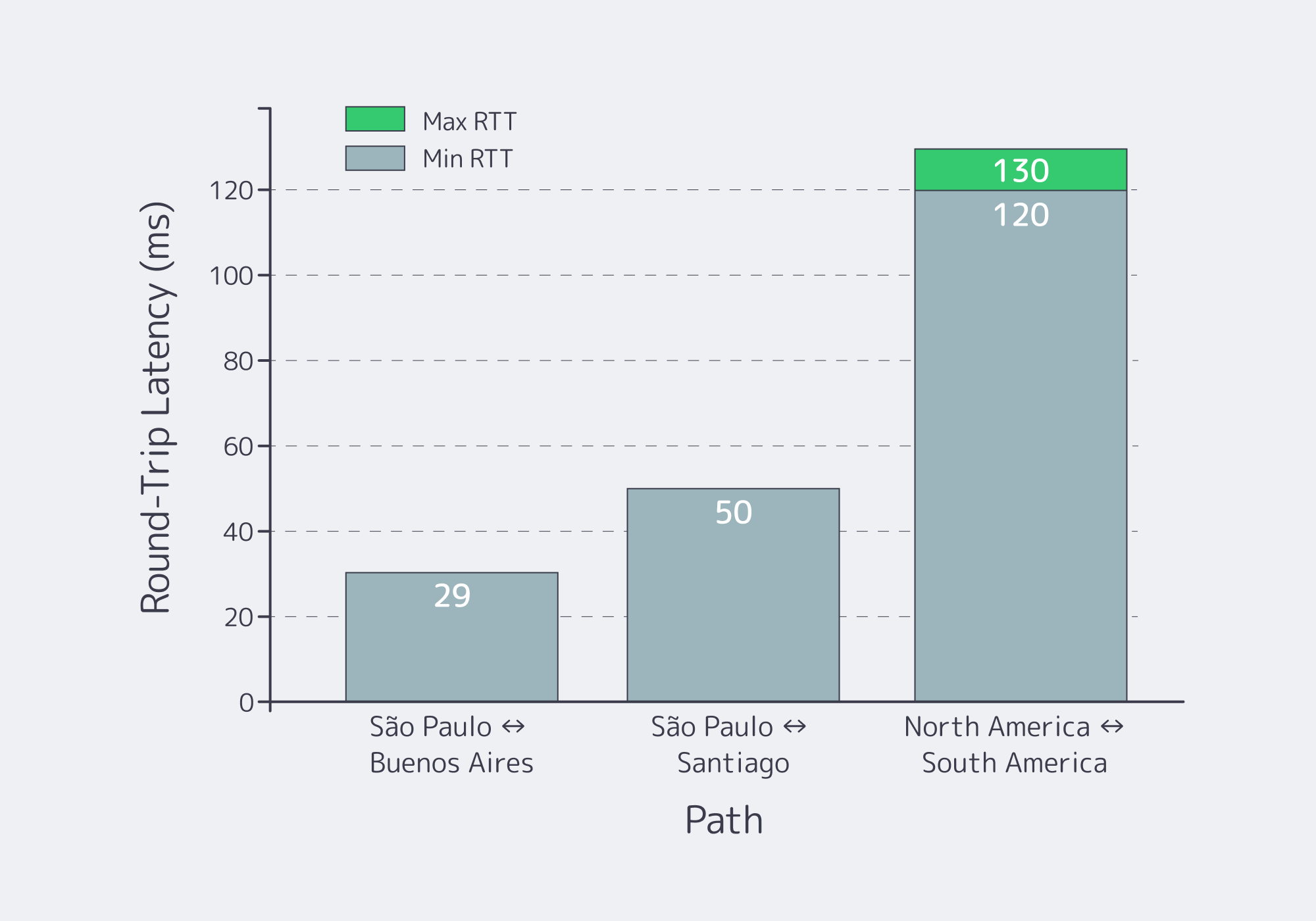
The replication strategy that hits strict targets is quorum-based, transaction-safe replication for the critical ledger, paired with asynchronous replication for everything else. Use synchronous commits only where “no lost transaction” is a hard requirement; otherwise replicate asynchronously with monitored lag. This yields near-zero RPO for the ledger and minute-scale RTO with automated promotion.
The Practical Replication Split: “Ledger vs. Everything Else”
A workable pattern in regulated systems:
- Tier 0 (Ledger / balances / settlement): quorum-based replication (Raft/Paxos-style consensus or another transaction-safe system) across three metros.
- Tier 1 (Orders, sessions, gameplay state): async replication + idempotency + replay.
- Tier 2 (analytics, logs, non-critical caches): async batch replication or rebuild.
Table: Replication Choices and Realistic RPO/RTO Outcomes
| Replication Mode (Three-Site) | Realistic RPO | Realistic RTO |
|---|---|---|
| Quorum-based, synchronous commit for ledger | 0 for committed txns | ~30–180s (automated failover + routing convergence) |
| Async replication with monitored lag (services + read models) | seconds (bounded by lag alarms) | ~1–5 min (promote + warm caches) |
| Snapshot/backup-driven recovery (last resort) | minutes to hours | hours (restore + rehydrate + verify) |
These are engineering targets, not marketing numbers. You only get the top row if you keep the quorum small (3 sites), keep the critical dataset scoped (ledger-only), and make routing conditional on data health—not just HTTP health.
Brazil Deploy Guide— Avoid costly mistakes — Real RTT & backbone insights — Architecture playbook for LATAM |
 |
Which Traffic Routing and CDN Pattern Across South America Maximizes Uptime for Regulated Workloads?
Use a two-tier routing design: CDN first (multi-origin + health checks) for everything cacheable and latency-sensitive, and BGP/BYOIP-based stable ingress for APIs that must keep fixed endpoints. Route only to sites that are healthy at both the app layer and the data layer; otherwise you’ll fail “correctly” but still break users.
Health-Based Routing That Isn’t Geo-DNS
Skip old geo-DNS tricks. Use:
Real health signals (not just “port open”):
- API p95 latency
- dependency health (DB quorum status, replication lag thresholds)
- queue depth / saturation
A routing controller that can make the call:
- CDN origin selection for web + assets
- L7 load balancer decisions for APIs
- BGP failover/anycast when fixed IPs are required
Melbicom’s BGP service is designed for this category of control—BGP at every data center, with routing policy support and IRR integration—so you can keep endpoints stable while still failing over quickly.
The CDN Pattern: Shield + Multi-Origin + Fast Purge
For regulated workloads, CDN is not “just static assets.” It’s a resilience layer:
- Origin pooling: keep three origins hot (SP/SCL/BUE) and route to the best healthy one.
- Shielding: reduce cross-border chatter by collapsing cache misses to a regional shield (often São Paulo), then distribute.
- Fast purge + versioned assets: when you push a critical client fix (wallet UI, payment flow), purge globally without waiting on TTL drift.
Melbicom’s CDN delivers instant cache purge across PoPs and supports multi-origin routing patterns explicitly.
Code example: a concrete “Only Route If Data Is Safe” gate
Below is a simple pattern, not a vendor-specific magic trick: the router only sends traffic to a site if (1) the API is healthy and (2) the site reports “ledger quorum OK” or “replication lag < threshold.”
| | routing_policy:sites:sao_paulo:http_health: https://sp.example.com/healthzdata_health: https://sp.example.com/ledger-quorumsantiago:http_health: https://scl.example.com/healthzdata_health: https://scl.example.com/ledger-quorumbuenos_aires:http_health: https://bue.example.com/healthzdata_health: https://bue.example.com/ledger-quorumdecision:- if: “data_health != OK”action: “drain_site” # do NOT route writes here- if: “http_health != OK”action: “remove_from_pool”- else:action: “weighted_route” # bias nearest healthy site | |
This is how you avoid the most common active/active failure mode: routing users to a site that’s “up” but not safe.
FAQ
Does active/active mean “no downtime ever”?
No. It means you can survive site failure without a full outage. You still need maintenance windows, rollback plans, and a strict definition of “correctness” under partial failure.
Can we hit zero RPO and sub-minute RTO at the same time?
For the ledger: often yes, if you scope the synchronous/quorum system to the critical dataset and keep automated routing tied to data health. For all state: usually no, because latency becomes the outage.
Where does object storage fit?
Use S3-compatible object storage for snapshots, rollback artifacts, and forensic retention. It’s not your hot-path database; it’s your “recover and prove” layer.
Closing the Loop: Proving Uptime, Not Promising It

The South America active/active story that passes scrutiny is simple: three metros, a ledger that replicates safely, and routing that refuses to lie. If São Paulo is degraded, Santiago and Buenos Aires should keep serving—but only when the data layer says it’s safe. If the data layer isn’t safe, you fail closed, preserve correctness, and recover fast.
Before going live, document the failure model you’re willing to survive (loss of one metro, loss of one interconnect path, partial packet loss), then build the telemetry and routing gates to enforce it. That’s what regulators, partners, and enterprise customers ultimately care about: not the diagram, but the evidence trail.
- Treat the ledger as a separate system with its own RPO/RTO targets; don’t let it inherit the “stateless scaling” assumptions of the API tier.
- Gate routing on data health, not just HTTP health (quorum status, replication lag, write availability).
- Keep a playbook for draining a site (read-only mode, write redirection, cache shielding) that can be executed automatically and verified externally.
- Use CDN as a resilience amplifier (multi-origin + shielding + purge discipline), not as a UX-only tool.
- Store rollback artifacts and snapshots where they can be audited and restored—then test restores as a scheduled production exercise.
Plan your São Paulo active/active rollout
Talk to our engineers about BGP/BYOIP, CDN, and S3-backed rollback so your South America active/active design is measurable, testable, and resilient.
Get expert support with your services
Blog

From São Paulo to a Five‑City Production Mesh
For businesses that already work in Europe or North America, South America is no longer an optional region. Latin America’s cloud infrastructure market is expected to grow at 21.7% CAGR from 2024 to 2031, reaching about USD 131 billion by 2031, with Brazil alone over USD 12.9 billion in 2024.
Mobile gaming is on a similar trajectory: South America’s mobile gaming market is about USD 3.23 billion in 2025 and forecast to reach USD 5.21 billion by 2030. iGaming and Web3 traffic are following the same arc, with SOFTSWISS reporting portfolio and jackpot programs that boost player turnover by up to 50% in the region.
At the same time, Brazil’s IX.br system has become a gravity center for the entire continent. Aggregated traffic across IX.br exchanges has exceeded 31 Tbit/s, with São Paulo alone crossing 22 Tbit/s and connecting more than 2,400 ASNs. If you care about deposits, bets, or on-chain events clearing in real time, your South America story starts in São Paulo.
Choose Melbicom— Reserve dedicated servers in Brazil — CDN PoPs across 6 LATAM countries — 20 DCs beyond South America |
|
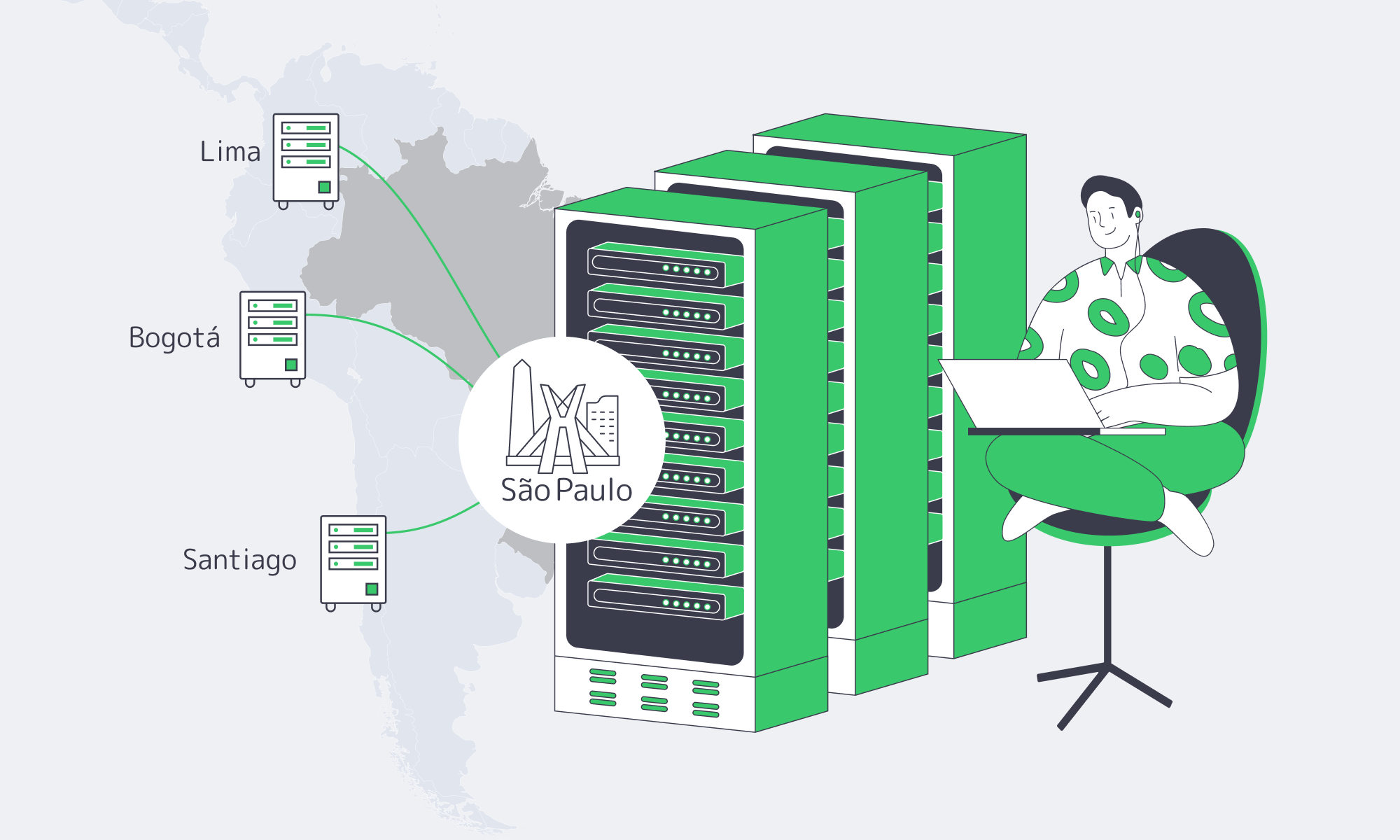
This article lays out a practical expansion path: starting with a single dedicated server in São Paulo, then layering CDN South America coverage and additional cities—Buenos Aires, Santiago, Bogotá, Lima—while balancing dedicated hosting in South America against caching, routing, and data‑residency constraints.
Why São Paulo Should Be Your First South American Dedicated Server Location
IX.br São Paulo is the region’s switchboard: top‑three IXP globally by traffic, with local paths between São Paulo and Rio typically in the low‑single‑digit millisecond range when you sit inside the ecosystem. That makes a dedicated server in South America, located in São Paulo, the logical first origin for anything latency‑sensitive.
We at Melbicom are building Brazil as a full‑fledged hub: São Paulo capacity is anchored in a robust data center, with integration into IX.br for dense local peering. From there, your flows can either stay entirely within Brazil or exit toward Atlanta (US‑Southeast) and Madrid on tuned, Tier 1‑backed paths via our 20+ transit providers and 25+ IXPs worldwide.
Once you have that first node, the question shifts from “Should we be in Brazil?” to a more detailed series of questions: Where do we rely on CDN? How do we keep data compliant and routes sane as we expand beyond São Paulo?
Which Cities Need Dedicated Server vs CDN?
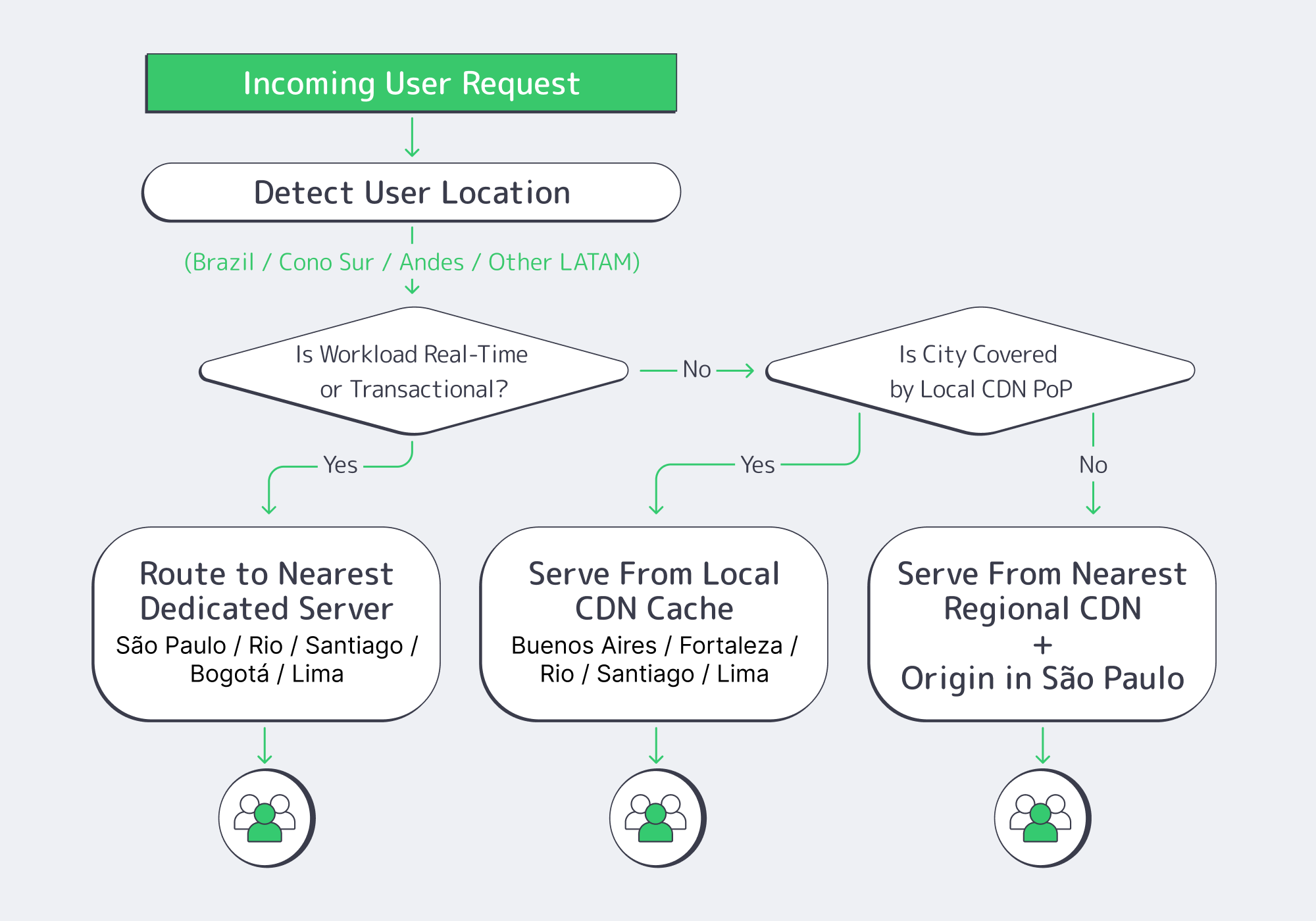 Use São Paulo for dedicated servers that handle stateful, money‑moving, or real‑time gameplay, and lean on CDN in Buenos Aires, Santiago, Bogotá, and Lima for static and semi‑static content. As volumes grow, graduate CDN‑only cities into mixed models by watching latency, rebuffering, and conversion curves.
The practical rule: dedicated hosting South America is for write‑heavy, high‑value flows that cannot tolerate extra round trips (bets, on‑chain events, stateful matchmaking, KYC flows). CDN South America is for media, assets, and any API call that tolerates a tiny bit of cache staleness or regional aggregation.
Today Melbicom’s CDN runs PoPs in Buenos Aires, Bogotá, Santiago, and Lima, among others, giving you a regional mesh even before you deploy new origin nodes.
A common pattern looks like this:
- Dedicated servers in São Paulo handle core transactional workloads for Brazil and, initially, much of the continent.
- CDN PoPs in Buenos Aires, Santiago, Bogotá, Lima terminate static and semi‑static traffic locally: game assets, static API responses, images, on‑chain state snapshots.
The outcome: Brazil‑origin traffic stays inside Brazil; Southern Cone traffic uses Santiago/Buenos Aires edges that shield the origin; Andean flows get localized reads while writes traverse optimized paths to São Paulo or your upstream hubs in Atlanta and Madrid.
Brazil Deploy Guide— Avoid costly mistakes — Real RTT & backbone insights — Architecture playbook for LATAM |
|
Which South American Location to Choose After São Paulo?
After a single São Paulo origin, typical sequencing is Baires for Southeast, Santiago for Cono Sur, then Bogotá and Lima for Andean mobile usage. Each step should follow measured demand and regulatory checks, not a single launch date, so you avoid stranded capacity or surprise compliance gaps.
A practical South America dedicated server build‑out usually goes through five stages:
| Stage | Trigger Signal (Business / Ops) | Recommended Move (Dedicated vs CDN) |
|---|---|---|
| 1 – São Paulo MVP | Brazil is ≥15–20% of revenue; high complaint rate about Brazil latency. | Deploy 1–2 dedicated servers in São Paulo as the regional origin; use CDN for rest of LATAM. |
| 2 – Cono Sur Expansion | Material user base in Chile/Argentina; streaming or live‑ops uptake. | Deepen CDN use in Santiago/Buenos Aires; keep origin in São Paulo unless origin RTT visibly hurts conversion or retention. |
| 3 – Andean Focus | Colombia/Peru traffic growing faster than Brazil; mobile‑only cohorts dominate. | Use Lima and Bogotá PoPs heavily; plan dedicated servers in at least one Andean capital when active user concurrency and regulatory needs converge. |
| 4 – Five‑City Mesh | Region behaves like 3–5 distinct markets; local compliance pressures increase. | Run dedicated servers in Brazil plus at least one origin per sub‑region, with CDN layering everywhere. |
This staged approach mirrors the broader cloud infrastructure story: Latin America’s cloud infrastructure market already exceeds USD 30 billion and is growing at 21.7% CAGR, but investments are far from evenly distributed. You buy time and optionality, not just capacity.
Early on, CDN buy you coverage and cost-effective offload. As TCP handshakes and stateful latency start to drag KPIs—bet confirmation lag, in-app purchase completion, or Web3 transaction finality—you promote a city from “edge-only” to “edge + dedicated origin.”
Local Data Residency, LGPD, and Cross‑Border Patterns

Infrastructure decisions in South America are now inseparable from data‑residency questions. Brazil’s LGPD has been in force since 2020; recent regulations (ANPD Resolution 19/2024) clarify cross‑border transfers via standard contractual clauses and adequacy‑style mechanisms, rather than imposing blanket data localization.
For many platforms, that translates into a simple playbook:
- Keep primary Brazilian PII in Brazil. Store customer profiles, KYC data, and transactional logs on dedicated servers in São Paulo, potentially with encrypted replicas in another jurisdiction.
- Move telemetry and aggregates freely. Anonymized analytics and gameplay metrics can safely live in Atlanta or Madrid, provided your legal basis and contracts are aligned.
- Treat other LATAM countries as “regulated but pragmatic.” Argentina and Mexico, for example, emphasize purpose limitation and cross‑border safeguards rather than hard localization rules; regulators still expect you to know where your primary stores sit and how you handle international transfers.
Routing ties this together. Without tuning, flows from Chile or Peru to Brazil can hairpin via the United States. With BGP sessions on your dedicated servers (free on Melbicom’s dedicated platform), you can:
- Prefer routes that keep Brazilian data inside Brazil when possible.
- Use regional peers so Santiago/Baires traffic reaches São Paulo directly, not via Miami.
- Steer non‑sensitive analytics toward Atlanta or Madrid where your global data lakes live.
The goal is to make South America dedicated hosting feel local to users and regulators while still benefiting from global hubs.
Who Can Design a Brazil‑First Mesh?
You want a provider that combines both dedicated hosting and CDN coverage in South America, and BGP expertise, plus the ability to ship custom servers in days, not months. Melbicom fits that profile, aligning São Paulo capacity, CDN PoPs, and procurement planning with your release roadmap.
Melbicom operates 21 Tier III/IV data centers worldwide and a CDN with 55+ PoPs across 36 countries, including South American locations such as Baires, Bogotá, Santiago, or Lima. That combo lets us treat origin + edge as one fabric rather than two disconnected systems.
Custom server configurations are typically delivered in 3–5 business days (including Ryzen/Xeon/EPYC CPUs, DDR4/DDR5 RAM, NVMe storage, with optional GPU) and free BGP sessions on dedicated servers give your network team full routing control.
Because Melbicom runs both the CDN and the dedicated hosting stack, cache misses stay on‑net: a Lima or Santiago PoP pulling from a São Paulo origin uses regional paths, not surprise trans‑oceanic backhaul. That simplifies latency tuning and cost control for Web3, iGaming, and mobile gaming workloads.
Key Steps to Expanding in South America (without the Big Bang)
Rather than lighting up five cities at once, treat South America as a rolling program with explicit decision gates. In practice, a low‑risk plan for dedicated hosting in South America and regional caching looks like this:
- Start with a single, well‑provisioned São Paulo origin. Give yourself headroom on CPU, NVMe, and bandwidth so you are not rebuilding hardware during your initial Brazil launch window.
- Lean hard on the existing CDN mesh. Use PoPs in Buenos Aires, Bogotá, Santiago, and Lima as your first line of defense for assets and semi‑static APIs. Watch hit ratios, TTFB, and rebuffering before ordering new servers.
- Promote cities based on lived metrics. When a metro’s concurrency, transaction value, or regulatory exposure crosses your internal threshold, move it from CDN‑only to a combination of CDN plus dedicated origin.
- Tie procurement to milestones, not dates. Map hardware orders to growth signals (DAU, GGR, or TVL bands) and regulatory inflection points, so you avoid shipping racks into cities that never quite materialize in your revenue mix.
- Make BGP and data‑residency part of the design, not a retrofit. Decide early which flows must remain in‑country, which can land in Atlanta or Madrid, and how you prefer routes between Brazil and its neighbors.
These are infrastructure decisions, but they are really business risk decisions: you are trading capital outlay, regulatory exposure, and performance headroom against each other at every step.
Planning Your South America Dedicated Server Mesh
By the time you reach a five‑city mesh—São Paulo, Baires, Santiago, Bogotá, Lima—your region behaves more like a mini‑continent than a single “LatAm” market. Users expect local responsiveness; regulators expect clarity on where data lives; and finance expects that your capacity curve tracks revenue, not hope.
A good South America dedicated server strategy keeps three constraints in balance:
- Latency: Keep real‑time traffic on origins as close as possible to users, with São Paulo as the anchor and regional hubs for Cono Sur and the Andes.
- Compliance: Align data stores and cross‑border routes with LGPD and local rules; don’t let operational convenience accidentally dictate your residency story.
- Capital discipline: Use CDN and BGP tuning to delay expensive moves, but not so long that latency and uptime begin to erode user trust and lifetime value.
Done well, your footprint evolves from a single Brazilian node into a resilient mesh where São Paulo, Buenos Aires, Santiago, Bogotá, and Lima each play defined roles, some as heavy origins, some as cache-first edge cities, all connected via predictable routes to the USA and Europe where your main customer base is located.
Plan your Brazil‑first server rollout
Get a tailored plan for São Paulo origins, CDN coverage, and BGP routing across South America. Our team maps latency, compliance, and capacity milestones to a phased buildout.
Get expert support with your services
Blog

Dedicated Servers for Decentralized Storage Networks
Decentralized storage stopped being a curiosity the moment it started behaving like infrastructure: predictable throughput, measurable durability, and node operators that treat hardware as a balance sheet, not a weekend project. That shift tracks the market. Global Market Insights estimates the decentralized storage market at $622.9M in 2024, growing to $4.5B by 2034 (22.4% CAGR).
The catch is that decentralization doesn’t delete physics. It redistributes it. If you want to run production-grade nodes—whether you’re sealing data for a decentralized storage network or serving content over IPFS—your success is gated by disk topology, memory headroom, and the kind of bandwidth that stays boring under load.
Choose Melbicom— 1,300+ ready-to-go servers — 21 global Tier IV & III data centers — 55+ PoP CDN across 6 continents |
 |
Decentralized Storage Nodes: Where the Real Bottlenecks Live
You can spin up a lightweight node on a spare machine, and for demos that’s fine. But professional decentralized storage providers are solving a different problem: ingesting and proving large datasets continuously without missing deadlines, dropping retrievals, or collapsing under “noisy neighbor” contention.
The scale is already real. The Filecoin Foundation notes that since mainnet launch in 2020,the network has grown to nearly 3,000 storage providers collectively storing about 1.5 exbibytes of data. That’s 1.5 billion gigabytes distributed across thousands of independent nodes—far beyond hobby hardware.
That scale pushes operators toward dedicated servers because the constraints are brutally specific: capacity must be dense and serviceable (drive swaps, predictable failure domains); I/O must be tiered (HDDs for bulk, SSD/NVMe for the hot path); memory must absorb caches and proof workloads without thrashing; and bandwidth must stay consistent when retrieval and gateway traffic spike.
In other words: decentralized cloud storage isn’t “cheap storage from random disks.” It’s a storage appliance—distributed.
Decentralized Blockchain Data Storage

Decentralized blockchain data storage merges a storage layer with cryptographic verification and economic incentives. Instead of trusting a single provider’s dashboard, clients rely on protocol-enforced proofs that data is stored and retrievable over time. Smart contracts or on-chain deals govern payments and penalties, turning “who stored what, when” into a verifiable ledger rather than a marketing claim.
This is where centralized vs decentralized storage stops being ideological and becomes operational. Centralized systems centralize trust; decentralized storage networks distribute trust and enforce it with math. The price is heavier, more continuous work on the underlying hardware: generating proofs, moving data, and surviving audits.
Explaining How Decentralized Cloud Storage Works With Blockchain Technology
Decentralized cloud storage uses a blockchain (or similar consensus layer) to coordinate contracts and incentives among independent storage nodes. Clients make storage deals, nodes periodically prove they still hold the data, and protocol rules handle payments and penalties. The chain anchors “who stored what, when” and automates enforcement—without a single trusted storage vendor.
Under the hood, production nodes behave like compact data centers. You’re not just “hosting files”; you’re running data pipelines: ingest payloads, encode or seal them, generate and submit proofs on schedule, and handle retrieval or gateway traffic. The blockchain is the coordination plane and the arbiter; the hardware has to keep up.
Deployment Is Getting Faster—and More OPEX‑Friendly
The industry trend is clear: shorten the time between “we want to join the network” and “we’re producing verified capacity.” In one Filecoin ecosystem example, partners offering predefined storage‑provider hardware and hosted infrastructure cut time‑to‑market from 6–12 months to 6–8 weeks, turning what used to be a full data‑center build into a matter of weeks. That shift reframes growth: you expand incrementally, treat infrastructure as OPEX, and avoid the “buy everything upfront and hope utilization catches up” trap.
A high‑performance dedicated server model fits that pattern. Instead of buying racks, switches, and PDUs, you rent single‑tenant machines in existing facilities, pay monthly, and scale out node fleets as protocol economics justify it.
| Factor | Build (CAPEX) | Rent (OPEX) |
|---|---|---|
| Upfront Cost | Large hardware purchase | Monthly or term spend |
| Deployment Time | Procurement + staging | Faster provisioning |
| Hardware Refresh | You fund and execute upgrades | Provider manages lifecycle |
| Scaling | Stepwise, slower | Add nodes as needed |
| Maintenance | Your ops burden | Shared support and replacement model |
| Best Fit | Stable, long‑run fleets | Fast expansion or protocol pilots |
Decentralized Content Identification and IPFS Storage

IPFS flips the addressing model: you don’t ask for “the file at a location”; you ask for “the file with this identity.” In IPFS terms, that identity is a content identifier (CID)—a label derived from the content itself, not where it lives. CIDs are based on cryptographic hashes, so they verify integrity and don’t leak storage location. This is content addressing: if the content changes, the CID changes.
In practical terms, decentralized file storage performance often comes down to where and how you run your IPFS nodes and gateways. Popular content may be cached widely, but someone still has to pin it, serve it to gateways, and move blocks across the network. If those “someones” are running on underpowered hardware with weak connectivity, you’ll see it immediately as slow loads and timeouts.
Bringing IPFS into production usually involves:
- Pinning content on dedicated nodes so it doesn’t disappear when caches evict it.
- Running IPFS gateways that translate CID requests into HTTP responses.
- Using S3 storage and CDNs in front of IPFS to smooth out latency + absorb read bursts.
That’s exactly where dedicated servers shine: you can treat IPFS nodes as persistent origin servers with high‑bandwidth ports, local NVMe caches, and large HDD pools—then rely on a CDN to fan out global distribution.
Hardware Demands in Practice: Build a Node Like a Storage Appliance
The winning architecture is boring in the best way: isolate hot I/O from cold capacity, avoid resource contention, and over‑provision the parts that cause cascading failures.
Decentralized Storage Capacity Is a Disk Design Problem First
Bulk capacity still wants HDDs, but decentralized storage nodes are not just “a pile of disks.” Filecoin’s infrastructure docs talk explicitly about separating sealing and storage roles, and treating bandwidth and deal ingestion as first‑class design variables. The pattern is roughly:
- Fast NVMe for sealing, indices, and hot data.
- Dense HDD arrays for sealed sectors and archival payloads.
- A topology that lets you replace failed drives without jeopardizing proof windows.
Memory Is the Shock Absorber for Proof Workloads and Metadata
Proof systems and high-throughput storage stacks punish tight memory budgets. In Filecoin’s reference architectures, the Lotus miner role is specified at 256 GB RAM, and PoSt worker roles are specified at 128 GB RAM—a blunt signal that “it boots” and “it proves on time” are different targets.
Bandwidth Isn’t Optional in a Decentralized Storage Network
Retrieval, gateway traffic, replication, and client onboarding all convert to sustained egress. Filecoin’s reference architectures explicitly call out bandwidth planning tied to deal sizes, because bandwidth is part of whether data stays usable once it’s stored.
A snapshot of what “serious” looks like: the Filecoin Foundation profile of a data center describes a European storage-provider facility near Amsterdam contributing 175PiB of capacity to the network, connected via dark fiber links into Amsterdam, and serving 25 storage clients. That is pro-grade infrastructure being used to power decentralized storage.
Melbicom runs into this reality daily: the customers who succeed in production are the ones who provision for sustained operations, not peak benchmarks. Melbicom’s Web3 hosting focus is built around that exact profile—disk-heavy builds, real memory headroom, and high-bandwidth connectivity tuned for decentralized storage nodes.
Web3 Storage Scales on the Same Basis as Every Other Storage System

Decentralized storage networks are converging on mainstream expectations: consistent retrieval, verifiable durability, and economics that can compete with traditional cloud storage—without collapsing into centralized control. The way you get there is not mysterious: tiered disks, sufficient memory, and bandwidth that can carry both ingest and retrieval without surprises.
Dedicated servers are the pragmatic bridge between decentralized ideals and decentralized cloud storage as a product. They turn node operation into engineering: measurable and scalable. Whether you are running Filecoin storage providers, IPFS gateways, or other decentralized storage network roles, the playbook looks like any serious storage system—just deployed across many independent operators instead of a single cloud.
Practical Infrastructure Recommendations for Decentralized Storage
- Treat nodes as appliances, not pets. Standardize a small number of server “shapes” (e.g., sealing, storage, gateway) so you can scale and replace them predictably.
- Tier storage aggressively. Put proofs, indices, and hot data on NVMe; push sealed or archival sectors to large HDD pools. Avoid mixing hot and cold I/O on the same disks.
- Over‑provision memory for proofs. Aim for RAM budgets that comfortably cover proof processes, OS, observability, and caching—especially on sealing and proving nodes.
- Size bandwidth to your worst‑case retrieval. Design for sustained egress and replication under peaks; use 10+ Gbps ports where retrieval/gateway traffic is critical.
- Plan for regional and provider diversity. Distribute nodes across multiple DCs and regions when economics justify it, to reduce latency and mitigate regional failures.
Deploy Dedicated Nodes for Web3 Storage
Run decentralized storage on single-tenant servers with high bandwidth, NVMe, and dense HDDs. Deploy Filecoin and IPFS nodes fast with top-tier data centers and unmetered ports.
Get expert support with your services
Blog

GPU-Optimized Servers for ZK Proofs & Web3 Research
Zero-knowledge proofs (ZKPs) have moved from “clever crypto demo” to production infrastructure: ZK-rollups, privacy-preserving DeFi, ZK-based identity, and data-availability schemes all rely on generating proofs at scale. That’s a specific hardware problem: parallel compute, huge memory bandwidth, and a predictable environment.
Recent work on GPU-accelerated ZKP libraries shows proof generation speed-ups ranging from roughly 1.2× to over 8× (124%–713% faster) versus CPU-only runs for practical circuits. GPU-centric studies find that well-tuned GPU implementations can drive up to ~200× latency reductions in core proving kernels compared to CPU baselines. And production deployments of CUDA-based ZK libraries report roughly 4× overall speed-ups for real-world Circom proof generation.
Those gains only turn into real-world value when the GPUs sit inside dedicated, well-balanced servers: high-core-count CPUs to orchestrate the pipeline, ample RAM to keep massive cryptographic objects in memory, NVMe storage for chain data and proving keys, and strong networking to move proofs and state quickly.
Choose Melbicom— 1,300+ ready-to-go servers — 21 global Tier IV & III data centers — 55+ PoP CDN across 6 continents |
|
This is where Melbicom’s GPU-powered dedicated servers come in. We at Melbicom run single-tenant machines in 21 Tier III+ data centers across Europe, the Americas, Asia, and Africa. For ZK proofs, that combination of GPU density, memory, and predictable network paths is what turns “interesting benchmarks” into production-ready proving infrastructure.
What GPU Configuration Optimizes Zero-Knowledge Proof Performance
The optimal GPU setup for zero-knowledge proof generation combines massive parallelism, high memory bandwidth, and large VRAM capacity. For zk proofs, that means modern NVIDIA GPUs (24–80 GB) in dedicated servers, paired with fast host memory and I/O so the GPU can continuously process MSMs, FFT/NTT steps, and proving keys without stalling.
Most of the heavy lifting in ZK proofs comes from multi-scalar multiplication (MSM) and Number-Theoretic Transform (NTT) kernels. Studies of modern SNARK/STARK stacks show these two primitives can account for >90% of prover runtime, which is why GPU implementations dominate end-to-end performance.
A good GPU layout for ZK proofs focuses on:
- Core count and integer throughput. For large circuits, you want tens of thousands of CUDA cores working in parallel. An RTX 4090, for example, exposes 16,384 CUDA cores and pushes up to 1,008 GB/s of GDDR6X bandwidth.
- VRAM capacity. Real-world ZK benchmarks show curves and circuits that can consume 20–27 GB of VRAM during proof generation. That immediately rules out older 6–8 GB cards for bigger circuits or recursive proofs; 24 GB is a practical minimum, and 48–80 GB becomes essential for very large proving keys or deep recursion.
- Memory bandwidth. Data-center GPUs like NVIDIA A100 80 GB ship with HBM2e and deliver on the order of 2 TB/s memory bandwidth, making them ideal for MSM/NTT-heavy workloads that are fundamentally bandwidth bound.
Topology matters as well. ZK stacks today are usually optimized for one GPU per proof, not multi-GPU sharding of a single circuit. That means:
- One GPU per box works well for single, heavy proofs (zkEVM traces, recursive rollups).
- Multiple GPUs per server are ideal when you want to run many independent proofs concurrently – batched rollup proofs, per-wallet proofs, or proof markets.
We at Melbicom see most advanced teams standardizing on 1–2 high-end GPUs per server, then scaling out horizontally across many dedicated machines instead of fighting the complexity of multi-GPU kernels before the prover stack is ready.
Which Server Specifications Support Large-Scale ZK Computations
A ZK prover node is effectively a specialized HPC box: it streams huge matrices and vectors through heavy algebra kernels under strict latency or throughput requirements. To keep the GPUs saturated, the server around them needs balanced, predictable, stable performance.
The ideal ZK-focused server is built around three pillars: high-core-count CPUs, large RAM pools, and fast storage/networking. The goal is simple: never let the GPU wait on the CPU, memory, or disk—especially when proving windows or test campaigns are time-bound.
ZK Prover Server Baseline
Here’s a concise baseline for ZK proof and ZK-proof blockchain workloads:
| Component | Role in ZK / Blockchain Workloads | Recommended Specs for Heavy ZK Proofs |
|---|---|---|
| GPU | Runs MSM/NTT and other parallel cryptographic kernels; holds proving keys & witnesses | Latest-gen NVIDIA GPU with 24–80 GB VRAM and high bandwidth (e.g., RTX 4090 / A‑class), 1–2+ GPUs per server depending on parallelism needs |
| CPU | Orchestrates proving pipeline, node logic, preprocessing, I/O | Modern 32–64‑core AMD EPYC / Intel Xeon, strong single-thread performance, large cache |
| RAM | Stores constraint systems, witnesses, proving keys, node data | 128 GB+ DDR4/DDR5, with 256 GB recommended for large circuits or multiple concurrent provers |
| Storage | Holds chain data, proving keys, artifacts, logs | NVMe SSDs for high IOPS and low latency; multi‑TB if you keep full history or large datasets |
| Network | Syncs blockchain state, exchanges proofs, connects distributed components | Dedicated 10–200 Gbps port, unmetered where possible, with low-latency routing and BGP options |
CPU and RAM: Feeding the GPU
Even with aggressive GPU offload, the CPU still:
- Builds witnesses and constraint systems
- Schedules batches and manages queues
- Runs node clients, indexers, or research frameworks
- Handles serialization, networking, and orchestration
A low-core CPU turns into a bottleneck as soon as you run multiple concurrent provers or combine node operation with research workloads. Moving to 32–64 cores allows CPU-heavy stages to overlap with GPU kernels and keeps accelerators busy instead of stalled.
RAM is the other hard constraint. Proving keys, witnesses, and intermediate vectors for complex circuits can easily consume tens of gigabytes per pipeline. Once the OS starts swapping, your effective speed-up vanishes. That’s why ZK-focused machines should treat 128 GB as the floor and 256 GB as a comfortable baseline for intensive zk proofs and ZK-proof blockchain experiments.
We at Melbicom provision GPU servers with ample RAM headroom and current-generation EPYC/Xeon CPUs so research teams can keep entire circuits, proving keys, and node datasets resident in memory while running multiple provers side by side.
Storage and Networking: Moving Proofs and State
For ZK-heavy Web3 stacks, disk and network throughput are first-class design parameters:
- Storage: NVMe SSDs cut latency for accessing chain state, large proving keys, and data-availability blobs. This matters when you repeatedly regenerate proofs, replay chain segments, or run ZK proofs crypto experiments across big datasets.
- Networking: Proof artifacts (especially STARKs) can be tens of megabytes. Rollup sequencers, DA layers, and validators all stream data continuously. Without sufficient bandwidth, proof publication and state sync become the new bottleneck.
Melbicom runs its servers on a 14+ Tbps backbone with 20+ transit providers and 25+ IXPs, exposing unmetered, guaranteed bandwidth on ports up to 200 Gbps per server. Because these are single-tenant bare-metal servers in Tier III/IV facilities, Melbicom’s environment avoids hypervisor noise and noisy neighbors. That determinism is particularly important when you’re trying to reproduce ZKP research results or hit on-chain proving SLAs reliably.
How to Select GPUs for Blockchain Research Workloads
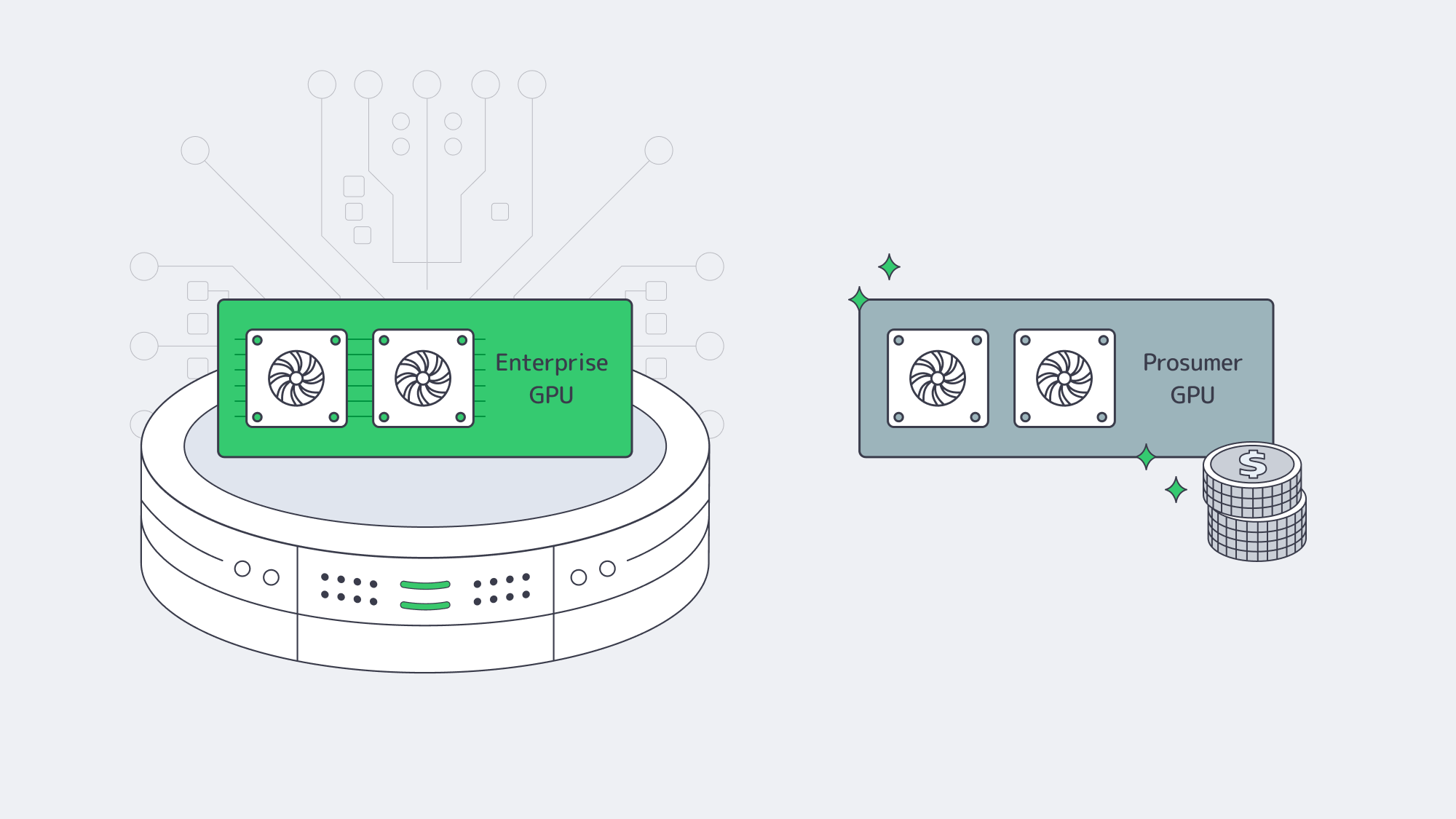
The right GPU for blockchain and ZK research balances compute density, memory capacity, and total cost of ownership. For many ZK workloads, modern NVIDIA GPUs with 24–80 GB VRAM strike the best trade-off, with enterprise GPUs favored for the highest-capacity proofs and prosumer GPUs used where cost efficiency and flexibility matter more than capacity.
In broad strokes:
- For very large circuits, deep recursion, or rollup-scale proofs in production, A‑class data‑center GPUs (such as A100 80 GB) are ideal. They combine 80 GB of high-bandwidth memory and >2 TB/s bandwidth, making them suitable for massive proving keys and wide NTTs.
- For lab clusters and mid-scale prover fleets where proofs fit in ~24 GB, RTX 4090-class GPUs are compelling. A single 4090 offers 24 GB of GDDR6X with ~1,008 GB/s bandwidth and 16,384 CUDA cores, providing excellent throughput at a far lower unit cost than data-center cards.
Economically, this often leads to a two-tier model:
- Development and research fleets built on 24 GB GPUs (e.g., for protocol experiments, circuit iteration, or testnets).
- Production prover clusters that add A‑class GPUs where circuits or recursion depth demand larger memory footprints or higher concurrency.
GPU-accelerated libraries like ICICLE, which underpin production provers, have already shown multi‑× speed-ups at the application level: one case study reports 8–10× speed-up for MSM, 3–5× for NTT, and about 4× overall speed improvement in Circom proof generation after integrating ICICLE. That kind of uplift is what makes it practical to move more proving work off-chain or into recursive layers.
Parallelism strategy also shapes the hardware plan. Because most proving systems today are optimized for one GPU per proof, it’s usually easier to:
- Run multiple independent proofs per server (one per GPU), or
- Scale out across many GPU servers, rather than complex multi-GPU sharding inside a single proof.
We at Melbicom keep dozens of GPU-powered server configurations ready to go—ranging from single‑GPU boxes to multi‑GPU workhorses—and can assemble custom CPU/GPU/RAM/storage combinations in 3–5 business days for more specialized ZK and blockchain research workloads.
Key Infrastructure Takeaways for ZK Proofs

For teams designing serious ZK-proof and ZK proof blockchain infrastructure, a few practical takeaways consistently show up in the field:
- Standardize GPUs as the default proving backend. MSM and NTT dominate proving time and map naturally to thousands of GPU threads; recent work shows GPU-accelerated ZKPs reaching up to ~200× speed-ups over CPU baselines on core kernels.
- Over-provision RAM relative to your largest circuits. Assume per-pipeline working sets in the tens of gigabytes; plan for 128 GB minimum and 256 GB+ on nodes running concurrent provers, to avoid swapping + subtle failures in long-running proof workloads.
- Design networking as part of the proving system. High-throughput links (10–200 Gbps) with good peering are essential when proofs, blobs, and chain state move between sequencers, DA layers, and storage. Melbicom’s 14+ Tbps backbone with strong peering and BGP support is built to keep those paths short and predictable.
- Prefer dedicated, globally distributed infrastructure. Single-tenant GPU servers in Tier III+ sites give deterministic performance and stronger isolation than shared cloud. Combining those with a well distributed CDN lets you pin ZK frontends, proof downloads, and snapshots close to users while keeping origin traffic on-net.
These aren’t abstract “nice-to-haves” – they’re the baseline for hitting proving windows, reproducing research results, and operating complex ZK systems under production load.
Building ZK-Proof Infrastructure on Dedicated GPU Servers
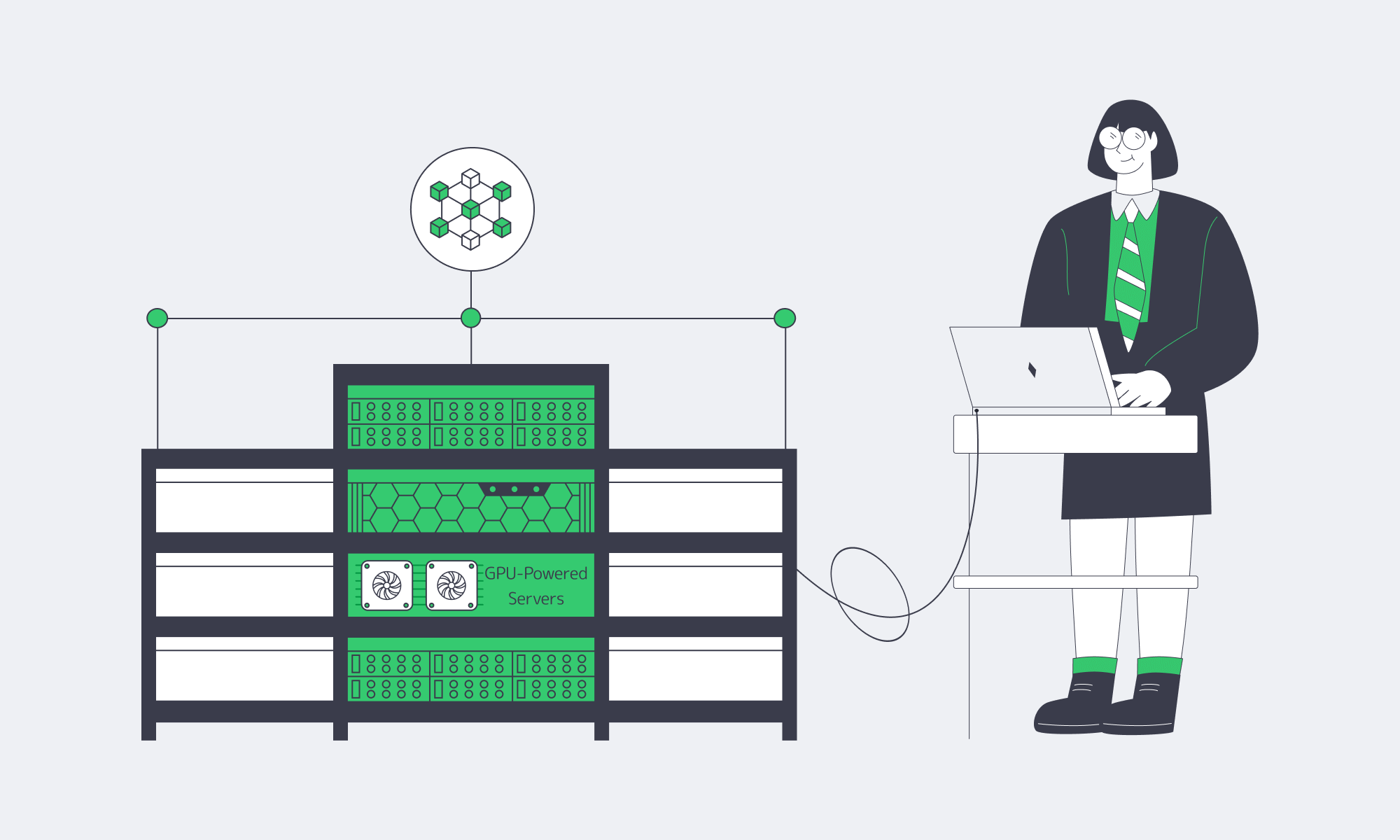
Zero-knowledge proofs may be “just math,” but turning that math into scalable Web3 infrastructure is an engineering exercise in compute, memory, and networking. Dedicated GPU servers are the practical way to get there: they expose raw accelerator performance, enough RAM to keep large cryptographic structures in memory, and the predictable network capacity required to move data and proofs on time.
AsZK systems evolve—ZK-rollups moving more logic off L1, ZK VMs becoming more sophisticated, and more protocols adopting ZK techniques for privacy and scalability—the hardware bar will only rise. Teams that treat GPU-optimized servers as first-class infra today will be better positioned to run fast provers, adapt to new proving systems, and maintain a tight feedback loop between research and production deployments.
Deploy GPU ZK Servers Today
Spin up dedicated GPU servers in 21 Tier III+ locations with unmetered 10–200 Gbps ports. Fast activation for in‑stock hardware and custom builds in 3–5 days to power your ZK proving and blockchain research.
Get expert support with your services
Blog

Dedicated Multi-Region Infrastructure for Oracles and Bridges
Oracle and bridge services live in the gap between deterministic chains and nondeterministic reality: data sources change, networks jitter, servers reboot, and packets occasionally disappear. Yet users and contracts still expect “now,” not “eventually.” In practice, the infrastructure is part of the security model—because when attestations arrive late or inconsistent, trust erodes fast.
Modern oracle and bridge operators already know the hard part isn’t computing the answer; it’s delivering the same answer, everywhere, on time—across multiple chains, regions, and failure modes—without leaking keys or accepting silent data-feed drift.
Choose Melbicom— 1,300+ ready-to-go servers — 21 global Tier IV & III data centers — 55+ PoP CDN across 6 continents |
|
The Infra Problem: Trust Dies in the Jitter
Latency for oracle updates and cross-chain messaging isn’t one number. It’s a stack: ingest → normalize → sign/attest → broadcast → observe finality. Each stage has its own tail latency—and tails are where “near-100% uptime” quietly turns into a reliability incident.
The stakes are not theoretical. Infrastructure that enables millions of dollars in transaction value is less about marketing scale and more about operational expectation: once you’re a dependency, your failure modes become other people’s risk. And cross-chain is no longer a niche edge case. Today’s best practices obsess over operational hardening and key custody.
The takeaway: your latency budget and your failure budget are entangled. If you want fast, consistent delivery, you architect for the tail—not the median.
What Dedicated Infrastructure Minimizes Oracle and Bridge Latency

Dedicated infrastructure minimizes oracle and bridge latency by removing noisy-neighbor contention and by keeping hot-path services (ingest, signing, relays, and chain-facing RPC) on single-tenant machines with predictable CPU and I/O. The best setups treat latency like a budget: pin workloads per region, minimize cross-region hops, and keep failover paths warm—not theoretical.
The Practical Latency Budget: Where “Sub-Second” Gets Spent
- Inbound feed variability: API response jitter, rate limits, TLS handshake churn.
- Disk and queue pressure: state persistence, retry queues, log compaction.
- Cross-region coordination: quorum collection, threshold signing, finality watchers.
- RPC variability: shared endpoints, congestion, request throttling.
Dedicated servers help because you can shape the platform: reserve headroom, keep state on local NVMe, and isolate signing and quorum traffic from everything else.
Web3 Server Hosting That Treats the Network as a First-Class Component
If you’re running web3 applications that depend on real-time updates, your web3 infrastructure is not just compute—it’s routing discipline. This is where multi-region dedicated servers plus predictable networking matter.
Melbicom provides the building blocks that map to oracle/bridge needs: 21 Tier IV/III data centers, a 14+ Tbps backbone, and 20+ transit providers plus 25+ IXPs to reduce propagation delays and jitter between regions.
Example: a Concrete Multi-Region Topology
| Layer | Region Examples | What Matters Most |
|---|---|---|
| Ingest + Normalize | Amsterdam, Frankfurt | Keep collectors close to data sources; buffer aggressively; avoid shared queues. |
| Sign/Attest Quorum | Singapore, Los Angeles | Isolate signing; prefer deterministic I/O; keep quorum traffic on private paths. |
| Broadcast + Observe Finality | Tokyo, Stockholm | Fast chain-facing egress; stable RPC; region-local watchers for tail control. |
Locations above reflect some of Melbicom’s data centers and are shown as examples; pick regions that match the chains and venues you’re servicing.
Which Multi-Region Server Setup Ensures Near-100% Uptime
A near-100% uptime setup uses at least two independent regions with active-active service, plus a third region as a cold or warm backstop for disaster recovery. Critical services—signing, relays, and finality observation—should fail over automatically with stable endpoints, while state replication is continuous and tested. Uptime isn’t a promise; it’s engineered behavior.
Active-Active Isn’t Optional for Oracles and Bridges
The “single region + hot standby” model fails a basic reality check: even brief regional network events can create mismatched observations. For oracle operators, that shows up as delayed updates. For bridges, it shows up as relay lag and message backlog.
The modern pattern is:
- Active-active ingest and observation
- Regional quorum for signatures (threshold or multisig)
- Deterministic failover for client endpoints
The point isn’t only uptime. It’s keeping behavior stable under stress: same inputs, same outputs, same latency envelope.
Stable Endpoints: BGP Sessions, BYOIP, and Controlled Failover
If clients, contracts, or counterparties pin to endpoints, IP churn is operational debt. The clean way out is bringing your own IP space and controlling routing.
Melbicom supports BGP sessions (including BYOIP) so operators can keep endpoints stable while engineering regional preference and failover through routing changes rather than “change the URL and pray.”
What most CTOs care about is not that “BGP exists,” but routing safety and hygiene. This is where Melbicom delivers: RPKI validation and strict IRR filtering for customer routes—important guardrails when uptime is tied to the integrity of your route announcements.
State Replica That Doesn’t Become a Latency Tax
Replication is where good architectures die: either you replicate too slowly and failover loses state, or you replicate too eagerly and build a constant cross-region latency bill into every request.
A pragmatic pattern is asynchronous replication with fast catch-up and explicit RPO/RTO targets. That can be as simple as structured logs + object snapshots, or as involved as streaming replication—what matters is predictability and observability.
# Example: lightweight feed-state replication (operator-owned logic) # Goal: ship signed artifacts + last-seen checkpoints, not your entire database. rsync -az --delete /var/lib/oracle/checkpoints/ replica:/var/lib/oracle/checkpoints/ rsync -az --delete /var/lib/oracle/signed-artifacts/ replica:/var/lib/oracle/signed-artifacts/ |
When bandwidth is the constraint, location matters. Melbicom offers per-server port speeds up to 200 Gbps in most locations, which lets operators place replication-heavy tiers where the network headroom actually exists.
What Secure Hardware Protects Bridge Keys and Data Feeds
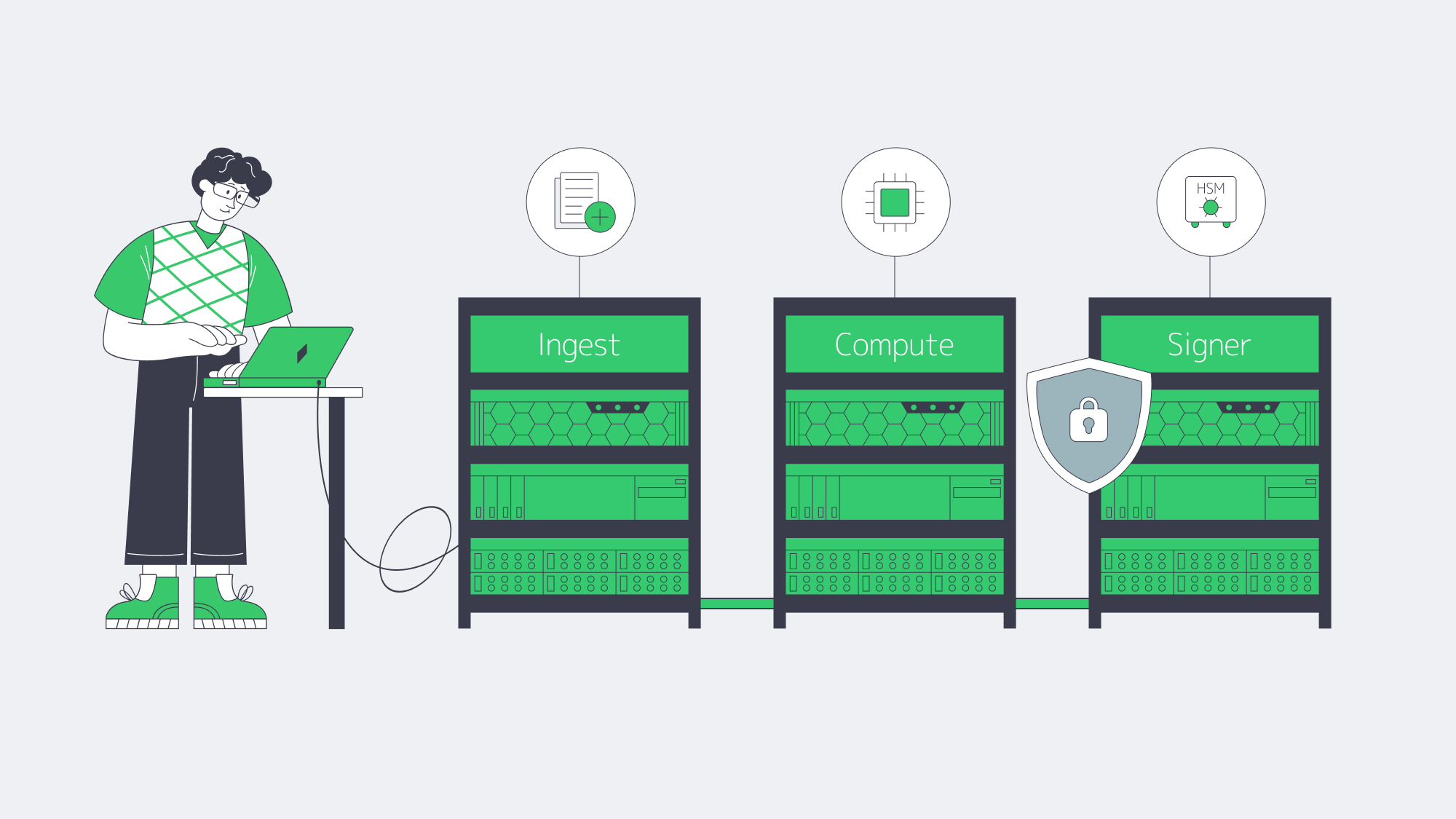
Secure hardware protects bridge keys and data feeds by isolating signing and sensitive processing onto single-tenant machines with locked-down access paths, hardware-backed key custody (such as HSM-backed operations), and strict separation between ingest, compute, and signing roles. The goal is blast-radius control: a compromised service shouldn’t expose keys or rewrite feeds.
Separate the Roles: Ingest ≠ Compute ≠ Sign
Most real incidents start with a “small” compromise: a collector host, a CI runner, a debug port. If ingest and signing share the same blast radius, you don’t have a key-management strategy—you have a hope-based security model.
Best practice is boring and effective:
- Ingest nodes can be replaced quickly; they should not hold signing material.
- Normalization nodes should have restricted egress and strict provenance controls.
- Signing nodes should be isolated, minimal, and auditable.
Dedicated servers make this separation more enforceable because you’re not sharing kernel neighbors or relying on a provider’s abstraction layer for isolation.
Hardware-Backed Key Custody Without Slowing the Hot Path
For bridges and high-stakes oracles, hardware-backed key operations reduce the chance that a software compromise becomes a key compromise. The operational trick is designing it so the signer remains fast and predictable: isolate it, keep it warm, and avoid forcing every request through cross-region round-trips.
Melbicom gives you in-region control and root-level access in Tier III+ DCs, along with stable networking: private links and BGP sessions that help keep the signaling path deterministic.
Data Feed Integrity: “Correct” Must Be Verifiable, Not Just Fast
- Multiple sources with explicit quorum logic
- Signed artifacts with traceable provenance
- Replay protection and deterministic ordering
- Continuous validation (detect drift, missing updates, and timestamp anomalies)
This is the difference between “a fast feed” and “a feed you can defend.”
FAQ
How do I know whether latency is a compute problem or a network problem?
Instrument the hot path end-to-end and split metrics by stage (ingest, normalize, sign, broadcast, finality). If p95 spikes correlate with cross-region hops or RPC response variability, it’s networking and topology—not CPU.
Is multi-region always worth the complexity?
For oracle and bridge operators, yes—because your failure modes are externalized. The complexity is the price of keeping outputs consistent under partial failures.
What’s the minimum multi-region footprint that still behaves well?
Two active regions + one backstop. Anything less turns “failover” into downtime plus cold-start latency.
Where does a CDN fit in this stack
Not for signing or quorum, but for distributing non-sensitive artifacts: dashboards, proofs, snapshots, static content, and client-side assets that should load fast globally. Melbicom’s CDN footprint spans 55+ PoPs across 36 countries.
Bridge Oracle Crypto: Key Takeaways for Low-Latency Trust

- Design for the tail, not the mean. Your p95/p99 latency is what users experience during congestion, RPC turbulence, and partial outages—so measure per stage and budget headroom intentionally.
- Run active-active where correctness matters. Two regions observing and relaying independently reduces “regional truth” drift and prevents one site’s network event from becoming system-wide lag.
- Keep endpoints stable through routing, not DNS scramble. Treat BGP-controlled failover as an operational primitive so clients don’t need reconfiguration during incidents.
- Isolate signing like it’s production finance—because it is. Separate ingest/compute/sign roles and assume any internet-facing node can be compromised.
- Practice failover as a routine operation. Define RPO/RTO, test replay scenarios, and rehearse key procedures so the first “real” failover isn’t also your first experiment.
Trust Is Built at the Speed of Your Infrastructure
Oracles and bridges don’t just use infrastructure—they are infrastructure. When latency spikes, updates arrive late. When uptime wobbles, counterparties lose confidence. And when keys or feeds aren’t protected by design, operational mistakes become systemic risk.
The durable pattern is consistent: dedicated servers for predictable performance, multi-region layouts that keep the hot path close to where it must execute, and hardened signing and data-feed boundaries that keep trust intact even when everything around gets noisy.
Deploy multi-region dedicated servers
Design for the tail with dedicated servers, stable BGP endpoints, and warm failover across regions. Keep keys isolated and updates consistent—without unpredictable jitter.
Get expert support with your services
Blog

Scaling Blockchain Analytics & Indexing with Dedicated NVMe-Powered Servers
Blockchain analytics has hit a true big‑data scale. A pruned Ethereum full node now holds 1.4 TB of data, up more than 22% year‑over‑year, based on Etherscan metrics tracked by YCharts. Archive‑style Ethereum nodes can require over 21 TB of disk, and Solana’s ledger has already exceeded 150 TB of history. Ethereum alone processes roughly 1.5–1.6 million transactions per day, more than 23% higher than a year ago.
On the demand side, the crypto compliance and blockchain analytics market is projected to grow from $4.4 billion in 2025 to nearly $14 billion by 2030 (25.85% CAGR). Put together, that’s more chains, more activity, and far heavier datasets landing on your infrastructure every month.
Choose Melbicom— 1,300+ ready-to-go servers — 21 global Tier IV & III data centers — 55+ PoP CDN across 6 continents |
|
Keeping up with that reality requires high‑performance dedicated servers: multi‑core CPUs, large RAM pools, fast NVMe SSDs, and serious bandwidth in predictable, single‑tenant environments. Melbicom builds specifically for this profile with single‑tenant servers across 21 Tier IV/III data centers, a 14+ Tbps backbone with 20+ transit providers and 25+ IXPs, and 55+ CDN PoPs in 36 countries that push data closer to users.
Blockchain and Analytics
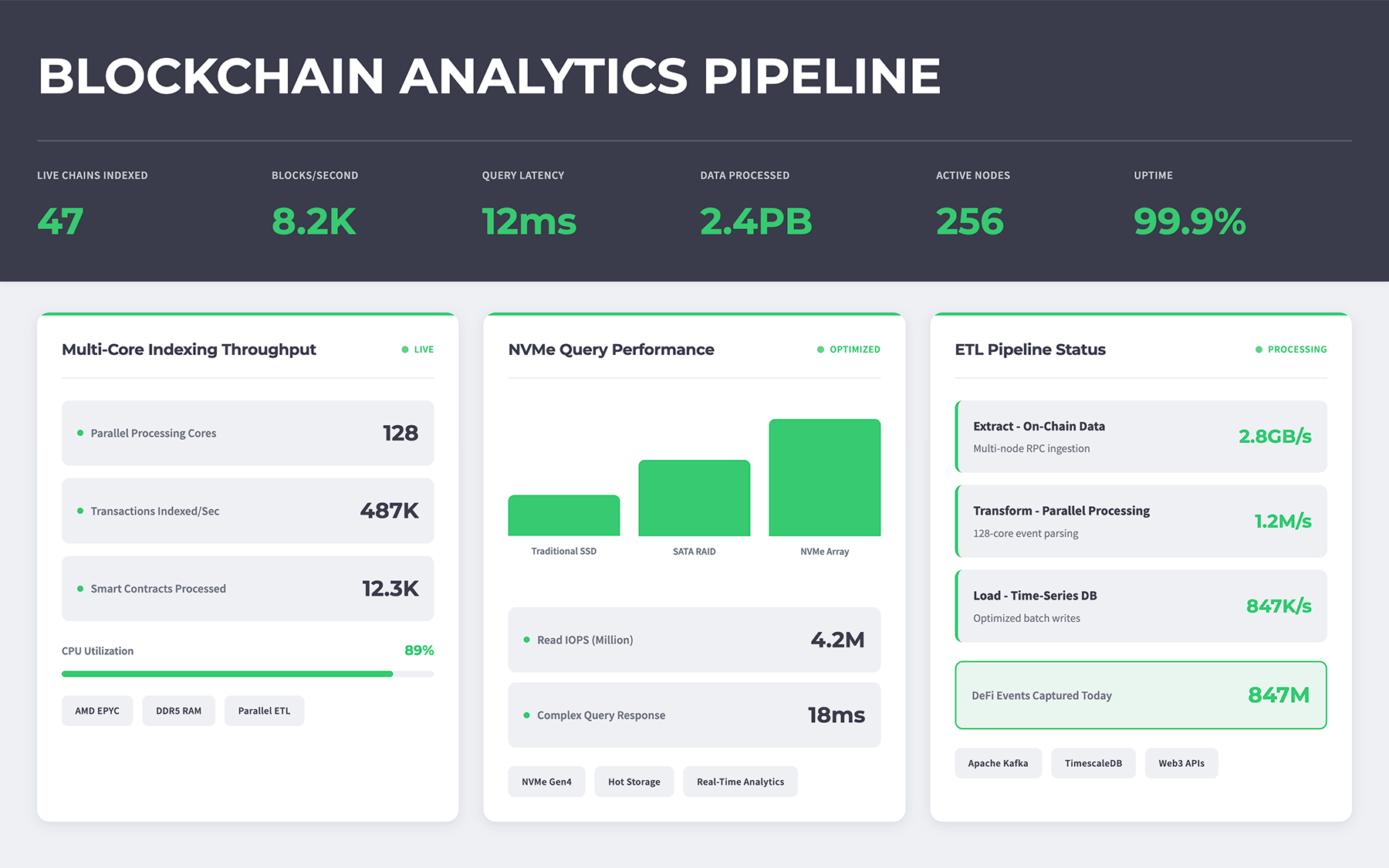
A blockchain is an append‑only log of everything that has ever happened: transfers, swaps, liquidations, governance votes, NFT mints. Blockchain analytics is about turning that log into structured data that powers dashboards, risk models, and compliance workflows.
Most serious stacks follow an ETL pattern:
- Extract blocks, transactions, logs, and state diffs from nodes across many chains.
- Transform them into normalized tables (addresses, token transfers, positions, fees).
- Load them into OLAP engines, column stores, or time‑series databases for aggregations.
Academic work on blockchain data analytics repeatedly highlights scalability, data accessibility, and accuracy once datasets reach multi‑terabyte size. Add multi‑chain and multi‑year history, and you’re firmly in big‑data territory.
In practice, modern platforms resemble web‑scale analytics systems: parallel ETL workers feeding NVMe‑backed warehouses, with query engines distributing scans across many cores. The bottleneck stops being “can we parse this?” and becomes “can our infrastructure ingest and query on‑chain data fast enough?”
What Server Specs Maximize Blockchain Indexing Throughput
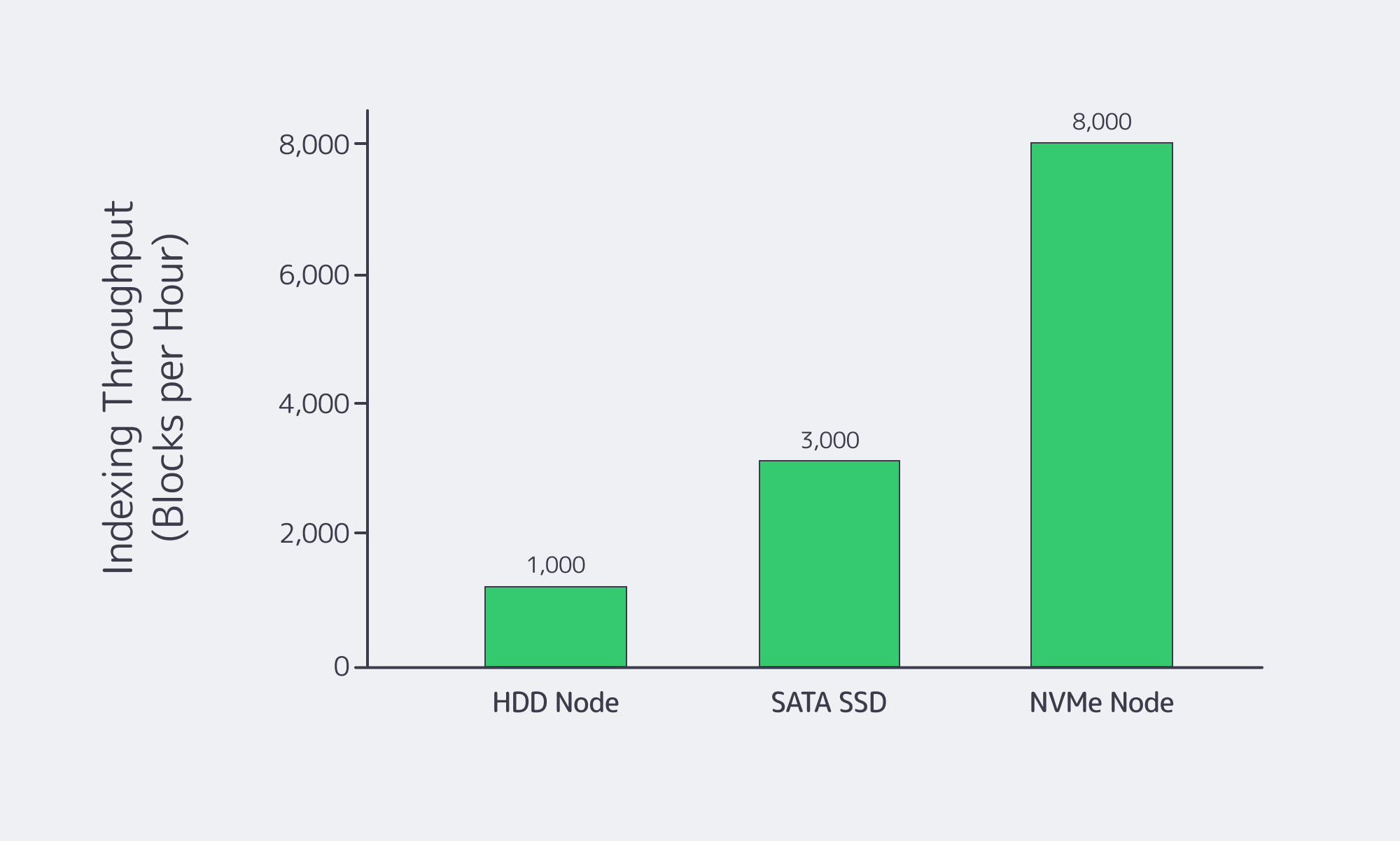
You want high‑core, high‑clock CPUs paired with generous RAM, NVMe SSDs, and high‑bandwidth networking on dedicated servers. That combination lets you parallelize indexing and ETL, keep hot state in memory, and avoid disk or network bottlenecks as chains, users, and queries scale.
CPU and Parallelism
Indexers parallelize naturally: one process per chain, per contract family, or per ETL stage. A 32‑ or 64‑core CPU lets you run many workers concurrently, while single‑thread speed still matters for replaying blocks and verifying signatures.
For Ethereum‑style workloads, the sweet spot is having many strong cores. We at Melbicom lean on the latest‑generation AMD EPYC options in Web3‑optimized builds so multiple nodes and ETL workers can share a host without sacrificing per‑thread performance.
Memory and Caching
Memory is the first line of defense against slow storage. Node clients and indexers cache as much state as RAM allows so they don’t hit disk on every lookup. Operator guides explicitly warn not to “skimp” on memory because extra RAM directly reduces disk I/O.
For multi‑chain analytics, 64–128 GB is a practical baseline, while high‑throughput chains such as Solana often push validators and RPC nodes toward 256 GB+ configurations. That headroom benefits both nodes and analytics engines by keeping large joins in memory instead of thrashing NVMe.
Storage, Network, and Why NVMe Is Non‑Negotiable
Storage and network are where indexing pipelines either fly or stall. Full and archival nodes on major chains now routinely sit in the multi‑terabyte range. That load makes storage throughput and network latency first‑class constraints.
Fast NVMe SSDs are effectively mandatory. Node‑operator guides recommend NVMe over SATA SSDs and warn that network‑attached storage introduces latency that is “highly detrimental” during sustained writes. On the network side, guidance for high‑throughput validators and RPC nodes calls for 10 Gbps or better connectivity and low‑latency routing.
Melbicom’s backbone is designed around those requirements: more than 14 Tbps of capacity, 20+ transit providers, 25+ IXPs, and per‑server ports up to 200 Gbps in most DC locations. That combination keeps nodes in sync with chain heads and absorbs traffic spikes from analytics APIs.
Dedicated, Single‑Tenant Environments
Dedicated servers remove noisy‑neighbor effects and hypervisor overhead that can skew latency and throughput. For long‑running node and ETL processes, that predictability is crucial: when you profile a bottleneck, you know it comes from your schema or code, not someone else’s workload.
Melbicom’s Web3‑ready configurations are single‑tenant by default and spread across 21 Tier IV/III locations in Europe, the Americas, Asia, the Middle East, and Africa, so teams can place heavy analytics nodes close to users and liquidity.
Table 1. Server Components That Actually Move the Needle
| Component | Role in Pipeline | Why High‑End Specs Matter |
|---|---|---|
| CPU (Cores & GHz) | Runs node clients, parsers, ETL workers | More cores and faster threads cut block processing time. |
| RAM | Caches state and query working sets | Large memory reduces disk hits during indexing and queries. |
| NVMe SSD | Stores chain DBs and analytics datasets | High IOPS keeps multi‑TB syncs and scans responsive. |
| Network Uplink | Moves blocks in and query results out | 10–200 Gbps links prevent sync lag and API timeouts. |
| Single‑Tenant Dedicated Hardware | Provides isolated, predictable resources | Dedicated servers avoid noisy neighbors and virtualization drag. |
Which NVMe Configuration Speeds On-Chain Analytics Queries
You want fast, local, enterprise‑grade NVMe—often more than one drive—and a layout that separates hot analytics reads from heavy write paths. Avoid cheap, DRAM‑less or QLC models, and keep network storage out of the critical query path whenever possible if you care about latency, stability, and query speed.
Multiple NVMe Drives for Parallel I/O
Analytics workloads are highly parallel: workers scan different partitions while nodes append new blocks and ETL jobs compact or re‑index tables. Spreading that activity across multiple NVMe drives—via separate volumes or RAID0—lets the kernel and controllers service more I/O queues in parallel.
A practical layout:
- NVMe 0: chain databases (Ethereum, L2s, Solana, etc.)
- NVMe 1: analytics warehouse (columnar or time‑series DB)
- NVMe 2: ETL scratch space and logs
This separation prevents a heavy analytical query from starving the node’s state updates.
Enterprise NVMe Over Consumer Shortcuts
Under indexing loads, you’re writing and rewriting terabytes. Consumer QLC drives often fall off a cliff under sustained writes or hit endurance limits early. Node‑hardware guides recommend fast NVMe and warn that cheaper flash “suffers significant performance degradation during sustained writes,” with network storage adding harmful latency on top.
Enterprise-grade TLC NVMe SSDs with DRAM caches and high TBW ratings are a safer baseline. They help keep IOPS high even while you backfill years of history and serve live queries at the same time.
Local NVMe Plus Object Storage for Cold Data
Not every byte needs NVMe forever. Historical partitions older than a certain horizon may see limited traffic outside audits and backtesting.
A pragmatic design is:
- Keep the active window (recent blocks and hot tables) on local NVMe.
- Offload older partitions and periodic snapshots to S3‑compatible object storage.
Melbicom’s S3‑compatible object storage runs in a Tier IV certified Amsterdam data center, uses NVMe‑accelerated storage, and offers plans from 1 TB to 500 TB with free ingress. That keeps the hot analytics tier lean and fast while still retaining full history for compliance and long‑horizon research.
DeFi Llama and Blockchain Analytics
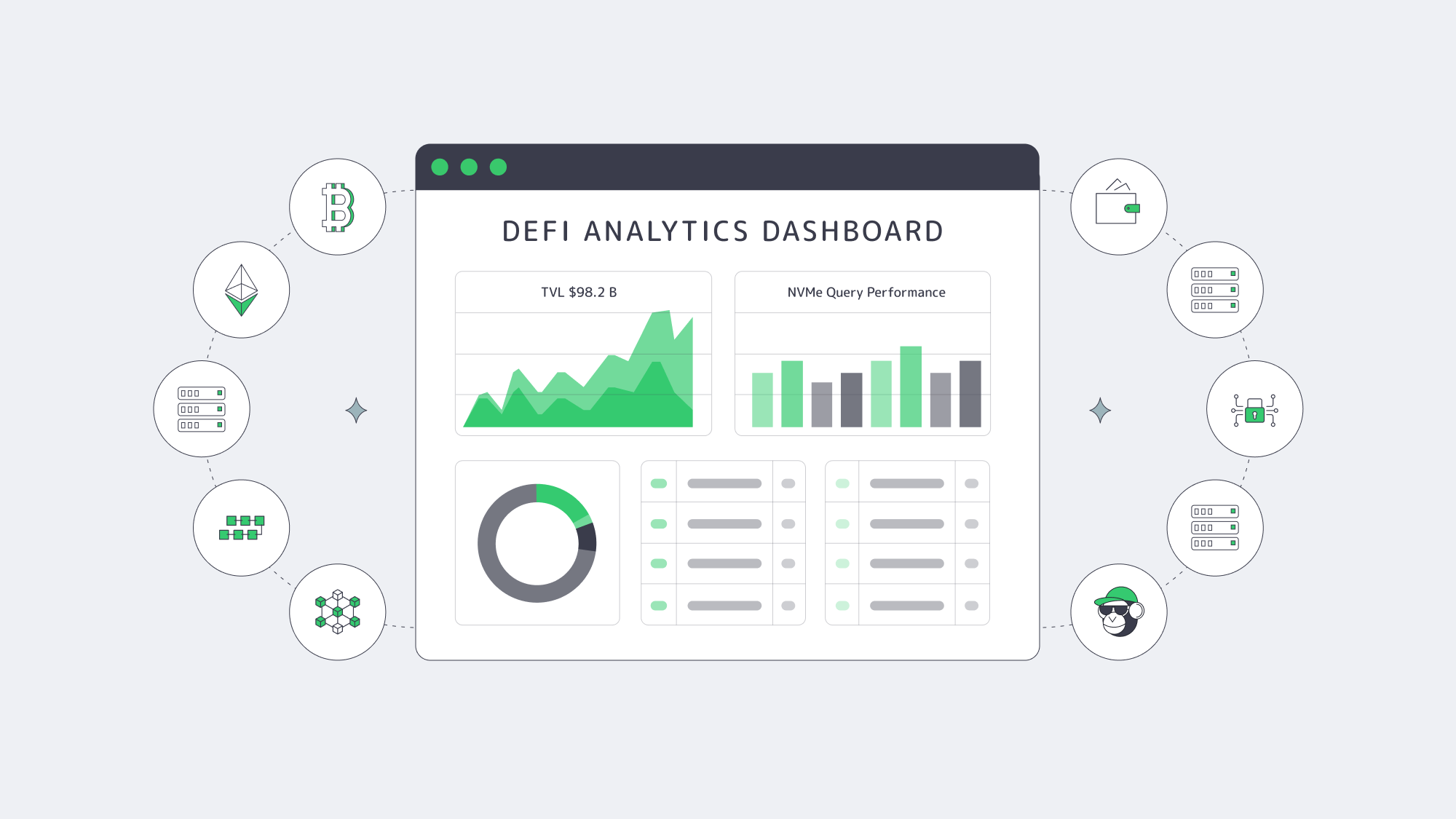
DeFi Llama shows what scaled blockchain and analytics looks like in production. The platform tracks DeFi metrics across hundreds of chains and thousands of projects and pools, which is only possible because indexing is continuously happening underneath every chart, table, and leaderboard users see.
Much of that work flows through The Graph. Many protocols expose subgraphs; DeFi Llama queries those instead of raw nodes. The Graph’s network has processed more than one trillion queries and supports thousands of active subgraphs across DeFi, NFTs, DAOs, gaming, and analytics.
Behind the scenes sit full and archival nodes, indexers that parse events into structured stores, and query engines that fan out across cores and NVMe to answer user requests. Any team aiming to provide similar multi‑chain views has to assume that per‑chain data volumes, query concurrency, and historical lookback windows will keep climbing—and size infrastructure accordingly.
Scaling Blockchain Analytics With High-Performance Servers
On‑chain data volumes are not slowing down. New L1s, L2s, and app‑chains add their own multi‑terabyte histories, while existing networks keep compounding. The only sustainable way to keep ETL jobs and queries in step with reality is to run them on high‑performance dedicated servers rather than undersized, oversubscribed instances.
Multi‑core CPUs let you parallelize ingestion and transformation. Large RAM footprints keep hot state and query working sets in memory. NVMe SSDs keep multi‑terabyte syncs and scans practical. High‑bandwidth, well‑peered networks prevent your nodes from falling behind chain heads or rate‑limiting analytics traffic.
For teams designing or scaling analytics pipelines, a few principles stand out:
- Design for multi‑chain growth. Plan for dozens of chains and terabytes of new data per year from day one.
- Make NVMe mandatory. Use multiple NVMe drives and clear hot/cold storage tiers; don’t rely on network storage for hot paths.
- Treat bandwidth as a product feature. 10 Gbps+ uplinks and clean peering reduce sync times and API latency under load.
- Choose predictable, single‑tenant servers. Deterministic performance simplifies capacity planning, SLOs, and debugging.
Scale blockchain analytics with Melbicom
Deploy high‑core CPUs, NVMe storage, and 10–200 Gbps networking across 21+ data centers. Get predictable, single‑tenant performance for nodes, ETL, and OLAP.
Get expert support with your services
Blog

Blueprint: Brazil Hub, Regional PoPs, Smarter Routing
South America is no longer a “far edge.” Mobile internet users in Latin America almost doubled from about 230 million to nearly 400 million between 2014 and the mid-2020s. Most of the platforms looking at the region already run their main origins in Europe or the U.S. — and now need a CDN footprint in South America that doesn’t collapse under cross-continent latency.
For those teams, the strategy hinges on three levers: PoP placement across South America, inter‑country routing around a Brazilian hub, and origin consolidation with Europe/US as global cores and Brazil as the regional shield. The rest is plumbing.
South America CDN— Reserve origin nodes in São Paulo — CDN PoPs across 6 LATAM countries — 20 DCs beyond South America |
|
Which South American PoP Layout Best Reduces Cross-Continent Latency?
A South America CDN layout should treat São Paulo as the regional hub for traffic coming from existing origins in Europe or the US (let’s use Madrid or Atlanta as examples), then fan out to edge PoPs in cities like Lima, Bogotá, Baires, and Santiago. The objective is simple: keep users in-region while long-haul flows ride the cleanest cables into Brazil.
IX.br’s trajectory explains the role of Brazil. In April 2025, the national IXP fabric hit 40 Tbps peak traffic, with IX.br São Paulo alone exceeding 25 Tbps. That makes SP the natural gravity well for an edge node: place a strong PoP where most of the packets converge.
Modern CDN planning for South America also has to factor in undersea routes. EllaLink’s direct connection between Brazil and Portugal delivers a latency reduction of up to 50% between Latin America and Europe, with RTT under 60 ms between Portugal and Brazil. That turns Brazil into both a regional hub and a clean bridgehead for Madrid‑hosted origins.
For a pan‑regional CDN rollout in South America, a pragmatic pattern looks like this:
- Anchor PoP in São Paulo – which can act as a consolidated regional shield pulling from Madrid or Atlanta origins and feeding the rest of the continent.
- Regional PoPs in Lima, Bogotá, Buenos Aires, and Santiago – existing Melbicom PoPs in these metros shorten last‑mile paths and reduce dependence on long‑haul routes for users outside Brazil.
- Optionally, cable‑adjacent PoPs near landing points (for example on the Brazilian coast) when your cross‑continent flows are especially latency‑sensitive.
The result: users almost always land on a local or near‑local PoP, and the PoPs maintain short, predictable paths into São Paulo and then out to origins in Madrid or Atlanta.
How Should Traffic Be Routed Between Countries Around Brazilian Origin Hubs?
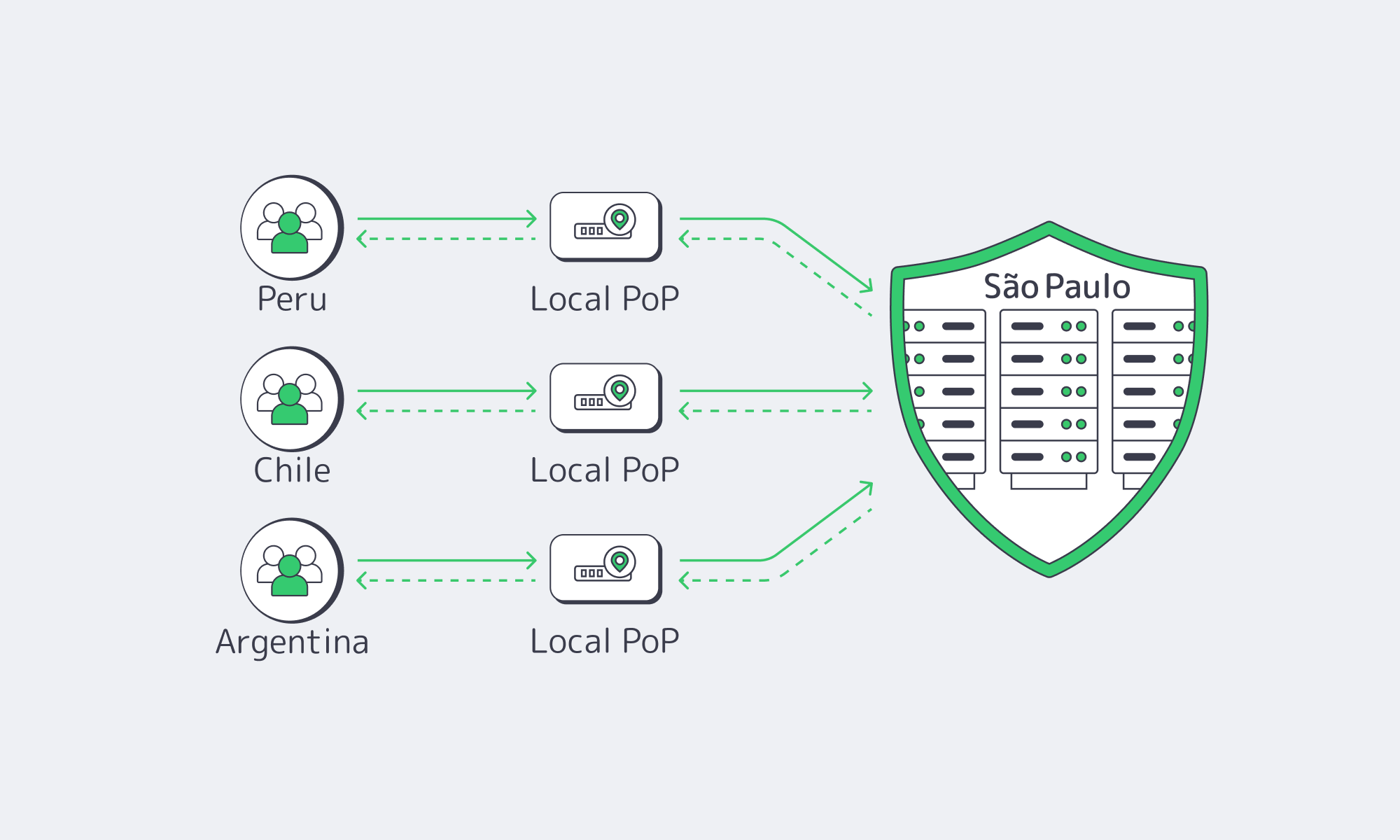
Inter‑country routing should keep packets on South American roads as long as possible. Users attach to the nearest anycast PoP; cache misses travel over regional links to a Brazilian shield in São Paulo, which in turn pulls from European or American origins. BGP policies prevent surprise trombones through distant transit hubs.
The failure mode you want to avoid is classic: a user in Argentina hits content hosted in Spain or the U.S. via a convoluted path that bounces through Miami or random Tier‑2s, turning every click into a 150 ms round‑trip. Properly run, a CDN service in South America does the opposite:
- Anycast on the edge so users in Chile, Peru, or Colombia hit the nearest regional PoP, not North America.
- Brazil as a regional origin hub from the CDN’s perspective: PoPs in Lima, Bogotá, Buenos Aires, and Santiago fetch from a consolidated shield in São Paulo, which in turn talks to Madrid and Atlanta origin clusters over optimized long‑haul.
- Local and regional peering across Latin American IXPs to keep inter‑PoP and PoP‑to‑Brazil traffic inside the continent wherever possible.
This is where routing control matters. A capable CDN provider for South America should expose enough knobs—BGP policies, local‑pref, MEDs—to bias traffic toward regional peers and away from noisy or congested upstreams. Melbicom’s BGP Session service provides free BGP sessions on dedicated servers, IPv4/IPv6, BYOIP, and support for full, default, or partial routes, available in every data center. That’s what allows you to pull Madrid/Atlanta origins into your own routing policy instead of letting transit pick arbitrary paths.
Brazil Deploy Guide— Avoid costly mistakes — Real RTT & backbone insights — Architecture playbook for LATAM |
|
Resilience rides on multi‑origin thinking. Practically, that means:
- Maintaining at least two independent origin clusters (for example, Madrid + Atlanta) behind the South American shield.
- Using CDN origin pooling and health checks so PoPs fail over cleanly if one of the origin clusters has trouble.
- Defining BGP failover policies that favor alternative regional paths before crossing ocean borders unnecessarily.
From a South American user’s perspective, the priority is consistent, low‑variance RTT—whether the byte actually came from a cache in Santiago or an origin in Madrid via São Paulo is just an implementation detail.
Which KPIs and Traffic Forecasts Should Drive a South America CDN Strategy?

The KPIs that actually move the needle in South America are latency, cache hit ratio, throughput headroom, and availability, all tied to realistic cross‑continent traffic forecasts. Design for video‑heavy, mobile‑first demand, then add capacity and PoPs based on measured TTFB, cache offload, and how quickly long‑haul links saturate.
Latency. Inside Brazil, a realistic target is <50 ms RTT, and <100 ms across major LatAm metros when traffic stays on regional routes and hits a local PoP. With direct systems like EllaLink, Europe–Brazil RTT drops below 60 ms and latency improves by up to 50% versus indirect North American paths.
Cache and origin offload. For a modern CDN in South America, a 90–98% cache hit ratio is achievable on well‑tuned workloads; anything lower usually means TTLs, hierarchy, or routing need work. The practical metric: what % of bytes bound for South American users are served from regional PoPs versus being dragged from Madrid or Atlanta on every miss?
Capacity and per‑server bandwidth. That scale needs serious ports. In Madrid, Melbicom’s dedicated servers come with 1–40 Gbps of bandwidth per unit and more than 100 ready-to-go configurations. Our Atlanta facility supports 1–200 Gbps per server with dozens of stock builds, ideal as a U.S. Southeast origin anchor. Overall, Melbicom offers dedicated servers in 21 Tier III/IV data centers and CDN PoPs in 55+ locations.
Availability and control. Finally, measure per‑PoP uptime, time‑to‑reroute during incidents, and how much routing control you actually have. BGP sessions with BYOIP in every data center let you keep consistent addresses and steer around degraded carriers without touching application code.
Key Metrics and Considerations for a South America CDN Strategy
| Metric/Factor | Target / Example | Strategic Impact |
| Latency (RTT/TTFB) | <50 ms within Brazil; <100 ms across LatAm | Direct regional paths and links like EllaLink cut cross‑continent delay by up to 50% and keep interactive apps usable. |
| Cache Hit Ratio | 90–98%+ | High hit ratios minimize Madrid/Atlanta origin load and long‑haul traffic; bad ratios surface immediately in origin bandwidth graphs. |
| Peak Throughput | At least 2× current peak as headroom | Protects UX during launches and events, especially for video‑heavy workloads; requires 10–100+ Gbps‑class ports at origin and key PoPs. |
| Traffic Mix & Growth | Video ~84% of traffic; IP traffic 18.8 EB/month by 2022 | Justifies deep caching and big pipes—Latin America is already video‑dominant and still growing fast. |
| Availability & Control | 99.9%+ regional availability; BGP + BYOIP everywhere | Lets you treat a CDN provider for South America as programmable network fabric rather than a black box, keeping flows regional and routes predictable. |
Key Design Takeaways for a Pan-Regional CDN South America Footprint
Once you map both infrastructure and demand, a few design patterns show up again and again for CDN South America deployments.
- Localize Aggressively and Peer in-RegionGet traffic onto South American IXPs as early as possible. Peer at IX.br and national exchanges so South America CDN flows don’t hairpin through Miami or random Tier‑2s. The payoff is often 100+ ms shaved off round‑trip times for cross‑border traffic.
- Use Brazil as the Regional Hub, Not the Only OriginKeep PoPs like Madrid and Atlanta as your global origin anchors while treating São Paulo as a regional shield for South America. The São Paulo PoP handles fan-in from long-haul and then fan-out to Lima, Bogotá, Buenos Aires, and Santiago, giving users “local” performance without forcing a full origin migration on day one.
- Design Inter-Country Routing DeliberatelyModel flows between neighbors, not just “user to origin.” Your routing policy should prioritize intra‑LatAm paths, use BGP communities to avoid bad upstreams, and keep return paths symmetric for latency‑sensitive apps.
- Size for Video and Peaks, Not AveragesLatin America’s IP traffic and video share are both on steep, long‑term ramps. Plan capacity around the worst case—launch days, finals, flash sales—backed by ports in the 10–200 Gbps range at origin and PoPs, rather than hoping averages will save you.
- Let KPIs Drive ExpansionTrack TTFB per country, cache hit ratio per PoP, and link utilization into Brazil. Add PoPs, or shift more workloads to forthcoming São Paulo dedicated capacity, when you see those metrics drift, not when users start complaining.
Operationalizing a South America CDN Strategy: Brazil Hub + PoPs
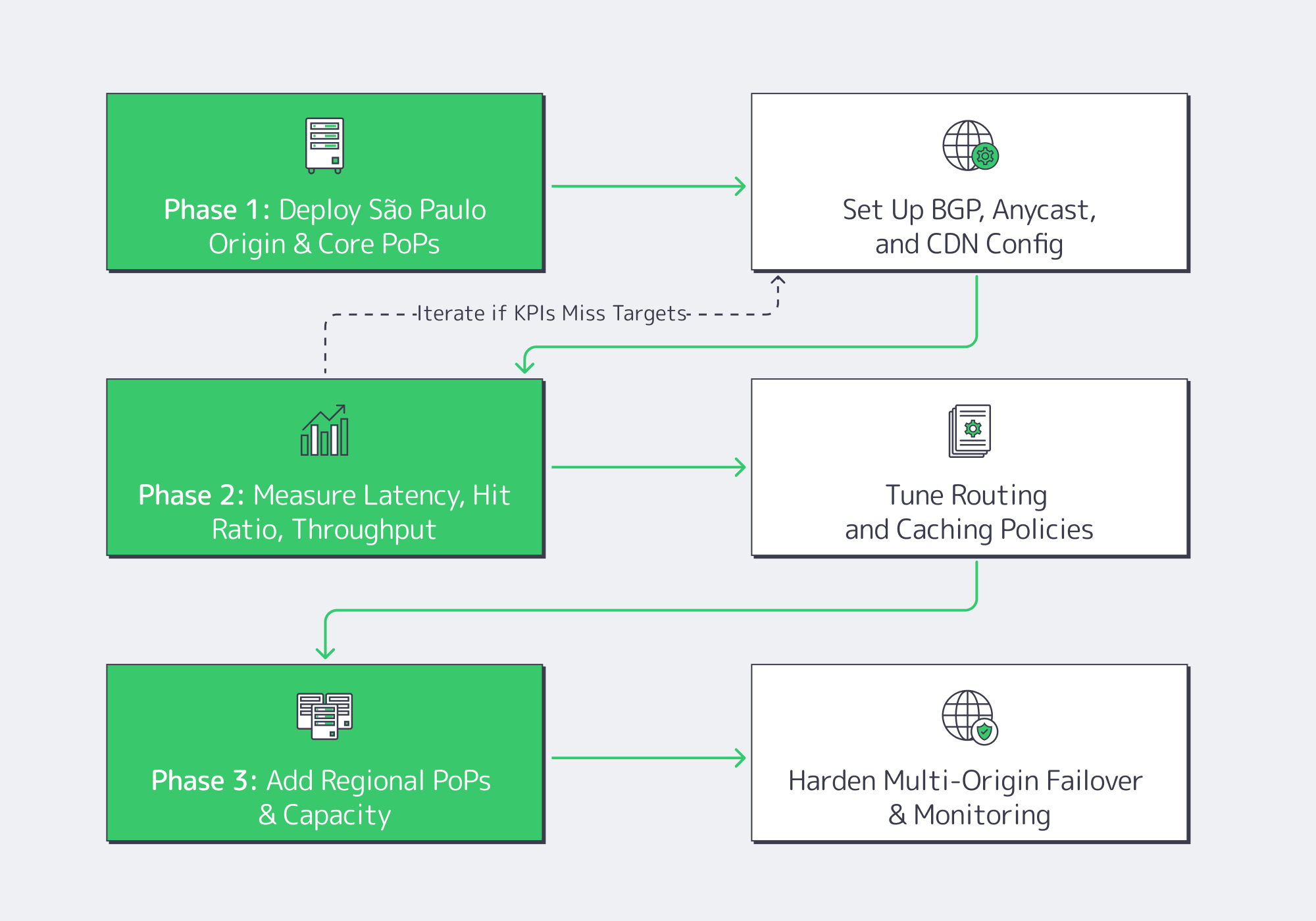
Putting this into practice usually follows a three‑step arc:
- Phase 1 – Core DeploymentStand up your primary origin cluster on dedicated servers in São Paulo, front it with an origin‑shielded CDN configuration, and establish BGP sessions plus BYOIP so routing is under your control. Start with a small ring of South America CDN PoPs that match your initial go‑to‑market countries.
- Phase 2 – Measurement and Policy TuningInstrument p95 latency, hit ratio, and per‑country concurrency. Tighten BGP policies where hairpinning still appears. Adjust cache TTLs and prefetching around traffic patterns (e.g., match‑day surges, trading windows, prime‑time streams).
- Phase 3 – Expansion and HardeningAs traffic grows, add PoPs and capacity in high‑growth markets, introduce secondary origins only where the risk profile justifies it, and harden multi‑origin failover. The result is a fabric that feels local across the continent but behaves like a single, coherent platform.
At that point, the distinction between “Brazil” and “the rest of South America” largely disappears from the user’s perspective — they just experience fast, consistent responses.
How Melbicom Helps You Deploy and Scale in South America
We at Melbicom built our platform for exactly this playbook: global origins plus a programmable edge.
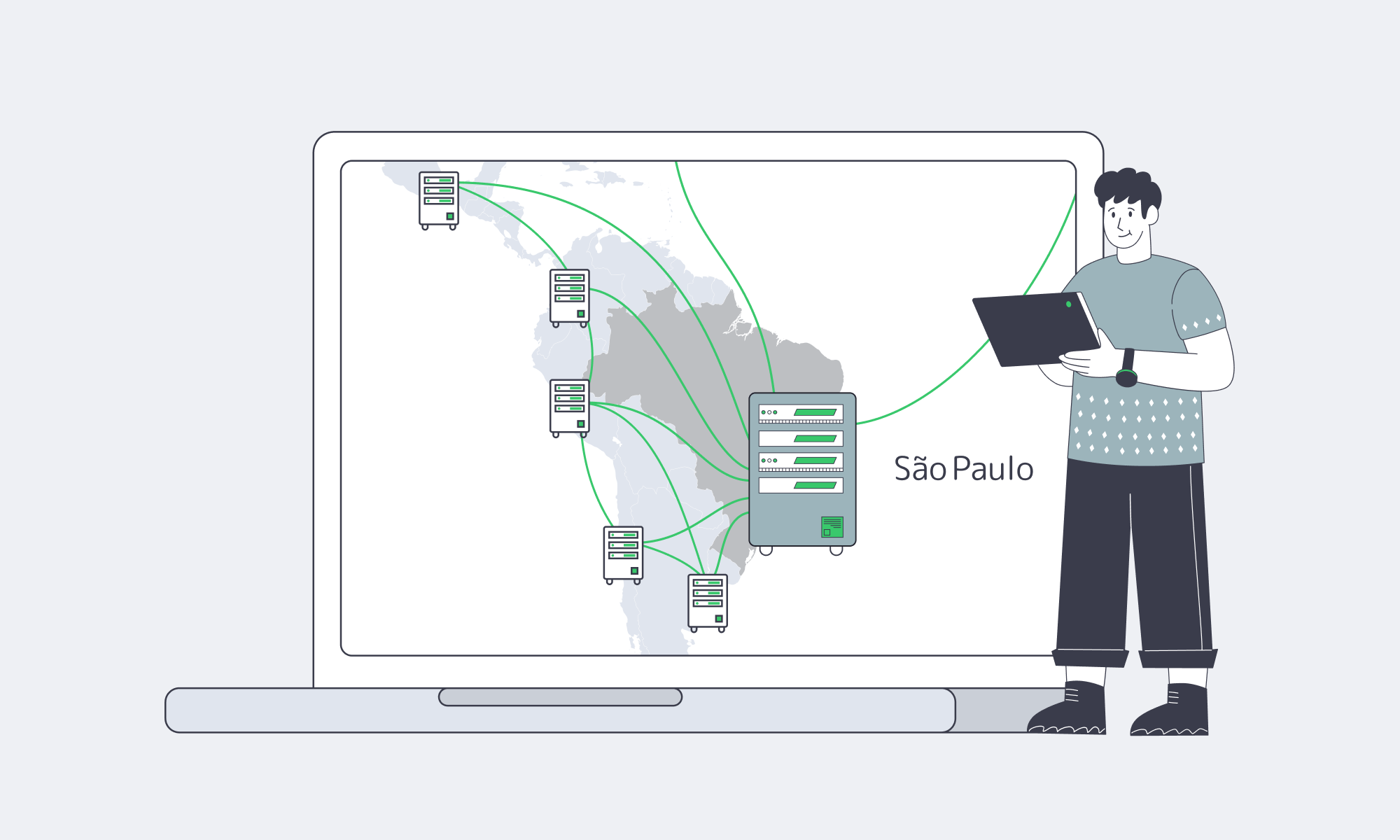
Melbicom operates single-tenant dedicated servers in 21 Tier III/IV data centers spanning Europe, the Americas, Asia, and Africa, backed by a 14+ Tbps backbone, 20+ transit providers, and 25+ IXPs. We keep 1,300+ ready-to-go configurations in stock and deliver custom servers in 3–5 business days, offering per-server ports from 1 up to 200 Gbps depending on location. On top of that, Melbicom’s CDN spans 55+ PoPs in 36 countries, including São Paulo, Lima, Bogotá, Buenos Aires, and Santiago.
If you’re planning or refining your CDN service in South America and want to combine European/African/American origins with a South American edge that you actually control, contact us. We’ll help you translate traffic forecasts and KPI targets into concrete server reservations in existing data center locations and pre-reserved São Paulo capacity, wired directly into our regional CDN PoPs and global backbone.
Deploy Your South America CDN
Build a regional edge in Brazil with origins in Europe or the U.S. Our team can map PoPs, BGP policy, and capacity to your traffic targets across LatAm.
Get expert support with your services
Blog

Dedicated vs. Cloud Hosting in Singapore: Which Is Right for You?
If you’re running high‑growth infrastructure out of Singapore, the “all‑in on public cloud” era is already over. Across Melbicom’s own customer base, the typical production stack now mixes public cloud, private cloud, and dedicated servers, with heavy, steady‑state workloads quietly moving off hyperscale platforms.
Independent data matches what we see. TechRadar’s analysis found that 86% of companies still use dedicated servers, and 42% have migrated workloads from public cloud back to dedicated servers in the past year. Broadcom’s global survey of VMware customers reports that 93% of organizations deliberately balance public and private cloud, 69% are considering repatriating workloads from public cloud, and 35% have already done so.
Singapore sits at the centre of this rebalancing. The city‑state is doubling down on its role as a regional hub, including plans for a 700MW low‑carbon data centre park on Jurong Island—roughly a 50% boost to national capacity. For teams serving users across APAC, the real question is no longer “cloud or not?” but which workloads belong on a dedicated server in Singapore, and which should stay on cloud platforms.
Choose Melbicom— 130+ ready-to-go servers in SG — Tier III-certified SG data center — 55+ PoP CDN across 6 continents |
 |
In this article, we combine what we at Melbicom see running infrastructure in Singapore with recent research on performance, cost, and compliance. We’ll unpack where Singapore dedicated servers outperform cloud, where cloud still clearly wins, and how to design a mix that reins in cloud costs without handcuffing product teams. By the end, you should have a decision framework for placing each workload—plus a clear sense of when a dedicated server Singapore strategy is the more sustainable path.
Performance: When a Dedicated Server Singapore Strategy Wins
Cloud still wins on sheer flexibility. But for latency‑sensitive and throughput‑heavy workloads, a well‑designed dedicated deployment in SG usually has a structural edge.
Dedicated Server Hosting in Singapore for Latency‑Critical Workloads
A dedicated machine means no noisy neighbours, no shared hypervisor, and no surprise throttling. CPU scheduling, NUMA layout, storage IOPS, and network queues are all under your control. When you pin cores to specific services or tune kernel parameters, you actually get the benefit consistently—something far harder to guarantee on multi‑tenant cloud hosts.
That matters for low‑latency trading and pricing engines, real‑time fraud detection and risk scoring, multiplayer game backends, WebRTC, live streaming, and interactive AI features. In those cases, a Singapore dedicated server hosted in a Tier III+ facility with strong peering will typically deliver more stable p95/p99 latency than a comparable cloud instance, simply because the stack between your process and the NIC is thinner and less virtualised.
At our Singapore site, we provision 1–200 Gbps of bandwidth per server on Tier III infrastructure, with more than a hundred ready‑to‑go configurations. Globally, we operate 21 data centers and a backbone tied into more than 20 transit providers and over 25 internet exchange points, fronted by a CDN delivered through 55+ points of presence in 36 countries. In practice, that combination—local compute plus global edge distribution—is exactly what latency‑sensitive apps need: keep state and write paths in Singapore, push static or cacheable content out over the CDN, and avoid shipping every byte through expensive cloud egress.
For European or North American teams expanding into Southeast Asia, this mixed setup often looks like:
- dedicated servers in Singapore for real‑time APIs and stateful services,
- regional caches and object storage for media and large payloads, and
- selective use of cloud services where managed functionality (for example, analytics or messaging) outweighs the jitter and cost.
Where Cloud Instances Still Shine
Cloud is still the fastest way to experiment. For bursty, short‑lived workloads—ad‑hoc analytics jobs, A/B tests, temporary campaign backends—spinning up instances on a cloud server Singapore platform is usually the right call. You get managed services, autoscaling, and platform tools without touching hardware.
For highly variable or unpredictable workloads, especially early in a product’s life, if traffic can swing 10x day‑to‑day and you haven’t yet stabilised demand, paying the flexibility premium is often cheaper than over‑provisioning dedicated capacity.
Financial‑sector analysis of cloud migration in Southeast Asia underlines this pattern. Institutions across Indonesia, the Philippines, Singapore, and neighbouring markets are accelerating digital banking, putting pressure on infrastructure but often starting on cloud to move quickly. The mistake isn’t using cloud; it’s leaving everything there once workloads become stable, heavy, and business‑critical.
Cost: Cloud Flexibility vs. Dedicated Server Predictability
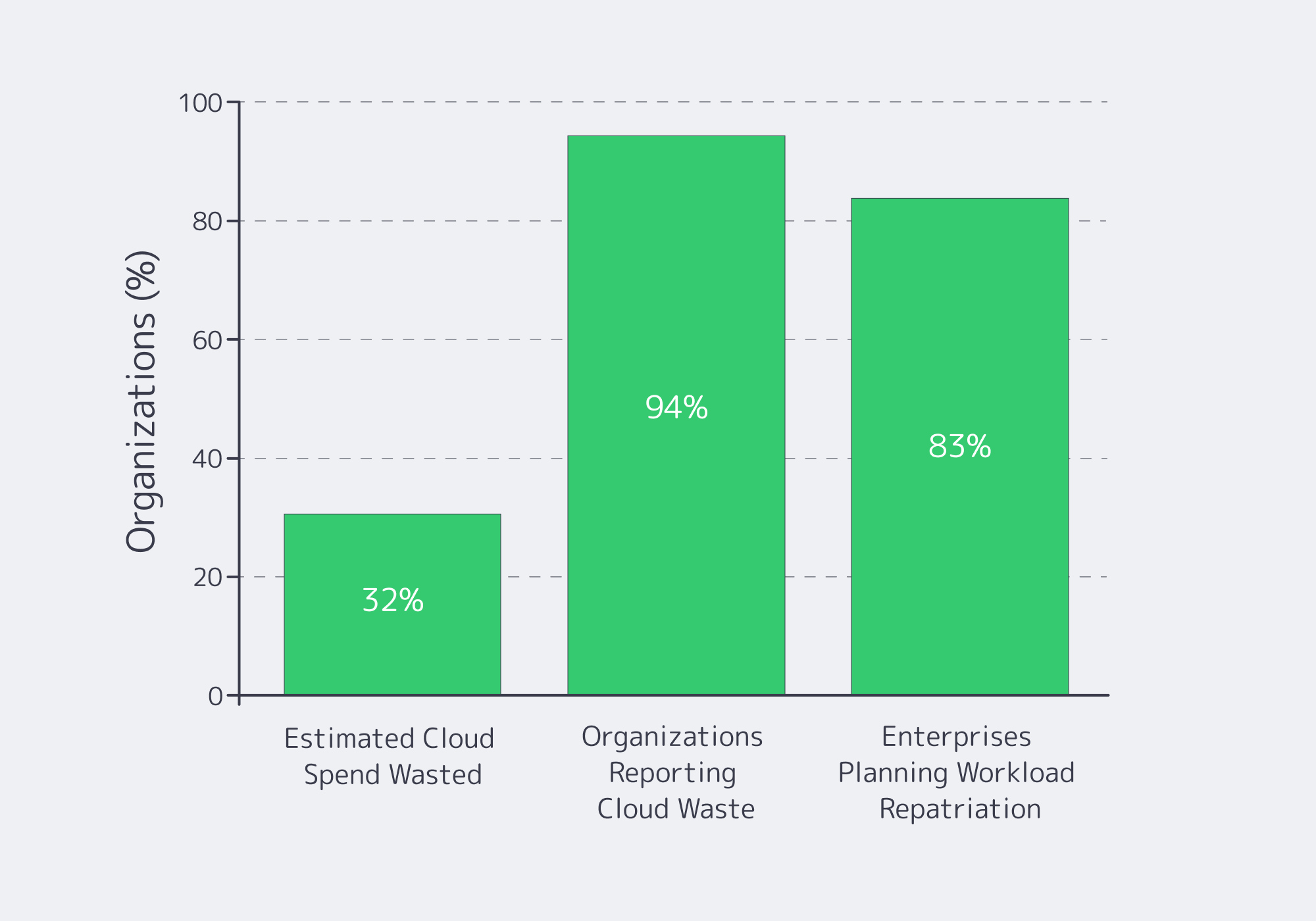
Public cloud pricing looks granular: per vCPU‑hour, per GB‑month, per million requests. In reality, your invoice tends to consolidate into one of the largest lines in the P&L.
In the same study cited earlier, nearly half of IT leaders reported surprise cloud‑related infrastructure costs, and 32% felt a meaningful slice of their infrastructure budget was being wasted on under‑used cloud resources.
In the Flexera’s State of the Cloud research, nearly half of IT leaders reported surprise cloud‑related infrastructure costs, with respondents self‑estimating that about 32% of cloud spend is wasted, up from 30% the previous year.
Cloud Hosting in Singapore and the Actual Cost of Elastic Workloads
Cloud’s economic model is built around elasticity. You avoid upfront CapEx, but you pay a premium for every kWh, vCPU, and GB you consume—forever.
Andreessen Horowitz’s “Trillion‑Dollar Paradox” analysis of public software companies found that, for some high‑growth firms, committed cloud contracts averaged around 50% of cost of revenue—a level where optimization has a direct, material impact on gross margin. Broadcom’s survey work shows why many teams are re‑examining their cloud footprint: 94% of IT leaders report some level of waste in public‑cloud spend, nearly half believe more than a quarter of that spend is wasted, and 90% say private cloud offers better cost visibility and predictability.
In Southeast Asia’s financial sector, additional cost layers show up in the migration itself. A recent analysis of cloud migration projects across banks in the region points to high refactoring costs, long transitional periods where on‑prem and cloud must be run in parallel, and the need for specialist cloud talent—each of which pushes the all‑in cloud bill higher than the raw price list suggests.
High‑density GPU nodes, sustained multi‑gigabit throughput, and premium storage tiers all carry cloud pricing multipliers that compound as workloads grow. Once you add data‑egress charges and inter‑AZ traffic for chatty microservices, “just leave it in the cloud” stops being neutral advice.
How Dedicated Servers in Singapore Change the Unit Economics
Dedicated reverses that model. You pay a predictable monthly fee for a known quantity of CPU, RAM, storage, and bandwidth, and you can drive utilisation close to the limit without triggering new pricing tiers.
A Barclays‑backed CIO survey found that 83% of enterprises plan to move at least some workloads from public cloud to on‑premises or private cloud infrastructure, up from 43% just a few years earlier—a striking swing driven largely by cost and control concerns. It’s not nostalgia; it’s unit economics.
For Singapore specifically, steady‑state workloads such as core databases, ledgers, game backends, and real‑time APIs often reach a point where running them on dedicated servers in a local facility is materially cheaper than keeping them on large cloud instances. Bandwidth‑heavy services—video, file delivery, AI inference over websockets—benefit from flat‑rate or high‑included‑traffic models. With a dedicated box pushing tens of gigabits and a CDN absorbing global distribution, your marginal cost per additional user often falls over time instead of rising.
At Melbicom, we see this pattern regularly. Teams start in the cloud, then move hot paths—databases, in‑memory caches, critical application tiers—to our Singapore dedicated servers once traffic patterns stabilise. In our Singapore data centre alone, there are 100+ ready‑to‑go configurations, and custom servers can be assembled in roughly 3–5 business days, so there’s no long CapEx‑style planning cycle. You keep an OpEx mindset while clawing back the premiums built into hyperscale pricing.
Dedicated vs. Cloud at a Glance
| Aspect | Dedicated Server in Singapore | Cloud Server in Singapore |
|---|---|---|
| Performance | Consistent, low‑jitter performance with full control over hardware, network stack, and tuning. Best for latency‑sensitive and high‑IO workloads. | Good average performance, but more variance due to multi‑tenancy, noisy neighbours, and shared hypervisors—especially at higher utilisation. |
| Cost | Fixed monthly pricing with high utilisation potential; better long‑term unit economics once workloads are steady and resource‑intensive. | Pay‑as‑you‑go and CapEx‑free, ideal for experiments and spiky demand; can become one of the largest recurring costs at scale. |
| Control & Compliance | Full control over data locality, access paths, logging, and change management; easier to map to internal policies and audits. | Shared responsibility model with constraints on where and how data is stored and processed; more complex to explain and evidence to regulators. |
Compliance and Data Control: Singapore Dedicated Servers Hosting vs. Cloud
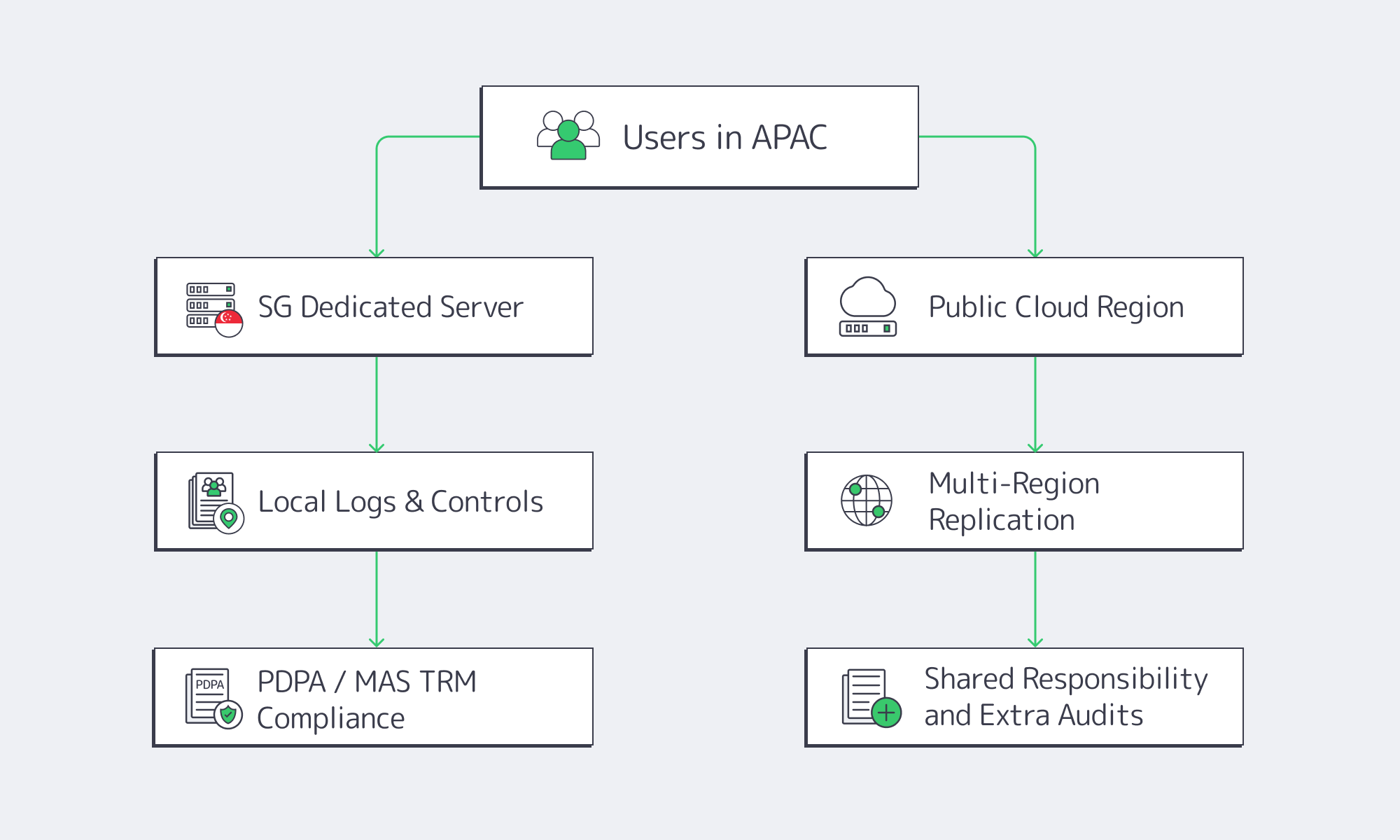
Performance and cost are quantifiable. Compliance is more binary: either you can prove you meet your obligations, or you can’t.
PDPA, Financial Regulation, and Data Residency
Singapore’s Personal Data Protection Act (PDPA) has real teeth. The Personal Data Protection Commission (PDPC) can order organisations to stop processing data, delete unlawfully‑held information, and impose fines of up to 10% of local annual turnover or SGD 1 million (roughly USD 800K), whichever is higher. Cross‑border transfers are allowed only if the overseas recipient offers “comparable protection” to PDPA standards.
Layer on sectoral rules—such as MAS Technology Risk Management (TRM) guidelines in finance, PCI DSS for payments, and internal risk policies—and the tolerance for opaque control planes shrinks fast. A recent review of cloud migration in Southeast Asia’s financial sector highlights what this looks like in practice:
- overlapping data‑protection regimes across markets,
- data‑localisation requirements in countries like Indonesia and Vietnam,
- cloud concentration and vendor lock‑in risks, and
- significant skill gaps and migration costs.
That mix is driving many institutions toward hybrid models: regulated systems anchored in a clearly defined environment (often in Singapore), with carefully curated use of public‑cloud services around the edges.
Building a Defensible Control Story
A Singapore‑hosted dedicated environment simplifies the story you tell auditors, regulators, and enterprise customers. You can point to specific racks in a Singapore data centre and document exactly which workloads and datasets run there. Only your team (and selected provider engineers under contract) can access the physical machines; there is no shared control plane and no other tenants on the box. OS images, patch cadence, encryption standards, and logging pipelines are all under your governance, making it easier to map them to PDPA, MAS TRM, PCI DSS, and internal policies.
By contrast, regulated workloads that remain on multi‑tenant cloud platforms tend to require substantial additional governance: a carefully designed landing zone, multi‑account structure, centralised security policies, and dedicated cloud‑spend management tooling are all needed just to keep the environment compliant and economical. None of this negates cloud’s value—but it does highlight that the operational burden sits with you.
We at Melbicom lean into the simpler model where it helps. Our dedicated servers in Singapore run in a Tier III facility with 1–200 Gbps per‑server bandwidth and direct connectivity into our global backbone. Regulated or high‑risk workloads can stay entirely within Singapore, under your change control, while non‑sensitive assets—media, cached responses, static content—are pushed out through our CDN and S3‑compatible object storage layer for global reach. That lets you meet data‑residency and audit expectations without accepting the cost and jitter of keeping everything in a single public‑cloud region.
Getting the Mix Right in Singapore
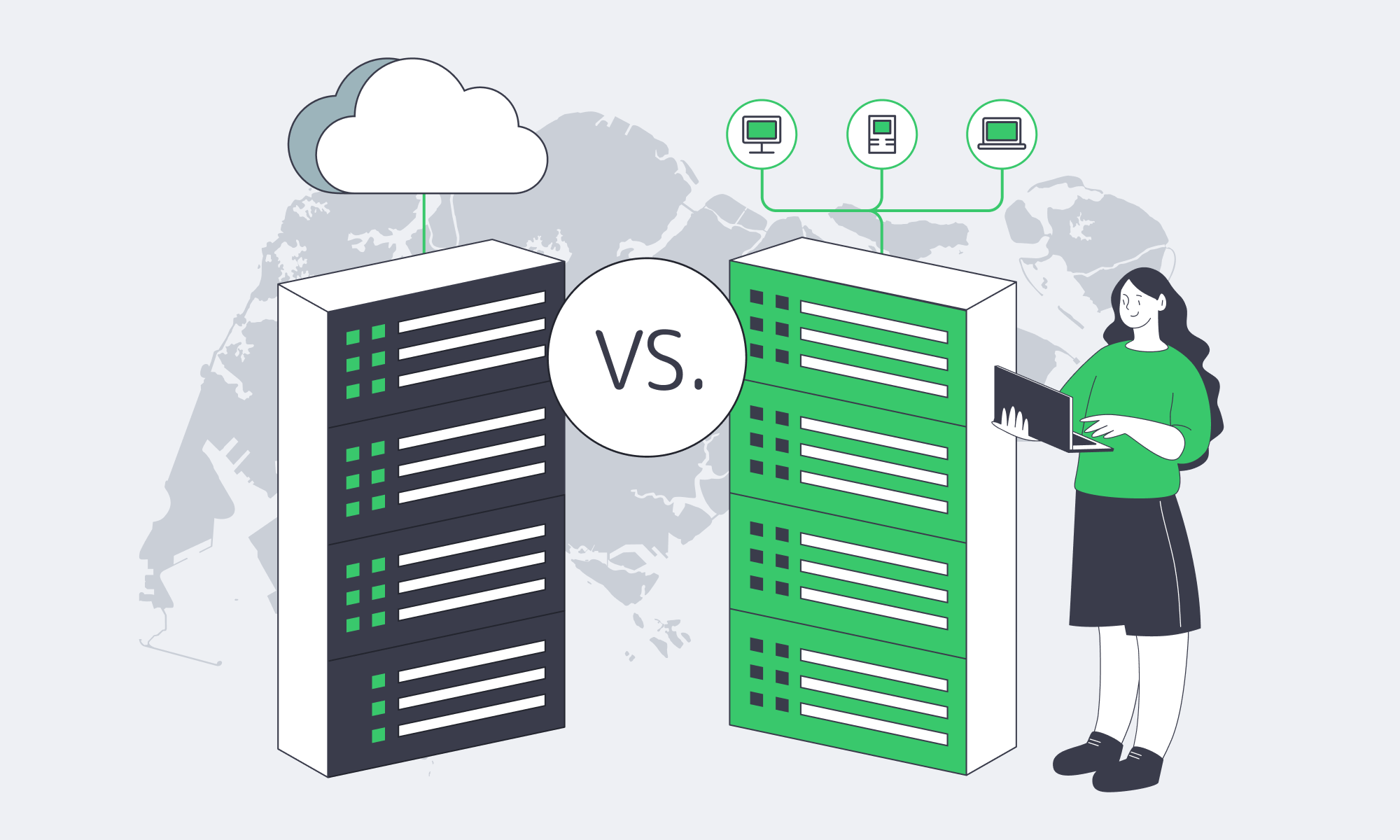
For most teams, the answer in Singapore isn’t “all‑cloud” or “all‑dedicated.” The pattern emerging from both industry data and what we see in practice is a deliberate mix: core, steady‑state, and regulated workloads on dedicated servers in Singapore; bursty, experimental, or heavily managed components in the cloud; and global reach delivered via CDN and object storage rather than by stretching a single compute layer everywhere.
Surveys and case studies point in the same direction. Enterprises worldwide are rebalancing toward private and dedicated infrastructure for their heaviest workloads, while keeping cloud for what it does best: fast iteration, managed services, and short‑lived capacity. At the same time, Singapore is expanding low‑carbon data‑centre capacity and strengthening its role as an anchor for regional infrastructure, making it an obvious hub for that dedicated tier.
If you’re deciding where to place your next tranche of capacity in or around Singapore, a few practical recommendations follow from the analysis above:
- Anchor latency‑critical and compliance‑heavy systems on dedicated Singapore infrastructure. Real‑time trading, risk, payments, game state, and other stateful services that suffer from multi‑tenant jitter or complex audit trails belong on single‑tenant servers under your direct control, close to your users.
- Use cloud platforms surgically for elasticity and managed primitives. Early‑stage products, unpredictable workloads, and specialised managed services (databases, analytics, functions) still fit well on cloud hosting Singapore platforms—provided you set clear thresholds for when to repatriate long‑running, resource‑intensive components.
- Treat network and data‑movement costs as first‑class design constraints. For bandwidth‑heavy or chatty services, design around high‑capacity dedicated links in Singapore plus a CDN and object storage tier, rather than assuming cross‑region or cross‑provider traffic will remain a rounding error on your cloud bill.
Answering those questions honestly usually reveals the shape of your Singapore infrastructure portfolio without the need for ideology.
Get a Dedicated Server in Singapore
Ready to move stable or regulated workloads to Singapore? Deploy high‑performance dedicated servers with 1–200 Gbps bandwidth and fast setup, backed by our global network, CDN, and 24/7 support.
Get expert support with your services
Blog

Winning Multinational Rollouts Across Latin America with Dedicated Servers
Latin America is no longer a “remote region” you serve from Miami, Ashburn, or Frankfurt and hope for the best. Investment, new capacity, and user expectations are moving too fast for that. IDB Invest estimates the region’s data center market will nearly double—from roughly $5B (2023) to almost $10B (2029)—and notes ~30 new data centers under construction or recently inaugurated.
But CTOs don’t win LATAM by copy/pasting a global template. They win with a unified rollout playbook that treats the region as it is: multiple regulatory regimes, multiple last-mile realities, and multiple connectivity “truths,” even when the map looks contiguous.
This playbook is focused on three levers that make or break a multinational rollout:
- Procurement: how you standardize hardware decisions while staying locally realistic.
- Network blend: how you keep transit and peering from becoming a black box.
- Monitoring: how you measure latency, loss, and availability the same way everywhere.
And because Brazil is both the biggest prize and the most common misstep, we’ll define when Brazil should be your primary origin and where secondary nodes should live.
Servers in LATAM— Reserve server hardware in Brazil — CDN PoPs across 6 LATAM countries — 20 DCs beyond South America |
|
Why a Global Template Breaks for a LatAm Dedicated Server Rollout
A global template typically assumes three things that fail in Latin America:
- Latency is geographic. In practice, it’s often policy + peering + congestion + last-mile.
- Your origin can sit outside the region. That works until cross-border jitter breaks real-time apps, or regulation demands local processing.
- One monitoring plane is enough. In LATAM, you need coordinated monitoring across countries, not just a single “green dashboard” from a U.S. vantage point.
The fix is not “more regions.” It’s a unified playbook that makes deployments repeatable while letting topology stay locally intelligent.
Procurement: Treat Dedicated Server in South America as a Supply Chain Decision
If you’re expanding fast, procurement is where rollouts quietly die—usually via inconsistent server SKUs, uneven spares strategy, and “temporary” instances that become permanent.
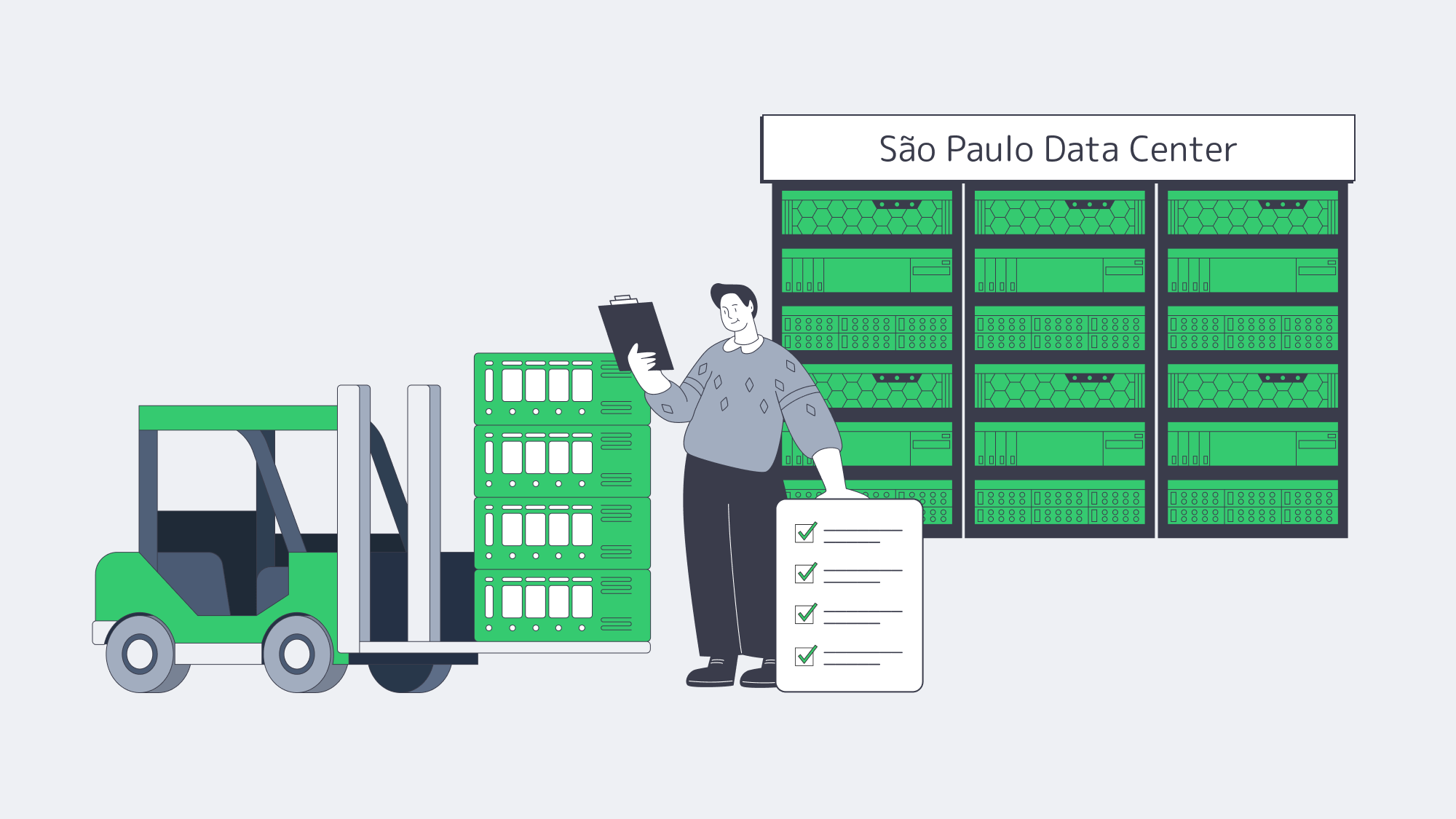
A procurement model that survives LATAM has three layers:
- Standardize server families, not exact SKUs. Pick 2–3 CPU/memory/storage archetypes aligned to your workloads (API, DB, cache/stream). Keep the bill of materials flexible enough to land locally without re-architecting.
- Standardize port and traffic assumptions per role. Origin nodes are not edge nodes. Your origin may need higher sustained egress and predictable routing control; edges need burst-friendly delivery and fast cache turnover.
- Standardize the deployment contract. Imaging, secrets, config management, and observability must be identical whether the node is in Brazil or elsewhere.
For Brazil specifically, plan around the reality that São Paulo is the procurement + connectivity center of gravity. São Paulo is one of the most interconnected hubs and a practical foundation for LATAM architectures.
Brazil Deploy Guide— Avoid costly mistakes — Real RTT & backbone insights — Architecture playbook for LATAM |
|
Network Blend per Country: Stop Treating “Transit” as a Single Line Item
In LATAM, the network blend is not just cost optimization. It’s your latency distribution, your loss profile, and your incident radius.
A functional model:
- Pin your performance targets to SLOs, not to providers. Your SLO is what matters; providers are just knobs.
- Design for country-local exit where it matters. If your traffic regularly hairpins across borders to find a peering point, you’ll see random “bad days” you can’t reproduce.
- Use BGP only when you can operationalize it. Routing control is powerful, but only if you monitor route changes, maintain prefix hygiene, and have a clear rollback playbook.
On the Melbicom side, BGP sessions are available (including BYOIP) for free on dedicated servers—useful when you want deterministic routing behavior across regions without rewriting your architecture.
Coordinated Monitoring: One SLO, Many Vantage Points
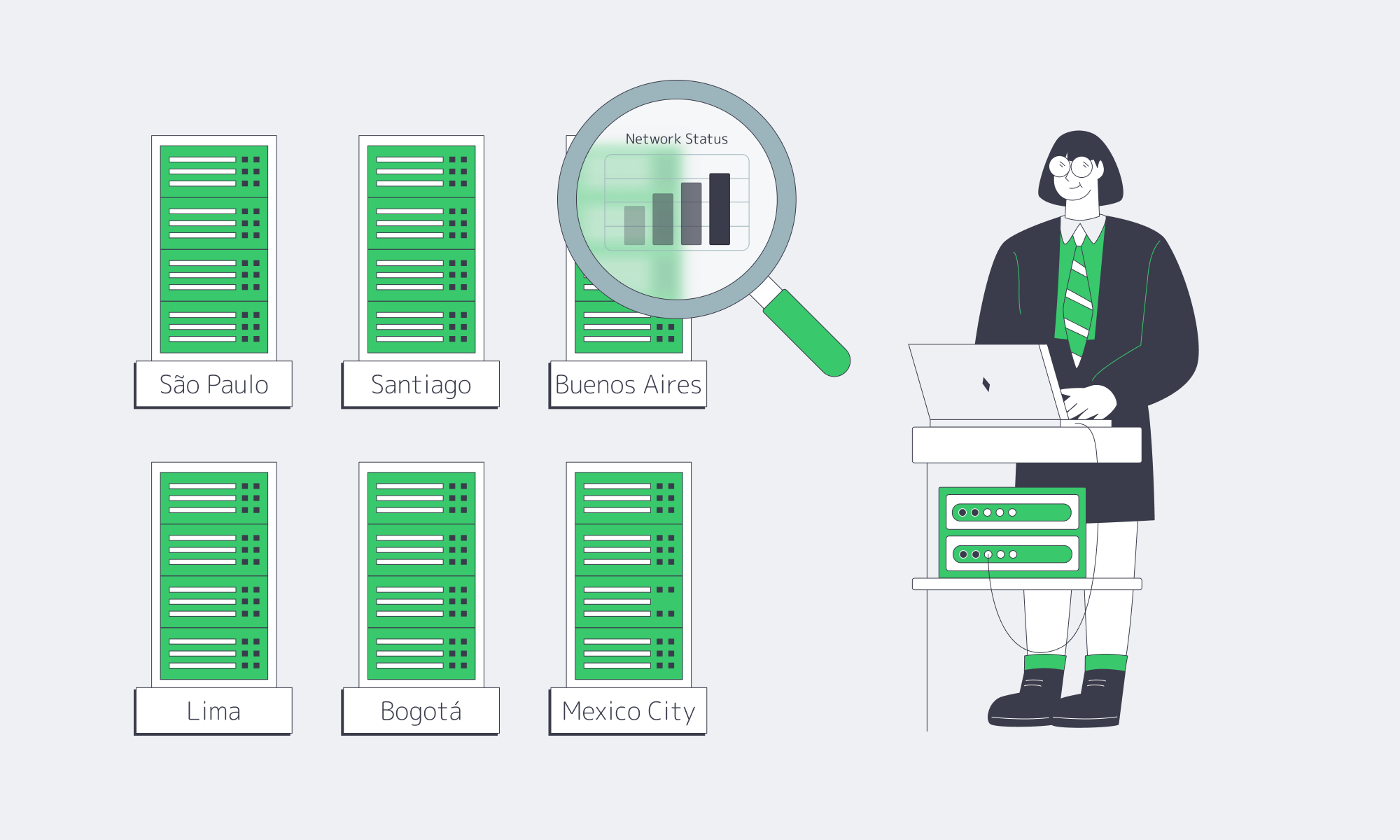
The classic failure mode: your monitoring says “fine,” users in Bogotá say “broken,” and the network team can’t reproduce the problem from outside the region.
Coordinated monitoring means:
- One SLO definition across the rollout (p95 latency, packet loss, HTTP error budgets, stream join time, etc.).
- Multiple vantage points inside the region and across borders so you can distinguish “Brazil is down” from “Argentina-to-Brazil transit is degraded.”
- A single correlation model: BGP changes, CDN cache hit ratio shifts, and origin load must be visible in the same incident timeline.
This is where “global template thinking” fails hardest. LATAM needs a shared measurement language, not a single measurement location.
Brazil Dedicated Server as the Primary Origin: The Rule, the Exception, the Reality
Brazil is the easiest place to overfit. It’s huge, economically central, and network-dense—but it’s not automatically the best origin for every LATAM deployment.
When a Brazil Dedicated Server Should Be Your Primary Origin
Use Brazil/São Paulo as the primary origin when at least one of these is true:
- Brazil is your largest market (user volume, revenue, or regulatory risk).
- Your application is sensitive to peering gravity. São Paulo’s IX.br ecosystem is a real differentiator when you need to reach into Brazilian networks.
- Your workload is latency-sensitive inside Brazil. The 2–3 ms round-trip latency within the São Paulo–Rio corridor is exactly the type of metric that matters for fintech, trading, and real-time iGaming systems.
- You need routing control at the origin. If you’re doing multi-region failover or traffic steering, control belongs at the origin, not only at the edge.
When Brazil Should Not Be Your Only Origin
Brazil-as-only-origin breaks when:
- Your users cluster heavily in Mexico or the northern tier (crossing multiple borders to reach São Paulo creates a wide jitter envelope).
- Your risk model can’t tolerate a single “regional heart.” A São Paulo issue shouldn’t become a LATAM-wide incident.
- Your app’s write-path is globally chatty (e.g., synchronous cross-service dependencies). In that case, the origin must be closer to the majority of your request graph, not just the biggest map country.
Where to Add Secondary Nodes—and What They Should Do
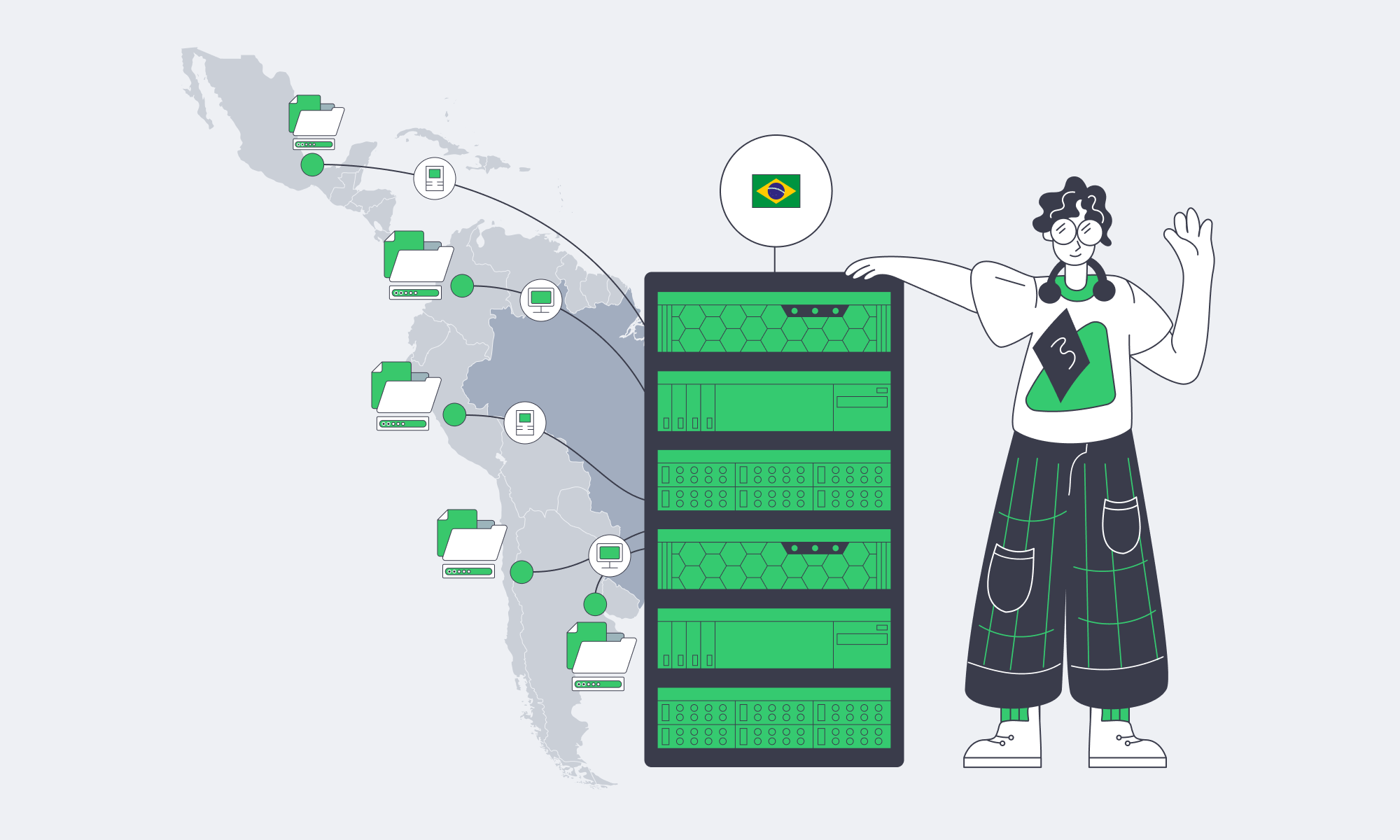
Secondary nodes are not mini-origins by default. Their job is to absorb latency, isolate incidents, and localize delivery.
A practical pattern for LATAM:
- Brazil/São Paulo as primary origin for data gravity
- Secondary nodes as delivery + resilience points in the largest non-Brazil demand centers
For Melbicom specifically, the current LatAm CDN footprint includes PoPs in São Paulo, Santiago, Buenos Aires, Lima, Bogotá, and Mexico City (useful for “near-user” delivery when the origin is centralized). This is how you keep the LATAM delivery redundant even when the origin is in one country.
Table: Practical Topology Patterns for Multinational LATAM Rollouts
| Pattern | Primary Origin | Secondary Nodes (Role) |
|---|---|---|
| Brazil-centric LATAM | São Paulo | Santiago / Buenos Aires / Lima / Bogotá / Mexico City as delivery nodes (cache, acceleration, fail-soft) |
| Split LATAM delivery | São Paulo | Two “anti-hairpin” secondary nodes aligned to demand clusters (e.g., Pacific vs. Southern Cone) |
| Resilience-first | São Paulo | Secondary nodes sized for “read-heavy continuity” during origin degradation (serve cached, degrade writes) |
A Unified LatAm Dedicated Server Playbook
A unified playbook is not a template. It’s a contract:
- Treat LATAM as multiple network domains: build one rollout system, but allow topology to vary by country.
- Choose São Paulo as origin when Brazil traffic/compliance dominates; otherwise, avoid making it your only “regional heart.”
- Add secondary nodes to prevent hairpin latency and to keep incidents local; size them for the failure mode you’re willing to tolerate.
- Make routing control operational (or don’t do it): BGP without monitoring and rollback is just chaos with better vocabulary.
- Run coordinated monitoring with in-region vantage points so you can separate “origin issues” from “cross-border path issues.”
- Lock procurement to server families and role-based bandwidth assumptions so your rollout doesn’t stall on SKU mismatches.
Deploy, Customize, and Scale LatAm Infrastructure With Melbicom
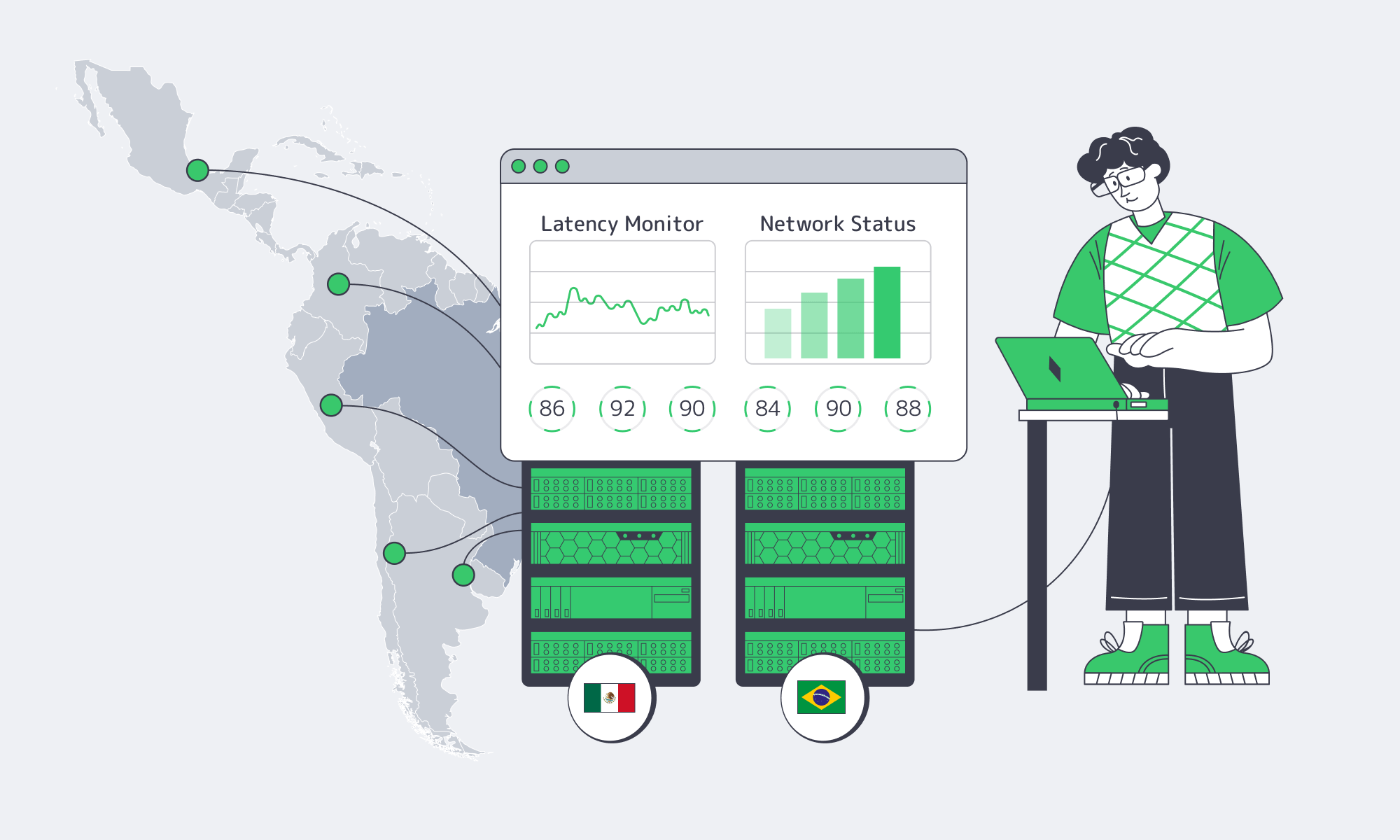
Melbicom can help you finalize this blueprint. We’re opening priority access for teams preparing LatAm rollouts anchored in Brazil. Share your traffic profile, hardware requirements (CPU/GPU, NVMe tier, port targets, redundancy and DDoS posture), and timelines, and we’ll shape a tailored offer and pre-stage capacity across our network and LatAm CDN—with first-wave placement when São Paulo dedicated servers go live.
Plan your LatAm rollout with Melbicom
Share your traffic profile and hardware needs. We’ll validate routes, size capacity, and pre-stage Brazil origin with CDN and DDoS options across LatAm.
Get expert support with your services
Blog

Maximizing Uptime: Redundancy and DDoS Protection for Adult Hosting
Outages on adult platforms tear straight into revenue and brand trust. Industry research on downtime estimates average losses of around $9,000 per minute for digital businesses, with large enterprises absorbing hundreds of millions annually across incidents. For an adult platform that lives or dies on recurring spend and creator loyalty, the real bill includes churn, chargebacks, and ad campaigns to recover reputation.
At the same time, the volume and shape of traffic keep tilting the odds against you. Video already accounts for about 82% of all internet traffic, and that share is still rising as more consumption shifts to streaming. Adult content is massively over‑represented in that stream: multiple independent analyses still converge around roughly 35% of all internet downloads being linked to adult content.
Choose Melbicom— 1,300+ ready-to-go servers — 21 global Tier IV & III data centers — 55+ PoP CDN across 6 continents |
|
That traffic is increasingly live. In the broader content ecosystem, one recent analysis of social usage found around 70% of social media users now prefer live video over pre‑recorded content, with Gen Z spending about 3.5 hours a day on social platforms and dedicating a big chunk of that to live streams. Adult creators are following the same curve: interactive cam sessions, real‑time shows, and pay‑per‑minute live events.
Meanwhile, the attack surface is getting more hostile, not less. Cloudflare’s telemetry shows how quickly DDoS has escalated: 4.5 million DDoS attacks mitigated in just Q1 2024 — and 36.2 million attacks already mitigated in the first three quarters of 2025, a 170% increase over all of 2024. Many of those are short “hit‑and‑run” bursts; Cloudflare’s Q1 2025 report notes that 89% of network‑layer and 75% of HTTP DDoS attacks end within 10 minutes — far too fast for manual mitigation or ticket‑driven response.
On top of that, DDoS is no longer just about volume. Streaming‑focused security research highlights ransomware, bots, DRM bypass, and data breaches as core threats for media platforms, with bots alone accounting for nearly half of all internet traffic and significantly distorting performance and analytics. For adult platforms, that means every outage or slowdown is a revenue, trust, and compliance event — not just a technical one.
We at Melbicom operate dedicated streaming infrastructure, CDN, S3‑compatible storage, and BGP‑enabled routing for high‑risk verticals. In this article, we combine that experience with current data on DDoS trends, streaming economics, and traffic behavior to answer one question: how do you design adult hosting DDoS protection and redundancy so that attacks, surges, and failures become routine engineering problems, not existential crises?
Key Signals: Why Uptime Is Non‑Negotiable for Adult Platforms
| Factor | Data Point | Why It Matters for Adult Platforms |
|---|---|---|
| Video dominance | Video made up 82% of all internet traffic in 2022 and continues to grow. | Adult platforms are overwhelmingly video‑first; your entire product is exposed to bandwidth and latency shocks. |
| Adult share of downloads | Around 35% of all internet downloads are adult media. | You operate in one of the highest‑volume verticals, with matching visibility to attackers and regulators. |
| 4K streaming cost | Netflix‑style 4K streams run at ~25 Mbps and ~7 GB/hour. | High bitrates make concurrency spikes especially punishing for origin and network if capacity planning is conservative. |
| DDoS escalation | Cloudflare mitigated 4.5M DDoS attacks in Q1 2024 and 36.2M in 2025 YTD, 170% of the 2024 total. | The background noise of attacks is now continuous; you should assume you’ll be hit, repeatedly. |
| Cost of downtime | Oxford Economics‑based analysis pegs average IT downtime at ~$9,000 per minute for large organizations. | Even short outages during peaks can erase months of margin — before you factor in refunds, churn, and brand damage. |
Adult Hosting DDoS Protection: Why Uptime Is Non‑Negotiable
For an adult platform, “five nines” isn’t a purely academic SLA number — it’s a proxy for creator payouts, partner trust, and risk tolerance from payment providers and ad networks.
Attackers understand this leverage. They time campaigns to coincide with:
- High‑profile drops: new series, branded shows, influencer crossovers
- Scheduled live events: cam marathons, paid live streams
- Promo pushes: email, socials, affiliate pushes landing within a narrow window
Modern DDoS traffic is rarely a single brute‑force flood. It’s multi‑vector and time‑boxed, often combining volumetric L3/L4 floods with HTTP‑layer noise and bot activity. Cloudflare’s Q1 2025 data shows that while most attacks are “small” by hyperscaler standards, they still saturate typical enterprise links and crash unprotected servers — and almost all finish before a human can triage.
At the scale of a busy adult tube or premium live platform, that means:
- On‑demand mitigation is effectively obsolete. By the time you’ve paged the on‑call and switched traffic into a third‑party scrubber, the first campaign is over — and the second is warming up.
- Attack and organic surges look similar at the edge. A trending creator or viral promotion can produce request curves that resemble a denial‑of‑service without good instrumentation and rate‑limiting.
Any credible adult hosting DDoS protection strategy therefore has to assume always‑on, automated mitigation at the network and CDN layer, and redundant, high‑bandwidth dedicated servers behind that shield, sized for peak traffic plus a safety margin, not monthly averages.
Adult Video Content and File Hosting
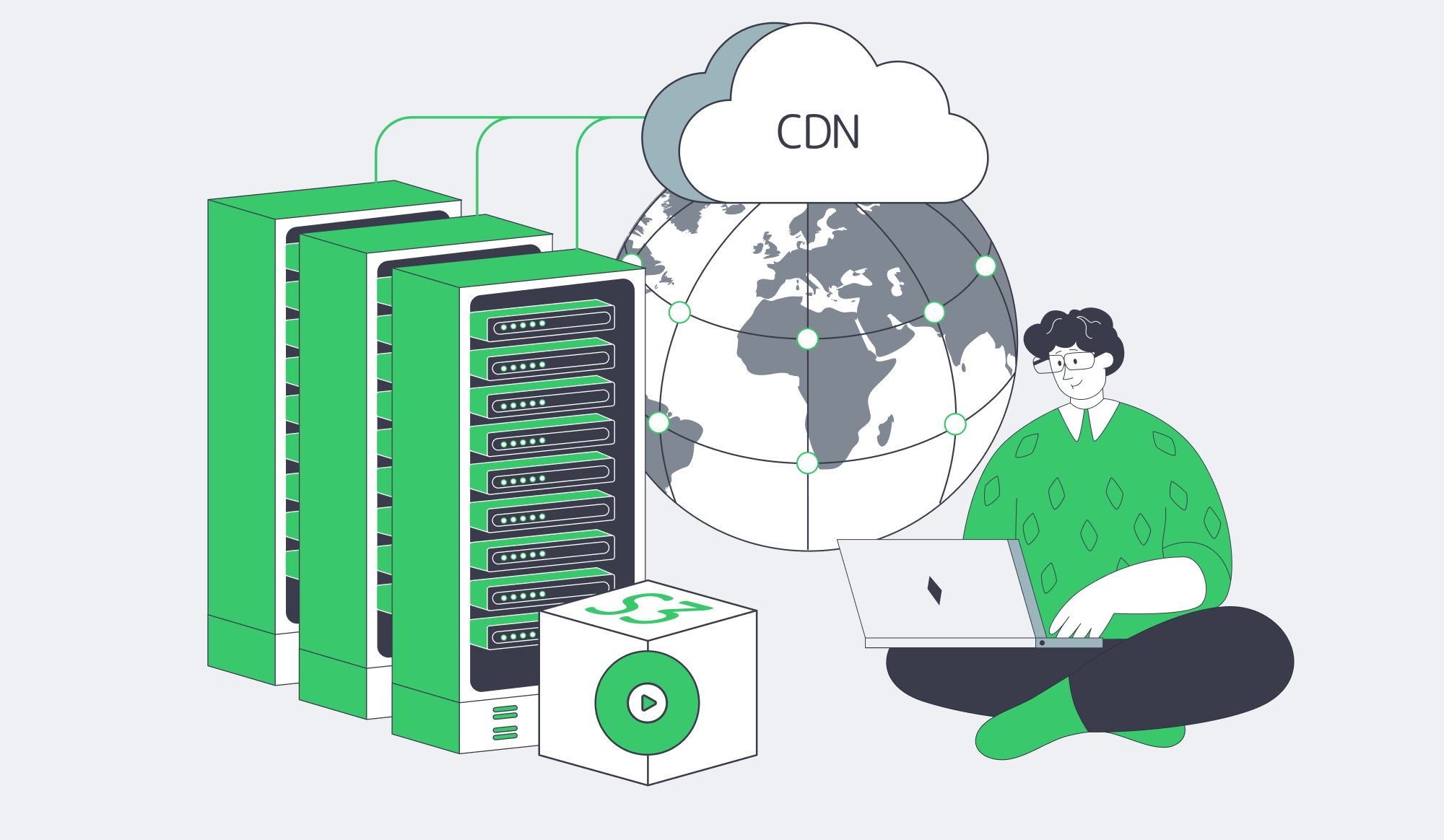
Most serious adult platforms now rely on dedicated streaming servers fronted by a CDN, plus separate object storage for archives and downloads. The objective is simple: keep origin nodes lean, cache everything aggressively, and ensure that no single physical server or rack is a point of failure — even under sustained attack.
Under the hood, this means designing around the realities of high‑bitrate, attack‑prone traffic. From an infrastructure standpoint, resilient adult hosting for this layer looks like:
1. High‑bandwidth dedicated servers close to users
Melbicom offers dedicated servers in 21 Tier III/IV data centers globally, including hubs like Amsterdam, Los Angeles, São Paulo, Lagos, Madrid, and Singapore. Depending on location, per‑server ports range from 1 Gbps up to 200 Gbps, so clusters can be built for everything from regional cam platforms to global video archives.
2. CDN offload as a first‑class requirement, not an add‑on
Melbicom’s CDN is built on 55+ PoPs across, with origin shielding, geographic request routing, and multi‑origin pooling for load balancing and failover. For adult workloads this does three things:
- Keeps hot content local to viewers, reducing TTFB and rebuffering.
- Shields origins behind anycast PoPs so DDoS traffic is handled at the edge.
- Enables regional A/B testing (e.g., moving a subset of traffic to a second origin cluster without DNS flips).
3. S3‑compatible object storage for archives and downloads
For long‑tail catalogs and large downloadable assets, Melbicom’s S3‑compatible storage provides NVMe‑backed storage with erasure coding and IAM controls. That gives you:
- A durable backing store for originals and mezzanine files.
- The ability to serve files via CDN using signed URLs, keeping S3 points private.
- Predictable bandwidth pricing and free ingress, which matters when you’re constantly ingesting new content.
The architectural pattern is straightforward: dedicated servers for transcoding and origin, CDN for distribution, S3 for durability — all stitched together over a backbone that is engineered for DDoS resistance and redundancy end‑to‑end.
Adult Content Hosting Solutions
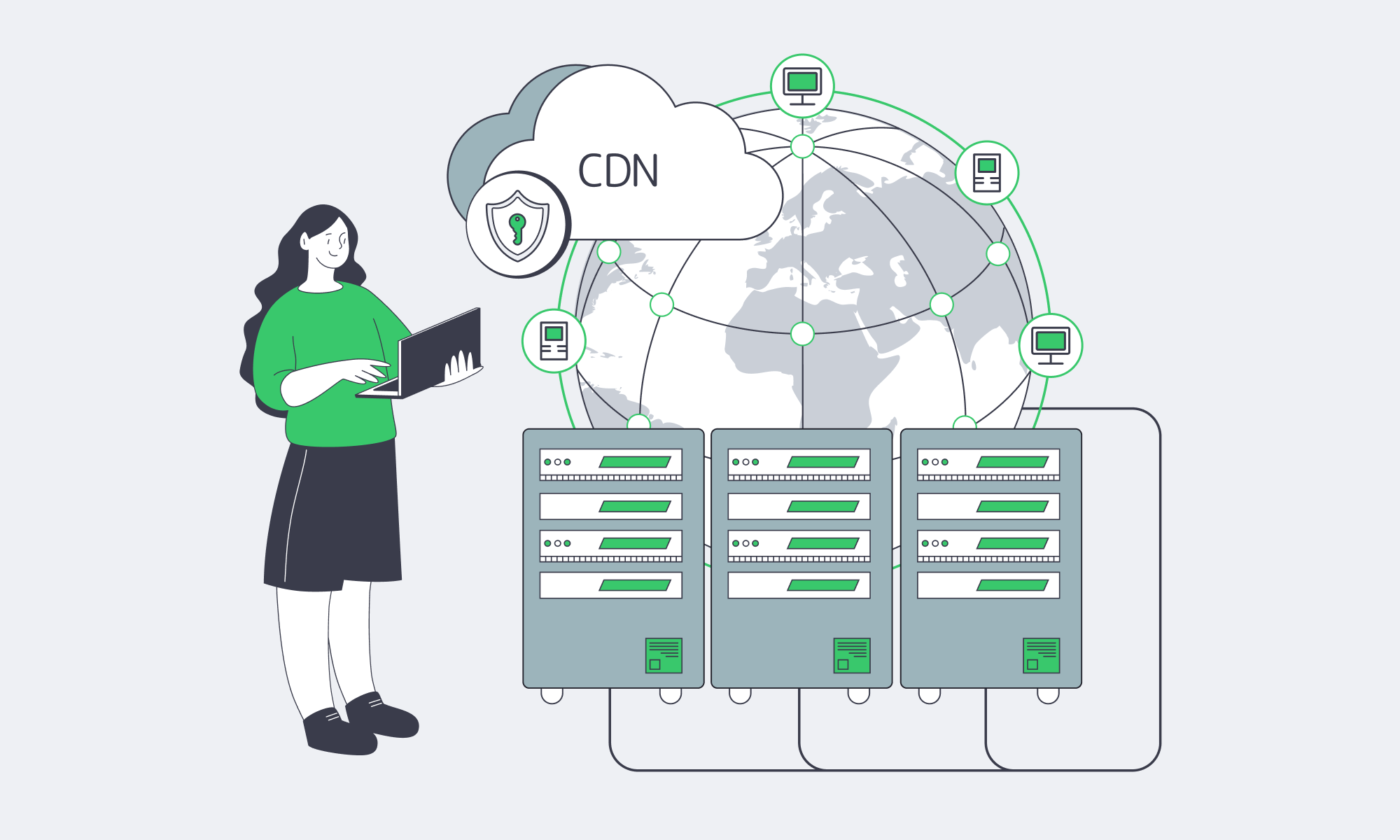
You can think of a serious adult hosting stack as a set of layers that must all behave correctly under both traffic overload and active attack:
Dedicated Servers as the Backbone of Resilient Adult Infrastructure
Single-tenant servers provide deterministic bandwidth per machine — in Melbicom’s case, anywhere from 1 Gbps to 200 Gbps per server — along with full control over kernel-level network handling, cache hierarchies, and storage layouts. They also offer a predictable cost model, allowing bandwidth and hardware to be sized for worst-case live-event loads rather than averages. From there, true resilience comes from how those servers are arranged.
Anti‑DDoS Dedicated Servers for Adult Sites
Because modern DDoS attacks are surgical and increasingly automated, mitigation has to be inline and always on. The nature of these bursts — often lasting under a minute and mimicking legitimate traffic — turns them into a design constraint. For adult hosting, this means edge defenses must be behavior-aware rather than reliant on default CDN or WAF profiles. Attacks frequently disguise themselves as cached traffic, abuse search and 404 endpoints, or rely on randomized query strings and headers to bypass caching. Effective protection now depends on CDNs that rate-limit both cached and dynamic content, block cache-busting patterns, and aggressively cache or pre-compute expensive endpoints. It also requires behavioral analysis that evaluates request patterns, timing, and headers rather than just IP addresses.
At the network layer, capacity and filtering need to be built directly into the backbone to withstand the hyper-volumetric spikes seen in 2025. Melbicom follows this model by integrating always-on DDoS filtering into its global network, removing hostile traffic as it enters the backbone without billing tenants for attack bandwidth, and ensuring neighboring customers benefit from the same hardened paths. On the server side, resilient architectures typically separate edge-origin and core-origin clusters to protect control-plane and storage systems; isolate login and payment endpoints on hardened origins; and implement strict health checks with circuit breakers so degraded regions are drained quickly rather than flapping between unhealthy nodes.
Redundant Adult Hosting and Global Failover
DDoS is only one failure mode; routine issues like fiber cuts, power problems, regional routing incidents, or deployment mistakes can be just as damaging. For adult platforms operating across North America, Europe, and fast-growing markets, three redundancy patterns consistently work well.
The first is active/active regions for core web and API functions, with at least two regions per continent, each running its own server pools and database replicas. A global CDN routes users to the nearest healthy region, and origin pools are configured so a secondary region can take over within seconds without relying on DNS changes.
The second is BGP-enabled stability: when you own your IP space, BGP sessions with the hosting provider allow your prefixes to be announced across multiple data centers. Melbicom’s BGP Session service lets customers move services between locations while keeping IPs stable, use multiple upstreams with RPKI/IRR protections, and maintain consistent premium/API hostnames for partners that whitelist specific addresses.
The third pattern is separating the hot path from bulk storage. Live and frequently accessed content is served from high-bandwidth origins close to major audiences, while cold archives sit in S3‑compatible storage accessed through signed CDN URLs. During partial outages — such as a regional issue in one data center — this design lets platforms deprioritize high-latency archival fetches and focus on keeping the hot path (live sessions, trending VOD, logins, payments) responsive.
Security trends for streaming underscore why this separation matters. Cybergen’s analysis of streaming threats in 2025 highlights how ransomware, bots, and data breaches can all hit the same platform at once, and that “almost half of internet traffic” now comes from bots that degrade performance and distort analytics if left unchecked. A layered architecture gives you options to contain damage.
Are There Any Reliable Hosting Services Specialized in Adult Content?
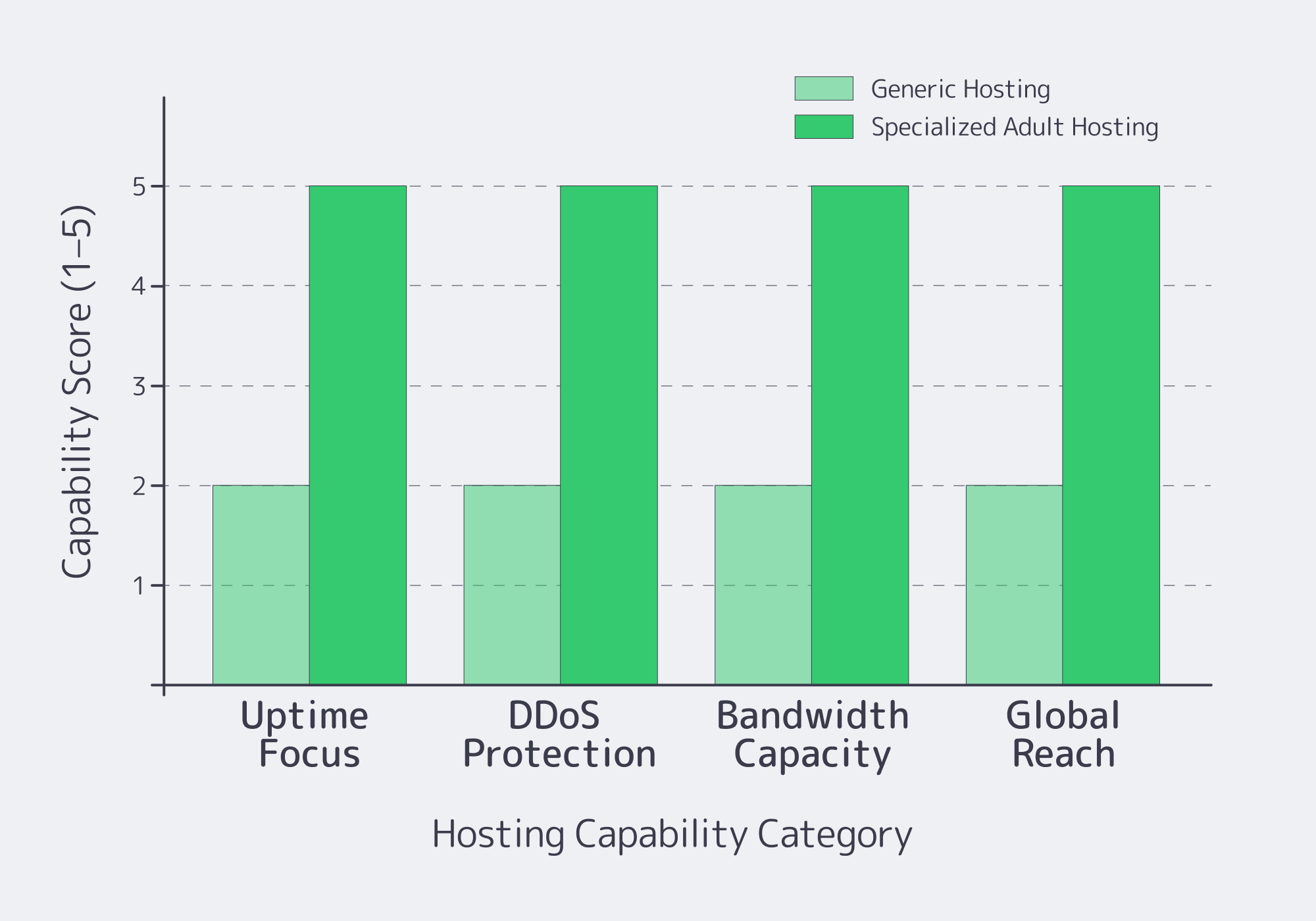
Yes — but “reliable” has to mean more than just allowing adult content. You want providers that understand streaming workloads, tolerate payment‑provider and regulatory pressure, and operate their own network, data centers, CDN, and storage, so they can actually deliver on uptime and DDoS resilience.
For adult platforms, due diligence should focus on three questions:
- Does the provider operate its own backbone and CDN, or just resell? Melbicom runs a global backbone with 21 Tier III/IV data centers and 55+ CDN PoPs across 36 countries, giving us direct control over routing, DDoS filtering, and peering. This vertical integration is what makes deterministic latency and failover possible.
- Can they actually absorb and mitigate real‑world DDoS campaigns? With hyper‑volumetric attacks now reaching 22.2 Tbps and ~10.6 billion packets per second, and thousands of >1 Tbps or >1 Bpps attacks recorded in a single year, your provider’s DDoS story has to go beyond “we use a firewall.” Melbicom’s network‑native DDoS filtering and CDN‑level request handling are built specifically for this environment.
- Is there enough hardware variety and capacity to match your growth curve? For adult workloads, we typically see platform teams evolve from a handful of mid‑range servers to dozens of high‑bandwidth configs across regions, often with bespoke builds (deployed within 3–5 business days). We also maintain over 1,300 ready‑to‑go server configs, so scaling isn’t a procurement project every time you cross a new threshold.
When those ingredients are in place — adult‑friendly policies, vertical control over the stack, serious DDoS capacity, and hardware variety — reliable adult hosting stops being a marketing phrase and becomes a measurable property of your platform.
Bringing It All Together: Architecting Always‑On Adult Platforms
Adult platforms now operate at the intersection of three compounding pressures:
- Explosive video and live‑stream growth, with users expecting 4K‑grade experiences on every device.
- A DDoS environment defined by hyper‑volumetric, short‑lived attacks, often combined with bot traffic and fraud.
- Tight regulatory and reputational constraints, where failures quickly ripple into payment friction, affiliate distrust, and creator churn.
The only sustainable answer is to treat redundancy and DDoS protection as first‑order design constraints, not bolt‑ons. That means sizing dedicated servers for peak concurrency, running active/active regions behind a CDN that understands your origin topology, and relying on always‑on, behavior‑aware mitigation that can respond in seconds without human intervention.
At the same time, the threat landscape sketched by DDoS and streaming‑security research is a reminder that you can’t silo DDoS from the rest of your security posture. Ransomware, bots, DRM bypass, and privacy breaches all lean on the same infrastructure choices: where you store data, how you segment networks, which services are exposed publicly, and how your provider’s backbone handles abusive traffic.
For teams making roadmap decisions now, a practical checklist looks like this:
- Multi‑region origins and APIs with health‑checked routing and no single points of failure at the data‑center level.
- Always‑on, multi‑layer DDoS protection: CDN and network filtering tuned for both volumetric floods and subtle cache‑busting or login abuse.
- High‑bandwidth dedicated servers sized for real‑world live event peaks, not monthly averages — with room for 4K and multi‑camera expansion.
- Caching and storage tiers that keep hot content near users and cold content in durable, cost‑effective S3‑compatible storage.
- Operational runbooks and incident drills that assume DDoS, ransomware, and regional outages will intersect — and that human response may lag behind the 1st wave.
- Continuous monitoring of bots and fraud, treating analytics integrity as part of uptime, not a separate problem.
You don’t eliminate risk by doing this, but you change its character: from catastrophic, incidents to bounded engineering challenges you can model, rehearse, and recover from.
Streaming‑optimized servers for uptime
Deploy high‑bandwidth dedicated servers, global CDN, and S3‑compatible storage with always‑on DDoS mitigation. Explore streaming‑focused configurations and deploy quickly.