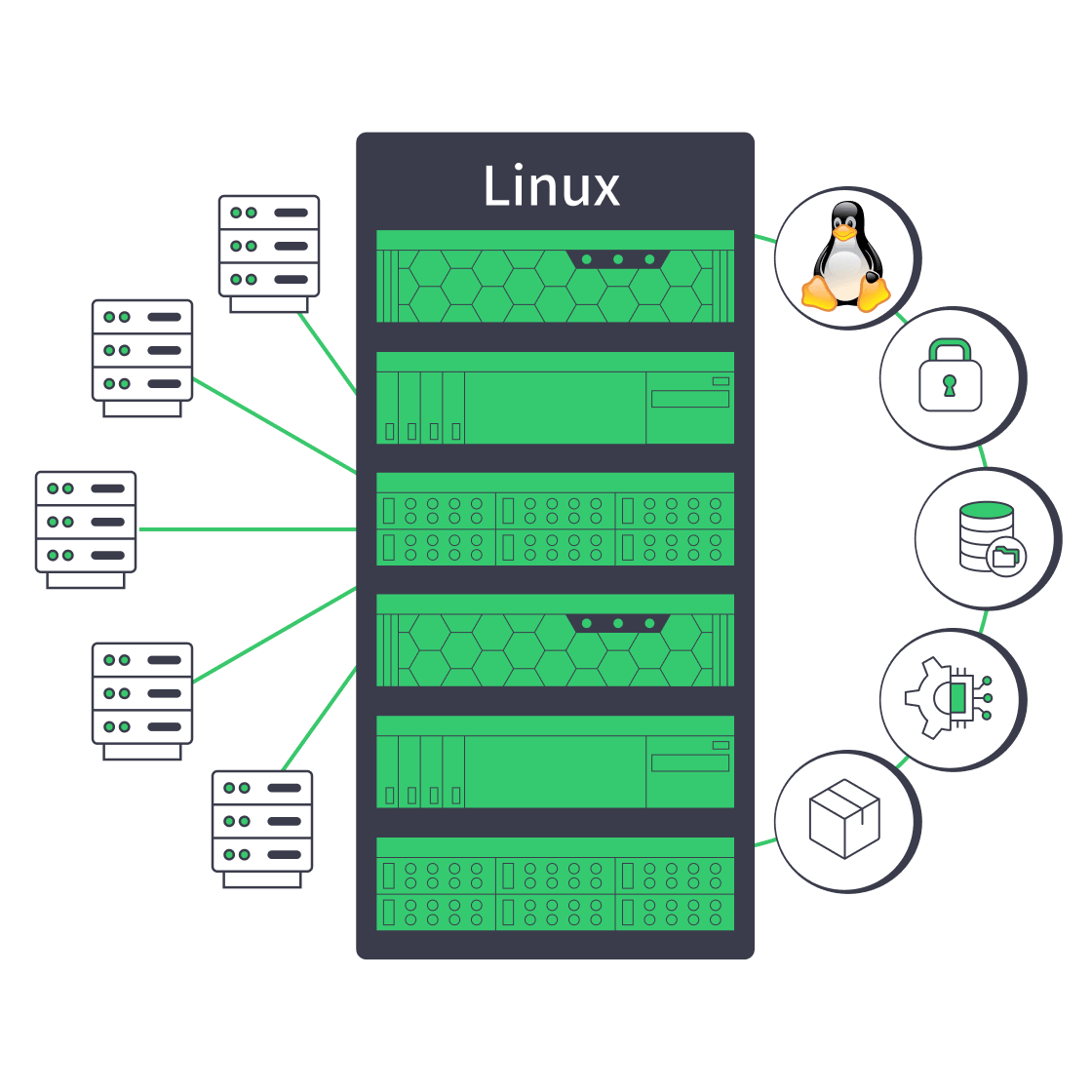
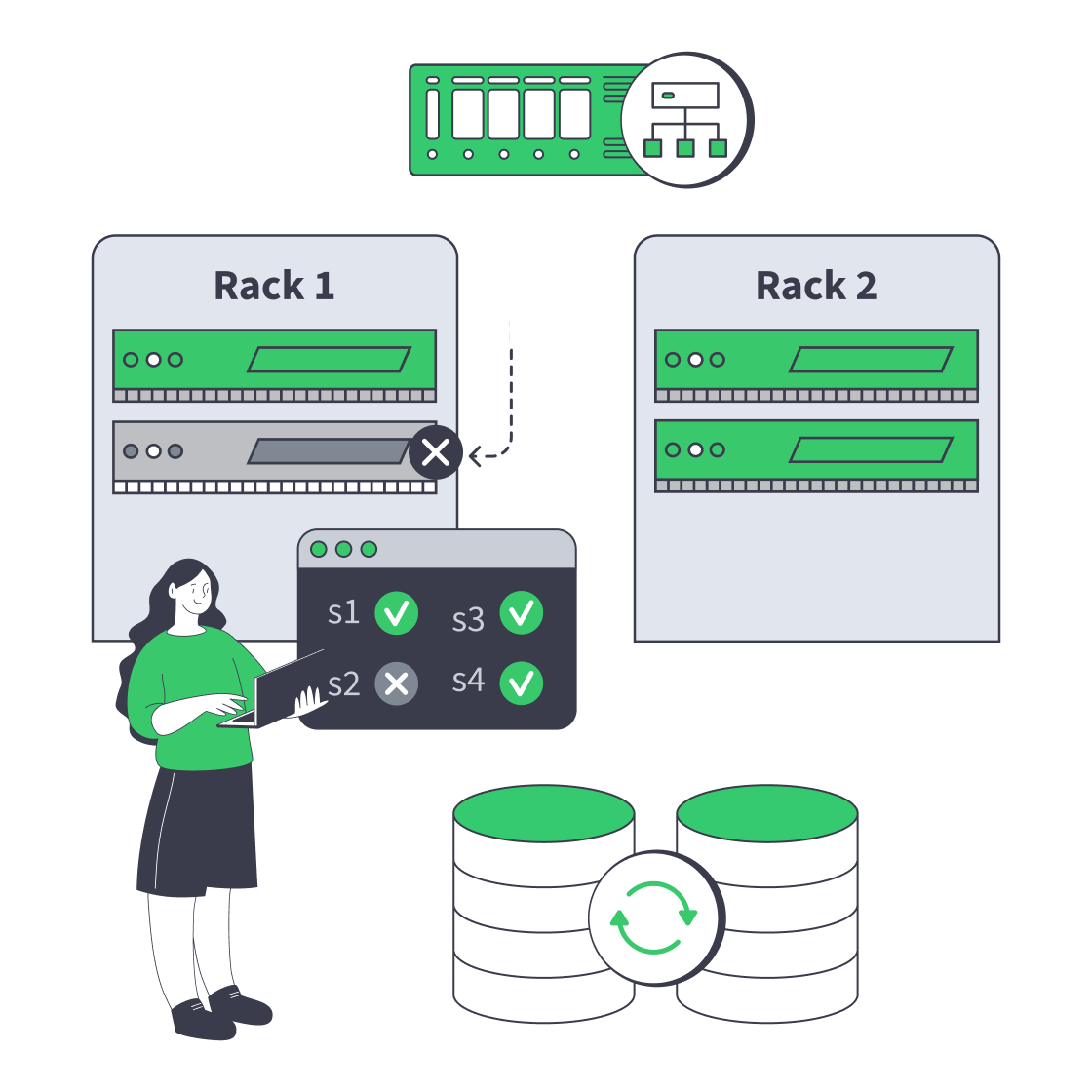
Wazuh hosting on dedicated servers makes pressure attributable

Size isolated CPU, RAM, NVMe, and bandwidth for agent ingest, alert indexing, concurrent search, retention, snapshots, and recovery with measurable headroom and clearer bottleneck attribution.

Protected Wazuh SIEM on dedicated servers

Dedicated server monitoring begins with evidence

Self-hosted Wazuh security
Size ingest against measured demand

Map agent count, average and peak EPS, indexed volume, and query concurrency before assigning compute capacity.

Isolated observability stack
Separate roles as workload evidence demands

Give manager, indexer, and dashboard roles independent capacity when bottlenecks or recovery targets justify separation.

SIEM capacity sizing
Protect index headroom during snapshots

Reserve dedicated server NVMe capacity for active indices, rollover, snapshots, restore tests, and measured growth.

Three-person user group
Keep software authority with your team

Melbicom supports the infrastructure; your team owns Wazuh configuration, rules, upgrades, monitoring, and response.

Available configurations
Need a Custom Build?
Filters
Clear all
Data center
Data center
CPU
CPU
CPU Brand
CPU Brand
RAM
RAM
Storage
Storage
from
up to
GPU
GPU
    Bandwidth
    Bandwidth
    Data Transfer
    Data Transfer
    Available configurations –
    CPU
    Memory
    Storage
    Network
    GPU
    Data center
    Price
    Show more

    Set Wazuh capacity to measured load

    Wazuh capacity starts with agent count, average and peak EPS, indexed volume, retention, concurrent searches, rule processing, and dashboard activity. When ingest, indexing, and search compete inside one undifferentiated resource pool, teams struggle to identify which workload is driving pressure before changing the hardware profile or deployment layout.

    At Melbicom, we provide isolated hardware with configurable CPU, RAM, SSD or NVMe storage, bandwidth, and regional placement for Wazuh. Match those resources to measured telemetry demand, preserve headroom for rollover and snapshots, then separate manager, indexer, and dashboard roles when bottlenecks or recovery objectives require distinct capacity.

    On each Linux dedicated server, your team owns the OS, Wazuh architecture, agents, rules, integrations, certificates, retention policies, snapshots, restores, upgrades, monitoring, and response procedures. We provide 24/7 technical support for the infrastructure layer, while software authority and security operations remain with your security team.


    Operator managing secure Wazuh SIEM infrastructure

    Turn workload evidence into control

    Align isolated resources with ingest, retention, search, and recovery objectives.
    Attributable ingest pressure
    Visible index headroom
    Direct bottleneck attribution
    Controlled retention growth
    Tested recovery objectives
    Explicit operating ownership

    Control the Wazuh infrastructure layer

    Select isolated compute, storage, bandwidth, and regional placement while retaining full software control.
    Attributable CPU and RAM capacity
    SSD and NVMe storage choices
    Bandwidth options by location
    Infrastructure across 20 data centers
    Ready-to-deploy server configurations
    Custom hardware configuration options
    Access to 24/7 technical support
    Customer-owned Wazuh operations
    Capacity for manager and indexer
    Snapshot and restore headroom
    Size Wazuh capacity
    Share ingest, retention, search, and recovery evidence to map a suitable hardware profile.
    Talk to an expert

    Infrastructure patterns for customer-operated Wazuh

    Server telemetry statistics
    Endpoint telemetry

    Reserve isolated compute and network capacity for sustained agent traffic, peak EPS, and manager-side event processing.

    Distributed indexing statistics
    Alert indexing

    Match memory and NVMe headroom to indexed volume, retention windows, concurrent searches, and rollover activity.

    Parallel event processing
    Rule processing

    Size CPU and memory from decoder activity, rule workload, event bursts, and expected alert generation rates.

    Intuitive control panel
    Dashboard analysis

    Reserve query capacity for analysts filtering retained data, exploring alerts, and reviewing security events concurrently.

    Self-hosted Wazuh security
    All-in-one deployment

    Keep manager, indexer, and dashboard together when measured load and recovery objectives support one host.

    Isolated observability stack
    Separated Wazuh roles

    Distribute central roles across nodes when ingest, search, index growth, or availability requirements justify separation.

    Verified SIEM recovery
    Snapshot and restore

    Reserve storage and I/O headroom for snapshots, restore tests, index recovery, and growing retained data.

    Multi-location CDN network
    Regional telemetry

    Choose regions for monitored endpoints and governance needs, then size bandwidth for administrator access paths.

    Operations guidance for self-hosted Wazuh

    Linux dedicated server with security, automation, storage, and network controls
    Linux Dedicated Server: Production Checklist for Control, Security, & Scale
    Dedicated server cluster rerouting traffic after a node failure
    Designing High-Availability Clusters That Fail Safely
    Server rack adding NVMe and nodes, with an 80% capacity gauge and p99 latency dial
    When and How to Scale Storage on Dedicated Servers
    Servers under AI magnifier displaying live metrics
    Building a Predictive Monitoring Stack for Servers
    More articles
    FAQ
    Is Wazuh managed by Melbicom?
    How should we size infrastructure for Wazuh?
    Can Wazuh roles run on one server?
    When should Wazuh roles be separated?
    Which storage factors matter for Wazuh?
    Does larger hardware create high availability?
    Can we choose region and bandwidth?
    What infrastructure support does Melbicom provide?
    Can Wazuh run on a Linux dedicated server?
    Why does NVMe matter for Wazuh indexing?
    Create your account
    Access the control panel, fund your balance, and choose infrastructure for your Wazuh deployment.
    Create an account
    Plan your deployment
    Share agents, EPS, retention, search load, and recovery targets so specialists can discuss capacity.
    Talk to an expert