Dedicated SQL Server hosting sized for concurrent queries

Rent a physical host with CPU for concurrent queries, RAM for active data, and local SSD/NVMe storage for transaction logs, temporary query work, and growing business databases.
Dedicated servers for SQL Server databases

SQL Server hosting matched to your workload

CPU capacity sizing
Compute capacity for concurrent queries

Processor capability and core count support concurrent queries, with edition limits and licensing guiding hardware choice.

RAM memory module
System memory for active database work

Installed RAM supports active data and query work, with headroom for the operating system and other host processes.

Verified storage I/O
Storage choices for data, logs and tempdb

Local SSD/NVMe choices provide usable capacity and I/O for data files, transaction logs, and temporary database work.

Database capacity sizing
Ready and custom hardware choices

A ready configuration or custom build brings CPU, RAM, and local storage together around your database workload.

Available configurations
Need a Custom Build?
Filters
Clear all
Data center
Data center
CPU
CPU
CPU Brand
CPU Brand
RAM
RAM
Storage
Storage
from
up to
GPU
GPU
    Bandwidth
    Bandwidth
    Data Transfer
    Data Transfer
    Available configurations –
    CPU
    Memory
    Storage
    Network
    GPU
    Data center
    Price
    Show more

    Room for live queries and batch work

    Your database handles transactions while reports, imports, and maintenance draw on the same host. That overlap shapes the capacity you need through the day. Measured peak query demand, log writes, and data growth guide spending on the right balance of compute, RAM, and local storage.

    Melbicom dedicated servers give your database the host’s CPU, RAM, and local drives. RAM serves active data and query work; drives hold data files, transaction logs, and tempdb. Bandwidth and location choices fit application traffic and transfers for backups and supported replicas.

    You install and operate appropriately licensed SQL Server on rented hardware. Ready and custom options combine CPU, RAM, and local drives to suit each host’s role, from live queries to backups, migration, or supported replicas. Custom builds are delivered in 3–5 business days.
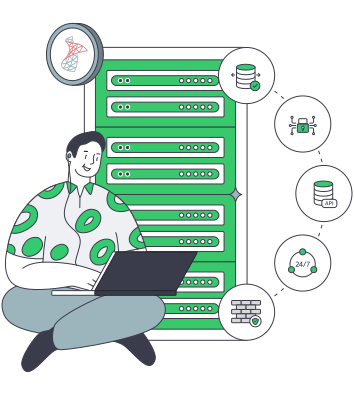
    SQL Server operator managing database workloads

    Capacity for database work and growth

    Host resources support transactions, reporting, database growth, and restore rehearsals.
    Headroom for concurrent queries
    Capacity for log write demand
    Room for reports and imports
    Storage that fits database growth
    Capacity for restore rehearsals
    Separate hosts for replica roles

    Hardware that fits your SQL workload

    Your host combines compute, memory, local storage, and connectivity for database workloads and planned growth.
    A physical host for your workload
    Processor and core-count choices
    System memory for database work
    Local SSD/NVMe storage options
    Drive capacity for data and logs
    Bandwidth for database transfers
    Locations near your applications
    Ready hardware configurations
    Custom CPU, RAM and storage builds
    Additional hosts for recovery roles
    Specify your SQL host
    Discuss CPU, RAM, storage, and bandwidth for your production database workload.
    Discuss your host

    Different workloads, distinct hardware demands

    Approved invoice payment
    ERP transactions

    CPU, RAM, and storage for log writes support concurrent order processing, stock updates, and financial postings.

    Three-person user group
    CRM workloads

    CPU and RAM support active customer records, contact histories, and simultaneous queries from service teams.

    Application server operations
    Business applications

    Host compute and local storage give application databases room for concurrent requests, retained records, and growth.

    Server analytics processing
    Mixed reporting demand

    CPU, RAM, and tempdb capacity support reports that run alongside live transactions on the same database host.

    Parallel event processing
    Batch integrations

    Compute and local drives provide room for sustained imports, temporary query work, and concurrent application traffic.

    Database server operations
    Internal databases

    Business databases share host CPU, RAM, and local storage for concurrent queries, scheduled jobs, and retained data.

    Staged recovery deployment
    Migration rehearsals

    A separate target host provides transfer bandwidth and working storage for database restores and migration rehearsals.

    Bidirectional database replication
    Replica host roles

    Separately sized physical hosts provide capacity for supported replica roles and the workload each must accept after failover.

    Database planning from hardware to recovery

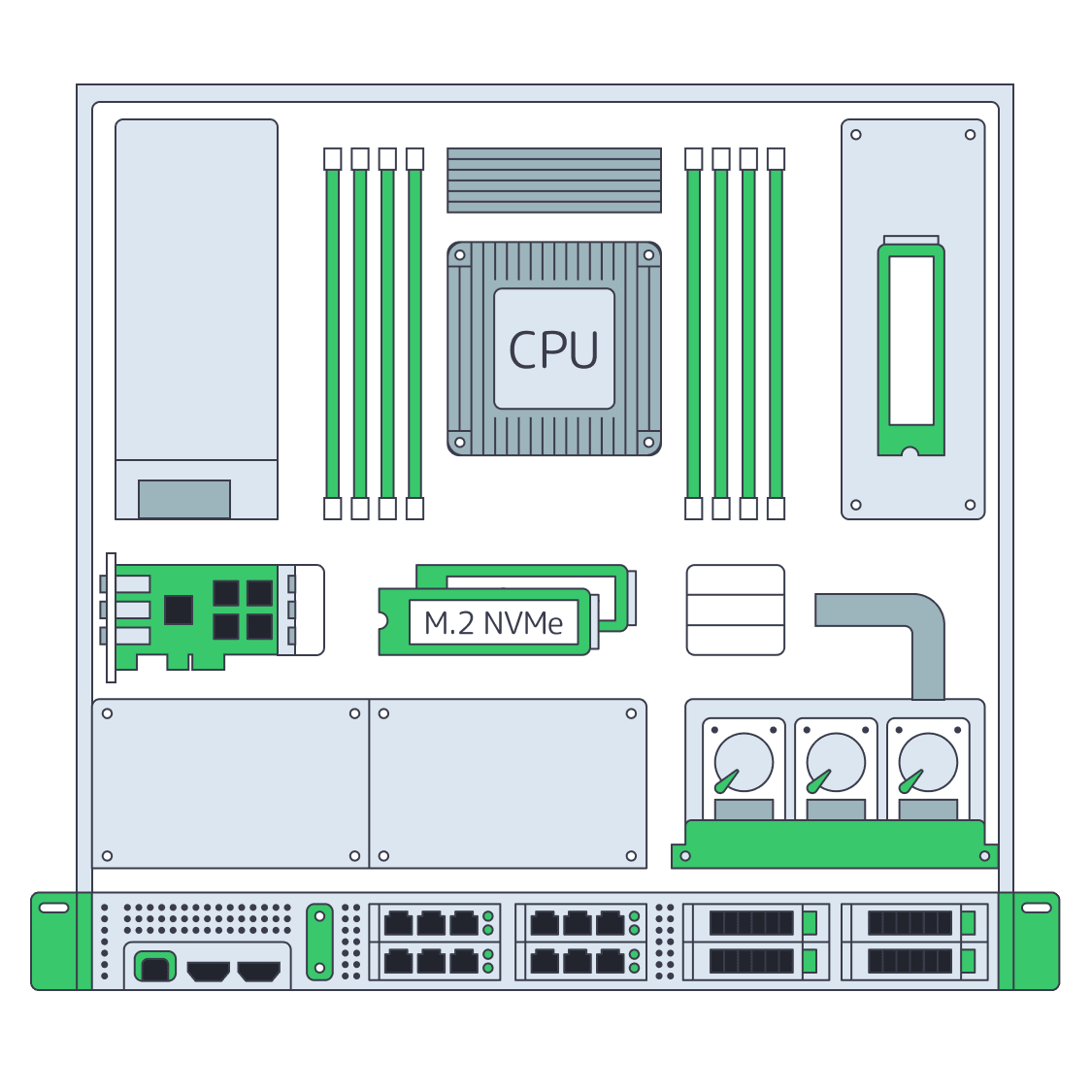
    Dedicated server BOM with CPU, RAM, NVMe, and NIC modules sized from workloads
    Spec Dedicated Servers From Workload, Not the Catalog
    Balanced scale comparing owned servers to rented subscription contract
    Database Server Acquisition: Should You Buy or Rent?
    Illustration of servers linked to cloud object storage by green high‑speed cables
    Blueprint for High-Performance Backup Server Solutions
    Server racks racing forward to show SQL Server 2022 speed gain.
    SQL Server 2022 Upgrade: Performance and Cost
    More articles
    FAQ
    What makes a physical host a good fit for SQL Server?
    How do core count and edition affect hardware choice?
    How much system memory should I plan for?
    How should I choose storage for data, logs, and tempdb?
    What network capacity does my database host need?
    How do backup and restore goals affect host sizing?
    How should I size hosts for availability replicas?
    What capacity helps with a SQL Server migration?
    When should I choose a custom configuration?
    How do Windows and Linux affect the host specification?
    Choose your database host
    Create an account to order a ready configuration with CPU, RAM, and storage matched to your workload.
    Create an account
    Build around your workload
    Discuss a custom CPU, RAM, and storage combination, including separate hosts for planned database roles.
    Discuss your host