Valkey & Redis hosting sized to your working set

Rent dedicated servers for Redis or Valkey. Reserve memory for active datasets, match CPU to command demand, and allocate bandwidth for application traffic and replica synchronization.

Valkey and Redis workloads on dedicated server infrastructure

Valkey hosting with whole-host capacity

RAM memory module
Memory for data and background work

Choose RAM for active data, object overhead, and background work that overlaps with application requests.

CPU capacity sizing
CPU choices for your command workload

Match per-core performance to your command mix, with additional cores for I/O threads and background work.

Locked stable bandwidth
Bandwidth matched to client traffic

Select bandwidth for client requests, response data, and replication between your primary and replica nodes.

Bidirectional database replication
Separate hardware for replica nodes

Assign primary and replica nodes to separate physical hosts, with resources sized for each node's role.

Available configurations
Need a Custom Build?
Filters
Clear all
Data center
Data center
CPU
CPU
CPU Brand
CPU Brand
RAM
RAM
Storage
Storage
from
up to
GPU
GPU
    Bandwidth
    Bandwidth
    Data Transfer
    Data Transfer
    Available configurations –
    CPU
    Memory
    Storage
    Network
    GPU
    Data center
    Price
    Show more

    Size each node for active data and background operations

    Cached reads, session updates, and replica synchronization can draw on the same host. Size memory around the working set and the operations that overlap with live traffic, then match CPU to the command mix. Build the hardware budget around those demands, not dataset size alone.

    Melbicom provides exclusive hosts with CPU, RAM, storage, and bandwidth choices. Select a ready configuration or order a custom build delivered in 3–5 business days. Match each node’s resources to active data, persistence work, and the traffic connecting it to the application.

    Use separate physical hosts for primary and replica roles, or reserve a host for a substantial single-node cache. Your team installs the chosen engine and controls persistence and recovery. Each node has an explicit resource budget to guide maintenance and plan for workload growth.

    Operating an in-memory data platform with dedicated resources

    Plan resources for in-memory stores

    Make memory, latency, and recovery demands part of your hardware decisions.
    Working-set headroom
    CPU sized for command load
    Room for persistence work
    Separate workload budgets
    Replica roles on separate hosts
    Measured capacity growth

    Hardware matched to node demand

    Choose hardware for active data and command traffic, with capacity for persistence and replication.
    Reserve an entire physical host.
    Choose CPU for command demand.
    Reserve RAM for your working set.
    Specify disks for persistence.
    Match bandwidth to node traffic.
    Choose your data transfer plan.
    Place hosts near your applications.
    Install and control your engine.
    Get support for your hardware.
    Order a workload-specific build.
    Plan your node hardware
    Match your custom build to memory usage, command demand, and replication traffic.
    Discuss your build

    Memory-resident workloads across your business

    Cache policy operations
    SaaS application caches

    Reserve RAM for your SaaS working set so cached application reads can reduce repeated database queries.

    E-commerce shopping cart
    Commerce read caches

    Size RAM for your active catalog cache and bandwidth for the read traffic during peak shopping periods.

    Verified identity login operation
    Business session stores

    Give session stores their own RAM budget, with expiry policies matched to your application's login flows.

    API server configuration
    API rate limiting

    Size CPU and RAM for request counters and expiry work, supporting rate limits on your business API endpoints.

    Statistics monitoring dashboard
    Tenant usage counters

    Allocate RAM for quota counters and CPU for frequent updates, keeping billing records in their source system.

    Database read processing
    Feature lookups

    Reserve RAM for personalization features while your application refreshes cached values from the source data.

    Server analytics processing
    Dashboard aggregates

    Size hosts for live dashboard aggregates, matching RAM to retained data and CPU to incoming updates.

    Queue worker workflow
    Job coordination

    Assign CPU and RAM to job coordination, with your team controlling persistence settings and retry behavior.

    Infrastructure decisions for in-memory workloads

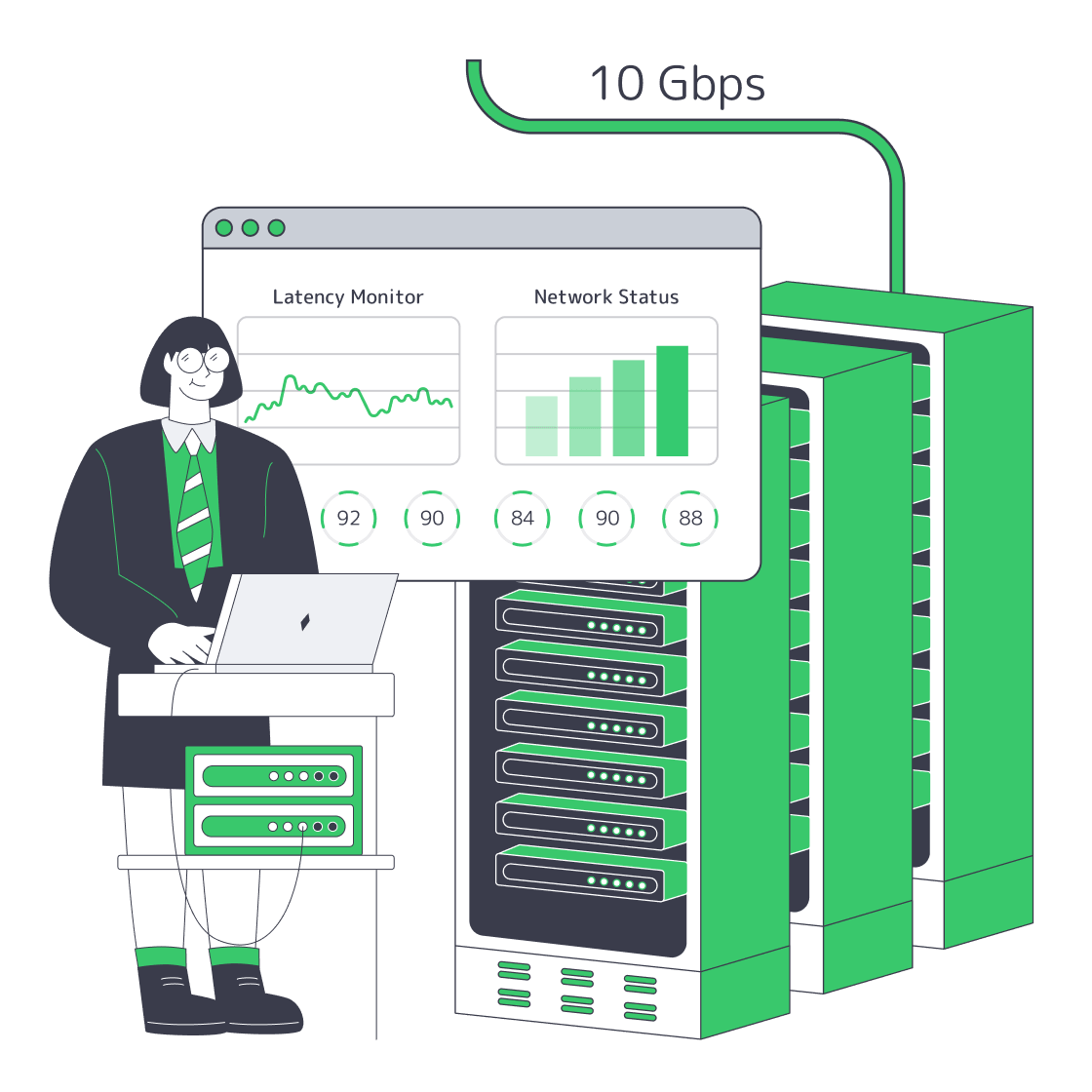
    Engineer monitoring a 10Gbps dedicated server and network status
    10Gbps Dedicated Server Providers: Compare Ports, Terms and Network
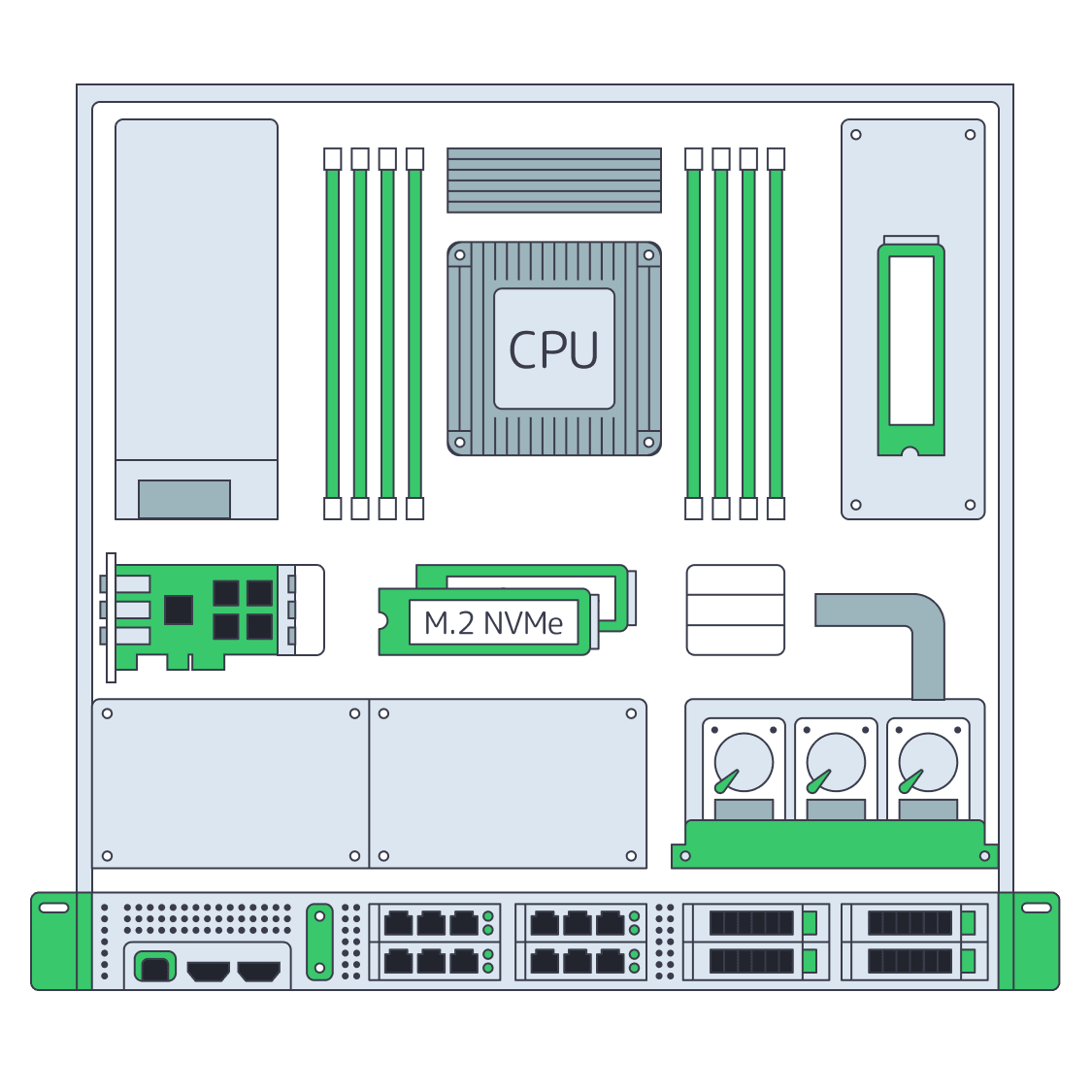
    Dedicated server BOM with CPU, RAM, NVMe, and NIC modules sized from workloads
    Spec Dedicated Servers From Workload, Not the Catalog
    Balanced scale comparing owned servers to rented subscription contract
    Database Server Acquisition: Should You Buy or Rent?
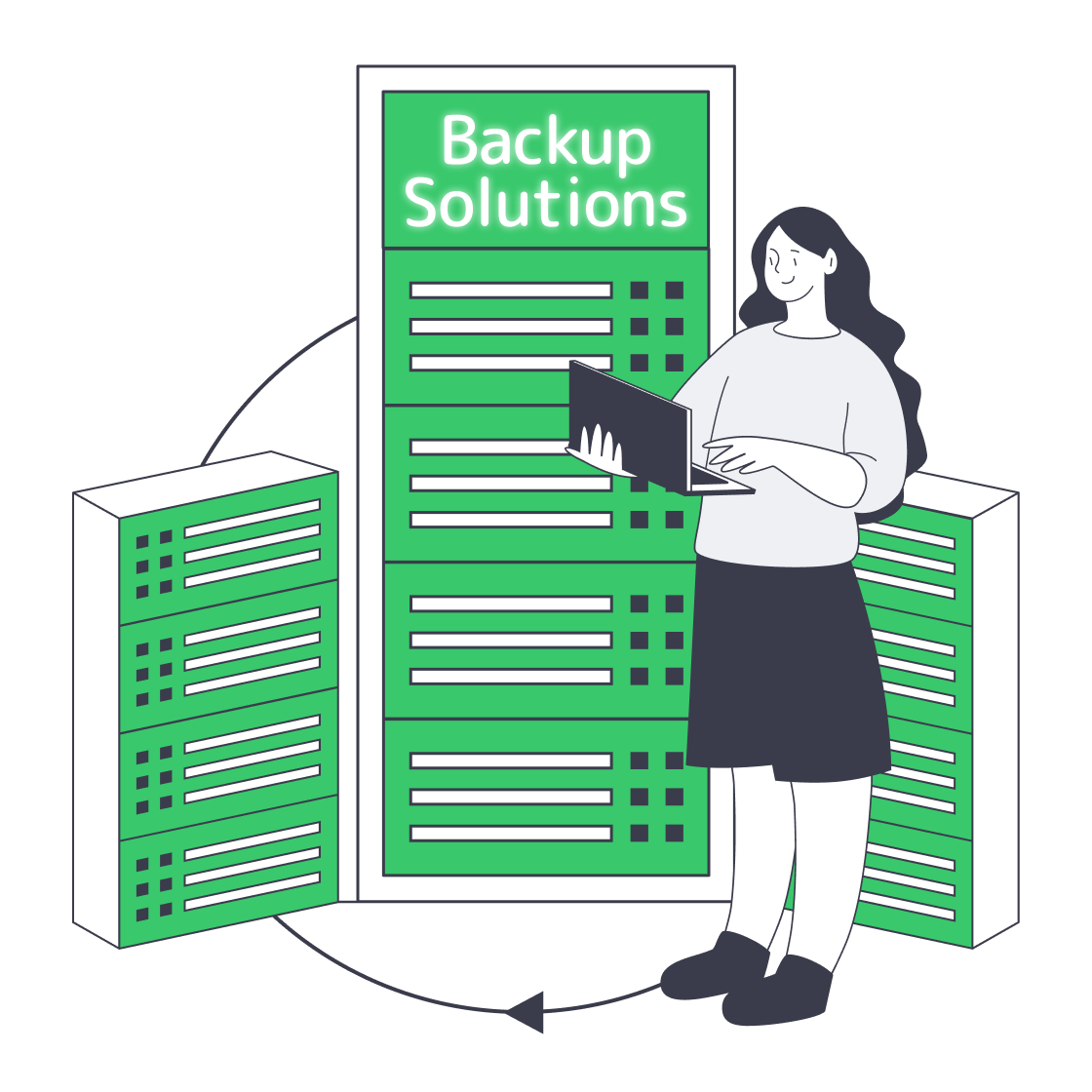
    Illustration of servers linked to cloud object storage by green high‑speed cables
    Blueprint for High-Performance Backup Server Solutions
    More articles
    FAQ
    Who operates Redis or Valkey on the rented server?
    How should we choose between Redis and Valkey?
    How much RAM should each node have?
    How should we choose CPU capacity?
    When does a physical host fit a cache workload?
    How do expiration and eviction affect capacity?
    How does persistence change the hardware specification?
    How should we size replicas for recovery?
    Should we use Sentinel or Cluster?
    What should we check before moving between engines?
    How should we choose location and network capacity?
    When can we get a custom configuration?
    Start with a ready host
    Create an account and select a ready host with CPU and RAM sized for your active data.
    Create an account
    Build around your data
    Rent a custom host with CPU, RAM, and disks matched to active data and replica workloads.
    Discuss your build