Real-time bidding infrastructure for stable auction latency

Run DSP, SSP, exchange, and bidder workloads on single-tenant dedicated servers, measuring p95/p99 latency, timeout rate, and stable cost per request under sustained auction load.
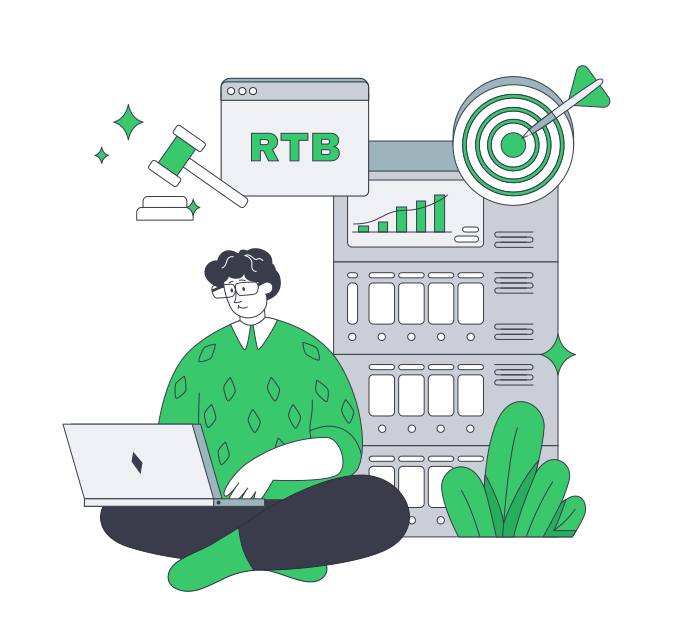
Real-time bidding infrastructure optimizing auction performance

Compare and choose real-time bidding infrastructure

Isolated trading engine
Isolate bidder execution under sustained load

Single-tenant CPU and memory isolate bidder execution from ingestion, reporting, and analytics during sustained concurrency.

Timed auction bids
Measure tail latency before average latency

Track p95/p99 latency, timeout rate, QPS, CPU saturation, and network utilization during sustained auction concurrency.

Regional node placement
Place capacity around partner paths

Deploy near DSP, SSP, and exchange partners, then validate round-trip paths before routing production auction traffic.

Locked bandwidth costs
Plan bandwidth around cost per request

Both metered and unmetered plans are available; choose by bidstream, payload, log transfer, and cost per request.

Available configurations
Need a Custom Build?
Filters
Clear all
Data center
Data center
CPU
CPU
CPU Brand
CPU Brand
RAM
RAM
Storage
Storage
from
up to
GPU
GPU
    Bandwidth
    Bandwidth
    Data Transfer
    Data Transfer
    Available configurations –
    CPU
    Memory
    Storage
    Network
    GPU
    Data center
    Price
    Show more

    Keep auction timing measurable as bid volume scales under load

    RTB teams have only part of an auction window to parse a request, retrieve profile data, execute bidder logic, and return a response. Under sustained concurrency, CPU contention, uneven nodes, and saturated network paths surface first in p95/p99 latency and timeout rate, not in average response time during peak auction traffic windows.

    At Melbicom, we provide single-tenant capacity that lets teams match CPU, memory, storage I/O, and bandwidth to request rate, payload size, lookup behavior, and logging volume. An AdTech dedicated server makes resource saturation and cost per request easier to attribute because bidder execution does not share host capacity across comparable nodes and regions.

    A practical programmatic advertising infrastructure separates revenue-critical bidder paths from ingestion, reporting, analytics, and experiments, then places each cluster around the partner routes it serves. Teams can add repeatable capacity by region, compare node behavior under the same load profile, and keep failover and recovery ownership explicit in production.

    Operator managing real-time advertising auction infrastructure

    Protect auction economics through controlled latency paths

    Track the signals that decide whether available compute becomes usable bids.
    Lower p99 response variance
    Fewer bidder timeout events
    More sustained QPS headroom
    Traceable cost per request
    Measured regional path latency
    Faster saturation diagnosis

    RTB server hosting isolates bid paths

    Configure compute, memory, storage, bandwidth, and placement around auction behavior and operator control.
    Single-tenant CPU for bidder logic
    Isolated memory for hot lookups
    Storage I/O sized for bidstreams
    Bandwidth matched to payload volume
    Regional capacity near partner paths
    Repeatable node profiles across regions
    Root control over bidder software
    Operator-owned monitoring and alerts
    Capacity headroom for sustained QPS
    Recovery roles separated by workload
    Map your RTB capacity
    Bring QPS, payload, lookup, region, and recovery inputs to plan the right server profile.
    Talk to an expert

    Workloads behind the real-time auction path

    Real-time DSP auction
    DSP bidder execution

    Run bidder logic on isolated CPU and memory, then measure p95/p99 execution time under sustained auction concurrency.

    User click path
    SSP request routing

    Route bid requests through regional gateways while tracking timeout rate, QPS, and network utilization by partner path.

    Isolated trading engine
    Exchange auction services

    Keep auction coordination separate from reporting workloads so resource contention remains visible during traffic peaks.

    RAM memory module
    Profile and feature lookups

    Serve hot user, campaign, and model data from memory-sized nodes without obscuring lookup latency or CPU pressure.

    Parallel queue worker processing
    Bidstream ingestion and queue processing

    Separate ingestion and queue processing from bidder threads so bursty writes do not hide auction-path saturation.

    Parallel event processing
    Event replay with isolated log processing

    Move event logs and replay jobs to their own capacity, preserving measurable CPU, storage, and network behavior.

    Analytics server operations
    Real-time reporting and attribution workloads

    Run reporting and attribution outside the bidder path while keeping data movement and retention explicit.

    Validated AI model processing
    Model scoring and experiment runs

    Isolate model scoring tests and experiments from production auctions, then compare resource demand before promotion.

    Infrastructure decisions for real-time advertising

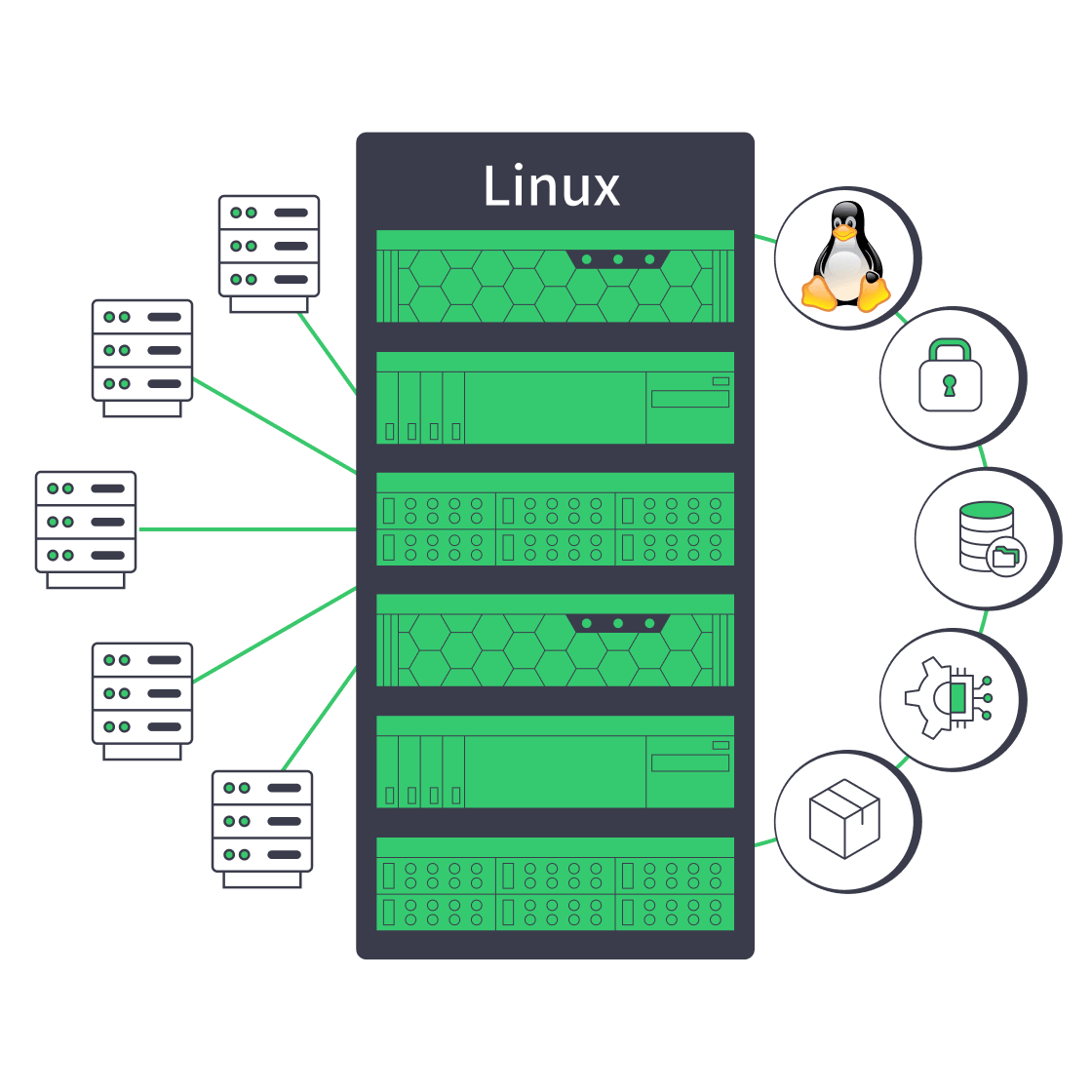
    Linux dedicated server with security, automation, storage, and network controls
    Linux Dedicated Server: Production Checklist for Control, Security, & Scale
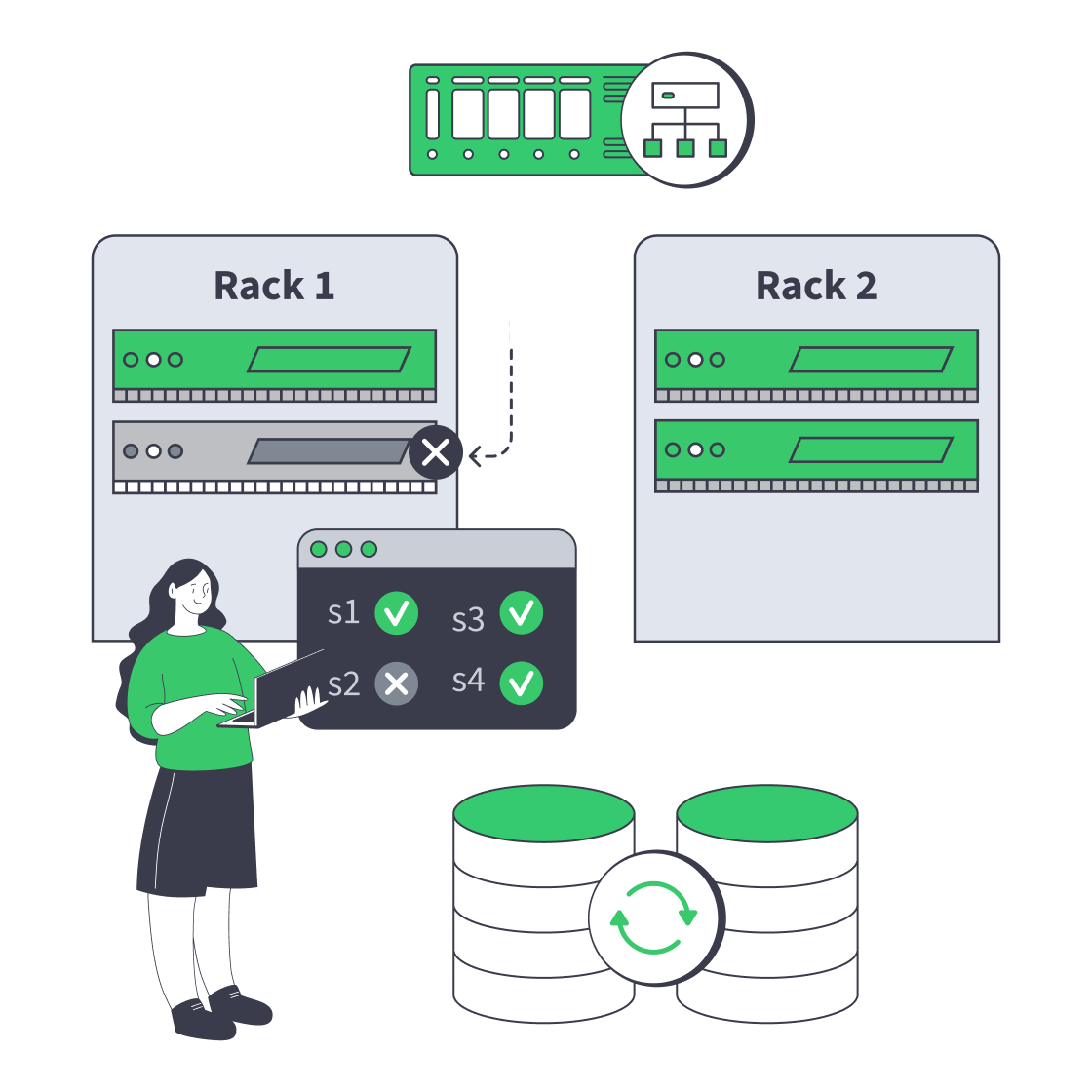
    Dedicated server cluster rerouting traffic after a node failure
    Designing High-Availability Clusters That Fail Safely
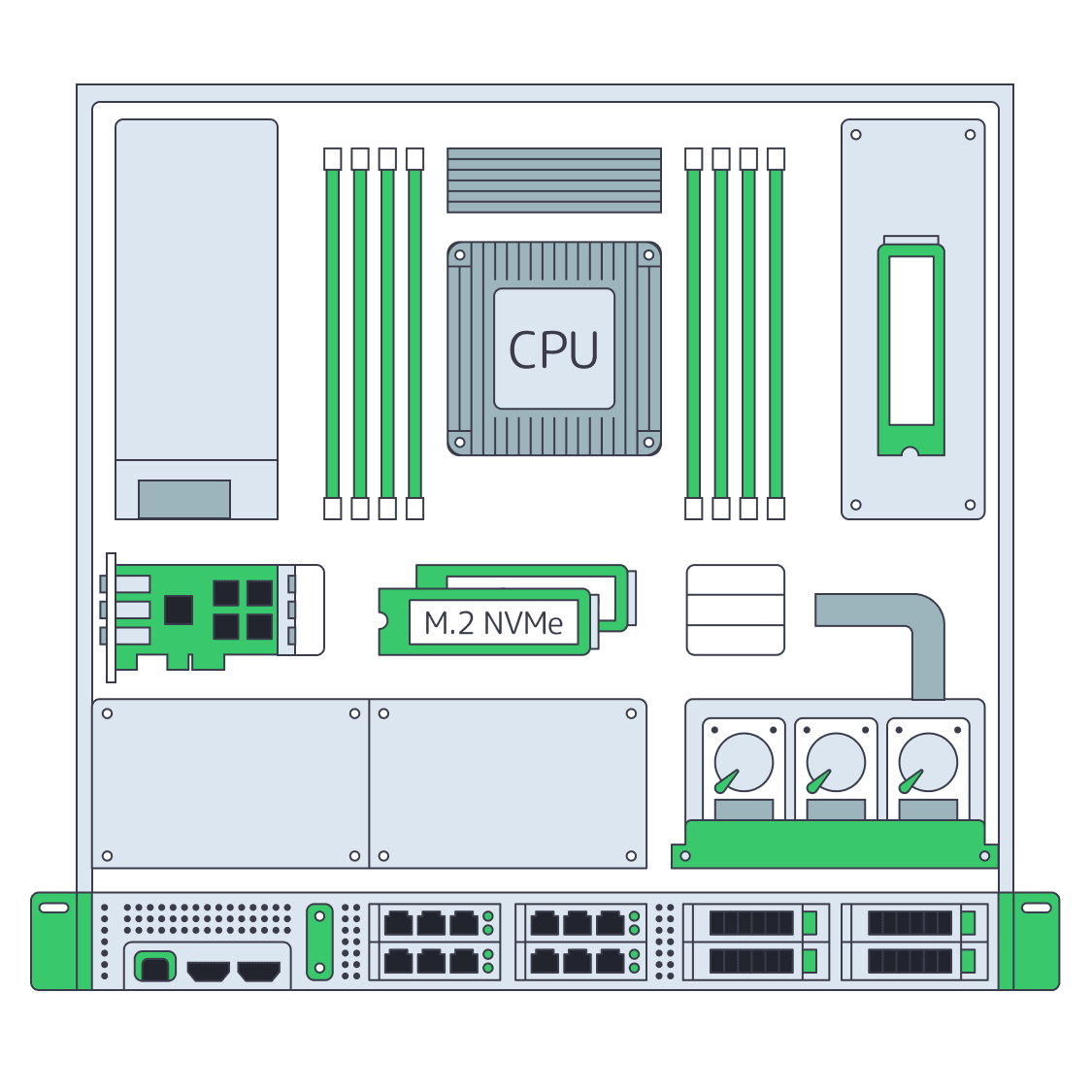
    Dedicated server BOM with CPU, RAM, NVMe, and NIC modules sized from workloads
    Spec Dedicated Servers From Workload, Not the Catalog
    Server with global data streams and a test dashboard for 10Gbps validation
    Validate 10Gbps Dedicated Server Line-Rate Performance
    More articles
    FAQ
    Validate bidder latency and timeout behavior under sustained load?
    Which workloads should be isolated from the real-time bidding path?
    What should determine an RTB server profile?
    How does regional placement affect usable auction time?
    Which metrics reveal bidder capacity limits first?
    Should RTB teams choose metered or unmetered bandwidth?
    How much bandwidth can one server support?
    Who manages bidder software and operational recovery?
    Can deployments use repeatable profiles across regions?
    How should teams plan capacity for traffic growth?
    Launch your RTB stack
    Create an account, choose a server profile, and deploy your bidder stack from the control panel.
    Create an account
    Plan regional capacity
    Bring QPS, payload, partner-path, and recovery inputs to scope regional capacity and workload separation.
    Talk to an expert