Match machine learning dedicated servers to measured demand

Run data preparation, classical ML, training, evaluation, batch jobs, and production inference on isolated hardware configured around CPU, memory, storage, network, and verified accelerator demand.

Secure ML workloads on dedicated servers

GPU dedicated servers follow measured ML demand

Validated AI model processing
Benchmark every stage

Measure dataset size, feature jobs, training runs, evaluation cycles, batch windows, and inference concurrency before sizing.

CPU capacity sizing
Fit compute to demand

Choose CPU, RAM, storage, network, and verified GPU capacity from the stage that constrains throughput or completion time.

Verified storage I/O
Trace data movement

Separate preprocessing, checkpoints, artifacts, and service traffic so storage and transfer pressure remain attributable.

AI inference controls
Own the operating stack

Control the OS, drivers, frameworks, containers, monitoring, updates, and recovery process within your own ML stack.

Available configurations
Need a Custom Build?
Filters
Clear all
Data center
Data center
CPU
CPU
CPU Brand
CPU Brand
RAM
RAM
Storage
Storage
from
up to
GPU
GPU
    Bandwidth
    Bandwidth
    Data Transfer
    Data Transfer
    Available configurations –
    CPU
    Memory
    Storage
    Network
    GPU
    Data center
    Price
    Show more

    Separate ML workload roles before contention spreads

    Machine learning is not one workload. Data preparation stresses CPU and memory, training may justify verified accelerator capacity, evaluation rereads shared artifacts, and inference adds concurrency and latency targets. Map each stage to an explicit infrastructure boundary before compute, storage, or network contention dictates the final architecture.

    At Melbicom, we provide isolated dedicated hardware with configurable CPU, RAM, storage, bandwidth, and regional placement. Match each role to observed demand, keep data movement attributable, and retain direct control of the operating environment. The ML platform, frameworks, and model operations remain explicitly customer-owned.

    Use our ready-to-deploy or custom configurations to assign preparation, training, evaluation, batch, and inference roles to explicit infrastructure and compute capacity. Add nodes only when measured throughput, resilience, or job parallelism requires them, while your team retains ownership of drivers, pipelines, monitoring, releases, and recovery.


    Operator managing secure ML data pipelines

    Workload benchmarks reveal capacity limits

    Translate observed bottlenecks into clearer sizing, scheduling, and operating decisions.
    Measured training throughput
    Visible resource contention
    Planned batch completion
    Measured inference latency
    Attributable capacity cost
    Explicit recovery ownership

    Control the full ML operating scope

    Configure isolated capacity while your team owns the runtime, pipelines, models, monitoring, and releases.
    Isolated single-tenant compute
    Isolated GPU-capable hardware
    Intel and AMD processor choices
    Memory capacity for large datasets
    Storage sized for model artifacts
    Bandwidth matched to data movement
    Regional capacity in 20 data centers
    Access to 24/7 technical support
    1000+ ready-to-go server configurations
    Custom builds in 3–5 business days
    Configure from evidence
    Match CPU, RAM, storage, bandwidth, and verified GPU options to measured demand.
    Talk to an expert

    Run each ML stage on explicit capacity

    Parallel event processing
    Data preparation jobs

    Use CPU, memory, storage, and network capacity for cleaning, joins, transforms, and repeatable feature generation.

    AI training processing
    Classical model training

    Run regression, classification, clustering, and forecasting on capacity sized from representative datasets and benchmarks.

    GPU server appliance
    Deep learning training

    Assign verified accelerator capacity when model architecture and framework benchmarks show a clear training benefit.

    Validated AI model processing
    Model evaluation runs

    Separate validation, test sets, and repeated scoring so evaluation demand remains visible beside training jobs.

    AI inference processing
    Batch scoring jobs

    Reserve capacity for recurring predictions, retraining, reports, and data refreshes within measured batch windows.

    AI inference operations
    Online inference services

    Size CPU, memory, network, and verified accelerators from request concurrency, payload size, and latency targets.

    Overlapping storage folders
    Model artifact releases

    Keep checkpoints, datasets, metrics, and model artifacts traceable through customer-owned release and recovery procedures.

    ML server processor
    Distributed ML roles

    Add nodes only when measured parallelism, resilience, or role isolation justifies a distributed operating model.

    Infrastructure guidance for machine learning teams

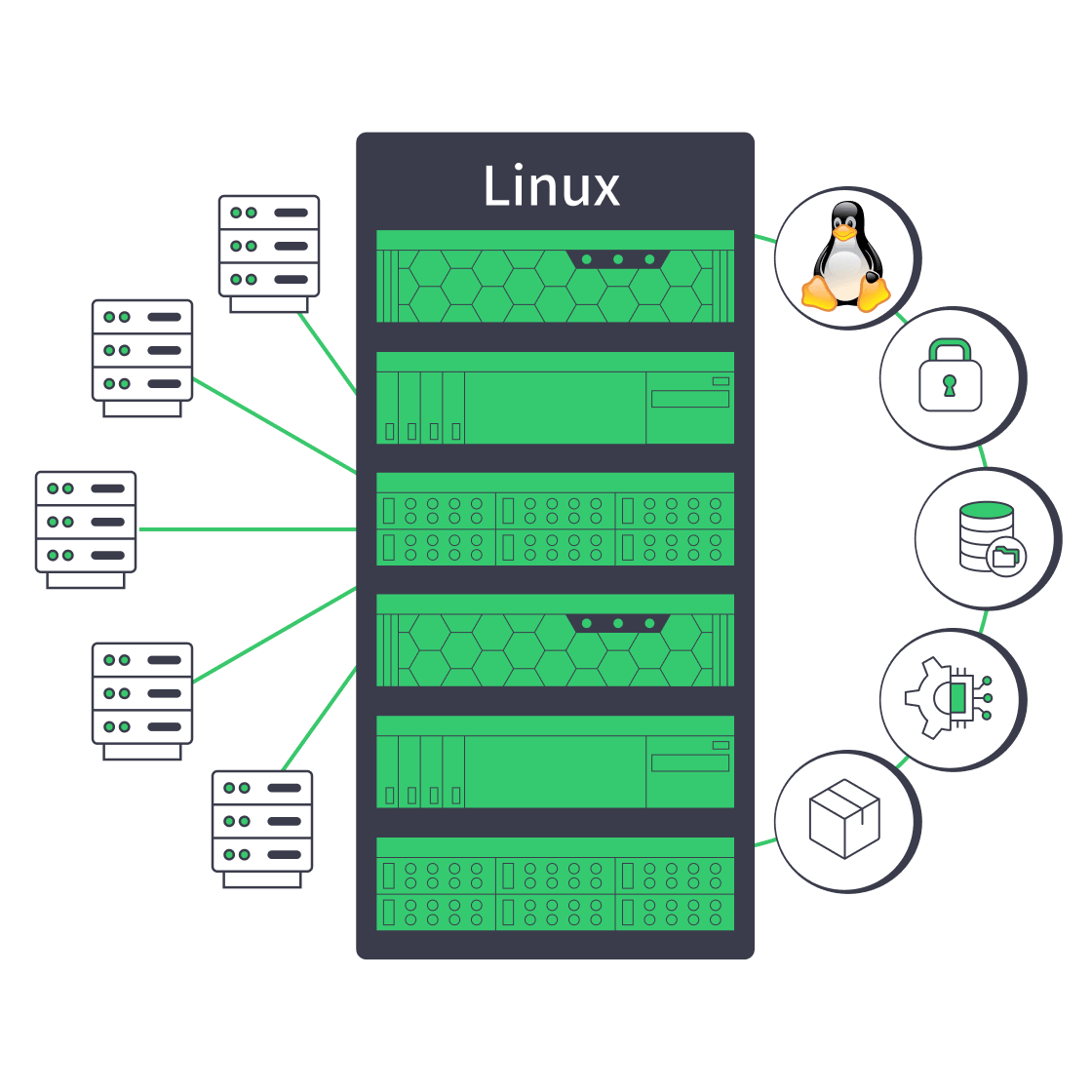
    Linux dedicated server with security, automation, storage, and network controls
    Linux Dedicated Server: Production Checklist for Control, Security, & Scale
    GPU Dedicated Servers: How to Choose Hardware for AI, Rendering, and Web3
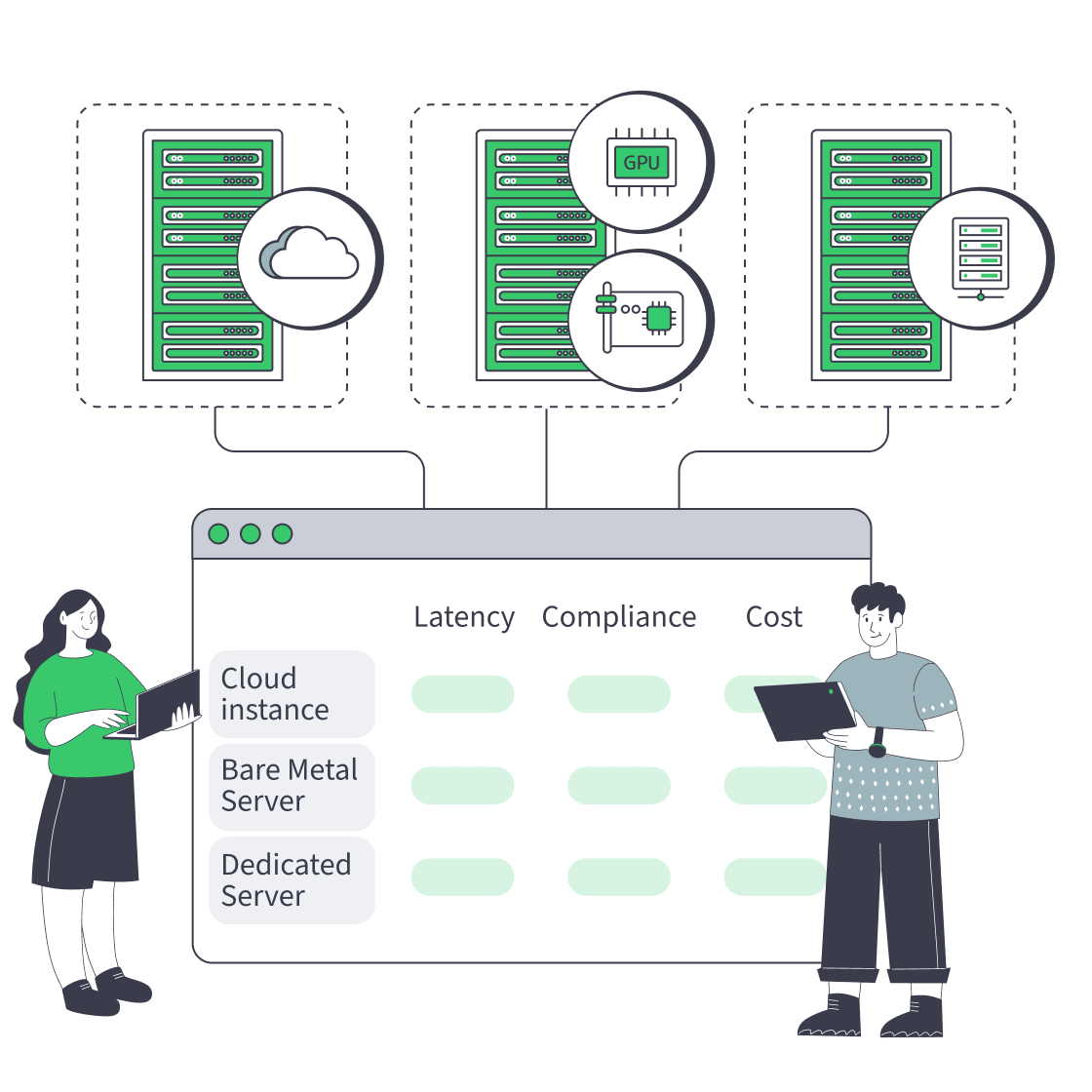
    Cloud, bare metal, and dedicated servers feeding one decision dashboard
    Bare Metal Server vs Cloud: Checklist for Performance, Compliance, and Cost
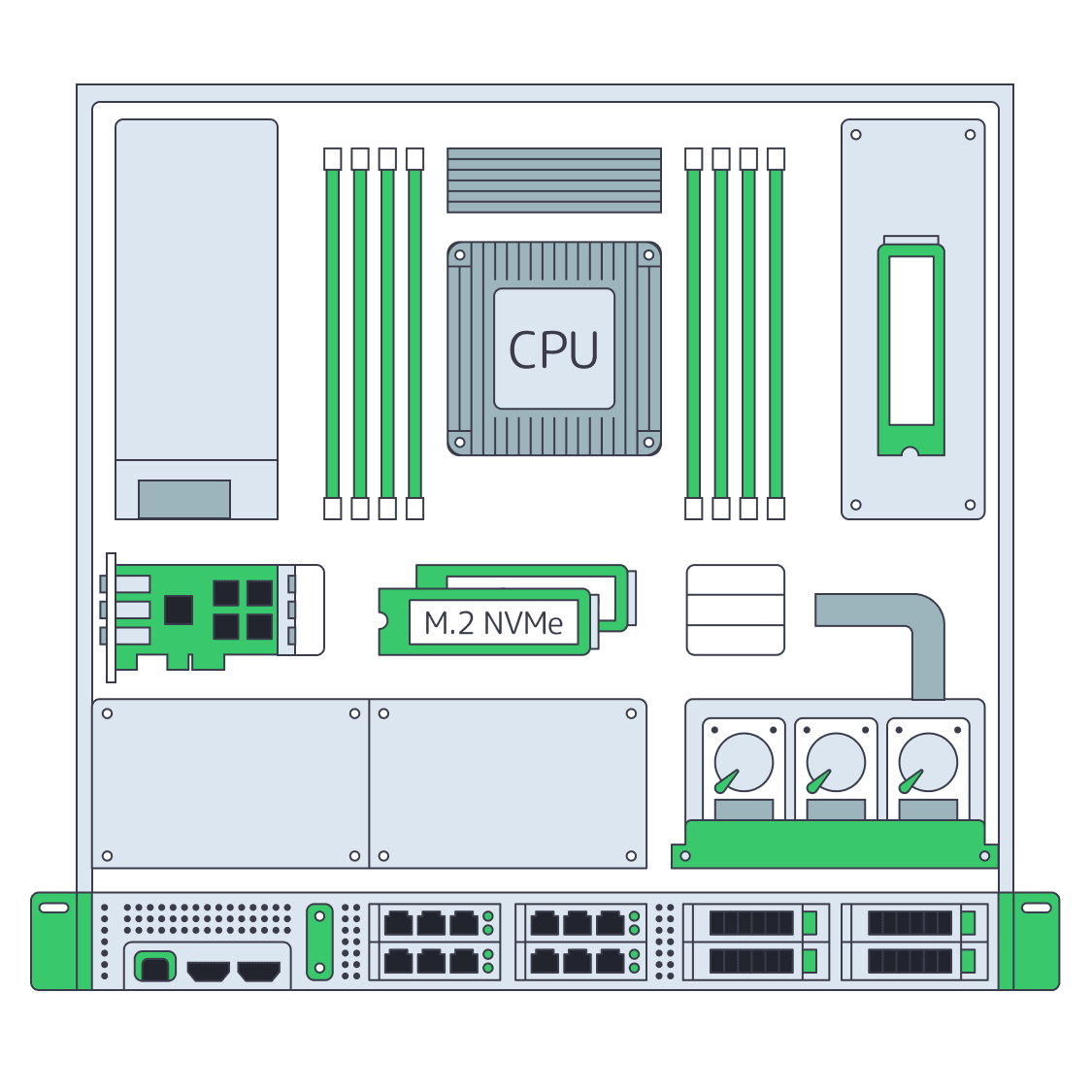
    Dedicated server BOM with CPU, RAM, NVMe, and NIC modules sized from workloads
    Spec Dedicated Servers From Workload, Not the Catalog
    More articles
    FAQ
    What should teams measure before choosing ML infrastructure?
    Does every machine-learning workload need a GPU?
    When do GPU dedicated servers fit ML workloads?
    How should RAM be sized for machine learning?
    What storage factors matter for training and evaluation?
    How should network capacity be planned?
    Who manages the ML software stack?
    Can teams start with one server?
    What server configurations can you provide?
    Where can ML infrastructure be deployed?
    Do you provide a managed ML platform?
    Do you provide 24/7 technical support?
    Start with an account
    Access the control panel, fund your balance, and configure infrastructure around measured ML demand.
    Create an account
    Plan the configuration
    Share dataset size, job profiles, concurrency, and operating requirements before selecting capacity.
    Talk to an expert