Live sports streaming infrastructure built for event control

Assign each live sports streaming server to ingest, processing, packaging, or origin on isolated hardware; tune compute, bandwidth, and placement, then load-test headroom and recovery before kickoff.

Protected live sports streaming servers

Control every media role before kickoff

Isolated media broadcast
Capacity stays isolated for each media role

Assign CPU, RAM, storage, and network by media role, keeping ingest, processing, packaging, and origin capacity isolated.

Locked stable bandwidth
Pre-event load testing with reserved headroom

Load-test bandwidth, placement, and rendition demand before kickoff, keeping headroom so peak load stays within limits.

Broadcast media backup
Primary and backup paths with operator access

Separate primary and backup roles, then rehearse recovery with IPMI/KVM access, private networking, and failover procedures.

Multi-location CDN network
CDN segment delivery after packaging stage

Place global CDN after packaging to cache segments near viewers and reduce repeated origin requests during peak demand.

Available configurations
Need a Custom Build?
Filters
Clear all
Data center
Data center
CPU
CPU
CPU Brand
CPU Brand
RAM
RAM
Storage
Storage
from
up to
GPU
GPU
    Bandwidth
    Bandwidth
    Data Transfer
    Data Transfer
    Available configurations –
    CPU
    Memory
    Storage
    Network
    GPU
    Data center
    Price
    Show more

    Live sports teams design ingest, processing, origin and delivery

    Live sports events run inside a fixed match window where ingest, processing, packaging, and origin must remain stable under shifting demand and concurrency. Measure each role independently, then prevent any saturated node from cascading failure across the pipeline and dictating the production runbook during decisive peak audience moments.

    Melbicom provides isolated dedicated servers with configurable CPU, RAM, storage, bandwidth, private networking, API control, and regional placement per media role. Teams load-test capacity before events, retain IPMI/KVM operator access, and validate headroom, recovery paths, and placement across ingest, processing, packaging, and origin stages.

    Keep primary and backup paths distinct, rehearse failover, and assign global CDN only after packaging to cache live segments near viewers. Offload repeated origin reads without shifting control, while encoders, packagers, DRM, entitlement, players, monitoring, and recovery procedures remain fully owned and operated by the streaming team.


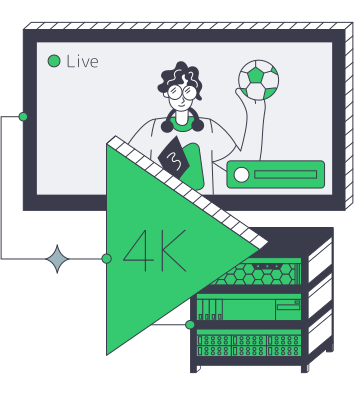
    4K live sports streaming infrastructure

    Hold the match window inside tested limits

    Role-level headroom and recovery controls reduce overload exposure across the event path.
    Measured processing headroom
    Lower origin overload risk
    Explicit primary-backup roles
    Role-level incident isolation
    Capacity matched to concurrency
    Fewer repeated origin reads

    Controls for every live match window

    Configure production and recovery roles across media stack, event regions, bandwidth, and tested runbook
    Isolated hardware for media roles
    Configurable CPU and RAM options
    Origin storage by workload profile
    Metered and unmetered bandwidth
    Private networking to pipeline roles
    IPMI/KVM access for recovery roles
    API control for repeatable changes
    Regional placement for event paths
    CDN cache rules for live segments
    Origin shielding for audience peaks
    Configure event servers
    Select a ready-to-deploy configuration or request a custom build around your event roles.
    Talk to an expert

    Live streaming origin server roles across event stages

    Multiple media stream ingestion
    Ingest gateways for feeds

    Place ingest gateways near sources, isolating compute and network budgets from downstream processing roles.

    Media encoding processing
    Rendition processing nodes

    Assign CPU, RAM, and GPU-ready builds to rendition nodes, then load-test processing headroom before each event.

    Packaged media delivery
    Packaging control tiers

    Run the packager on isolated nodes, separating segment creation from ingest demand and live origin traffic.

    Media origin delivery network
    Primary origin nodes

    Size primary origins for segment demand, protect the main path, and reserve backup capacity for operator recovery.

    Broadcast media backup
    Backup event path

    Mirror critical roles across regions, rehearse recovery steps, and keep IPMI/KVM access ready for operator-led response.

    Media broadcast operations
    Concurrent match control

    Set separate compute and bandwidth budgets per match, reducing cross-event contention across the processing path.

    Multi-location CDN network
    Regional segment delivery

    Use CDN for live sports streaming after packaging to cache segments near geographically distributed audiences.

    Cache policy operations
    Origin-offload delivery

    Apply cache rules, purging, and origin shielding to cut repeated segment requests during sharp audience peaks.

    Infrastructure guides for live sports streaming

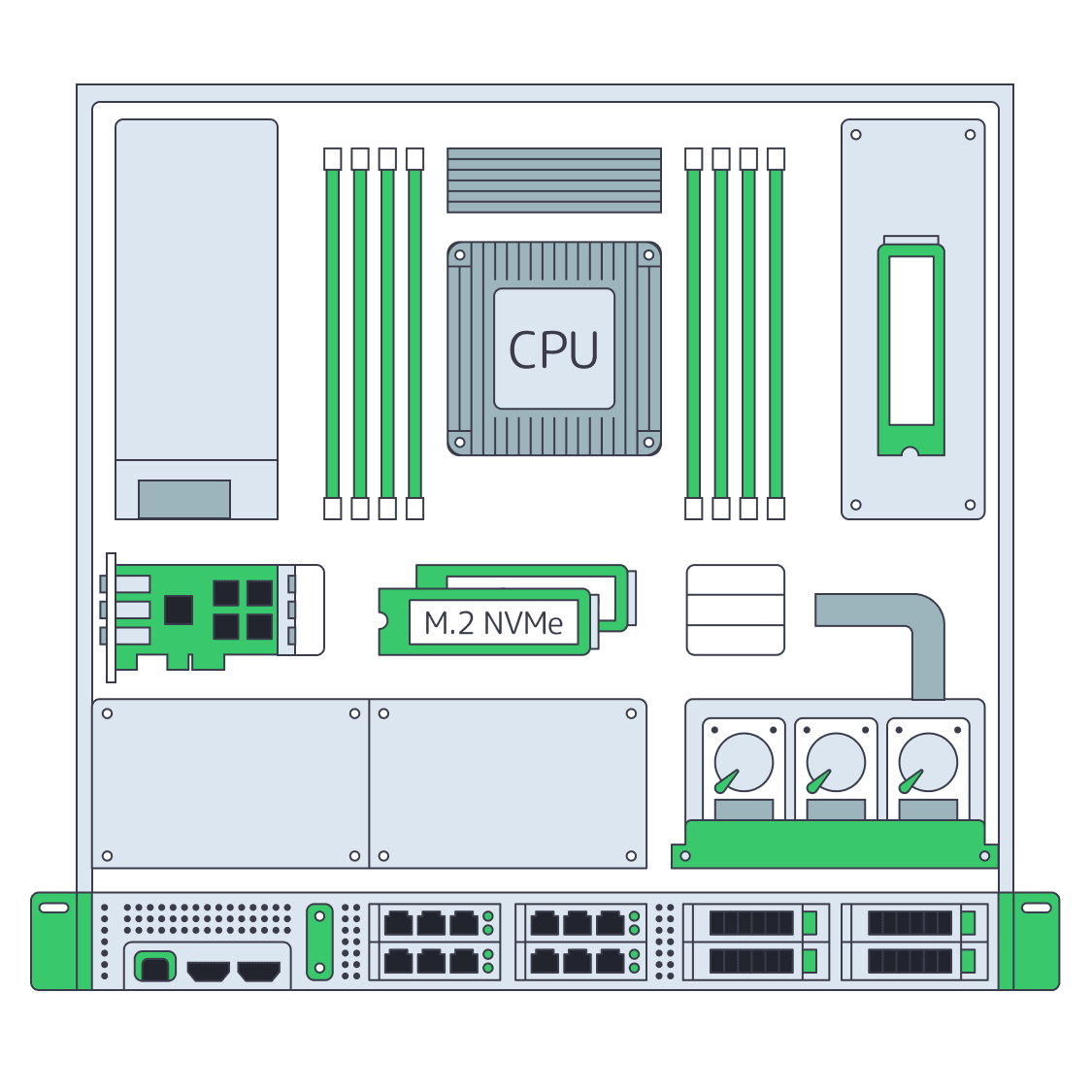
    Dedicated server BOM with CPU, RAM, NVMe, and NIC modules sized from workloads
    Spec Dedicated Servers From Workload, Not the Catalog
    Dedicated servers feeding CDN edge nodes for seamless global live streaming
    How Dedicated Servers Power Seamless Live Streaming
    Server racks streaming globally to edge nodes and screens with a low‑latency gauge
    Low-Latency Live Streaming in Adult Entertainment with Dedicated Servers
    Dedicated server feeding CDN to deliver 4K streams over 200 Gbps link
    Dedicated Servers for Video Streaming at Scale
    More articles
    FAQ
    What kind of server is needed for live video streaming?
    When should a live sports origin use a CDN delivery layer?
    How should teams separate primary and backup stream paths?
    How do we size capacity for concurrent matches?
    Can we use our own encoder and packager?
    Which regions can host live sports workloads?
    What controls support event-day recovery?
    How should we choose metered or unmetered bandwidth?
    How quickly can custom event servers be delivered?
    Is expert support available around the clock?
    Start event deployment
    Create an account, choose regional server options, and prepare production roles for the next match window.
    Create an account
    Plan the match architecture
    Share pipeline roles, concurrency, regions, bandwidth, and recovery needs with an expert.
    Talk to an expert