High availability infrastructure built for tested recovery

Deploy isolated dedicated nodes across application, database, and ingress tiers. Configure capacity, recovery access, and private networking for tested failover and resilient service operation.

High availability servers supporting tested recovery

Dedicated server hosting for controlled failover

High-availability service failover
Size surviving capacity

Size each node group so the surviving topology carries required production load after a node failure without overload.

High-availability service failover
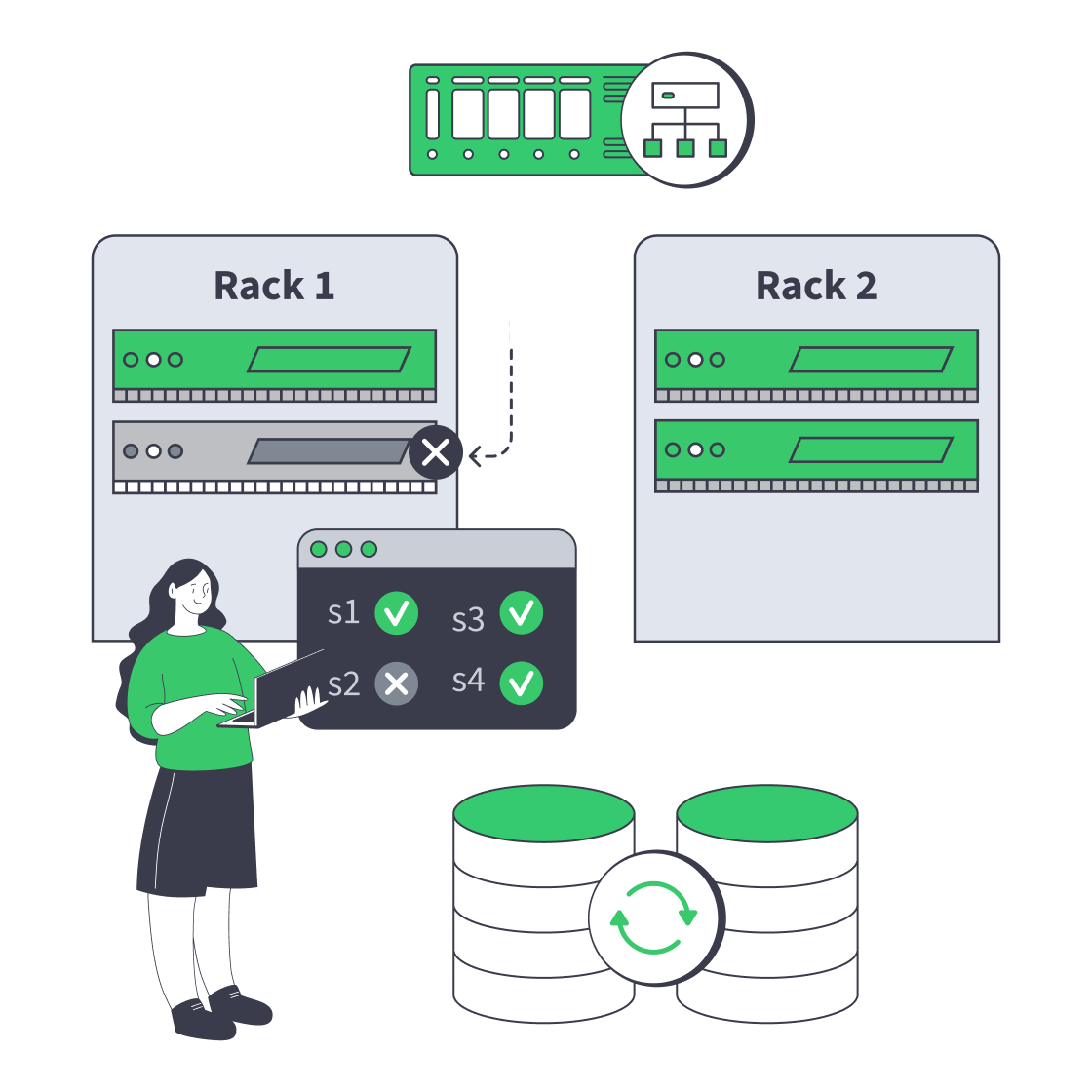
Separate failure domains

Place redundant nodes against the failure model, then confirm rack, site, or regional separation before ordering.

Stateful service operations
Define state control rules

Set replication, quorum, fencing, and promotion rules before traffic depends on synchronized service or database state.

Successful recovery test
Test every recovery path

Run failover and rollback drills under representative load, recording detection, traffic shift, recovery, and reintegration.

Available configurations
Need a Custom Build?
Filters
Clear all
Data center
Data center
CPU
CPU
CPU Brand
CPU Brand
RAM
RAM
Storage
Storage
from
up to
GPU
GPU
    Bandwidth
    Bandwidth
    Data Transfer
    Data Transfer
    Available configurations –
    CPU
    Memory
    Storage
    Network
    GPU
    Data center
    Price
    Show more

    Service recovery depends on controls

    High availability starts with a defined failure model and enough surviving capacity for node loss. Applications still depend on traffic distribution, state, and quorum. Teams must decide which failures matter, what keeps running, and which test evidence proves the intended behavior under representative production demand and planned maintenance.

    Melbicom supplies isolated dedicated hardware with configurable CPU, RAM, storage, and network capacity. Root access, IPMI/KVM, private networking, and regional deployment options help teams map nodes to failure domains, preserve recovery access during incidents, and keep facility resilience distinct from application-level controls during recovery.

    Your team owns load balancing, health checks, replication, quorum, fencing, failover, monitoring, testing, and rollback. Size dedicated server hosting for degraded-mode demand, rehearse recovery under representative load, and document promotion, reintegration, and rollback decisions within one consistent operating model across documented incidents.


    Operator managing protected high availability infrastructure

    Recovery evidence for every failure mode

    Measure what survives, shifts, restores, and returns to service under controlled tests.
    Surviving load capacity
    Explicit quorum control
    Measured traffic shift
    Verified restore paths
    Controlled node reintegration
    Documented rollback evidence

    Control every high availability decision

    Use isolated capacity and infrastructure controls while your team owns every service-level recovery decision.
    Isolate compute per node
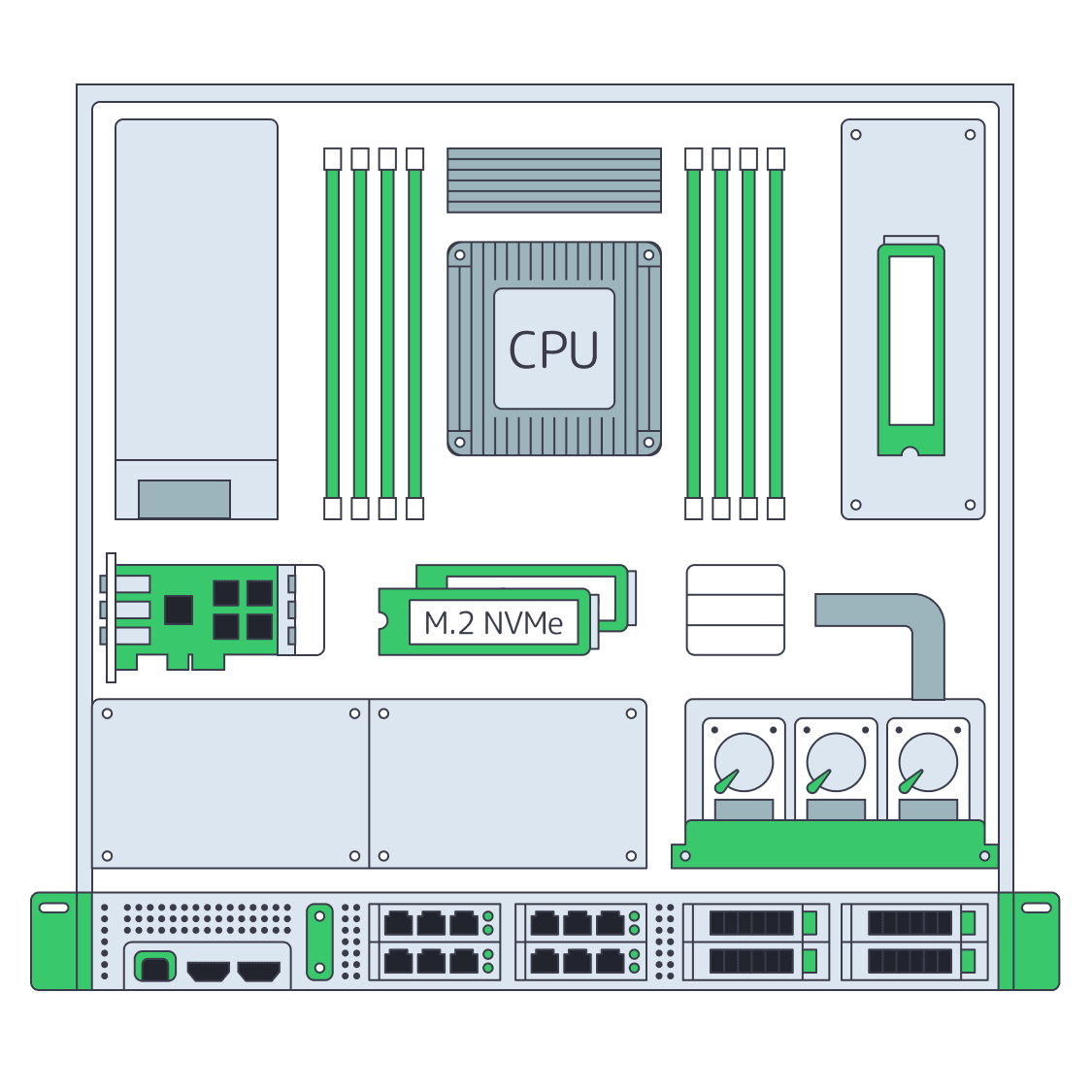
    Configure CPU, RAM, and storage
    Control cluster software as root
    Recover remotely through IPMI/KVM
    Connect nodes through private networks
    Control routing during traffic shifts
    Place nodes by failure model
    Size bandwidth for degraded mode
    Access 24/7 infrastructure support
    Component replacement within 4 hours
    Plan the node topology
    Match nodes, locations, and network capacity to your documented failure model.
    Talk to an expert

    Architectures that demand tested recovery

    Application traffic failover
    Active-active request tiers

    Route stateless traffic across live nodes; customer-run health checks remove unhealthy instances from rotation.

    High-availability service failover
    Active-passive service pairs

    Keep standby capacity synchronized and tested; your team owns promotion, fencing, traffic shifts, and rollback.

    Stacked database cylinder
    Database quorum clusters

    Run replication and quorum rules that prevent split-brain while preserving database state through node loss.

    Application traffic failover
    Redundant ingress nodes

    Use application-aware checks on customer-controlled load balancers, with clear maintenance rules for every backend.

    Regional node map placement
    Regional recovery nodes

    Place service roles across locations when latency, consistency, and failure scope justify regional separation.

    API server configuration
    Stateful API clusters

    Protect sessions, queues, and persistent state through explicit replication, promotion, and tested rollback rules.

    High-availability service failover
    Maintenance-ready clusters

    Drain traffic before servicing one node; verify surviving capacity and rollback checks before production return.

    Recovery capacity failover
    Bare metal server failover

    Operate failover tooling on isolated hardware; measure routing, recovery, reintegration, and rollback under load.

    High availability guidance for infrastructure teams

    Dedicated server cluster rerouting traffic after a node failure
    Designing High-Availability Clusters That Fail Safely
    Dedicated server BOM with CPU, RAM, NVMe, and NIC modules sized from workloads
    Spec Dedicated Servers From Workload, Not the Catalog
    Servers under AI magnifier displaying live metrics
    Building a Predictive Monitoring Stack for Servers
    Illustration of person with shield beside backup server representing secure data protection
    Building a Resilient Multi‑Layer Backup Strategy with Dedicated Servers
    More articles
    FAQ
    Does Melbicom provide managed high availability?
    What does Melbicom operate?
    Who owns load balancing and health checks?
    How should teams size N+1 capacity?
    Do data center redundancy tiers guarantee application availability?
    Who manages replication, quorum, and fencing?
    Is failover automatic?
    How should failover and rollback be tested?
    Can nodes be placed in different locations?
    What access supports remote recovery?
    Open your Melbicom account
    Create an account, then order dedicated nodes against the approved high availability topology.
    Create an account
    Design the recovery model
    Share failure domains, surviving-load targets, and network needs so Melbicom can scope each node.
    Talk to an expert