Size a gpt-oss-120b dedicated server for measured demand
Run a private assistant on isolated GPU capacity. Size memory, context, concurrency, queue depth, and latency while your team owns the runtime, access, integrations, and recovery.
Run a private assistant on isolated GPU capacity. Size memory, context, concurrency, queue depth, and latency while your team owns the runtime, access, integrations, and recovery.

Start with OpenAI’s single 80 GB GPU guidance, then verify hardware against your inference engine and workload.

Test context length, concurrency, batching, queue depth, and token generation demand with the selected inference engine.

Control the operating system, drivers, inference engine, model files, API layer, authentication, observability, and releases.

Keep inference capacity separate from retrieval, identity, workflow integrations, observability, and the assistant interface.
A private assistant is more than a model file. Teams must turn gpt-oss-120b into a production serving plan that covers GPU memory, context length, concurrency, batching, queue depth, latency targets, identity, retrieval, evaluation, and recovery before employees rely on its answers.
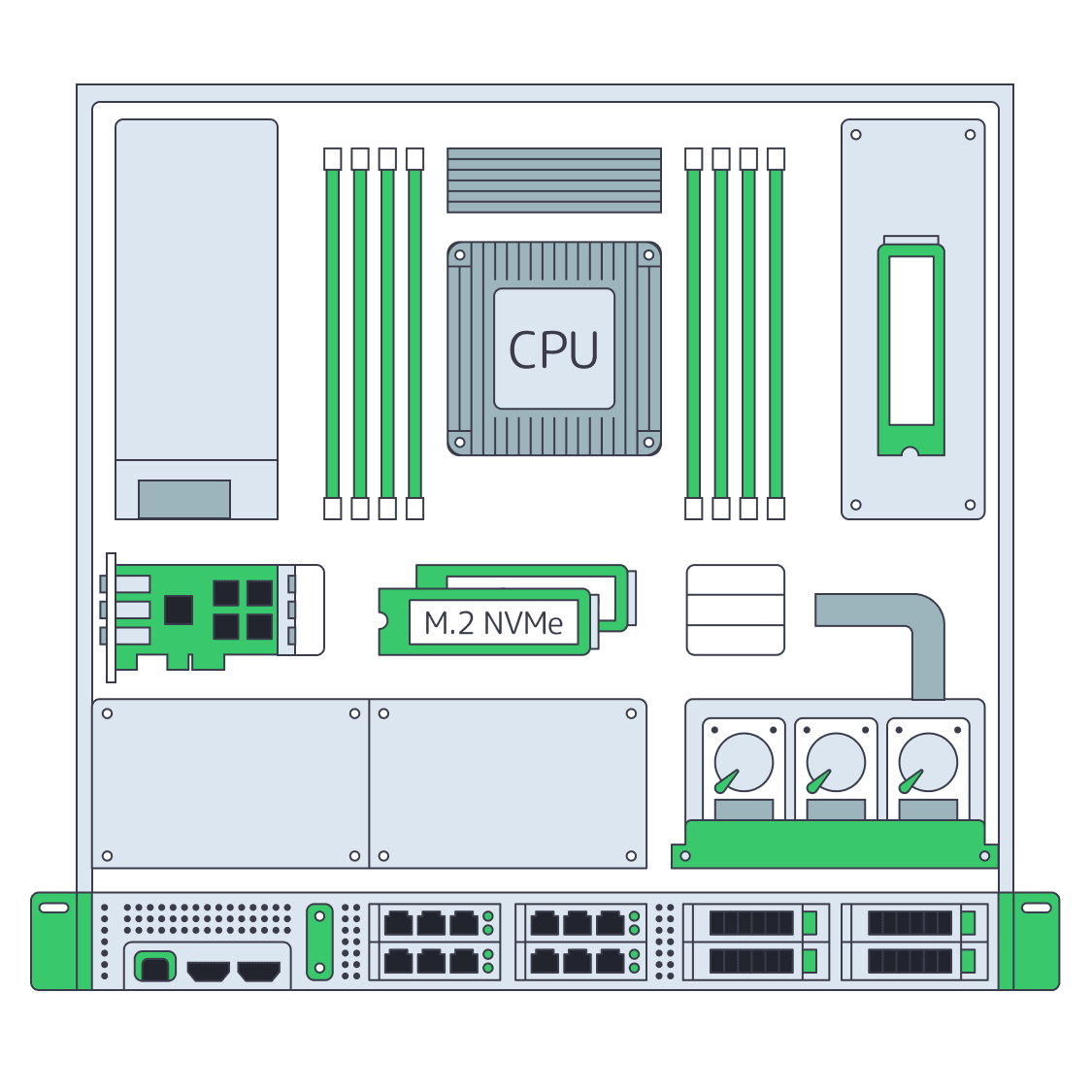
Melbicom provides isolated GPU-capable infrastructure with customer control over the operating environment. Size CPU, RAM, storage, and network capacity for the chosen inference engine, then verify the current configuration against OpenAI’s single 80 GB GPU starting point, expected request patterns, and workload measurements under representative load.
Your team owns drivers, runtime, model artifacts, APIs, access controls, integrations, observability, releases, evaluation, and incident response. Clear boundaries separate infrastructure from assistant behavior, assign recovery work, and tie capacity changes to measured utilization while all application decisions stay with the operating team throughout production operations.


Serve authenticated chats while the application controls retrieval, permissions, citations, session state, and responses.

Generate drafts and summarize cases while your systems enforce customer-data access, approvals, and review workflows.

Synthesize long contexts while teams track prompt size, queue depth, generation time, and source-handling behavior.

Connect reasoning to internal tools with application-owned authorization, action limits, audit logs, and rollback controls.

Answer policy questions from trusted sources with identity, retrieval, versioning, and escalation controlled internally.

Assist with code and system questions while repositories, permissions, tool calls, and review gates remain application-owned.

Expose inference through an internal API with controlled schemas, authentication, quotas, telemetry, and versioned releases.

Compare prompts, runtimes, and model customizations against task quality, latency, resource use, and regression thresholds.