Ecommerce hosting built around measurable checkout latency

Run storefront, checkout, database, search, cache, and worker tiers on isolated dedicated servers sized for peak concurrency, clearer bottleneck attribution, and planned recovery.

Ecommerce hosting optimized for checkout performance

Keep every commerce tier measurable

CPU operations control
CPU for live requests

Reserve CPU for storefront, API, and checkout work so peak concurrency remains attributable under load conditions.

RAM memory module
RAM for active data

Size RAM to database and cache working sets so hot reads stay resident and predictable during traffic peaks.

Isolated queue workers
I/O isolated for jobs

Separate indexing, imports, reporting, and backups so shared storage I/O cannot delay live customer request processing.

Unmetered bandwidth capacity
Regions and bandwidth fit

Select region and bandwidth from measured shopper, payment, marketplace, and operator paths before routing traffic.

Available configurations
Need a Custom Build?
Filters
Clear all
Data center
Data center
CPU
CPU
CPU Brand
CPU Brand
RAM
RAM
Storage
Storage
from
up to
GPU
GPU
    Bandwidth
    Bandwidth
    Data Transfer
    Data Transfer
    Available configurations –
    CPU
    Memory
    Storage
    Network
    GPU
    Data center
    Price
    Show more

    Compare the fit when choosing dedicated ecommerce infrastructure

    Ecommerce traffic is not one workload. Browse requests, checkout APIs, database writes, search queries, cache misses, imports, and reporting jobs compete differently as promotions raise concurrency. Teams must identify which tier saturates first, how tail latency shifts, and what recovery window the business can accept for peak operations.

    At Melbicom, we provide isolated hardware, ready-to-deploy configurations, regional deployment options, and both metered and unmetered bandwidth options. Dedicated capacity keeps contention reproducible and attributable while your team maps CPU, memory, storage I/O, and network demand and controls application deployment and tuning.

    Start with one configuration when workload and recovery targets justify it, then separate application, database, search, cache, worker, staging, and backup roles as evidence requires. This operating model protects live transaction paths while your team owns patching, monitoring, replication, backups, and scheduled restore testing within the accepted recovery window.

    Operator managing ecommerce sales infrastructure

    Operational gains measurable under load

    Track the signals that protect checkout performance and capacity decisions.
    Measurable checkout tail latency
    Visible request timeout rate
    Database latency by workload
    Worker queue depth by role
    Resource saturation by tier
    Capacity spend backed by data

    Control capacity across each tier

    Map hardware, regions, bandwidth, and operating boundaries to the workloads your team measures.
    Single-tenant CPU for checkout
    Reserved RAM for active data
    Regional capacity for shopper paths
    Bandwidth sized for partner traffic
    Role separation for live requests
    Headroom for promotion peaks
    Storage I/O planned by workload
    Queue pressure tracked under load
    Ready-to-deploy server choices
    Custom builds for defined needs
    Size your commerce stack
    Bring concurrency, catalog, database, and bandwidth evidence to a configuration review.
    Talk to an expert

    Commerce roles with distinct capacity demands

    Application server operations
    Storefront application tiers

    Isolate web and application processes so browse traffic remains measurable when promotions raise concurrent sessions.

    Approved checkout receipt
    Checkout and payment APIs

    Reserve CPU and network capacity for cart and checkout APIs, then test p95 and p99 latency under peak concurrency.

    Stacked database cylinder
    Transaction database nodes

    Size memory to the active database working set and track query latency, lock waits, write rate, and recovery headroom.

    Database read processing
    Search and cache services

    Separate search and cache capacity so reindexing, cache misses, and catalog changes remain attributable under load.

    Parallel queue worker processing
    Catalog processing workers

    Isolate catalog imports, exports, and image processing when their CPU or storage pressure affects live customer requests.

    E-commerce shopping cart
    Commerce integration jobs

    Run ERP, PIM, inventory, fulfillment, and marketplace integrations on capacity sized for queue depth and retry volume.

    Server analytics processing
    Reporting analytics jobs

    Separate reporting and analytics when long queries or scans disturb live transaction response times under production load.

    Staged recovery deployment
    Recovery staging systems

    Reserve staging, backups, restores, and rebuilds within the recovery window so recovery work does not affect production.

    Infrastructure guides for ecommerce engineering teams

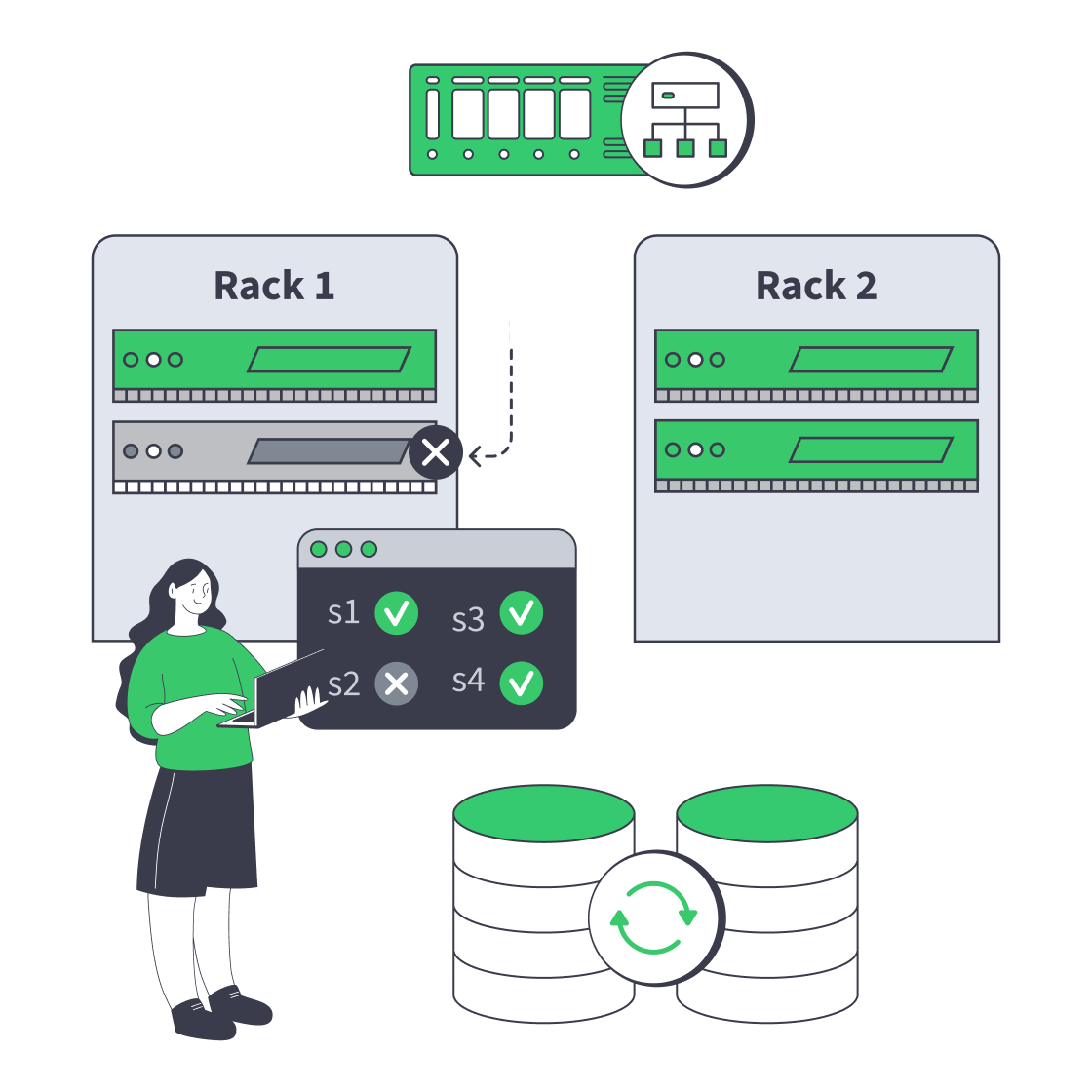
    Dedicated server cluster rerouting traffic after a node failure
    Designing High-Availability Clusters That Fail Safely
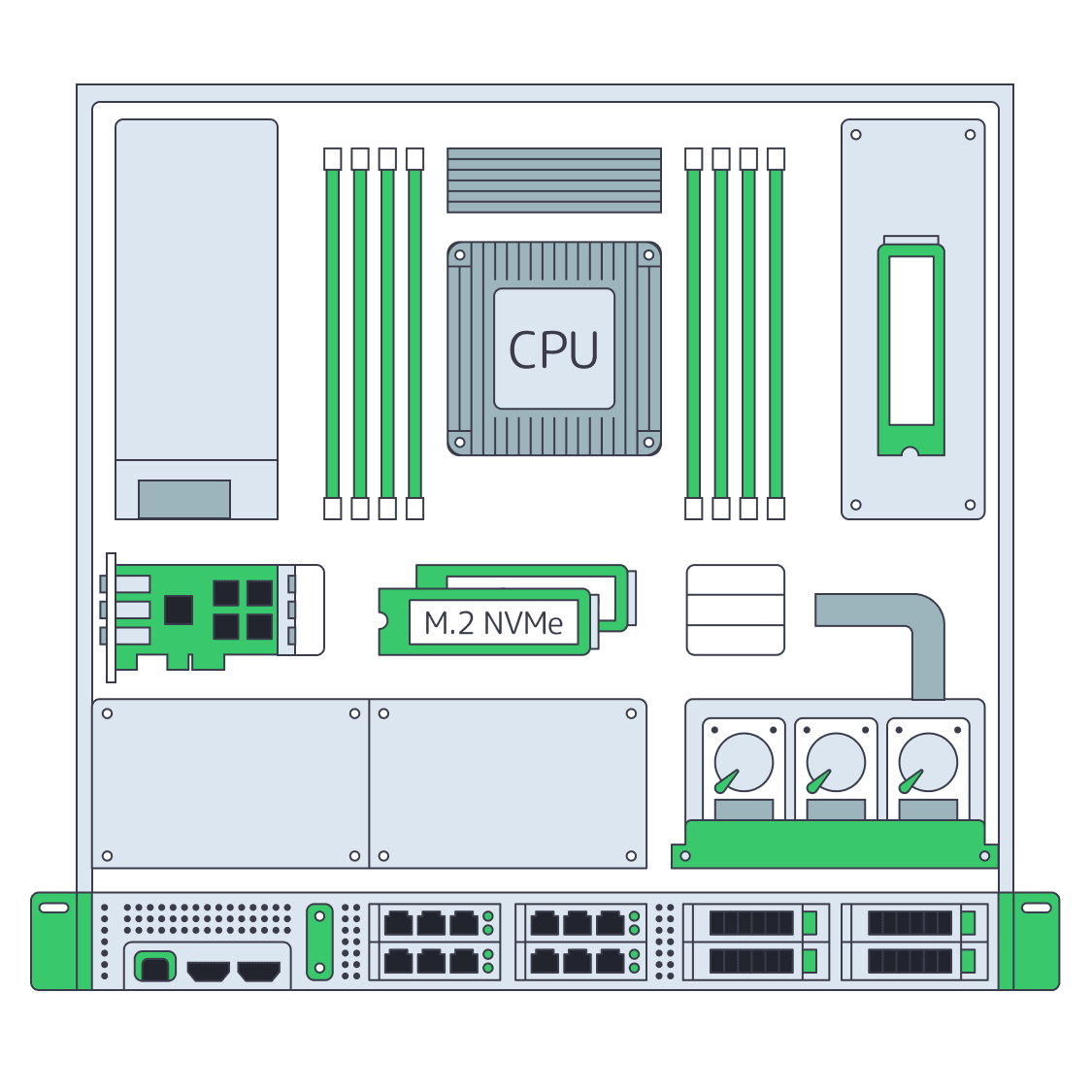
    Dedicated server BOM with CPU, RAM, NVMe, and NIC modules sized from workloads
    Spec Dedicated Servers From Workload, Not the Catalog
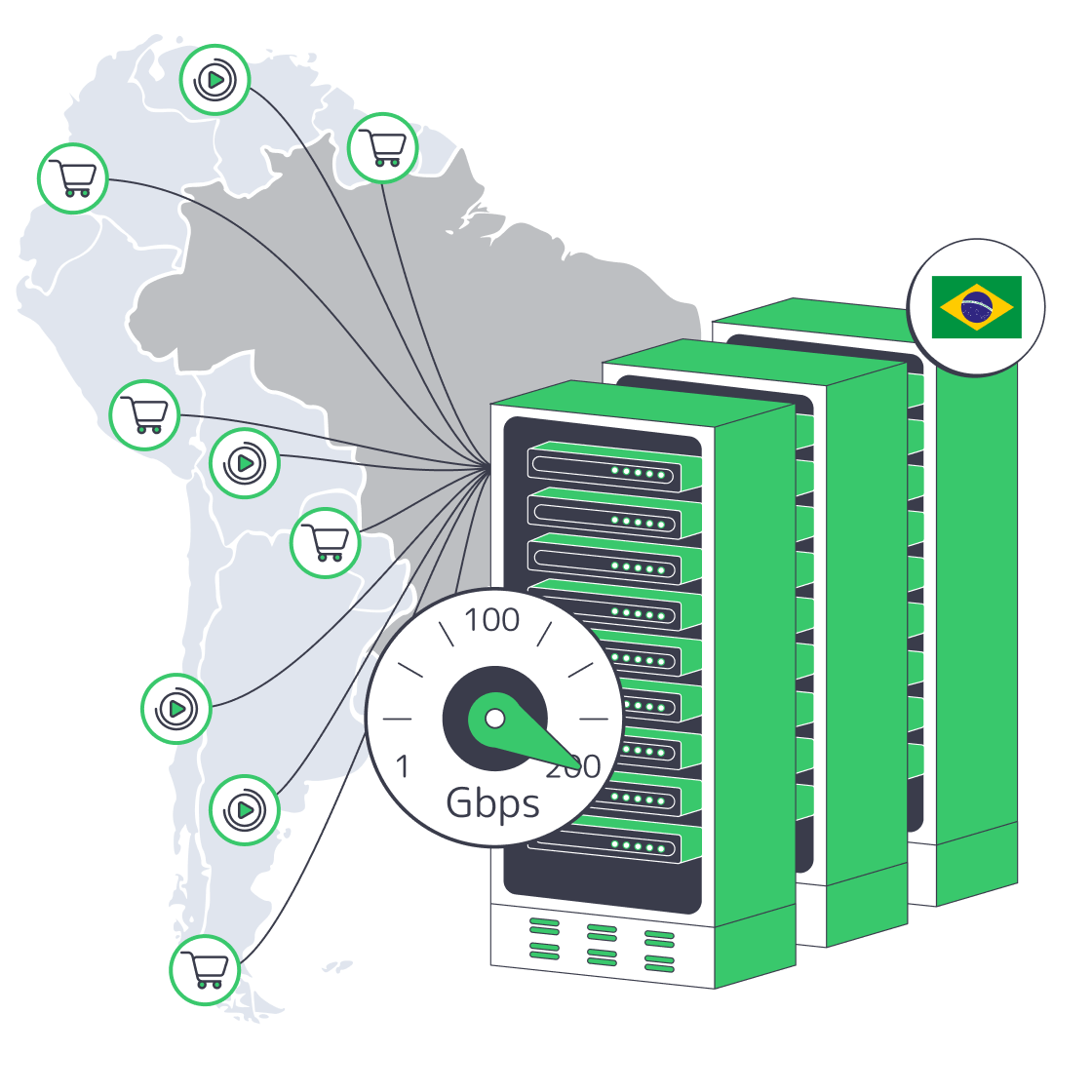
    Brazil servers with CDN edges and 1/10/100/200 Gbps speedometer for commerce and streaming
    Brazil Unmetered-Port Servers and CDN for Boosting Conversions
    Illustration of a person managing a MySQL database on a dedicated server
    Finding the Right Fit: MySQL Database Hosting Service
    More articles
    FAQ
    How to size ecommerce servers for catalog and checkout peaks?
    Ecommerce workloads off production storefront/database tiers?
    When does one dedicated ecommerce server make sense?
    What should teams measure before choosing a configuration?
    How should a store choose its server region?
    Can teams separate database and application workloads?
    Who manages commerce software, patching, and monitoring?
    How should teams plan backups and restore testing?
    Can the infrastructure support different commerce platforms?
    How do custom configurations fit unusual workloads?
    Create your account
    Create an account, add funds, and choose a server configuration for measured commerce workloads.
    Create an account
    Plan your configuration
    Share concurrency, catalog, database, and regional needs to review ecommerce server hosting capacity.
    Talk to an expert