
Blog

Finding the Right Fit: MySQL Database Hosting Service
Many high-traffic applications rely on the relational database capabilities of MySQL. While it has many merits that have earned it global popularity, hosting and scaling MySQL effectively is no easy feat, and the heavier the load, the harder the task.
Basic single-instance setups that rely on one machine running MySQL are a poor fit for modern high-traffic needs. These setups lack failover, and scaling them horizontally is limited. Moreover, the downtime can be catastrophic should the lone server fail.
Choose Melbicom— 1,100+ ready-to-go servers — 21 global Tier IV & III data centers — 39 CDN PoPs across 35 countries |
 |
A flexible, distributed architecture that can deliver speed is required to cope with the demands of high-traffic workloads.
So let’s discuss and compare the respective advantages and disadvantages of the three leading infrastructure models for a MySQL database hosting service: managed cloud, containerized clusters, and dedicated servers. By focusing on performance, scaling replicas, automated failover, observability, and cost as key aspects, the strengths and drawbacks of each soon become clear.
What Are the Key Requirements for a MySQL Database Hosting Service?
A strong MySQL database hosting service for heavy workloads should deliver low latency, replica scaling, dependable failover, full observability, and predictable cost. The right model depends on whether the team values managed operations, Kubernetes portability, or direct hardware control with fewer provider-imposed limits.
Performance
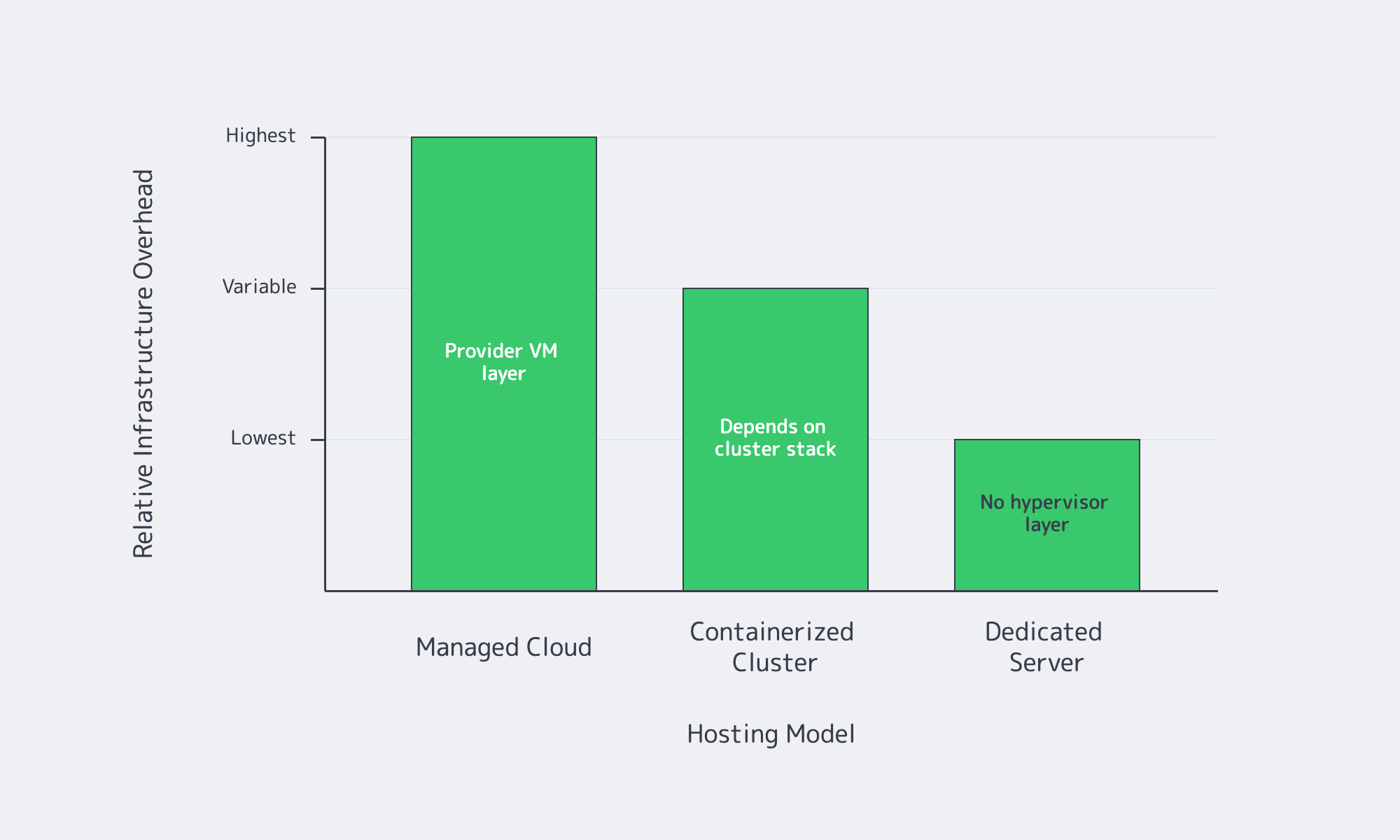
Low latency and sustained throughput are needed for adequate performance during peak loads in high-traffic environments, and performance depends on the infrastructure in place. Compared with physical hardware, virtualized MySQL deployments can add overhead that varies by instance type, storage design, and concurrency. Dedicated servers, on the other hand, eliminate the hypervisor layer, granting access to all CPU and I/O resources. Although they can perform well, containerized clusters such as Kubernetes add extra variables to consider, including storage drivers, network overlays, and node placement.
Scaling Replicas
MySQL deployments use read replicas to deal with large query volumes. This replication is simplified by cloud providers through point-and-click or API workflows. Similarly, container-based clusters can be scaled using Kubernetes operators. However, multi-primary, large shard counts, and other specific topologies typically require some manual work. For greater topology freedom, dedicated infrastructure lets you deploy more physical nodes as needed. This means there is no provider-imposed hard limit on replica counts, and advanced replication patterns remain possible.
Automated Failover
Downtime can result in poor UX and lost revenue, making failover extremely important. The architecture behind modern managed cloud MySQL deployments, such as Amazon RDS or Google Cloud SQL, can switch to standby instances automatically. Depending on the service and workload conditions, failover commonly takes roughly one to two minutes. Container platforms using Percona or Oracle MySQL operators rely on Kubernetes and database-aware automation to detect node failures and promote replicas. On dedicated servers, tools such as Orchestrator or MySQL Group Replication can support fast failover when redundancy, quorum, and monitoring are designed correctly.
Observability
Sophisticated monitoring is needed to successfully run MySQL at scale. It is important to observe CPU, RAM, and disk server metrics as well as query insights such as latency, locks, and replication lag. Managed services often provide dashboards, but they may only display common metrics and usually do not provide OS-level access. Container-based setups provide granular data through robust stacks like Prometheus or Grafana, but if your in-house expertise is not up to scratch, they may be tricky to maintain. With a dedicated server, you have total control over the OS, which means you can install any monitoring system, such as Percona’s PMM, ELK stacks, or custom scripts for a detailed overview.
Cost Modelling
As with any business decision, cost is often a major deciding factor. Opting for a managed service means less maintenance work and requires less in-house platform knowledge, but premium rates for CPU, memory, and I/O can be joined by bandwidth, storage, and backup fees. While managed cloud can be beneficial for smaller workloads, sustained high traffic can make costs difficult to forecast. These overheads can potentially be reduced for operations sharing resources across multiple apps if you opt for container-based MySQL, but only if they run on existing Kubernetes clusters. The underlying nodes still require outlay, and you have many other components at play that all incur costs of their own. To avoid unexpected charges, a dedicated server with a predictable monthly or yearly rate can prevent nasty surprises. Renting or owning hardware can work out more economically at scale because fewer cloud-style billing variables are involved.
What Is Managed Cloud MySQL Hosting and When Should You Use It?
Choosing a managed cloud service (also referred to as DBaaS) to host MySQL databases can simplify the process significantly. These platforms handle OS patching, backups, software updates, and basic failover automation.
If you lack dedicated DBA or DevOps resources, a managed service on platforms such as Amazon RDS or Google Cloud SQL can be a practical option. A simple API call adds replicas with ease, and you can enable high availability by checking a box.
Managed Cloud Performance: Regardless of how powerful the hardware is, these services run in provider-managed environments and many vendors have parameter limits in place. You may also find that specialized configurations are not permitted. For demanding workloads, performance depends on the instance class, storage tier, network path, and provider limits.
Scaling Replicas: While creating multiple read replicas is allowed, multiple primary replicas and custom topologies might not officially be supported. So, depending on how heavy your read-only workload is, managed clouds may or may not be right for you. Amazon RDS for MySQL supports up to 15 read replicas per source DB instance in the same Region, which could be sufficient for some applications.
Automated Failover: The biggest advantage that managed cloud options have to offer is automated failover. Standby replicas in different zones maintain synchronous copies, and failover often takes roughly a minute or two, depending on the service, database activity, and recovery process.
Observability: The dashboards offered by the top managed cloud solutions might not give OS-level access, but they do provide basic metrics and are easy to track. Deep kernel and file system tweaks are unavailable, but users still get access to slow query logs.
Cost: Most of these platforms operate in a pay-as-you-go manner, which is attractive to new users and convenient, but costs can soon mount. Add storage I/O, data transfer, and backup retention, and a heavy workload can become harder to budget. Those with consistently heavy traffic may find that renting a physical machine reduces costs in the long run.
What Are the Trade-Offs of Hosting MySQL in Containerized Clusters?
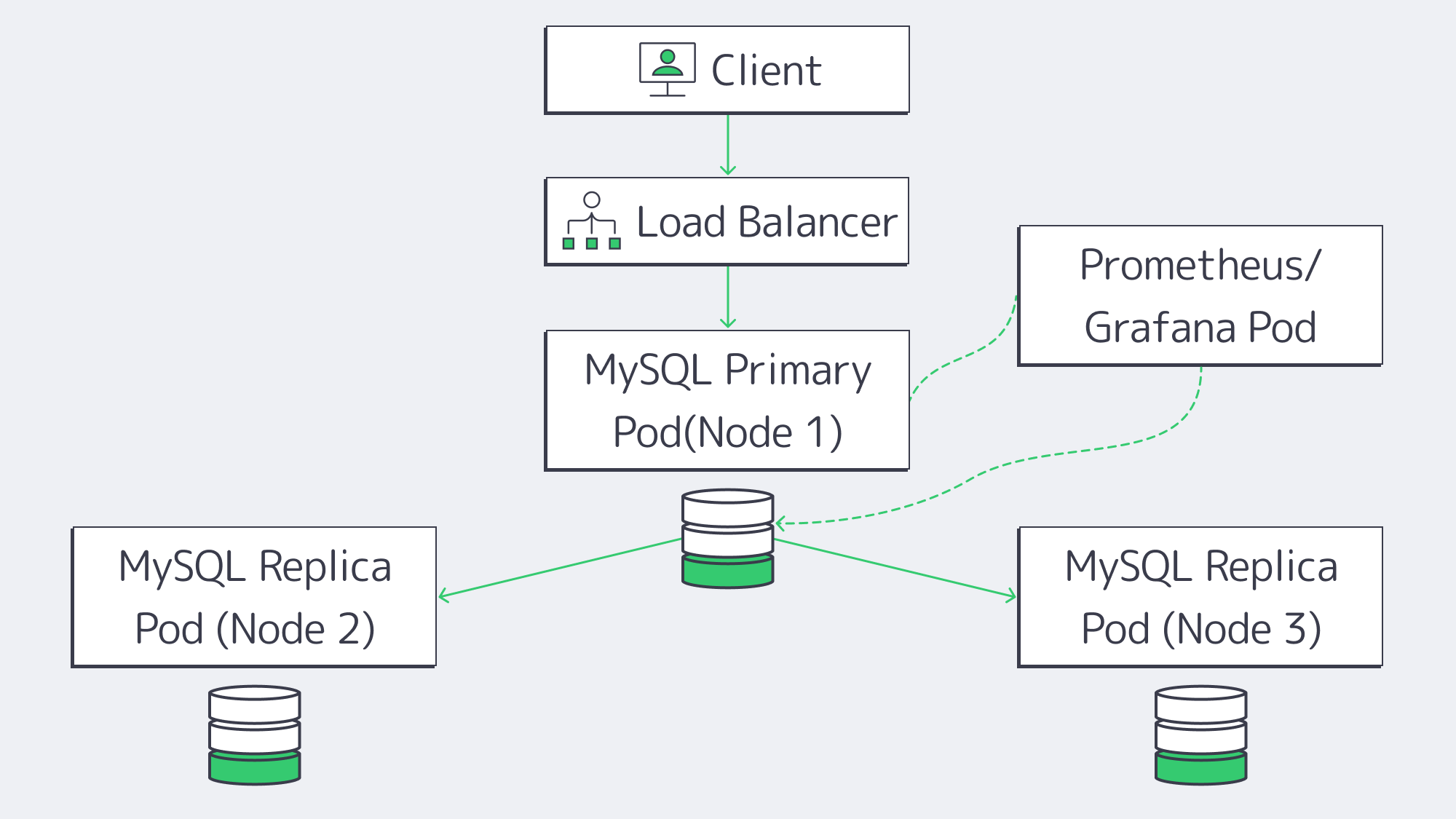
Containerized clusters are considered a good middle-ground option, and for those already operating with other microservices, they can be the most sensible solution. Orchestration platforms like Kubernetes can help automate replicas and backups, helping considerably with MySQL management.
Containerized Performance: The typical overhead with container operation is often less than full VMs, but you have to consider that if Kubernetes itself sits on virtual nodes, then abstraction comes into the picture, adding complexity to the performance situation. The network layer and any storage plugins also affect performance.
Scaling Replicas: With a MySQL operator, you can handle replication setup and orchestrate failovers. Replicas can spin up and be removed rapidly, but large multi-primary or geo-distributed clusters need customization, which could be out of your wheelhouse.
Automated Failover: Failed pods are quickly identified and restarted, and a replica can be promoted to primary automatically, but fine-tuned readiness checks are needed to make sure everything is in sync, which can affect reliability. Without the right checks in place, split-brain scenarios are possible.
Observability: Logging stacks and granular monitoring tools such as Prometheus or Grafana can be integrated with Kubernetes, giving plenty of metrics. However, the node network, storage layer, and service routing must also be monitored to keep track of cluster health properly.
Cost: Those with Kubernetes in place for other operations will find they can cost-effectively piggyback MySQL onto an existing cluster, so long as resources are available. If you are starting totally from scratch and just want Kubernetes to cover your MySQL needs and nothing else, then, in all honesty, it is probably overkill. The infrastructure outlay will set you back, and managing the cluster adds further complexity.
Dedicated Servers for MySQL Hosting
If you have high-traffic needs and require control, then the raw power on offer from a dedicated server often makes it the best MySQL database hosting service choice. Through Melbicom, you can rent physical servers housed in our Tier III or Tier IV data centers situated worldwide. This gives you direct access to single-tenant hardware without hypervisor overhead.
Dedicated Server Performance: As there is no virtualization layer, users get full CPU, memory, and disk I/O. Query latency for I/O-heavy workloads can also be reduced when local NVMe drives are used on dedicated machines.
Scaling Replicas: Read replicas are not limited by a managed-provider quota, and advanced MySQL features such as Group Replication, multi-primary setups, or custom sharding are unrestricted depending on how many servers are deployed and how the topology is designed.
Automated Failover: With open-source tools like Orchestrator, MHA, or Group Replication, you can configure failover around your own recovery objectives. With the right configuration, dedicated-server failover can be designed to match demanding availability targets, and multi-datacenter replication can be built across Melbicom locations where latency and consistency requirements allow.
Observability: With dedicated server hosting, you have full OS-level access, meaning you can use any stack, be it Percona PMM or ELK, etc. This allows you to monitor a better variety of aspects, such as kernel tuning, file system tweaks, and direct hardware metrics.
Cost: Dedicated infrastructure has an initial outlay, but it remains predictable; there are no nasty surprises, regardless of any unexpected spikes. Those with a substantial workload may find that the total is lower than equivalent cloud bills. Melbicom dedicated servers support bandwidth up to 200 Gbps per server. We also provide 24/7 support as standard with any of our plans.
Trade-Offs: The main trade-off is that OS patches, security, backups, and capacity planning need to be handled on your end, but many teams find it an acceptable overhead considering the performance, control, and TCO predictability benefits that a dedicated server presents.
MySQL Hosting Models Compared: Cloud vs. Containers vs. Dedicated
Take a look at the following table for a concise comparative overview of each model:
| Model Type | Advantages | Disadvantages |
|---|---|---|
| Managed Cloud | – Simple startup – Integrated HA & backups |
– Virtualization overhead – Limited configurations available – Costs can mount |
| Containerized (K8s) | – Portable across clouds – Automated with operators – Good fit if you use K8s already |
– Requires previous expertise – Storage/network complexities – Fluctuating overhead |
| Dedicated Servers | – High raw performance – Full control, no hypervisor – Costs are predictable |
– In-house management needed – Cannot be scaled instantly – Requires hands-on setup |
Choosing a MySQL Hosting Service

Ultimately, to choose the best MySQL database hosting for your needs, you need to consider your workload, budget, and in-house expertise. Each of the top three models has benefits and drawbacks. A managed cloud might be convenient, but it can be costly to scale. If teams are already invested, then containerization provides sufficient automation, but may not handle complex needs. For reliable performance, a dedicated server is a powerful, dependable, cost-effective solution for sustained high-traffic workloads.
When it comes to high-traffic applications that hit resource ceilings or cost ceilings, the blend of speed, control, and predictable expenses that a dedicated server solution brings to the table is hard to beat. With a dedicated server running MySQL, organizations can avoid premium charges and cloud lock-in, with the right failover configurations in place for a resilient, scalable database service.
Ready for Faster MySQL Hosting?
Deploy your MySQL on high-performance dedicated servers with predictable pricing.