Database hosting for predictable query latency
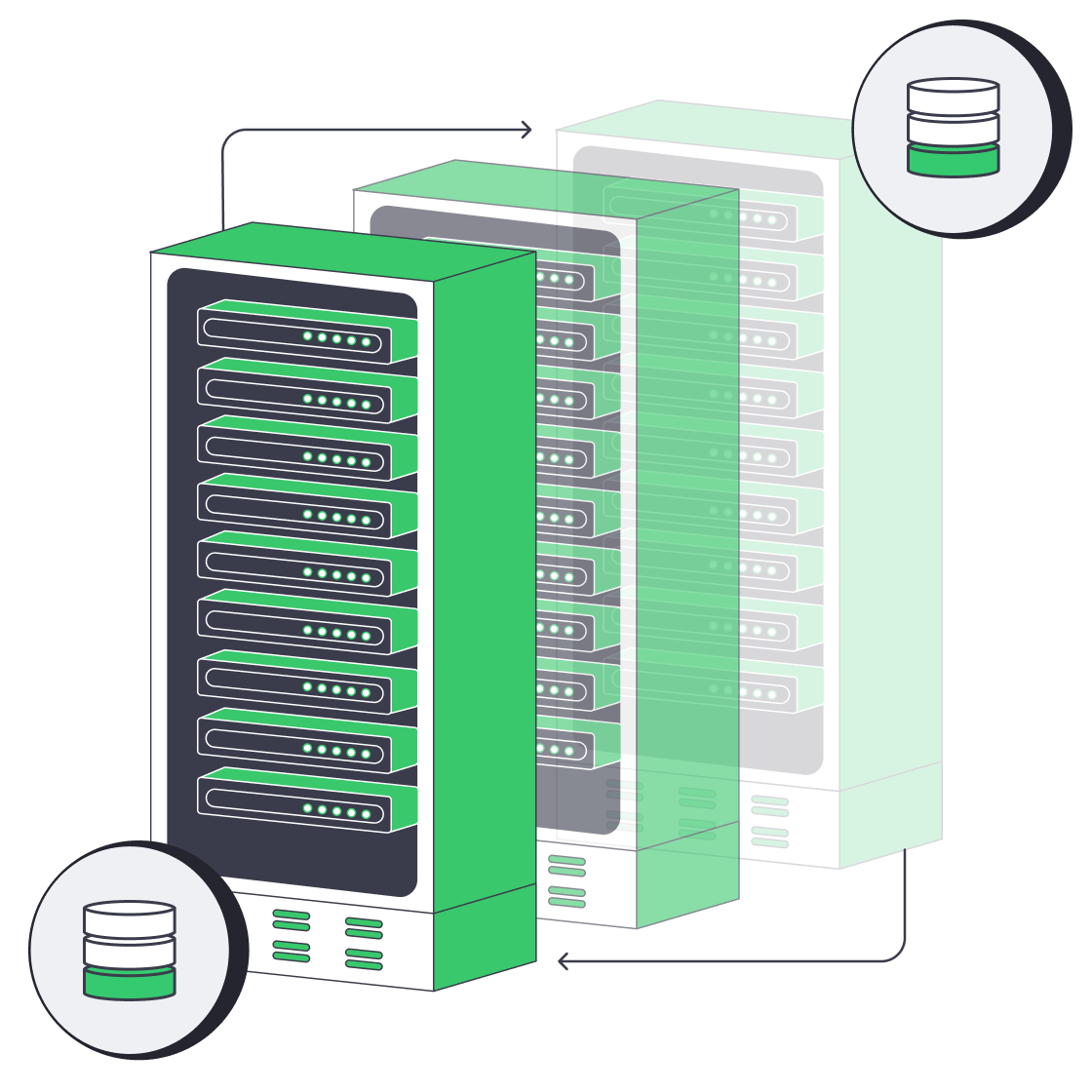
Start to host a database on isolated infrastructure with configurable CPU, memory, storage, and network capacity, ensuring stable latency, predictable throughput, and direct operator control.
Start to host a database on isolated infrastructure with configurable CPU, memory, storage, and network capacity, ensuring stable latency, predictable throughput, and direct operator control.


Align CPU, memory, storage, and network capacity with working sets to stabilize latency and throughput.

Keep direct control of systems, database engines, topology, tuning, and maintenance for predictable operations.

Use isolated compute to limit contention and preserve consistent database behavior during peak demand.

Store backups and archives in data storage to protect workloads while preserving durability and recovery.
Production database hosting services require consistent CPU, memory, storage, and network behavior to keep query latency and write throughput predictable under sustained load. When infrastructure diverges from working sets or write patterns, resource contention rises, performance becomes uneven, and operators lose confidence in production stability in demanding environments.
Melbicom provides isolated infrastructure with configurable CPU, memory, storage, and network capacity aligned to each database workload. Teams retain control over the operating system, database engine, topology, tuning, and maintenance model, while dedicated resources reduce contention and keep performance consistent during sustained production demand.
Data storage provides a separate destination for customer-managed backups and archives, keeping durability operations outside the primary database path. This separation protects workload performance, supports structured recovery workflows, and preserves clear operational ownership because backup scheduling and restoration remain fully controlled by the customer.



Run transactional workloads with write paths and working sets, keeping latency stable under steady demand.

Run analytic queries and batch jobs with resources, keeping performance stable during heavy read demand.

Deploy distributed nodes with set topology and network capacity, supporting replication and steady data sync.

Handle writes by aligning memory and storage with write paths, keeping throughput stable during spikes.
Maintain replica systems for recovery and read distribution, keeping primary and secondary database performance stable.

Mirror production setups for testing and validation, keeping configs consistent across development and staging.
Store backups and archives on separate storage, protecting primary workloads while preserving durability and recovery.

Prepare recovery runs with stored backups and isolated infrastructure, restoring data without disrupting active systems.