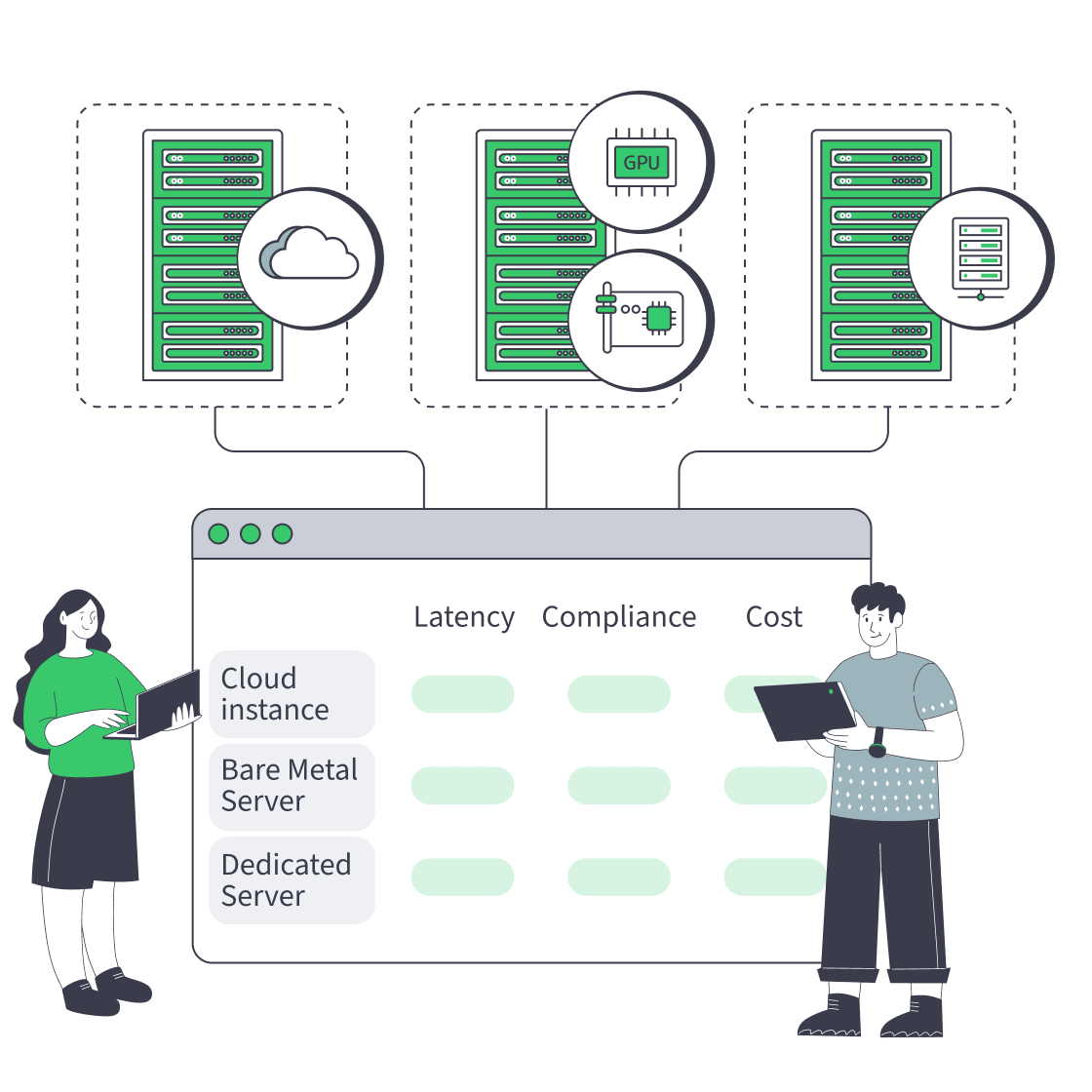
Buy server with USDT to match workload demand
Choose cloud VPS or dedicated servers from concurrency, memory, storage I/O, isolation, and control requirements; then verify and follow the live BitPay invoice before sending the USDT payment.
Choose cloud VPS or dedicated servers from concurrency, memory, storage I/O, isolation, and control requirements; then verify and follow the live BitPay invoice before sending the USDT payment.


Adjust CPU, RAM, and storage for workloads whose resource demand changes without requiring isolated physical hardware.

Choose dedicated capacity when resource isolation, hardware control, and attributable performance define the operating model.

Choose by workload, then use supported cryptocurrency or fiat payment methods after the required first payment.

Verify currency, amount, destination, expiry, and processor requirements in the generated BitPay invoice before payment.


USDT may fit the treasury workflow, but it cannot size compute, memory, storage, bandwidth, or isolation. Start with measured demand and the operating model: use cloud VPS for adjustable virtual capacity or dedicated servers where isolated physical resources and direct hardware control define the operating boundary for production workloads.
Melbicom keeps infrastructure selection separate from settlement. Configure capacity, region, storage, and network requirements before payment enters the decision. When the generated BitPay invoice offers USDT, it governs the selected currency, any specified network, exact amount, payment destination, expiry, and processor requirements for that order.
That sequence gives infrastructure and finance teams a controlled handoff: approve workload fit, access the account, review the order, and follow the live invoice before sending USDT. Route any order, jurisdiction, invoice, or processor question to support before payment rather than relying on generic crypto assumptions throughout the live checkout.



Use virtual capacity for development and test environments where adjustable CPU, RAM, and storage follow changing demand.

Size production services for concurrency, memory pressure, storage I/O, and the operating control the workload requires.

Match stateful databases to working-set size, sustained I/O demand, resource isolation, and recovery ownership.

Choose bandwidth and regional placement from user paths, transfer volume, and service-level operating targets.

Confirm workload fit before payment; use USDT only when the BitPay invoice offers that route for that infrastructure order.
Keep product sizing unchanged when crypto funds the order; the settlement asset does not redefine workload requirements.

Treat the generated invoice as authority for options, processor requirements, and payment instructions before sending funds.
Ask support to confirm order, jurisdiction, or processor questions rather than relying on generic crypto-payment assumptions.