Apache Kafka hosting that makes broker pressure easier to trace

Run customer-operated brokers on isolated infrastructure sized for ingress, retention, replication, and recovery traffic, so saturation, replica lag, and network headroom remain visible by node.

Protected Kafka infrastructure monitoring broker performance

Size dedicated server hosting to Kafka demand

Verified storage I/O
Trace broker pressure

Isolated CPU, memory, storage, and network capacity ties saturation and tail latency to each broker node.

Storage retention capacity sizing
Size storage from retention

Model usable storage from retention, replication, compaction, segment overhead, and planned broker recovery headroom.

Locked stable bandwidth
Keep network headroom

Keep network headroom for client traffic, partition reassignment, replica catch-up, and recovery during maintenance.

Self-hosted Apache Kafka
Separate Kafka roles

Place brokers and KRaft controllers in distinct roles so quorum health stays observable through planned change.

Available configurations
Need a Custom Build?
Filters
Clear all
Data center
Data center
CPU
CPU
CPU Brand
CPU Brand
RAM
RAM
Storage
Storage
from
up to
GPU
GPU
    Bandwidth
    Bandwidth
    Data Transfer
    Data Transfer
    Available configurations –
    CPU
    Memory
    Storage
    Network
    GPU
    Data center
    Price
    Show more

    Size Kafka for failure and recovery

    Event analytics is not one generic workload. Producer ingress, consumer fan-out, partition count, replication, retention, and compaction compete for broker resources, while maintenance or node loss adds reassignment and replica catch-up traffic. Measure traffic, storage growth, lag, and recovery behavior before turning capacity assumptions into infrastructure orders.

    Melbicom supplies isolated dedicated hardware with configurable compute, memory, storage, bandwidth, and regional placement. Bare metal server hosting makes broker pressure easier to distinguish from shared-resource noise, aligns storage with append and fetch patterns, and preserves network headroom for inter-broker replication and recovery.

    Your team installs, configures, secures, updates, monitors, and operates Apache Kafka. Place brokers and KRaft controllers across deliberate failure domains, tune OS limits, set retention and replication policies, and test replacement procedures. Melbicom provides 24/7 infrastructure support; Kafka lifecycle, data durability, rebalancing, and recovery decisions remain yours.

    Operator monitoring secure Kafka event streams

    Turn broker signals into operating control

    Track the metrics that expose saturation, lag, quorum health, and recovery capacity.
    Attributable broker pressure
    Measured replica lag
    Visible storage headroom
    Observable quorum health
    Planned rebalance capacity
    Clearer fault attribution

    Control each Kafka infrastructure role

    Map broker capacity, controller placement, OS limits, and recovery headroom before production traffic arrives.
    Isolated compute for broker roles
    Memory capacity for page cache
    Configurable local storage capacity
    Bandwidth choices for replication
    Regional deployment options
    Failure-domain placement controls
    Ready-to-deploy server configurations
    Custom server configuration options
    24/7 infrastructure support
    Customer-operated Kafka lifecycle
    Plan broker capacity
    Share traffic, retention, replication, and recovery estimates to narrow server options.
    Talk to an expert

    Match capacity to each Kafka workload

    Parallel event processing
    Clickstream pipelines

    Ingest user events across partitions while tracking burst shape, consumer fan-out, retention growth, and replication traffic.

    Server telemetry statistics
    Telemetry event streams

    Carry logs and metrics through brokers sized for message rate, segment writes, consumer lag, and recovery reads.

    System log document
    Audit event retention

    Retain audit events with storage modeled for replication, compaction, segment overhead, and operational headroom.

    Server analytics processing
    Real-time analytics

    Feed analytics engines with broker capacity planned around producer ingress, consumer egress, partition count, and bursts.

    Event pipeline operations
    Event-driven services

    Maintain explicit broker, controller, and failure-domain ownership through service changes and node loss events.

    Bidirectional database replication
    Change data capture

    Move database changes through partitions sized for message volume, retention, consumer lag, and replica catch-up traffic.

    Event pipeline operations
    Recommendation feeds

    Deliver behavioral events to ranking systems with capacity reserved for fan-out, replay, rebalancing, and traffic spikes.

    Recovered media recording
    Incident replay streams

    Preserve telemetry for reconstruction while measuring storage growth, fetch demand, recovery reads, and reassignment time.

    Infrastructure guidance for Kafka operators

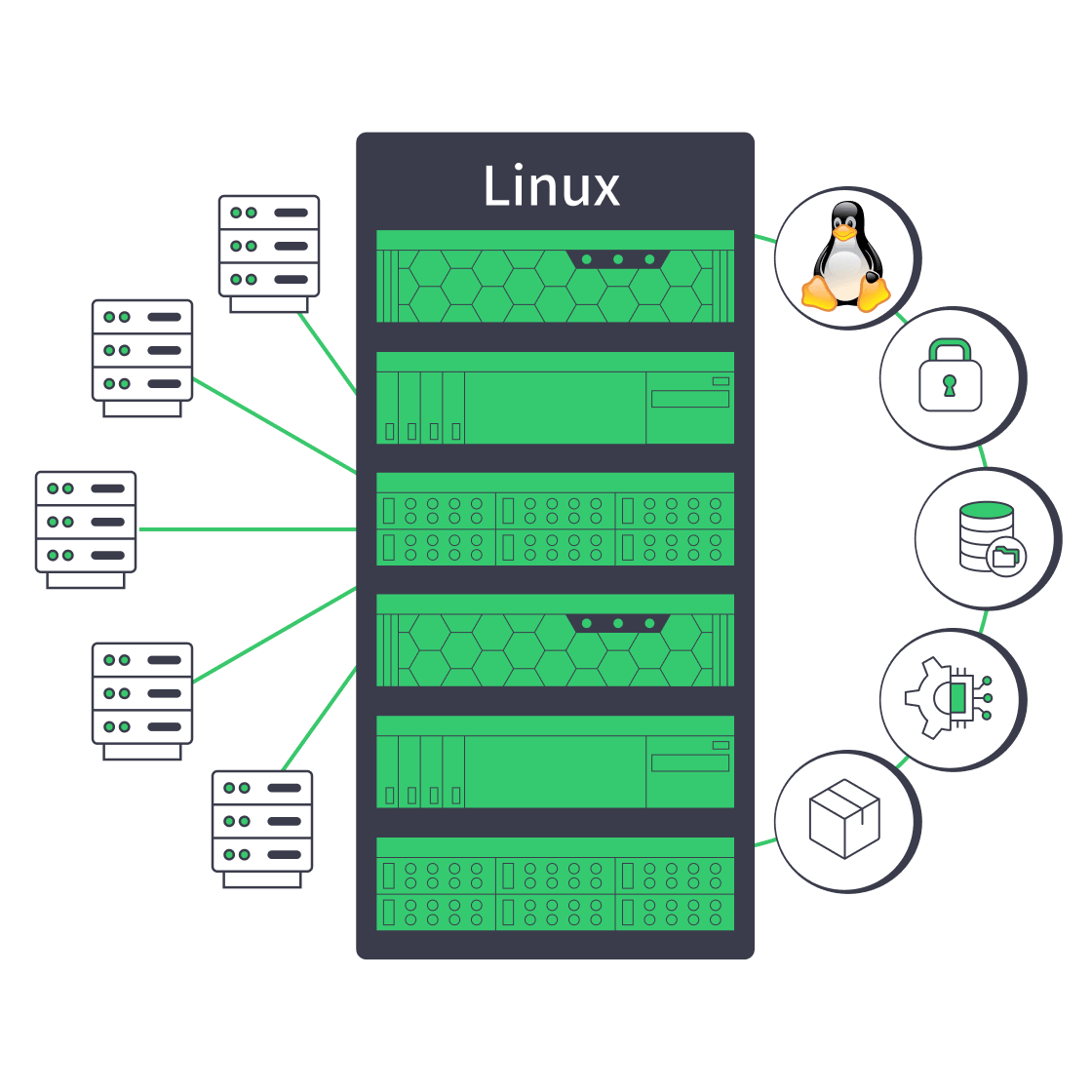
    Linux dedicated server with security, automation, storage, and network controls
    Linux Dedicated Server: Production Checklist for Control, Security, & Scale
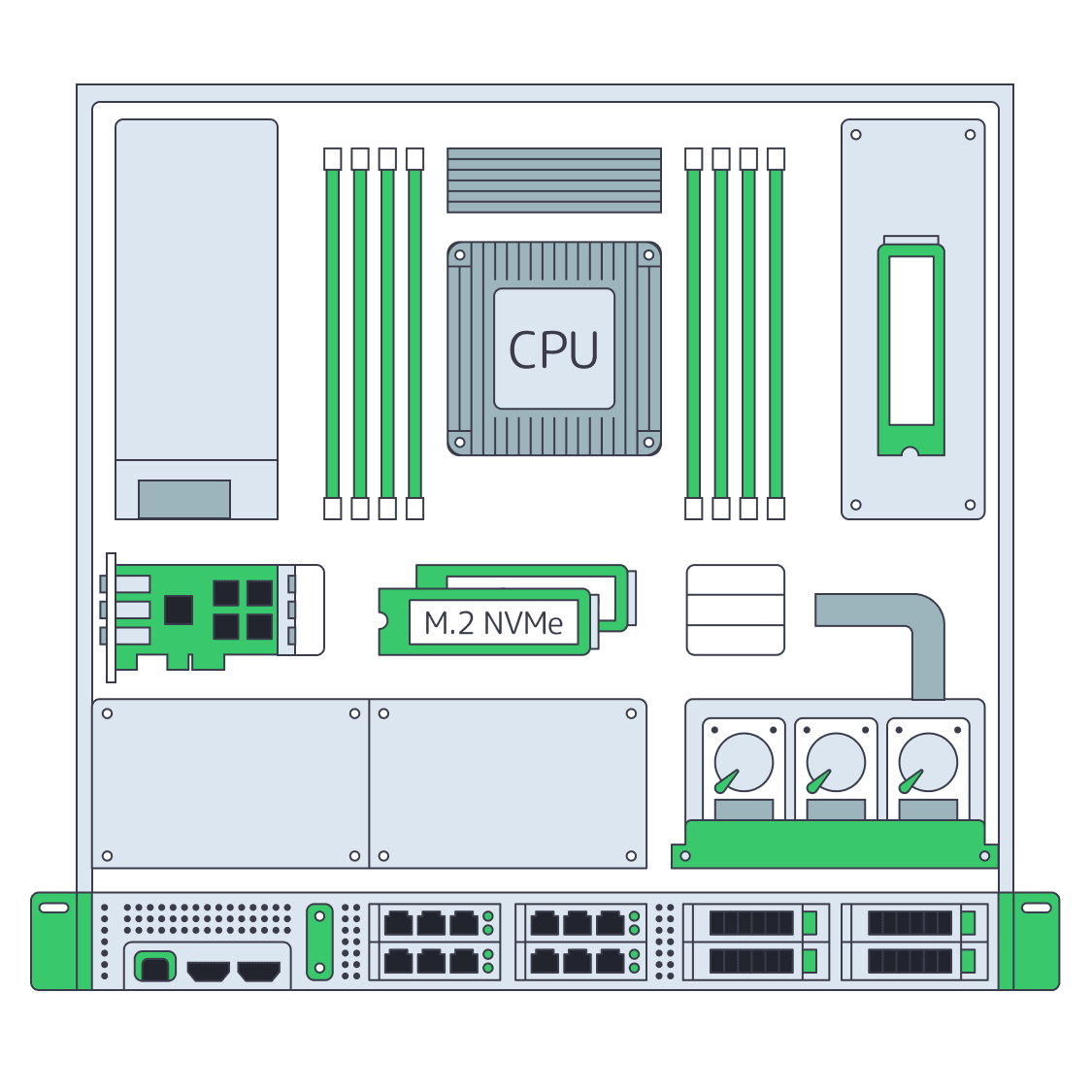
    Dedicated server BOM with CPU, RAM, NVMe, and NIC modules sized from workloads
    Spec Dedicated Servers From Workload, Not the Catalog
    Server with global data streams and a test dashboard for 10Gbps validation
    Validate 10Gbps Dedicated Server Line-Rate Performance
    Server rack adding NVMe and nodes, with an 80% capacity gauge and p99 latency dial
    When and How to Scale Storage on Dedicated Servers
    More articles
    FAQ
    Does Melbicom manage Apache Kafka?
    How should we size Kafka broker capacity?
    Why use bare metal server hosting for Kafka?
    How should retention affect storage sizing?
    Should brokers and KRaft controllers be separated?
    How many KRaft controllers support failure tolerance?
    Which OS limits matter for large Kafka clusters?
    What should we monitor on each broker?
    Can Kafka infrastructure span multiple regions?
    What should broker replacement planning include?
    Opening an account
    Access the control panel, fund your account, and deploy infrastructure for a customer-operated Kafka cluster.
    Create an account
    Plan your Kafka cluster
    Share traffic, retention, and recovery assumptions so specialists can help narrow server options.
    Talk to an expert