Web3 hosting that keeps every workload in its lane
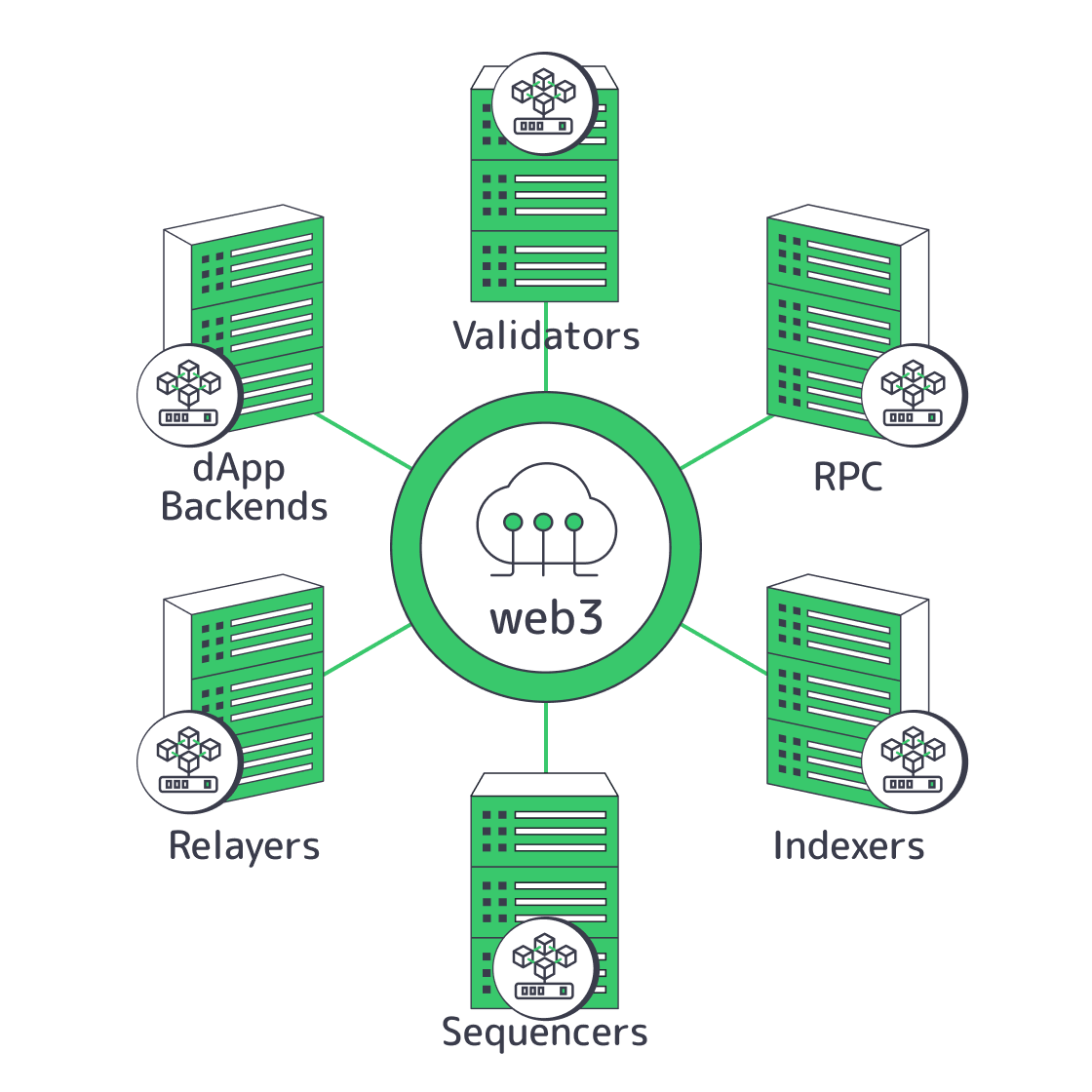
Map nodes, RPC services, indexers, databases, caches, and workers to dedicated server capacity sized for resource isolation, clearer performance attribution, and regional growth.
Map nodes, RPC services, indexers, databases, caches, and workers to dedicated server capacity sized for resource isolation, clearer performance attribution, and regional growth.


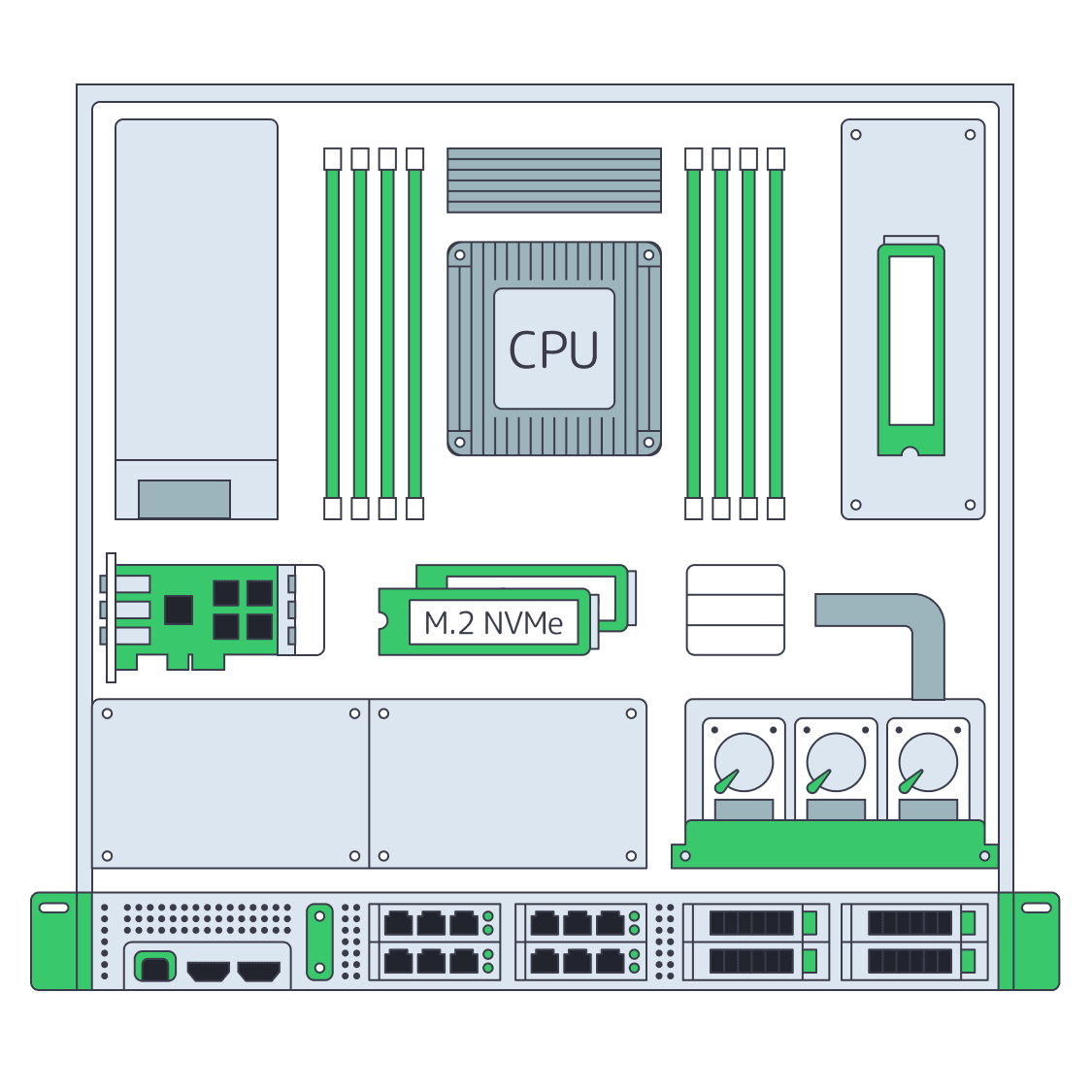
Keep CPU capacity available for RPC logic, node execution, analytics, and workers without shared-capacity contention.

Size RAM for database working sets, cache hit rates, and processes that must remain resident under peak load.

Plan storage for ledger growth, write intensity, re-indexing, and the recovery window your team can accept.

Choose region and bandwidth around users, peers, synchronization traffic, and the headroom required for bursts.
Production Web3 stacks rarely share one bottleneck. Public RPC paths need response consistency, nodes and indexers compete for storage I/O, databases absorb writes, and caches protect hot reads. Size each role against its working set, catch-up behavior, and traffic pattern before those peaks collide. This shows which role needs protected headroom during recovery.
Both metered and unmetered bandwidth options are available with our isolated dedicated servers. Configure CPU, RAM, storage, and regional placement, then match compute to execution services, storage I/O to ledger and index growth, and RAM to caches or databases. Separate recovery-heavy jobs when public endpoints need protected headroom.
Build Web3 server hosting around explicit workload roles. Separate noisy or recovery-heavy services, consolidate compatible workloads where headroom is measurable, and expand at the bottleneck. At Melbicom, we support the server and network layer; your team controls node software, keys, data, releases, monitoring, backups, and protocol policy.



Reserve CPU, RAM, and bandwidth for public RPC endpoints, keeping catch-up and indexing out of response headroom.

Size CPU, storage, and bandwidth for chain state, synchronization, pruning policy, and projected ledger growth.

Match CPU, RAM, and storage I/O to ingestion, reprocessing, and queries while isolating production APIs.

Run application APIs, gateways, and automation apart from node maintenance, analytics, and recovery work.

Protect active working sets with RAM and storage I/O, while reserving headroom for writes, compaction, and failover.

Allocate CPU and RAM to ETL, reporting, and automation without disrupting customer-facing services or database workloads.

Place gateways near users and peers, then choose bandwidth for request volume, upstream traffic, and regional growth.

Plan for dataset growth, read patterns, retention, and recovery while keeping storage-heavy roles operationally separate.