Keep real-time odds processing steady through live-event peaks

Match isolated dedicated servers to live-feed ingestion, odds recalculation, and API publication with configurable CPU, RAM, NVMe, bandwidth, and placement for lower contention and consistent API response.

Protected servers processing live sports odds

Build headroom into real-time odds infrastructure

Gaming platform capacity sizing
Recalculation headroom

Match CPU capacity to update volume and frequency so recalculation queues remain controlled during event peaks.

RAM memory module
Active-market memory

Keep active market state in memory so calculation workers avoid storage waits as prices change across live events.

NVMe storage drive
NVMe write capacity

Reserve NVMe capacity for event logs, snapshots, and persistence so durable writes do not crowd live calculations.

Verified regional server protection
Public API protection

Filter hostile traffic before public odds feeds and APIs to help preserve endpoint capacity for legitimate requests.

Available configurations
Need a Custom Build?
Filters
Clear all
Data center
Data center
CPU
CPU
CPU Brand
CPU Brand
RAM
RAM
Storage
Storage
from
up to
GPU
GPU
    Bandwidth
    Bandwidth
    Data Transfer
    Data Transfer
    Available configurations –
    CPU
    Memory
    Storage
    Network
    GPU
    Data center
    Price
    Show more

    Sizing sportsbook infrastructure for real-time odds processing

    Low-latency betting infrastructure has one unforgiving job: ingest changing event data, recalculate markets, persist state, and publish current odds while feed volume and request rates shift within seconds. The operating model must make contention visible, identify the stage that sets the latency budget, and preserve headroom for concentrated live-event bursts.

    Melbicom puts isolated hardware behind the processing path, with configurable CPU, memory, NVMe storage, bandwidth, and regional placement. Match each role to the resources it consumes most, then test queue depth, recalculation time, persistence behavior, and API response under representative peak-event load. Capacity follows the bottleneck, not blanket overprovisioning.

    Put DDoS protection in front of public odds feeds and partner APIs, while keeping compute planning and application resilience as explicit responsibilities behind that edge. Run ingestion, calculation, persistence, and delivery as separate roles when their capacity or failure boundaries differ. Trading and platform teams retain clear ownership from feed arrival to published odds.


    Operator scaling live sports odds processing

    Keep odds processing within peak-event latency thresholds

    Track the signals that show whether each stage can absorb live-event peaks.
    Lower recalculation jitter
    Steadier ingestion queues
    Shorter persistence waits
    More consistent API response
    Clearer failure boundaries
    Filtered hostile traffic

    Set boundaries for each pipeline role

    Match each processing stage to workload-fit CPU, memory, NVMe, bandwidth, placement, and support.
    CPU choices for update volume
    RAM sized for active markets
    NVMe storage for state writes
    Metered and unmetered bandwidth
    Regional placement for topology fit
    Isolated capacity for contention control
    Separate roles for failure control
    24/7 support for processing operations
    DDoS coverage for public APIs
    Protection for partner endpoints
    Map your processing path
    Bring peak volumes, latency targets, and role boundaries for a workload-fit configuration.
    Talk to an expert

    Build the live odds path role by role

    Gaming odds data ingestion
    Live feed ingestion

    Real-time sports data infrastructure needs CPU headroom to absorb feed bursts without starving calculation workers.

    Gaming odds operations
    Market recalculation

    Match processor capacity to market count, update frequency, and pricing logic before representative peak events begin.

    SSD storage drive
    State persistence

    Use NVMe-backed storage roles for logs and snapshots while keeping active calculation state close to memory.

    API server configuration
    Odds API delivery

    Separate public delivery from calculation nodes so request bursts do not consume the calculation layer's compute budget.

    Statistics monitoring dashboard
    Peak-event validation

    Replay representative event bursts, measure queue depth and API response, then add capacity at the bottleneck.

    Regional node map placement
    Regional topology fit

    Place each processing role near feed sources, trading teams, and applications according to your operating topology.

    Verified regional server protection
    Public API protection

    Filter hostile traffic at the public edge to help legitimate odds API requests retain endpoint capacity during attacks.

    Protected gaming platform
    Partner feed protection

    Apply edge filtering to partner endpoints while preserving explicit capacity and recovery boundaries behind that layer.

    Guides for real-time odds infrastructure

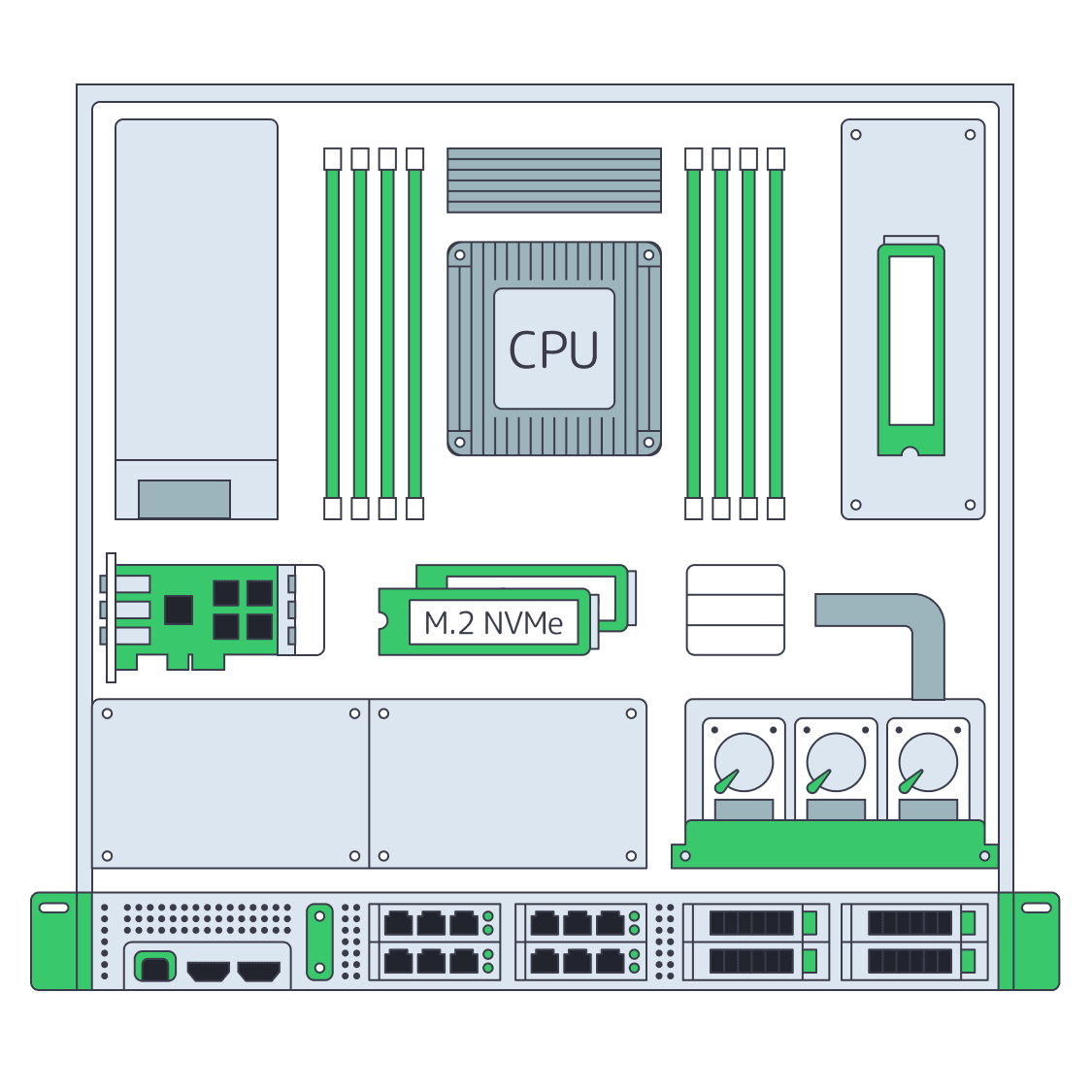
    Dedicated server BOM with CPU, RAM, NVMe, and NIC modules sized from workloads
    Spec Dedicated Servers From Workload, Not the Catalog
    Dedicated servers and CDN icons depicting cost-efficient iGaming infrastructure
    Dedicated Servers: Slashing iGaming Hosting Costs
    Globe linking dedicated servers and CDN nodes for low‑latency iGaming
    Lightning-Fast iGaming: Dedicated Hosting for Low-Latency Performance
    Server clusters and global load balancer showing scalable iGaming infrastructure
    Future-Proof iGaming with Global Dedicated Server Clusters
    More articles
    FAQ
    Why use isolated dedicated servers for live odds workloads?
    How does DDoS protection fit a real-time odds API architecture?
    How should CPU capacity match recalculation demand?
    How much memory does an odds workload need?
    When should pipeline roles use separate servers?
    How should NVMe storage support odds state?
    How do regional options affect live odds delivery?
    How should sportsbooks choose metered or unmetered bandwidth?
    Can Melbicom provide custom server configurations?
    Is technical support available around the clock?
    Configure your server
    Choose CPU, memory, storage, bandwidth, and region for the processing role your workload needs.
    Create an account
    Plan role boundaries
    Share peak volumes, latency targets, and pipeline roles to map capacity, placement, and failure boundaries.
    Talk to an expert