Run Metal Blockchain validators with measurable headroom

Use single-tenant dedicated servers for MetalGo validators, subnet nodes, API nodes, monitoring, and recovery, with root access, public TCP reachability, and capacity your team can size and control.

Secure Metal validators on dedicated servers

Metal Blockchain node hosting with clear control

Whitelisted network endpoints
Public staking access

Configure a stable public IP and bidirectional TCP access on default port 9651 before starting validation.

Isolated blockchain state
Isolated node resources

Single-tenant CPU, RAM, and storage make node responsiveness easier to measure, tune, and troubleshoot.

Recovery capacity expansion
Sync and recovery capacity

Reserve capacity for state growth, logs, monitoring retention, upgrades, backups, and accepted recovery windows.

Verified root user
Root-level node control

Use root access for MetalGo, firewall rules, monitoring, backups, and subnet settings under your own policy.

Available configurations
Need a Custom Build?
Filters
Clear all
Data center
Data center
CPU
CPU
CPU Brand
CPU Brand
RAM
RAM
Storage
Storage
from
up to
GPU
GPU
    Bandwidth
    Bandwidth
    Data Transfer
    Data Transfer
    Available configurations –
    CPU
    Memory
    Storage
    Network
    GPU
    Data center
    Price
    Show more

    Compare sizing for Metal Blockchain validators and subnet nodes

    Metal Blockchain operators must match infrastructure to the job: validation, subnet work, API traffic, monitoring, or recovery. Each role changes pressure on CPU, memory, storage, bandwidth, and public reachability, while the staking period leaves little room for identity or connectivity mistakes during active validation and planned recovery workflows.

    At Melbicom, we provide single-tenant hardware, root access, regional deployment choices, and network capacity you can size around MetalGo state growth and synchronization. Isolated resources make slow state work or missed responsiveness easier to trace to compute, memory, storage, or network pressure under sustained node load and resynchronization.

    Keep the boundary explicit: we support the server and network layer; your team operates MetalGo, staking, keys, firewall policy, monitoring, backups, upgrades, and subnet configuration. This model preserves control while giving validators and supporting nodes measurable capacity, clear ownership, and a practical, tested recovery path under load.


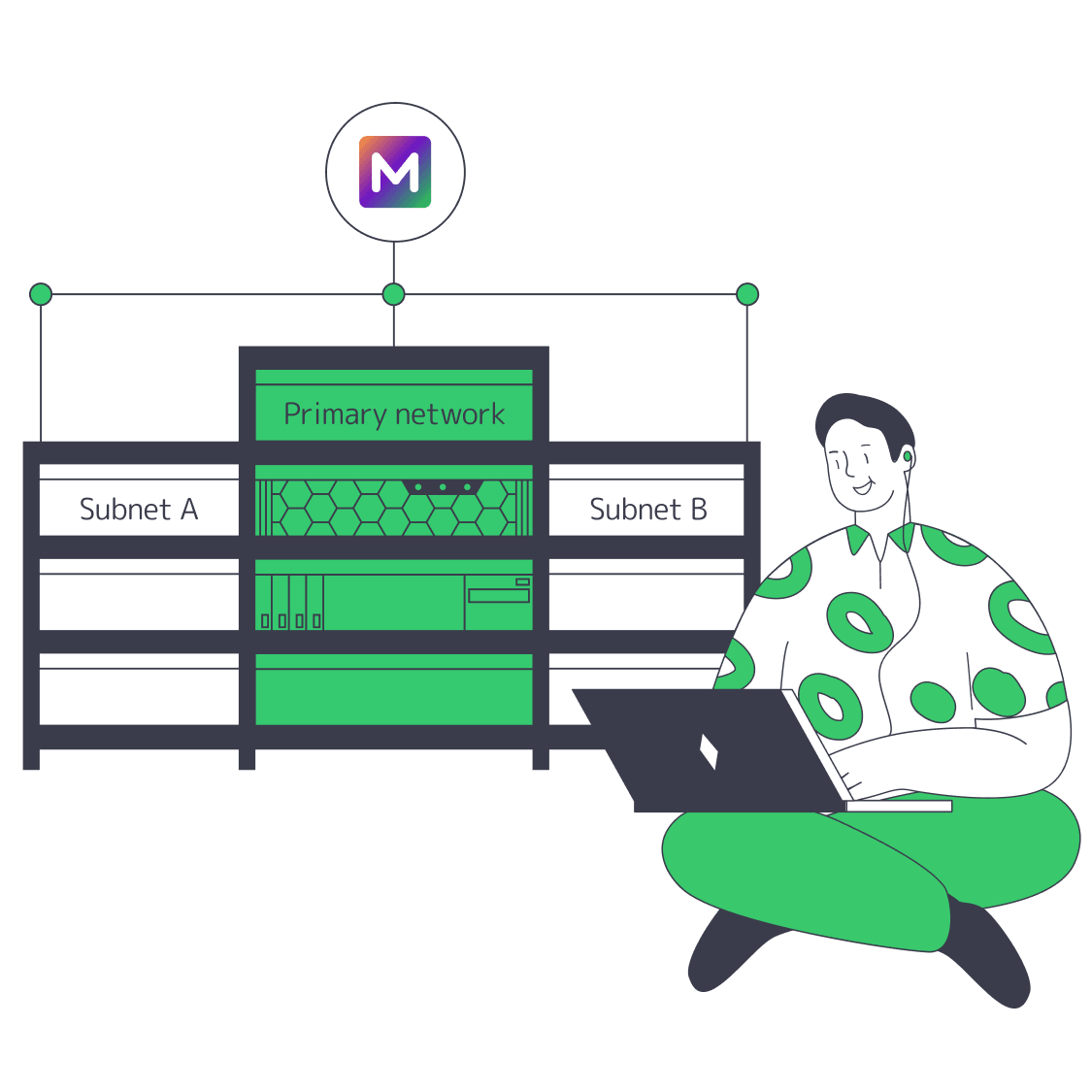
    Operator managing secure Metal validator infrastructure

    Measurable Metal validator operations

    Operational gains tied to reachability, state work, and recovery.
    Verified peer reachability
    Measurable node response
    Planned sync recovery
    Clear resource attribution
    State-growth headroom
    Defined operator ownership

    Choose controls for each MetalGo node

    Select compute, memory, storage, network, and access around each node role and recovery plan.
    Single-tenant CPU and memory
    Dedicated storage for node state
    Stable public IP configuration
    Bidirectional TCP port access
    Storage headroom for state growth
    Metered and unmetered bandwidth
    Root access for MetalGo control
    Firewall and monitoring control
    Dedicated servers on 5 continents
    Supported crypto or fiat payments
    Build your node server
    Choose a dedicated server for Metal Blockchain that matches your operating plan.
    Talk to an expert

    Size Metal validators and subnet nodes by role

    Blockchain validator operation
    Primary Network validator

    Prioritize peer reachability, public staking-port access, and validation headroom throughout the fixed staking period.

    Metal Blockchain logo
    Subnet validator

    Size compute, memory, storage, and bandwidth for both Primary Network duties and the subnet workload you operate.

    Blockchain full-node operations
    Non-validating node

    Plan capacity for synchronization, state growth, logging, and upgrades without assigning stake or validator responsibility.

    API server configuration
    API-facing node

    Separate API traffic, query load, and retention needs from validation so resource pressure remains visible and controllable.

    Server telemetry statistics
    Observability host

    Run metrics, logs, and alerts separately so observability load stays visible without masking validator capacity pressure.

    Recovery capacity expansion
    Recovery reserve

    Reserve compute, storage, and bandwidth for backups, restore tests, and the recovery window your policy accepts.

    Staged blockchain state deployment
    Upgrade staging node

    Test MetalGo releases, firewall changes, and subnet settings before applying them to any validator with active stake.

    Regional node map placement
    Regional support node

    Place regional capacity around peer reachability, operator access, and failure domains defined by your node plan.

    Metal Blockchain operations and infrastructure guides

    Metal validator and subnet racks with locked admin access and backup drive
    Metal Blockchain Node Setup on Bare Metal: Validator Specs, Subnets, & Ops
    Dedicated server BOM with CPU, RAM, NVMe, and NIC modules sized from workloads
    Spec Dedicated Servers From Workload, Not the Catalog
    Globe with server racks, padlock, 24/7 clock, and fiber links for validator hosting
    Dedicated Servers for Blockchain Node Hosting and Staking
    Illustration of server rack topped by HDD, SSD, and NVMe icons showing speed hierarchy
    Choosing Dedicated Server Storage: HDD, SSD, or NVMe?
    More articles
    FAQ
    What server and network setup does a Metal Blockchain validator need?
    Who manages Metal Blockchain software, staking, backups, and failover?
    Is the published minimum enough for production?
    Why must port 9651 be publicly reachable?
    How should storage be sized for state growth?
    Can validator parameters change during staking?
    Which node roles need separate capacity plans?
    Do you guarantee validator rewards?
    How should I choose metered or unmetered bandwidth?
    Can I choose cryptocurrency or fiat payment methods?
    Configure your server
    Choose from 1000+ ready-to-go server configurations or receive custom builds in 3–5 business days.
    Create an account
    Review your node plan
    Plan node roles, reachability, state growth, and recovery with our experts and 24/7 technical support.
    Talk to an expert