LLM fine tuning infrastructure built for complete training runs
Rent GPU-powered dedicated servers with usable VRAM, host resources, NVMe, and topology matched to full fine-tuning, LoRA, QLoRA, and repeatable customer-operated AI training cycles.
Rent GPU-powered dedicated servers with usable VRAM, host resources, NVMe, and topology matched to full fine-tuning, LoRA, QLoRA, and repeatable customer-operated AI training cycles.

Size usable VRAM for full tuning, LoRA, or QLoRA so hardware spending follows the selected training method.

Budget activations as sequence length and per-device microbatch grow across forward and backward work.

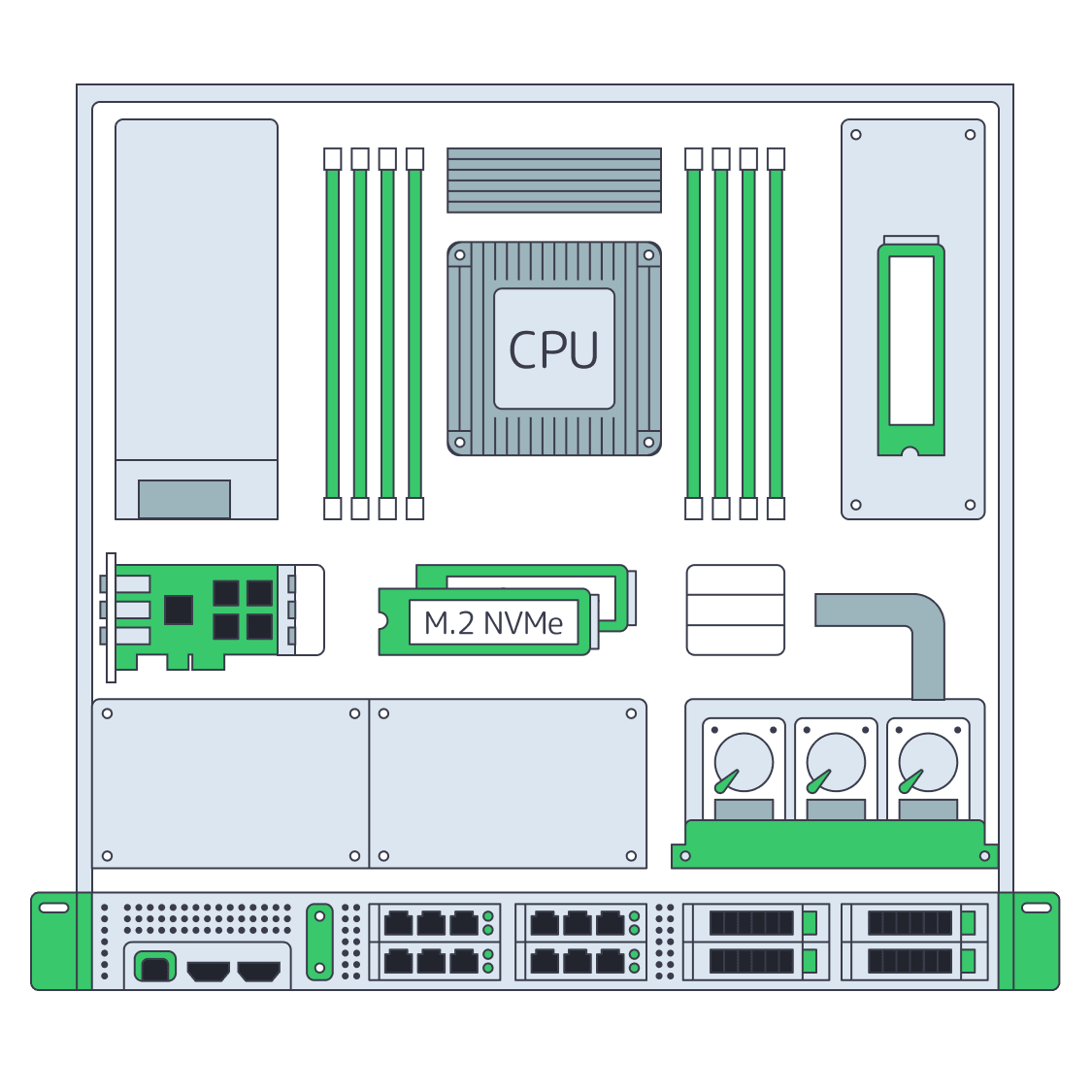
Pair GPUs with CPU, RAM, and NVMe for preprocessing, datasets, checkpoints, logs, and retained restart state.

Choose one GPU, a multi-GPU host, or more nodes from the parallelism plan and measured workload demand.
Fine-tuning hardware starts with the method you intend to repeat. Full tuning, LoRA, and QLoRA place different demands on usable VRAM, gradients, optimizer state, activations, and runtime headroom. Sequence length and per-device microbatch then determine whether the target batch and completion window fit on one dedicated host for the workload your team has benchmarked.
Melbicom rents dedicated GPU servers configured around preferred compatible GPUs, usable VRAM, CPU, host RAM, NVMe, and the topology required by your workload. Custom builds are ready in 3–5 business days, turning benchmark results, checkpoint retention, and completion targets into a concrete host specification for the next fine-tuning cycle without buying the hardware.
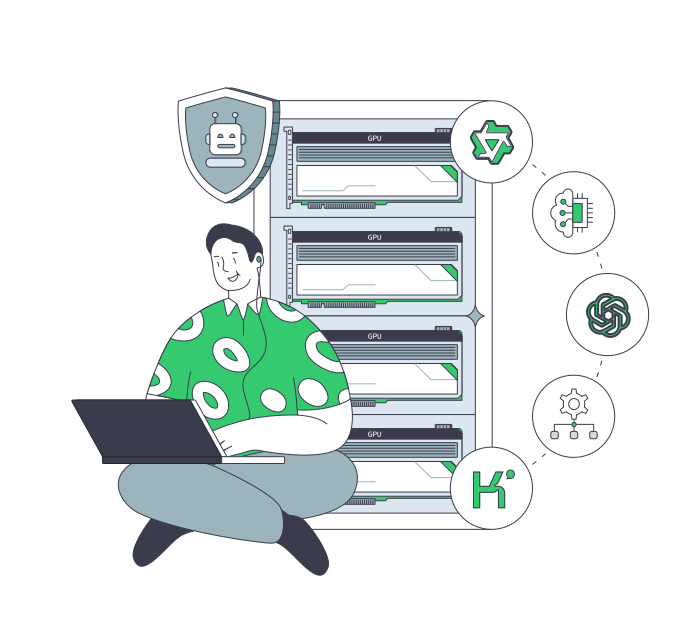
Your team operates an isolated dedicated environment with direct control of drivers, libraries, containers, datasets, checkpoints, and recovery. Exclusive GPU and host resources keep preprocessing, fine-tuning, evaluation, and restart work on the specification you selected, preserving consistent hardware boundaries across experiments while software and release decisions remain yours.



Fit weights, gradients, optimizer state, activations, and runtime buffers within the selected full-model configuration.
Keep the base model resident while adapters train, with activation memory sized for the intended batch.
Use a quantized base with trainable adapters while preserving room for activations and runtime workspaces.
Fit sequence length, packing, precision, and per-device microbatch to the curated dataset and completion target.

Keep specialized corpora, checkpoints, AI model evaluation, and retained artifacts on dedicated hardware across tuning cycles.

Keep code, datasets, containers, and restart procedures inside the environment your team controls for every tuning cycle.

Keep recurring variants on one stable host specification, with consistent hardware across scheduled experiment windows.

Define sharding or parallelism for every device before extending the workload from one GPU host across multiple nodes.