Llama hosting sized around model fit and inference load
Rent GPU-equipped dedicated servers for private Llama chat and AI-agent workloads, with VRAM sized to model weights, context, concurrency, latency, and throughput targets.
Rent GPU-equipped dedicated servers for private Llama chat and AI-agent workloads, with VRAM sized to model weights, context, concurrency, latency, and throughput targets.


Size VRAM for complete model weights at the selected precision, plus KV cache and other runtime allocations.

Reserve VRAM for KV cache growth across longer contexts, generated tokens, and concurrent requests.

Set context length, concurrency, and output volume against your latency and sustained throughput targets.

Run Llama on confidential documents and source code while your team controls the runtime and data path.
Every Llama deployment starts with a serving profile: model version, weight format, precision or quantization, prompt and output lengths, multimodal inputs, and production concurrency. Together, those choices divide the memory budget among model weights, KV cache, runtime allocations, and operating headroom for the planned serving load.
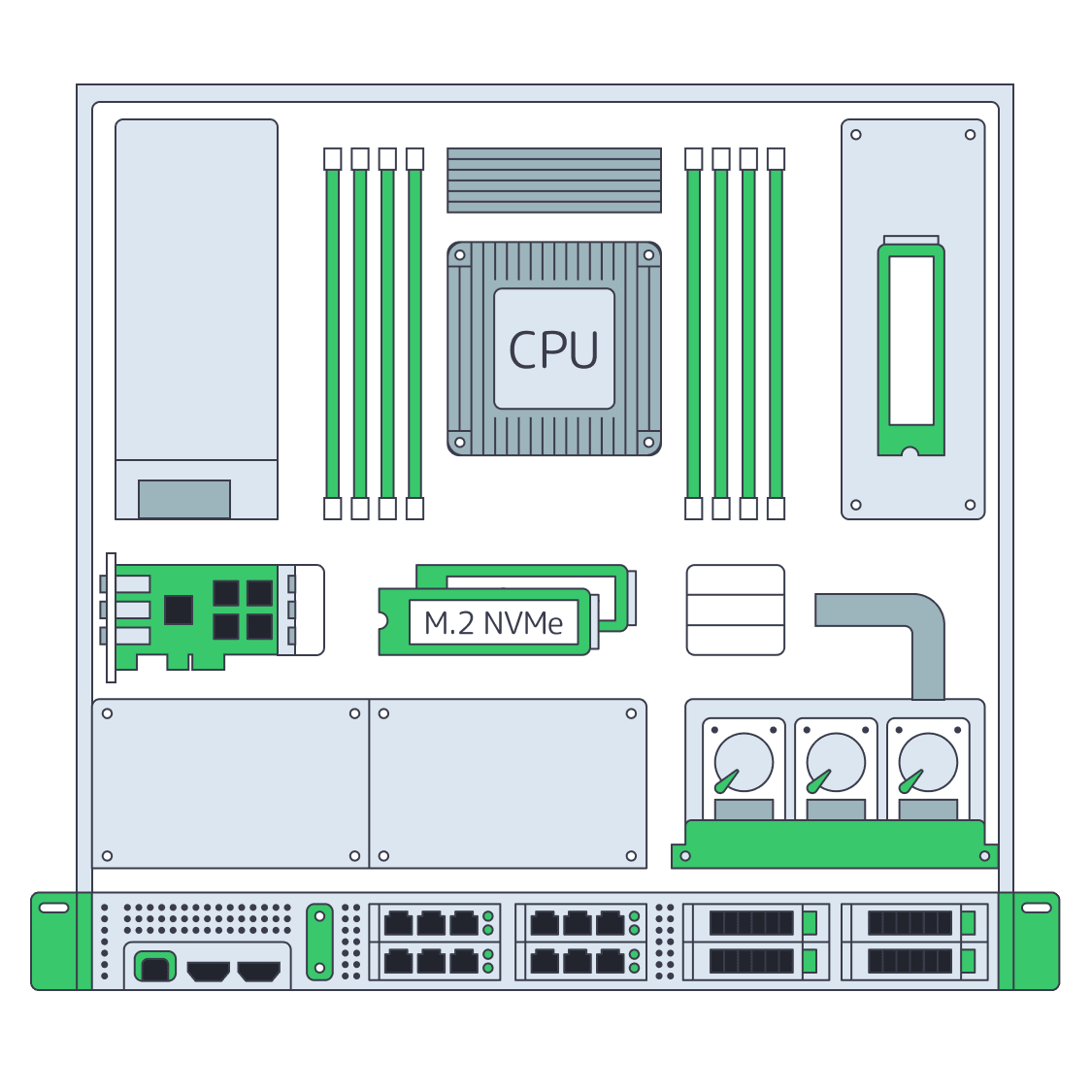
Melbicom maps that profile to GPU-equipped dedicated servers with VRAM for all model weights, host RAM for the serving process, and local NVMe for model files, caches, logs, and temporary work. Preferred-GPU and multi-GPU builds align the hardware with the model footprint, context policy, concurrency, latency, and throughput targets.
Choose a ready GPU-powered configuration when the model and load fit the available hardware, or use a custom build for preferred GPUs, additional VRAM, and multi-GPU or multi-host capacity. The same sizing inputs guide later expansion, keeping hardware spend tied to prompt lengths, concurrency, and measured latency and throughput.



Balance conversation history, generated tokens, and concurrent sessions against KV cache growth and response latency.

Reserve context and cache headroom for retrieved passages, user prompts, and concurrent answer generation at peak load.

Budget memory for long sources, structured extraction, summaries, and concurrent document requests in business workflows.

Match model precision and repository context to simultaneous completions, developer latency, and throughput targets.

Plan bursty conversations, tool calls, and longer sessions against a time-to-first-token target under load.

Reserve context and concurrency for policy search, internal documents, and role-specific answers used by teams.

Budget memory for text and image inputs, runtime overhead, batching, and concurrent multimodal requests.

Prioritize throughput and queue depth when batch completion matters more than individual request latency.