Gemma hosting with model-matched GPUs under your control
Rent GPU-equipped dedicated servers for Gemma inference, matching GPUs and VRAM to AI agents, assistants, document analysis, and multimodal applications under production load.
Rent GPU-equipped dedicated servers for Gemma inference, matching GPUs and VRAM to AI agents, assistants, document analysis, and multimodal applications under production load.


Size VRAM for each partition's share of full dense or MoE weights, not only active parameters per token.

Reserve cache and runtime memory so simultaneous conversations stay within your planned response target.

Add GPU capacity for image tokens and supported audio processing beyond the text-generation workload.

Run models on confidential company documents or source code while your team controls the environment.
Compact quantized checkpoints can start on modest hardware. Dense, multimodal, and MoE models can raise VRAM demand as weights, cache, requests, and document jobs overlap under load. Choose a host that keeps the model resident and preserves response headroom as production traffic rises.
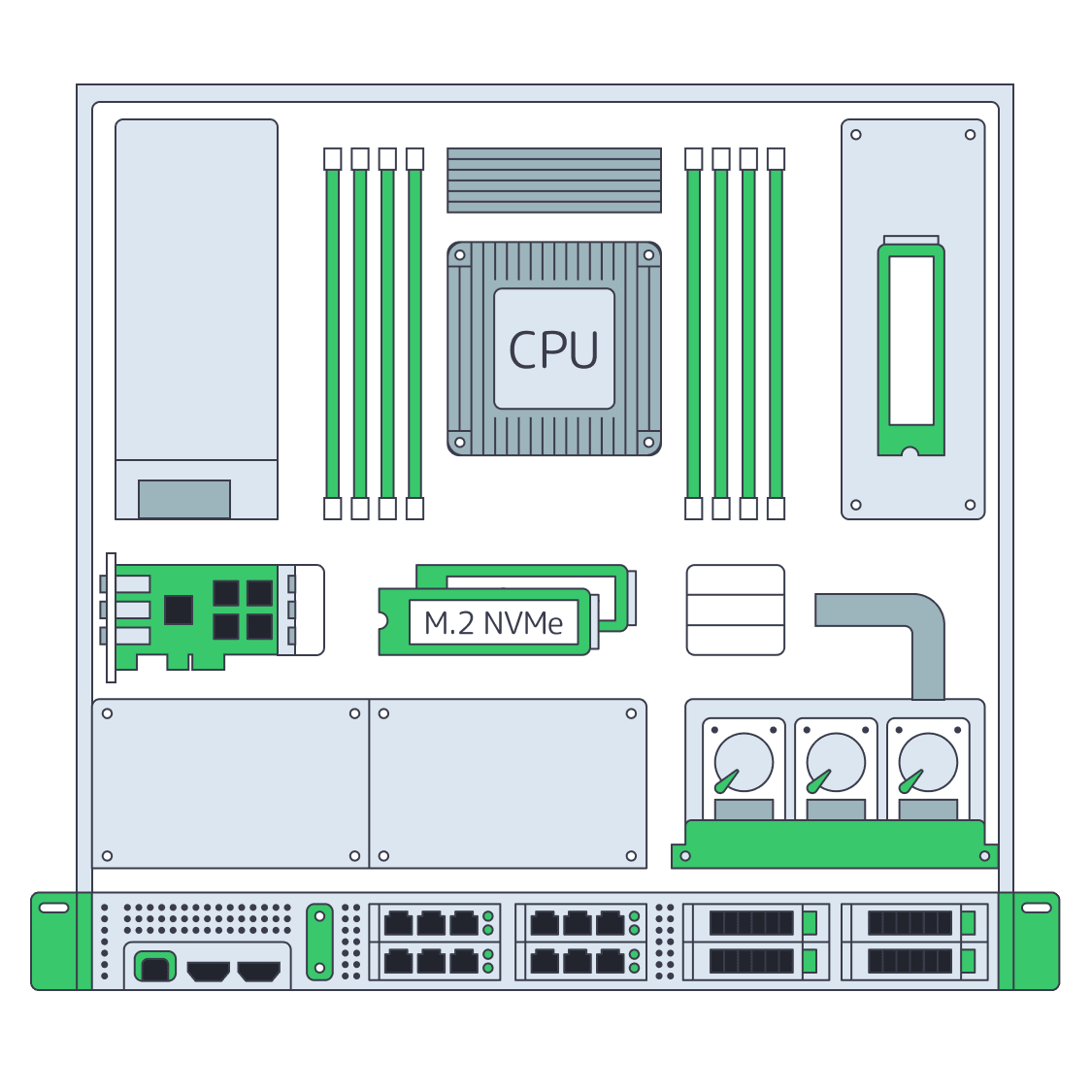
Melbicom offers 1100+ ready-to-go server configurations worldwide, including GPU-powered options for model serving. Custom builds around your preferred GPU and VRAM are ready in 3–5 business days, with system RAM and local storage sized to fit model files, runtime cache, and serving load.
Your team keeps full control of drivers, runtime, weights, batching, and apps on rented dedicated hardware. Choose a design for measured response and throughput goals, then add GPUs or hosts as traffic grows. Software stays in your hands, while hardware spend tracks real demand.



Size weights, cache, and replicas for concurrent assistant conversations to meet your response-time target.

Size image-token and preprocessing memory for document and chart jobs that arrive at the same time.

Run embedding and generation with compute, memory, and storage sized for retrieval traffic and index growth.

Serve fine-tuned compact models for AI agents that execute tasks through tools under concurrent load.

Test quantized or specialist models on CPU or modest GPU resources before committing production hardware.
Use one accelerator when weights, cache, and concurrency fit its VRAM with room for the response target.

Use multiple GPUs when model weights exceed one card's memory, or to meet the workload's throughput target.

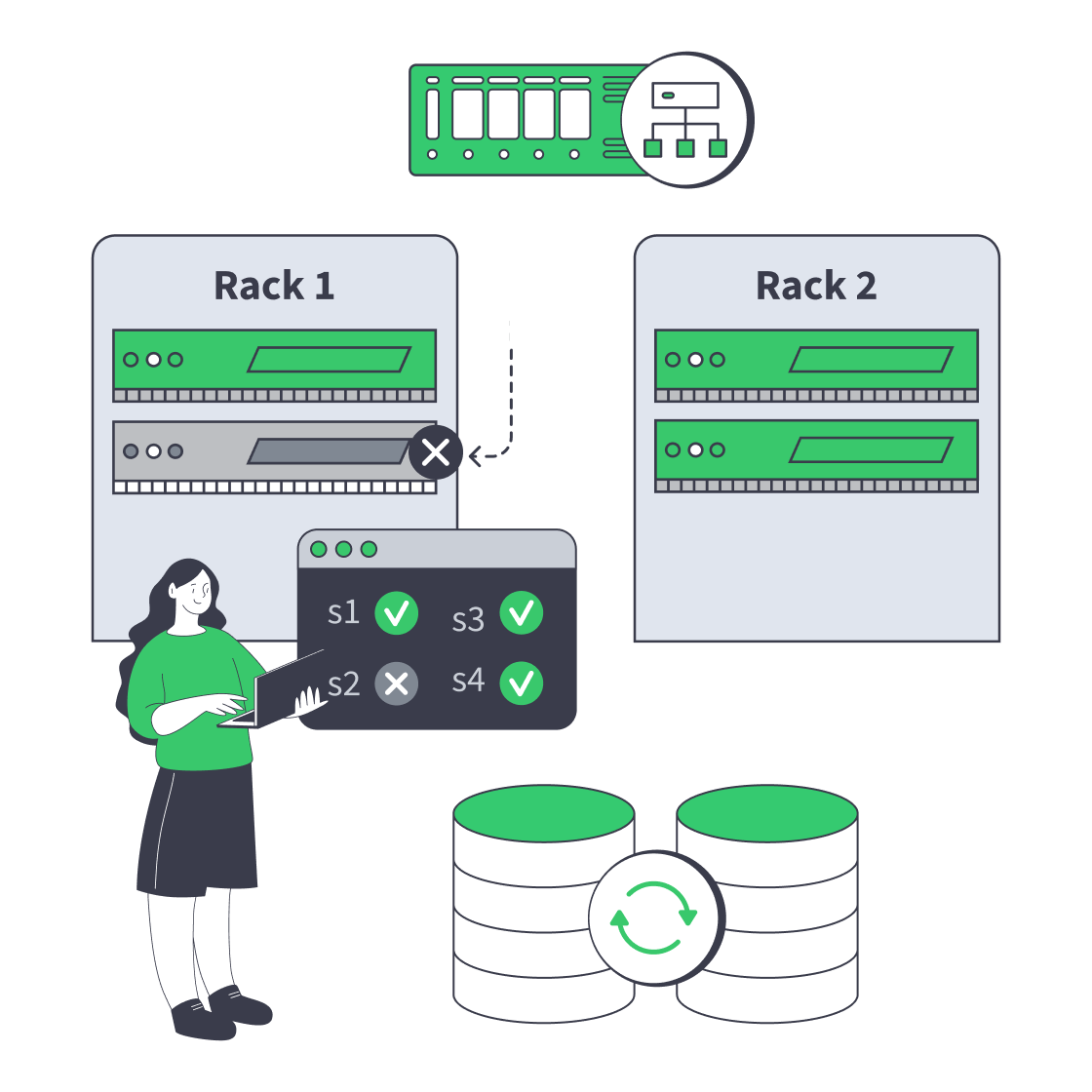
Run replicas across hosts when traffic levels, maintenance plans, or resilience goals require more than one server.