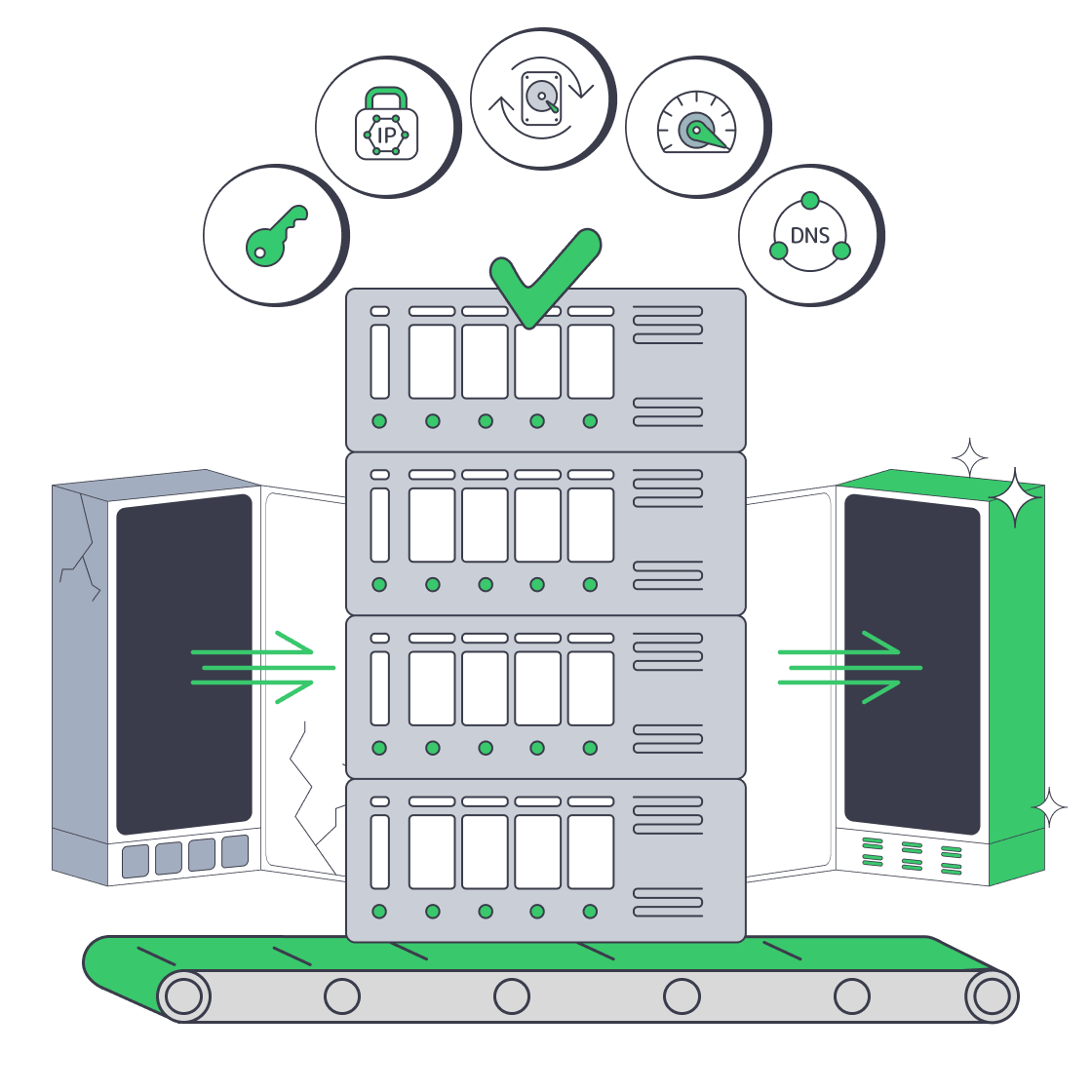
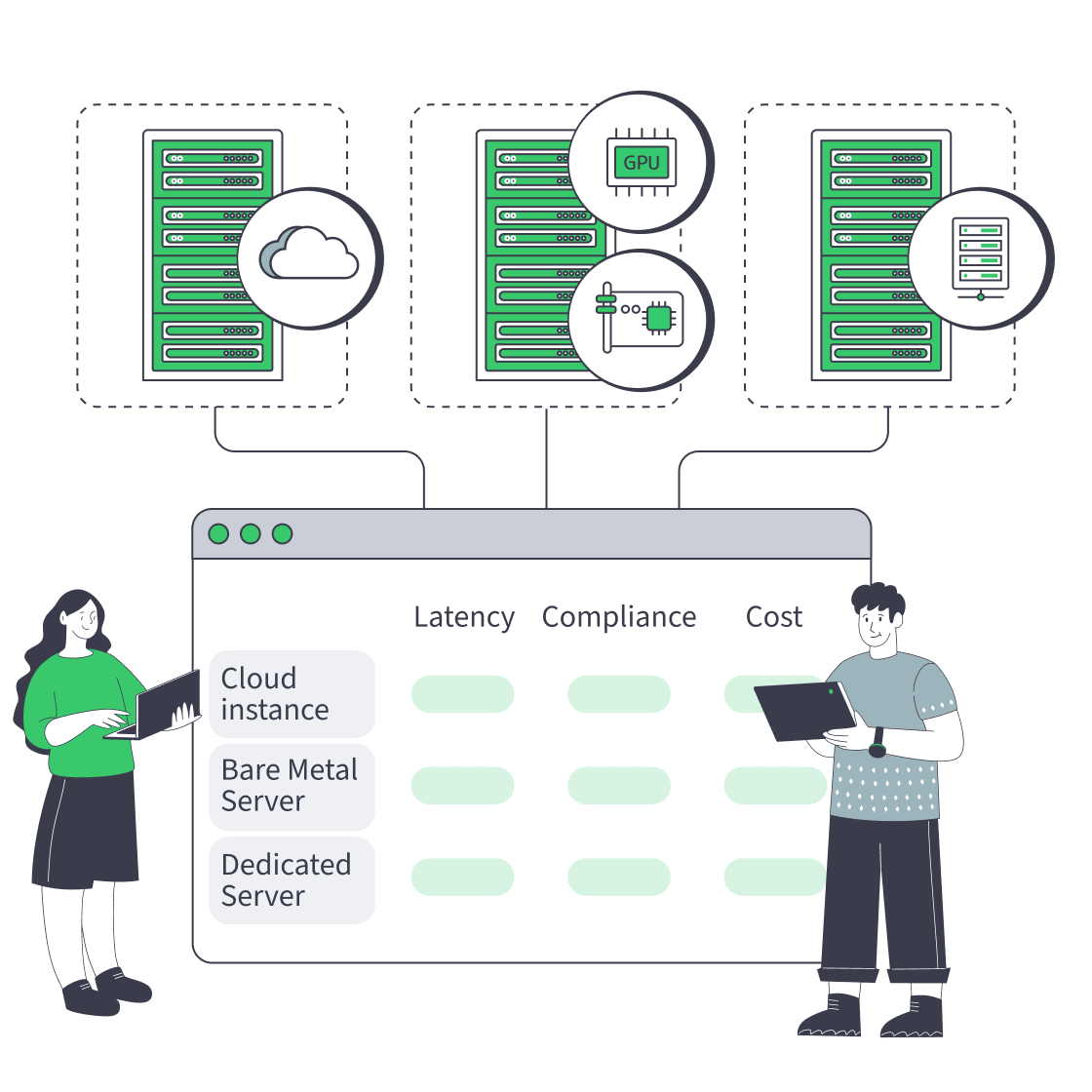
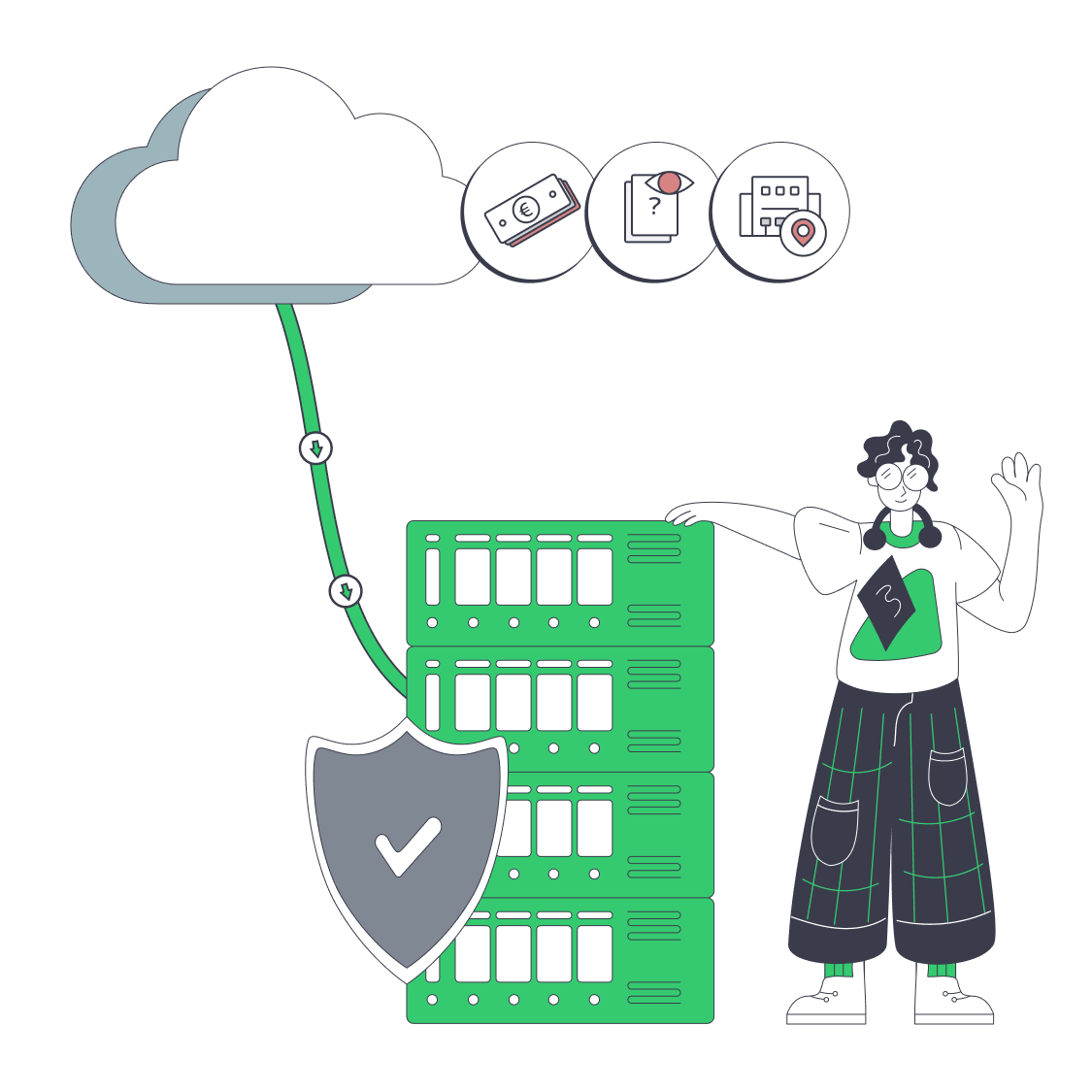
Cloud migration starts with evaluating the estate you actually run. Inventory applications, dependencies, stateful services, transfer volumes, operating constraints, and demand patterns, then decide what should remain in the cloud, move to dedicated infrastructure, or use a hybrid model. Rehost, replatform, retain, retire, replace, or refactor only after that evidence is clear.
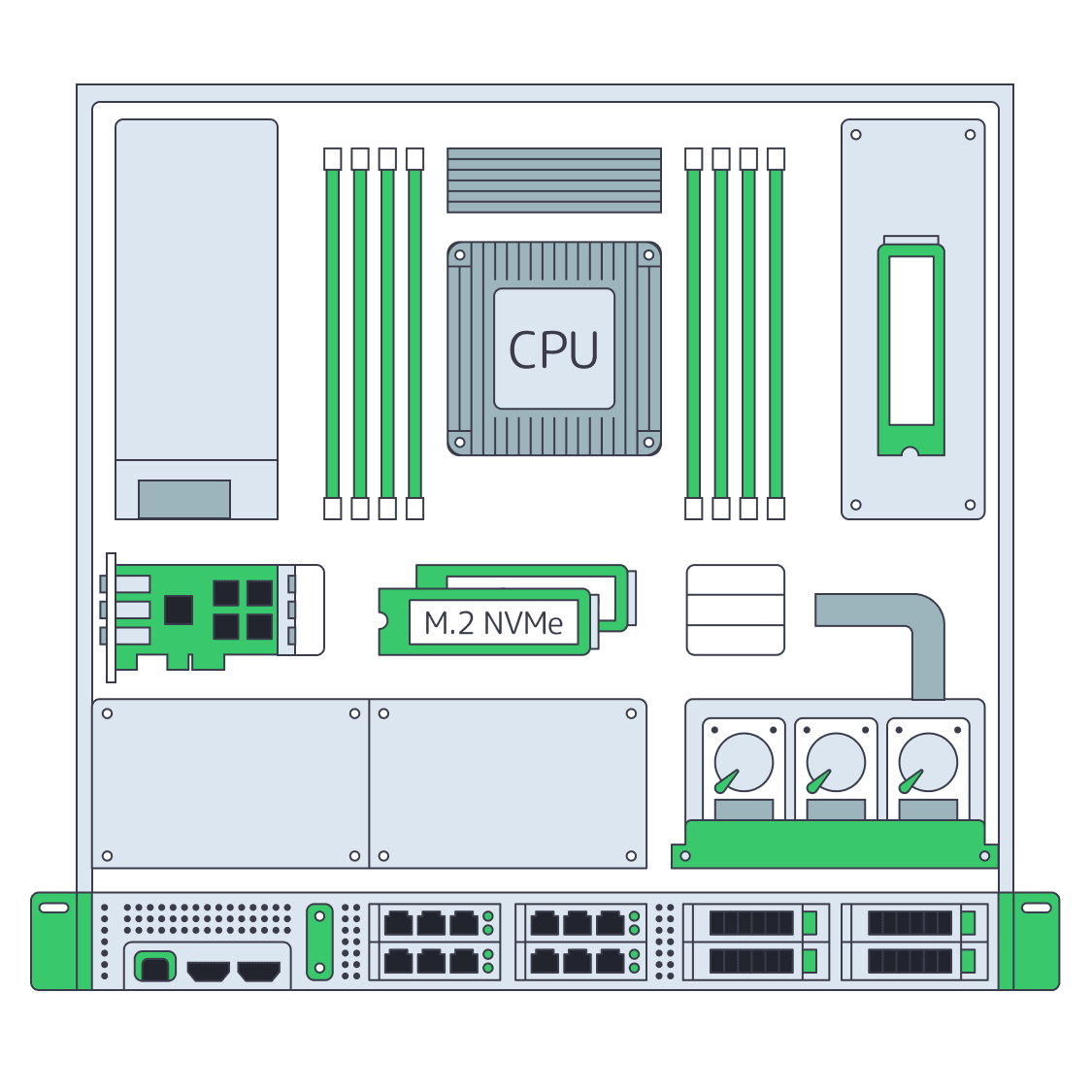
At Melbicom, we configure isolated dedicated server capacity around measured CPU, memory, storage I/O, bandwidth, and regional placement. Stable workloads can gain more predictable infrastructure and bandwidth costs, clearer security boundaries through single-tenant isolation, and more precise placement where a chosen cloud platform lacks the required location or control.
A controlled plan can retain elastic demand in cloud capacity while placing steady workloads on dedicated infrastructure. Run any move through explicit gates for pilots, transfer, testing, cutover, validation, rollback, and cleanup. Optional S3 cloud storage can hold staging or recovery copies without becoming the production target or shifting execution away from the customer.