Blockchain node hosting built for operator control
Run full, archive, RPC, indexing, analytics, and validator workloads on isolated dedicated servers with configurable compute, memory, bandwidth, regional placement, and direct runtime control.
Run full, archive, RPC, indexing, analytics, and validator workloads on isolated dedicated servers with configurable compute, memory, bandwidth, regional placement, and direct runtime control.


Match CPU, RAM, and bandwidth choices to full, archive, RPC, indexing, analytics, or validator workloads.

Single-tenant hardware avoids resource sharing and gives your team direct control of the operating environment.

Choose regional deployment options that fit peer communication, user access, and practical multi-node architecture.

Install the node client, keys, monitoring, and upgrades around infrastructure your operators configure directly.
Full, archive, RPC, indexing, analytics, and validator nodes place different demands on compute, memory, bandwidth, and regional placement. The operating decision starts with the node role, expected chain-state growth, query patterns, and the level of control your team needs over the runtime, so capacity planning follows the workload rather than a generic template.
At Melbicom, we provide isolated hardware, ready-to-go server configurations, custom build options, and regional deployment choices across our infrastructure. You can select processor, RAM, and bandwidth profiles by location and access 24/7 technical support while retaining responsibility for the operating system and node client throughout operations.
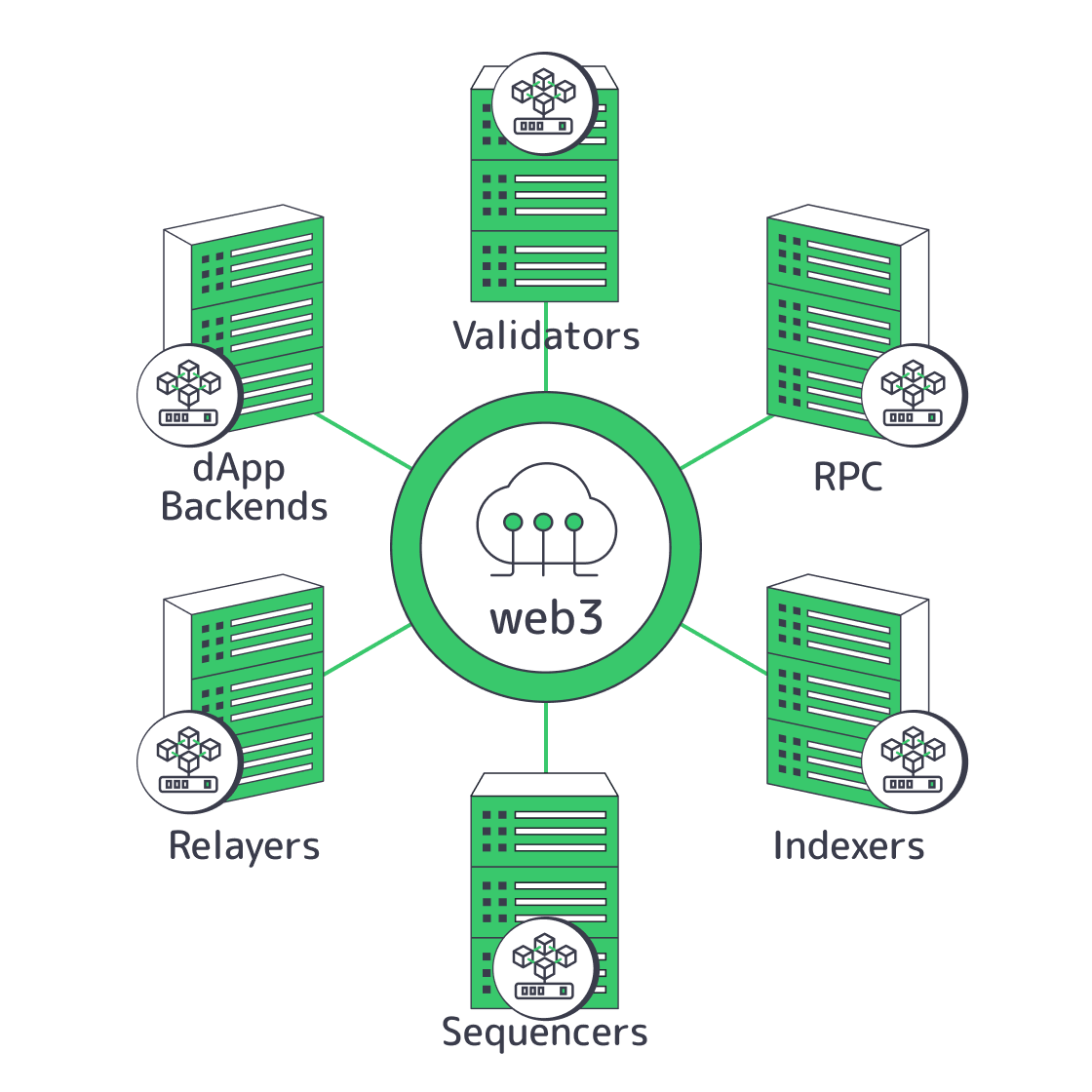
Assign each server a clear role in the node architecture: peer-facing full nodes, high-capacity archive workloads, RPC endpoints, or indexing and analytics processes. You manage clients, keys, synchronization, monitoring, upgrades, forks, and application logic, while we supply the infrastructure layer that keeps those responsibilities under your control.



Run full nodes on isolated servers with balanced CPU, RAM, bandwidth, aligned to regional peers and steady sync workloads.

Allocate memory and sustained bandwidth for archive workloads that retain deeper chain history under your control.

Run RPC endpoints on tuned compute near applications to control latency and keep query performance predictable under load.

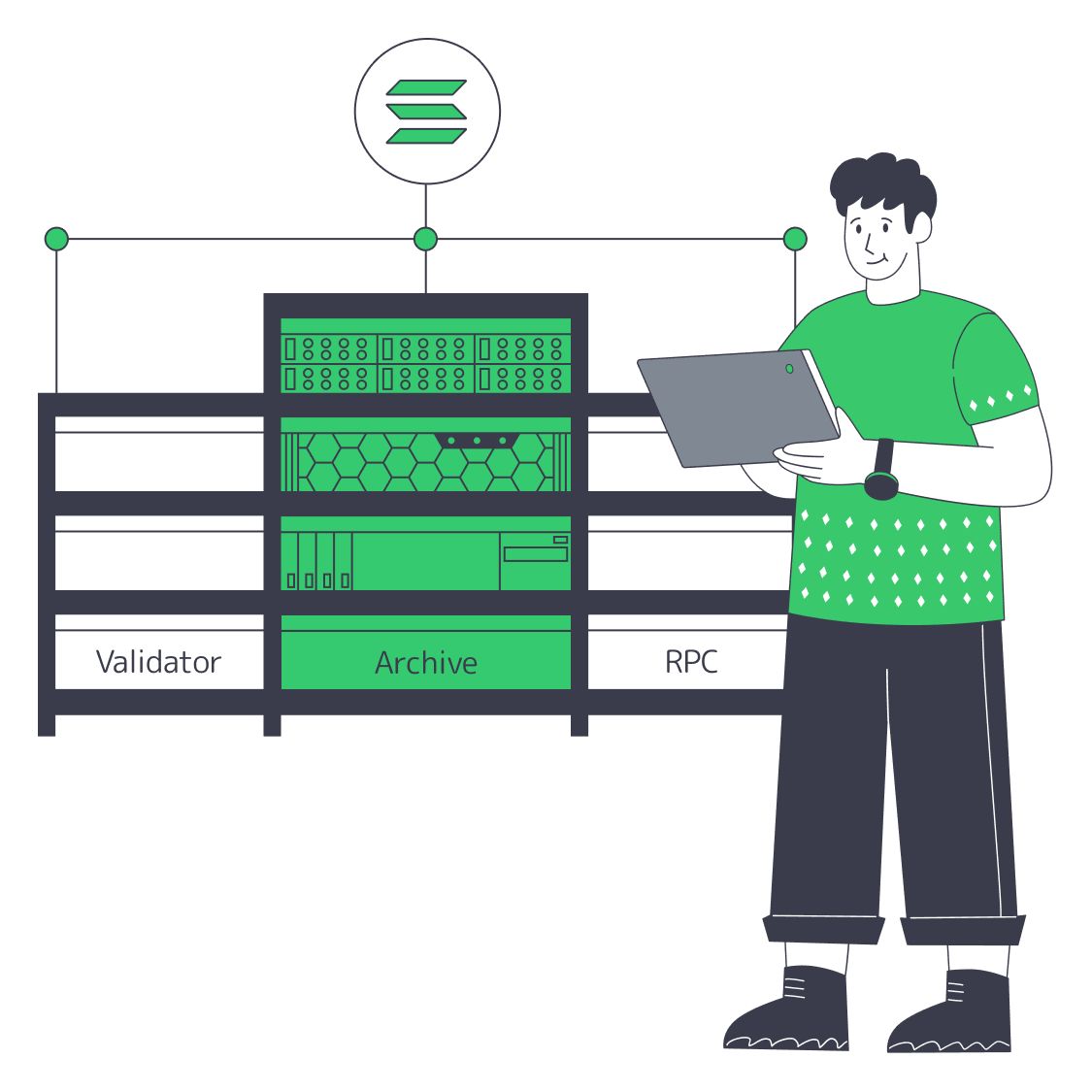
Host validator clients on dedicated servers while your team controls keys, upgrades, consensus, resources, and placement.

Run indexers on dedicated compute with memory tuned for ingestion pipelines and query workloads your team operates daily.

Run analytics workloads on tuned CPU, RAM, and bandwidth pipelines that turn chain data into application-ready datasets.

Run multi-chain nodes across regions with role separation while managing clients, keys, monitoring, and upgrades.

Run private and consortium chains on dedicated servers with OS control and configurations matched to governance.