Blockchain game hosting built for real-time control

Run blockchain gaming infrastructure on dedicated servers for blockchain games, separating sessions, APIs, RPC nodes, and indexing workloads to reduce contention and keep launches and recovery predictable.

Blockchain game hosting on dedicated servers

Compare infrastructure for blockchain game hosting

Isolated blockchain state
Isolate real-time sessions from chain workloads

Keep sessions and matchmaking on isolated hardware so RPC, indexing, and telemetry workloads avoid contention.

CPU operations control
Match compute to concurrent sessions

Match CPU and memory to simulation, session density, and API demand with headroom for peak gameplay events.

Recovered storage files
Plan state, storage, and rebuild capacity

Plan storage and I/O for game state, chain data, logs, and indexing with capacity reserved for rebuild operations.

Multi-location CDN network
Place regions by players and endpoints

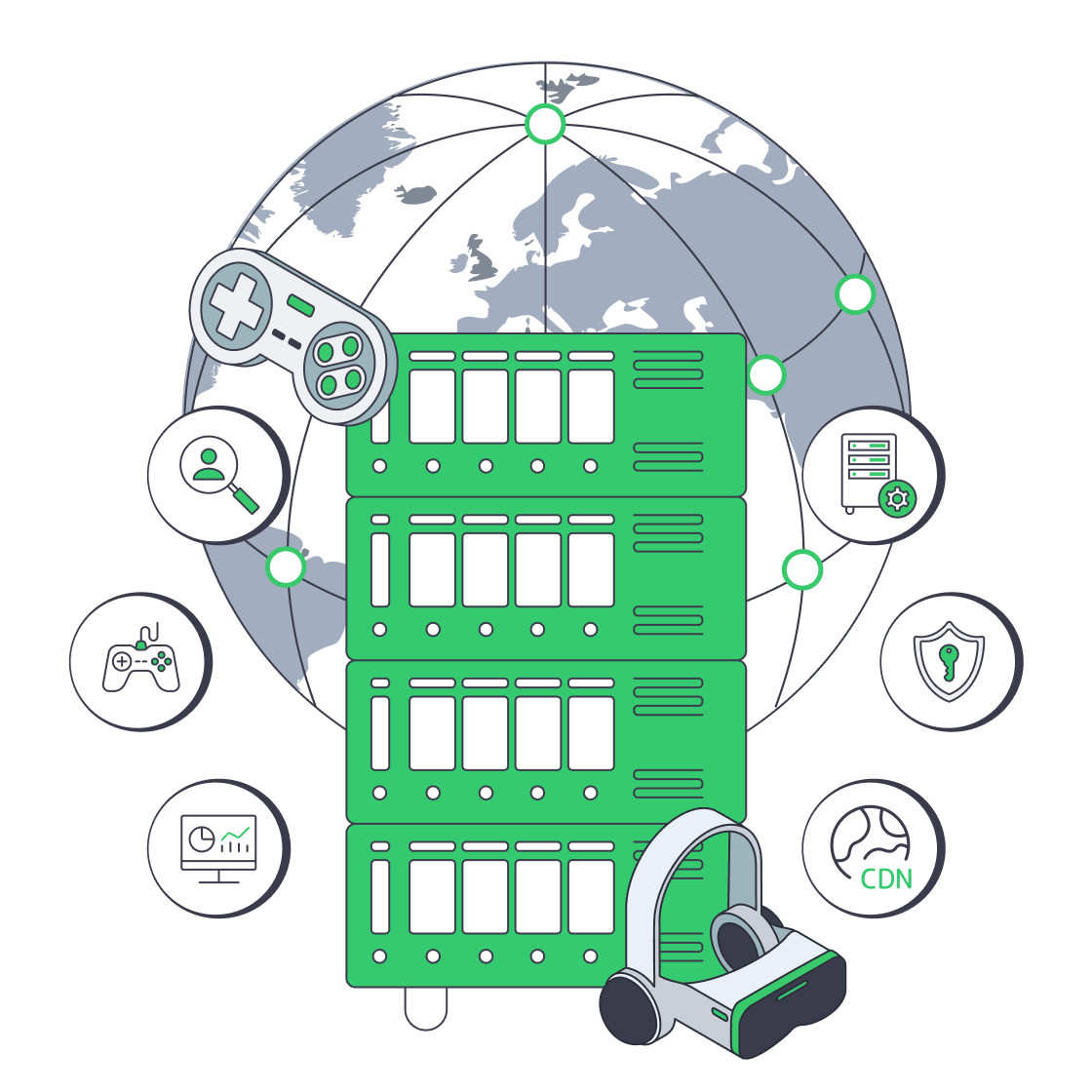
Place regions around players, endpoints, and operations to balance latency, recovery planning, and failure domains.

Available configurations
Need a Custom Build?
Filters
Clear all
Data center
Data center
CPU
CPU
CPU Brand
CPU Brand
RAM
RAM
Storage
Storage
from
up to
GPU
GPU
    Bandwidth
    Bandwidth
    Data Transfer
    Data Transfer
    Available configurations –
    CPU
    Memory
    Storage
    Network
    GPU
    Data center
    Price
    Show more

    Separate real-time gameplay from blockchain processing workloads

    Blockchain game hosting combines real-time player sessions with asynchronous chain and data workloads that compete for CPU, memory, storage, and network capacity. Without explicit workload boundaries, RPC calls, indexing, telemetry, and synchronization consume resources needed by authoritative gameplay during launches, peak events, and recovery operations.

    At Melbicom, we provide isolated dedicated servers so teams can separate gameplay services from RPC endpoints, blockchain clients, indexers, and analytics pipelines. Each workload can be sized by CPU, memory, storage, and region, with both metered and unmetered bandwidth options available to match traffic patterns and reduce contention during peak events.

    Teams keep latency-sensitive gameplay off-chain while customer-managed workers submit or reconcile blockchain events asynchronously. Roles consolidate when resource behavior and recovery needs align, but separate when contention risks delay sessions or expand failure impact. This model supports controlled launches, rebuilds, and consistent gameplay under changing player demand.

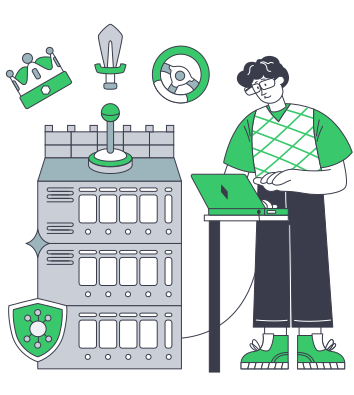
    Operator managing protected blockchain game infrastructure

    Operational gains across gameplay and blockchain workloads

    Six infrastructure outcomes teams can measure through launches, events, and recovery work.
    Measured session CPU headroom
    Reduced workload contention
    Tested state rebuild windows
    Clear launch capacity margins
    Bounded regional failure impact
    Explicit workload ownership

    Plan capacity for blockchain games

    Map gameplay and blockchain roles to dedicated capacity, clear boundaries, and customer-managed operations.
    Isolated hardware for session services
    Dedicated capacity for game APIs
    CPU choices for simulation load
    Memory headroom for peak concurrency
    Storage sized for persistent state
    I/O planning for chain indexes
    Bandwidth aligned to traffic shape
    Regional placement for player topology
    Supported crypto or fiat payments
    Custom builds for distinct workloads
    Blockchain server builder
    Order ready servers or define custom builds for gameplay and blockchain workloads.
    Talk to an expert

    Blockchain game and Web3 game hosting workloads

    Gaming platform operations
    Authoritative sessions

    Run real-time simulation and matchmaking on isolated hardware so player actions stay responsive during peak concurrency.

    RPC server stack
    RPC and node layer

    Place blockchain clients and RPC endpoints on separate machines to prevent indexing and query traffic from affecting gameplay.

    Distributed indexing statistics
    Indexing pipelines

    Process chain data and events on dedicated nodes sized for throughput so ETL pipelines avoid contention with sessions.

    API server configuration
    Game APIs and assets

    Serve inventories and marketplace APIs on isolated infrastructure tuned for demand so bursts do not disrupt gameplay services.

    Server telemetry statistics
    Telemetry systems

    Run telemetry on isolated capacity so metrics, logs, and traces stay available without competing with gameplay services.

    Recovery capacity expansion
    Recovery and rebuild

    Reserve dedicated capacity for resync and reindex jobs so recovery workloads do not interfere with active gameplay sessions.

    Regional node map placement
    Regional deployment

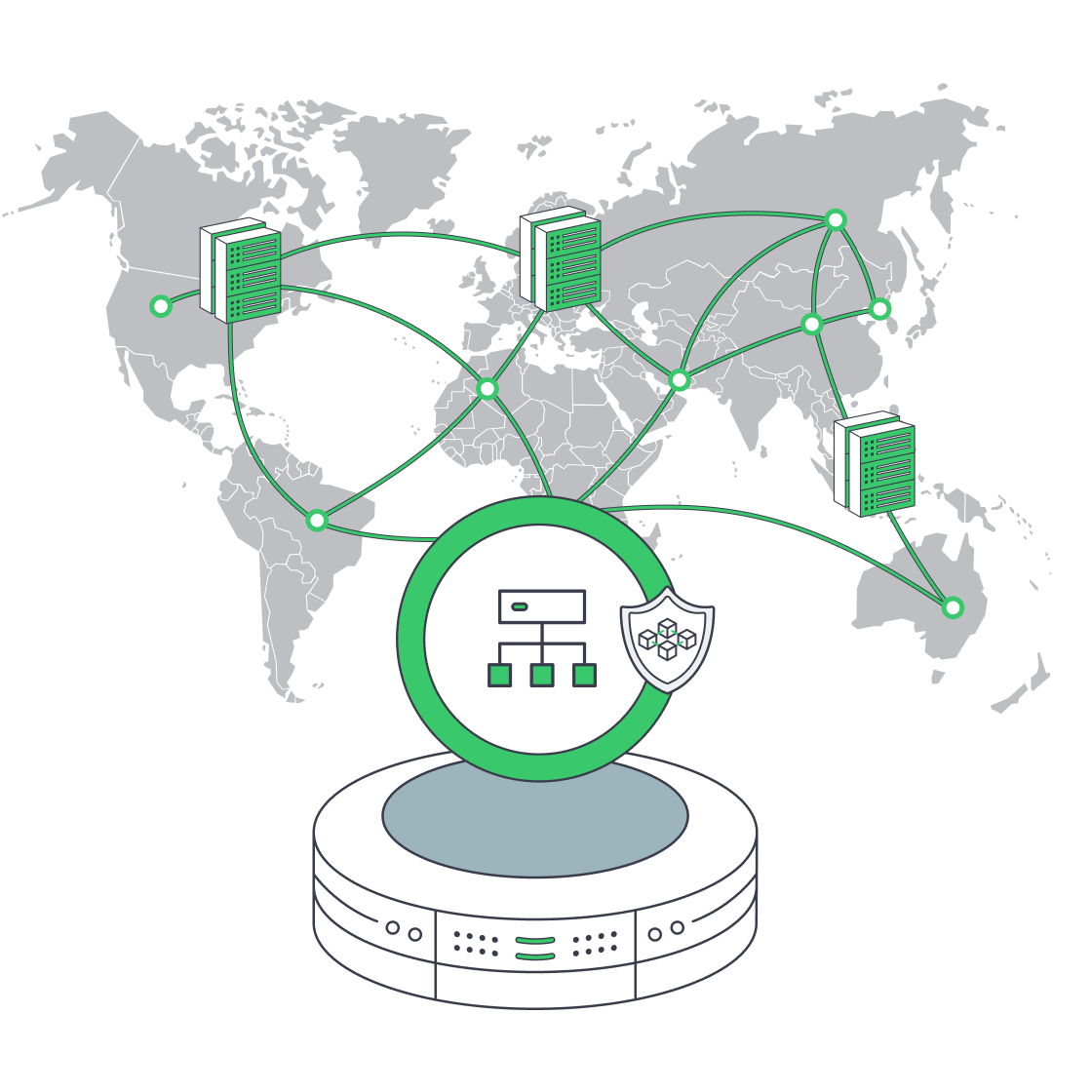
    Deploy workloads across regions based on players and endpoints to balance latency, recovery planning, and failure boundaries.

    Scalable server resources
    Launch scaling

    Prepare baseline and peak capacity across gameplay and blockchain components to prevent contention during traffic spikes.

    Infrastructure guides for blockchain game teams

    Global gaming infrastructure with servers, CDN nodes, and DDoS protection
    Gaming Infrastructure: Build Low-Ping Multiplayer & Resilience
    Dedicated servers linking RPC, indexers, storage, CDN, and observability
    Why Production dApps Fail in the RPC Layer, Not the Chain
    Dedicated servers on world map grid with latency dials and blockchain icon
    Dedicated Servers Powering Real-Time Web3 Gaming Worlds
    Globe with server racks, padlock, 24/7 clock, and fiber links for validator hosting
    Dedicated Servers for Blockchain Node Hosting and Staking
    More articles
    FAQ
    Which blockchain-game workloads stay off-chain or run on-chain?
    Who manages game software blockchain clients smart keys backups?
    How should teams isolate gameplay from blockchain processing?
    How do metered and unmetered bandwidth options differ?
    How do teams plan for state growth and rebuild operations?
    How does regional placement affect blockchain game infrastructure?
    What dedicated-server deployment and support options are available?
    How do cryptocurrency payments work after KYC?
    Opening an account
    Access the control panel, fund your account, and configure capacity for gameplay and blockchain.
    Create an account
    Migration without drama
    Share gameplay services and blockchain components to map capacity boundaries before deployment.
    Talk to an expert