Archive node hosting that keeps historical state queryable
Run blockchain archive node infrastructure on dedicated servers sized for sync, replay, and historical RPC workloads, with storage headroom and isolated capacity for concurrent queries.
Run blockchain archive node infrastructure on dedicated servers sized for sync, replay, and historical RPC workloads, with storage headroom and isolated capacity for concurrent queries.

Plan storage for chain size, client mode, and growth so historical datasets expand without disruptive rebuilds or migrations.

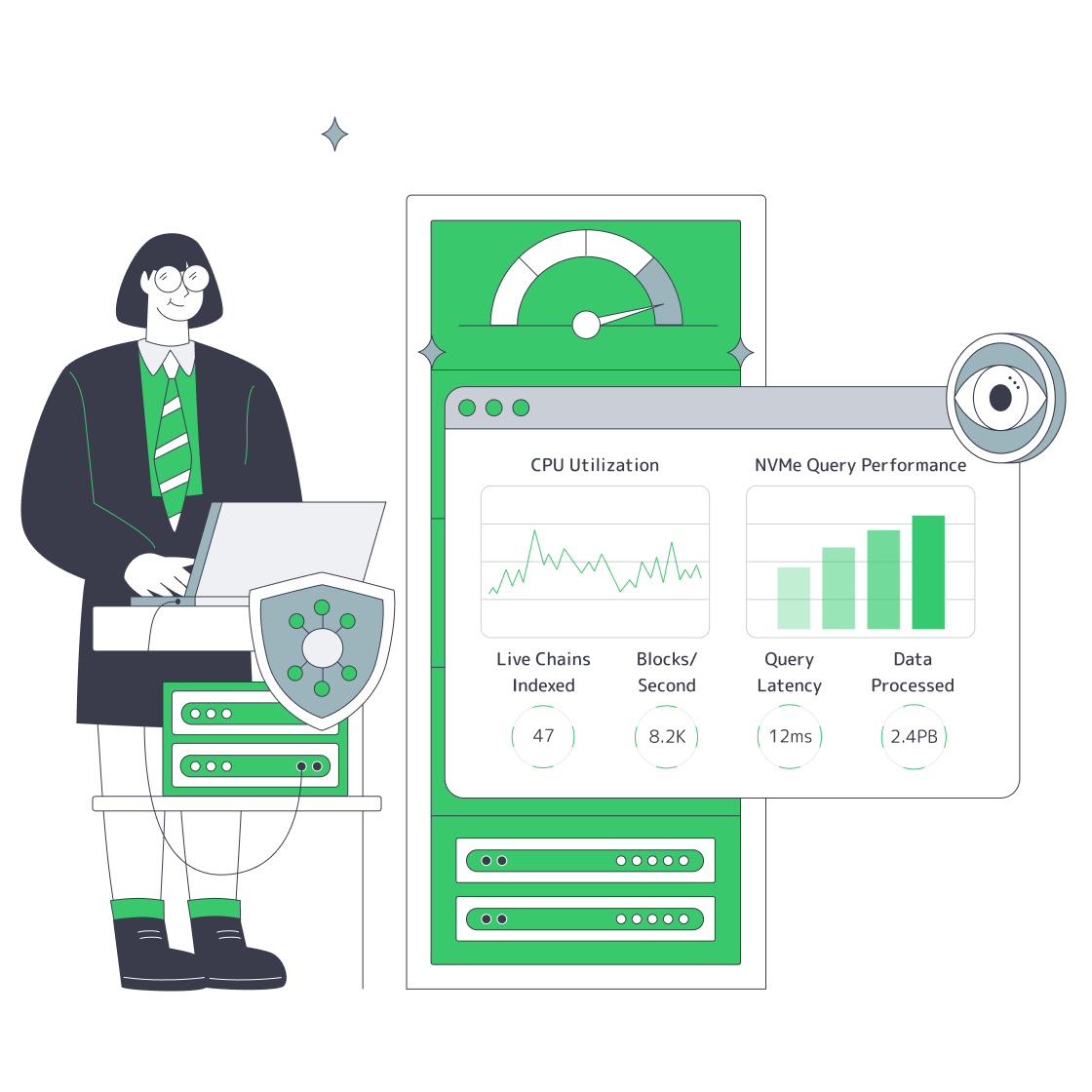
Reserve CPU, memory, and storage IOPS for replay, indexing, and historical RPC during concurrent archive workloads.

Use NVMe storage and configurable memory to reduce I/O bottlenecks during sustained synchronization and replay cycles.

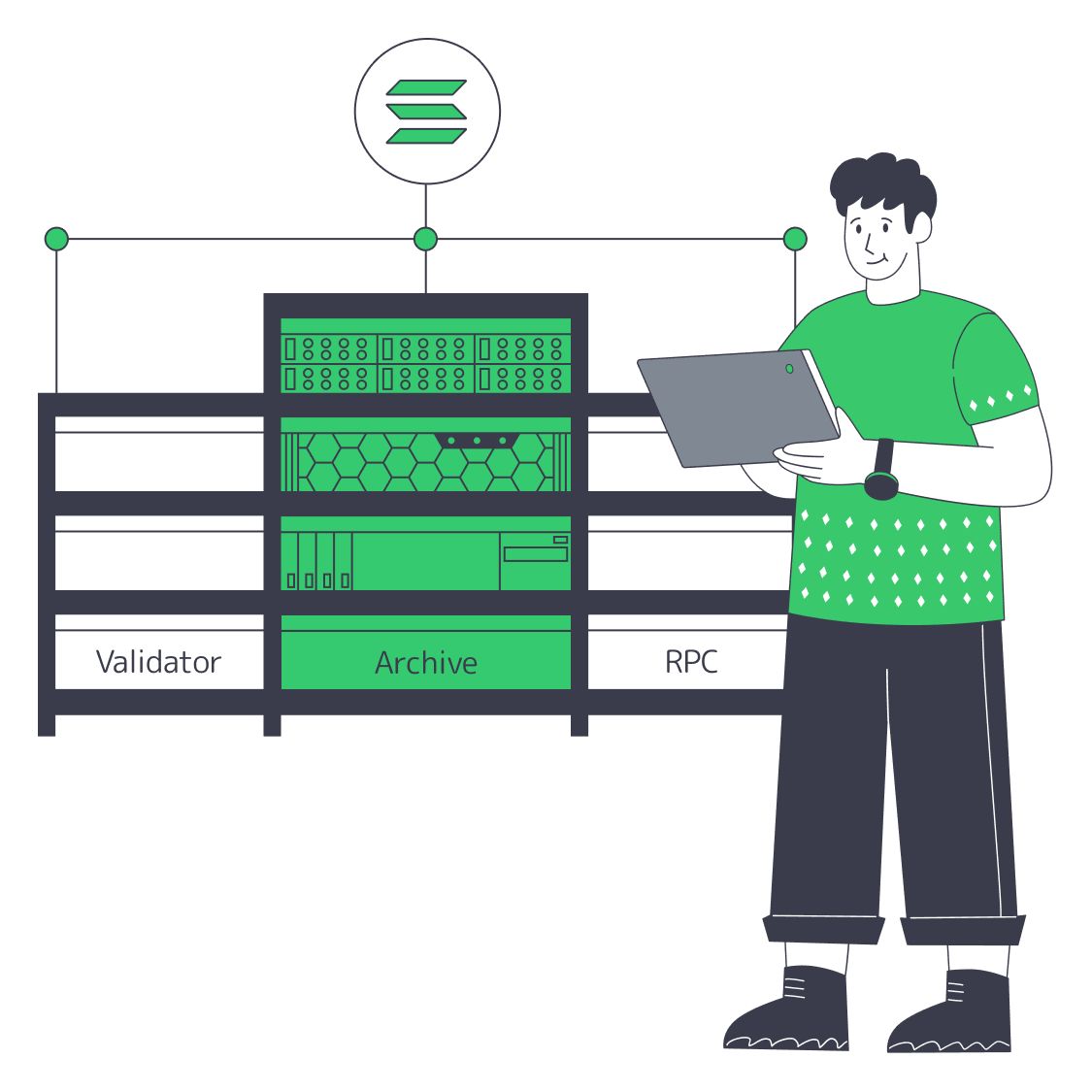
Separate ingestion, analytics, and public RPC across servers when contention or availability objectives justify the topology.
Retaining complete historical state turns infrastructure selection into a capacity decision, not a one-time deployment. Teams must compare chain and client requirements, archive mode, storage headroom, replay cost, query patterns, and recovery objectives before choosing hardware for sustained synchronization and concurrent historical access.
At Melbicom, we provide isolated hardware with configurable CPU, memory, and NVMe storage for archive workloads, with metered and unmetered bandwidth options available. Dedicated resources keep ingestion and historical RPC pressure measurable, while regional placement aligns peer paths, application latency, and data-governance requirements.
A practical operating model assigns ingestion, indexing, analytics, and public RPC to separate hosts when contention risk or availability targets justify that separation. Teams retain control of client software, monitoring, backups, and recovery, while the resulting topology keeps query concurrency, storage expansion, and rebuild paths explicit.



Serve historical queries from retained chain state while isolating ingestion to keep explorer latency predictable under load.

Run ETL and indexing on separate nodes so replay workloads do not disrupt ingestion throughput or dataset delivery.

Query historical state for analytics while isolated compute and storage protect sync performance during concurrent processing.

Run audit and compliance checks with reproducible queries over chain history, controlled access, and consistent datasets.

Replay transactions and inspect historical state changes on isolated infrastructure sized for sustained security analysis.

Serve historical RPC queries from isolated infrastructure so response behavior stays predictable under concurrent demand.

Run history-heavy logic on a dedicated server for archive node workloads with compute and controlled storage capacity.

Test client modes and retention policies on isolated hosts without disrupting production queries or synchronization.