Anycast infrastructure keeps regional ingress under your control

Run application and routing nodes on isolated dedicated servers, with each location sized for catchment demand, connection state, recovery headroom, and measured traffic.

Protected Anycast infrastructure routing live traffic

Dedicated server hosting for controlled Anycast

Server capacity sizing
Size each announcing node

Size CPU, RAM, storage, and port capacity from measured catchment demand and recovery load at each location.

Regional matchmaking network
Separate route and health

Link service health to customer-owned route changes; BGP reachability alone cannot verify the application.

Stateful service operations
Define state behavior early

Define replication, session handling, and recovery before catchment demand shifts toward another regional node.

User-controlled routing policy
Control authorized prefixes

Use BYOIP, dual-stack prefixes, route views, and communities through routing policy your team controls locally.

Available configurations
Need a Custom Build?
Filters
Clear all
Data center
Data center
CPU
CPU
CPU Brand
CPU Brand
RAM
RAM
Storage
Storage
from
up to
GPU
GPU
    Bandwidth
    Bandwidth
    Data Transfer
    Data Transfer
    Available configurations –
    CPU
    Memory
    Storage
    Network
    GPU
    Data center
    Price
    Show more

    Border gateway routing protocol cannot prove service health

    Anycast turns one regional capacity plan into several live catchments. Each announcing node must absorb its own request rate, connection state, application work, egress, and recovery demand. A route can stay reachable while the process behind it is already unhealthy in production.

    Melbicom dedicated servers give each location isolated CPU, RAM, storage, and network capacity. Regional deployment options let teams size nodes from measured traffic instead of a global average, while root access keeps the routing daemon, observability, health logic, and rollback procedures under customer control throughout operations.

    BGP sessions connect those nodes to Melbicom’s network for authorized IPv4 and IPv6 announcements, BYOIP, route views, and communities. Your team maps service health to announcements and withdrawals, manages application state, tests failure scenarios, and owns rollback and incident response when catchments shift under pressure.

    Anycast nodes routing live streaming traffic

    Make every Anycast decision measurable

    Six operating outcomes for customer-owned routing and regional application nodes.
    Per-location capacity clarity
    Visible catchment pressure
    Explicit health ownership
    Measured rollback readiness
    State recovery discipline
    Controlled prefix policy

    What each Anycast node controls

    Build each location with isolated capacity, service health logic, state ownership, route control, and tested recovery.
    Isolated compute for every node
    RAM sized to connection state
    Storage for application recovery
    Ports matched to catchment demand
    Customer-owned service health logic
    Routing software under root control
    State replication planned explicitly
    Rollback tests before route changes
    BYOIP for authorized prefixes
    IPv4 and IPv6 BGP communities
    Plan regional nodes
    Map catchments, node capacity, routing ownership, and recovery before ordering.
    Talk to an expert

    Where customer-operated Anycast earns its keep

    Distributed regional routing policy
    Authoritative DNS ingress

    Run authoritative DNS on isolated regional nodes, with health logic and route withdrawals owned by your team.

    API server configuration
    Public API endpoints

    Place API gateways on regional capacity sized for request rates, connection state, egress, and recovery demand.

    Application server operations
    SaaS application entry

    Separate application entry nodes from backend state, then define replication and session behavior across every region.

    Protected server infrastructure
    Security service edges

    Run customer-operated security services on regional nodes and retain capacity, telemetry, rollback, and incident control.

    Software development screen
    Software delivery entry

    Use each bare metal server as a controlled delivery origin sized for connections, throughput, and rollback traffic.

    Stable multiplayer tick rate
    Gaming service ingress

    Distribute gaming ingress across regional nodes while measuring session locality, packet demand, and catchment pressure.

    Private network shield
    Private prefix migration

    Move authorized prefixes across nodes with planned announcements, withdrawals, validation, monitoring, and rollback tests.

    Regional matchmaking network
    Planned route changes

    Schedule route changes for maintenance after verifying application health, state readiness, recovery steps, and rollback.

    Infrastructure guides for Anycast operators

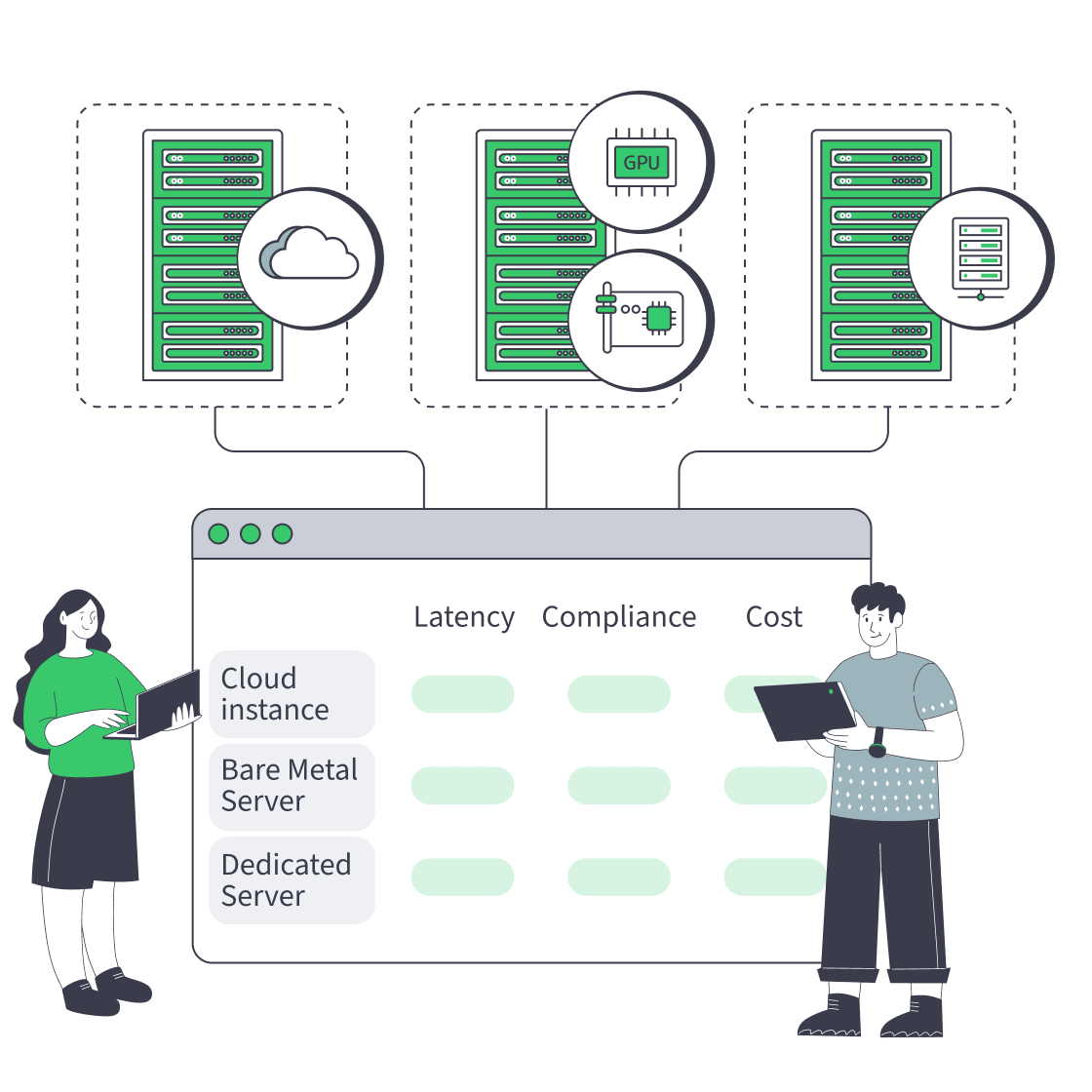
    Cloud, bare metal, and dedicated servers feeding one decision dashboard
    Bare Metal Server vs Cloud: Checklist for Performance, Compliance, and Cost
    Dedicated server pricing drivers arranged around a server rack and invoice
    Beyond Hardware: Total Cost Of Dedicated Servers
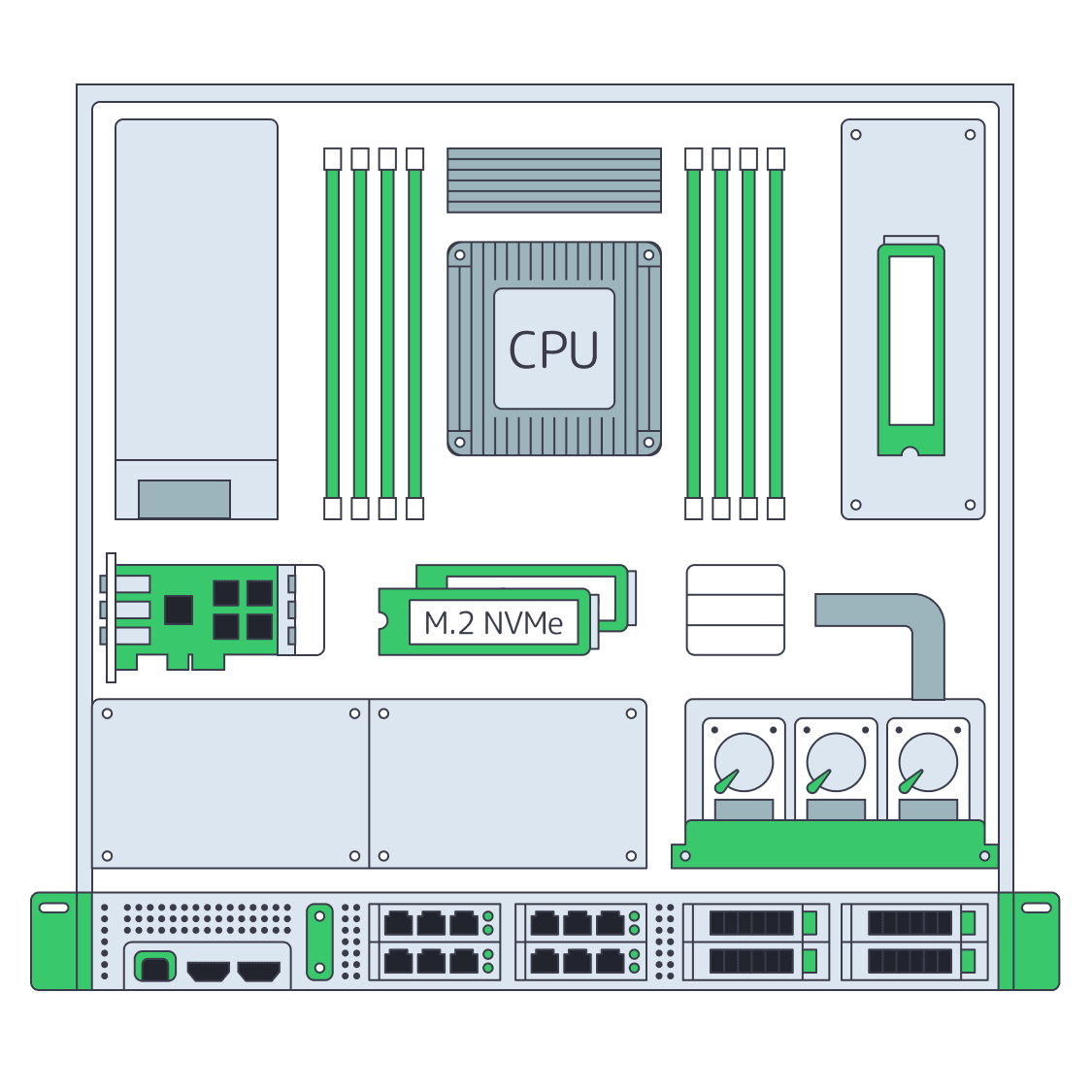
    Dedicated server BOM with CPU, RAM, NVMe, and NIC modules sized from workloads
    Spec Dedicated Servers From Workload, Not the Catalog
    Illustration of a server rack, symbolizing the gold standard of dedicated server reliability
    How Dedicated Server Hosting Supports Infrastructure Reliability
    More articles
    FAQ
    Is this a managed Anycast service?
    What does Melbicom provide for Anycast deployments?
    Who operates routing and service health?
    Can I announce my own IPv4 and IPv6 prefixes?
    Which routes and BGP controls are supported?
    How should each Anycast node be sized?
    Does BGP reachability prove application health?
    How should stateful services handle multiple locations?
    Are BGP sessions available in every Melbicom location?
    What support is available during infrastructure incidents?
    Configure regional nodes
    Choose regional dedicated hardware and bandwidth for customer-operated application and routing nodes.
    Create an account
    Define routing ownership
    Share prefix and capacity needs while keeping health logic and route policy customer-owned.
    Talk to an expert