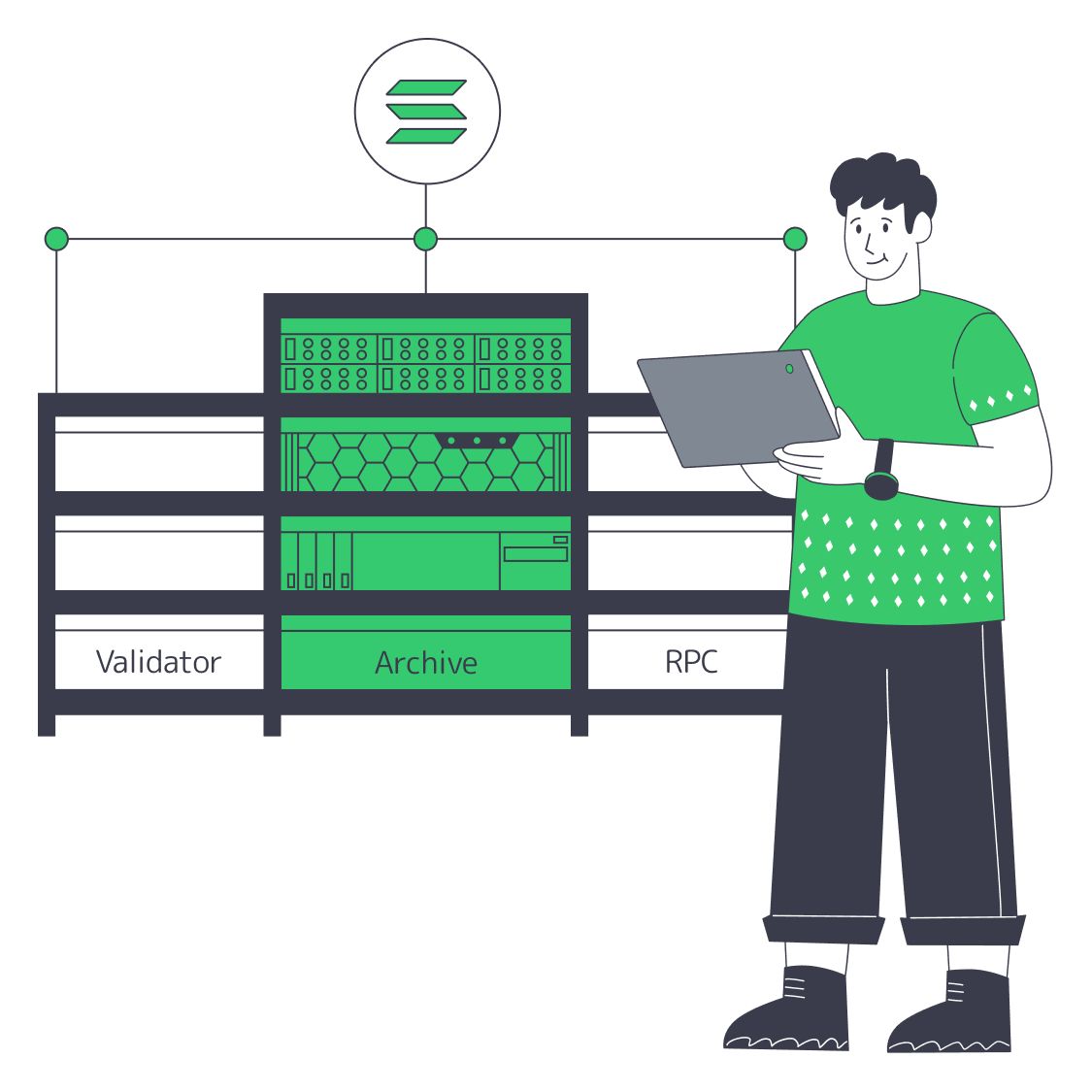
RPC node hosting with infrastructure under your direct control

Select a dedicated server for RPC nodes and full or archive roles while your team controls clients, keys, monitoring, scaling, failover, redundancy, and endpoint SLAs across deployments.

Secure high-performance multi-chain RPC servers

Dedicated server provider for RPC nodes

RPC server stack
RPC node workloads on single-tenant hardware

Single-tenant servers isolate CPU and RAM, keeping RPC node workloads separated.

Configuration setup monitor
Configuration aligned to workload inputs

CPU, RAM, and bandwidth choices align RPC nodes with client requirements.

Regional node placement
RPC node clusters with regional placement

Regional placement aligns RPC nodes with topology and internal routing models.

Isolated blockchain state
Clear boundaries for infrastructure control

Server supply keeps RPC monitoring, scaling, and endpoint SLAs fully customer-owned.

Available configurations
Need a Custom Build?
Filters
Clear all
Data center
Data center
CPU
CPU
CPU Brand
CPU Brand
RAM
RAM
Storage
Storage
from
up to
GPU
GPU
    Bandwidth
    Bandwidth
    Data Transfer
    Data Transfer
    Available configurations –
    CPU
    Memory
    Storage
    Network
    GPU
    Data center
    Price
    Show more

    Blockchain RPC infrastructure stays under operator control

    RPC providers operate full, archive, and gateway node roles that must align with internal architecture, client behavior, and workload design rather than provider abstractions. The core decision is securing infrastructure that preserves control over node clients, RPC exposure, scaling logic, and endpoint behavior across all deployment stages and evolving workload requirements.

    We supply dedicated server infrastructure across multiple regions with selectable CPU, RAM, storage, and placement inputs. Both metered and unmetered bandwidth options are available. Teams can match these infrastructure choices to documented node requirements while keeping hardware supply separate from node-layer operation across development, staging, and production environments.

    With this operating model, infrastructure and node responsibilities remain clearly separated. Your team defines monitoring, redundancy, failover, and endpoint SLAs, while Melbicom supports the hardware and network layer that enables consistent deployments, controlled scaling, and infrastructure stability for complex multi-role node architectures.

    Operator managing multi-chain RPC infrastructure

    Keep RPC node infrastructure under operational control

    Six outcomes driven by infrastructure ownership and configuration decisions
    Controlled deployment inputs
    Consistent regional configuration
    Clear responsibility boundaries
    Aligned workload and hardware
    Region-specific deployments
    Direct node operation control

    IT infrastructure for RPC providers

    Dedicated infrastructure keeps node deployments customer-operated at scale, with clear role boundaries.
    20 data centers across 5 continents
    1000+ ready-to-go server configurations
    Custom builds in 3–5 business days
    200 Gbps max per server by location
    Intel and AMD CPU options
    Crypto payments available
    Region-based deployment choices
    Technical support available 24/7
    Metered and unmetered bandwidth
    Customer-operated node environment
    Server configuration
    Select ready configurations or request custom builds matched to your node workload.
    Talk to an expert

    RPC provider infrastructure deployment scenarios

    Blockchain full-node operations
    Full node deployments

    Run node clients on isolated servers, matching CPU RAM storage to defined synchronization requirements.

    Blockchain archive node backup
    Archive node capacity

    Deploy archive nodes on configurations, matching storage and bandwidth to customer retention and query needs.

    RPC server stack
    RPC gateway infrastructure

    Operate RPC gateway nodes on isolated servers, while teams control access, monitoring, and endpoint behavior.

    Distributed indexing statistics
    Indexing worker nodes

    Run indexing workers on chosen CPU and memory profiles, controlling ingestion, processing, and query workflows.

    Regional node map placement
    Regional node fleets

    Deploy node fleets across regions aligning sites with customer topology, policy constraints, and routing models.

    Recovery capacity failover
    Standby and failover nodes

    Provision standby nodes on isolated servers so teams control redundancy, failover logic, and recovery workflows internally.

    Approved infrastructure migration
    Migration staging nodes

    Stage new node environments on isolated servers, controlling sync, validation, and customer cutover workflows.

    Blockchain storage capacity sizing
    Capacity expansion nodes

    Expand node capacity with aligned configurations while your team controls scaling, monitoring, and endpoint exposure.

    Infrastructure insights for RPC provider teams

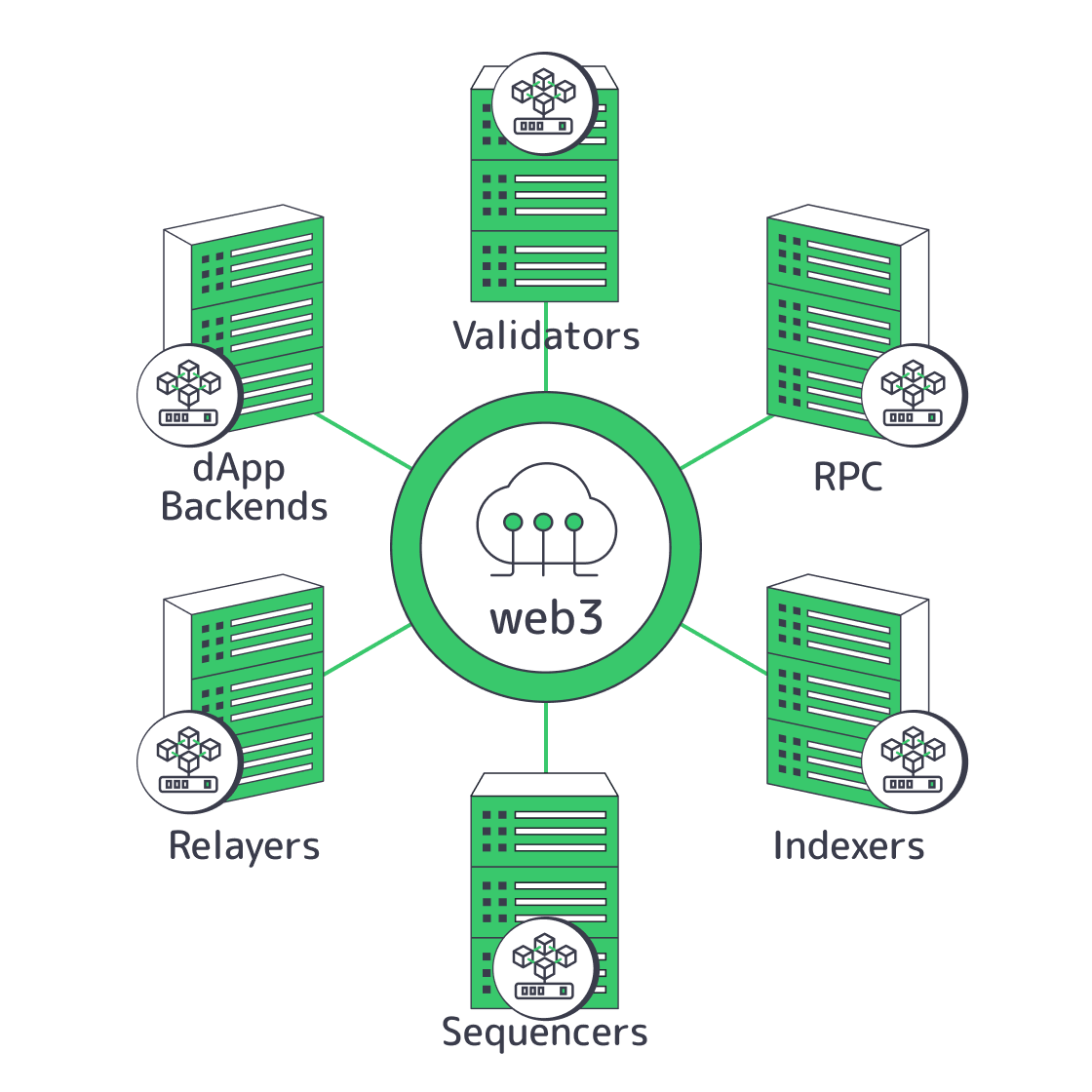
    Web3 Hosting: Infrastructure Patterns for Reliable Nodes, RPC, and dApps
    Dedicated servers linking RPC, indexers, storage, CDN, and observability
    Why Production dApps Fail in the RPC Layer, Not the Chain
    Validator, RPC, and archive servers linked to storage, network, and monitoring
    Build Stable Solana Validator, RPC, and Archive Nodes
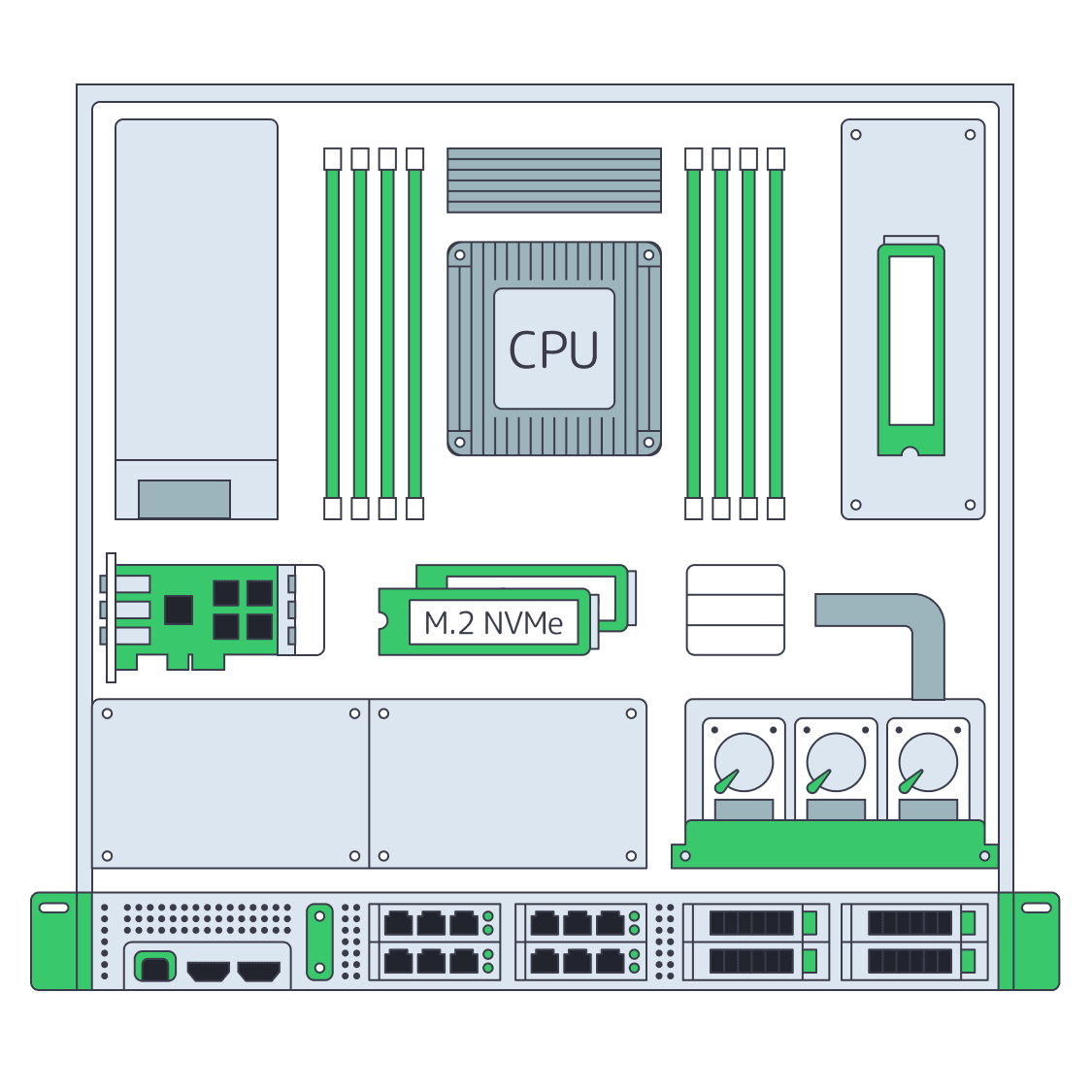
    Dedicated server BOM with CPU, RAM, NVMe, and NIC modules sized from workloads
    Spec Dedicated Servers From Workload, Not the Catalog
    More articles
    FAQ
    Does Melbicom operate or manage blockchain RPC endpoints?
    What do RPC providers verify before choosing storage or bandwidth?
    Which configurations are available for RPC infrastructure?
    How fast can custom server configurations be delivered?
    Which bandwidth option fits RPC and node traffic?
    Who is responsible for node monitoring and scaling?
    Can we pay for infrastructure with cryptocurrency?
    What level of support is provided?
    Opening an account
    Use the control panel, top up balance, and deploy infrastructure aligned to node workloads.
    Create an account
    Migration planning
    Share workload requirements and regions, then your team plans controlled node migration.
    Talk to an expert