Production dApp hosting for direct off-chain workload control

Run APIs, indexers, databases, caches, analytics, and workers on isolated dedicated servers with role-based capacity, direct OS control, traceable runtime behavior, and regional placement.

Secure dApp hosting on dedicated servers

Shape dApp infrastructure around workload roles

Regional node placement
Match regional placement to user demand

Place application endpoints and data services in regions that match user demand and operating requirements.

Isolated application environment
Isolate workloads on dedicated hardware

Assign API and RPC-facing workloads to clear capacity boundaries so teams can trace use and runtime contention.

Server capacity sizing
Align capacity with workload demand

Allocate CPU, RAM, storage I/O, and bandwidth around indexer, database, cache, analytics, and worker demand.

User-controlled blockchain state
Control the runtime and release stack

Use direct OS access to set service configuration, observability, access controls, and release workflows.

Available configurations
Need a Custom Build?
Filters
Clear all
Data center
Data center
CPU
CPU
CPU Brand
CPU Brand
RAM
RAM
Storage
Storage
from
up to
GPU
GPU
    Bandwidth
    Bandwidth
    Data Transfer
    Data Transfer
    Available configurations –
    CPU
    Memory
    Storage
    Network
    GPU
    Data center
    Price
    Show more

    Build the off-chain stack around workload-specific resources

    A production dApp rarely has one uniform infrastructure profile. User-facing APIs depend on predictable response time, while indexers and analytics consume CPU and storage I/O, and databases and caches need memory discipline. A single capacity pool can hide which service is driving contention and where capacity should change first.

    Our team provides isolated hardware, configurable CPU, RAM, storage, bandwidth choices, direct operating-system access, and regional deployment options. Infrastructure teams can tune each service to its bottleneck, trace runtime behavior against a clear hardware boundary, and adjust capacity while retaining control of the deployment environment.

    Assign API, indexing, database, cache, analytics, and worker roles according to load, then separate or consolidate them as demand changes. Melbicom supports the infrastructure layer and hardware, while your team retains control of application code, smart contracts, keys, node or RPC software, application databases, monitoring, deployments, and upgrades.

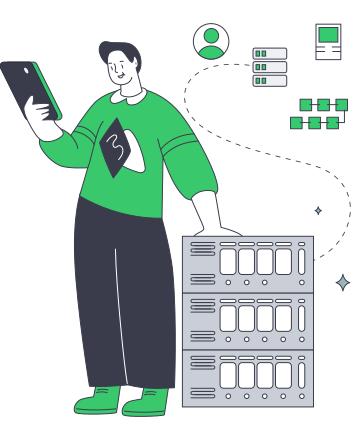
    Operator managing distributed dApp infrastructure

    Choosing dApp hosting, teams compare infrastructure options

    Compare isolation, resource fit, runtime control, bandwidth, and regional placement.
    API latency under team control
    Observable indexer throughput
    Clear capacity ownership
    Capacity spend by service role
    Regional service placement
    Controlled release changes

    Configure off-chain services by role

    Shape compute, memory, storage, bandwidth, placement, and access for every service role.
    Isolated hardware per service role
    CPU options for parallel jobs
    RAM sized for caches and databases
    Storage tuned for indexing I/O
    Bandwidth choices by workload
    Regional placement for endpoints
    Direct operating-system access
    Customer-controlled deployment stack
    1000+ ready-to-go server configurations
    Supported crypto or fiat payments
    Configure your stack
    Select a ready-to-deploy dedicated server for dApps or plan a custom build.
    Talk to an expert

    dApp backend hosting roles have different bottlenecks

    API server configuration
    Customer-facing API request traffic

    Trace API latency under changing demand by assigning compute and bandwidth to customer request paths.

    RPC server stack
    Customer-controlled RPC application access

    Keep RPC software isolated while your team controls clients, keys, monitoring, configurations, and upgrades.

    Distributed indexing statistics
    Indexing chain events into application data

    Allocate CPU and storage I/O to event ingestion, transformation, and queries so teams can trace contention.

    Database server operations
    Databases for persistent application state

    Size RAM and storage for application databases by write load, query demand, indexes, and recovery plans.

    Isolated application environment
    Separated application service roles

    Group or separate services by workload, failure scope, and region so capacity decisions remain traceable.

    Server analytics processing
    Scheduled analytics on assigned capacity

    Run analytics jobs on assigned cores, memory, and storage throughput; preserve user-facing service capacity.

    Parallel queue worker processing
    Background processing worker queues

    Assign background workers their own capacity so queue and scheduler bursts stay distinct from API load.

    RAM memory module
    Reserved RAM for application caches

    Allocate RAM to hot data and session state so cache pressure stays visible during application demand peaks.

    Infrastructure decisions for production dApps

    Dedicated servers linking RPC, indexers, storage, CDN, and observability
    Why Production dApps Fail in the RPC Layer, Not the Chain
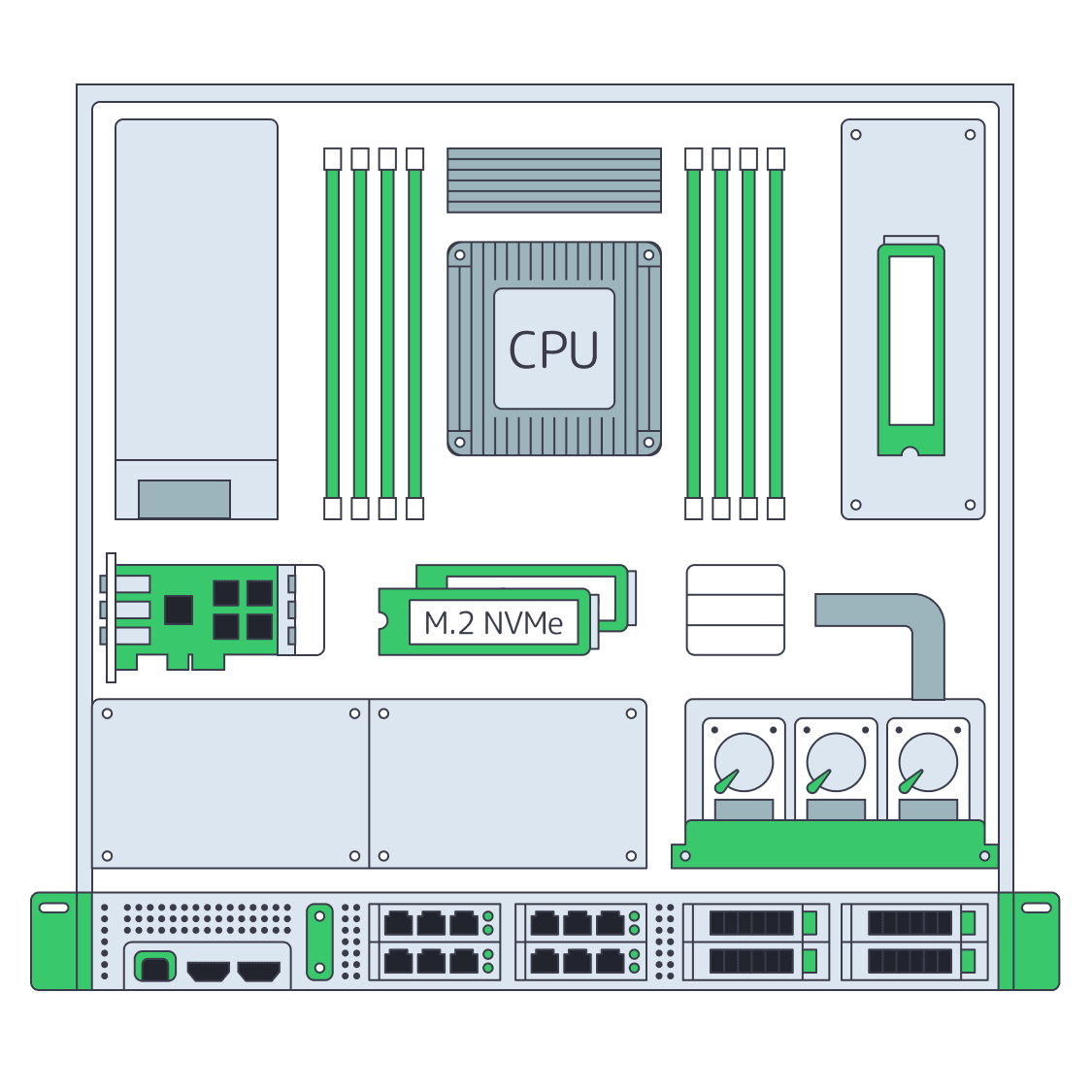
    Dedicated server BOM with CPU, RAM, NVMe, and NIC modules sized from workloads
    Spec Dedicated Servers From Workload, Not the Catalog
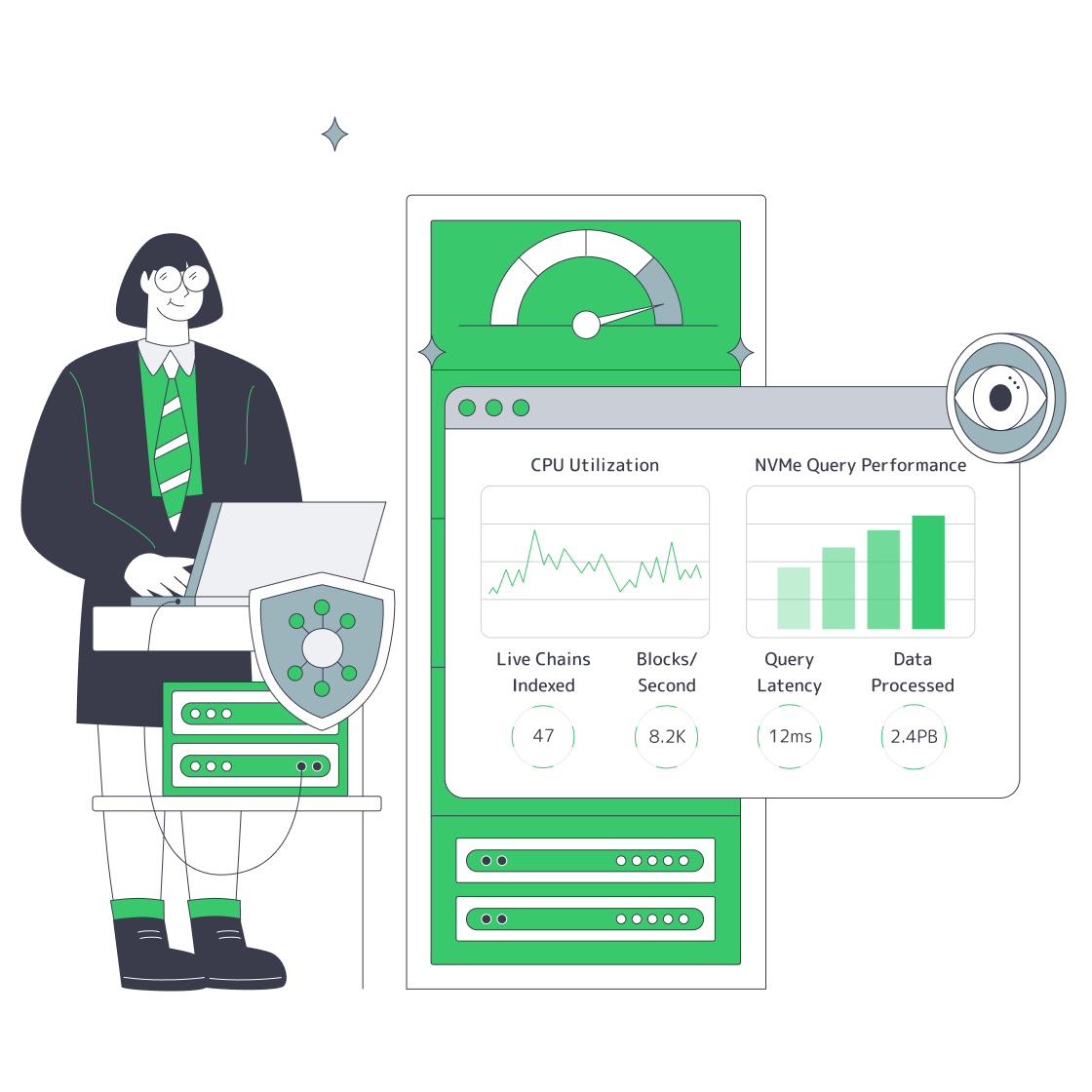
    High-performance servers feeding blockchain data into an analytics dashboard
    Scaling Blockchain Analytics & Indexing with Dedicated NVMe-Powered Servers
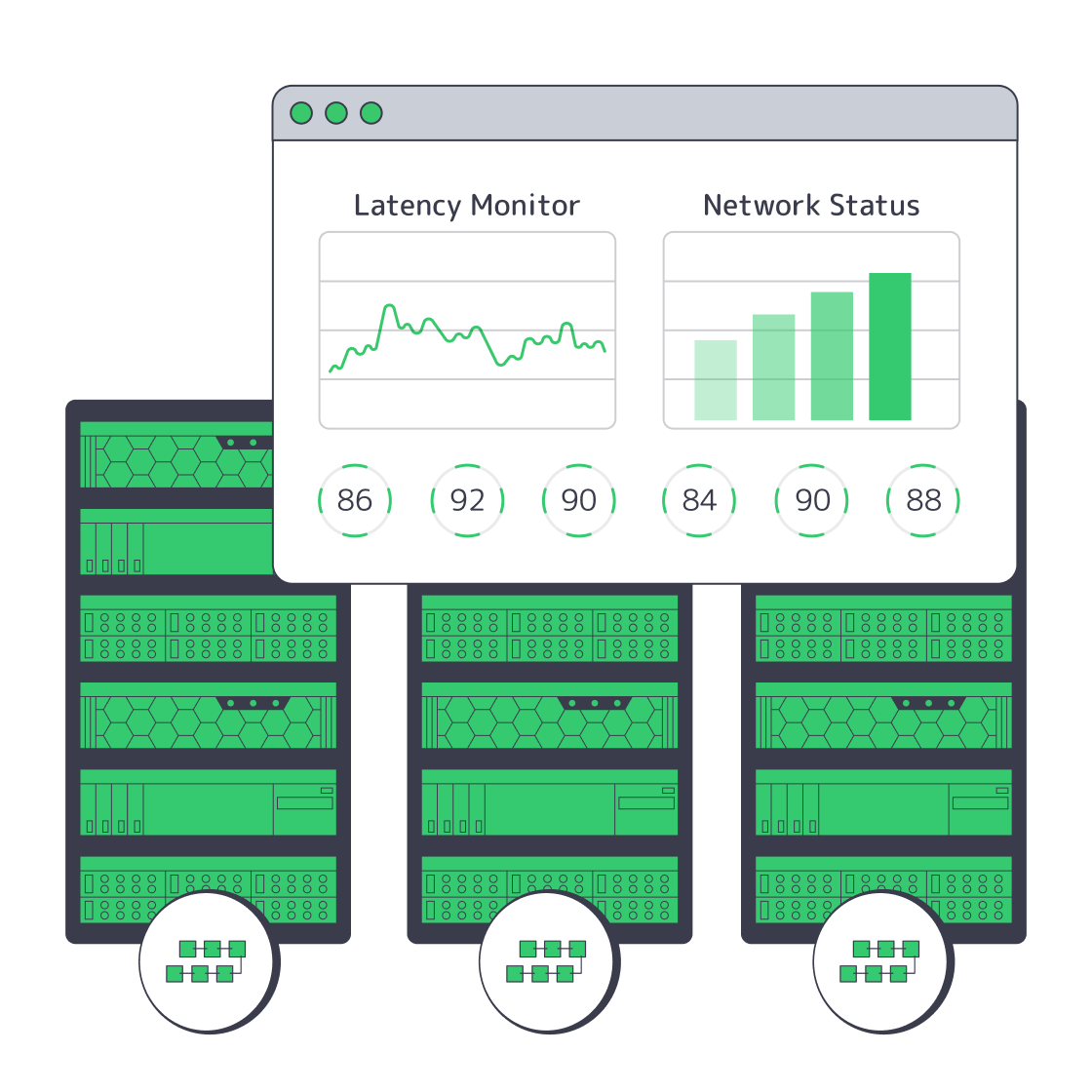
    Blockchain chain linked to dedicated servers with performance dashboards
    Dedicated Servers for dApp Backends and Off-Chain APIs
    More articles
    FAQ
    Which off-chain dApp workloads fit dedicated infrastructure?
    Does dApp hosting include smart contract and app management?
    How should teams size each dApp service?
    When should dApp services use separate servers?
    Can I pay for dApp hosting with cryptocurrency?
    Which regions are available for dApp infrastructure?
    What access does the infrastructure team receive?
    Are ready-to-go and custom server configurations available?
    Who supports the infrastructure layer?
    Can bandwidth be matched to service roles?
    Opening an account
    Create an account, add funds, and configure infrastructure for production dApp service roles.
    Create an account
    Plan your configuration
    Share workloads, target regions, and constraints so our team can shape a custom server path.
    Talk to an expert