Choose a bare metal server for measured workload demand

Map CPU, RAM, storage, bandwidth, traffic plans, and location to sustained workloads. Keep physical capacity isolated, resource pressure attributable, and recovery headroom explicit.

Bare metal servers with isolated hardware

Plan CPU, RAM, storage, and endpoint protection

CPU capacity sizing
Size CPU for execution

Choose core count and clock profile from concurrency, sustained utilization, and the execution pattern behind CPU saturation.

RAM memory module
Keep active data in RAM

Size RAM to active databases, caches, and virtual machines so memory pressure remains visible under representative load.

Verified storage I/O
Plan storage for I/O load

Select media, capacity, and disk layout from write intensity, retained data, rebuild work, and accepted recovery windows.

Verified regional server protection
Scope endpoint protection

Scope separate DDoS protection to public applications and APIs while core server sizing remains a capacity decision.

Available configurations
Need a Custom Build?
Filters
Clear all
Data center
Data center
CPU
CPU
CPU Brand
CPU Brand
RAM
RAM
Storage
Storage
from
up to
GPU
GPU
    Bandwidth
    Bandwidth
    Data Transfer
    Data Transfer
    Available configurations –
    CPU
    Memory
    Storage
    Network
    GPU
    Data center
    Price
    Show more

    Choosing a bare metal server: hardware, bandwidth, and location

    Bare metal server hosting is a capacity decision before it is a hardware order. CPU pressure, active memory, storage I/O, transfer volume, and regional paths peak differently, so a generic configuration can hide the first bottleneck. Size steady-state demand, peak headroom, maintenance work, rebuild pressure, and accepted recovery windows as separate requirements.

    At Melbicom, we map your workload requirements to isolated physical servers with choices across processor profile, RAM, storage, bandwidth, traffic plan, and deployment location. Ready-to-deploy configurations cover common workload shapes, while custom builds provide a defined path when the required hardware or network profile needs closer alignment with production demand.

    Assign each production role to a repeatable configuration, validate it under representative load, and reserve headroom for maintenance, rebuilds, and recovery. Scope DDoS protection only to exposed public applications and APIs, while your team retains policy control over server sizing, operating systems, application security, failover design, and recovery procedures.

    Operator launching configured bare metal server

    Bare metal server pricing and outcomes

    Compare the inputs that shape cost, capacity, deployment fit, and recovery planning.
    Attributable CPU saturation
    Measured memory headroom
    Planned storage recovery
    Predictable transfer capacity
    Measured regional paths
    Scoped endpoint protection

    Size capacity from measured demand

    Map hardware, deployment, and network choices to workload evidence with our 24/7 technical support.
    CPU profiles matched to sustained load
    RAM sized for active working sets
    Storage media chosen by I/O pressure
    Disk layouts planned for rebuild demand
    Bandwidth sized from traffic demand
    Traffic plans aligned with transfer volume
    Region choice follows measured paths
    Ready inventory or custom builds
    DDoS protection for public applications
    Endpoint scope kept separate from sizing
    Match build to demand
    Choose ready inventory or define a custom build from measured workload requirements.
    Talk to an expert

    Match physical capacity to workload shape

    Database capacity sizing
    Transaction databases

    Size CPU, memory, and storage I/O for concurrency, working sets, write demand, and the accepted query latency.

    Virtual machines on host
    Virtualization workloads

    Map guest density, memory allocation, and disk activity to physical capacity with explicit headroom for maintenance events.

    Verified storage I/O
    High-I/O data services

    Match storage media and layout to queue depth, retained data, rebuild demand, and the required recovery window.

    CPU performance optimization
    Compute-heavy workloads

    Match core count, clock profile, and memory to sustained execution so CPU saturation stays attributable under load.

    Private network shield
    Private infrastructure

    Define repeatable internal server roles with controlled data paths, documented recovery, and maintenance headroom.

    Application server operations
    Licensed applications

    Align processor, memory, and deployment choices with software licensing constraints and measured production demand.

    Regional node map placement
    Regional service origins

    Place application origins near measured users and systems, then choose bandwidth and traffic plans from transfer demand.

    Application traffic operations
    Public-facing endpoints

    Pair the selected server role with scoped DDoS protection when applications or APIs expose an internet-facing attack boundary.

    Bare metal planning and buying guides

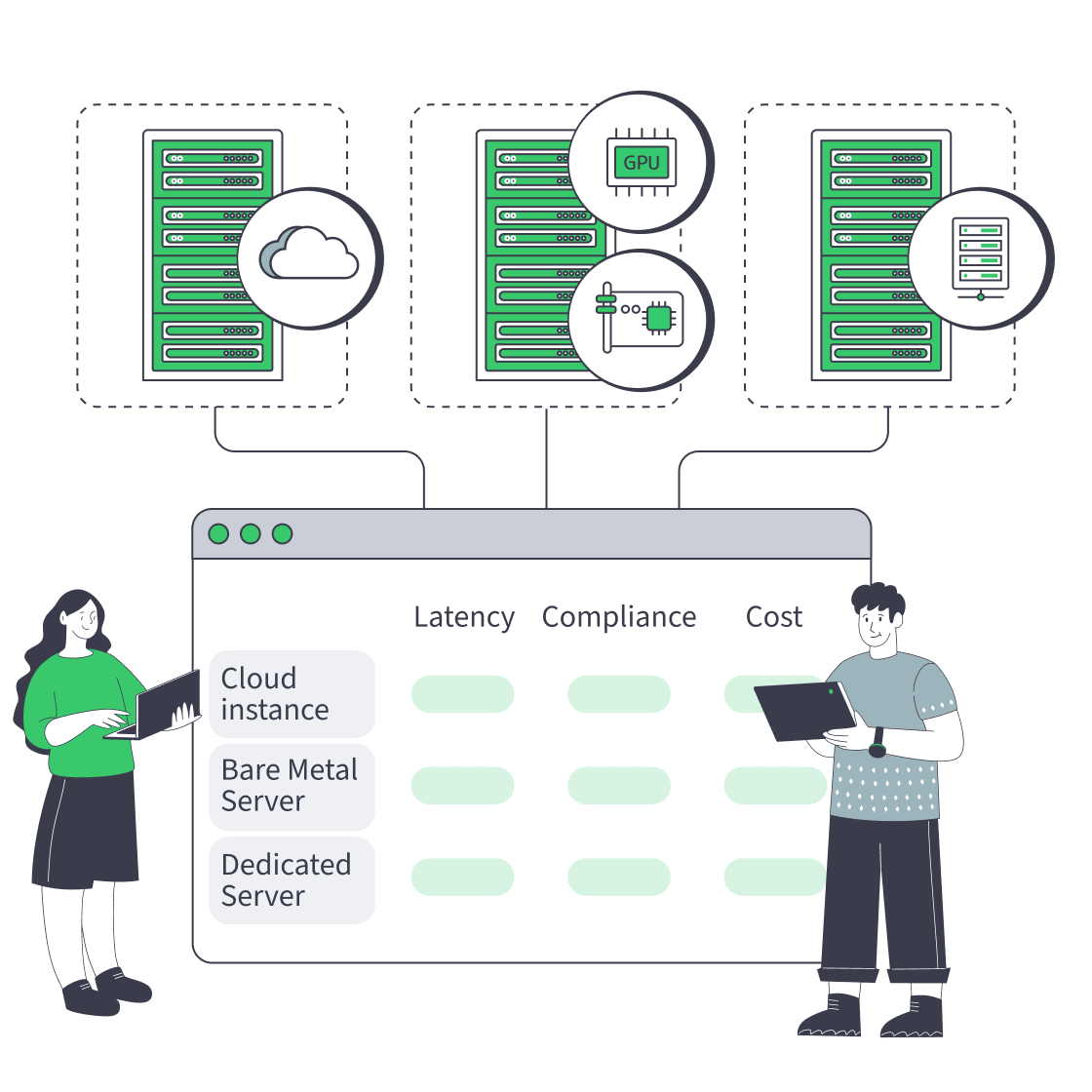
    Cloud, bare metal, and dedicated servers feeding one decision dashboard
    Bare Metal Server vs Cloud: Checklist for Performance, Compliance, and Cost
    Dedicated server pricing drivers arranged around a server rack and invoice
    Beyond Hardware: Total Cost Of Dedicated Servers
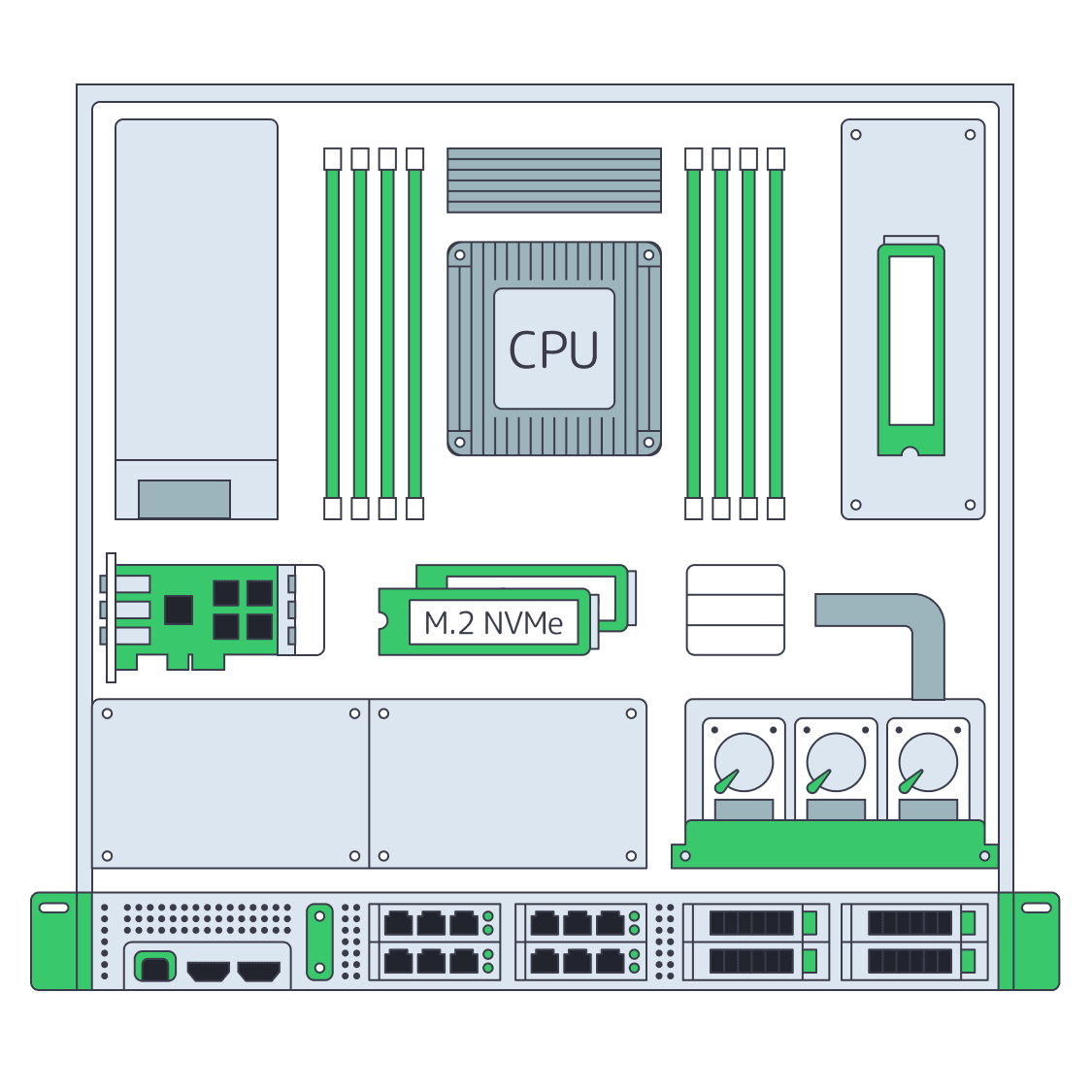
    Dedicated server BOM with CPU, RAM, NVMe, and NIC modules sized from workloads
    Spec Dedicated Servers From Workload, Not the Catalog
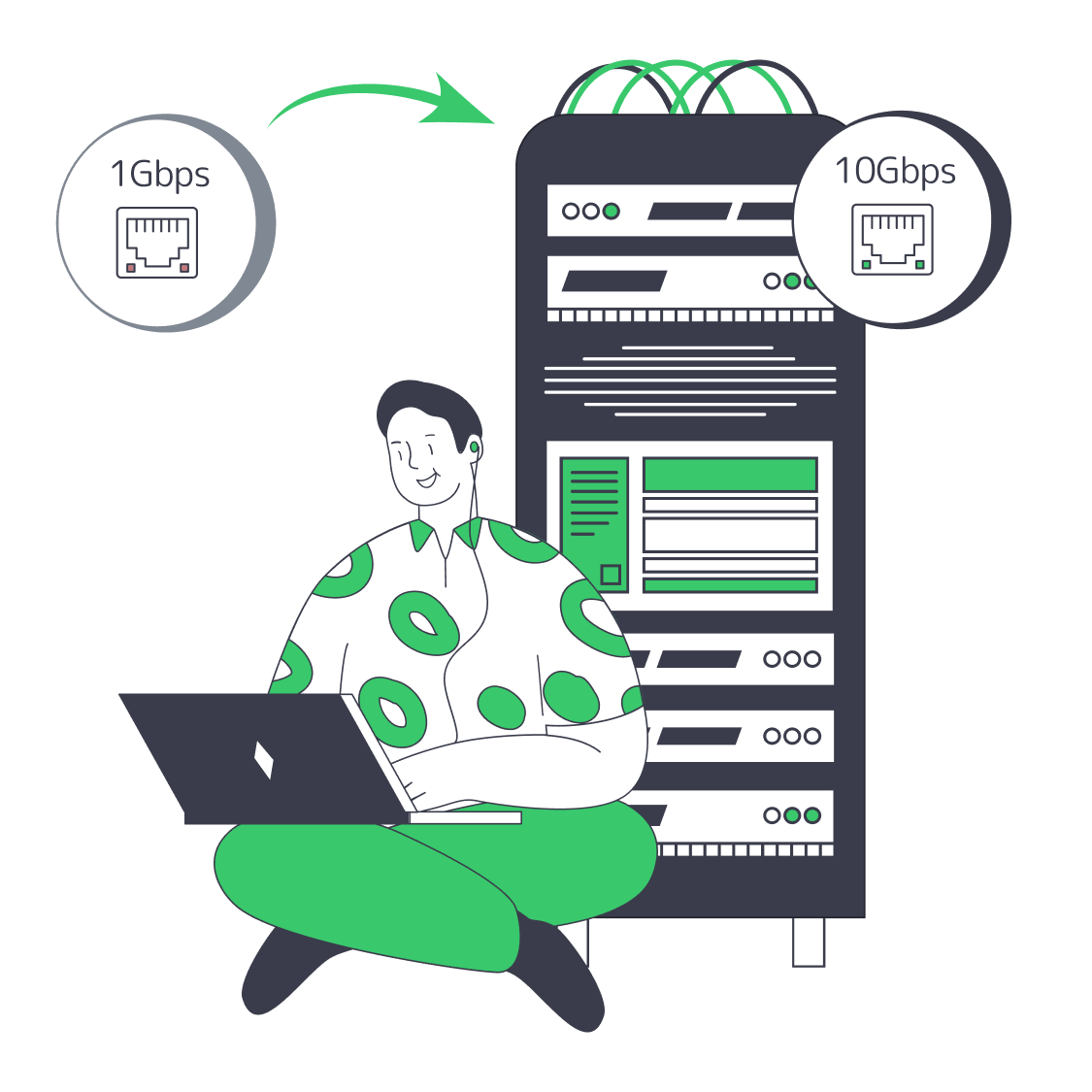
    1Gbps server with monthly traffic meter, bottlenecks, and 10Gbps upgrade path
    1Gbps Reality: Goodput, Bottlenecks, And Upgrade Cues
    More articles
    FAQ
    What configuration inputs shape bare metal server pricing?
    Bare metal server vs dedicated server: what is the difference?
    Which workloads fit a single-tenant physical server?
    How should we size CPU and RAM?
    How should we plan storage and rebuild capacity?
    Which bandwidth and traffic plan should we choose?
    How should we choose a deployment location?
    What is available as ready inventory?
    How long do custom configurations take?
    How much bandwidth can one server support?
    What does 24/7 technical support cover?
    When is DDoS protection relevant?
    Compare ready capacity
    Create an account to compare current hardware, bandwidth, traffic plans, and location options.
    Create an account
    Define a custom build
    Share workload evidence so an expert can map CPU, RAM, storage, bandwidth, and regional requirements.
    Talk to an expert