
Blog
Finding an Unmetered Dedicated Server Plan in Amsterdam
A decade ago, it was necessary to count every gigabyte and keep your fingers crossed that the 95th-percentile spike on your invoice wasn’t horrendous in order to plan your bandwidth. For video platforms, gaming labs, and other traffic-heavy businesses, this was a genuine gamble and required calculus to keep within budget limitations. These days, thankfully, the math is no longer a caveat. Fixed monthly prices and hundreds of terabytes are on tap thanks to the AMS-IX exchange based in Amsterdam. The high-capacity network serves as one of Europe’s main crossroads and has reached a 15 Tbps peak.[1]
Choose Melbicom— 250+ server configurations — Tier IV & III DCs in Amsterdam — 39 CDN PoPs across 35 countries |
 |
Definition Matters: Unmetered ≠ Infinite
Jargon can confuse matters; it is important to clarify that unmetered ports refer to the data and not the speed. Essentially, the data isn’t counted, but that doesn’t mean that the speed is unlimited. If saturated 24 x 7, a fully dedicated 1 Gbps line should be capable of moving 324 TB each month. That ceiling climbs to roughly 3.2 PB with a 10 Gbps line. So you need to consider how much headroom you need, which could be considerable if you are working with huge AI datasets or operating a multi-regional 4K streaming. If you are using shared uplinks, it is wise to read through the service agreements, one line at a time, or you will find out the hard way how “fair use” throttle affects you:
- Guaranteed Port: Our Netherlands-based unmetered server configurations indicate that the bandwidth is solely yours, with language such as “1:1 bandwidth, no ratios.”
- Zero Bandwidth Cap: The phrase “reasonable use” should raise alarm bells. It often means the host can and will slow you at will. If limitations are in place, look for hard numbers to understand potential caps.
- Transparent overage policy: The legitimacy of an unmetered plan boils down to overage policies. Ideally, there should be an explicit statement, such as “there isn’t one.”
How Does Amsterdam’s AMS-IX Multipath Deliver Low Latency?
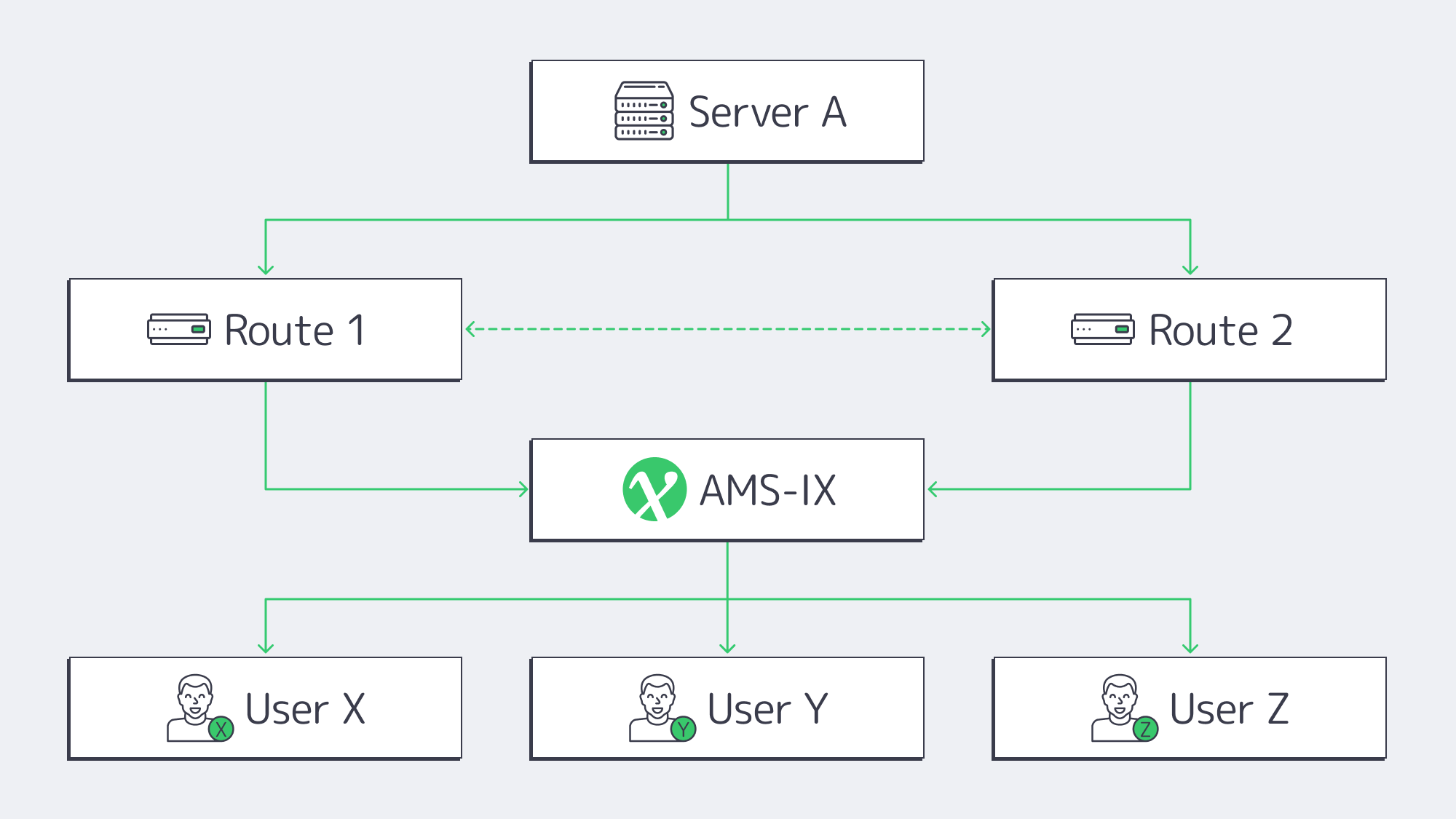
The infrastructure around Amsterdam’s AMS-IX connection now brings together 900+ connected networks and has reached a 15 Tbps traffic peak.[1] At Netflix’s 15 Mbps UHD guideline, that peak is enough capacity for roughly one million concurrent 4K streams. Traffic can be distributed across carrier-neutral facilities, so providers with diverse physical peerings can reroute around a delayed or failed path without a ticket or manual BGP changes during failover response.
Melbicom‘s backbone uses 25+ IXP peering hubs and 20+ transit partners, giving teams practical route-diversity and failover options. Latency still depends on the viewer ISP, route, and target region, so live-feed teams should benchmark from their real EU and transatlantic audiences before committing to glass-to-glass latency targets.
What Runs on 1–10 Gbps Unmetered Ports?
| Port speed | Concurrent 4K streams* | Max data/month** |
|---|---|---|
| 1 Gbps | ≈ 60 | 324 TB |
| 5 Gbps | ≈ 300 | 1.6 PB |
| 10 Gbps | ≈ 600 | 3.2 PB |
*In accordance with Netflix’s 15 Mbps UHD guideline.[2] **Theoretical, 100 % utilization.
Streaming & CDN nodes: Recent traffic measurements still show video as a major bandwidth driver: Sandvine’s 2024 Global Internet Phenomena Report measured video at 38% of traffic across fixed and mobile networks, while on-demand streaming generated 54% of total downstream volume.[3] For edge boxes feeding Europe, a 10 Gbps port can fill quickly during prime time; live streaming a single 4K event at 25 Mbps reaches a gigabit with just 40 viewers.
AI training bursts: OpenAI’s GPT-3 paper reported that the Common Crawl portion of the training data was 45 TB of compressed plaintext before filtering.[4] To put things into perspective, copying 45 TB takes around five days across nodes on a 1 Gbps line or half a day on a 10 Gbps line. Without GPUs bolstered by generous unmetered pipes, parameter servers can easily spike during distributed training.
How to Verify a Genuine Unmetered Dedicated Server in the Netherlands
- Dedicated N Gbps + port in writing.
- SLA with no traffic ceiling and no “fair use” policy unless clearly defined.
- Dual AMS-IX peerings (minimum) and diverse transit routes.
- Tier III or IV facility to ensure sufficient power and cooling redundancy.
- Real-world test file demonstrates that it hits 90 % of the stated speed.
- Complimentary 24/7 support (extra ticket fees are common with budget plans).
If the offer doesn’t meet at least four out of the six above-mentioned criteria, then steer clear because you are looking at throttled gigabits.
Price vs Performance in Unmetered Plans
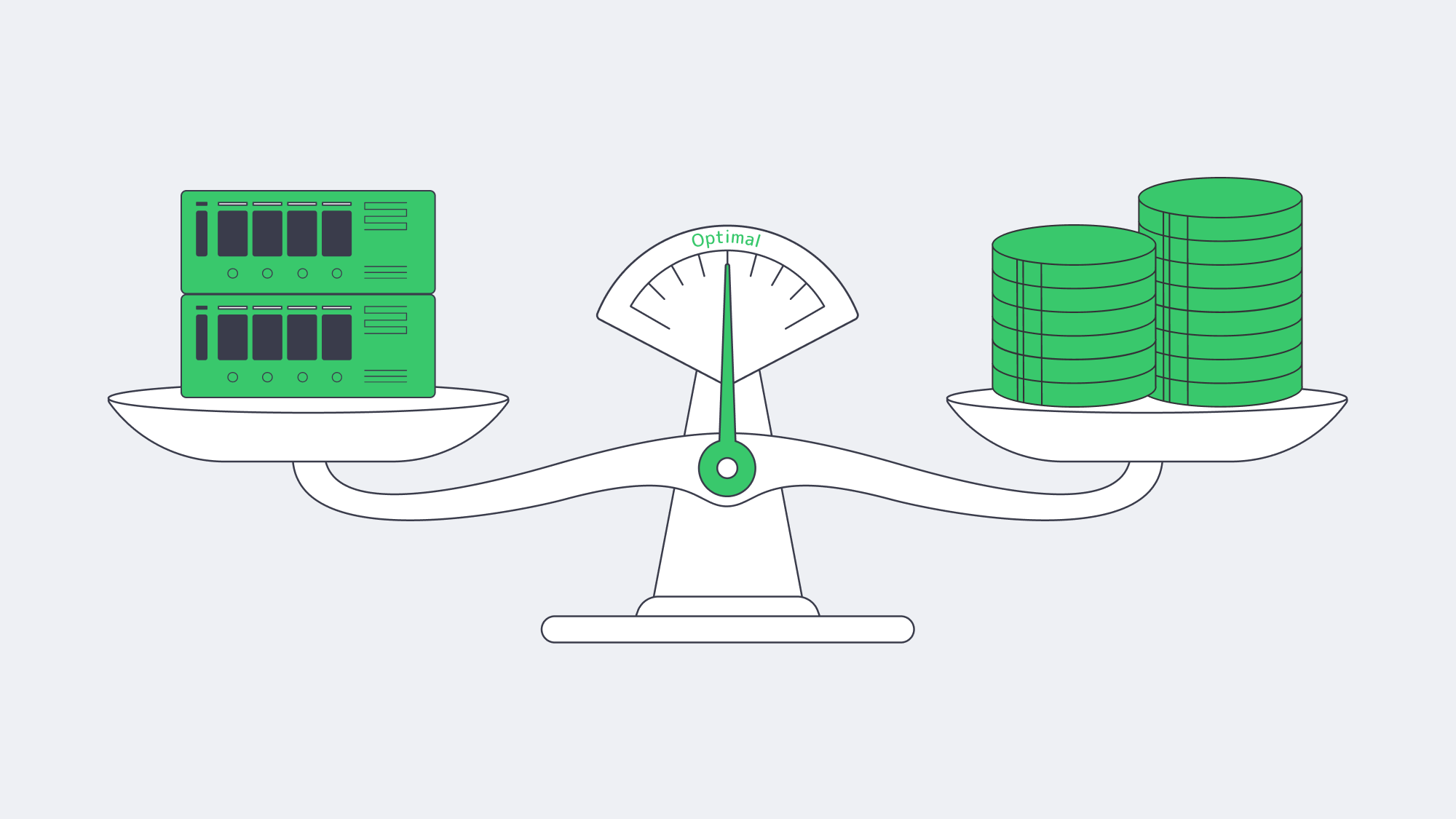
Search pages are littered with “cheap dedicated server Amsterdam” adverts, but headline prices and true throughput can be widely disparate. You have to consider the key cost lenses to know if you are getting a good deal. When you hone in on the cost per delivered gigabit, a €99/month “unmetered” plan that delivers 300 Mbps after contention works out pricier than a plan for €179 that sustains 1 Gbps. Consider the following:
- Effective €/Gbps – Judge sustained speed, not port size.
- Upgradability – Confirm 1-to-5 Gbps upgrades can happen in place.
- Bundles – The total cost of ownership may include hidden add-ons; Melbicom bundles IPMI access and BGP announcements, keeping costs transparent.
The sweet spot for the majority of bandwidth-heavy startups is either an unmetered 1 Gbps or 5 Gbps node. Either 10 Gbps or 40 Gbps is required for traffic-heavy endeavors such as gaming and streaming platforms that are expecting petabytes. With U.S. metros, costs can be high, but the carrier density on offer in Amsterdam keeps tiers cheaper.
What’s the Upgrade Path from 10G to 100G–400G?
The rise of AI and the continuing popularity of video have kept exchange ports moving upward: AMS-IX reported that its number of 400G ports grew by 65% over the past year as the Amsterdam platform reached a 15 Tbps peak.[5] That trend points toward 25G and 40G dedicated uplinks becoming more common for workloads that consistently outgrow 10G. At Melbicom, Amsterdam ready-to-go options include up to 100 Gbps bandwidth, and unmetered plans are available; custom builds can use up to 200 Gbps per-server network capacity when needed.
Planning for a provider that scales beyond 10 Gbps reduces future migration risk. Whether your climb is linear with a steady subscriber base or lumpy because of a viral game patch or major live event, available headroom beyond 10 Gbps helps keep growth from turning into a forced rebuild.
What Else Should You Check—Latency, Security, and Facility Resilience?
Don’t overlook latency: High bandwidth means nothing if there is significant packet loss; low latency is vital to be sure to test both.
Security is bandwidth’s twin: A volumetric DDoS flood can arrive as fast as a legitimate traffic surge. Ask if scrubbing is on-net or through a third-party tunnel.
Facility resilience matters: Power and cooling redundancy still determine whether high bandwidth remains useful during faults. For Amsterdam workloads, Melbicom offers Tier III and Tier IV facility options, so verify the site tier, power path, and cooling redundancy alongside the port speed.
How to Choose an Unmetered Dedicated Server in Amsterdam
Amsterdam’s AMS-IX remains one of Europe’s major interconnection hubs; its multipath ecosystem can reduce the risk that a single cable cut affects your operations. For a dedicated server that is truly unmetered, review the service terms behind it with a fine-tooth comb. Require proof of 1:1 bandwidth, look for zero-cap wording, verify physical redundancy, and run sustained live speed tests before trusting the unmetered claim for production use.
Ready for unmetered bandwidth?
Deploy a dedicated Amsterdam server with guaranteed 1:1 ports, unmetered bandwidth options, and zero caps.