
Blog

Faster Apps and LGPD Compliance with Brazil Dedicated Servers
Why Rent Dedicated Servers in Brazil Instead of Serving from Abroad?
Hosting application origins on a Brazil dedicated server can shorten network paths to Brazilian users and avoid unnecessary international round trips. The improvement depends on peering, user location, and congestion, so compare RTT, packet loss, and application response times from your main audience regions rather than assuming uniformly low latency nationwide.
DataReportal’s Digital 2026: Brazil estimates 185 million internet users and 86.9% internet penetration using October 2025 data, making origin placement relevant at national scale.
Two structural factors matter when comparing local and overseas compute:
- Brazil’s internet exchanges are world‑class. In March 2026, IX.br reported a 50 Tbps aggregate traffic peak across its exchanges, including 32 Tbps in São Paulo. More than 2,500 networks connected directly to the São Paulo exchange, creating opportunities to shorten paths to the last mile through local peering.
- Modern subsea routes reduce overseas detours. EllaLink lists round-trip delay below 60 ms for Sines–Fortaleza and below 105 ms for Sines–São Paulo. These are route-specific operator figures, not nationwide internet latency guarantees; they support cross-regional services and BCP but do not replace tests on Brazilian networks.
Host in LATAM— Reserve servers in São Paulo — CDN PoPs across 5 LATAM countries — 21 Tier III & IV DCs, including Brazil |
 |
How Do São Paulo Proximity, IX.br Peering, and Multi‑Homed Transit Cut Latency?
Put your origin where Brazil’s networks meet. In São Paulo, IX.br peering can shorten paths to participating ISPs and content networks and reduce detours through distant transit hubs. Multi‑homed upstreams provide alternative paths, but not deterministic latency. BGP selects routes according to routing policy, not automatic latency or packet-loss measurements; failover depends on failure detection and routing convergence. This combination—São Paulo adjacency + IX.br peering + multi‑homed transit—can improve the reachability and resilience of a Brazil dedicated server, but nationwide response times still depend on user location, access networks, congestion, and application behavior.
Which Regulatory “Rules of the Road” Are Easier to Meet with In‑Country Hosting?
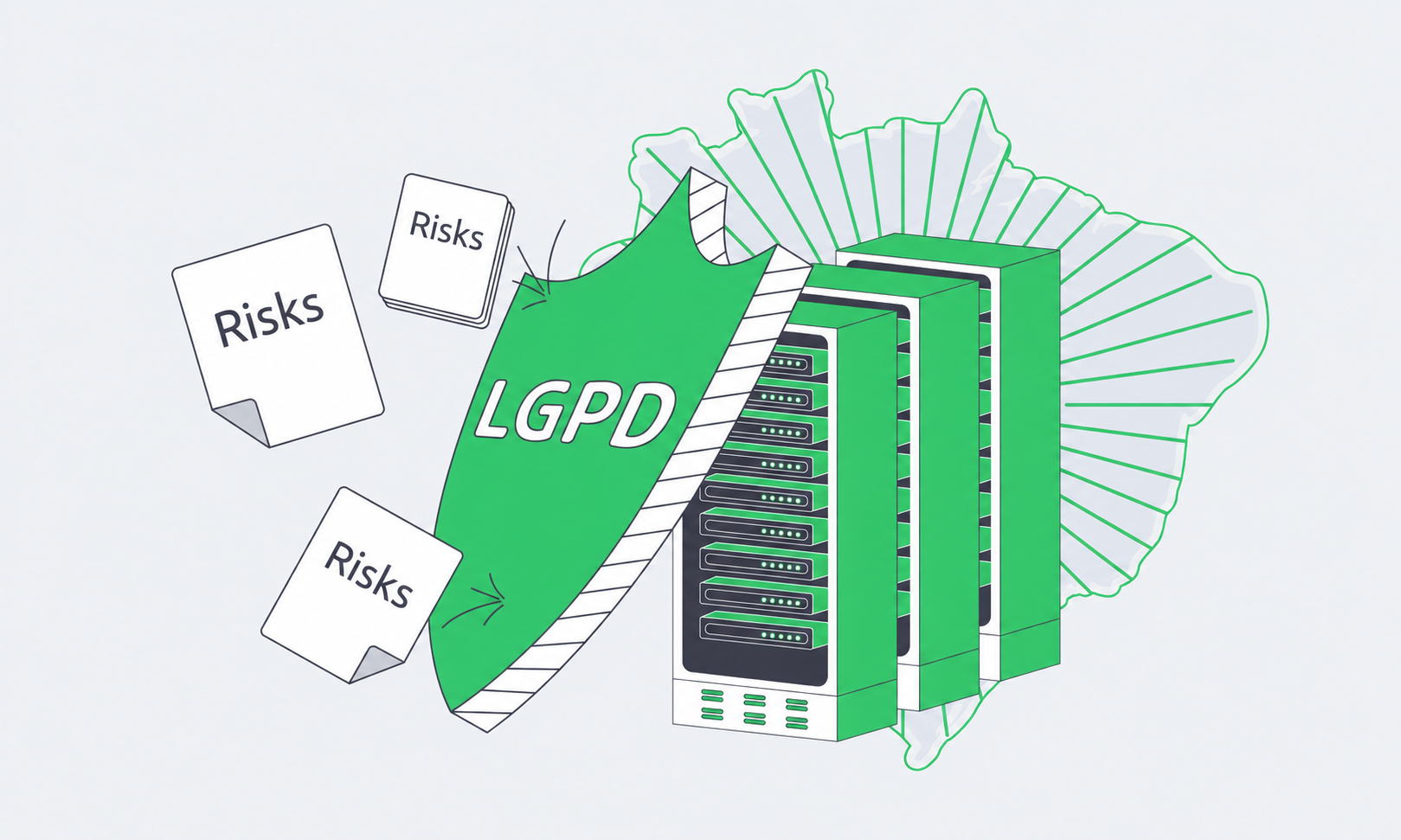
Brazil’s LGPD does not impose a blanket requirement to host personal data in Brazil. ANPD resolutions regulate cross‑border transfers of personal data, including standard contractual clauses (SCCs) and adequacy decisions. Keeping data on a Brazil‑based dedicated server can reduce international transfers, but does not by itself establish compliance: lawful processing, security, and data-subject rights still apply. Review backups, logs, CDN caching, and overseas access as part of the same data-flow assessment.
ANPD’s Resolution No. 32 of January 26, 2026 recognizes the EU, Iceland, Liechtenstein, and Norway as adequate destinations within the decision’s scope, so covered transfers do not need SCCs as their transfer mechanism.
Under Resolution No. 15/2024, controllers generally must notify ANPD and affected individuals within three business days of learning that an incident affected personal data when it may cause relevant risk or harm. Eligible small-scale processing agents receive double the period; specific statutory deadlines may also apply.
What Does the Market Signal Say About Repatriating Steady Workloads?
In its April 16, 2024 report, Barclays data showed that 83% of 100 CIO respondents planned to repatriate some public‑cloud workloads to private cloud or on-premises infrastructure over the following 12 months, with storage and databases leading the planned moves. These were intentions recorded in spring 2024, not completed migrations or a current Brazil-specific adoption rate. The same survey found strong public-cloud spending expectations, supporting a pragmatic hybrid approach rather than a single‑stack dogma.
How Does TCO Look When You Shift Origin Compute to a Dedicated Server in Brazil?

Three cost levers dominate: always‑on compute, egress, and control overhead. Dedicated hosts exchange variable instance pricing for fixed monthly economics and large, predictable bandwidth allocations—attractive when origin traffic and job queues run 24/7. You also reclaim hardware‑level tuning (I/O, NUMA, storage layout) and avoid sharing compute hardware with other tenants, which can help stabilize tail latency; shared network paths can still introduce contention. For global platforms with Brazilian user concentrations, lower RTTs and predictable bandwidth charges can improve responsiveness and cost planning. Compare the full TCO, including operations, redundancy, backups, migration, and bandwidth overages, rather than assuming dedicated hosting is always cheaper.
Local vs. remote origin for Brazil (at a glance)
| Hosting Location | Latency Considerations for Brazilian Users | Data Sovereignty & Compliance |
|---|---|---|
| Remote Cloud (US/EU) | International paths add distance; RTT varies by route and user network | Use an applicable LGPD transfer mechanism, such as adequacy or SCCs |
| Local Dedicated Server (BR) | Can shorten domestic paths; measure from the regions and ISPs you serve | Local hosting alone does not establish compliance; assess backups and overseas access |
These are placement considerations, not latency benchmarks. Cross-border requirements depend on the actual data flows and the applicable ANPD transfer mechanisms.
The Pragmatic Migration Path from Hyperscale Cloud to Dedicated Servers
You don’t need a “big bang.” Migrate with deliberate, low‑risk steps that preserve uptime and auditability:
- Stand up a parallel origin in São Paulo. Choose a dedicated server in Brazil sized for your peak request/second and storage IOPS profiles. Establish site‑to‑site VPN or private interconnect to your cloud VPC to sync data and logs.
- Replicate state methodically. Bulk‑load historic datasets over high‑bandwidth links (or offline media if needed); then switch to near‑real‑time streaming for deltas. Measure replication lag and jitter over the chosen paths; multi‑homed transit and IX.br peering do not guarantee either.
- Cut over with your CDN. If you already run CDN edges in Brazil, point them to the new São Paulo origin and ramp traffic with weighted DNS or header‑based routing where the CDN supports it. Cache hits remain at the edge; validate cache misses and uncached dynamic requests before increasing origin-bound traffic.
- Retain a thin cloud footprint. Keep object storage (Melbicom S3 is hosted in Amsterdam), backups, or DR replicas in the cloud while the production origin sits on a Brazil-based dedicated server. Confirm where these copies and any overseas administrative access are located, and assess the applicable transfer mechanism before moving personal data.
The Operating Model: MSAs, Remote Management, and a 24/7 NOC
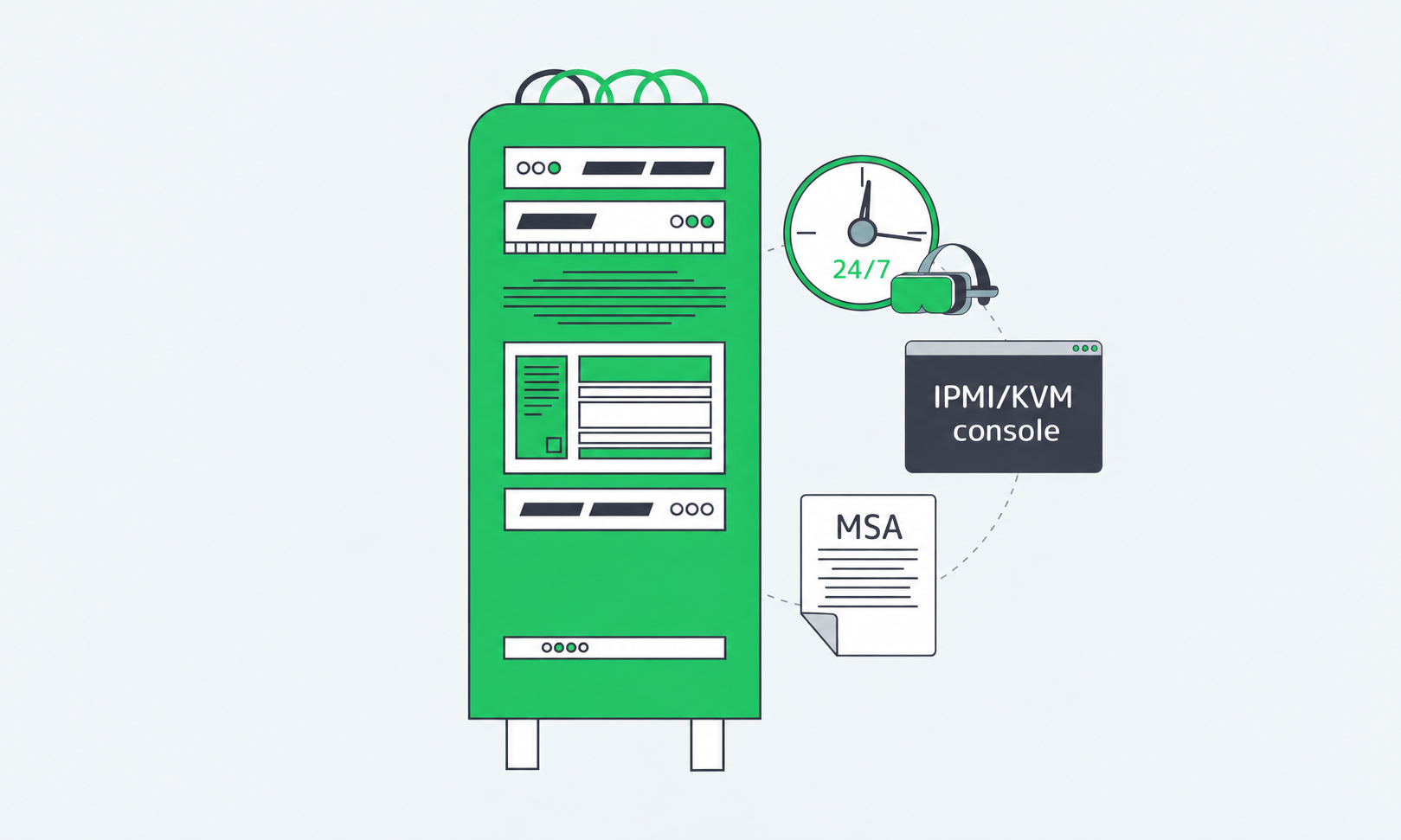
MSAs. With dedicated hosting in Brazil, you contract directly for the outcomes that matter—data location, support scope, hardware replacement windows, access controls, log retention, and peering policy. A well‑drafted MSA clarifies who can access what (and from where) and how incidents are handled under LGPD.
Remote management. Dedicated servers in Brazil shouldn’t mean hands‑on‑keyboards in a cage. Expect IPMI/KVM for full out‑of‑band control so your SREs can reinstall operating systems, manage firmware, or capture consoles without a truck roll.
24/7 NOC. Network‑aware ops is non‑negotiable for low‑latency applications. Look for round‑the‑clock support with hardware replacement windows documented in the MSA and engineers who understand BGP, peering, and routing health—because a fast origin is only as reliable as the path to it.
Brazil Deploy Guide— Avoid costly mistakes — Real RTT & backbone insights — Architecture playbook for LATAM |
 |
Latency and Compliance in Brazil
Placing origins on a dedicated server in Brazil—ideally in São Paulo with IX.br peering and multi‑homed transit—can shorten paths to Brazilian users and reduce reliance on international routes. Validate latency, packet loss, and application performance from the networks your users actually use. Keeping personal data within Brazil can reduce cross‑border flows, but LGPD compliance still depends on lawful processing, security, rights handling, and any remaining international transfers. Evaluate steady workloads for dedicated or private infrastructure using measured performance and full TCO, not a blanket assumption that local hosting is always faster, cheaper, or compliant.
Fast, Compliant Server Launches in Brazil
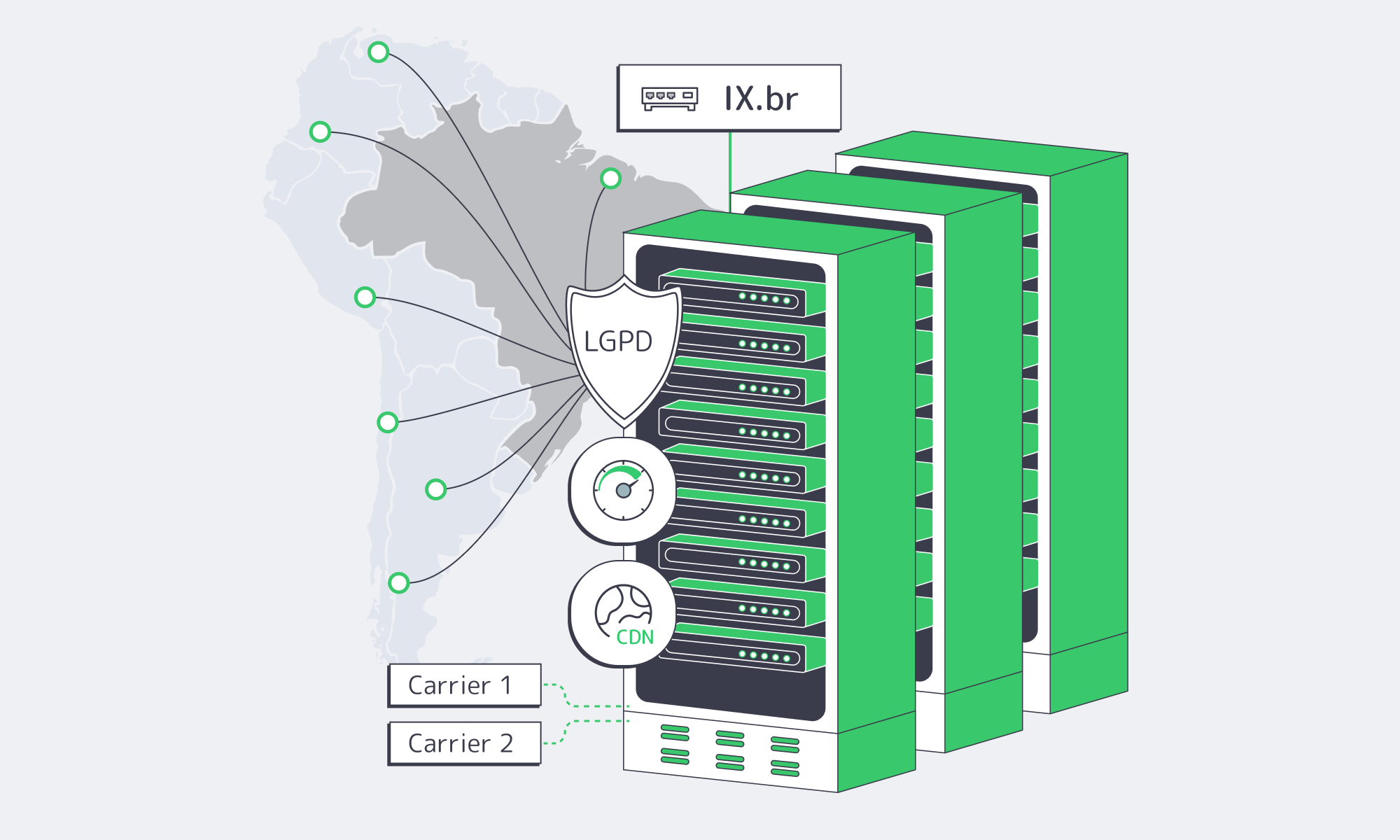
Melbicom is preparing data center presence in São Paulo and is collecting early‑access demand for dedicated servers. Until go‑live, we can plan your Brazil launch around IX.br peering, multi‑homed transit, and your data-handling requirements, while Melbicom CDN nodes in Fortaleza and Rio de Janeiro can serve cacheable content today. CDN caching does not relocate your origin or establish in-country handling for all personal data. Once São Paulo capacity is available and your configuration is confirmed, we can plan a controlled origin migration. Melbicom operates its own global network, offers high‑bandwidth options (up to 200 Gbps per server globally) and custom hardware, and runs a 24/7 NOC with IPMI/KVM and BGP/BYOIP readiness. Share your traffic volumes, compliance needs, and hardware/network specs now; we’ll return a Brazil-ready design and confirm capacity, port speeds, and launch timing in your quote.
Dedicated Hosting in Brazil, Made Flexible
- Deploy fast: We’re collecting detailed requirements now (traffic profiles, IX.br peering needs, carrier preferences, rack‑level constraints) to pre‑stage capacity and shorten activation windows at launch. Our 24/7 NOC will coordinate launch support; installation and activation dates will be confirmed in your quote.
- Customize freely: Specify CPU/RAM/NVMe/GPU mixes, NICs, and storage layouts; request BGP/BYOIP and routing policy; define private L2/L3 overlays. Melbicom’s global baseline includes up to 200 Gbps per server. São Paulo port speeds, carrier options, and hardware availability must be confirmed in your quote.
- Operate globally: Keep a consistent operating model across Melbicom’s 21 Tier III/IV data centers, including the coming-soon São Paulo and Marseille facilities, and a CDN with 40 PoPs across 35 countries. Build once (automation, monitoring, IaC), then roll out in Brazil without re‑tooling. Our own network gives us routing control and the ability to engineer paths—not just rent them.
- Control TCO: Fixed‑price dedicated servers with generous bandwidth allocations reduce egress shock and keep costs legible for steady workloads. Use CDN edges in LATAM today to reduce origin fetches for cacheable content; shift the origin to São Paulo after activation to reduce long‑haul dependencies.
- Engineer for resilience: Pre‑plan IX.br peering, map multi‑homed transit (at least two upstreams), define failure domains, and codify playbooks with the 24/7 NOC. Confirm remote-management access (IPMI/KVM), hardware replacement procedures, and on-site support responsibilities before launch.
- Experience freedom: Simple onboarding, clear MSAs, transparent control surfaces, and access to network engineers—not ticket ping‑pong. We’re structured for no vendor lock‑in and no shared tenancy on your compute.
Be the first to host in Brazil on special terms
Share your traffic and hardware needs to reserve São Paulo capacity. We’ll follow up with launch timelines and options for peering, transit, and compliance.