
Blog
Find Truly Unlimited Bandwidth Servers in Singapore
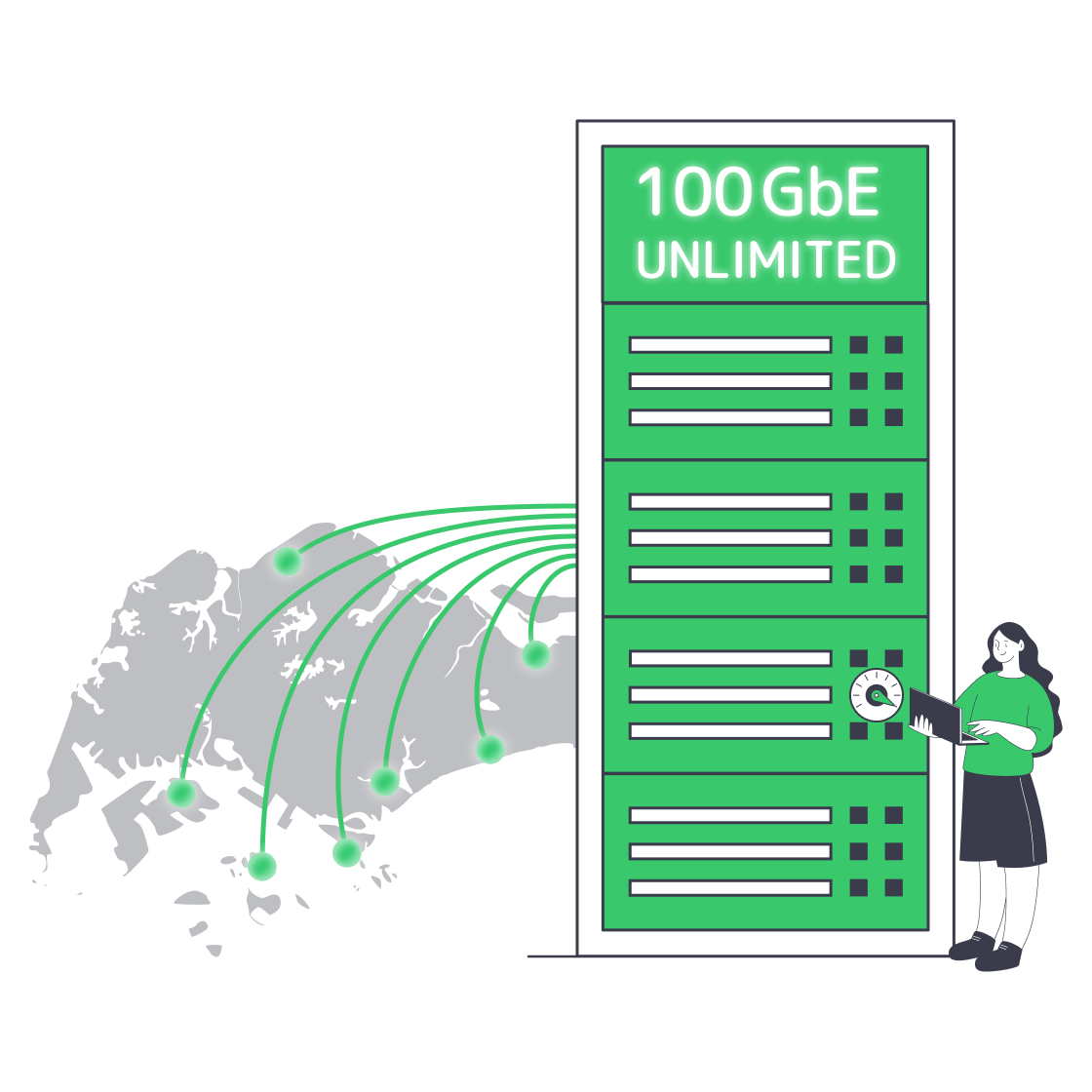
Singapore’s strategic perch on Asian fiber routes—combined with a steady decline in wholesale IP-transit rates—has turned unmetered dedicated servers from niche luxury to a mainstream option. Singapore now has more than 70 cloud, enterprise, and colocation data centers with over 1.4 GW of computing capacity on the island. Its Green Data Centre Roadmap adds at least 300 MW of capacity in the next few years, with another 200 MW reserved for operators using green energy options. This expanding supply and cheaper costs mean that hosts can bundle sizeable, flat-priced ports for mainstream use that previously wouldn’t have been economically viable.[1]
Choose Melbicom— 120+ ready-to-go server configs — Tier III-certified SG data center — Unmetered bandwidth plans |
 |
These unlimited offers are particularly attractive for buyers dealing in petabytes. Streaming workloads are still a major bandwidth driver: Ericsson’s Q4 2025 Mobility Report says video accounted for 76 percent of global mobile data traffic at the end of 2025.[2] However, “unlimited” might not be as unlimited as it seems on the surface. Many deals still conceal the limits, making it hard to understand what you’re getting. Use this guide to understand what to audit, measure, and demand when choosing a cheap dedicated Singapore server that must run continuously under load.
How to Read an “Unlimited Bandwidth” Offer on Servers
Read an “unlimited bandwidth” server offer by separating port speed from transfer policy. A real unmetered plan should name the port speed, avoid hidden monthly TB caps, explain any fair-use language, and avoid billing models where sustained use above a commit triggers throttling or overage charges.
Fair-Use Clauses, TB Figures, and Wiggle Words
First off, be sure to look for fair use triggers in the terms of service. You will likely find something along the lines of “We reserve the right to cap after N PB.” If you deal with large traffic and a limit exists, it should be hundreds of terabytes per Gbps, or removed entirely.
Avoid 95th-Percentile “Bursts”
Some providers blur the difference between unmetered ports and burstable billing through the 95th-percentile model. You might find 1 Gbps advertised, but with a guarantee of only 250 Mbps sustained; once sustained usage exceeds the commit, the link may be throttled or billed at overage rates. In network billing, the 95th-percentile method discards the highest 5 percent of traffic samples and bills on the highest remaining value, so it is not the same as a continuously unmetered port.[3] When scanning the documentation, look for words like “burst,” “peak,” “commit,” or specific percentile formulas. If the port is truly unlimited, it will stay unmetered and simply state the speed transparently.
No-Ratio Guarantees and Transparency
If the port is oversubscribed, then “unmetered” is irrelevant. Ideally, you need dedicated capacities with no contention ratios, which means that the full line rate you purchase is solely yours. Marketing claims should be verifiable by looking at real-time graphs with measurable metrics, so that your teams can see the throughput matches. Melbicom offers single-tenant servers with unmetered bandwidth options and guaranteed no-ratio throughput for sustained use.
Which Infrastructure Signals Prove a Truly Unlimited Server?
Carrier-Neutral Data Centers
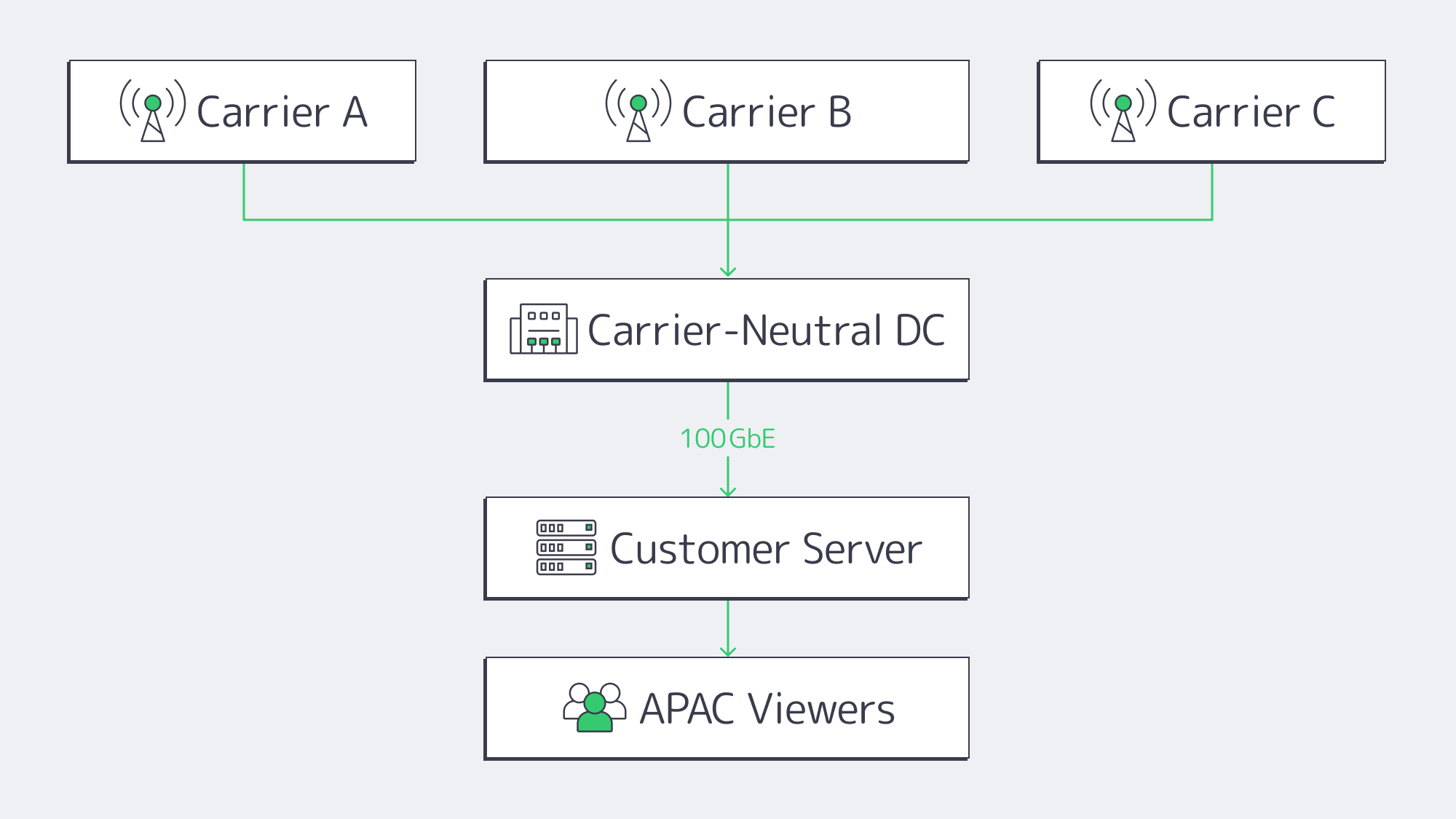
It is wise to prioritize hosts located in carrier-neutral Tier III+ data centers.
- Singapore’s Equinix SG
- Global Switch
- Digital Realty
- SIN1 facilities
Choosing multiple on-net carriers over single-carrier buildings that rely on one upstream prevents the likelihood of silent limits being imposed on heavy users during peaks, ensuring a plentiful upstream capacity and competitive transit rates.
Recent Fiber and Peering Expansion
Singapore’s trans-Pacific connectivity picture has moved forward since the earlier cable-delay cycle. Bifrost reached ready-for-service status in October 2025, adding a direct Singapore–U.S. West Coast route with more than 260 Tbps of capacity, while Echo is targeting ready-for-service in 2026.[4][5] Those systems improve route diversity and capacity headroom for hosts that can buy, peer, and engineer capacity across them.
Port Availability Options
If the vendor has a range of ports available, then it is an infrastructural signal that its back-end capacity can meet unlimited needs. When there are 10 Gbps, 40 Gbps, or 100 Gbps configurations ready to spin up today, you are in good hands. With Melbicom, you can have a Singapore server at 1 to 200 Gbps. Though the upper end may be far more than you need, knowing that you can commit to 1 Gbps with 100 GbE and higher network options available gives you the peace of mind that you won’t be oversold gigabit uplinks for your traffic.
How Can You Prove an “Unlimited” Port Is Truly Unlimited?
| Port speed | Max monthly transfer @ 100 % load | Rough equivalence |
|---|---|---|
| 1 Gbps | 330 TB | ≈66K 5 GB video files |
| 10 Gbps | 3.3 PB | ≈660K 5 GB video files |
| 100 Gbps | 33 PB | ≈6.6M 5 GB video files |
Tip: You should be able to move ~330 TB/mo. on an “unmetered 1 Gbps” port without incurring any sort of penalty. If the fine print states less, then it isn’t truly unlimited.
Test what you buy.
- Looking-glass probes – be sure to check multiple continents when you pull vendor sample files from the Singapore facility; compare observed throughput against the port speed you are buying.
- Iperf3 marathons – Run Iperf sessions at or near full port speed for at least 6 hours to spot any sudden drops that indicate hidden shaping.
- Peak-hour spot checks – To help detect oversubscription, you can saturate the link during APAC prime time; collective loads shouldn’t decrease with a capable network.
- Packet-loss watch – If a server is truly unlimited, then packet loss should be below 0.5 % during traffic spikes.
The tests above will expose any inconsistencies. If discovered, raise the issue under the service agreement and ask the host to troubleshoot or expand capacity. Reputable hosts committed to marketed throughput should document the remediation path.
Why Are “Unlimited Bandwidth” Offers Everywhere Now?
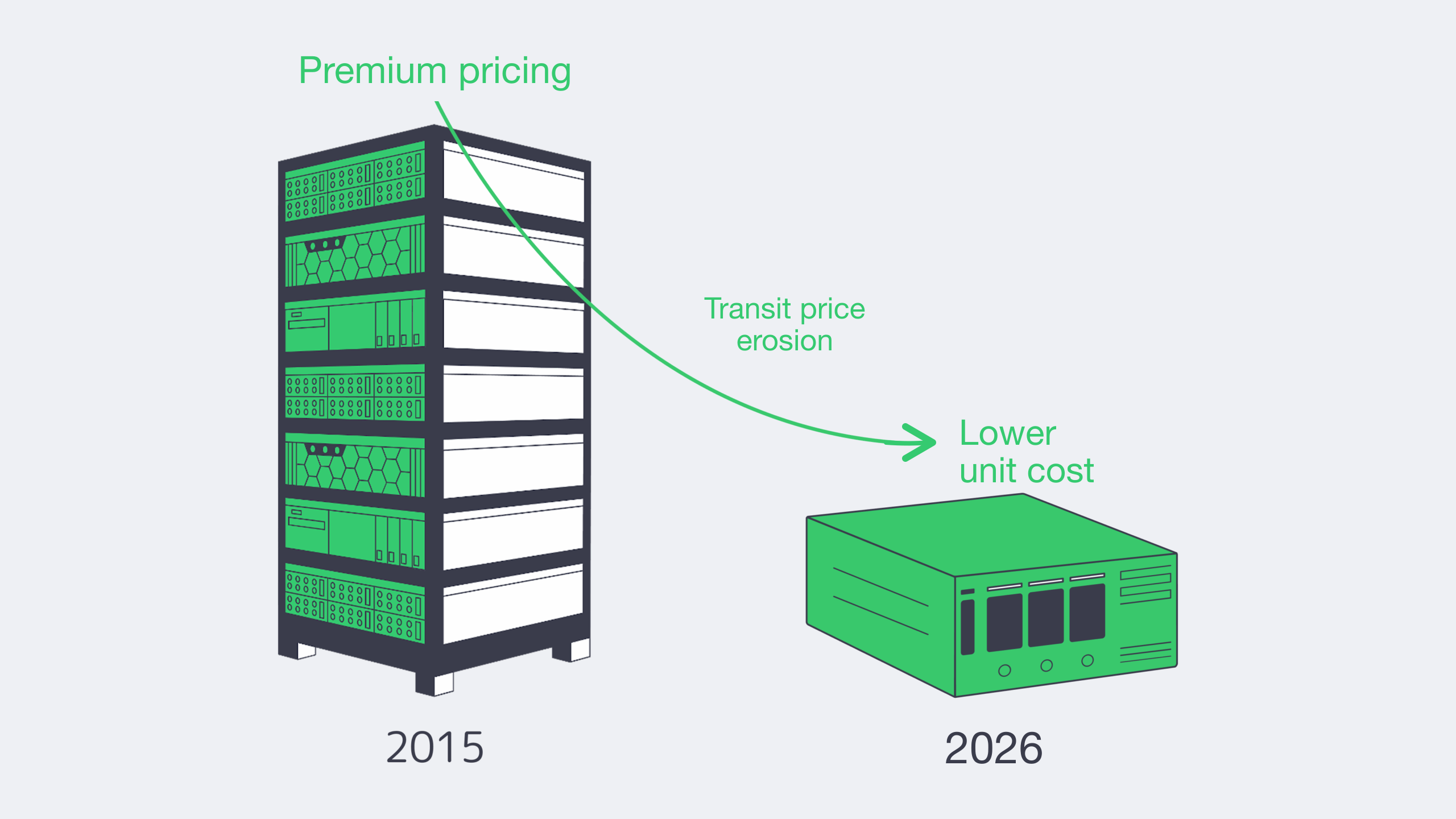
A decade ago, an unmetered 1 Gbps port in Singapore was commonly priced as a premium enterprise product. Bandwidth was bought wholesale, billed through sky-high 95th-percentile commits, and rationed through small TB quotas, making it far less viable for smaller businesses. These days, 100 GigE IP-transit pricing continues to decline; TeleGeography reports a 12 percent compound annual decrease across key cities from Q2 2022 to Q2 2025, and larger ports, competition, and content-provider-funded cables keep lowering the unit cost of heavy egress.[6]
- Local peering and content localization keep more popular traffic close to Singapore users, reducing the amount that must cross expensive long-haul routes.
- Singapore’s Green Data Centre Roadmap ties additional capacity to energy-efficiency and green-energy requirements, so new supply is expected to arrive with stricter sustainability conditions.
- Hosts such as Melbicom operate across 21 global Tier III and Tier IV data centers with 20+ transit partners and 25+ IXP peering hubs, helping high-traffic buyers combine local Singapore capacity with broader route diversity.
The changes above mean that streaming platforms and other high-traffic clients can get an Asia plan for a dedicated server that rivals European or U.S. pricing without moving away from end-users in Jakarta or Tokyo.
How to Choose an Unlimited-Bandwidth Dedicated Server in Singapore
- Scrutinize the contract. Make sure there are no references to 95th percentile, burst percentages, or vague commits. If “fair use” is mentioned without revealing the numbers, then steer clear.
- Vet the facility. Prioritize Tier III, carrier-neutral buildings with published lists that can be checked.
- Look for a 100 GbE-or-higher roadmap. Although you might only need 10 Gbps for now, a roadmap indicates that the provider is a future-proof option.
- Prove and verify marketing claims and service agreement details. Download test files, run lengthy Iperf tests, and review port graphs.
- Historical context checks. More established hosts could be carrying over outdated caps whereas the raw throughput capabilities provided by modern fiber often mean that newer entrants can beat them.
If you can tick the above criteria, you have a better chance of having found an authentic, always-on, “unlimited” full-speed dedicated Singapore server.
Why Singapore Is Ready for Truly Unlimited Dedicated Servers
The bandwidth economics in Singapore have evolved: transit is cheaper, data-center capacity is expanding under tighter energy-efficiency rules, and new or recently activated terabit-scale cable systems are adding route diversity. It is now possible to obtain the bandwidth needed in Singapore for platforms with demanding, continuous, high-bit-rate traffic affordably and provably without hidden constraints.
When just about everybody boasts “unlimited” services and uses jargon to confuse the matter, it can be tougher to separate the smoke from the substance. However, armed with our advice, you should be able to weed out the genuine deals. The upside is that you can quickly separate smoke from substance by checking fair-use language, validating that the data center is carrier-neutral, looking for 100 GbE readiness, and benchmarking sustained throughput against published MSAs.