
Blog
Cheap Unlimited-Bandwidth Dedicated Servers: Avoid Hidden Costs
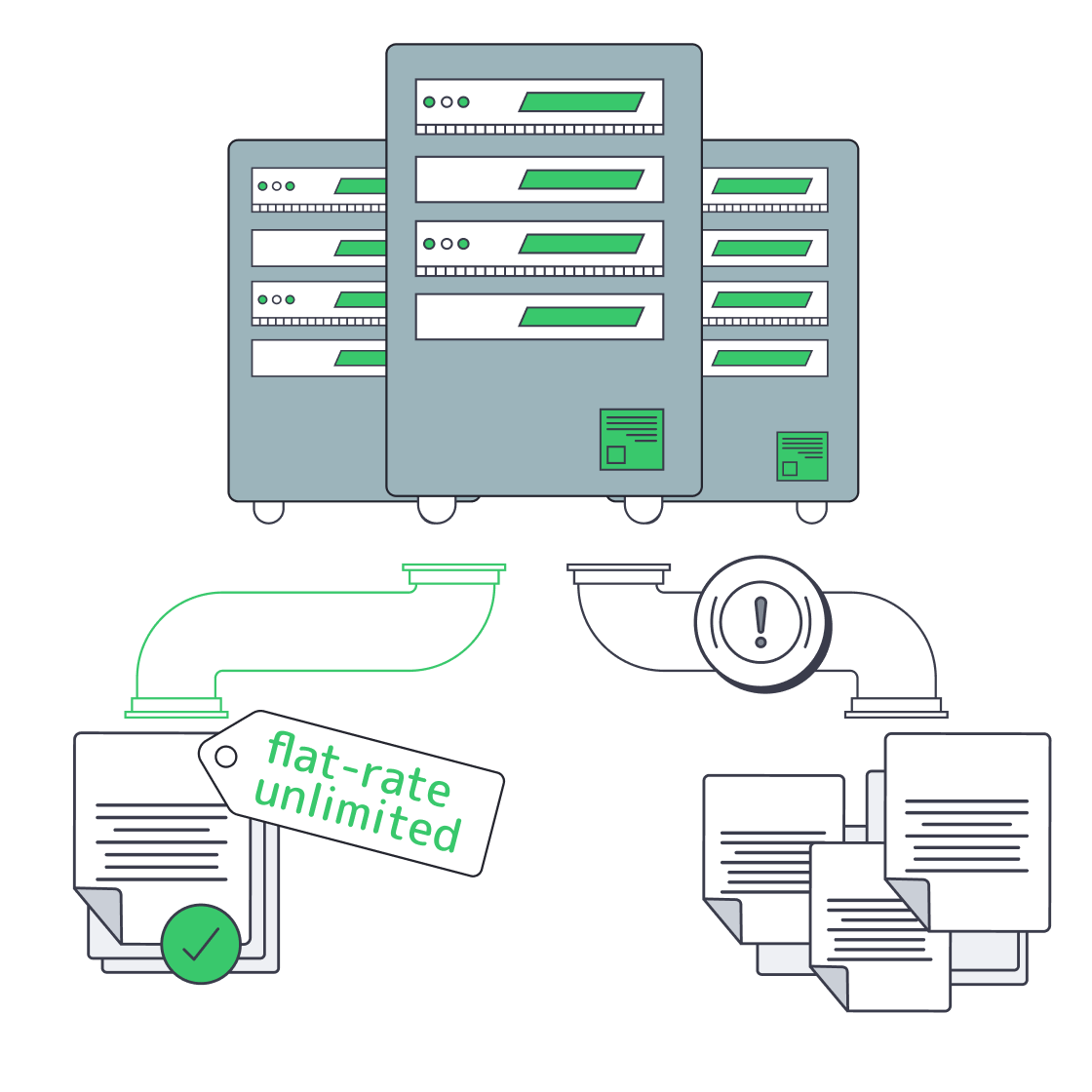
Infrastructure teams running streaming, gaming, AdTech, or analytics workloads know bandwidth—not CPU—is often the real bill driver. Against that backdrop, offers for a cheap dedicated server with unlimited bandwidth are everywhere. The promise is simple: a flat monthly fee, “unlimited” traffic, and instant savings over metered cloud egress. The reality is often less pretty: fair‑use throttling once you actually saturate the port, surprise “abusive usage” emails, or renewal hikes that quietly erase any early discount.
At the same time, the cost of high‑capacity connectivity has collapsed. TeleGeography’s 2025 IP transit data shows that in the most competitive markets, the lowest 100 GigE transit offers sit at about $0.05 per Mbps per month, with 100 GigE port prices falling roughly 12% annually from 2022 to 2025. On the transport side, weighted median 100 Gbps wavelength prices across key routes have dropped 11% per year over the last three years. Those economics are exactly what make genuinely unmetered dedicated servers viable—if the provider actually passes the savings through instead of hiding limits in the fine print.
In other words: the market now supports truly TCO‑optimized unlimited plans, but there are still plenty of traps. The rest of this piece is about telling those apart.
Choose Melbicom— Unmetered bandwidth plans — 1,300+ ready-to-go servers — 21 DC & 55+ CDN PoPs |
 |
What Makes an Unlimited-Bandwidth Dedicated Server Truly TCO-Optimized
A truly TCO‑optimized dedicated server with unlimited bandwidth keeps lifetime cost predictable: “unmetered” with no fair‑use throttling, guaranteed port capacity rather than shared ratios, clear renewal pricing, and enough backbone, peering, and support that you can run hot 24/7 without surprise bills or performance degradation.
- Start with the word “unlimited.” Many offers advertise it but tuck the real terms into a fair‑use policy: you can use as much as you like until the provider decides it’s too much. That usually means throttling or forced plan changes when you actually drive the link near line rate. A cost‑optimized plan instead spells out port speed—1, 10, 40, or even 200 Gbps—and lets you use that capacity continuously. At Melbicom we design our unlimited bandwidth dedicated server plans around that principle: if you pay for a 10 Gbps port, you can run 10 Gbps without being treated as an outlier.
- The second filter is whether the network can support that promise. Melbicom operates a global backbone with 14+ Tbps of capacity, connected to 20+ transit providers and 25+ internet exchange points (IXPs), plus 55+ CDN PoPs that push content closer to users. Ports scale from 1 Gbps up to 200 Gbps per server, so “unlimited” has real headroom rather than marketing‑only numbers.
- Finally, TCO isn’t just bandwidth. Hardware quality, provisioning agility, and support translate directly into operational cost. Melbicom runs 21 global Tier IV & Tier III data centers so you can deploy close to users without redesigning your stack each time. All of that sits behind a flat monthly price per server, with free 24/7 support, so you’re not quietly paying in engineering hours for every incident or hardware tweak.
Which Unlimited Bandwidth Plans Avoid Hidden Renewal Hikes

Unlimited bandwidth plans that genuinely avoid renewal hikes are almost boring: a single, clearly documented monthly price; no “introductory” or “promo” qualifiers; no vague fair‑use clauses; and no essential features split into billable add‑ons after month twelve.
The classic “too good to be true” pattern is a rock‑bottom first‑term price that quietly doubles at renewal. That’s tolerable on a small SaaS plan; it’s disastrous when the asset is a high‑traffic dedicated server with terabytes of data gravity. You migrate workloads, tune performance, maybe colocate other services near it—and then the second‑year invoice jumps 2–3× because the initial rate was promotional. The same trick often shows up as add‑on metering: “unlimited” on paper, but with specific traffic types, locations, or features billed separately.
The way to spot this is to read pricing tables and terms as if you were finance. If the offer page shows only a discounted introductory rate and is silent on renewals, assume the hike exists. If “unlimited” appears alongside mention of 95th‑percentile billing, burst caps, or loosely defined fair‑use policies, the risk is high that your total cost of ownership will drift up as soon as you actually use the bandwidth you’re paying for.
By contrast, a TCO‑oriented unlimited plan aims for rate stability. At Melbicom we price dedicated servers on a flat monthly basis: you pick hardware and port speed, we provide the capacity, and the price tag on our dedicated server page is what you build into your model. If you need more bandwidth, you upgrade the port or add servers—rather than discovering a multiplier in the fine print. The absence of teaser pricing matters because it prevents the infra you depended on at 1× scale from becoming untenable at 10× scale.
How Do Flat-Rate Plans Simplify Bandwidth Budgeting
Flat‑rate unmetered plans simplify bandwidth budgeting by turning a volatile, usage‑driven cost into a fixed monthly line item. Instead of watching per‑GB meters or 95th‑percentile graphs, you decide what a given server and port are worth and know your bill won’t spike every time traffic does.
Usage‑based egress pricing is the opposite. Consider a typical major cloud provider. Public documentation for Amazon EC2, for example, starts data transfer out at $0.09 per GB for the first 10 TB per month, then drops to $0.085 per GB for the next 40 TB and $0.07 per GB for the next 100 TB. Those numbers sound small until you multiply them by real‑world traffic:
| Monthly Data Transfer | Estimated Cloud Egress Cost* | Flat-Rate Server Cost |
|---|---|---|
| 10 TB | ≈ $900 (usage-based) | $500 (fixed) |
| 50 TB | ≈ $4,400 | $500 (fixed) |
| 100 TB | ≈ $7,800 | $500 (fixed) |
*Illustrative calculation based on EC2 data transfer out pricing tiers across the first 150 TB/month. Actual charges vary by region and service.
At small scales, usage‑based billing is manageable. As soon as you cross into tens of terabytes per month, bandwidth becomes your primary cost risk. Analysis from practitioners and vendors alike repeatedly flags data transfer as one of the most common sources of unexpected overruns on cloud bills. That’s before you add AI inference traffic, larger media assets, or new regions.
Flat‑rate unlimited servers invert that risk profile. Instead of bandwidth being a variable cost that explodes with success, it becomes a predictable input: you choose an unlimited bandwidth server with, for example, a 10 Gbps port at a known monthly rate, then treat bandwidth as fixed when you model margins and runway. If you need more capacity, you add nodes or step up port speeds, but individual traffic spikes don’t translate into four‑ or five‑figure surprises. Pair that with a globally distributed CDN—and you can keep content close to users while keeping origin bandwidth and cost curves stable.
From a planning perspective, that means fewer worst‑case scenarios in your spreadsheets and more confidence in long‑term commitments. Bandwidth becomes the boring part of your infrastructure P&L—which is exactly what most CFOs and CTOs want.
From Chasing a Cheap Unlimited Bandwidth Plan to Choosing a TCO-Optimized One
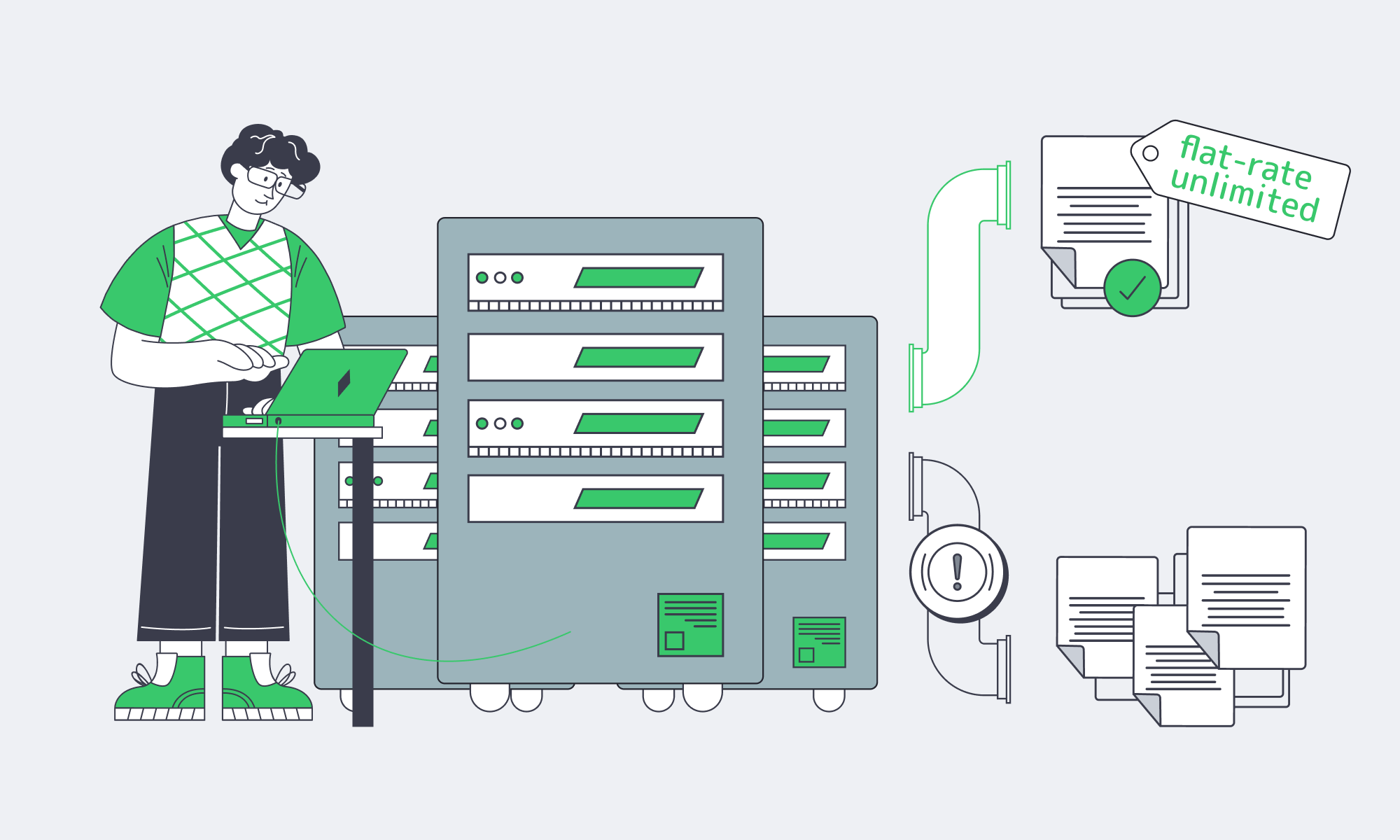
The current market makes it easy to chase the absolute lowest sticker price on anything labeled “unlimited.” The problem is that infrastructure rarely stays at its day‑one footprint. If your workloads grow as intended, 10× traffic is a matter of when, not if—and contracts that looked cheap at small scale can quietly accumulate risk.
What you want instead is a TCO‑optimized unlimited bandwidth strategy: understand how much bandwidth your workloads will consume, pick flat‑rate plans that genuinely let you use the ports you’re paying for, and ensure the underlying network and support model can keep up without hidden surcharges. Unlimited bandwidth dedicated servers that meet those requirements let you absorb new features, bitrates, codecs, and even extra regions without having to renegotiate your relationship with finance every quarter.
When you zoom out from individual offers, a few practical recommendations emerge:
- Treat “unlimited” as a technical claim, not a slogan. Ask explicitly what happens if you run the port hot 24/7. If the answer involves undefined “fair use,” thresholds, or 95th‑percentile clauses, assume there are financial or performance cliffs.
- Model renewals/edge cases before you sign. TCO‑optimized plans make renewal pricing explicit and avoid jumps after an introductory term. Include high‑traffic months, peak events, and feature launches in your cost scenarios—not just your current baseline.
- Move bandwidth from variable to fixed where it makes sense. For workloads pushing tens of terabytes per month, flat‑rate unmetered plans plus CDN offload are often cheaper and vastly more predictable than per‑GB egress, even if the per‑server sticker price looks higher at first glance.
- Favor providers that invest in backbone capacity and peering. Multi‑terabit backbones, 20+ TP, and broad IXP reach reduce both performance risk and the chance that your “unlimited” plan is really just oversold capacity with contention during peaks.
In practice, you’ll mix models—some usage‑based services where traffic is low or bursty, some flat‑rate unmetered infrastructure where throughput dominates. The key is that you choose where to take risk, instead of letting unclear fair‑use rules decide for you.
Choose flat-rate unlimited bandwidth servers
Predictable pricing and performance without fair-use throttling. Deploy in 21+ global locations with ports up to 200 Gbps and 24/7 support. Pick hardware and port speed, and keep bandwidth a fixed monthly cost.