
Blog
Sofia Servers Anchor Europe’s Emerging Data Hub
For years, Europe’s internet gravity has sat firmly in Frankfurt, London, Amsterdam, and Paris. Now the map is tilting. As AI, streaming, and distributed apps turn into bandwidth hogs, operators are shifting east and south in search of more power, cheaper land, and better routes to emerging users.
According to a JLL-backed analysis, Europe’s secondary data center markets are on track to expand capacity by 49%, while traditional FLAPD hubs grow at roughly 16% over the same period – a sign that hyperscale and edge demand are spilling into new regions.
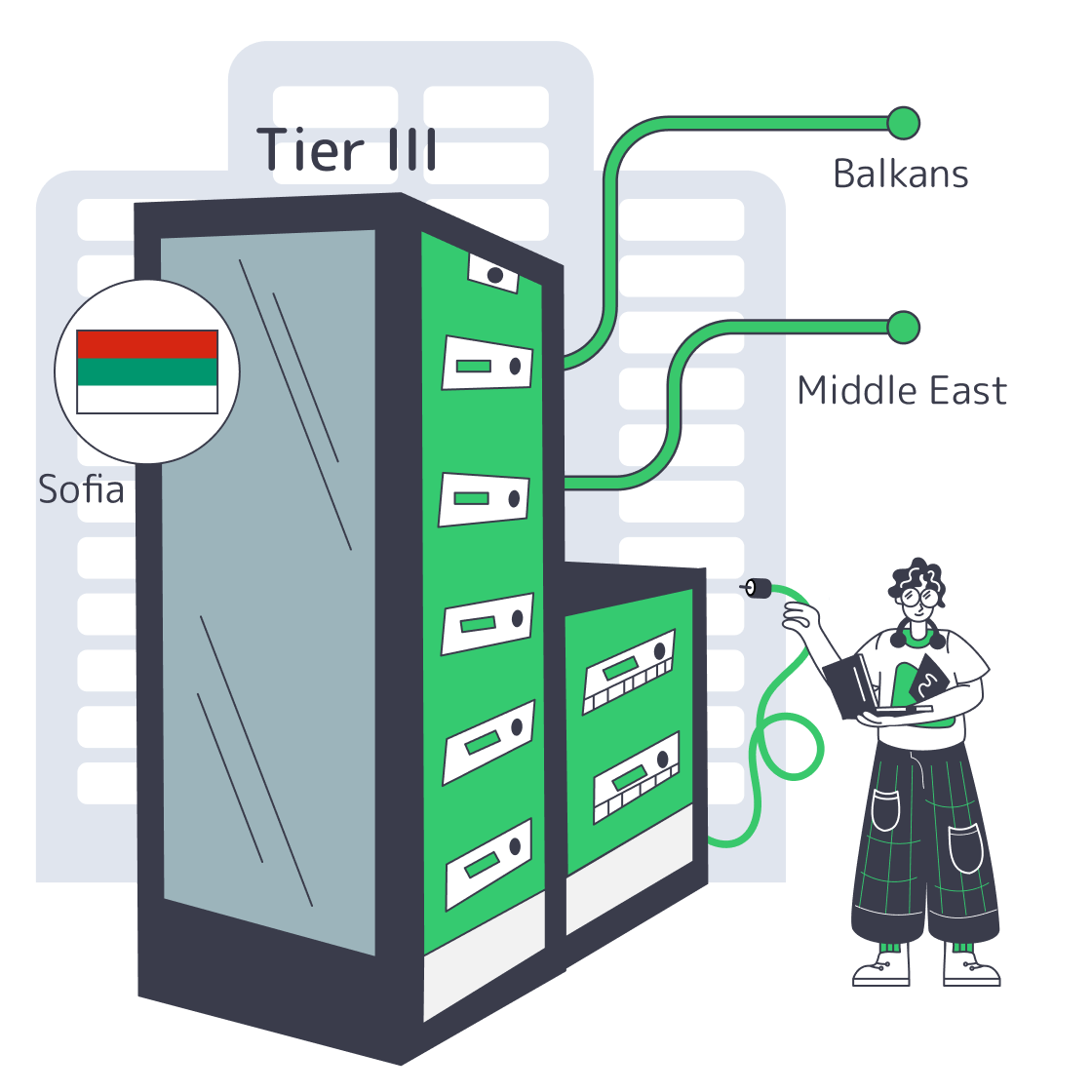
Bulgaria, is one of the clearest winners in that shift. Sitting at the crossroads between Central Europe, the Balkans, and the Middle East, Sofia combines Tier III infra, aggressively improving connectivity and low operating costs. For teams looking at a Sofia server deployment as a regional foothold, it’s no longer a niche play – it’s a strategic one.
Choose Melbicom— Tier III-certified Sofia DC — 50+ ready-to-go servers — 55+ PoP CDN across 36 countries |
 |
What Makes Sofia Ideal for Balkan DCs
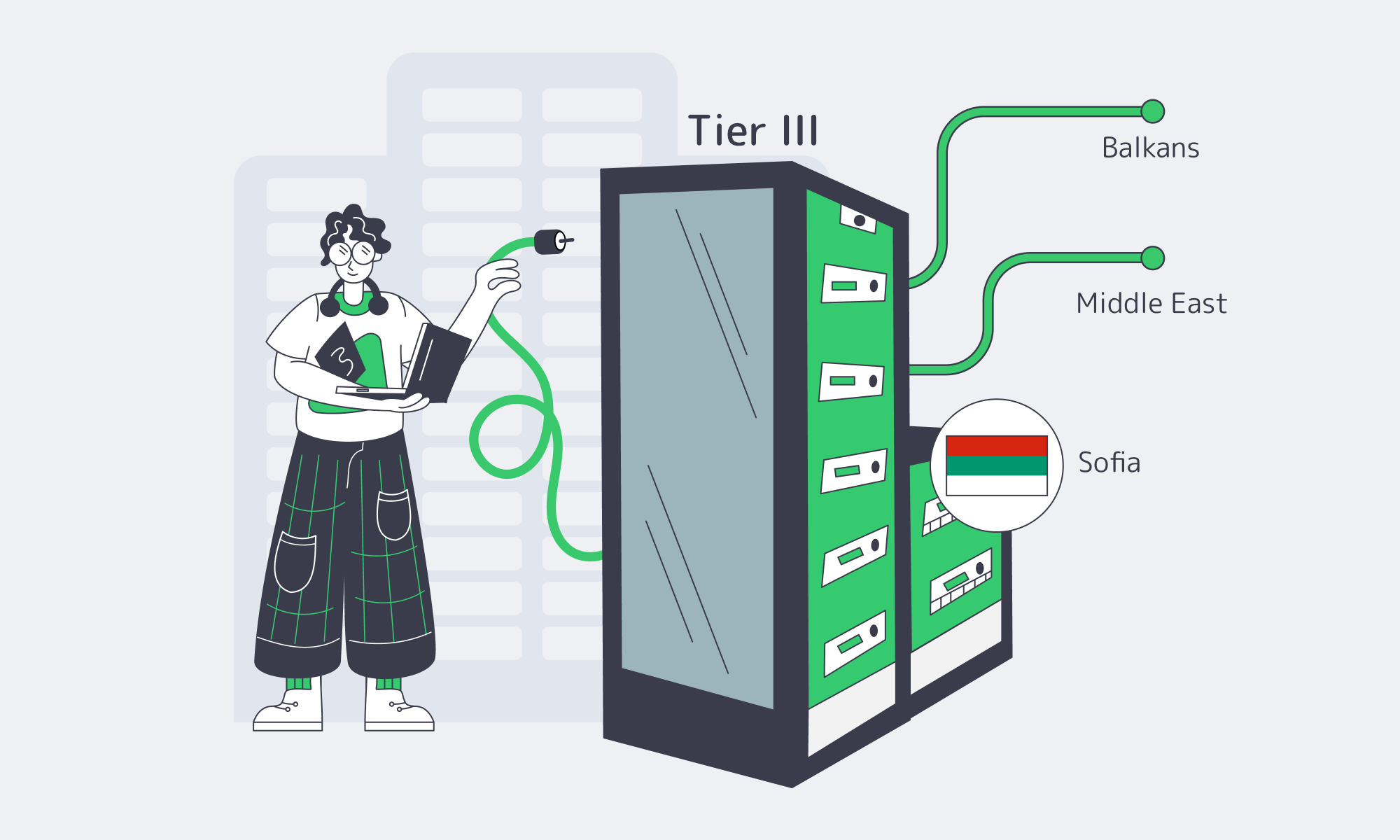
Sofia is ideal for Balkan data centers because it sits on major East–West fiber routes, offers low-latency paths into the Balkans and Turkey, and now hosts modern Tier III facilities at lower cost than Western hubs. This combination turns Sofia into a high-performance, cost-efficient anchor point for serving Southeastern Europe and nearby regions.
Sofia’s geography does a lot of heavy lifting. The city is a natural intersection of multiple Bulgarian and international networks, with fiber paths north into Romania and west into Central Europe, plus routes toward Greece and Turkey. That positioning shows up in real latency numbers: measurements between Sofia and Istanbul come in with minimums around 10 ms, making it effectively “local” to Turkey from a performance perspective.
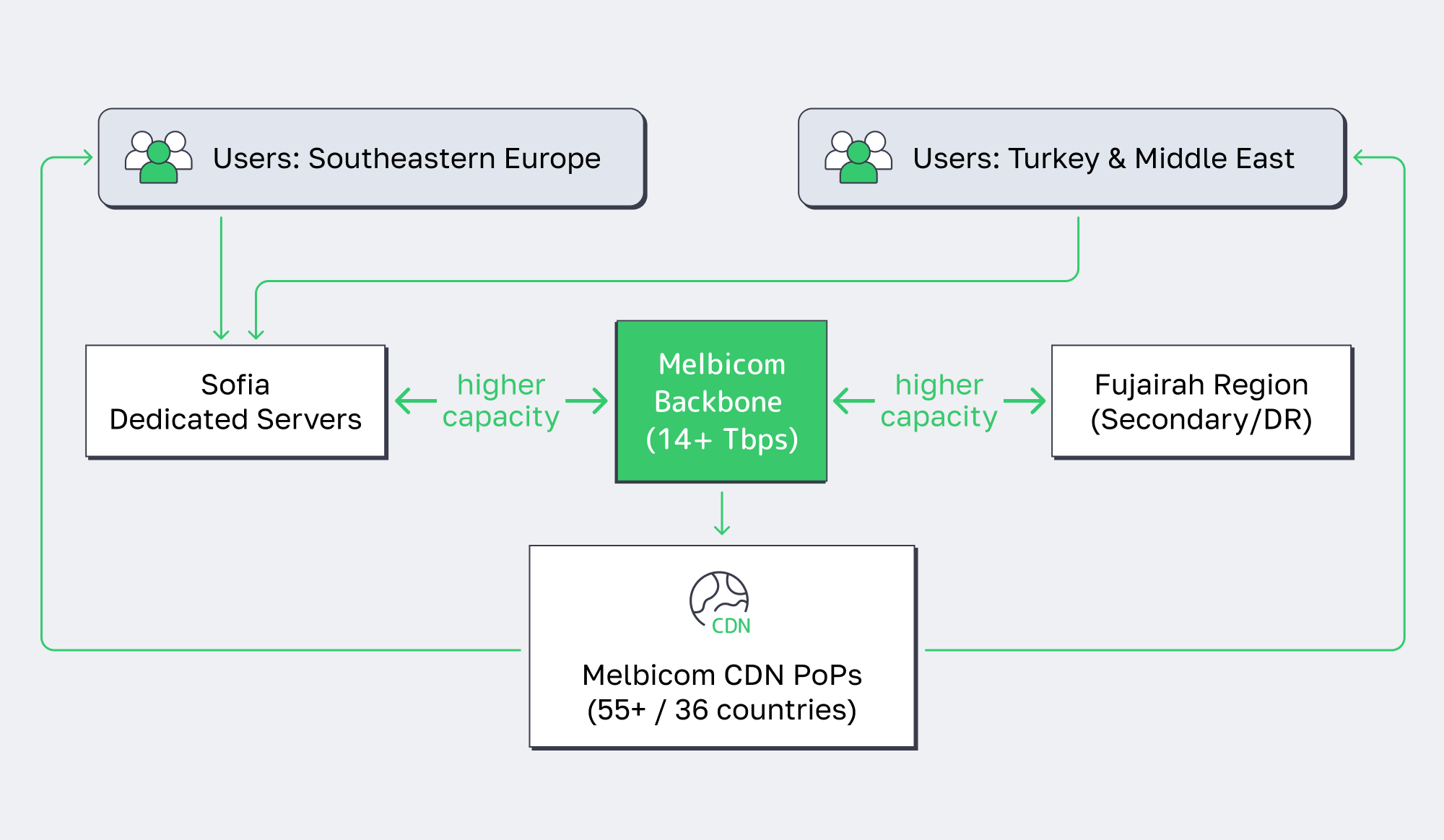
The infrastructure on top of those routes has caught up fast. A major global colocation provider recently invested $12 million to double capacity at one of its Sofia sites to 700 racks, a strong signal that international workloads are moving in. At the same time, Melbicom’s facility in Sofia – a Tier III data center with 9,000 m² of space and 3 MW of power – offers 1–40 Gbps per server connectivity. Pair that with Melbicom’s 14+ Tbps global network and you get a local data center that behaves like a major European hub from a throughput and routing standpoint.
Cost and power are the other half of the story. Land, energy, and labor in Bulgaria are significantly cheaper than in core Western markets, which is exactly why analysts highlight secondary regions as the growth engine for Europe’s data center build-out. Lower input costs mean providers like Melbicom can offer high-bandwidth Sofia servers at pricing that’s often below FLAP while still running on Tier III infrastructure and redundant power systems.
Finally, Sofia isn’t just a bandwidth pipe; it’s evolving into an AI and research hub. Bulgaria has secured €90 million in EU funding to build BRAIN++, an AI “factory” supercomputer at Sofia Tech Park – a modern GPU data center intended to support large-scale AI projects.
The government is also exploring an AI gigafactory with IBM and the European Commission, discussing a facility with 100,000+ GPUs and up to 500 MW of power demand – the kind of project that pulls in even more fiber routes and energy investment around it.
In short: the combination of location, maturing infrastructure, and AI-focused investments is turning Sofia from a regional outpost into a serious data gravity well.
Where to Host Servers for Southeastern Europe and Beyond
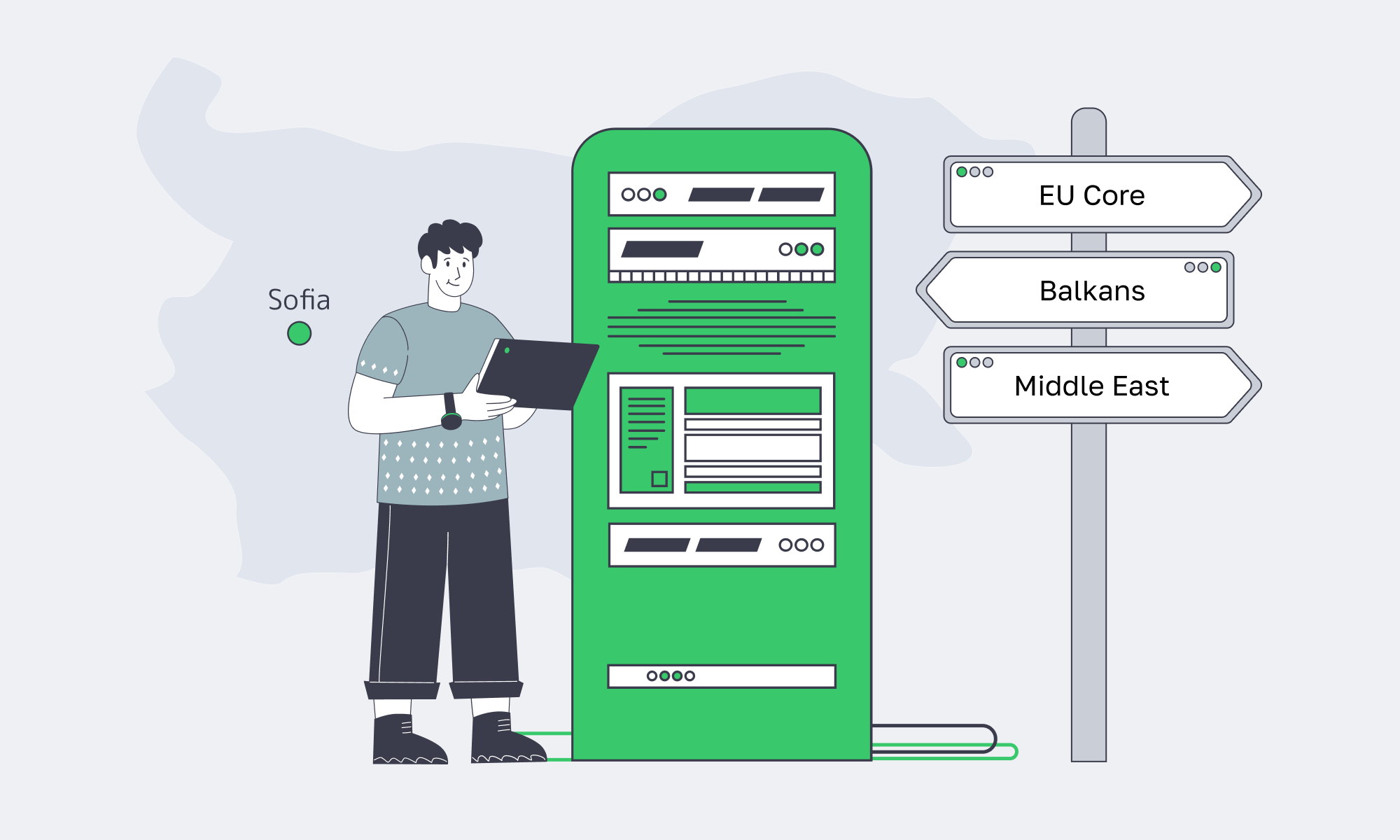
If you need to serve users across Southeastern Europe (and spill over into the Middle East), Sofia is one of the most efficient places to host. A Sofia server gives you sub-20 ms latency to major Balkan capitals, near-local performance into Istanbul, and solid paths into the Eastern Mediterranean – without the cost profile of Western hubs.
From a routing perspective, putting your workload in Sofia lets you sit near the center of a dense mesh of short-haul links. WonderNetwork’s ping data shows Sofia–Bucharest latencies clustering around 21 ms and Sofia–Athens with minimums in the low teens, even though average RTTs are higher depending on direction and path.
Layer that with ~10 ms to Istanbul and you’re effectively within a single “latency zone” that covers Romania, Greece, Serbia, Bulgaria, and Turkey – ideal for gaming, streaming, and low-latency Web3 infra.
Sofia also stays on the right side of compliance. Bulgaria is an EU, GDPR-governed jurisdiction, which simplifies life if you’re handling user data from across Europe and the Middle East. Hosting in some non-EU locations can raise uncomfortable questions about data sovereignty and cross-border access; keeping sensitive workloads inside the EU, while still being physically close to MENA routes, gives you performance without legal gray zones.
Reliability is handled at both the facility and network layers. Sofia sits on diverse fiber routes – north via Romania, west via Serbia/Central Europe, and south toward Greece and subsea cable landings. If one corridor has an issue, traffic can be rerouted through others.
Finally, Sofia’s role in AI and high-performance workloads is only going to grow. As large GPU campuses like BRAIN++ come online and the proposed AI gigafactory moves forward, local ecosystems of power, cooling, and specialized networking will keep improving. Hosting core services or data pipelines in Sofia today means you’re colocated with where AI capacity in the region is heading tomorrow.
Example: Latency From a Sofia Server to Key Regional Cities
| Destination city | Typical RTT (ms)* |
|---|---|
| Istanbul, Turkey | ~10–16 ms |
| Bucharest, Romania | ~21 ms |
| Athens, Greece | ~13–20 ms (min side) |
*Approximate ranges from WonderNetwork’s point‑in‑time measurements; real-world values vary with ISP and path.
Key Advantages of Hosting in Sofia, Bulgaria
Zooming out, the value proposition of putting a Sofia server at the center of your Eastern European footprint looks like this:
- Performance where it matters: Single‑digit to low‑tens of milliseconds to core Balkan markets and Istanbul + reasonable hops into the Eastern Mediterranean and Middle East.
- Modern, scalable infrastructure: Tier III facilities with multi‑megawatt power, redundant cooling, and fast ports enable high‑throughput, AI‑ready deployments.
- Cost efficiency vs. FLAP hubs: Lower land and power costs in Bulgaria let providers price aggressively without cutting corners on hardware or connectivity.
- Network resilience by design: Multiple fiber corridors in and out of Sofia, combined with redundant peering, reduce the blast radius of any single route failure.
- Future alignment with AI growth: EU‑funded GPU factories and proposed 100,000‑GPU hyperscale sites in Bulgaria suggest long‑term investment in the region’s digital core.
Sofia Dedicated Server: A Strategic Bet on an Emerging Hub
Choosing Sofia is not about chasing a cheap corner of the map; it’s about exploiting a structural tilt in how Europe’s infrastructure is being built. As core hubs hit power and land limits, operators are pushing new capacity into regions that still have room to grow. Sofia happens to combine that greenfield advantage with a rare density of international routes and fast paths into the Balkans and Western Asia.
For teams that care about both latency and long‑term flexibility, a Sofia server can play multiple roles at once: regional edge for Southeastern Europe, stepping stone toward the Middle East, and a resilient backup or spillover region for workloads running in Western hubs. As AI and bandwidth‑hungry applications continue to reshape traffic patterns, being present in an emerging node like Sofia looks less like an experiment and more like prudent risk management.
Launch Sofia servers today
Spin up Tier III servers in Sofia with 1–40 Gbps ports on a 14+ Tbps backbone. Go live fast with ready configs and custom builds.