
Blog
Server Dedicated USA: Provider Comparison Checklist
In the US dedicated-infrastructure market, the real differentiator is no longer the processor line on a product page. It is whether a provider can move from quote to production quickly, keep bandwidth and IP behavior predictable under pressure, and reduce the manual work your team inherits after the order is placed. Recent data-center market research says 64% of North American capacity under construction now sits outside traditional mature markets, while operators report rising costs and tighter power constraints. In that environment, “available now,” “automatable now,” and “stable endpoint now” matter more than another raw-hardware headline.
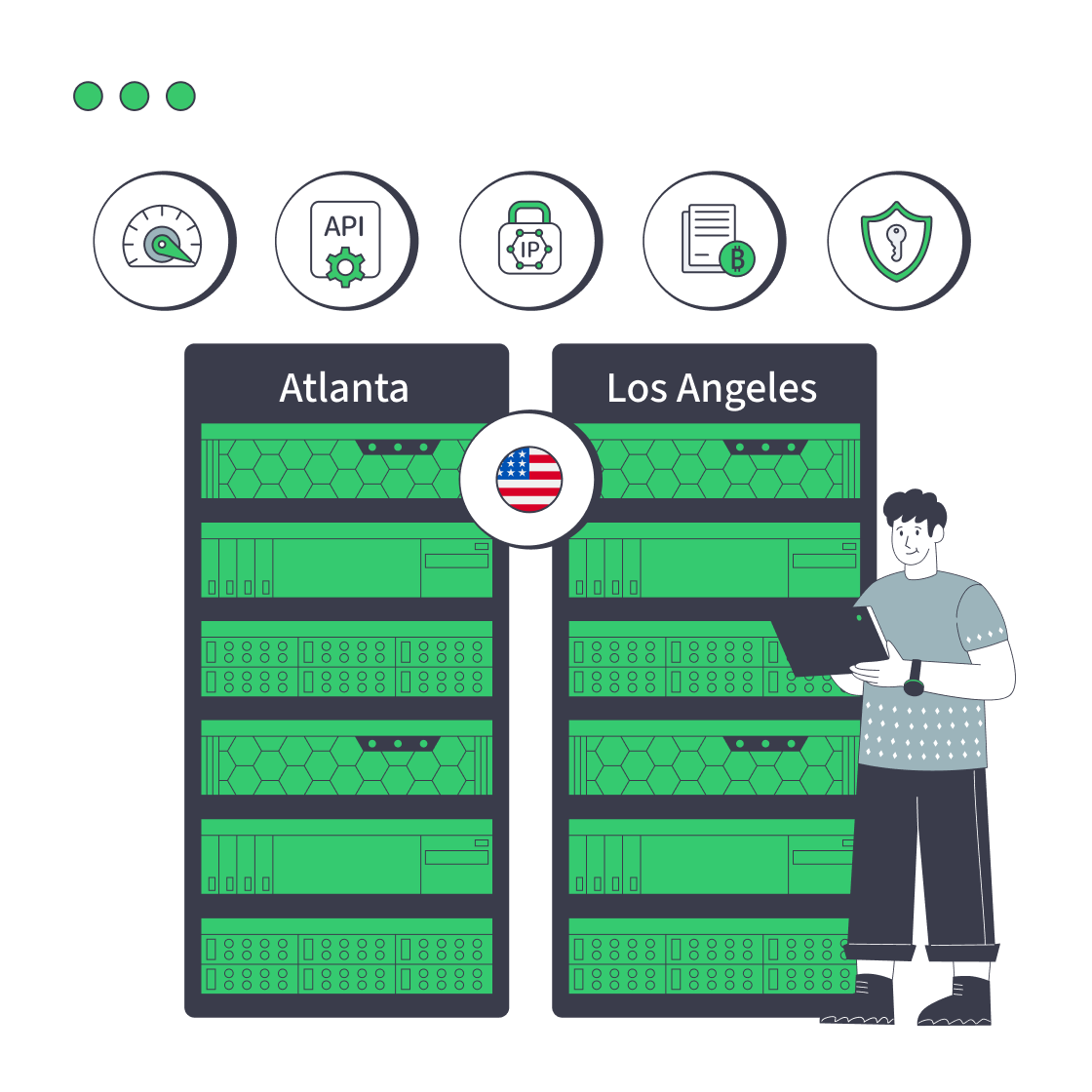
Melbicom gives that decision a practical shape through its Atlanta and Los Angeles locations. The current US ready-configuration list includes 28 servers in Atlanta and 35 in Los Angeles. At network level, Melbicom operates 21 data-center locations globally, works with 23 transit providers and 29 IXPs, and runs 39 CDN PoPs across 35 countries.
USA Servers Ready— Atlanta and LA inventory — Guaranteed bandwidth — Crypto-friendly billing |
 |
Why a Server Dedicated USA Shortlist Is Now an Operations Decision
A modern USA dedicated server shortlist should start with route behavior, deployment workflow, and trust boundaries before CPU bins. The useful question is not “Which server is fastest on paper?” It is “Which US location and provider keep latency stable, endpoints consistent, and recovery scriptable when traffic, maintenance, or incidents arrive?”
That shift changes procurement. City names are not enough; teams should test from the geographies that feed the workload. We at Melbicom publish test hosts and downloadable files for both Atlanta and Los Angeles, which lets buyers run packet-loss, path, and throughput checks before committing. The second screen is deployability: stock status, activation time, API access, and a clear support boundary are leading indicators of whether production will run by workflow or ticket queue.
How to Evaluate USA Dedicated Server Offers for Bandwidth, API, and Support
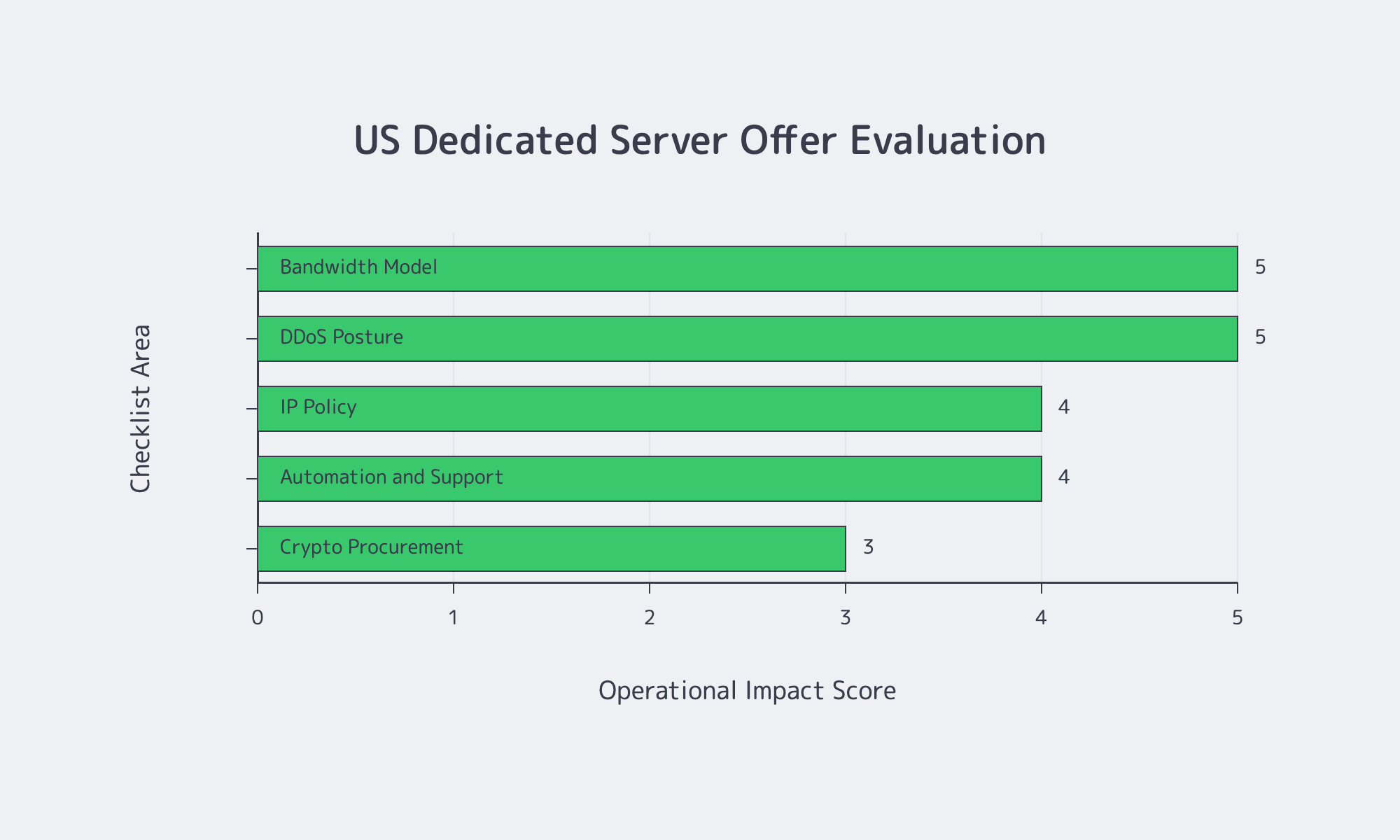
A strong USA dedicated server offer should make five things explicit: bandwidth terms, DDoS posture, IP policy, automation surface, and support scope. API-first survey data says 82% of organizations now use at least some API-first practice, with a quarter fully API-first, so manual-only provisioning is now incident risk.
What a Dedicated Server in USA Should Prove Before You Sign
Bandwidth is where “high bandwidth” often becomes slippery. Separate port speed from guaranteed throughput, oversubscription language, metered versus unmetered terms, and the treatment of attack traffic. For instance, Melbicom offers guaranteed bandwidth and flat monthly pricing tied to hardware and chosen port speed.
| Area | Provider Proof to Request | Deployment Implication |
|---|---|---|
| Bandwidth model | Port speed; guaranteed throughput; metering; attack-traffic billing | Confirms the real sustained channel |
| DDoS posture | Scrubbing mode; telemetry visibility; handoff process; billing impact | Shows behavior under hostile traffic |
| IP policy | IPv4/IPv6; BYOIP; BGP; RPKI/ROA process | Protects endpoints and allowlists |
| Automation and support | Provisioning API; rebuilds; auth model; KVM/IPMI; 24/7 scope | Keeps failover replayable |
| Crypto procurement | Settlement asset; invoice currency; confirmations; renewals; credits/refunds | Prevents renewal friction |
Support needs the same scrutiny. “24/7 support” can mean anything from remote hands to useful help during OS installs, rebuilds, and maintenance windows. DDoS posture belongs in the same pass. Threat telemetry recorded more than 8 million DDoS attacks in a six-month period, and the operational question is not whether a badge says “protected.” It is where scrubbing happens, what telemetry remains visible, and whether attack traffic can distort billing or capacity planning.
Managed vs. Unmanaged US Dedicated Servers for Nodes and Apps
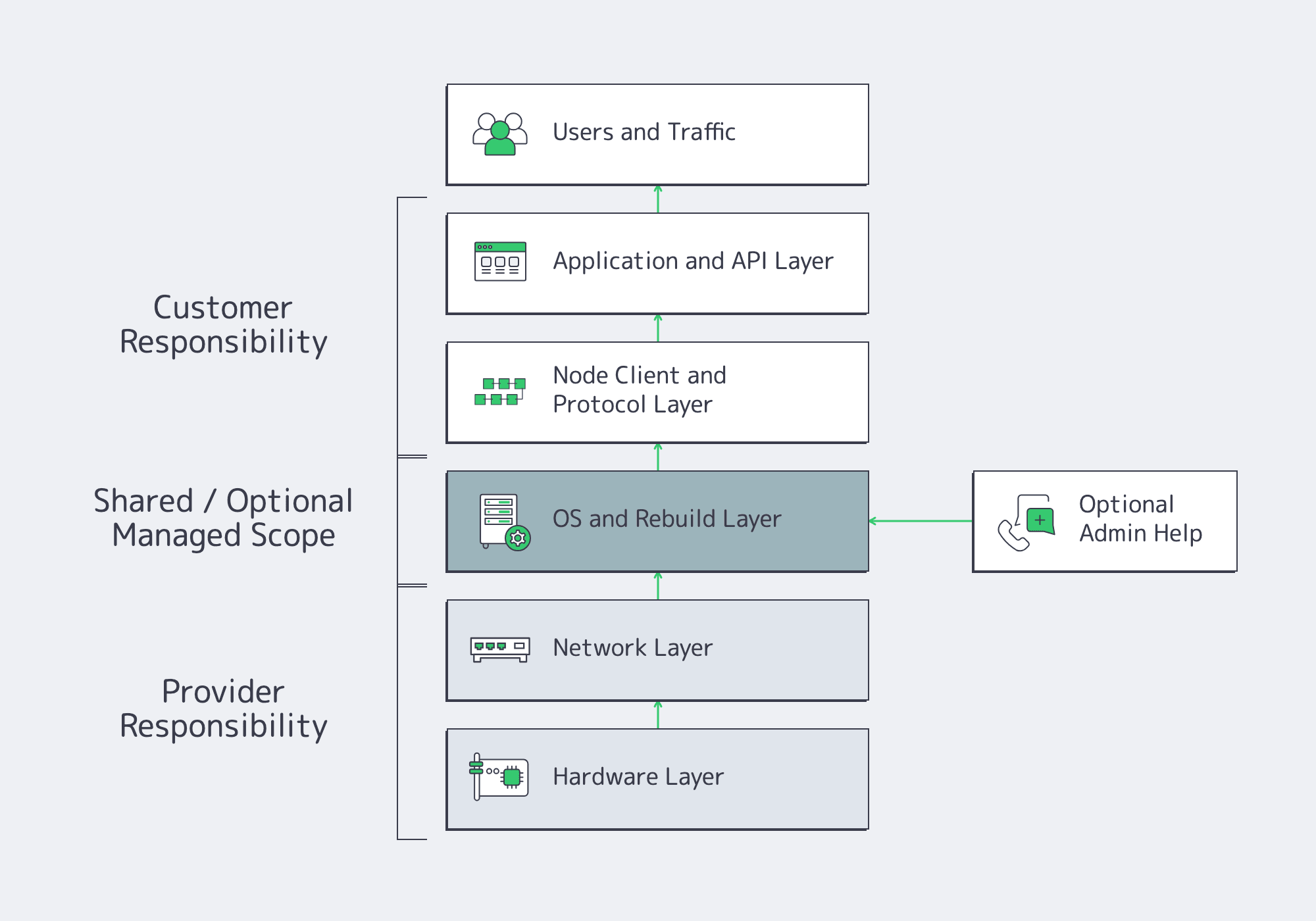
For node workloads and production apps, managed versus unmanaged is too blunt. The practical question is which layers the provider operates and which layers your team retains. The common target is provider-operated hardware and network, customer-controlled protocol and application logic, plus optional administration help for OS work, rebuilds, and patch windows.
For instance, in Web3, that split matters in node and RPC deployment hardening. A resilient layout separates authoritative node paths from public RPC fan-out, keeps replication on private paths, and uses BGP or BYOIP when endpoint continuity matters during maintenance or regional failover. Melbicom offers BGP/BYOIP and private inter-data-center links, horizontally scaled multi-region RPC patterns, and migration paths designed to avoid endpoint changes.
The same logic applies to exchange backends and wallet-adjacent systems. Customer-facing APIs, payment orchestration, and customer-data stores should not share a trust zone with signing systems or withdrawal controls. Blockchain-crime analysis put stolen funds at $2.2 billion and found private-key compromises accounted for 43.8% of losses. The practical takeaway is basic but unforgiving: keep public ingress away from key material, limit systems that can touch signing flows, and use hardware-backed cryptographic controls when asset value justifies them.
BTC Billing, IP Policy, and Security for Dedicated Server Deployment
BTC billing, IP policy, and security baselines should be decided before a dedicated server is deployed, because all three shape production risk. Billing affects renewal continuity, IP policy affects endpoint stability, and management security affects the blast radius of routine operations. Treat them as architecture inputs, not back-office cleanup.
When a USA Dedicated Server with BTC Is Really a Treasury Workflow Decision
A USA dedicated server with BTC should be framed as procurement flexibility, not a compliance shortcut or branding gimmick. The point is whether the payment rail fits how operations and treasury already move. Melbicom’s FAQ says crypto payments are available and can be enabled for new orders or renewals through an account manager, while US pages advertise monthly billing. Before the first invoice, clarify settlement asset, invoice currency, pricing source, quote-lock period, confirmation threshold, renewal workflow, and refund or credit-note path.
For teams that already hold digital assets, crypto billing can remove conversion steps and reduce weekend, cross-border, or card-approval friction. The privacy-friendly version is boring in the best way: clean invoices, clear ownership records, limited exposure of payment credentials, and fewer manual handoffs between treasury and infrastructure.
Dedicated Server USA IP Policy Requirements
IP policy is now architecture. Public registry guidance says the ARIN IPv4 free pool is depleted, new networks should request IPv6, and organizations seeking IPv4 should expect transfer workflows or pre-approval. Public IPv6 measurement puts global adoption around 46.5%, with US capability near 60%, so dual-stack is no longer a side quest. A dedicated server in USA should be evaluated for IPv6 readiness, BYOIP BGP sessions, route objects, RPKI, ROAs, route-origin validation, and prefix filtering. NIST routing guidance points in the same direction: stable endpoints require verifiable routing practice, not just address space.
Security baselines should be written before the server goes live. Management paths should stay off the public internet, VPN access should use MFA and narrow feature exposure, and cryptographic workflows should favor controlled key handling over convenience. For exchanges, wallets, and node operators, the minimum baseline is segmented ingress, hardened management, separate signing surfaces, auditable privileged access, and rebuild automation that can reproduce a known-good state.
Straight to Deployment with a Dedicated Server in USA
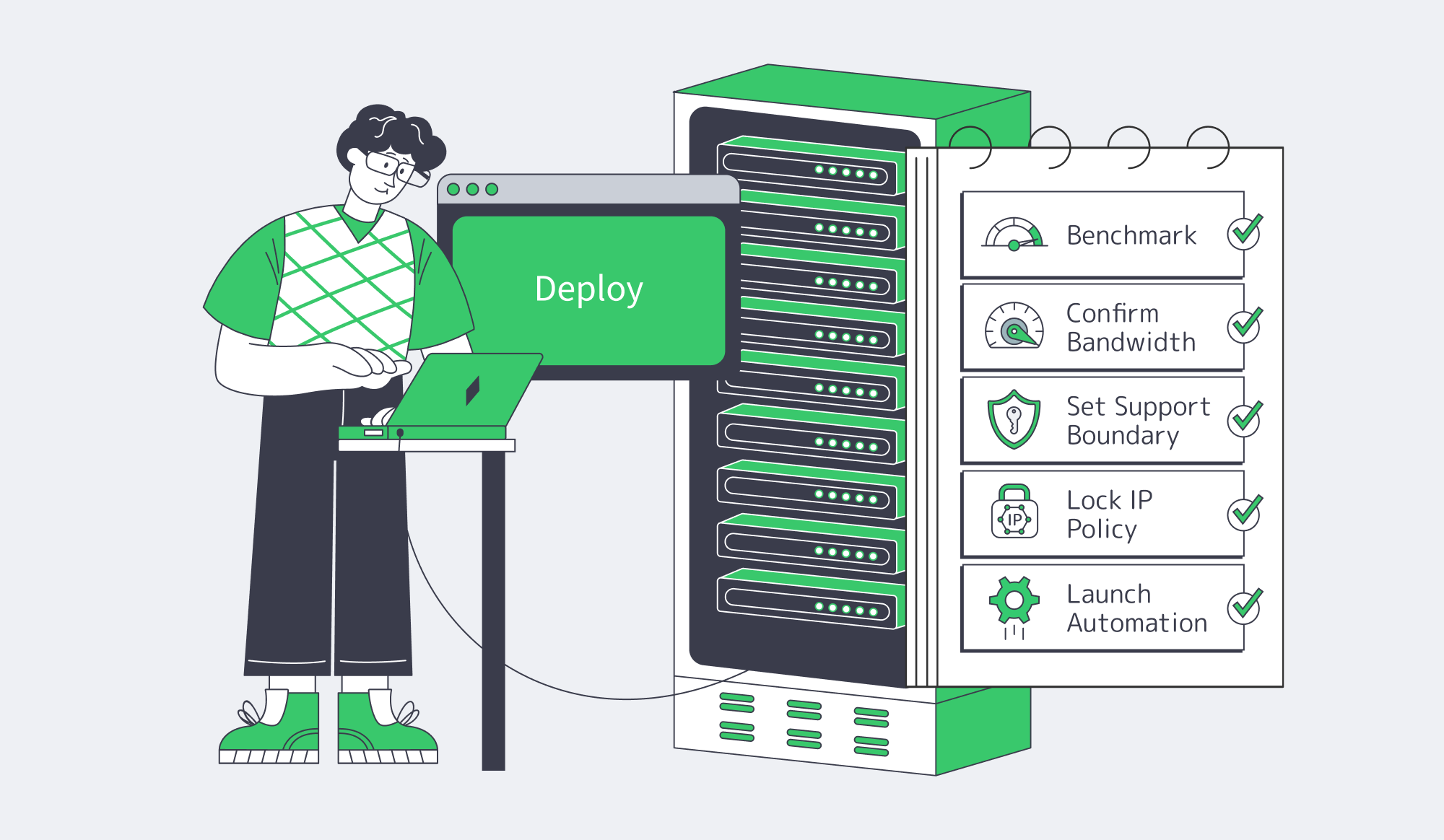
The fastest way to buy well is to turn the shortlist into an execution plan. A dedicated server in USA should be benchmarked from real traffic origins, matched to documented bandwidth and IP terms, deployed through repeatable automation, secured before exposure, and procured through a billing rail that will not interrupt renewals.
- Benchmark both US locations from real traffic origins; use published test files and path tests rather than a city name alone.
- Put bandwidth into writing: port speed, guaranteed throughput, oversubscription language, metered or unmetered terms, and attack-traffic treatment.
- Decide the ownership boundary: let the provider operate hardware and network reliability, while your team controls protocol, client, and release logic.
- Treat IP policy as architecture: require dual-stack readiness, decide whether BGP/BYOIP matters, and ask how routing-security controls are handled.
- Keep management off the public internet and require VPN plus MFA for KVM, IPMI, VPN, and privileged accounts.
- Separate public APIs from signing, payments, and customer-data systems; use hardware-backed cryptographic handling where key risk is material.
- Confirm crypto procurement before the first invoice: settlement asset, invoice currency, pricing source, confirmation threshold, renewal workflow, and credits or refunds.
- Use API hooks or infrastructure-as-code for provisioning, rebuilds, and failover; if deployment cannot be replayed automatically, it is not production-ready.
That is the practical meaning of a modern server dedicated USA purchase. It is not a hunt for the lowest monthly number or the loudest bandwidth claim. It is a search for infrastructure that is deployable, automatable, supportable, and compatible with the way security and finance already work.
Deploy in the USA
Compare US locations, bandwidth, APIs, routing, stock, and BTC billing.