
Blog

Maximizing Uptime: Redundancy and DDoS Protection for Adult Hosting
Outages on adult platforms tear straight into revenue and brand trust. Industry research on downtime estimates average losses of around $9,000 per minute for digital businesses, with large enterprises absorbing hundreds of millions annually across incidents. For an adult platform that lives or dies on recurring spend and creator loyalty, the real bill includes churn, chargebacks, and ad campaigns to recover reputation.
At the same time, the volume and shape of traffic keep tilting the odds against you. Video already accounts for about 82% of all internet traffic, and that share is still rising as more consumption shifts to streaming. Adult content is massively over‑represented in that stream: multiple independent analyses still converge around roughly 35% of all internet downloads being linked to adult content.
Choose Melbicom— 1100+ ready-to-go servers — 21 global Tier IV & III data centers — 39 PoP CDN across 6 continents |
 |
That traffic is increasingly live. In the broader content ecosystem, one recent analysis of social usage found around 70% of social media users now prefer live video over pre‑recorded content, with Gen Z spending about 3.5 hours a day on social platforms and dedicating a big chunk of that to live streams. Adult creators are following the same curve: interactive cam sessions, real‑time shows, and pay‑per‑minute live events.
Meanwhile, the attack surface is getting more hostile, not less. Cloudflare’s telemetry shows how quickly DDoS has escalated: 4.5 million DDoS attacks mitigated in just Q1 2024 — and 36.2 million attacks already mitigated in the first three quarters of 2025, a 170% increase over all of 2024. Many of those are short “hit‑and‑run” bursts; Cloudflare’s Q1 2025 report notes that 89% of network‑layer and 75% of HTTP DDoS attacks end within 10 minutes — far too fast for manual mitigation or ticket‑driven response.
On top of that, DDoS is no longer just about volume. Streaming‑focused security research highlights ransomware, bots, DRM bypass, and data breaches as core threats for media platforms, with bots alone accounting for nearly half of all internet traffic and significantly distorting performance and analytics. For adult platforms, that means every outage or slowdown is a revenue, trust, and compliance event — not just a technical one.
We at Melbicom operate dedicated streaming infrastructure, CDN, S3‑compatible storage, and BGP‑enabled routing for high‑risk verticals. In this article, we combine that experience with current data on DDoS trends, streaming economics, and traffic behavior to answer one question: how do you design adult hosting DDoS protection and redundancy so that attacks, surges, and failures become routine engineering problems, not existential crises?
Key Signals: Why Uptime Is Non‑Negotiable for Adult Platforms
| Factor | Data Point | Why It Matters for Adult Platforms |
|---|---|---|
| Video dominance | Video made up 82% of all internet traffic in 2022 and continues to grow. | Adult platforms are overwhelmingly video‑first; your entire product is exposed to bandwidth and latency shocks. |
| Adult share of downloads | Around 35% of all internet downloads are adult media. | You operate in one of the highest‑volume verticals, with matching visibility to attackers and regulators. |
| 4K streaming cost | Netflix‑style 4K streams run at ~25 Mbps and ~7 GB/hour. | High bitrates make concurrency spikes especially punishing for origin and network if capacity planning is conservative. |
| DDoS escalation | Cloudflare mitigated 4.5M DDoS attacks in Q1 2024 and 36.2M in 2025 YTD, 170% of the 2024 total. | The background noise of attacks is now continuous; you should assume you’ll be hit, repeatedly. |
| Cost of downtime | Oxford Economics‑based analysis pegs average IT downtime at ~$9,000 per minute for large organizations. | Even short outages during peaks can erase months of margin — before you factor in refunds, churn, and brand damage. |
Adult Hosting DDoS Protection: Why Uptime Is Non‑Negotiable
For an adult platform, “five nines” isn’t a purely academic SLA number — it’s a proxy for creator payouts, partner trust, and risk tolerance from payment providers and ad networks.
Attackers understand this leverage. They time campaigns to coincide with:
- High‑profile drops: new series, branded shows, influencer crossovers
- Scheduled live events: cam marathons, paid live streams
- Promo pushes: email, socials, affiliate pushes landing within a narrow window
Modern DDoS traffic is rarely a single brute‑force flood. It’s multi‑vector and time‑boxed, often combining volumetric L3/L4 floods with HTTP‑layer noise and bot activity. Cloudflare’s Q1 2025 data shows that while most attacks are “small” by hyperscaler standards, they still saturate typical enterprise links and crash unprotected servers — and almost all finish before a human can triage.
At the scale of a busy adult tube or premium live platform, that means:
- On‑demand mitigation is effectively obsolete. By the time you’ve paged the on‑call and switched traffic into a third‑party scrubber, the first campaign is over — and the second is warming up.
- Attack and organic surges look similar at the edge. A trending creator or viral promotion can produce request curves that resemble a denial‑of‑service without good instrumentation and rate‑limiting.
Any credible adult hosting DDoS protection strategy therefore has to assume always‑on, automated mitigation at the network and CDN layer, and redundant, high‑bandwidth dedicated servers behind that shield, sized for peak traffic plus a safety margin, not monthly averages.
Adult Video Content and File Hosting
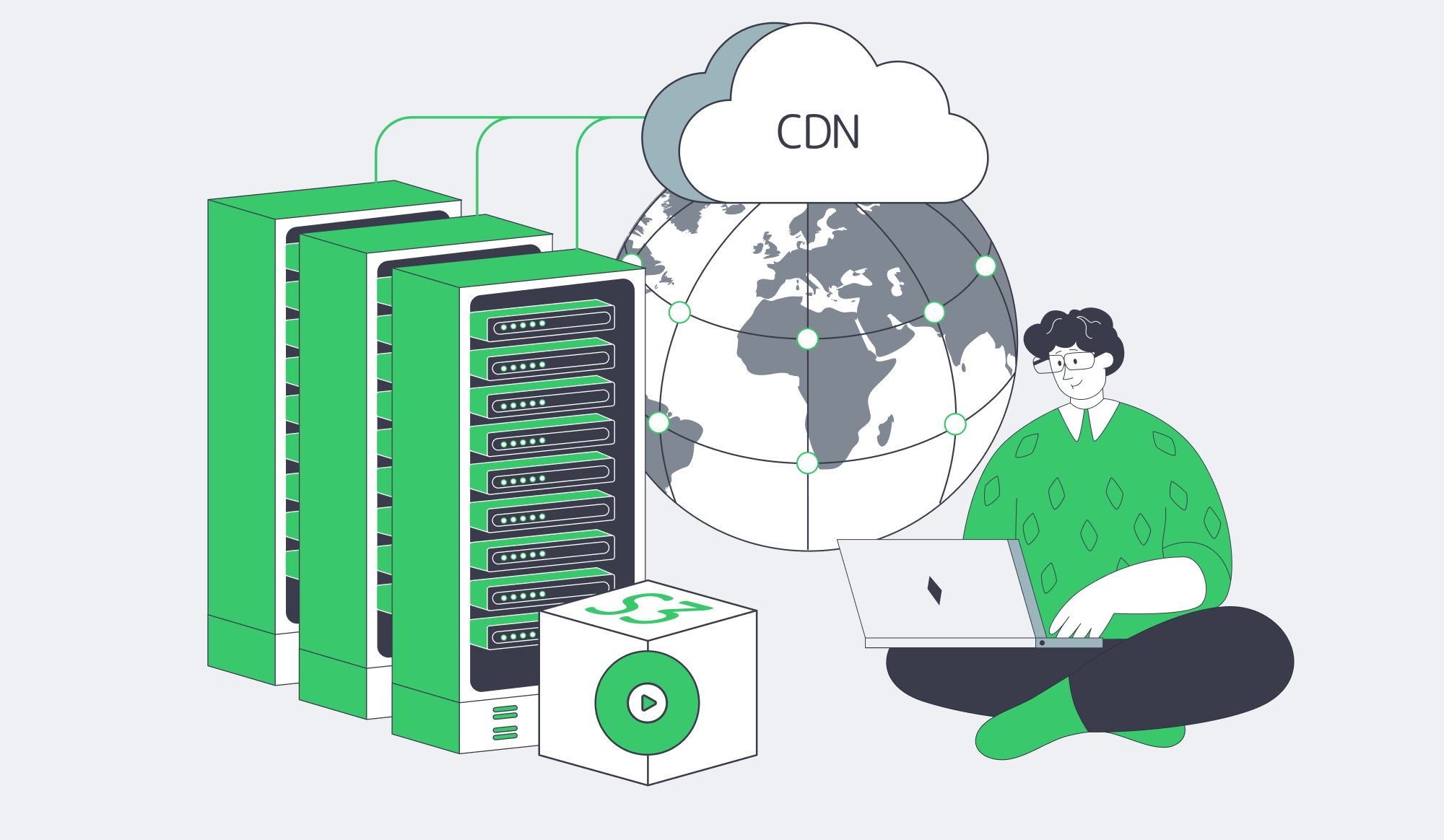
Most serious adult platforms now rely on dedicated streaming servers fronted by a CDN, plus separate object storage for archives and downloads. The objective is simple: keep origin nodes lean, cache everything aggressively, and ensure that no single physical server or rack is a point of failure — even under sustained attack.
Under the hood, this means designing around the realities of high‑bitrate, attack‑prone traffic. From an infrastructure standpoint, resilient adult hosting for this layer looks like:
1. High‑bandwidth dedicated servers close to users
Melbicom offers dedicated servers in 21 Tier III/IV data centers globally, including hubs like Amsterdam, Los Angeles, São Paulo, Lagos, Madrid, and Singapore. Depending on location, per‑server ports reach up to 200 Gbps, so clusters can be built for everything from regional cam platforms to global video archives.
2. CDN offload as a first‑class requirement, not an add‑on
Melbicom’s CDN is built on 39 PoPs across 35 countries, with origin shielding, geographic request routing, and multi‑origin pooling for load balancing and failover. For adult workloads this does three things:
- Keeps hot content local to viewers, reducing TTFB and rebuffering.
- Shields origins behind anycast PoPs so DDoS traffic is handled at the edge.
- Enables regional A/B testing (e.g., moving a subset of traffic to a second origin cluster without DNS flips).
3. S3‑compatible object storage for archives and downloads
For long‑tail catalogs and large downloadable assets, Melbicom’s S3‑compatible storage provides NVMe‑backed storage with erasure coding and IAM controls. That gives you:
- A durable backing store for originals and mezzanine files.
- The ability to serve files via CDN using signed URLs, keeping S3 points private.
- Predictable bandwidth pricing and free ingress, which matters when you’re constantly ingesting new content.
The architectural pattern is straightforward: dedicated servers for transcoding and origin, CDN for distribution, S3 for durability — all stitched together over a backbone that is engineered for DDoS resistance and redundancy end‑to‑end.
Adult Content Hosting Solutions
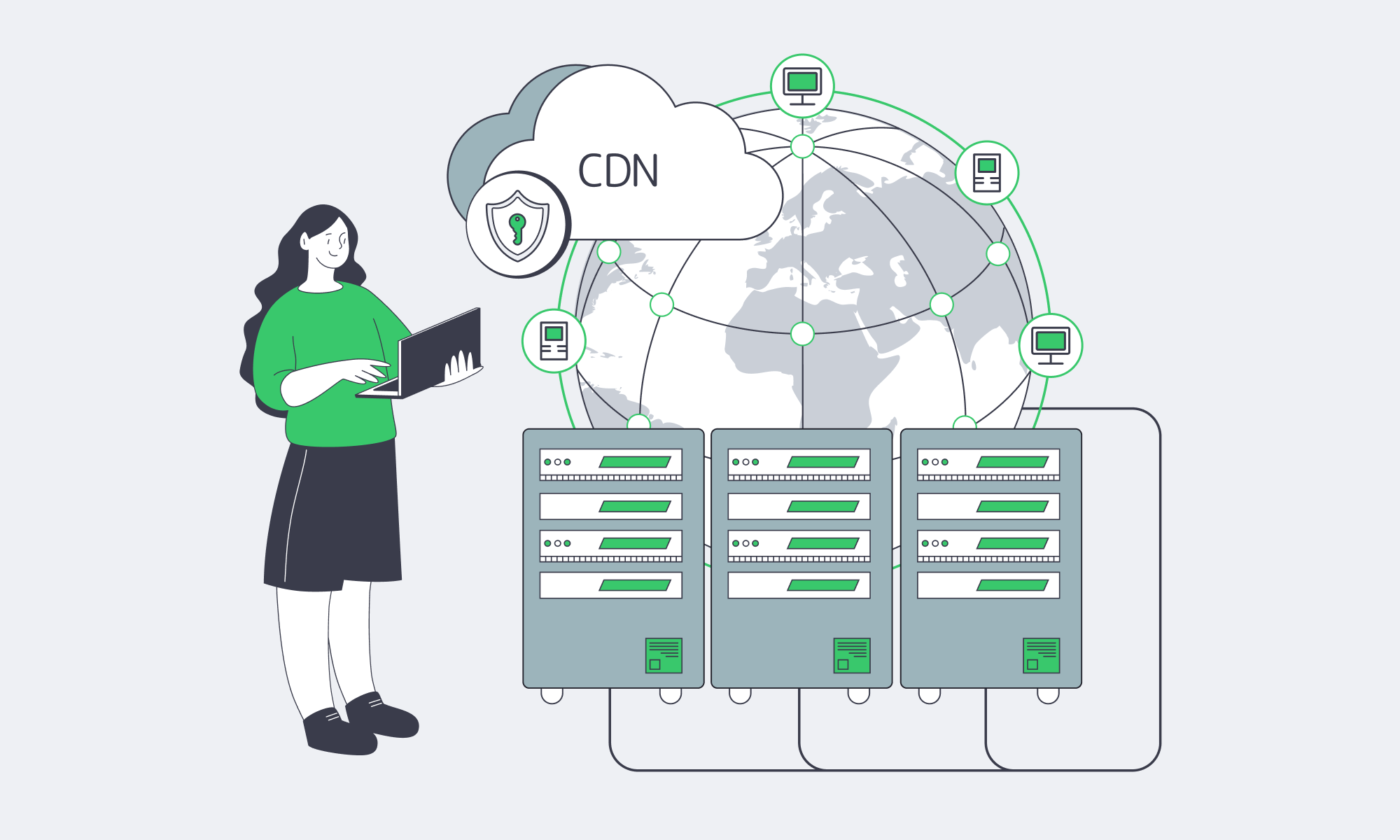
You can think of a serious adult hosting stack as a set of layers that must all behave correctly under both traffic overload and active attack:
Dedicated Servers as the Backbone of Resilient Adult Infrastructure
Single-tenant servers provide deterministic bandwidth per machine — in Melbicom’s case, up to 200 Gbps per server — along with full control over kernel-level network handling, cache hierarchies, and storage layouts. They also offer a predictable cost model, allowing bandwidth and hardware to be sized for worst-case live-event loads rather than averages. From there, true resilience comes from how those servers are arranged.
Anti‑DDoS Dedicated Servers for Adult Sites
Because modern DDoS attacks are surgical and increasingly automated, mitigation has to be inline and always on. The nature of these bursts — often lasting under a minute and mimicking legitimate traffic — turns them into a design constraint. For adult hosting, this means edge defenses must be behavior-aware rather than reliant on default CDN or WAF profiles. Attacks frequently disguise themselves as cached traffic, abuse search and 404 endpoints, or rely on randomized query strings and headers to bypass caching. Effective protection now depends on CDNs that rate-limit both cached and dynamic content, block cache-busting patterns, and aggressively cache or pre-compute expensive endpoints. It also requires behavioral analysis that evaluates request patterns, timing, and headers rather than just IP addresses.
At the network layer, capacity and filtering need to be built directly into the backbone to withstand the hyper-volumetric spikes seen in 2025. Melbicom follows this model by integrating always-on DDoS filtering into its global network, removing hostile traffic as it enters the backbone without billing tenants for attack bandwidth, and ensuring neighboring customers benefit from the same hardened paths. On the server side, resilient architectures typically separate edge-origin and core-origin clusters to protect control-plane and storage systems; isolate login and payment endpoints on hardened origins; and implement strict health checks with circuit breakers so degraded regions are drained quickly rather than flapping between unhealthy nodes.
Redundant Adult Hosting and Global Failover
DDoS is only one failure mode; routine issues like fiber cuts, power problems, regional routing incidents, or deployment mistakes can be just as damaging. For adult platforms operating across North America, Europe, and fast-growing markets, three redundancy patterns consistently work well.
The first is active/active regions for core web and API functions, with at least two regions per continent, each running its own server pools and database replicas. A global CDN routes users to the nearest healthy region, and origin pools are configured so a secondary region can take over within seconds without relying on DNS changes.
The second is BGP-enabled stability: when you own your IP space, BGP sessions with the hosting provider allow your prefixes to be announced across multiple data centers. Melbicom’s BGP Session service lets customers move services between locations while keeping IPs stable, use multiple upstreams with RPKI/IRR protections, and maintain consistent premium/API hostnames for partners that whitelist specific addresses.
The third pattern is separating the hot path from bulk storage. Live and frequently accessed content is served from high-bandwidth origins close to major audiences, while cold archives sit in S3‑compatible storage accessed through signed CDN URLs. During partial outages — such as a regional issue in one data center — this design lets platforms deprioritize high-latency archival fetches and focus on keeping the hot path (live sessions, trending VOD, logins, payments) responsive.
Security trends for streaming underscore why this separation matters. Cybergen’s analysis of streaming threats in 2025 highlights how ransomware, bots, and data breaches can all hit the same platform at once, and that “almost half of internet traffic” now comes from bots that degrade performance and distort analytics if left unchecked. A layered architecture gives you options to contain damage.
Are There Any Reliable Hosting Services Specialized in Adult Content?
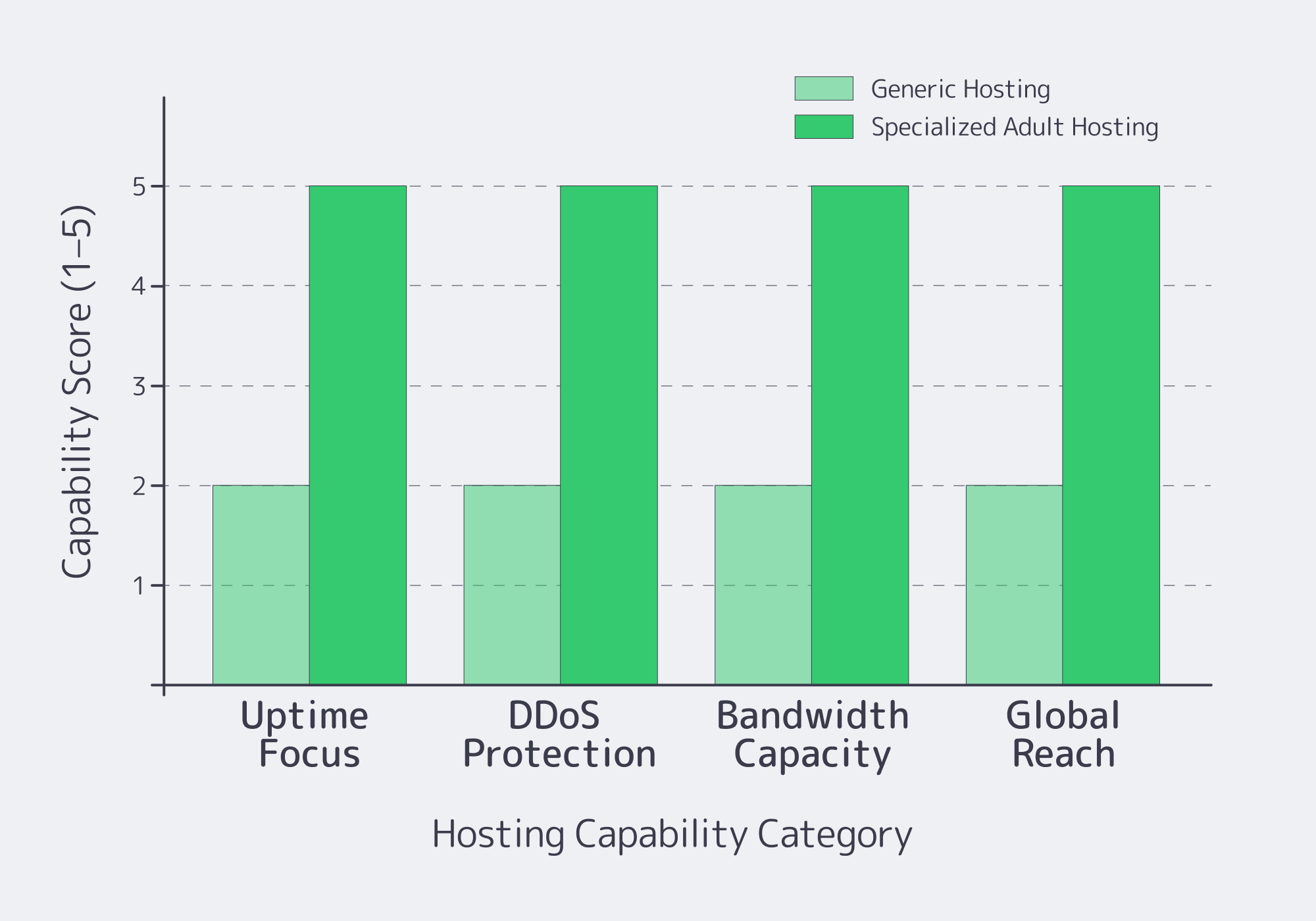
Yes — but “reliable” has to mean more than just allowing adult content. You want providers that understand streaming workloads, tolerate payment‑provider and regulatory pressure, and operate their own network, data centers, CDN, and storage, so they can actually deliver on uptime and DDoS resilience.
For adult platforms, due diligence should focus on three questions:
- Does the provider operate its own backbone and CDN, or just resell? Melbicom runs a global backbone with 21 Tier III/IV data centers and 39 CDN PoPs across 35 countries, giving us direct control over routing, DDoS filtering, and peering. This vertical integration is what makes deterministic latency and failover possible.
- Can they actually absorb and mitigate real‑world DDoS campaigns? With hyper‑volumetric attacks now reaching 22.2 Tbps and ~10.6 billion packets per second, and thousands of >1 Tbps or >1 Bpps attacks recorded in a single year, your provider’s DDoS story has to go beyond “we use a firewall.” Melbicom’s network‑native DDoS filtering and CDN‑level request handling are built specifically for this environment.
- Is there enough hardware variety and capacity to match your growth curve? For adult workloads, we typically see platform teams evolve from a handful of mid‑range servers to dozens of high‑bandwidth configs across regions, often with bespoke builds (deployed within 3–5 business days). We also maintain 1100+ ready‑to‑go server configs, so scaling isn’t a procurement project every time you cross a new threshold.
When those ingredients are in place — adult‑friendly policies, vertical control over the stack, serious DDoS capacity, and hardware variety — reliable adult hosting stops being a marketing phrase and becomes a measurable property of your platform.
Bringing It All Together: Architecting Always‑On Adult Platforms
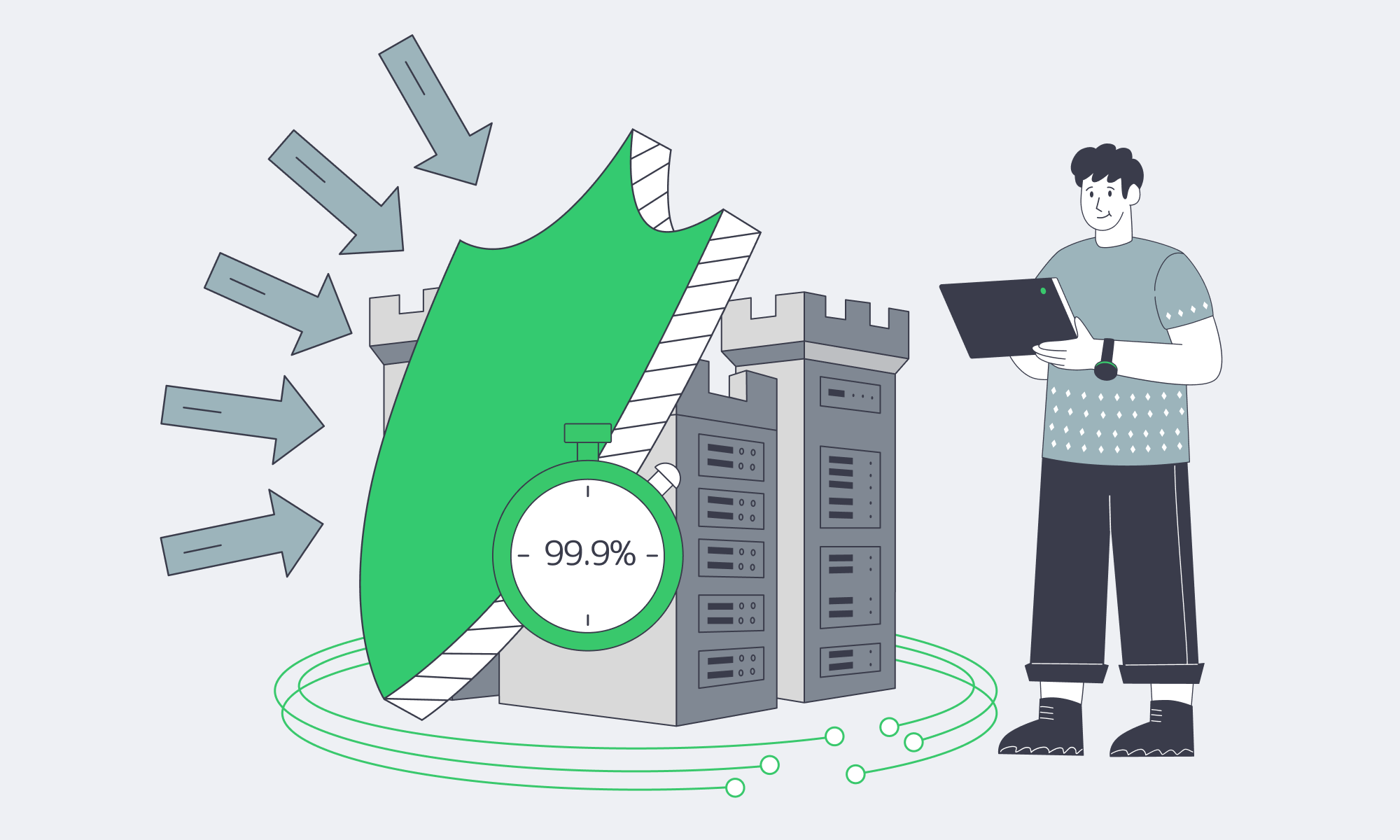
Adult platforms now operate at the intersection of three compounding pressures:
- Explosive video and live‑stream growth, with users expecting 4K‑grade experiences on every device.
- A DDoS environment defined by hyper‑volumetric, short‑lived attacks, often combined with bot traffic and fraud.
- Tight regulatory and reputational constraints, where failures quickly ripple into payment friction, affiliate distrust, and creator churn.
The only sustainable answer is to treat redundancy and DDoS protection as first‑order design constraints, not bolt‑ons. That means sizing dedicated servers for peak concurrency, running active/active regions behind a CDN that understands your origin topology, and relying on always‑on, behavior‑aware mitigation that can respond in seconds without human intervention.
At the same time, the threat landscape sketched by DDoS and streaming‑security research is a reminder that you can’t silo DDoS from the rest of your security posture. Ransomware, bots, DRM bypass, and privacy breaches all lean on the same infrastructure choices: where you store data, how you segment networks, which services are exposed publicly, and how your provider’s backbone handles abusive traffic.
For teams making roadmap decisions now, a practical checklist looks like this:
- Multi‑region origins and APIs with health‑checked routing and no single points of failure at the data‑center level.
- Always‑on, multi‑layer DDoS protection: CDN and network filtering tuned for both volumetric floods and subtle cache‑busting or login abuse.
- High‑bandwidth dedicated servers sized for real‑world live event peaks, not monthly averages — with room for 4K and multi‑camera expansion.
- Caching and storage tiers that keep hot content near users and cold content in durable, cost‑effective S3‑compatible storage.
- Operational runbooks and incident drills that assume DDoS, ransomware, and regional outages will intersect — and that human response may lag behind the 1st wave.
- Continuous monitoring of bots and fraud, treating analytics integrity as part of uptime, not a separate problem.
You don’t eliminate risk by doing this, but you change its character: from catastrophic, incidents to bounded engineering challenges you can model, rehearse, and recover from.
Streaming‑optimized servers for uptime
Deploy high‑bandwidth dedicated servers, global CDN, and S3‑compatible storage with always‑on DDoS mitigation. Explore streaming‑focused configurations and deploy quickly.