
Blog
Real-Time Defense Recommendations for BGP Route Security
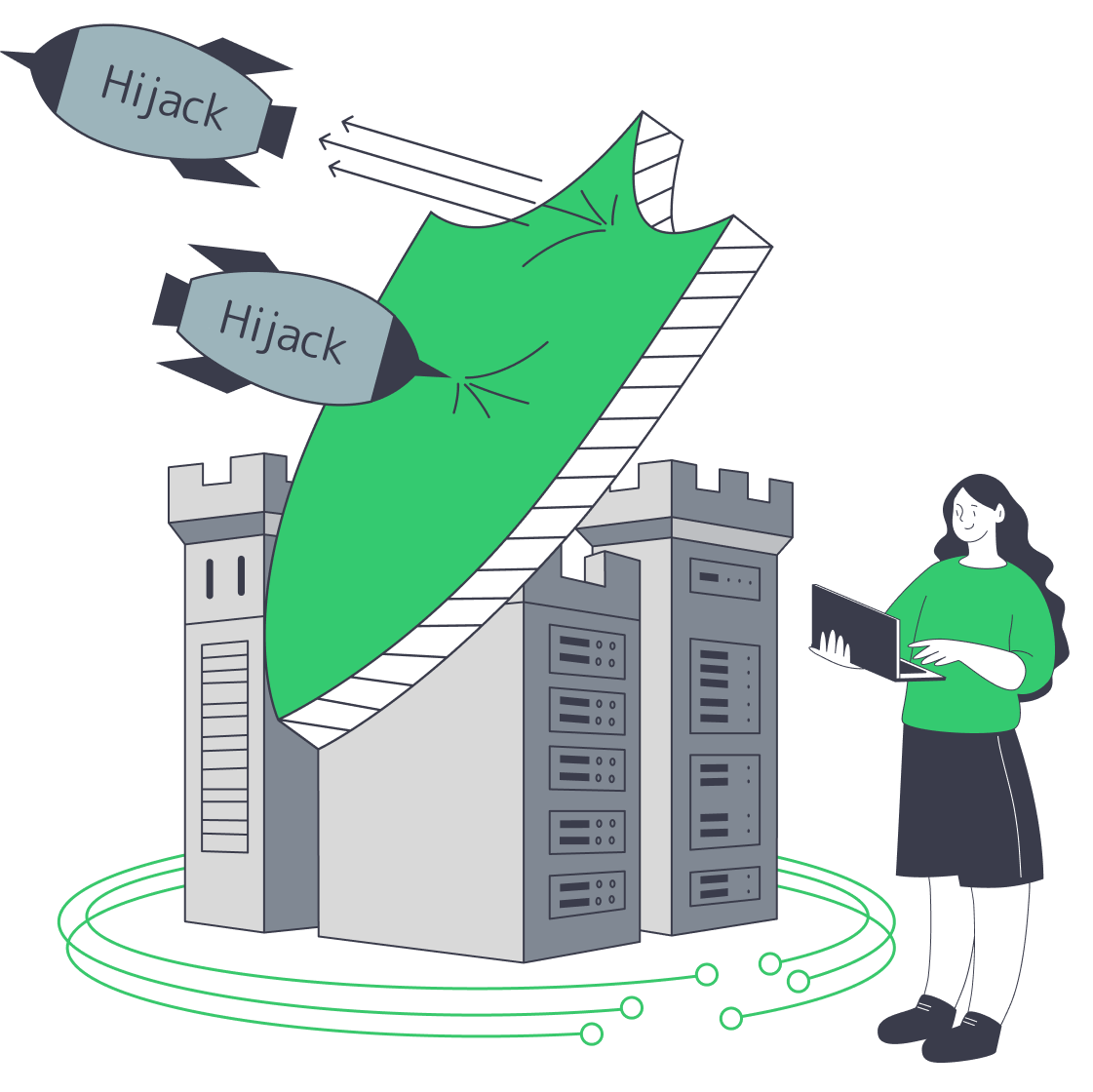
The Border Gateway Protocol (BGP) is still working hard to route every public packet worldwide three decades on. With so many years passing since its backbone links lit up, its weaknesses are as old and familiar as the protocol itself. Time and again, we see Autonomous Systems (AS) claim an IP prefix they don’t own; it’s believed by everyone unless another network filters the claim, leading to a costly prefix-hijack that remains common enough to demand operational guardrails. In its Q3 2025 report, Qrator Labs still recorded five global BGP incidents, including four route leaks and one hijack, after a sharper Q2 spike.
Choose Melbicom— 1,100+ ready-to-go servers — 21 Tier III/IV data centers — BGP sessions with BYOIP |
 |
A BGP failure can soon cascade because it sits beneath TLS and zero-trust overlays. While a hijacked route’s traffic can’t be decrypted by the hijacker, the ciphertext is passed on, and the intermediary can delay, throttle, and discard whatever they like. Too many detours can have devastating results, especially in SaaS architectures with complex service meshes and multiple micro-services. One single path change can spawn thousands of failed API calls, desynchronize queues, and destroy tuned autoscaling heuristics. For example, an upstream’s acceptance of a forged /24 can misroute a SaaS platform’s traffic into an unintended jurisdiction long enough to trigger transaction failures, queue drift, and noisy autoscaling reactions before operators identify and withdraw the bad path.
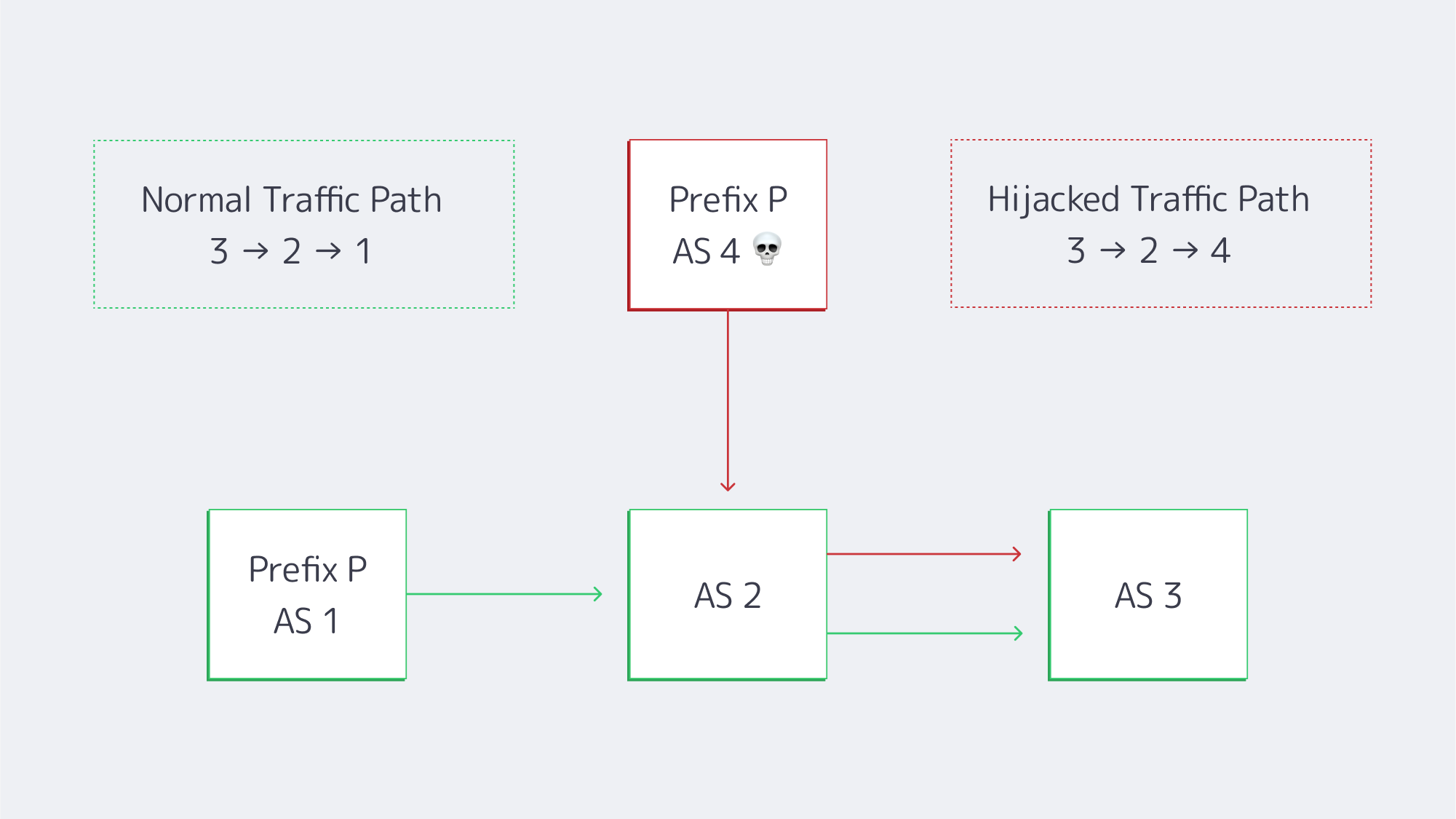
An AS 1 → AS 2 → AS 3 traffic flow is being advertised by rogue AS 4, misrouting users before filters kick in.
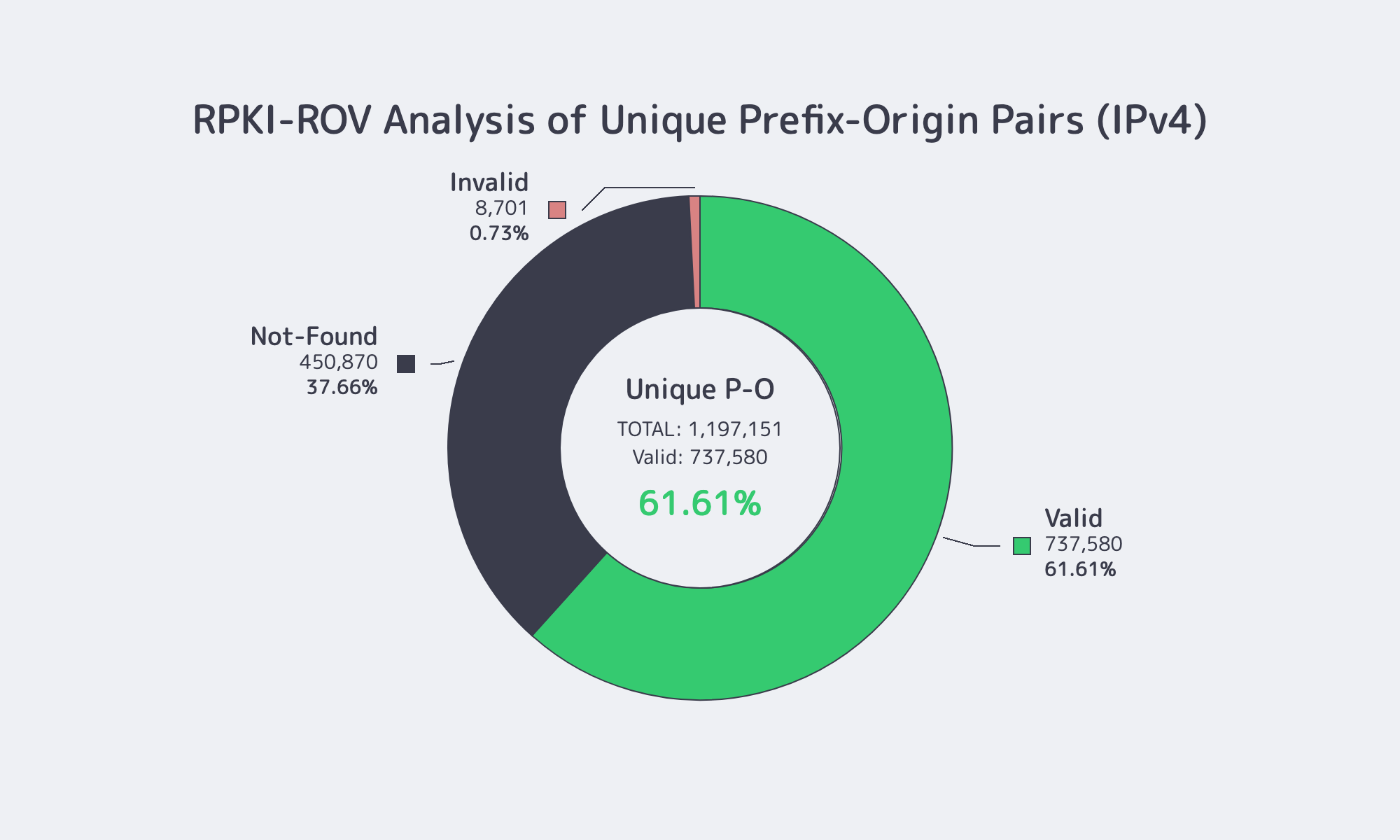
Resource Public Key Infrastructure (RPKI) is the industry’s solution. More than 60% of IPv4 prefix-origin pairs are now covered by ROAs, so invalid routes that once propagated widely stall at many networks. That progress comes from operators, including Melbicom, enforcing drop-invalid policy at network edges.
How RPKI Mitigates BGP Route Attacks
RPKI mitigates border gateway protocol attacks by letting prefix holders publish cryptographically signed ROAs that identify which AS may originate each prefix. Routers compare BGP announcements with those ROAs through route origin validation, then reject invalid origins while keeping valid and not-found routes under normal policy.
Operationally, protecting border gateways relies on origin validation. It is easy enough to deploy when you break it down into five disciplined phases:
| Phase | Action | Key Take-away |
|---|---|---|
| 1 | Publish ROAs in the RIR portal | Sign every prefix, keep max-length realistic, and set sensible end-dates. |
| 2 | Stand up validators (Routinator, FORT, rpki-client/StayRTR) | Feed them to routers over RTR; run at least two for fault-tolerance. |
| 3 | Monitor in “log-only” mode | Flag any customer whose prefixes appear invalid; fix before enforcement. |
| 4 | Flip to enforcement | Reject invalids on all eBGP sessions; stage by POP or peer type if nervous. |
| 5 | Continuous auditing | Track invalid counts, validator health, ROA expiry, and new prefix adds. |
Phase 3 is where risk peaks. Consider a cloud tenant originating a /22 from a forgotten AS or a DevOps team forgetting to extend an ROA before migrating to multi-cloud. Cleanup matters before reject-invalid goes live, and tight prefix caps help.
At Melbicom, the process starts with 16 prefixes per BGP session, IRR vetting during onboarding, and scheduled reviews. Customers do not manage those edge filters themselves; invalid RPKI or IRR checks reject a bogus /24.
The Importance of Strict IRR Filtering
Because RPKI leaves many IPv4 routes not-found, IRR filters close the gap until ROA coverage becomes universal:
- Block any prefix outside of a customer’s allocation
- Reject RFC 1918 leaks.
- Attach max-prefix quotas to limit catastrophic full-table leaks.
The issue then becomes data hygiene: IRR entries age poorly, so engineers should build prefix lists from current IRR data and review them constantly. IRR can’t substitute for RPKI, but together they create layered defense: an attacker can forge an IRR record, but not a matching ROA without the resource holder’s private key.
Despite the risks, some hosts still accept a route “as-is”, but Melbicom combines strict IRR and RPKI validation for BGP sessions on Melbicom’s hardware, helping ensure that only legitimately verified routes propagate outward while invalid or unauthorized announcements die at the border.
Monitoring BGP Validation in Real Time
Even with filters, the table needs monitoring to ensure verification; luckily, BGP dashboards have significantly matured and can be watched in real-time. Failure to monitor in modern times is essentially negligence. Do the following:
- Public telemetry – Look for any sudden origin changes via Cloudflare Radar, RIPE RIS Live, and Qrator Radar, which stream updates.
- RPKI status portals – Validate routes through NIST RPKI Monitor or Cloudflare’s lookup, which will tell you whether a route is valid, unknown, or invalid.
- Local alerting – Use BGPalerter, a tool that feeds events into Slack, PagerDuty, or a SIEM, letting you know the instant an upstream accepts a new path.
At scale, those feeds become operational data sets: engineers can group incidents by ASN and upstream, overlay latency traces, and see RTT deltas when an unvalidated path appears—before the first ticket lands.
RPKI-ROV analysis of unique prefix-origin pairs (IPv4)
Looking Forward: BGPsec and ASPA
Although RPKI authenticates the origin, it doesn’t validate the path. The future looks brighter with safeguards such as BGPsec and ASPA.
- BGPsec is the standardized path-validation extension that signs each AS hop in a BGP UPDATE. It remains a long-horizon control for most operators because cryptographic path validation adds CPU, memory, and deployment coordination costs at full-table scale, even on modern hardware.
- Autonomous System Provider Authorization (ASPA) publishes customer-provider relationships in RPKI. Its IETF drafts and early implementations are maturing, and operators can use ASPA data to detect route leaks and some AS_PATH manipulation as deployment grows.
Conclusion: Secure Routing by Default
BGP security has grown from merely an academic talking point to an operational imperative in recent years. RPKI origin validation is now backed by more than 60% of IPv4 prefix-origin pairs, and when security-minded networks enforce it, invalid-origin announcements are much less likely to propagate. Until ROA coverage becomes universal, strict IRR filtering can help close the gap, aided by vigilant team monitoring through real-time dashboard feeds and alarms.
Emerging technology is set to bring further control, with BGPsec and ASPA adding path-verification and route-leak detection signals as deployment matures. The result is fewer widely propagated hijacks, while routing risk still demands active control.

Networks that drop invalids move routing hygiene forward. Melbicom’s BGP Session service rejects RPKI-invalid announcements, accepts only prefixes with valid IRR entries, and supports up to 16 prefixes per session. When a leaked /24 can crater latency or funnel traffic to a bogus site, route vigilance becomes a core control.