
Blog

Cheap Singapore Dedicated Servers: Hidden Costs
Ultra-cheap dedicated servers in Singapore promise a shortcut to regional presence: low monthly fees, local IPs, and the cachet of hosting in one of the world’s best-connected hubs. But the economics of Singapore’s high-cost, high-quality data center market are unforgiving. When a plan looks improbably cheap, the discount can be paid back later—in performance bottlenecks, outages, throttled bandwidth, or slow support at the worst possible moment. For budget-conscious startups and small businesses, the question isn’t “How low can I go?” It’s “What hidden costs am I taking on, and how quickly could they erase my savings?”
Choose Melbicom— 100+ SG configurations — Tier III-certified SG data center — 39 PoPs in 35 countries |
 |
Why Cheap Singapore Servers Appeal
Singapore combines political stability, regional connectivity, and proximity to major Southeast Asian markets. Its data center sector is sizable, supported by cable landings and peering. The allure is obvious: a low-priced Asian dedicated server with local latency and familiar legal rules.
Singapore also carries high real estate, power, staffing, and compliance costs. When a plan’s price drops to the floor, savings usually come from older hardware, thinner network allocation, narrower support, a lower-tier site, or restrictive terms. Those trade-offs are acceptable only when explicit and within the workload’s risk budget.
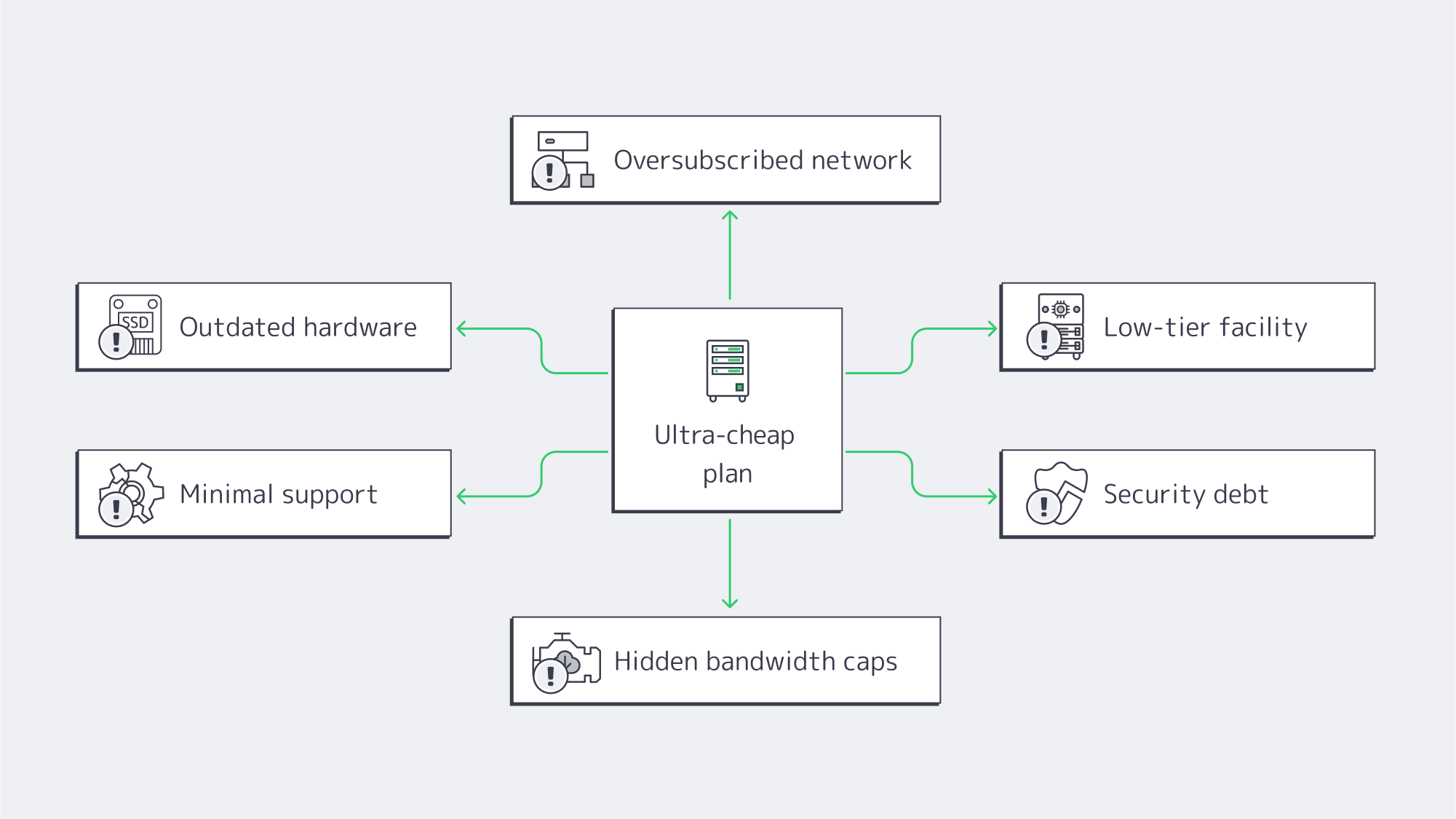
Cheap Dedicated Servers in Singapore: What Hidden Costs Should You Expect?
- Outdated hardware → slow I/O, limited concurrency, and little upgrade headroom.
- Oversubscribed networks → latency spikes, jitter, and packet loss at peak.
- Lower-tier facilities → less maintenance flexibility and greater exposure to power or cooling interruptions.
- Thin support → slower responses, longer outages, and recovery delays.
- Security debt → unpatched systems, poor IP reputation, and compromise risk.
- Fine-print bandwidth → throttling after a threshold, overage fees, hidden caps.
How does outdated hardware tax your revenue?
One common trade-off in cheap Singapore dedicated server deals is older CPU generations, HDD-based storage, or smaller memory footprints. The performance penalty appears as slower database work, longer request queues, and lower concurrency under peak load. Older components can also narrow the margin for growth and increase the operational effort required when hardware needs replacement. The right comparison is not “old versus new” in the abstract; it is whether the exact CPU, RAM, and storage configuration meets the workload’s measured needs.
Singapore inventory includes 100+ ready-to-go server configs across Intel and AMD CPUs, with 32–576 GB RAM and multiple processor generations. Compare generation, core count, clock speed, memory, and storage before choosing; the lowest price helps only when the configuration fits.
How Thin Networks Hurt Singapore Latency
You choose Singapore for proximity to Southeast Asian users, but geography alone does not determine latency. Carrier selection, peering, congestion, and access networks all affect the route. A local server on oversubscribed uplinks can still show jitter, packet loss, or circuitous paths at peak.
Singapore deployments support up to 200 Gbps of per-server network capacity. For global static delivery, pair the origin with Melbicom’s CDN, spanning 39 PoPs across 35 countries. Test actual routes and port profile against your traffic before launch.
What is the uptime risk with low-tier facilities?
Data center tiering describes infrastructure topology and maintainability, not a guaranteed annual uptime percentage. Tier III certification means the site is concurrently maintainable: planned removal of a capacity component or distribution path should not interrupt operations, although equipment failure or operator error can still affect the site. Buyers should verify the certification scope and examine maintenance and redundancy practices rather than converting a Tier label into a promised number.
Downtime is where “cheap” turns expensive fast. The relevant number is the cost of one hour for your own workload: lost orders, delayed transactions, staff time, contractual exposure, and recovery work. Even a small number of incidents can erase the monthly savings of a low-end plan, so model incident costs from your own data.
Melbicom’s servers in Singapore run in a Tier III-certified facility. That supports planned infrastructure maintenance without shutting down the critical environment, but application resilience still depends on customer architecture and operations.
How Support Gaps Create Emergencies
On paper, you can self-manage a server and save money. In practice, incidents arrive at inconvenient hours. In Singapore’s dedicated server market, cheap offers may come with email-only queues, slow triage, or paid escalation. Each delay extends recovery time and can force teams to use external consultants or divert internal staff.
Melbicom provides free 24/7 technical support for server reboots, OS reinstalls, BGP setup, network troubleshooting, and performance issues. The operational value is faster access to engineering help; your own monitoring, runbooks, and escalation process still determine the full recovery time.
Which security risks lurk in budget server deals?
Security debt accumulates when operating systems, firmware, access controls, or network abuse processes are neglected. Poor IP reputation can affect mail delivery, while weak patching and access controls raise compromise risk. Before ordering, ask how IP reputation, abuse reports, hardware replacement, firmware, and customer-side patching responsibilities are handled. A lower monthly price does not transfer those responsibilities away from your team.
Bandwidth and Scaling Limits That Trigger Bills
Beware the promise of dedicated servers in Singapore with unlimited bandwidth. “Unlimited” can still be governed by port speed, traffic-shaping, fair-use, or acceptable-use terms. Ask whether transfer is metered, whether the port is shared or dedicated, which sustained rates are permitted, and what happens after any threshold. A successful campaign should not trigger a term you discover only after traffic rises.
Scalability is the second half of the fine print. Some configurations allow component changes; others require replacement hardware or migration to a different server. Ask which upgrades are possible in the current chassis, what downtime they require, how IPs and data will move, and how long replacement capacity takes to provision.
In Singapore, Melbicom supports 1–200 Gbps of network capacity per server; ready-to-go configurations currently show 1–40 Gbps bandwidth with 50 TB or unmetered options. Choose the port and transfer model from the actual configuration, and treat later hardware changes as planned upgrades or migrations unless the order terms confirm a simpler path.
Hidden Infrastructure Costs and Operations
Hidden infrastructure costs usually appear as slow responses, unstable network performance, longer incidents, security problems, or unexpected transfer charges. The operational symptom points to the compromise; the business impact appears in lower conversion, lost revenue, staff time, compliance exposure, or budget volatility.

Use this table to trace each symptom back to a likely infrastructure compromise.
| Hidden cost lever | You notice it as | Business impact |
|---|---|---|
| Old CPUs / HDDs | Slow load times; poor concurrency | Lost sales; delayed processing |
| Oversubscribed uplinks | Peak-hour lag; jitter; packet loss | Missed service commitments; bad UX |
| Low-tier facility | More maintenance exposure; longer interruptions | Lost revenue; reputational damage |
| Minimal support | Hours to first response; long recovery times | Missed sales; overtime and consulting costs |
| Security debt | Poor IP reputation; compromise risk | Incident spend; compliance exposure |
| “Unlimited” with throttles | Sudden slowdowns; surprise fees | Growth penalty; budget volatility |
How Do You Balance Dedicated Server Hosting Cost and Reliability in Singapore?
If you only remember one framework, make it this:
- Verify the facility, not just the badge. If planned infrastructure shutdowns are unacceptable, use Tier III concurrent maintainability as a baseline. Also review certification scope, maintenance process, and your redundancy plan.
- Match hardware to measurements. Compare CPU generation, core count, clock speed, RAM, and storage against the workload; NVMe is valuable for I/O-bound systems but is not a universal requirement.
- Audit the network, not the brochure. Ask for test IPs and route visibility from the user regions that matter. A lower monthly price is not a saving if congestion or poor routing breaks the latency budget.
- Price recovery into your TCO. Document support channels, escalation scope, the hardware-replacement process, and the operational cost of each hour your service remains degraded.
- Read bandwidth terms like a contract. Confirm port speed, transfer allowance, fair-use rules, and overage or throttling conditions. Pair origin capacity with a CDN when static assets need broader geographic delivery.
The useful comparison is total cost: a workload-appropriate configuration, sufficient network headroom, facility resilience, and human support weighed against the operational cost of incidents and migrations.
What Does a Pragmatic Shortlist Look Like?
Use these checks for cheap Singapore dedicated server offers:
- Facility: Tier III certification, documented redundancy, a clear certification scope, and defined maintenance processes.
- Network: Transparent port speeds, test IPs, route visibility, and written transfer terms. Verify any 100–200 Gbps requirement against the specific configuration rather than assuming every ready-to-go plan includes it.
- Hardware: Exact CPU model and generation, usable RAM, storage type and endurance, drive layout, remote management, and replacement process. Require NVMe only when the workload’s I/O profile justifies it.
- Support: Written 24/7 channels and scope, response process, replacement responsibility, and escalation path.
- Bandwidth terms: Define “unmetered,” thresholds, and overages in plain English. For sustained high transfer, confirm written allowance instead of informal tolerance.
- Growth path: A documented route to a larger configuration, including provisioning time, migration steps, IP handling, and expected downtime. Singapore inventory includes 100+ ready-to-go configurations for right-sizing across different CPU, RAM, and network needs.
Bottom Line on Cheap Singapore Servers
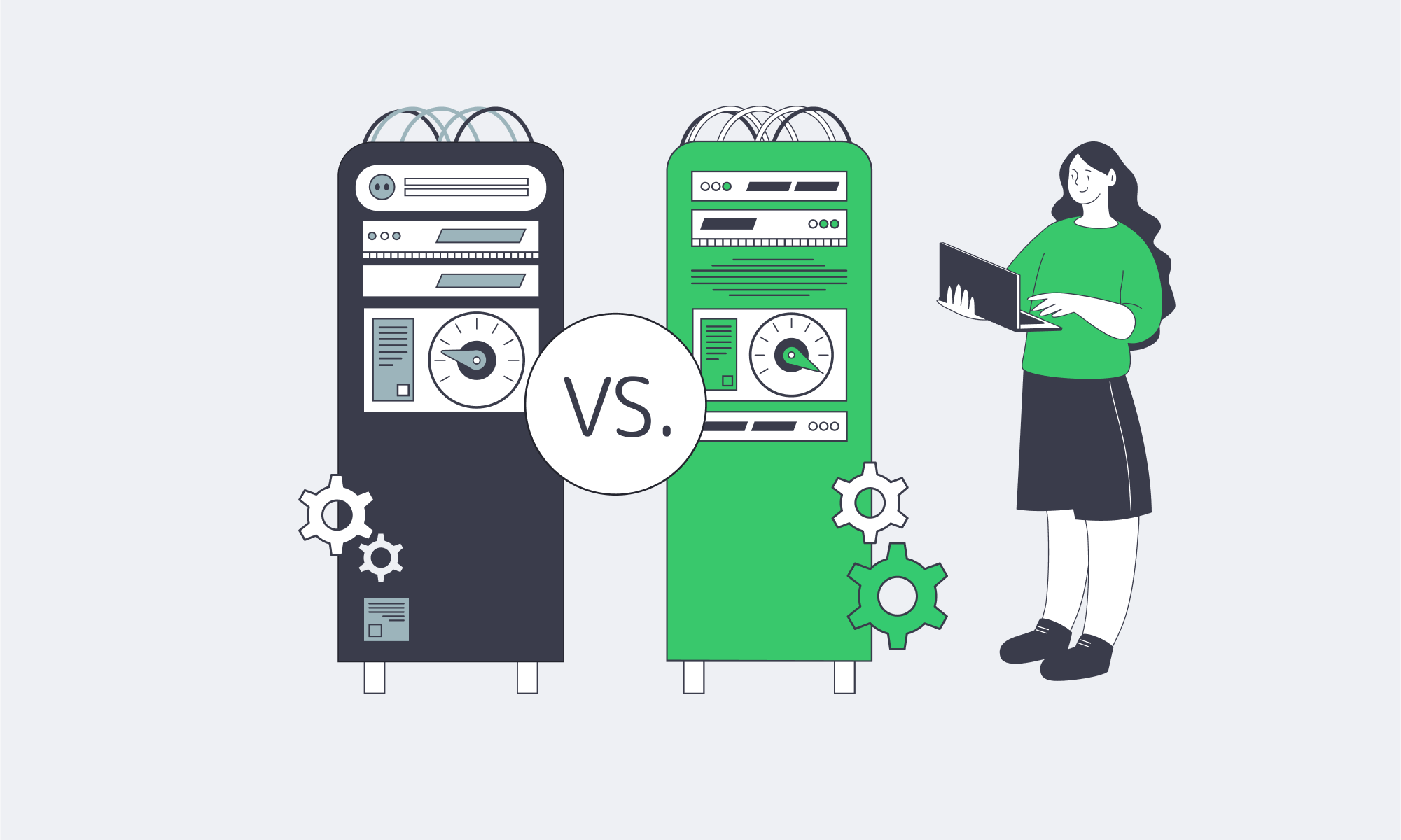
Rock-bottom pricing in a high-cost market usually reflects a trade-off: hardware age, network allocation, facility design, support scope, contract terms, or upgrade flexibility. Those trade-offs are not automatically disqualifying, but they should be explicit and compatible with the workload’s risk tolerance. Singapore’s latency advantage depends on the server, network, and operating model working together.
For buyers controlling spend, the useful target is not the lowest sticker price but the lowest acceptable total cost for the workload. Verify the exact hardware, network, facility, support, and bandwidth terms, then model incident and migration costs. A cheap Singapore dedicated server is a good deal only when those assumptions remain acceptable under peak load and failure.
Ready for Reliable Singapore Servers?
Host where your users are without the performance compromises of bargain plans. Choose workload-fit hardware, a strong network, and 24/7 expert support—at transparent prices.