
Blog
Architecting Minutes-Level RTO with Melbicom Servers
The impact of unplanned downtime for modern businesses remains high. A 2024 EMA-backed analysis puts the average cost of unplanned IT downtime at $14,056 per minute for midsize and large organizations, which is intolerable for workloads tied to revenue, contracts, or customer trust. In situations where real-time transactions are required for operations, every second of downtime equates to revenue loss. Furthermore, it can trigger contractual penalties and erode client and customer trust. The best preventative measure is storing a fully recoverable copy of critical workloads in a secondary data center. The location should be distant enough to survive regional disasters, yet close and fast for a swift takeover if needed.
Melbicom operates 21 Tier III and IV data centers connected by high-capacity backbone links, with dedicated-server bandwidth options up to 200 Gbps per server. Architects can place primary, secondary, and even tertiary nodes in separate facilities without changing vendors or tooling. That separation helps avoid the single-point-of-failure trap and supports minutes-level failover targets.
Choose Melbicom— 1,100+ server configurations — 21 global Tier IV & III data centers — 39 CDN PoPs across 35 countries |
 |
Why Pair or Triple Dedicated Backup Nodes?
- Node A and Node B are located hundreds of kilometres apart, serving as production and standby, respectively, and replicating data changes continually.
- Node C is located at a third site to provide a logically isolated safety layer that can also serve as a sandbox for testing and experimentation without affecting production.
Dual-site operation can absorb traffic and keep business running when the standby node is sized for the protected workload. Shared cloud DR can run into CPU contention and capacity constraints; capacity-reserved physical servers reduce that risk. If a problem arises at Site A, Site B can boot pre-scripted VMs or dedicated server images from recent replicas. The result is a practical path to minutes-level recovery instead of a best-effort restore.
How Does Block-Level Encrypted Replication Cut RPO and Network Load?
Block-level encrypted replication cuts RPO and network load by snapshotting changed disk blocks and sending only those deltas to the standby server. When storage I/O, write rate, and link capacity are sized together, smaller transfers can support sub-minute RPO targets while leaving more bandwidth for production traffic.
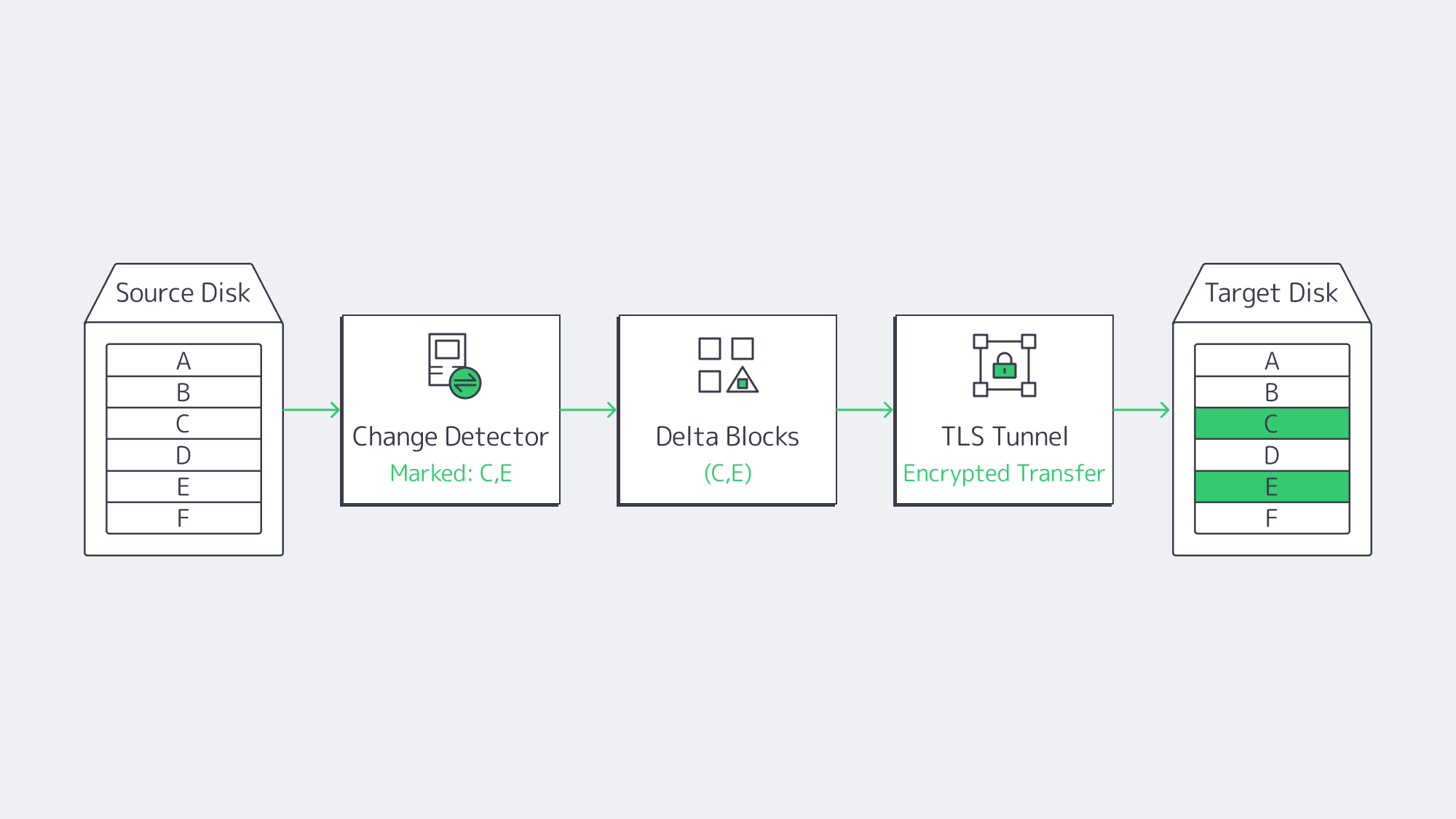
For always-on workloads, copying whole files wastes resources and slows operations. A modern backup server solution captures changed disk blocks in snapshots and streams those deltas to remote storage. For example, a 10 GB database update that flips 4 MB of pages will only send the 4 MB across the wire, providing the following pay-offs:
- Recovery point objectives (RPOs) can reach under one minute when write rate, storage I/O, and link capacity are sized correctly.
- Bandwidth impact remains minimal during business hours.
- Multiple point-in-time versions are retained without petabytes of duplicate data.
Replication data should be protected with AES-based encryption in the backup stack or TLS for each network hop, keeping it unreadable in flight; encryption at rest should be enforced on the storage target as well. This supports regulated-workload safeguards without implying that encryption alone satisfies GDPR, HIPAA, or similar obligations. On Melbicom dedicated servers, the high-bandwidth network path can carry these encrypted delta streams while WAN optimization layers reduce repeated data, which we will discuss next.
How Do WAN Acceleration and Burst Bandwidth Speed Initial Seeding?
Distance introduces latency, and a single TCP stream may not fill a high-capacity path without tuning. Add WAN acceleration or replication acceleration to the stack where the backup platform supports it, using inline deduplication and multi-threaded streaming. Veeam’s best-practice guidance cites 500 Mbit/s average throughput per target WAN accelerator and a typical 10x data-reduction rate, meaning 500 Mbit/s of processed change data can traverse about a 50 Mbit/s WAN link.
The most bandwidth-intensive step is the initial transfer: 50 TB over a 1 Gbps link can take almost five days before protocol and storage overhead. For compatible locations and configurations, using 100 or 200 Gbps server bandwidth for the initial seed can compress that copy window to roughly an hour or less before overhead. Once the baseline is complete, a lower-bandwidth plan can handle block-level delta transfers if the ongoing change rate fits the link budget.
Scripted VM and Server Spin-Up
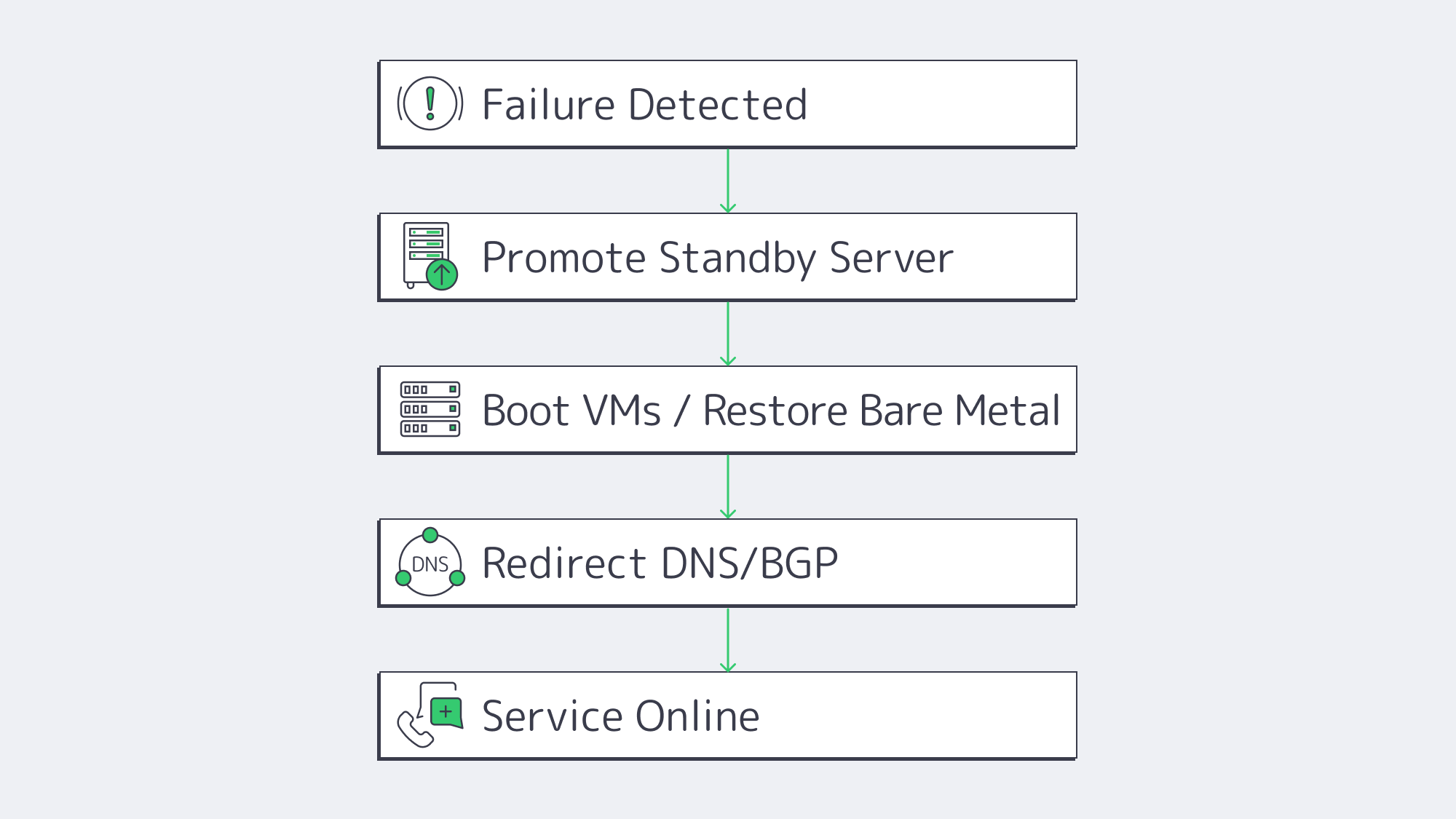
Replicated bits are no use if rebuilding your servers means prolonged downtime. That’s where instant-recovery workflows and scripted dedicated-server restore runbooks come into play. The average runbook looks something like this:
- Failure is detected and Site A is flagged offline.
- Scripts promote Node B and register the most recent snapshots as primary disks.
- Critical VMs are booted directly from the replicated images by the hypervisor on Node B through auto-provisioning. Dedicated server workloads PXE-boot into a restore kernel that writes the image to local NVMe volumes.
- User traffic is redirected toward Site B via BGP, Anycast, or DNS updates, while authentication caches and transactional queues help preserve session continuity where the application supports it.
When the standby hardware is already live in a Melbicom rack, total elapsed time becomes boot time plus DNS or BGP convergence, so recovery can stay in the minutes range. For compliance audits, scripts can run weekly fire drills that execute the same steps in an isolated VLAN and email a readiness report.
| Backup Strategy | Typical RTO | Ongoing Network Load |
|---|---|---|
| Hot site (active-active) | < 5 min | High |
| Warm standby (replicated dedicated server) | 5 – 60 min | Moderate |
| Cold backup (off-site tape) | 24 – 72 h | Low |
Warm standby—the model supported by paired Melbicom nodes—delivers a sweet spot between cost and speed, putting minutes-level RTO within reach of most budgets.
Designing for Growth & Threat Evolution
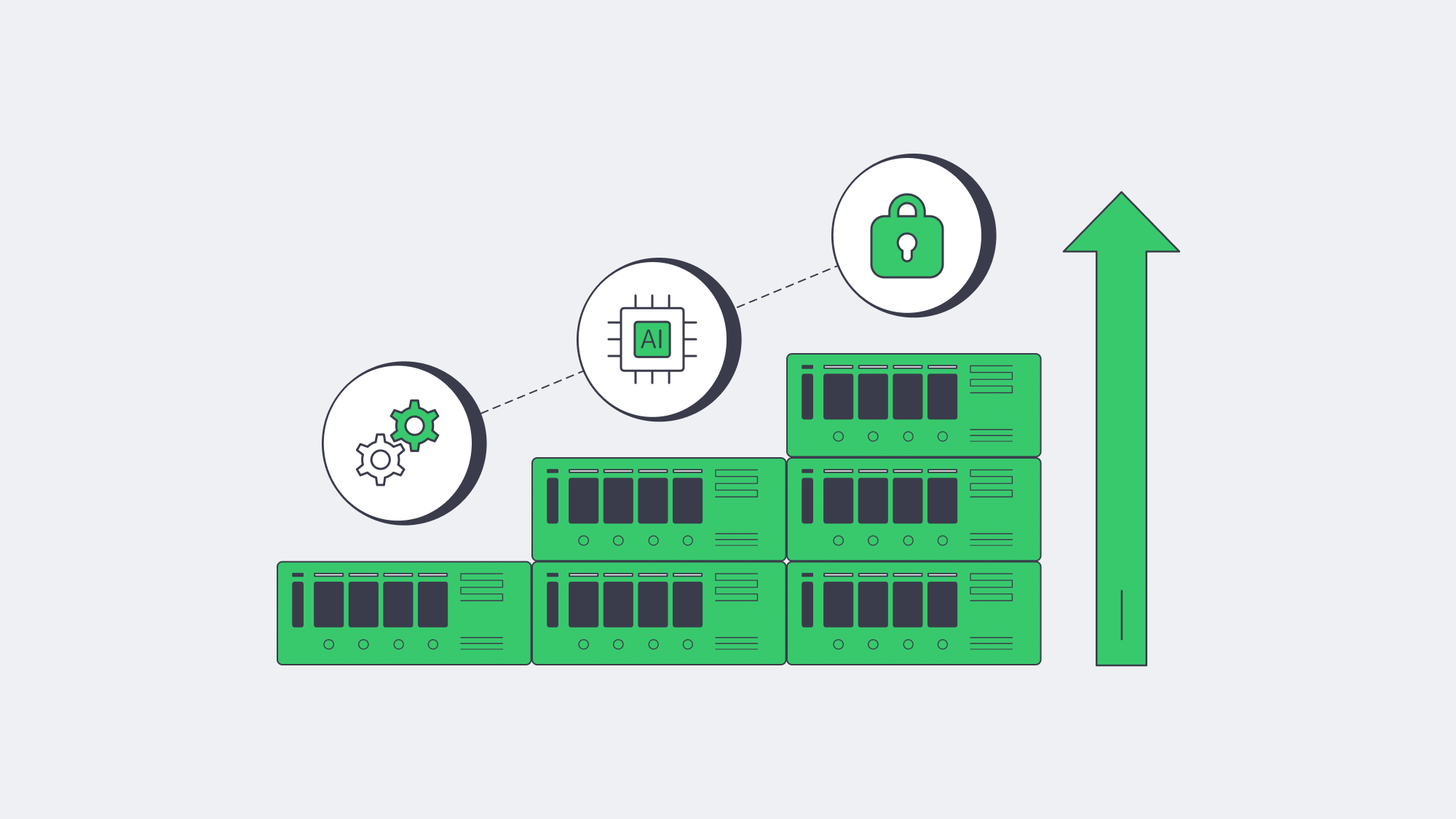
Cyber risk remains high for smaller organizations: the 2025 Hiscox Cyber Readiness Report found that 59% of SMEs surveyed had experienced a cyberattack in the previous 12 months. For these businesses, prolonged downtime is unaffordable, highlighting the importance of resilient architecture that can be scaled both horizontally and programmatically:
- Horizontal scale—Melbicom has 1,100+ ready-to-go server configurations across its global footprint, with ready-stock activation available in as little as two hours. They span Intel and AMD platforms and, in selected locations, RAM options above 1 TB; a tertiary node can be provisioned in a different region without a long procurement cycle.
- Programmatic control—Backup infrastructure versions alongside workloads as Ansible, Terraform, or native SDKs turn server commissioning, IP-address assignment, and BGP announcements into code.
- Immutable or isolated copies—Keep at least one protected copy outside the production account or primary recovery path, using separately managed Object-storage or backup vaults to reduce ransomware blast radius.
In the future, anomaly detection will likely be AI-assisted, marking suspicious data patterns such as mass encryption writes and snapshotting clean versions before contamination spreads. Protocols such as NVMe-over-Fabrics may narrow failover performance gaps for metro or colocated designs, although distance and protocol overhead still matter. As these advances mature, Melbicom’s network can support the design with multiple Tier III/IV data centers and high-bandwidth per-server options.
Can SMBs Use Offsite Server Backup?
SMBs can use offsite backup solutions for servers when the design starts with one secondary dedicated server, block-level replication, encryption, and automated restore scripts. The key is matching RTO and RPO targets to budget so critical workloads get warm standby while less critical systems use scheduled backups.
Modern backup solutions are often considered “enterprise-only,” so midsize businesses sometimes choose simpler VM-only recovery. In practice, a single dedicated backup server at a secondary site can protect key workloads when it is paired with block-level replication, encryption, and tested restore automation. Recoveries run on reserved hardware instead of shared emergency capacity, and automation is especially beneficial to smaller operations with limited IT teams.
Geography, Speed, and Automation: Make the Most of Every Minute
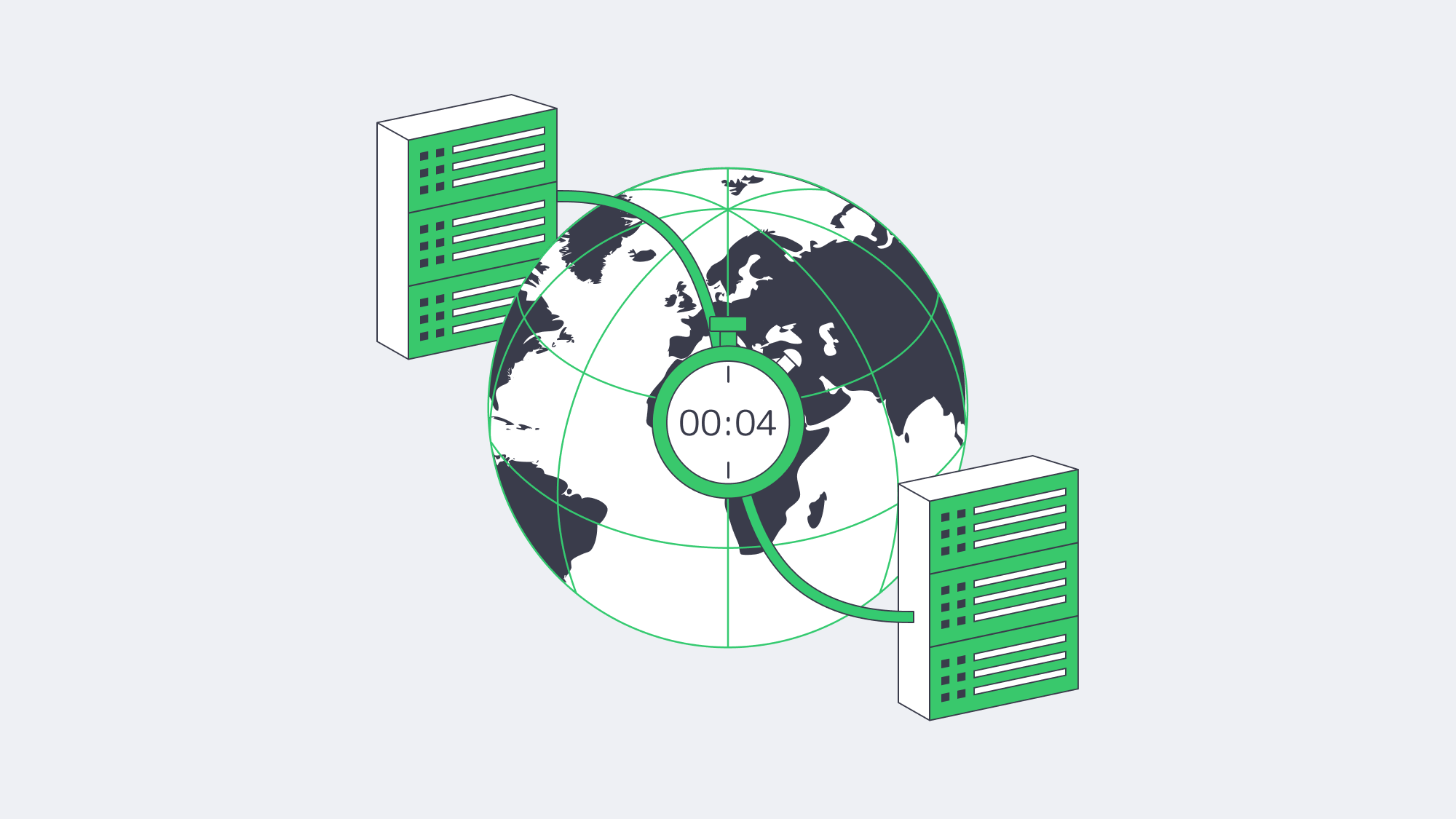
Current downtime and cyber-risk data signal that outages are costlier, attackers remain active, and customer tolerance is lower. By geographically separating production and standby services on Melbicom dedicated servers, you establish the cornerstone of a defensive blueprint. Securing operations requires block-level, encrypted replication for tight sync. Data streams then need compression and WAN acceleration, initial seeding over adequate bandwidth, and scripted spin-ups. That way, failover is integrated into daily workflows. Executing this blueprint can reduce RTO to minutes and help make even a severe outage a recoverable event.
Get Your Backup-Ready Server
Deploy backup-ready dedicated servers across Melbicom’s 21 Tier III/IV data centers and build toward minutes-level disaster recovery.