
Blog

Designing Latency-First Servers in São Paulo
São Paulo is where financial markets, instant payments, and real-time apps converge — and where a few extra milliseconds can mean lost trades, abandoned checkouts, or rage‑quits.
For latency‑sensitive workloads, the right move is to design a latency‑first dedicated server Sao Paulo plan: place servers in the right buildings, plug them into IX.br, and back them with multi‑homed 10 Gbps+ uplinks that keep jitter low when traffic spikes.
Choose Melbicom— Reserve dedicated servers in Brazil — CDN PoPs across 6 LATAM countries — 20 DCs beyond South America |
 |
Which Dedicated Servers Minimize Latency in São Paulo
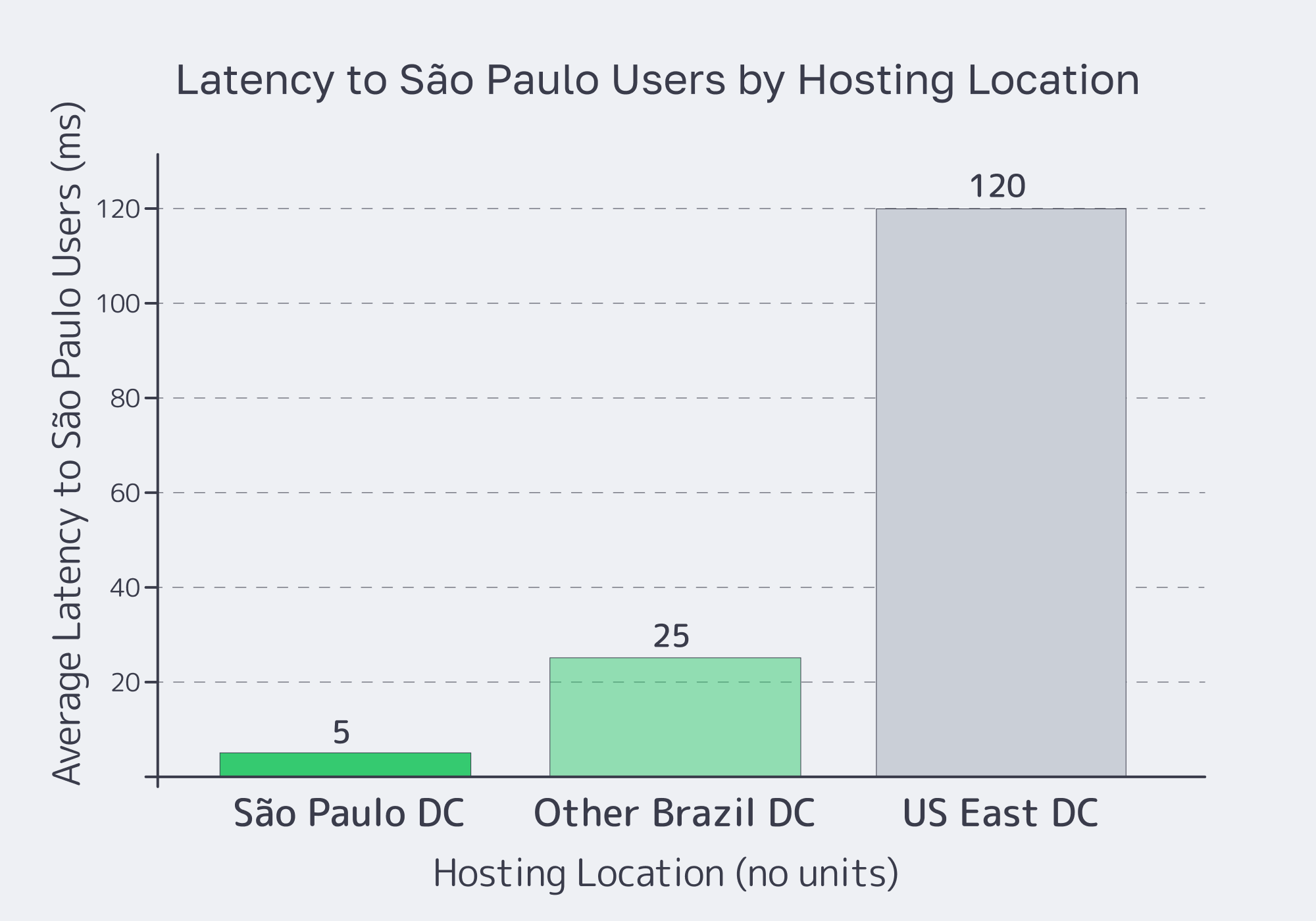
A São Paulo dedicated server minimizes latency when it combines three things: physical proximity to users and exchanges, deep peering at IX.br, and high‑bandwidth multi‑homed transit. Put your compute in São Paulo’s core, plug into IX.br’s 2,400+ networks, and you can cut latency to Brazilian users by up to 70% compared with out‑of‑country hosting.
Melbicom’s Brazil design follows that pattern. Brazil dedicated servers are being rolled out in a Tier III data center directly tied into the city’s fiber ring and IX.br. By placing origins in SP, you keep user traffic on local routes instead of bouncing through distant transit hubs.
In practice, the right dedicated server in São Paulo is less about CPU brand and more about network placement and headroom:
| Latency Optimization Feature | Description | Benefit for Low-Latency Apps |
|---|---|---|
| São Paulo Data Center Location | Servers inside São Paulo’s metro, close to users and IX.br. | Minimizes propagation delay; local users see roughly 2–3 ms RTT within the São Paulo–Rio corridor instead of tens of ms from remote regions. |
| IX.br Peering | Direct connection to IX.br São Paulo, the world’s largest IXP by participants. | Shortens paths to Brazilian ISPs and carriers; fewer hops and less jitter for FinTech, trading, and gaming traffic. |
| Multi‑Homomed 10 Gbps+ Transit | Multiple Tier 1/2 carriers per rack and 1+ Gbps uplinks per server. | Avoids congestion and route flaps; traffic automatically follows the fastest, cleanest path. |
| BGP Control (with BYOIP) | Free BGP sessions on dedicated servers plus the ability to announce your own prefixes. | Lets you steer routes, build anycast, and tune performance per provider or region. |
| Dedicated Server Performance Tuning | Full root access to optimize OS/network stack (custom kernels, NIC offloads, etc.). | Squeezes out microseconds for trading engines, matching services, and real-time APIs. |
We at Melbicom also care about configuration freedom. Across 21 Tier III/IV data centers globally, engineers can choose from 1,300+ ready‑to‑deploy dedicated server configurations — Ryzen, Xeon, and EPYC designs with DDR5 and NVMe — with per‑server bandwidth up to 200 Gbps in mature sites such as Amsterdam, Frankfurt, and Los Angeles.
For São Paulo specifically, we are staging dozens of configurations around those same building blocks (modern CPUs, NVMe storage, optional GPUs) and 1+ Gbps per‑server ports. Where a standard setup isn’t enough, Melbicom can deploy custom server configurations in roughly 3–5 days, matching hardware and network layout to your exact latency profile.
What IX.br Peering Optimizes Real‑Time São Paulo Apps
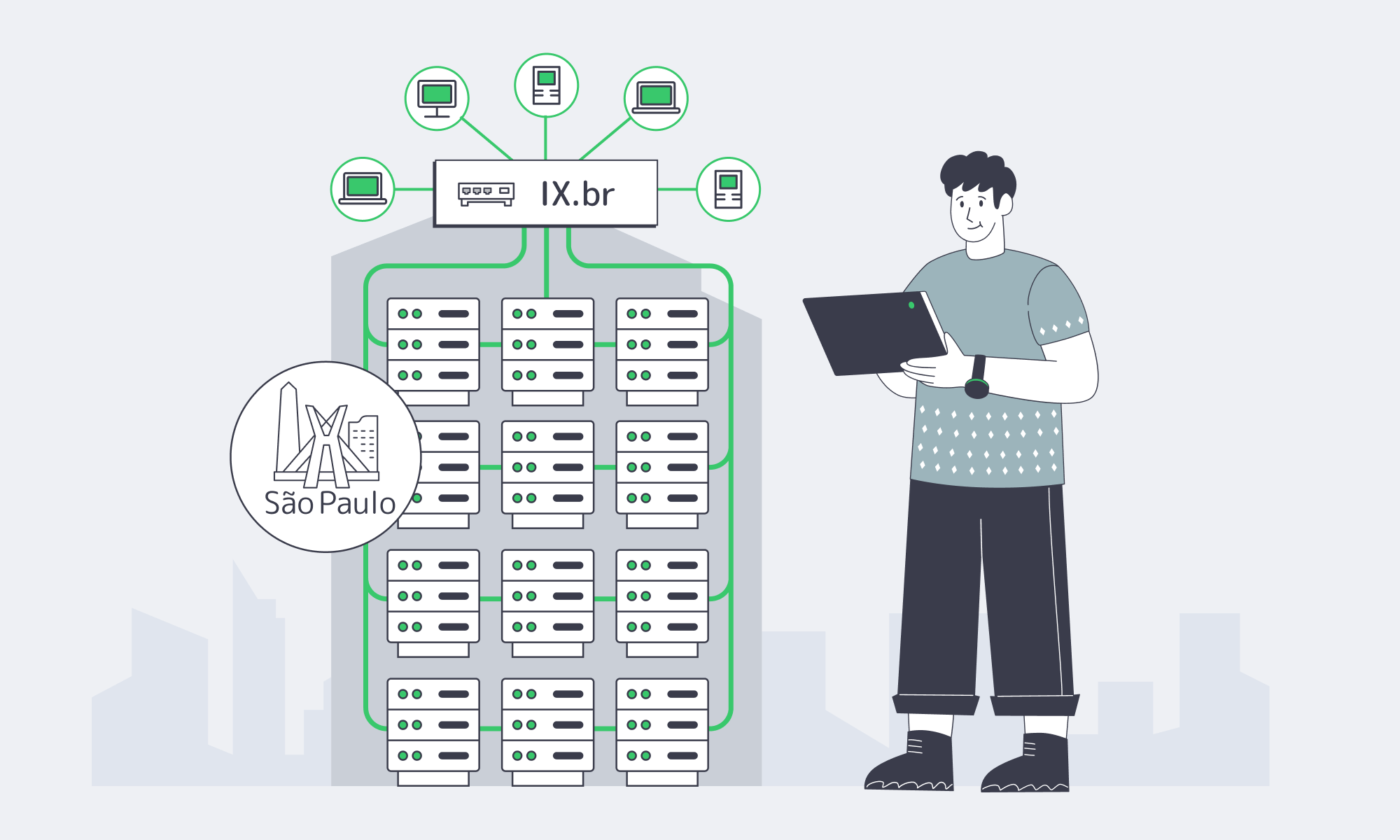
For real‑time apps, IX.br is the control point. IX.br São Paulo aggregates more than 31 Tb/s of traffic nationally and 22 Tb/s in São Paulo alone, with over 2,400 autonomous systems connected — the largest IXP fabric on the planet. When your network is on‑net there, you are effectively one hop away from most Brazilian eyeballs.
That directly impacts anything interactive. São Paulo–Rio paths inside the IX.br ecosystem typically sit in the low‑single‑digit millisecond range, which is exactly what real‑time payments, voice, video, and esports need. Brazil’s gaming market alone counts nearly 90 million gamers and roughly USD 2.5 billion in annual revenue, so shaving tens of milliseconds off routing isn’t cosmetic — it affects win rates, churn, and ARPU.
For a Sao Paulo dedicated server, the goal is therefore not just to “have good transit,” but to terminate as much traffic as possible on IX.br and treat transit as a fallback. That’s why we at Melbicom design São Paulo origins to reach IX.br’s 2,400+ networks directly and then layer a Tier 1‑backed transit mix on top: peering carries the bulk of local traffic; transit handles the long haul.
Brazil Deploy Guide— Avoid costly mistakes — Real RTT & backbone insights — Architecture playbook for LATAM |
 |
Extending São Paulo Performance with CDN
São Paulo apps rarely serve only São Paulo. When your audience spills into the rest of Latin America, you want the city to act as an origin shield and use a CDN Sao Paulo edge to project that performance outward.
Melbicom’s enterprise CDN runs 39 PoPs in 35 countries across 6 continents, with six strategically placed in LATAM. Pair a São Paulo origin with regional edges and you can serve static assets from PoPs close to your users in Latin America, while dynamic traffic returns to São Paulo over our optimized backbone. That keeps Time‑to‑First‑Byte low for users across the region without giving up the routing advantages of a single, well‑peered São Paulo hub.
Internationally, we also lean on the modern cable map. Systems like EllaLink link Brazil directly with Europe, cutting round‑trip latency by up to 50% versus legacy routes that detoured through North America. With the right transit mix, a São Paulo origin remains competitive even for cross‑Atlantic traffic.
Where to Place Dedicated Servers for São Paulo Trading Apps
Trading and FinTech are where São Paulo latency gets truly unforgiving. B3 — Brazil’s main stock exchange — runs its primary data center in Santana de Parnaíba, in Greater São Paulo. For co‑located clients, B3 has driven internal order‑processing latency down to about 350 microseconds from 1.2 milliseconds, a 70% reduction that shows how much speed matters.
Most platforms don’t need to sit in B3’s cage, but they do need to sit nearby. The right placement for a São Paulo dedicated server handling trading workloads is therefore a Tier III/IV facility in the metro with direct fiber paths to B3, IX.br, and key banking and payments networks. Done correctly, you see few‑millisecond latencies — enough for brokers, neobanks, real‑time risk engines, and Pix gateways.
Inside the city, that breaks down into a few practical rules:
- Keep your trading engines, risk services, and market‑data handlers in the same metro — don’t split them across regions.
- Choose a data center with cross‑connect options to carriers that already serve B3 and major financial ISPs.
- Use 10 Gbps+ ports even if today’s bandwidth is lower; the headroom keeps queues empty and latencies predictable during volatility spikes.
São Paulo Dedicated Server Patterns for FinTech & Real‑Time Apps
On top of placement, trading and FinTech apps expect control. With a São Paulo dedicated server, you can pick the exact CPU, NVMe layout, and NICs you need, then layer routing logic that matches your risk profile.
Melbicom supports this with configuration freedom: engineers can request custom builds delivered in 3–5 business days when edge cases appear. That includes CPUs tuned for high‑frequency workloads, all‑NVMe storage, optional GPUs, and 1+ Gbps ports per server.
Free BGP sessions on dedicated servers let you announce your own prefixes and build anycast or multi‑homed setups without extra line‑items. For real‑time apps beyond FinTech — multiplayer games, live streaming, collaboration tools — the pattern is similar: put your primary origins on a São Paulo dedicated server footprint with IX.br peering, keep latency‑sensitive state and queues local, and project static content out over CDN PoPs. Brazil’s nearly 90 million gamers expect that kind of responsiveness; the financial sector simply puts a higher dollar value on each millisecond.
Building a Latency‑First Edge in São Paulo
If you treat São Paulo as just “another region,” you leave performance on the table. Treat it instead as a latency‑first hub: place dedicated servers close to users and B3, plug directly into IX.br, and size ports at 10 Gbps and above so congestion never becomes your enemy. The result is a platform that feels instant to users and trustworthy to counterparties.
Key priorities for a latency‑first São Paulo design:
- Location First: Keep compute, caches, and trading engines in São Paulo’s metro, not a distant city — and keep latency‑sensitive microservices in the neighboring racks.
- Peering Before Transit: Aim to deliver most Brazilian user traffic over IX.br; use multi‑homed transit as the safety net for edge cases and international routes.
- Headroom as a Policy: Use 10 Gbps+ ports on origins, with clear capacity planning for when to jump to 25 Gbps and 40 Gbps, so traffic surges don’t push queues into your latency budget.
- Control the Routes: Use BGP sessions (and BYOIP if needed) to steer traffic and implement anycast or failover paths tuned to your risk model.
- Project Outward Smartly: Treat São Paulo as the origin shield and use regional CDN and object‑storage patterns to serve the rest of LATAM efficiently, instead of trying to stand up full stacks in every country.
Do that, and “dedicated server Sao Paulo” stops being a SKU label and becomes a design pattern: a way to guarantee that your FinTech, trading, and real‑time apps stay ahead of both user expectations and competitors’ infrastructure.
Deploy in São Paulo
Design a latency-first footprint with IX.br peering, Tier III placement, and 1 Gbps+ ports. Once our Brazil location is live, our team can deploy ready-to-go configs within 2 hrs and deliver tailored builds in 5 days to match your performance goals.