
Blog
LA Dedicated Servers: Low Latency and Tier III Resilience
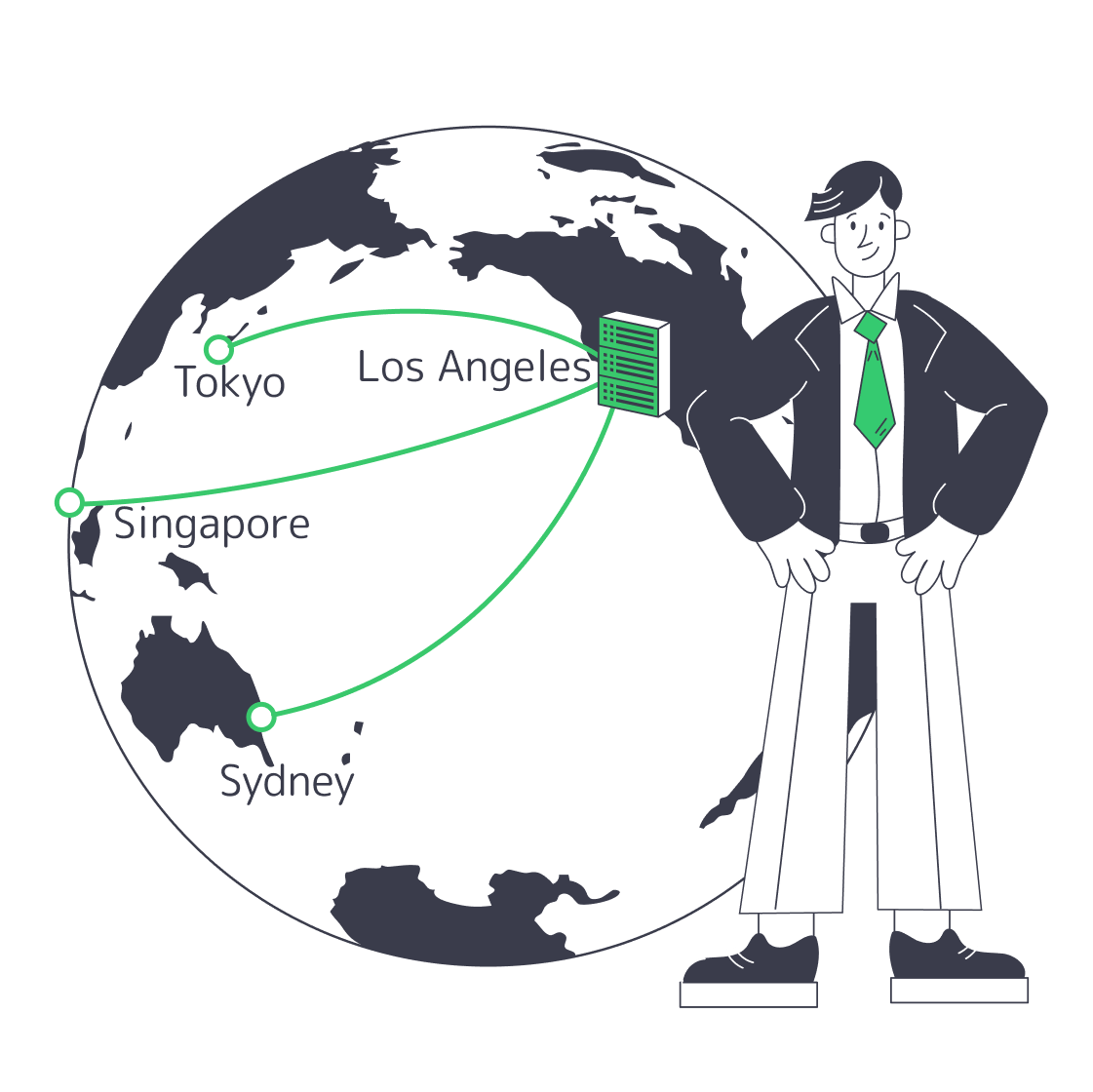
Los Angeles (LA) remains a global media capital and serves as one of the internet’s major transpacific gateways. When you need dedicated infrastructure that serves both Asia-Pacific and North America with consistently low latency—and you want it in an advanced, carrier-neutral Tier III-certified data center—Los Angeles should be on your shortlist. The three benefits we discuss below are strategic geography for global reach, a resilient data center fabric, and a next-generation, workload-driven ecosystem. Where appropriate, the discussion uses verifiable latency figures and local facility characteristics.
Choose Melbicom— 50+ ready-to-go servers — Tier III-certified LA facility — 55+ CDN PoPs across 39 countries |
 |
How Do Los Angeles Dedicated Servers Reduce Latency to APAC?
Los Angeles dedicated servers reduce APAC latency by placing the origin near West Coast backbone routes, dense carrier interconnects, and Southern California transpacific cable paths. This shortens the network path between North American applications and users in Japan, Australia, and Southeast Asia, often saving tens of milliseconds versus inland or East Coast hosting.
Downtown’s One Wilshire carrier hotel is a useful example of the local fabric: it is carrier-neutral, offers access to 200+ carriers, and is described by CoreSite as hosting more than 300 networks. That density helps teams route traffic across varied paths instead of depending on a single upstream path.
TeleGeography’s Submarine Cable Map continues to show Southern California as an important U.S. landing and aggregation area for Pacific cable systems, reinforcing Los Angeles’s role as an on-ramp to Japan, Southeast Asia, and Oceania. In short, packets that originate in LA have a geographic head start toward APAC.
How many milliseconds does that translate into? On an optimized transpacific path (Unity), Los Angeles–Tokyo measures ~97 ms RTT router-to-router, while city-to-city measurements typically show ~160 ms to Sydney and ~170 ms to Singapore. Those are the latency budgets to design around when you host in LA.
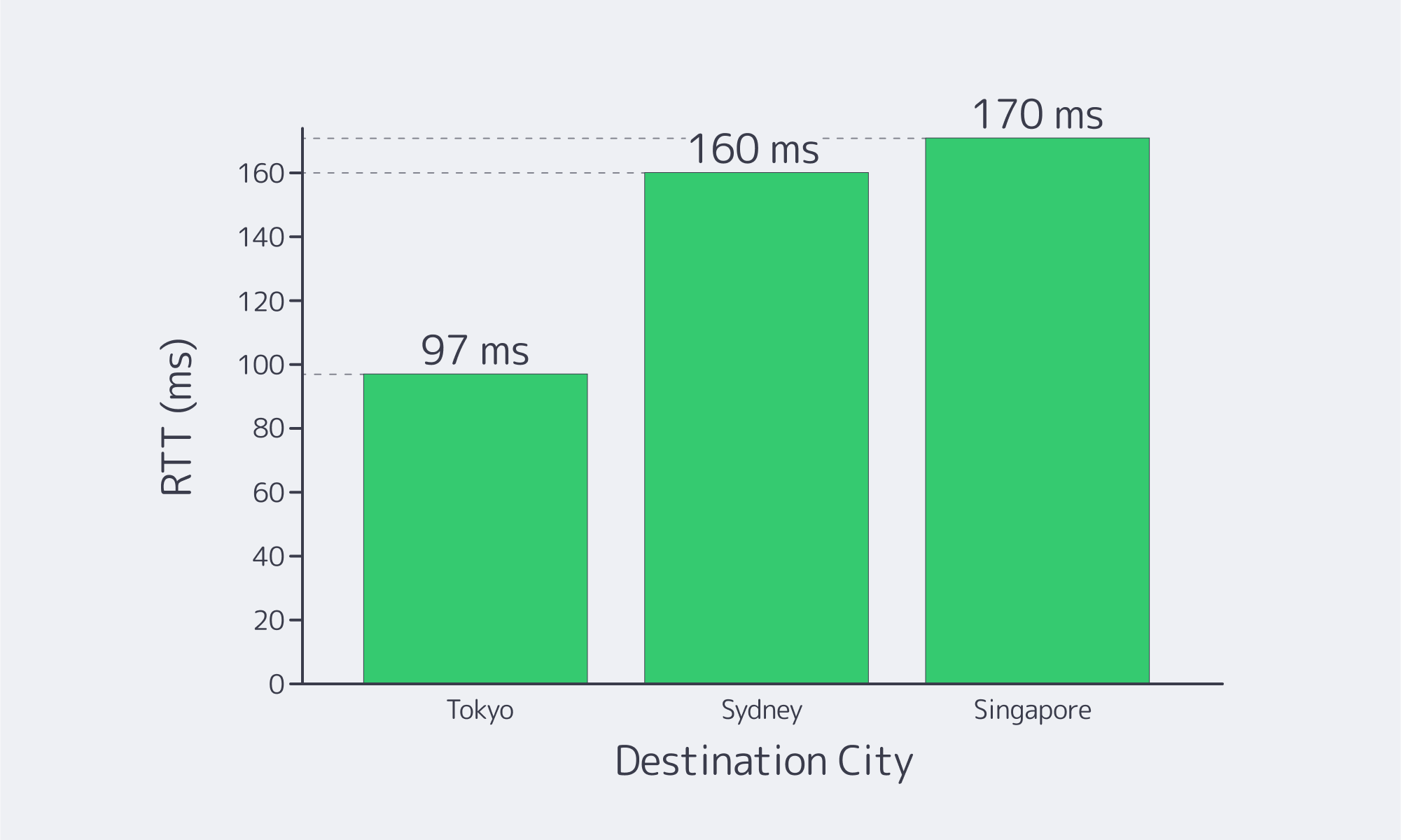
Sources: Global Secure Layer (Unity cable latency matrix) and WonderNetwork Global Ping Statistics. (globalsecurelayer.com; wondernetwork.com)
The architectural bottom line is that placing an LA origin server or stateful application layer in Los Angeles can save tens of milliseconds for APAC users versus an inland or East Coast deployment. Those milliseconds matter for real-time APIs, streaming, multiplayer gaming, and trading workloads.
When Should You Use a Dedicated Server in Los Angeles for Global Reach?
Use a LA dedicated server when one footprint needs to serve both the U.S. West Coast and East Asia without the operational complexity of active multi-region deployment. Dense interconnects and proximity to transpacific cable paths help reduce tail latency while keeping architecture simple.
What Does LA’s Data-Center Fabric Look Like Under the Hood?
Carrier-neutral mega-hubs enable cross-connects and multi-carrier routing, while Tier III data centers support planned-maintenance resilience. A Tier III design target is commonly associated with 99.982% availability, or about 1.6 hours of annual downtime, and allows maintenance without taking IT load offline when redundant systems are used.
Melbicom’s Los Angeles facility is Tier III-certified, offers 50+ ready-to-go server configurations deployable in under two hours, and supports 1–200 Gbps per server.
Which Workloads Benefit Most from Los Angeles Dedicated Servers?
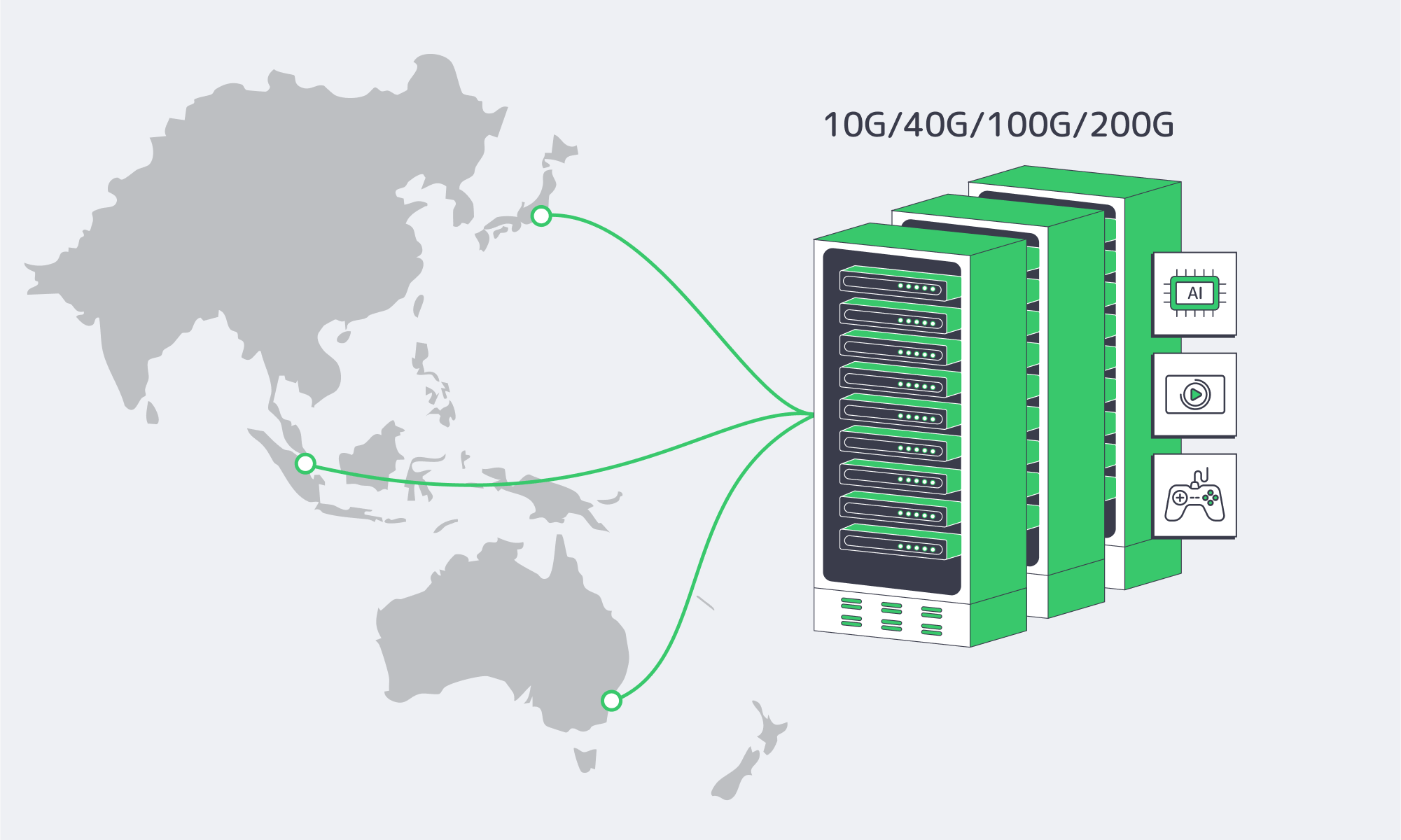
Broadcasting and interactive media. Video remains one of the heaviest internet traffic categories. AppLogic report states that video remains the largest application category by volume, while live digital events and streaming platforms continue to shape traffic peaks. A cluster in LA can feed both West Coast audiences and transpacific edges while keeping origin fetches short.
Gaming, real-time collaboration, and low-jitter messaging. The RTTs above support the rationale for LA PoPs in multiplayer titles and RTC systems. You can shave dozens of milliseconds compared with inland footprints and reduce congestion risk by staying on-net through well-peered West Coast routes.
CDN-assisted architectures. Los Angeles is an excellent origin hub for global delivery, especially when it feeds edges along the Pacific. For teams that prefer a single-vendor path, Melbicom’s global CDN spans 55+ locations across 39 countries and integrates cleanly with LA-hosted origins to reduce cache-fill time and keep delivery costs predictable.
How Does LA Help West Coast Scaling?
Latency budgets. For interactive applications or long-tail VOD, each 10–30 ms saved to APAC markets can matter. Hosting in LA places your origin close to transpacific cable landings and dense meet-me rooms, decreasing RTT and path variance.
Data gravity and egress economics. Keeping origin stores or hot caches in Los Angeles reduces cross-region round-trips for West Coast users and fetches to Asia, and with the right interconnect mix you can balance cloud egress via private paths and IX peering.
Operational resilience. Tier III redundancy provides N+1 power and cooling, enables maintenance without downtime, and reduces the blast radius of routine changes. Combine that with multiple upstreams and IX peers to avoid last-mile incidents.
Key Lessons for Your LA Deployment
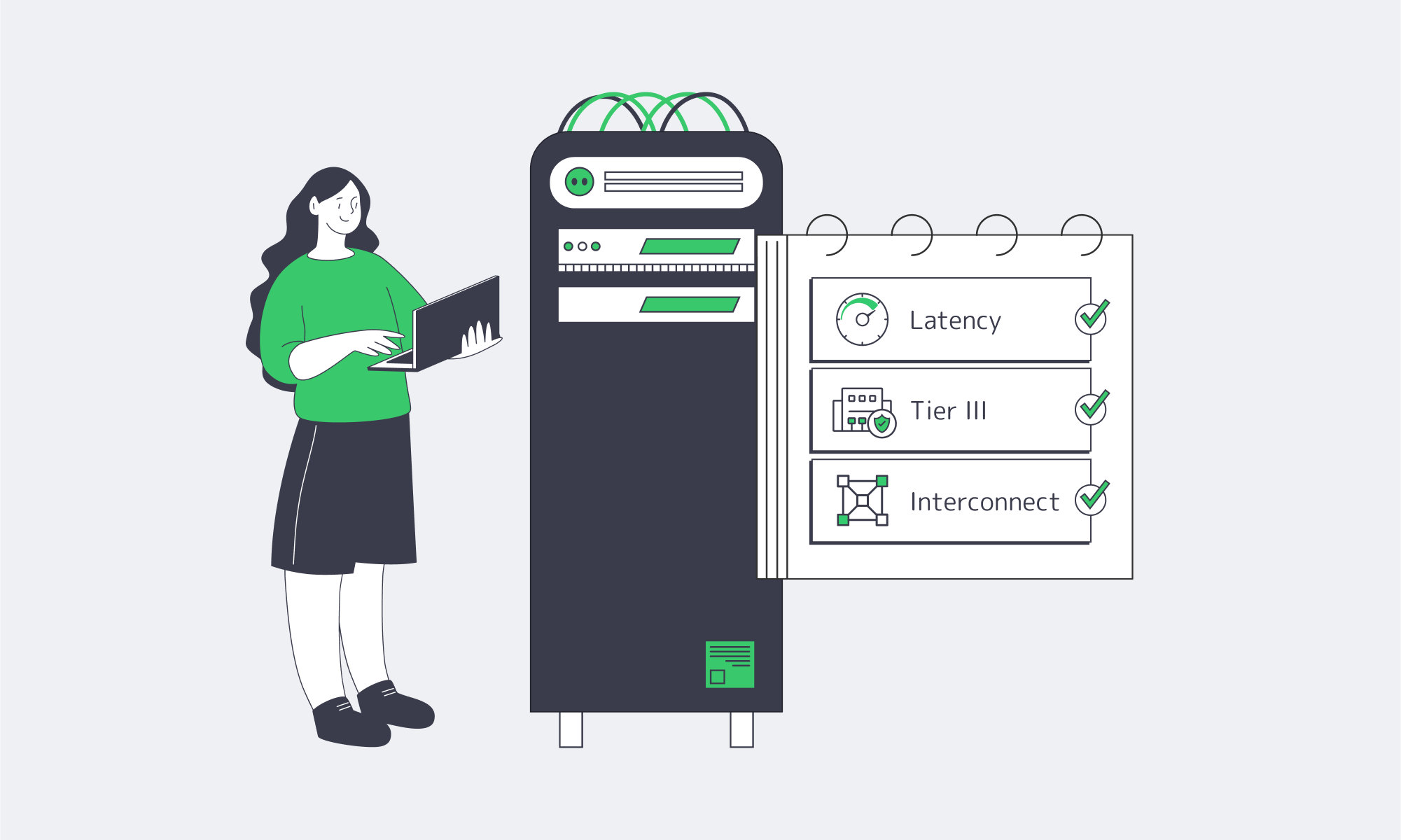
- Begin where your packets need to start. Los Angeles combines transpacific routes and dense carrier hotels, giving you roughly 100–170 ms RTT design targets to key APAC centers and strong U.S. West Coast performance.
- Choose Tier III data centers. Use this design class when you need maintenance-without-downtime patterns and the 99.982% Tier III availability target.
- Use LA as an interconnection hub. Use a CDN footprint with LA origins to speed cache fills and reduce last-mile variation.
- Tune bandwidth to the workload. For media, gaming, and inference, prioritize providers that offer per-server bandwidth in the hundreds of Gbps and multi-carrier routes. Melbicom’s Los Angeles location supports 1–200 Gbps per server.
- Think ahead to hybrid. Carrier-neutral facilities in LA make it easier to interconnect with major clouds when you need burst capacity or tier splitting.
Where Should You Build Next?

If APAC expansion or tighter West Coast performance is part of your roadmap, a Los Angeles dedicated server footprint is a practical next step. You get measurable latency targets in Tier III facilities with deep carrier selection and access to transpacific cable paths. LA gives origins and APIs an advantage for streaming and interactive workloads, where video and live digital events remain major capacity drivers.
For teams planning multi-node systems, LA also adds operational leverage: cross-connects are straightforward, redundancy patterns are familiar, and there is ample capacity to scale bandwidth off the shelf without re-architecting the stack. Adding edges or secondary regions becomes a linear expansion rather than a full redesign.
Deploy in Los Angeles today
Launch high‑performance dedicated servers in LA with Tier III reliability, 1–200 Gbps bandwidth, and rapid provisioning in under 2 hours.