
Blog
Compliance Playbook For Italian Dedicated Servers
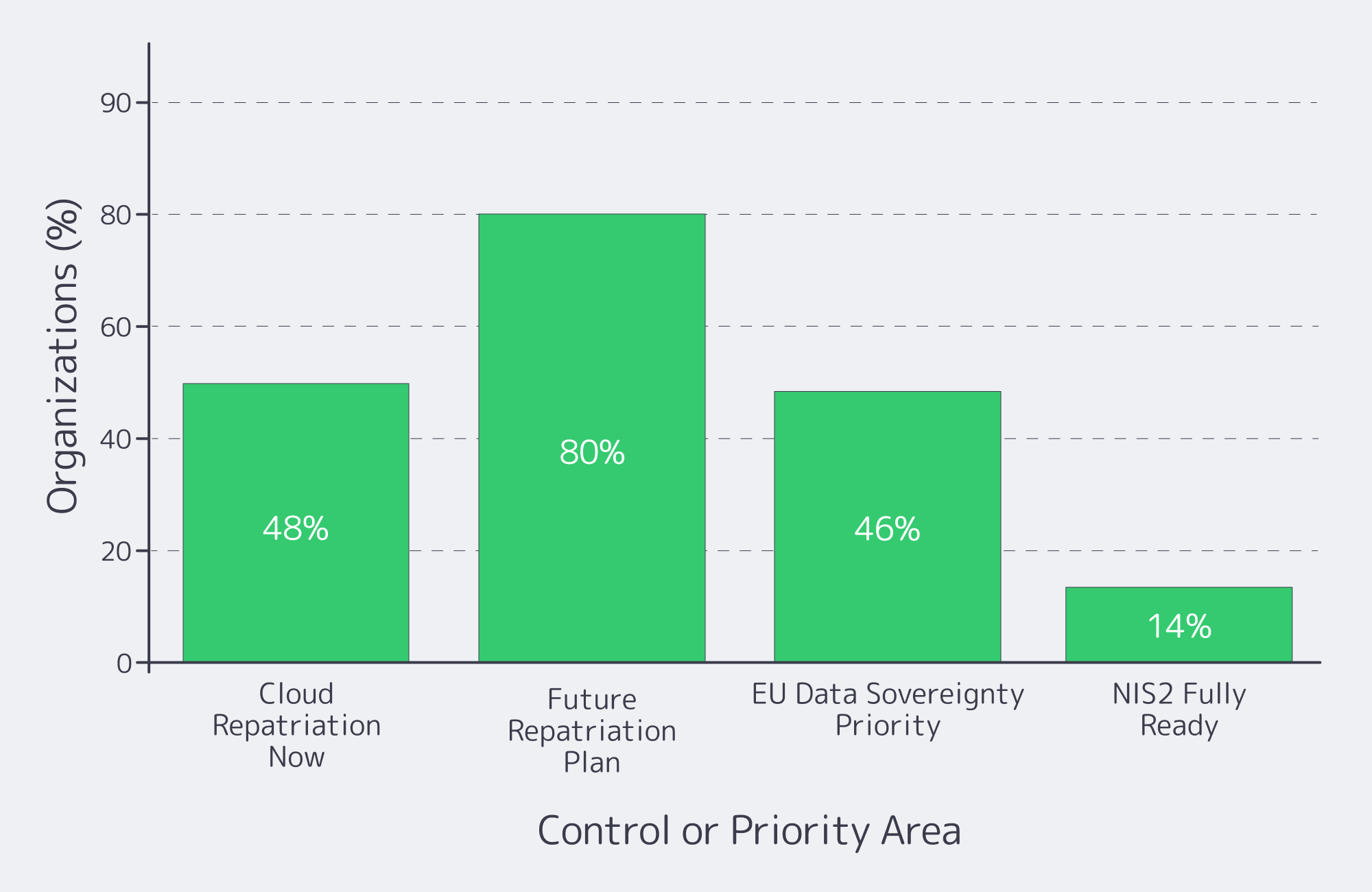
European regulation has quietly killed “move fast and break things” for infrastructure teams. GDPR set the baseline for data protection; NIS2 and DORA now turn cyber‑risk and resilience into board‑level issues. Recent research shows that over 48% of companies are considering or actively moving workloads from public clouds back on‑premises or to private clouds, and around 80% expect to repatriate some workloads within the next two years, largely due to cost and sovereignty pressures.
At the same time, 46% of European security leaders now rate EU data sovereignty as their single most important buying criterion, ahead of cost. For regulated services, that translates into a blunt infrastructure mandate: keep critical data on infrastructure where you can prove where it lives, who can access it, and which controls wrap around it.
Italy is a strong candidate for that anchor point. Palermo sits on top of multiple Mediterranean cable landing stations, and Melbicom’s Tier III data center there connects directly into those systems. That location can shave 15–35 ms of latency to North Africa and the Middle East and improve overall route quality by 50–80% for those regions. For EU‑facing workloads, hosting on a dedicated server in Italy combines clear EU jurisdiction with low‑latency connectivity into European backbones.
Choose Melbicom— Tier III-certified Palermo DC — Dozens of ready-to-go servers — 55+ PoP CDN across 36 countries |
 |
This article offers a practical compliance playbook for running regulated workloads on a dedicated server in Italy deployment – how to map data flows, what GDPR artifacts to demand, which controls line up with NIS2 and DORA, and how to stay audit‑ready instead of scrambling when someone says, “We have an assessment next month.”
What GDPR Artifacts to Request from Italian Dedicated Server Hosting Providers
For Italian hosting, you want GDPR paperwork that proves where data lives, who touches it, and how it’s protected. In practice, that means a DPA with teeth, full sub‑processor and location transparency, mapped data flows, security certifications or audits, and clear incident‑handling clauses you can point to in an assessment.
The non‑negotiables:
- Data Processing Agreement (DPA). Your DPA with a hosting provider should clearly scope which services are in play, what security measures apply, how data‑subject rights are supported, and how audits or inspections can be performed.
- Sub‑processor and location transparency. Demand a current list of sub‑processors with their roles and countries.
- Data‑flow and data‑category mapping. Before migrating, map which components on the server handle personal data, which handle telemetry or logs, and which external services receive copies (backups, monitoring, email gateways). That map becomes your single reference when customers or regulators ask, “Exactly where does this field go?”
- Security certifications and audits. Independent audits are now standard proof that “appropriate technical and organisational measures” exist.
- Incident handling and cooperation clauses. Your DPA and main contract should commit the provider to prompt incident notification and meaningful cooperation (log access, forensic details, timelines) so you can meet GDPR’s breach‑reporting deadlines and NIS2/DORA thresholds without conflict.
With this pack in place, you can show regulators and enterprise customers that server hosting in Italia isn’t just a rack in Palermo – it’s a controlled processing environment with clear legal responsibilities and traceable data flows.
Which Security Controls Meet NIS2 and DORA Requirements
NIS2 and DORA effectively codify what used to be optional security hygiene. On a dedicated server in Italy, regulators expect encrypted data, strong identity and access control, rich logging and monitoring, disciplined patching, and tested incident‑response – plus contracts that make your provider an accountable part of that control system.
Encryption, Access, & IAM for Server Hosting Italia
Encrypt data at rest and in transit by default: full‑disk or volume encryption for storage, TLS for services, and VPN or private links for management and inter‑DC traffic. NIS2 guidance calls for “state of the art” cryptography and documented key‑management, including rotation and logging. Combine that with strong identity: SSH keys or certificates for server logins, MFA on Melbicom’s control panel and IP‑KVM, and role‑based access control so only those who truly need it can touch production.
Logging, Monitoring, & Vulnerability Management
NIS2 and DORA both assume that you can detect, investigate, and reconstruct incidents. Centralize system, application, database, and network logs from your Italian server into a SIEM or log pipeline, define retention windows, and monitor for anomalies. Only 14% of organizations say they’re fully NIS2‑ready, according to IDC research sponsored by Microsoft – most are still filling gaps in monitoring and response. A disciplined patch and vulnerability‑management process – defined patch windows, regular updates, and documented remediation timelines for critical CVEs – is one of the fastest ways to close that readiness gap.
Incident Response and Resilience on Your Server Italia Stack
NIS2 and DORA introduce strict timelines and expectations for incident reporting, alongside resilience requirements. Essential entities under NIS2 face fines of up to €10 million or 2% of worldwide annual turnover, whichever is higher, if they fall short on key security obligations. To keep your Italian server environment on the right side of that line, you need a written incident‑response plan, mapped roles between your team and Melbicom, and a tested disaster‑recovery design: encrypted backups (for example, to Melbicom’s EU‑based S3 object storage in Amsterdam), restore drills, and, where needed, second‑site capacity in another EU DC.
How GDPR, NIS2, and DORA Line Up for Hosting
| Framework | Primary Focus | Hosting‑Relevant Must‑Haves |
|---|---|---|
| GDPR | Personal‑data protection and privacy | DPA with your Italian provider; transparent data flows and sub‑processors; appropriate security (encryption, access control); breach detection and 72‑hour reporting processes. |
| NIS2 | Cybersecurity for essential/important entities | “State of the art” controls: encryption, MFA, logging/monitoring, vulnerability management, documented risk management, and fast incident reporting backed by clear governance. |
| DORA | Digital operational resilience for finance | ICT‑risk framework, segregated and tested backups, documented RTO/RPO, rigorous incident handling and reporting, and strong third‑party oversight for infrastructure providers. |
How to Ensure Audit Readiness for Italian Dedicated Hosting
Audit readiness for Italian hosting means treating your environment as an evidence machine, not just a stack of servers. You need up‑to‑date documentation, log trails you can reconstruct incidents from, clear ownership with your provider, and a lightweight review cadence that keeps controls aligned with GDPR, NIS2, and DORA expectations.
Start with an evidence repository. Collect the DPA, main contract, network diagrams, data‑flow maps, and risk assessments that describe your Italian environment. Add vulnerability‑scan reports, backup/restore test logs, penetration‑test summaries, and configs proving MFA, encryption, and hardening. When an audit lands, you’re curating from a library, not hunting through inboxes.
Then audit from the outside‑in. Periodically run an internal checklist against GDPR, NIS2, and DORA requirements: Can you show where personal data sits on your dedicated server Italy deployment? Produce a sub‑processor list? Prove that backups are tested? The point isn’t to build a bureaucracy – it’s to ensure that if a bank client, regulator, or board asks, you have concrete answers backed by evidence.
Finally, stay ahead of regulatory drift. GDPR enforcement has already produced roughly €5.88 billion in cumulative fines as of early 2025, and regulators are widening their target list beyond “big tech.” NIS2 and DORA are only increasing the stakes. Build a lightweight governance loop: periodic reviews of guidance from EU and Italian authorities, internal gap analyses, and scheduled updates to your controls and documentation. When rules shift, you adjust the Italian environment deliberately instead of reacting under audit pressure.
Turning a Dedicated Server in Italy Into a Compliance Advantage

Put all of this together and a dedicated server in Italy stops being “just hosting” and becomes part of your governance architecture. You concentrate your regulated workloads in a single‑tenant, clearly located environment under EU law; you can prove where every packet lives, who has access, and which controls wrap around it.
Key Takeaways for Hosting in Italy
- Anchor sensitive workloads in a single‑tenant Italian environment. Keep personal‑data‑heavy systems on a dedicated server Italy deployment so you can explain data residency and access in one slide – and avoid cross‑border transfer issues unless they’re explicitly required and documented.
- Treat security controls as regulatory requirements, not best‑effort. Map encryption, MFA, logging, vulnerability management, backups, and incident response directly to GDPR, NIS2, and DORA articles. Make sure each control has an owner, a test schedule, and an associated piece of evidence.
- Build audit readiness into day‑to‑day operations. Maintain an evidence repository, standardize log retention, and schedule periodic “mini‑audits” so there are no surprises when an external assessor or major customer wants proof that your Italian hosting stack is under control.
Get compliant hosting in Italy
Deploy dedicated servers in Palermo with EU data residency, NIS2-ready controls, encrypted backups, and 24/7 support. Choose a configuration that fits your workloads and compliance goals.