
Blog

Why Germany Became Europe’s Always-On Data Hub
One reason Germany has become the nerve center of European infrastructure is that each of its hosting layers, legal, electrical, environmental, and network, is designed to meet the needs of risk-averse organizations that cannot afford downtime or data privacy errors. GDPR-hardened compliance, Tier III-class availability design, and aggressive green-power regulation mean Germany dedicated server hosting can provide the control and continuity multinational businesses demand.
We explore the three pillars that make Germany the most logical destination to deploy mission-critical workloads below, and we lean on a short retrospective of the early 2000s colocation boom to help with the context before zooming in on the unparalleled carrier-hotel ecosystem in Frankfurt.
Choose Melbicom— 200+ ready-to-go servers — Tier III & IV DCs in Frankfurt — 40 CDN locations |
 |
GDPR-Hardened Compliance Meets Tier III Availability Design
Data hosted within Germany remains subject to German and EU data-protection law, including the General Data Protection Regulation. Keeping processing, administration, and routine access inside the EEA can reduce transfer-mechanism work for EU-only architectures, although any access or onward transfer to a third country still needs an appropriate GDPR basis such as standard contractual clauses. (European Commission)
Operational resilience would hardly matter without legal strength. Many German facilities serving enterprise hosting are built around redundant power, cooling, and carrier paths, and Tier III-certified sites are designed for concurrent maintainability: planned maintenance can be performed without taking IT operations offline. (Uptime Institute) The reliability ethos can be traced to the early 2000s colocation boom in the country, when Frankfurt first became the default interconnection point in Europe, and has only grown more serious as workloads have shifted from Web 1.0 to real-time analytics and video. It is now possible to have hardware maintenance done routinely when it is convenient and with no interruption to service, and the stability of the national grid provides an additional buffer against brownouts for data centers.
Melbicom reinforces this resilience model in Germany through Tier III & IV DCs in Frankfurt and up to 200 Gbps network capacity per server.
Outcome: Enterprises are able to align Germany deployments with demanding availability objectives, without automatically overlaying costly secondary infrastructure.
How Do Germany’s Energy-Efficiency Rules Lower OpEx for Dedicated Servers?
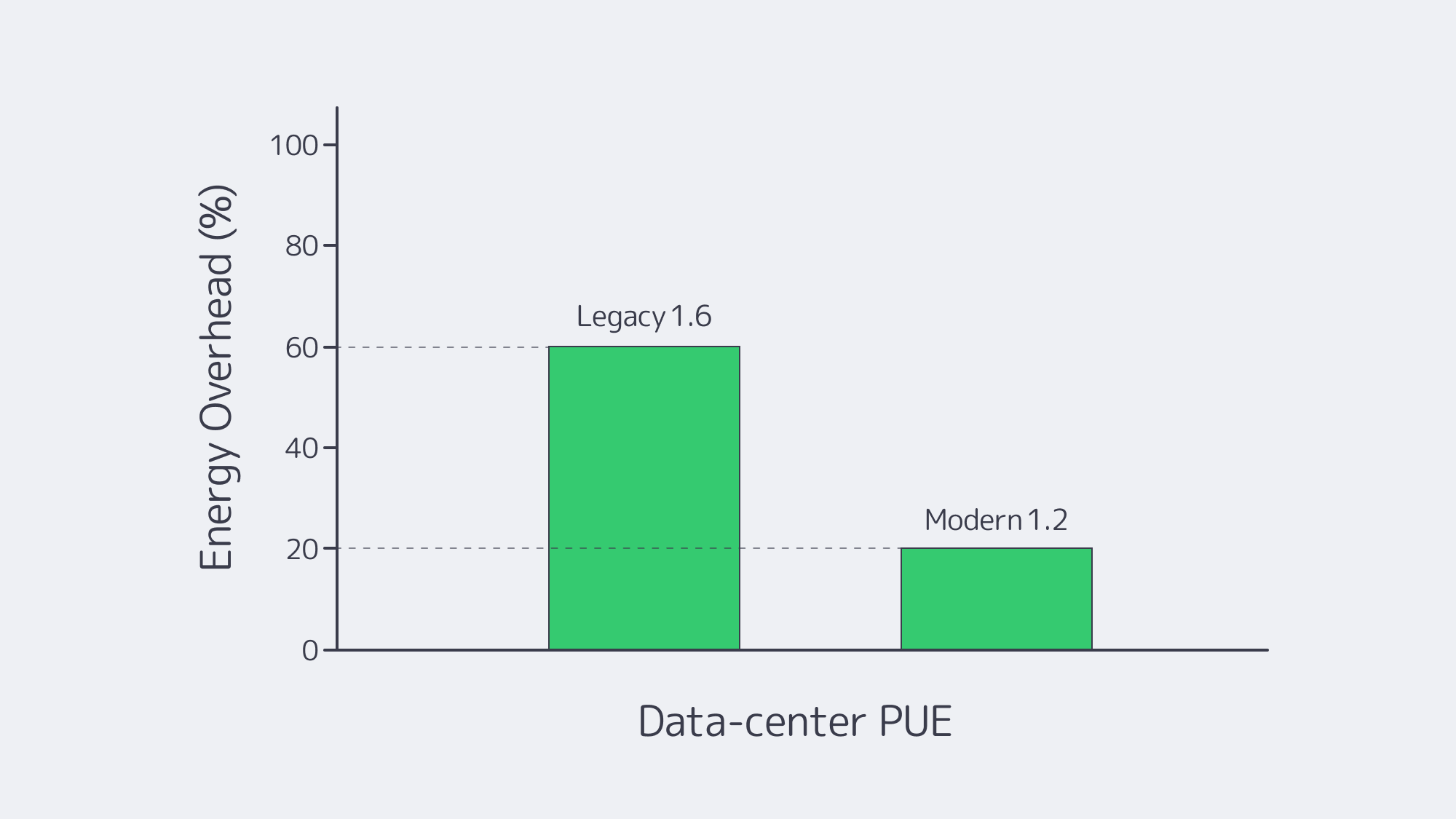
Compliance and uptime don’t pay the electric bill. Germany, however, has the technical rigor coupled with industry-leading sustainability economics that lead to long-term cost savings. A 2024 German Datacenter Association impact report found that 88 % of the power used by German colocation facilities was renewable, and 69 % of operators had secured one or more power-purchase agreements to hedge pricing and carbon risk. (German Datacenter Association)
Even more pressure and opportunity are added by policy. Under the current Energy Efficiency Act, data centers that begin operation on or after July 1, 2026 must achieve a power-usage effectiveness (PUE) of 1.2 or lower, while existing facilities must reach 1.5 from July 2027 and 1.3 by July 2030. A 2026 draft amendment would relax some PUE thresholds, so operators should treat the exact compliance path as moving while the efficiency pressure remains durable. (White & Case, Taylor Wessing) That pressure encourages operators to use direct-to-chip liquid loops, modular cooling, and waste-heat reuse where the workload and facility design justify them. Reducing PUE from 1.6 to 1.2 can cut total facility energy demand by approximately 25 percent for the same IT load, while reducing non-IT energy overhead from 60 percent to 20 percent.
For Melbicom, the practical takeaway is configuration choice: Germany dedicated server plans run in Tier III & IV DCs in Frankfurt with 200+ ready-to-go servers and network capacity up to 200 Gbps per server, so energy-aware infrastructure does not require giving up high port-speed options.
How Do Frankfurt’s DE-CIX and IXPs Improve Latency and Redundancy?
GDPR is the legal moat and Frankfurt is the performance engine of Germany. The city is also home to DE-CIX Frankfurt, which set a new all-time record of 18.73 Tbit/s on December 9, 2025. (DE-CIX) More than 1,000 local, regional, and global networks peer there, so any tenant can access Tier 1 transit, hyperscale clouds, SaaS platforms, and eyeball ISPs instantly. (DE-CIX) In latency-sensitive services, trading platforms, multiplayer gaming, and collaborative design, deployment of a Germany dedicated server in Frankfurt can reduce latency by tens of milliseconds over trans-Atlantic links.
To explain why planning for redundancy in Germany begins in Frankfurt, it is worth examining the current IT-load concentration across the largest FLAPD hubs in Europe:
| Hub | IT-Load Capacity (MW), Q2 2025 |
|---|---|
| London | 1,134 |
| Frankfurt | 1,020 |
| Paris | 616 |
| Amsterdam | 570 |
Source: German Datacenter Association Datacenter Outlook Germany 2025/26, using CBRE Research data. (germandatacenters.com)
Such figures explain why carrier hotels in Frankfurt along Kleyerstrasse remain one of Europe’s most important interconnection clusters. But capacity is not the complete redundancy picture. Germany also has a dense ring of regional Internet-exchange points (IXPs): Berlin (BCIX), Munich, Hamburg, and the Ruhr, which provide additional options for keeping national traffic local or routing around a single metro dependency. BCIX has linked providers in the capital since 2002, underscoring how deeply distributed peering is embedded in the national infrastructure. (bcix.de)
For enterprise architects, the practical design pattern is simpler: deploy the primary stack in Frankfurt, use GSLB and routing-aware failover for traffic steering, and place warm standby capacity in another approved European location only when the workload can leave Germany. That architecture fits with the backbone of Melbicom, which spans 21 global Tier III and Tier IV data centers, 29 IXP peering hubs, 23 transit partners, and 40 CDN PoPs across 35 countries. We provide up to 200 Gbps per server in Frankfurt, supporting resilient routing and CDN-assisted delivery designs for Germany-hosted workloads.
What Future Trends Will Shape Dedicated Server Hosting in Germany?
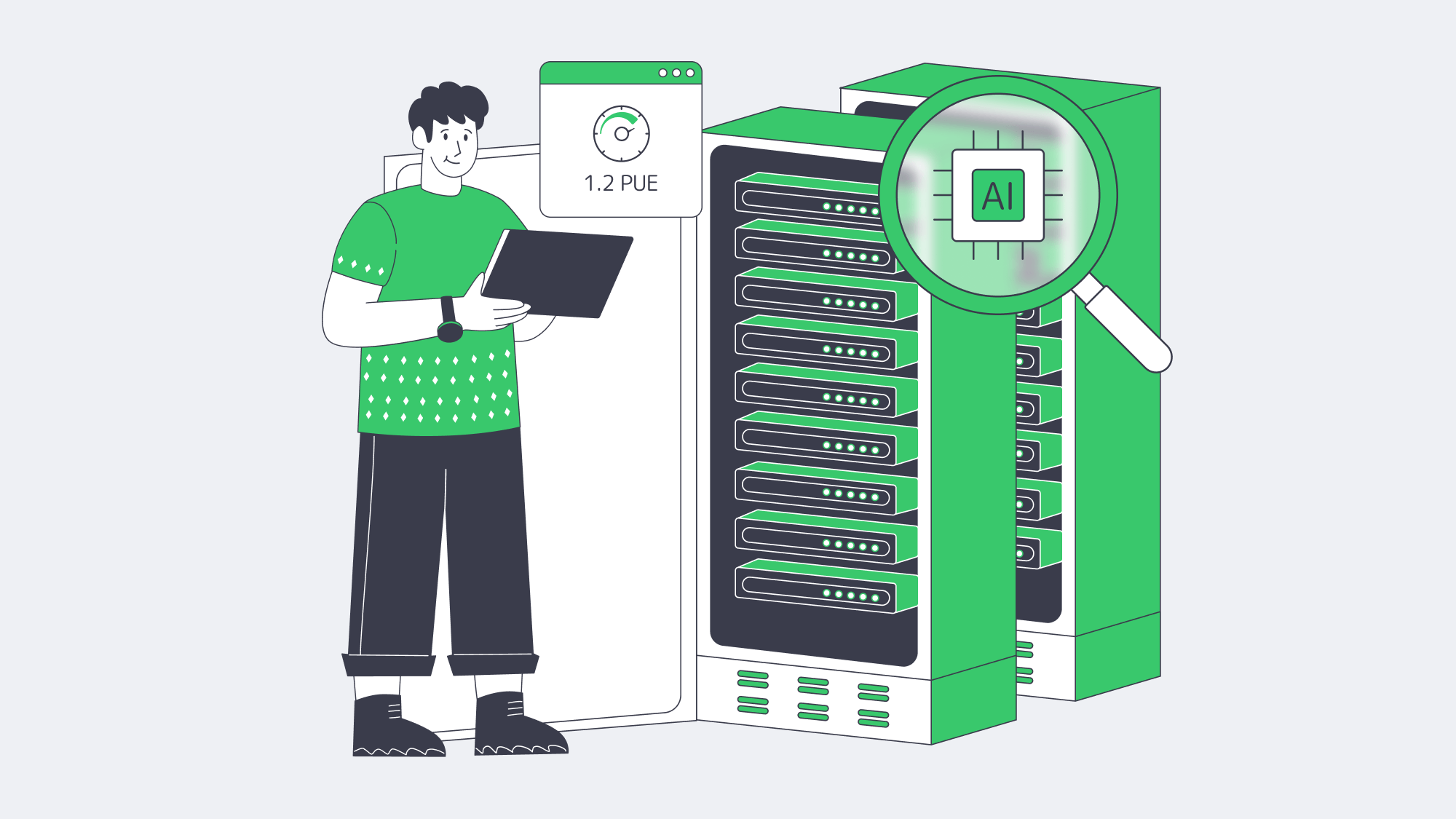
The strategic rationale for German dedicated server hosting will only grow as EU data-sovereignty expectations and AI inference workloads raise demand for dense, efficient infrastructure. JLL’s 2025 EMEA report lists London with 302 MW and Frankfurt with 279 MW in the development pipeline, showing that supply is expanding but still tight. (JLL) Energy law deadlines, even if amended, will keep driving additional jumps in cooling efficiency. The fact that Germany sits at the nexus of North-South and East-West fiber paths helps keep latency-sensitive 400 GbE-era, immersive, and AI-inference applications close to major population centers in Europe.
When a firm considers where to run its next compliance-sensitive workload, the calculus is becoming quite simple: sovereignty, uptime, and OpEx all come together in Germany, especially when a hosting provider can combine all these variables into a single infrastructure plan.
Why Germany Is a Smart Choice for Dedicated Server Hosting

Germany has a trifecta that is hard to find: GDPR-aligned data control, Tier III-class reliability, and energy-efficiency regulation that increases pressure on wasteful infrastructure over time. DE-CIX Frankfurt—Europe’s largest internet exchange by traffic—anchors a nationwide mesh of regional IXPs, giving architects more routing and failover options. The heritage of the early colocation boom lives on in the design philosophies that consider downtime a taboo, as well as new sustainability requirements that make the hardware you install today affordable and socially acceptable in the future.
Deploy Dedicated Servers in Germany
Choose from 200+ ready-to-go servers with up to 200 Gbps ports, hosted in Tier III & IV DCs in Frankfurt.