
Blog

Reducing Latency and Enhancing Security with Dedicated Server Hosting
Modern digital services are pushing boundaries on speed and safety. Performance-critical platforms—whether running real-time transactions or delivering live content—demand ultra-low latency and strong security controls. Even a few extra milliseconds or a minor breach can lead to major losses. In this environment, single-tenant dedicated server hosting stands out for providing both high performance and robust protection. Below, we examine how hosting on a dedicated server addresses these challenges better than multi-tenant setups.
How Do Dedicated Servers Compare with Shared Hosting for Speed and Security?
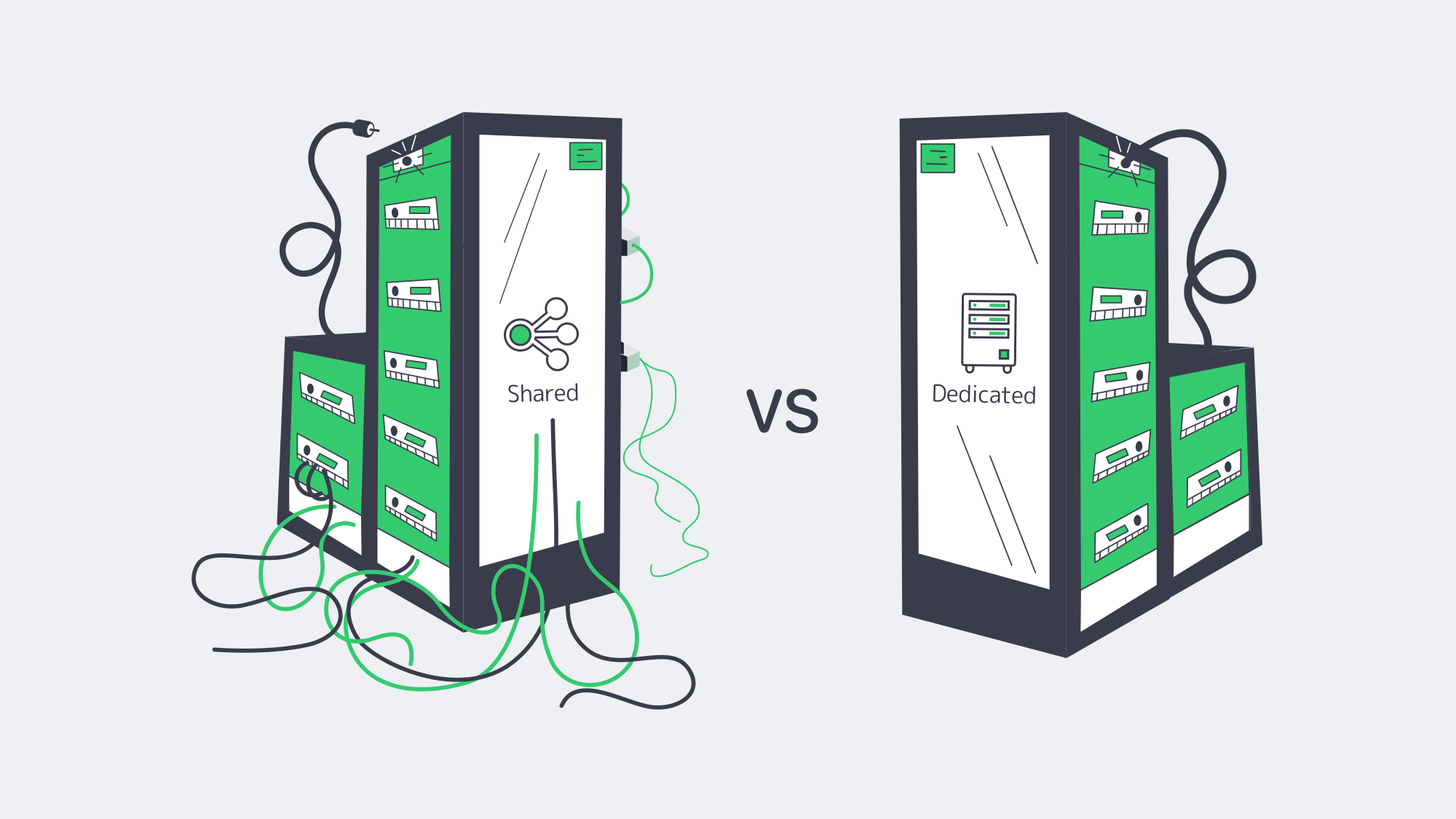
In shared or virtualized environments, multiple tenants operate on the same physical hardware, often leading to the “noisy neighbor” issue: resource contention causes performance dips or latency spikes. Virtual machines (VMs) also add a hypervisor layer between the application and hardware, introducing extra overhead. Meanwhile, dedicated servers deliver exclusive use of physical hardware—no risk of interference from other tenants and zero virtualization overhead. This single-tenant approach results in more predictable performance and simpler security management.
| Key Aspect | Dedicated Server (Single-Tenant) | Shared/Virtualized (Multi-Tenant) |
|---|---|---|
| Resource Isolation | Exclusive physical resources, no “noisy neighbors” | Resource contention from neighbors |
| Latency & Performance | Bare-metal speed, no hypervisor overhead | Added overhead from shared hypervisor |
| Security | Physical isolation, custom firewalls | Potential cross-VM exploits |
In some workloads, virtualization does have benefits like easy scaling. Yet for consistent performance and stronger security controls, dedicated hosting remains a strong fit. As multi-tenant clouds grow, businesses that need predictable speed and safety at scale have rediscovered the value of dedicated servers.
How Do Dedicated Servers Deliver Sub-10 ms Response Times?
Dedicated servers can deliver sub-10 ms response times when the server is placed close to users or exchange points, routes are short, and the port capacity matches traffic demand. Single tenancy removes shared-resource contention, but geography, peering, and last-mile network conditions still determine real-world latency.
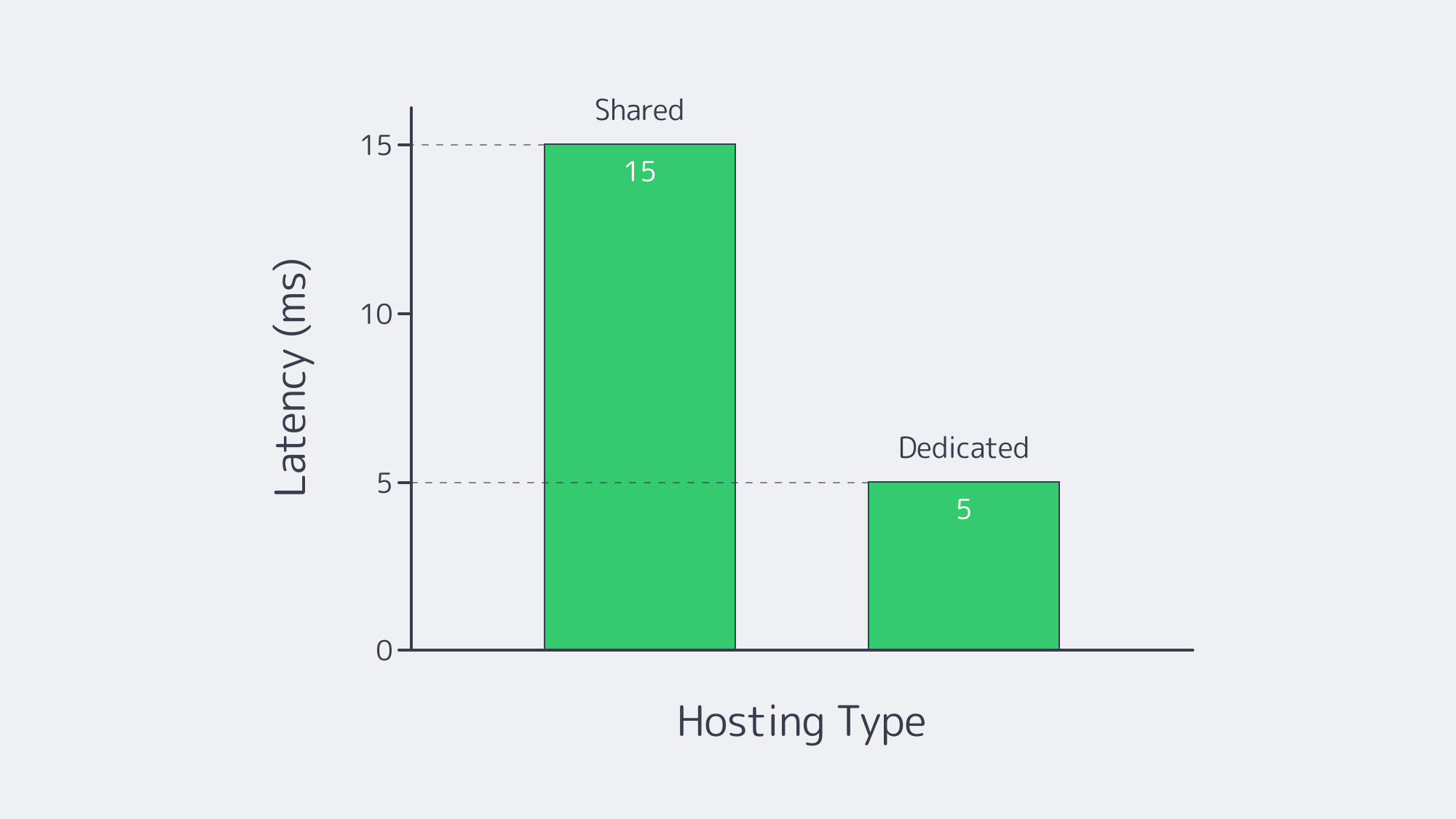
In latency-sensitive operations, every millisecond counts. Network performance depends on distance, hop count, and how your infrastructure connects to end-users. Dedicated hosting makes it possible to carefully select data center locations—keeping servers near major population centers or key exchange points to achieve sub-10 ms latencies for local users. At scale, those milliseconds translate into smoother user experiences and a measurable competitive advantage.
For example, in electronic trading and other time-sensitive systems, even a 1 ms delay can affect pricing opportunities, queue position, or user experience. While not every platform deals with trades, the same principle applies to anything that needs real-time interaction. For specialized, co-located systems, dedicated hardware can also support tuned network interface cards and kernel or network stacks that reduce server-side processing delay; internet-facing latency still depends on routing and distance.
Most important, a dedicated environment ensures consistent latency since you’re not competing for network capacity with other clients. Melbicom operates 21 Tier III and Tier IV data centers across Europe, Asia, Africa, the Middle East, and North America, including Tier IV capacity in Amsterdam with excellent European connectivity. By placing servers strategically across supported locations, you can reduce response times to single-digit milliseconds for local traffic.
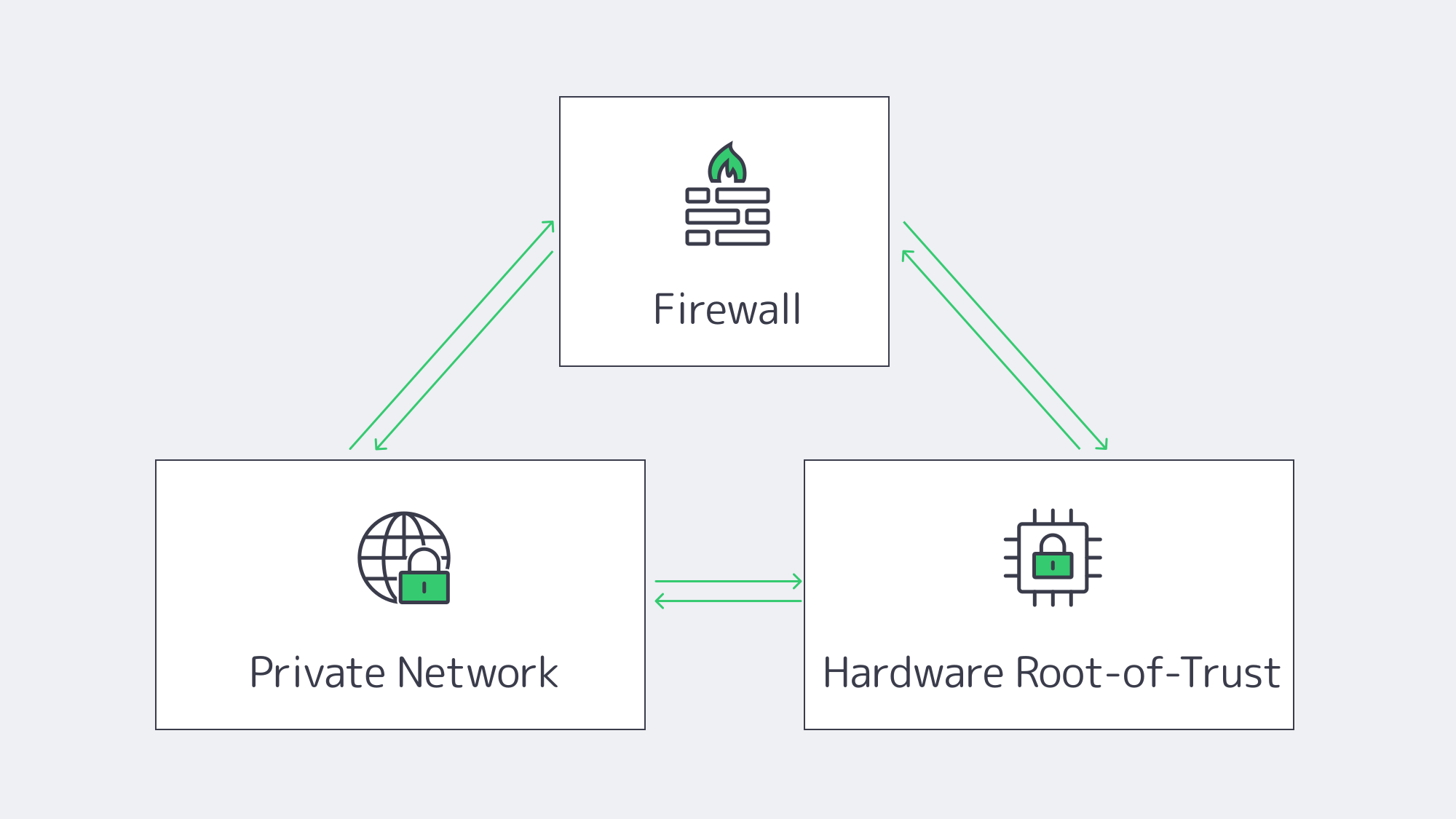
Custom Firewall, Private Networking, and Hardware Root-of-Trust
The Power of Custom Firewalls
In multi-tenant setups, firewall configurations are often limited or standardized to accommodate all users. With a single-tenant dedicated server, you can deploy custom firewall appliances or software, implementing fine-grained rules. This flexibility becomes crucial in mission-critical applications, where each port and protocol demands careful oversight. Dedicated hardware also lets you segment traffic on private VLANs, isolating back-end services from the public internet.
Private Networking for Latency and Security
Another hallmark of dedicated infrastructure is private internal networking—ideal for workloads that involve communication among multiple servers. Instead of routing traffic through external networks, you can use private links that reduce latency and diminish exposure to outside threats. Melbicom offers private networking capabilities so our customers can keep sensitive data flows entirely off the public internet. And with dedicated server hosting, bandwidth can reach up to 200 Gbps per server, ensuring that large-scale data transfers or intense workloads operate smoothly.
Hardware Root-of-Trust for Firmware Integrity
Firmware-level attacks remain a serious risk, with attackers targeting motherboards, baseboard management controllers, and BIOS code. One powerful defense is a hardware root-of-trust: a secure chip or platform security controller, such as a Trusted Platform Module (TPM), that measures and verifies server firmware during boot. NIST platform-firmware guidance emphasizes mechanisms for protecting firmware against unauthorized changes, detecting unauthorized changes, and recovering securely. In a dedicated server, secure boot and firmware-integrity checks can run before the operating system loads.
Defending Against Modern Threats

Cyber threats remain frequent and intense. Current DDoS threat reporting shows more than 8 million attacks worldwide in the second half of 2025 alone, with some attacks reaching 30 Tbps. While multi-tenant providers do offer layered defenses, sharing the underlying environment can mean broader attack surfaces. Dedicated servers reduce certain shared-infrastructure attack surfaces. You have exclusive use of the CPU, storage, and network interfaces, making it harder for attackers to exploit cross-tenant vulnerabilities. You can also implement advanced intrusion detection tools without worrying about impacting other tenants’ performance.
Scalability and Support
Some assume dedicated hosting lacks scalability. Melbicom has simplified server provisioning—our inventory includes more than 1,400 ready-to-go server configurations that can be deployed quickly, often in hours. Monitoring and support are likewise robust. Melbicom monitors for unusual traffic patterns, offering DDoS protection where needed. Free 24/7 technical support ensures you can resolve issues anytime. That kind of tailored assistance can be indispensable for mission-critical workloads.
Key Industry Trends Driving Dedicated Server Hosting
Analysts link the rise of dedicated hosting to two major drivers: low-latency requirements and relentless cyber threats. As next-gen networks and real-time applications proliferate, more businesses need near-instant responses. A 2026 ultra-low-latency connectivity market forecast projects roughly 18% CAGR through 2031, supporting continued demand for infrastructure that can serve near-real-time applications.
On the security front, cross-tenant exploits and side-channel risks continue to make isolation a design priority. This trend pushes organizations toward single-tenant architectures. In some cases, a hybrid model is adopted: critical workloads run on dedicated machines, while less sensitive tasks reside in elastic cloud environments. The result is more infrastructure budget moving toward dedicated server hosting.
| Trend | Impact on Dedicated Hosting |
|---|---|
| Rise of Ultra-Low Latency Apps | Boosts demand for physically close servers offering sub-10 ms or microsecond-level performance |
| Escalating Cyber Threats | Single-tenant designs isolate vulnerabilities; advanced security controls become essential |
| Cost Predictability | Fixed-rate dedicated servers can be more economical at scale than variable cloud pricing |
Conclusion: Single-Tenant Infrastructure for Speed and Safety

For mission-critical services seeking sub-10 ms response times and robust security controls, single-tenant dedicated infrastructure remains a strong option. Multi-tenant environments have improved, but noise issues and cross-tenant risks persist. By taking full advantage of custom firewalls, private networking, and hardware root-of-trust, you create a fortified environment with consistent low latency.
Get Your Dedicated Server
Deploy a high-performance dedicated server in hours and gain ultra-low latency with robust security.