
Blog

Beyond Hardware: Total Cost Of Dedicated Servers
Dedicated server price is no longer just hardware: the monthly fee reflects power, network, IP, support, and contract economics. Similar CPU/RAM servers can produce different invoices once bandwidth, renewals, remote hands, or extra IPs enter the picture.
Uptime Institute reports rack densities rising into the 7–9 kW range, while modern servers can draw several hundred watts under load. TeleGeography says global internet bandwidth grew 23%. More density and traffic make the “server as a box” view outdated.
Choose Melbicom— 1,300+ ready-to-go servers — Custom builds in 3–5 days — 21 Tier III/IV data centers |
 |
What Drives Dedicated Server Pricing Beyond CPU and RAM
CPU and RAM explain the base server, not the full bill. Storage performance, bandwidth accounting, interconnection quality, IP usage, support scope, and contract flexibility create the biggest pricing gaps—and the costs that compound fastest as deployments grow.
Dedicated Server Prices and Why Storage Is No Longer “Just Disk”
Storage is now priced by latency as much as capacity. SATA 6 Gb/s tops out around 600 MB/s; NVMe is built for lower latency under parallel load. That makes NVMe right for DBs, caches, queues, and write-heavy logging—but an expensive mistake for cold data.
Melbicom’s S3-compatible storage changes that sizing math. Keep NVMe for the hot working set, then move snapshots, artifacts, and cold content to object storage. Pay for fast storage only where speed changes outcomes.
Server Prices and Why the Network Is the Bill
Most budget mistakes start with a category error:
- A port is capacity, measured in Gbps.
- Transfer is volume, measured in TB or by a metered model.
Those are not the same. “Unmetered” also does not automatically mean unconstrained. TeleGeography shows weighted-median 100 GigE transit pricing falling at about a 12% compound annual rate across key cities over a recent three-year span.
Melbicom’s live dedicated server catalog filters configurations by CPU, CPU brand, RAM, storage, bandwidth, transfer, GPU, and data center. That is how quotes should be read: know whether throughput is guaranteed (Melbicom’s case) or “up to,” how overages are billed, and whether mid-cycle provisioning changes the first invoice.
Location, Peering, IPs, Support, and Term
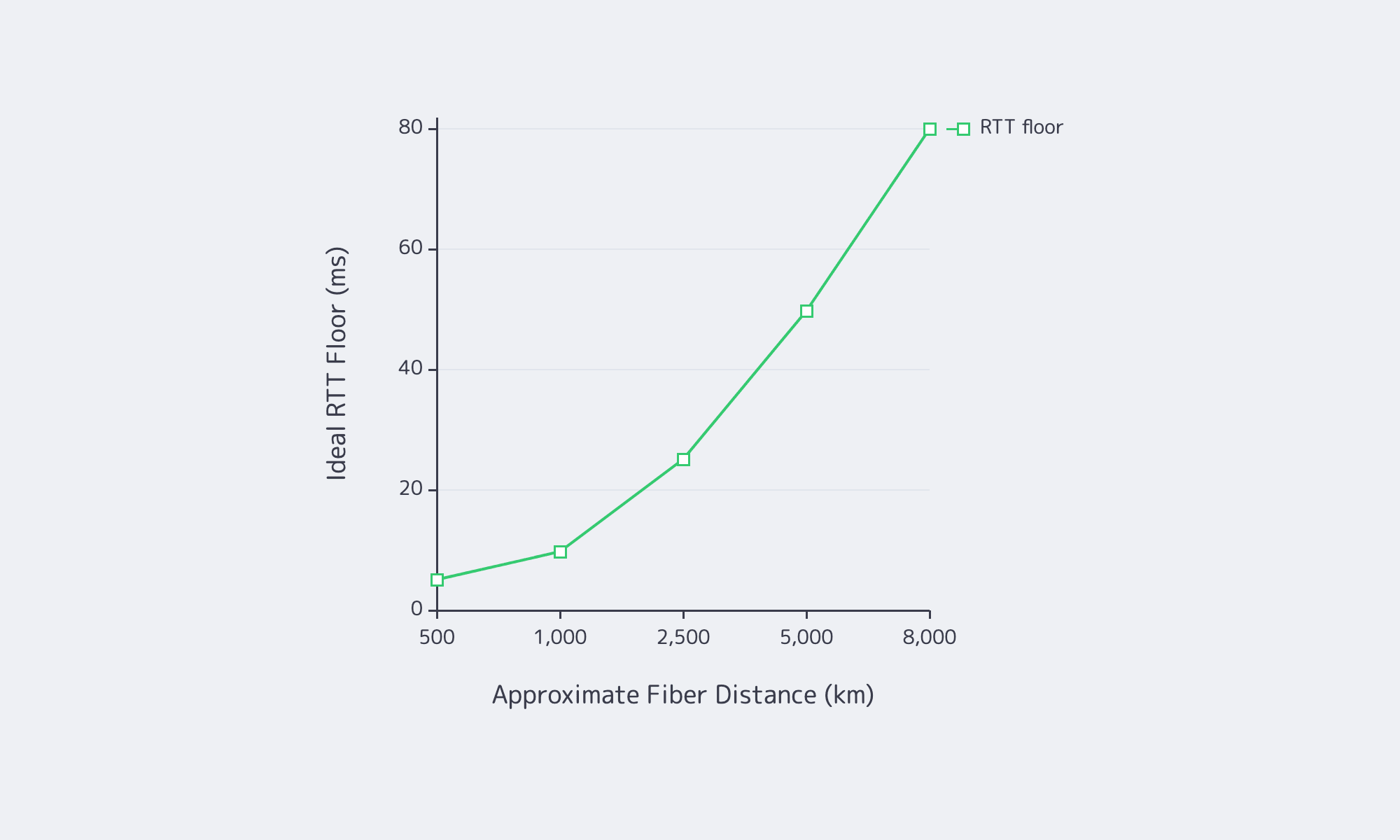
Location pricing is partly geography and mostly interconnection. High Performance Browser Networking uses a rule of thumb of 200,000,000 meters per second for light in fiber.
Then come the quiet line items. ARIN documents the depletion of the free IPv4 pool, so additional addresses can become expensive at scale. Remote hands often sit outside the monthly fee. A good first-term number can become a bad long-term number if bandwidth, IPs, or support work are repriced. Melbicom’s BGP session service matters here because BYOIP and routing flexibility can reduce renumbering and migration cost when infrastructure changes.
How to Compare Dedicated Server Quotes Without Missing Hidden Costs
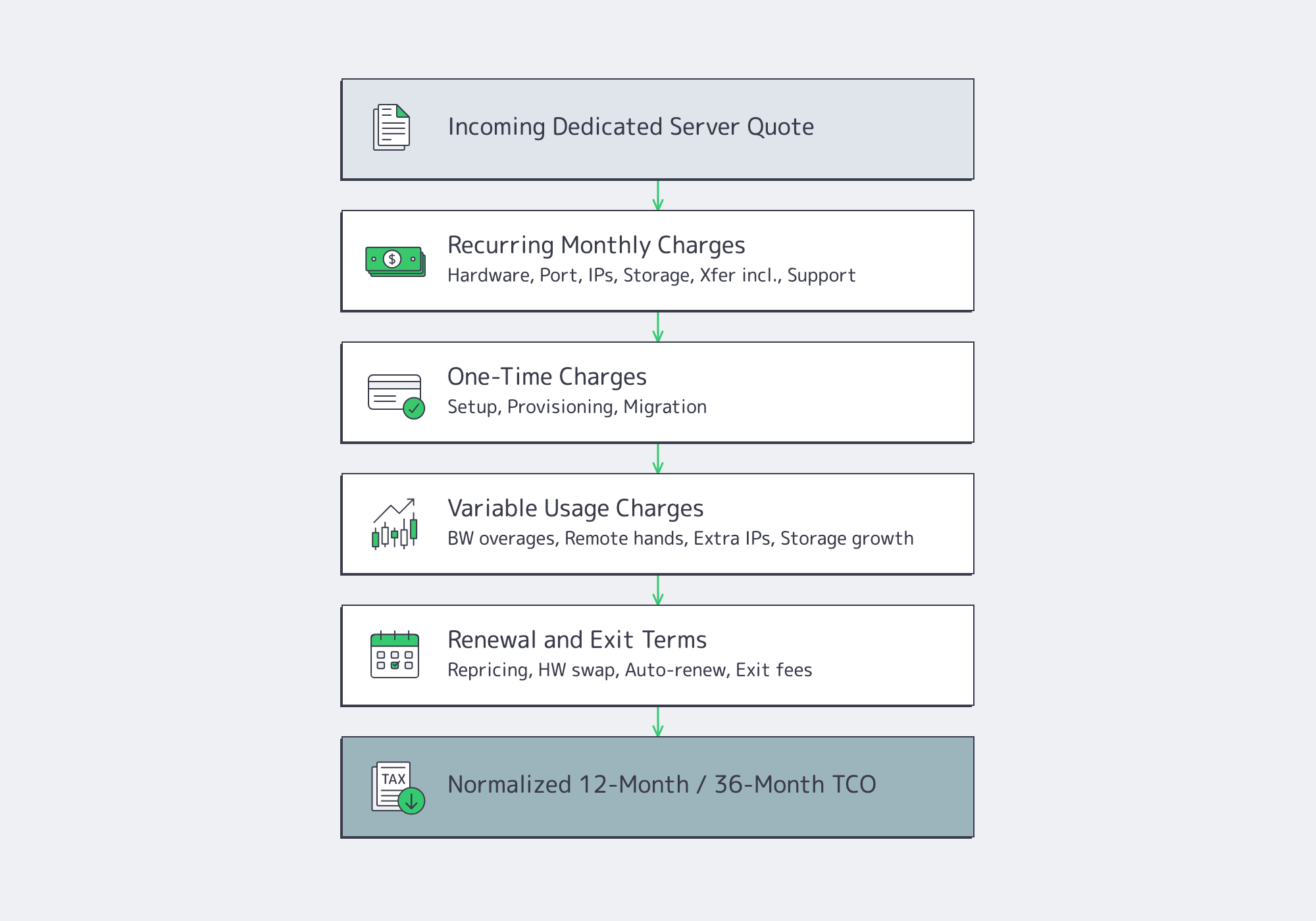
The only sound way to compare dedicated server quotes is to force each one into the same ledger: recurring charges, one-time fees, variable usage, and renewal mechanics. Without that normalization, the cheapest line item on day one often becomes the most expensive deployment over the term.
A simple quote-normalization framework:
- Recurring monthly charges: hardware, port, included transfer, IPs, storage, support, management.
- One-time charges: setup, provisioning, migration, install labor, cross-connects.
- Variable charges: bandwidth overages, extra IPs, remote hands, storage growth, burst events.
- Renewal mechanics: term, repricing language, auto-renewal, hardware swap terms, exit conditions.
| Cost Driver | How It Appears on Quotes | What to Clarify |
|---|---|---|
| CPU and licensing | CPU model, cores, threads | Are you paying for cores your workload—or your software licenses—cannot use? |
| RAM and storage | GB RAM, NVMe/SSD/HDD, x TB | Is premium local storage being used for cold data that belongs in object storage? |
| Port and bandwidth | 1/10/25/100 Gbps, unmetered, included TB | Is throughput guaranteed, how are overages billed, and is billing prorated mid-cycle? |
| Location and interconnection | Region or data center | Does the site have the peering depth and network headroom the workload needs? |
| IPs, support, and term | Included IPs, support tier, contract | How are additional IPs, remote hands, after-hours work, and renewal pricing handled? |
Two traps are especially expensive. First, oversized CPUs can inflate software licensing. Microsoft’s Windows Server rules are core-based with minimums per physical server, so extra headroom can also mean extra license spend. Second, network-heavy workloads become hard to forecast if CDN and object storage are treated as “later” optimizations. Melbicom’s CDN reaches 55+ PoPs in 36 countries and makes egress offload modelable instead of anecdotal.
How to Build a TCO Model for Dedicated Servers at Scale
A durable TCO model has three layers: fixed monthly spend, variable utilization costs, and change-or-risk costs. That structure reflects how dedicated servers behave in production, where traffic spikes, extra IPs, support work, licensing effects, and migration events often explain more spend than the server’s headline monthly rate.
Start with three buckets:
- Fixed monthly spend: server MRC, port, baseline transfer, included IPs, standard support, baseline storage.
- Variable utilization spend: bandwidth overages, extra IPs, storage growth, premium support, remote hands.
- Change and risk costs: setup, migrations, hardware refreshes, emergency work, and outage impact.
That third bucket is not theoretical. Uptime Institute says one in five impactful outages cost more than $1 million. The International Energy Agency estimates data centers use about 415 TWh of electricity, or roughly 1.5% of global demand, with consumption growing around 12% annually over the prior five years. Even when power is embedded in the provider’s price, those constraints still flow into server economics.
Use a unit-cost lens: cost per 1,000 requests, cost per TB served, cost per active tenant, or whichever metric maps infrastructure cost to delivered value. If spend rises while output stays flat, the problem is usually oversizing.
Dedicated Server Price Optimization Through Sizing Tips That Prevent Overpaying
The most common dedicated server pricing mistake is not paying too much per server. It is buying the wrong shape. Use a few simple rules:
- Fit CPU to the real bottleneck. Single-thread latency and throughput workloads do not scale the same way.
- Size RAM for the working set, not the full dataset.
- Use NVMe for hot paths; push cold data to lower-cost storage.
- Treat port speed as risk control for peak traffic, not a vanity metric.
- Use CDN offload to reduce origin egress and avoid oversized ports.
- Choose location for latency and routing efficiency, not just compliance.
Melbicom makes those trade-offs easier to model because the relevant levers are explicit: dedicated servers, data center locations, CDN, S3 storage, and BGP support sit in the same commercial ecosystem. That matters because reducing TCO is often about using the right adjacent service—not just buying a bigger server.
Dedicated Server Price Checklist Before You Sign
Before you approve a quote or renewal, use these rules of thumb:
- Separate port size from transfer volume and model both against normal traffic and peaks.
- Treat extra CPU cores as a licensing decision, not just a performance upgrade.
- Keep NVMe for hot data and move backups, snapshots, and logs to cheaper tiers.
- Price the full contract path: setup, renewal, extra IPs, remote hands, and exit costs.
- Choose location by latency, peering depth, and bandwidth ceiling—not by map alone.
Conclusion: Model the Full Operating Cost, Not the Sticker Price
Dedicated server price only looks simple when the quote hides the expensive parts. In reality, total cost is driven by storage latency choices, bandwidth accounting, interconnection depth, IP consumption, support scope, and how much optionality the contract preserves when traffic, routing, or architecture changes. The smartest buy is rarely the lowest monthly line item. It is the deployment shape that stays efficient when assumptions move.
Treat dedicated servers as a system, not a SKU. Normalize the quote, measure cost against the output your environment actually produces, and use services like CDN, object storage, and BGP to avoid solving every problem with a larger server and a fatter port.
Compare dedicated server pricing now
See configurations, ports, and transfer options across global data centers. Filter by CPU, RAM, storage, and bandwidth to model total cost before you buy.