
Blog
Boosting Affiliate Conversions with High-Performance Dedicated Servers
Affiliate campaigns are hyper-sensitive to latency. A page that opens within two seconds and one that takes three seconds or more can make the difference between profit and loss. Google reports show that the probability of bounce increases by 32% as load time moves from 1s to 3s, and Google AdSense Help notes that 53% of visits are likely to be abandoned if pages take longer than 3 seconds to load. A Google/Deloitte speed study summarized on web.dev found that a 0.1-second improvement in mobile site speed increased conversion rates by 8.4% for retail sites and 10.1% for travel sites. Affiliates working on a per-click basis can translate those percentages into margin.
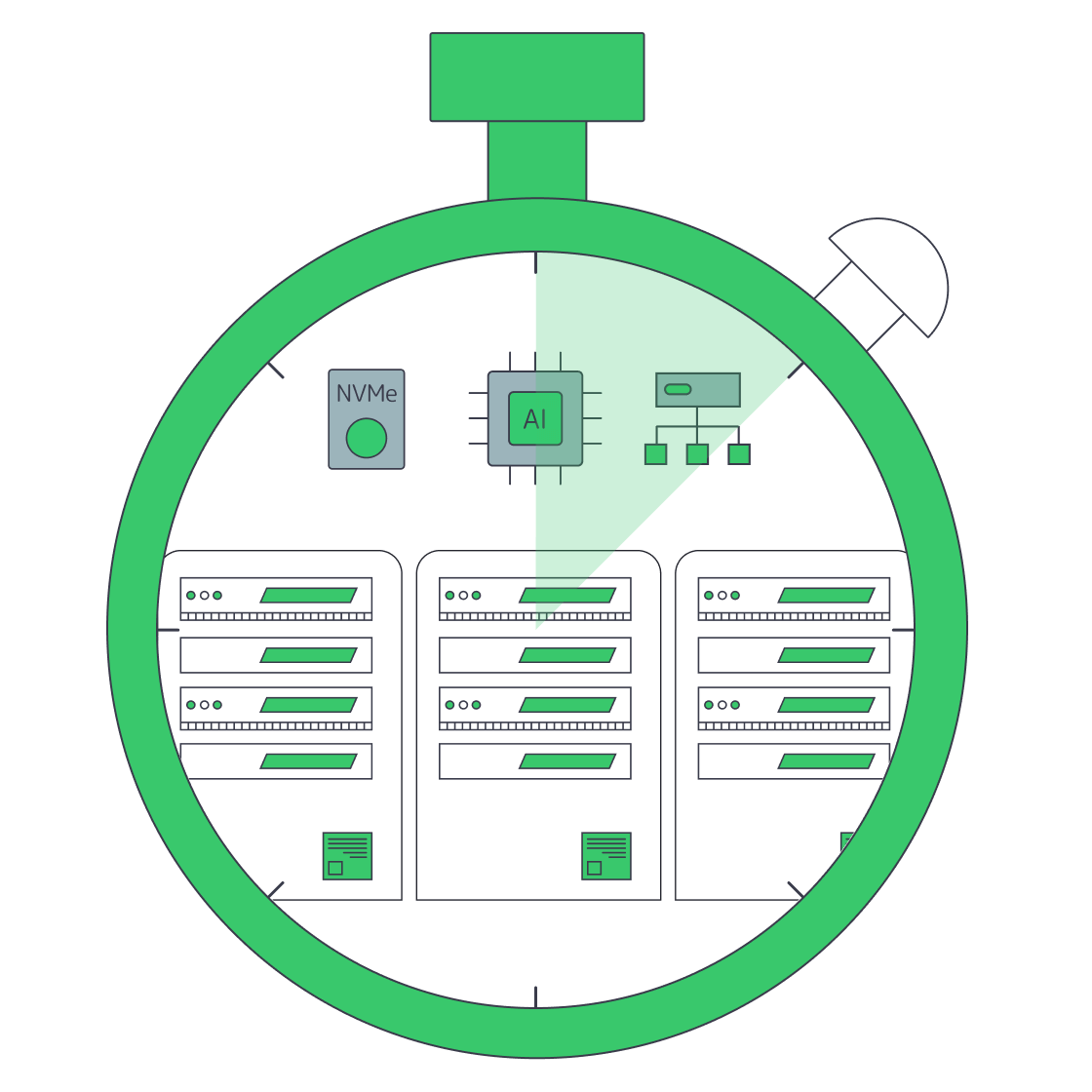
Modern infrastructure bridges that gap. The fastest deployments combine NVMe storage, multi-core CPUs with high amounts of RAM, and optimized high-throughput networks so that time to first byte is short and page rendering is never interrupted during campaign spikes. Performance-tuned dedicated servers pay off by sustaining throughput and consistent latency under real campaign load.
Choose Melbicom— 1,400+ server configs — 21 global Tier IV & III data centers — 39 CDN locations worldwide |
 |
How Dedicated Servers Help Affiliate Marketing Convert More Clicks
The 2025–26-class hardware and networks are not just incremental upgrades; they change the architecture. NVMe on PCIe 4/5 removes the I/O bottlenecks that once made dynamic pages “feel” slow. NVMe drives will routinely achieve multi-GB/s sequential reads and writes (5,000 MB/s and higher in typical settings), whereas SATA remains capped at 600 MB/s—a limit that is easily saturated under concurrent requests. On the CPU front, dozens of physical cores and high-speed DDR4/DDR5 RAM enable servers to render templates, execute tracking/attribution logic and serve API requests in parallel without spiking tail latency. On the network side, bandwidth-intensive sites rely on high-capacity, dedicated 1–200 Gbps ports, intelligent peering, and global distribution mechanisms that keep p95/p99 response times tight even when audiences are far-flung across regions.
In the browser: The HTML renders more quickly, render-blocking assets arrive sooner, and an overworked origin does not block the main thread. Users see content earlier, engage earlier, and leave less often, which is the exact direction toward increased conversion rates. BBC reported that every extra second of load time costs them another 10 percent of users, showing how small delays compound into losses.

NVMe dedicated servers for low latency
NVMe’s advantage is not just headline throughput; it is low-latency, high-queue-depth I/O that keeps dynamic sites responsive under concurrency.
Consider an affiliate landing page that accesses a geo database, retrieves creative variants, and records a click ID before the content is painted above the fold. NVMe reduces storage-operation wait times toward microseconds rather than milliseconds across the request pipeline. The result is lower TTFB, lower LCP, and a greater likelihood that the user sees and responds to the CTA.
CPA network dedicated hosting
There is a different but related issue facing networks and platforms: high rates of redirects, attribution and postbacks are required 24/7.
A delay in the tracking hop frustrates the user even before they can see the merchant page. Dedicated servers with high numbers of cores and memory can absorb bursty redirect traffic and high-capacity NICs ensure that traffic does not queue on the wire. Keeping tracking latency minimal preserves conversion probability across all offers and geos; it also preserves trust in reported numbers, which is critical when affiliates bid hourly.
Minimize the time it takes to load an affiliate landing page (infrastructure first)
Infrastructure is often the quickest win in affiliate campaigns.
- Move origins closer to demand and cache as much as you can at the edge. A worldwide CDN reduces distances and round-trips; static content is served by edge nodes, leaving origin CPU to concentrate on dynamic tasks.
- Right-size compute at the peaks, not averages. Ample headroom avoids CPU-bound stalls that slow p95 latency during launches, email drops, and other high-value bursts.
- Employ new routing and protocols. Consolidated connections (HTTP/2/3), intelligent peering, and anycast DNS eliminate much handshaking overhead and path variability, which is often a hidden cause of extra seconds.
A quick comparison
| Lever | Modern capability (examples) | Conversion-side effect |
|---|---|---|
| Storage | NVMe on PCIe 4/5 exceeds 5,000 MB/s; SATA is limited to ~600 MB/s | Lower TTFB and faster DB-backed renders improve completion of key funnel steps. |
| Compute | 24–64+ cores with fast DDR4/DDR5 and generous caches | Handles concurrency during spikes; stable time-to-interactive. |
| Network & Edge | Dedicated 10–200 Gbps ports, global CDN in 39 locations across 35 countries | Shorter paths and higher throughput reduce bounce and keep users on page. |
Scaling Strategies for Peak Campaigns (without Slowing Down)
Outstanding campaigns can create traffic spikes that resemble an overload event. The playbook should scale capacity without compromising latency per request.
Vertical headroom + horizontal scale. Start with servers that have enough margin in CPU, RAM, and NIC bandwidth so the initial configuration will not slow down at 5x baseline. Then add replicas behind a load balancer to handle the next order of magnitude. With dedicated hardware, the environment is predictable—no noisy neighbors, consistent NUMA layout, and high port speeds.
Fast capacity activation. The historical objection to dedicated servers — slow provisioning — is less relevant when capacity is planned in advance. For example, Melbicom pre-stages 1,400+ ready-to-go dedicated server configurations and typically brings servers online in about two hours, so additional capacity is in place when it’s needed during scheduled bursts or surprise viral moments.
Keep packets flowing. Spikes can make the NIC the bottleneck rather than the disk. Melbicom offers data center services with bandwidth up to 200 Gbps per server — useful when predictable, high-throughput delivery is important to scheduled launches.
Push static to the edge. At Melbicom, we pair origin servers with our own CDN in 39 locations across 35 countries. Campaign materials (images, CSS, JS, video clips) sit on the edge, while the origin focuses primarily on dynamic processing such as personalization and tracking. This keeps p95 and p99 latency steadier during high concurrency.
Global placement. Latency increases with distance; about 10 ms of round-trip time is added to each ~1,000 km. Melbicom has 21 international data center locations, so you can anchor origins close to traffic you are actually purchasing, and replicate into secondary regions as campaigns scale.
Operational preparedness. The operational side is also important: when you need to scale based on load-test results, the response time of the support team will determine how fast you can do it. Melbicom offers 24/7 technical support, and our control panel allows teams to modify capacity with ease.
Why a Good-Enough Shared Hosting Environment Is Not Good Enough
Shared machines and undersized VMs used to be the first point of call, but they often fail at scale due to resource contention and unpredictable latency. A neighboring tenant backing up or a burst of noisy processes can add hundreds of milliseconds of unpredictability to your requests — just when you launch a high-spend campaign. Modern dedicated environments remove that variability by giving you the entire CPU, memory channels, disk bus, and NIC with no local resource contention from other tenants. The lesson from high-volume affiliate traffic is direct: when conversions matter, infrastructure that is only “good enough” becomes expensive.
Affiliate Marketing Implementation Checklist

- Move stateful workloads to NVMe-based dedicated origins. Prioritize renderers, session stores and databases.
- Place origin servers close to users and front all static content with a CDN.
- Plan on headroom (CPU, RAM, bandwidth) so your p95 does not drift during peak.
- Perform a load test preflight and maintain an expansion path (pre-approved configs, DNS/balancer rules, warm replicas). Melbicom’s 1,400+ ready-to-go configs and 2-hour activation make this a realistic standard practice.
- Metrics that count: TTFB, LCP and conversion rate by geo/ISP. Correlate latency to abandonment and adjust capacity based on it.
Milliseconds to Money: Infrastructure ROI

Conversion arithmetic is merciless. Every second of delay eats into sales; every millisecond saved adds margin to ROI. The most powerful lever available to an affiliate is the performance envelope of its origin — how fast it can accept connections, read from storage, render dynamic content, and push bytes over the wire at peak. NVMe storage eliminates I/O stalls; high-performance CPUs and RAM can absorb concurrency without latency whiplash; high-speed network ports, global placement, and CDN delivery reduce costly round-trip delays. That combination can convert paid clicks into engaged sessions and engaged sessions into revenue even when there is a surge in traffic. It is straightforward, and the data speaks: the fewer seconds, the fewer bounces, the more conversions.
Deploy High-Performance Servers
Choose from over 1,400 ready-to-deploy dedicated server configurations and launch in as little as two hours.