
Blog

Atlanta Dedicated Servers: Bandwidth-First, Budget-Friendly
Atlanta is a case study in how infrastructure economics and competition can tighten hosting costs without compromising quality. With over 130 data centers in the metro, providers sharpen rates and add value to win deals. Add in Georgia’s ~$0.10/kWh commercial power rates and state tax incentives for data center investments, and you get a market where dedicated servers with high‑bandwidth allocations are available at double‑digit monthly prices, often with tens of terabytes of data transfer included. Such a combination—budget‑sensitive economics, competitive bandwidth, and a network crossroads hosted in Tier III+ facilities—is rare in the southeastern United States.
Choose Melbicom— 50+ ready-to-go servers in Atlanta — Tier III-certified ATL data center — 39 PoP CDN across 6 continents |
 |
Why Is Atlanta’s Hosting Market So Competitively Priced?
Density drives competition: Atlanta’s large data‑center footprint—over 130 facilities—keeps prices under sustained pressure. The area continues to see new construction—for example, a $1.3B QTS campus, a 36‑MW Flexential expansion, and a 40‑MW DataBank build—which adds capacity and moderates pricing even as demand grows. Meanwhile, robust carrier coverage, peering, and fiber routes support high throughput at favorable rates.
How do Georgia’s power rates and incentives reduce monthly bills?
Georgia’s average commercial rate of ~$0.10/kWh gives Atlanta providers structural savings on compute and cooling, which they can pass through in server pricing. On top of that, Georgia’s 2018 sales‑and‑use tax exemption (HB 696) cut capital and equipment costs for qualifying data centers. One policy analysis, citing the state’s evaluation, attributes roughly 90% of Georgia’s data center activity to these incentives—evidence that public policy materially expanded local capacity and competition. Together, inexpensive power plus tax relief help explain why “affordable” in Atlanta does not mean “compromised.”
What Should a Cheap Dedicated Server in Atlanta Plan Include Today?
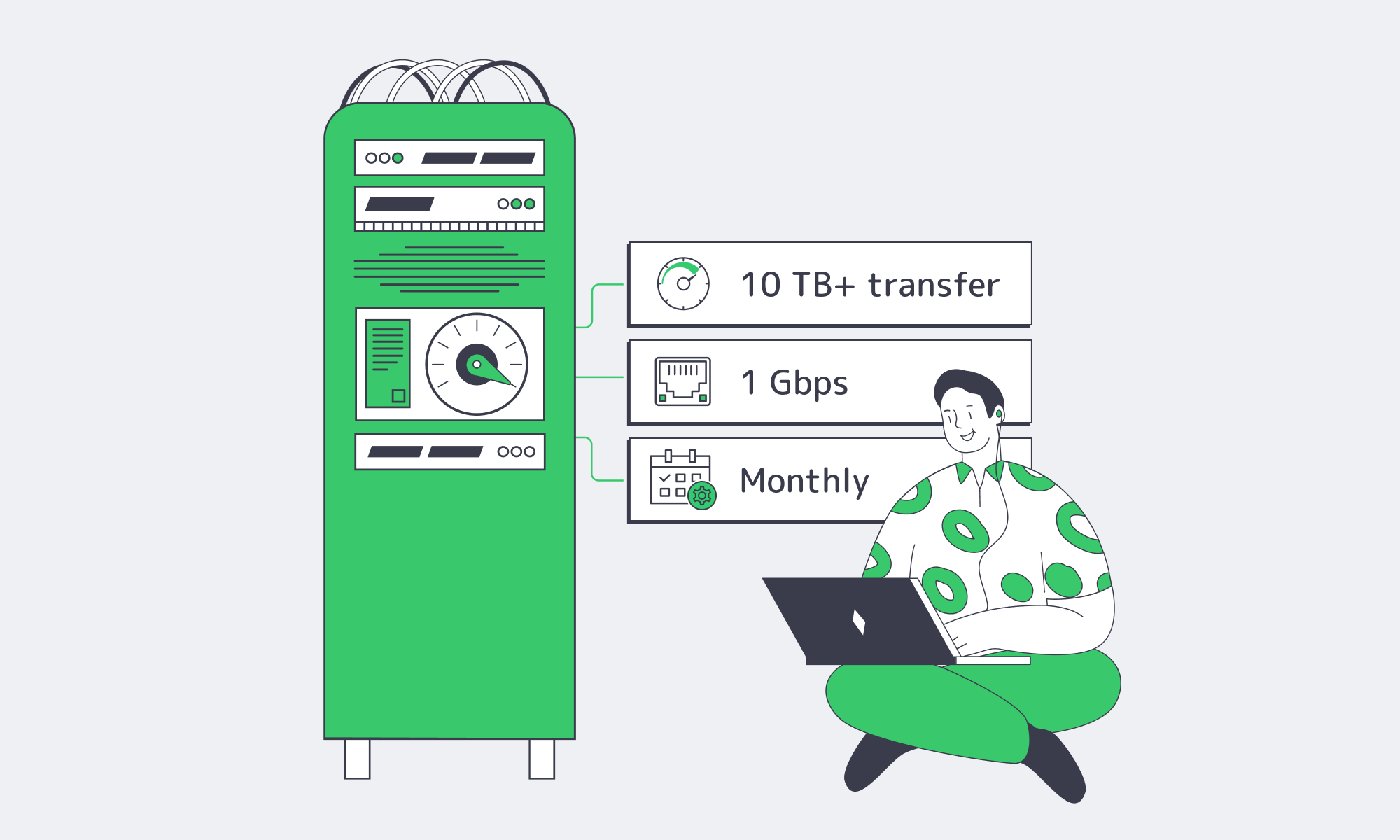
In Atlanta, “cheap” refers to value, not corner‑cutting. Entry‑level packages commonly include generous bandwidth—10 TB or even unmetered—in the base price. The providers achieve this with the help of the Peering and providers operating at the metro level with fiber available due to the fact that the cost per gigabit delivered decreases with the bandwidth added. Legacy plans that billed per GB of data have largely given way to bandwidth‑first packages. At entry level, the total cost of a dedicated server in Atlanta often beats an equivalently provisioned VPS once realistic bandwidth needs are factored in.
Dedicated server hosting in Atlanta: bandwidth‑first economics
Expect practical configurations such as 1–10 Gbps ports paired with terabytes per month of transfer and rapid turn‑up. The market has since lost the majority of the archaic types of pricing (huge initial minimums, significantly small pieces of data, very long lock-ins), to embrace foreseeable monthly arrangements in line with the existing shape of traffic.
Which Modern Cost‑Saving Technologies Are Doing the Heavy Lifting?
Hardware efficiency. Successive generations of x86 processors deliver more compute per watt, enabling more‑spec boxes in the same rack footprint and power envelope.
Automated and fast provisioning. Standardized ready‑to‑go configurations image quickly and consistently, reducing labor and time‑to‑value for customers. For example, we can activate standard Atlanta servers within 2 hours from a bench of 50+ on‑hand configs.
Transit and peering of high capacity. Suppliers are able to give the big transfer quotas, even unmetered on 1Gbps, at sustainable price with multi-Tbps backbones and wide choice of carriers. Melbicom’s network supports 14+ Tbps aggregate capacity, with per‑server ports up to 200 Gbps as required.
Facility engineering. Modern Tier III+ data centers standardize redundancy and efficiency practices (hot/cold aisle containment, high‑efficiency UPS, intelligent cooling). That reduces PUE and levels the costs despite the variability in the power markets -advantages that translate into consistency in performance where prices are affordable.
Atlanta’s Cost Levers for Affordable Dedicated Servers
| Cost Lever | What it means for you |
|---|---|
| Power economics | ≈$0.10/kWh commercial power reduces OPEX for compute and cooling, enabling lower monthly server pricing. |
| Market competition | Over 130 Atlanta data centers drive competitive pricing; new supply and expansions (QTS, Flexential, DataBank) strengthen buyer leverage. |
| Tax incentives | HB 696 (2018) exempts sales/use tax on qualifying data‑center equipment; an analysis ties ~90% of Georgia’s data‑center activity to these incentives, expanding capacity and choice. |
| Network abundance | Network abundance provides tens-of-TB or unmetered plan support at favorable rates and with good throughput. |
| Facility maturity | Tier III+ Atlanta facilities emphasize efficiency and reliability; many providers maintain ready‑built configurations for rapid, low‑touch delivery. |
How Should Buyers in Atlanta Control Total Cost without Losing Performance?
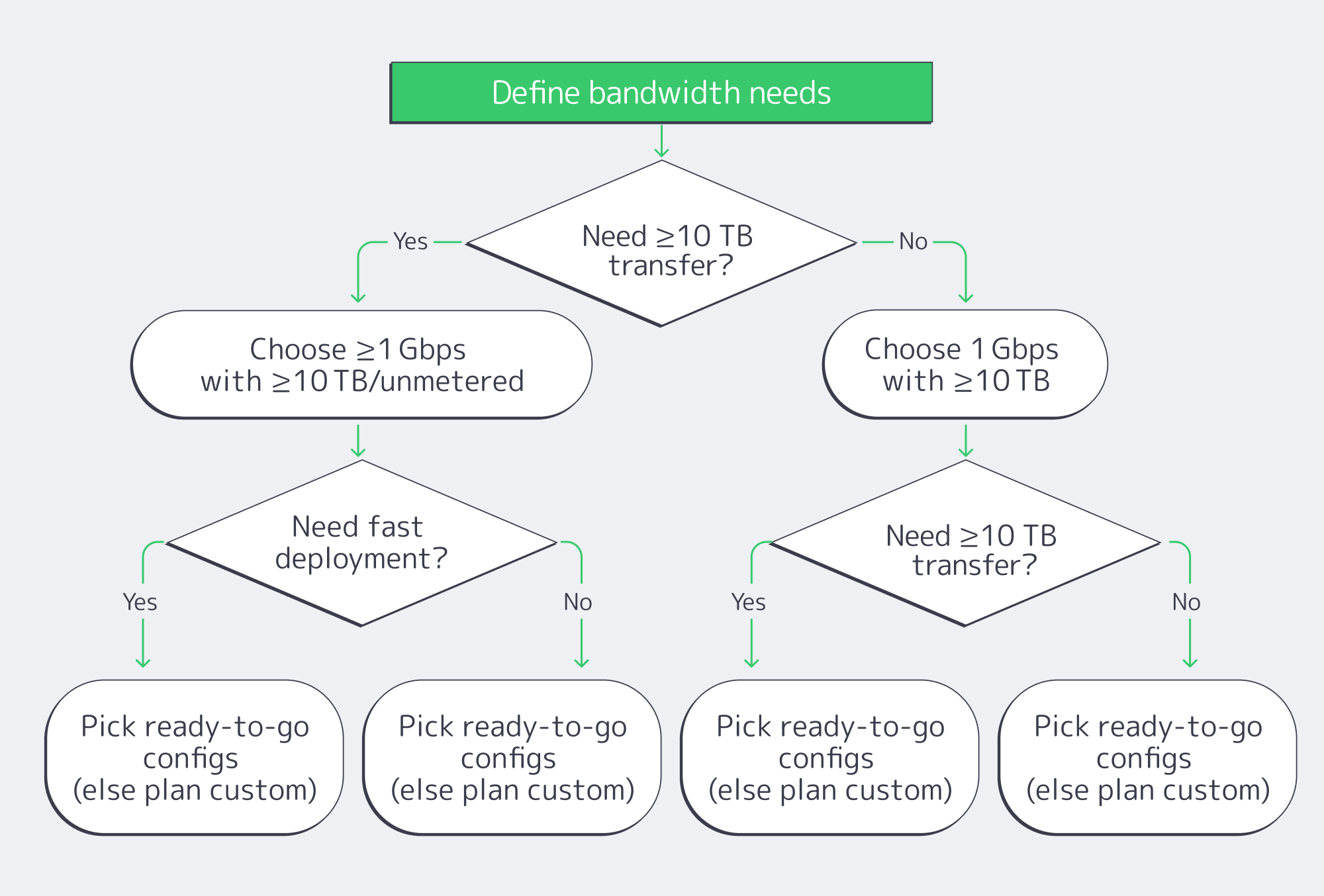
- Bandwidth is more important than raw CPU counts. The users of Atlanta dedicated server hosting normally choke the egress and not the cores. Target plans with 10+ TB of monthly transfer and at least a 1 Gbps port.
- Choose the suppliers whose delivery will take the shortest possible time. Atlanta ready designs not only save time-to-launch, but the total cost of ownership as well. Choose providers that offer rapid delivery; we can provision 50+ Atlanta configurations within 2 hours.
- Determine the level of redundancy and facility. A Tier III+ Atlanta data center helps protect uptime and power/cooling efficiency, supporting predictable OPEX.
- Utilize network architecture. Pair your dedicated server in Atlanta with a CDN to offload global traffic bursts and reduce last‑mile latency.
- Re-platform, step-up are not to occur. Favor vendors that enable clean upgrades—1→10→40 Gbps ports and higher transfer quotas—without migrations; Melbicom offers 1–200 Gbps per‑server options in Atlanta.
- Maintain low management overheads. Automated OOB provisioning and remote tools save time on the common operations. Evaluate whether the provider includes 24/7 support—a safety net that matters when you run a lean team.
Is Atlanta the Right Choice for Your Workload?

In the case of teams that consider value per dollar, Atlanta can fit oddly well: there is a deep provider base, power that is cheap(er), and capacity expansion through policy that ensures that offerings remain competitive. The fiber and peering ecosystem enables providers to include generous transfer (10 TB or unmetered) at prices that are difficult to match in more expensive metros along the coastlines—which is ideal when bandwidth is your primary cost driver. In case your users are located in the U.S. East Coast (or you share transatlantic flows), the trade-off on latency against costs in Atlanta is difficult to overcome.
Launch Atlanta dedicated servers in hours
Provision 1–200 Gbps ports on 50+ pre‑configured servers over our 14+ Tbps network with free 24/7 support. Deploy in a Tier III Atlanta facility and scale bandwidth as you grow.